
The Businesswomen of Ancient Rome
Roman women lent money, ran shops and workshops, owned productive property, took part in long-distance trade and managed agricultural estates. The surviving evidence reveals a much wider female presence in the Roman economy than the traditional image suggests.

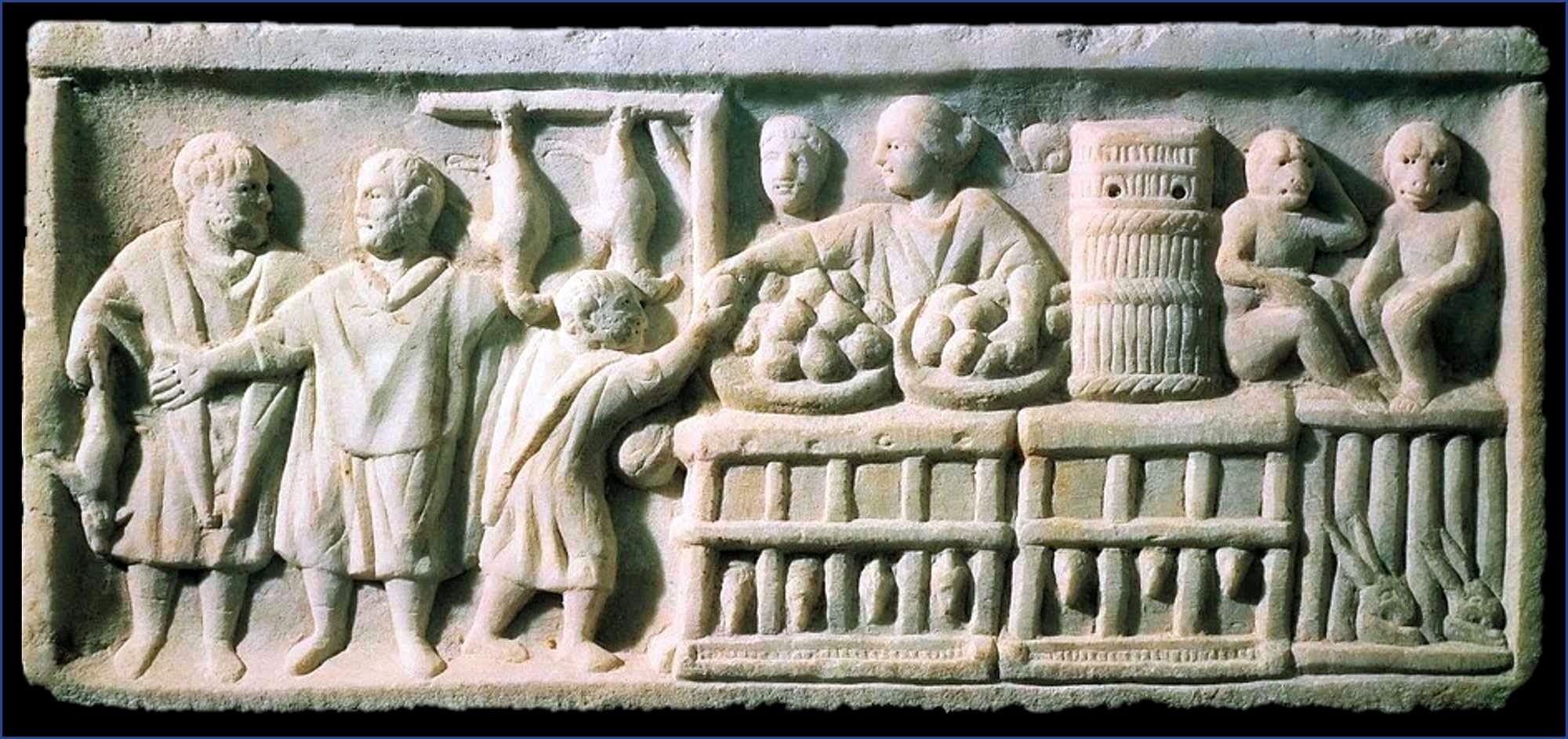
Women appear throughout the surviving evidence for the Roman economy. They lent money, bought and rented property, sold food and luxury goods, worked in skilled trades, managed workshops, owned productive land, participated in long-distance commerce and supervised agricultural estates.
Some were wealthy freeborn women whose capital and businesses could be administered through slaves and freedpeople. Many of the working women identified in inscriptions were freedwomen who had learned their trades while enslaved. Enslaved women themselves could also be entrusted with money and commercial responsibilities, even though the assets they managed legally belonged to their owners.
The evidence cannot tell us what proportion of Roman businesses were operated by women. Among roughly 2,500 surviving occupational inscriptions from Roman Italy, fewer than 200 commemorate female professionals, but that figure cannot be converted into a percentage of female employment.
Freeborn women were much less likely to have occupations recorded on their tombs; rural and unskilled workers are poorly represented; wives could work in family businesses without receiving an occupational title; and masculine plural terms could describe mixed groups of men and women.
What does survive is enough to establish a wide range of female economic activity. Women appear in loan documents and property disputes, on commercial amphorae, in legal petitions, on brick and pipe stamps, in shop scenes and in inscriptions naming occupations.
Some belonged to relatively modest urban businesses. Others supplied significant amounts of capital or controlled productive property. The evidence ranges from women selling fish, seeds and cloth to women financing maritime commerce and supervising industrial workshops.
Recent research has also reopened the role of the Roman vilica (a female overseer, estate manager, or the wife of a farm manager in Latin), traditionally understood mainly as the housekeeper of a rural villa. When the agricultural texts are read alongside inscriptions and archaeological evidence from productive villa complexes, her responsibilities appear considerably broader. In particular, the evidence places her within the processing of wine and olive oil, two of the most commercially important products of Roman agriculture.
Could a Roman Woman Conduct Business?
Roman society and Roman law gave men privileges that women did not possess. Women could not hold magistracies or serve as judges, and the jurists restricted their ability to act formally on behalf of other people. An adult free woman could also remain subject to tutela mulierum, a form of guardianship under which a male tutor was required to authorize certain legal acts.
The second-century Roman jurist Gaius, however, makes clear that this formal institution should not be confused with a guardian routinely controlling an adult woman's property. He rejects the conventional claim that women needed guardianship because they were supposedly too easily deceived. His description of actual practice is much more revealing:
“women of full age administer their own property, and it is a mere formality that in some transactions their guardian interposes his sanction”
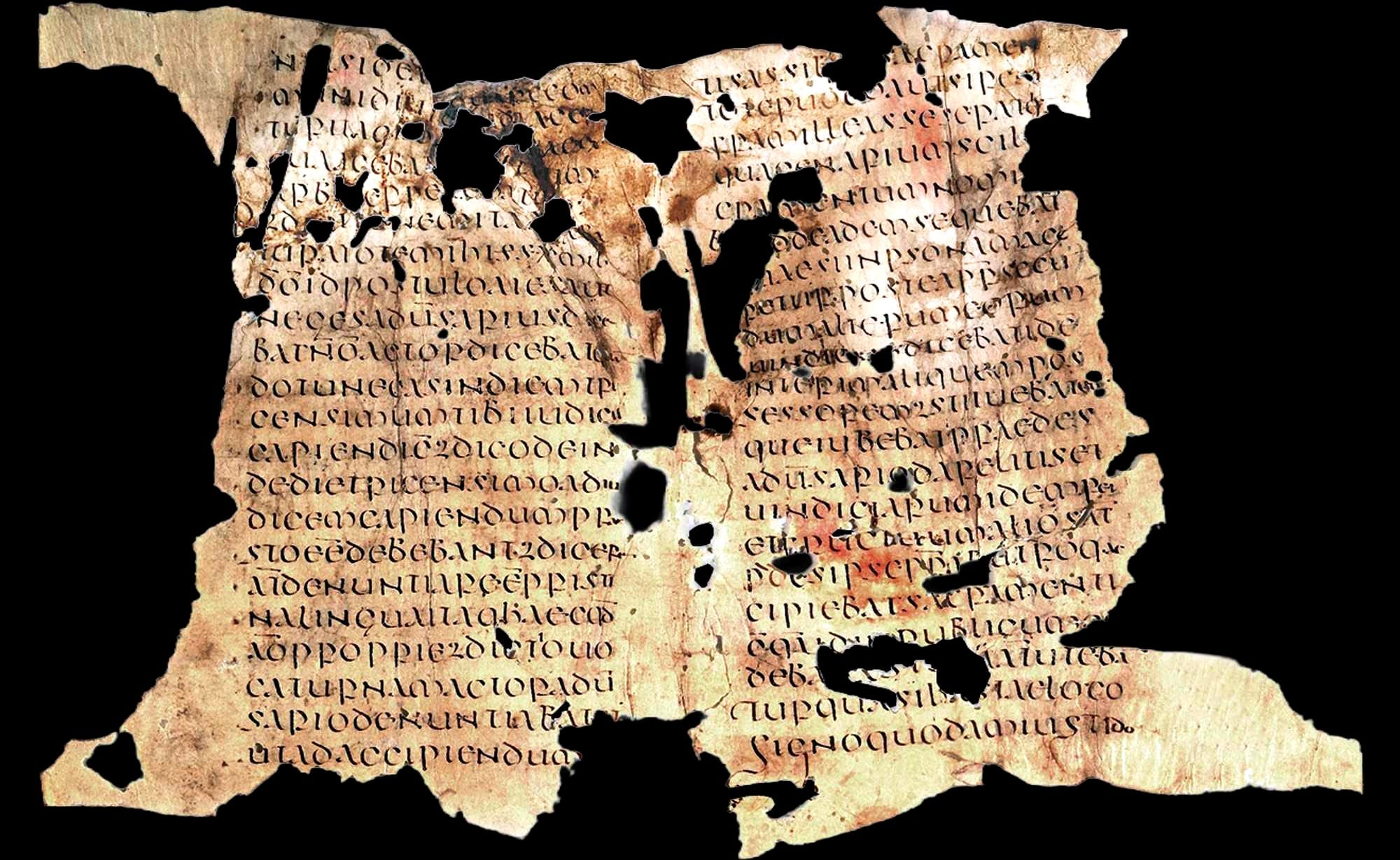
He then explains that the guardian could frequently be compelled to give that authorization against his own wishes. In the following section, Gaius contrasts adult female guardianship with guardianship of children, whose guardians actually administered their property and could later be required to account for what they had done.
A woman who was sui iuris — legally independent rather than under a father's patria potestas — could own property and conduct transactions to a considerable degree. Marriage did not necessarily transfer that property to her husband. Marriage involving manus, in which the wife entered her husband's legal family, became increasingly uncommon from the late Republic onward and exceptional during the Principate. In marriage without manus, husband and wife retained separate estates, and a legally independent wife remained owner of her property and the gains accruing to it.
The decreasing practical importance of guardianship can also be seen in business documentation. Guardians appear only rarely in transactions involving women preserved in the first-century CE Sulpicii archive from Puteoli. Roman law gradually reduced the transactions for which a guardian's authorization was necessary, while adult women gained greater influence over the appointment and replacement of guardians.
Women also made extensive use of the imperial legal system. Among some 2,500 surviving imperial responses concerning private legal matters between approximately 117 and 305 CE, about 650 — roughly a quarter — were addressed to female petitioners. These cases include family and inheritance disputes, but also sales, leases, debts and loans.
Roman commercial organization further allowed ownership and daily management to be separated. An owner could appoint another person to manage a shop, workshop or shipping enterprise. Legal rules dealing with such arrangements explicitly contemplate women both as principals appointing managers and as managers themselves. Ulpian even states that, for the relevant commercial action, it made no difference whether a manager was male or female, free or enslaved.
Roman law was therefore unequal in important respects, but there was no general prohibition preventing adult women from owning property, lending money, entering contracts or operating commercial enterprises.
Women Who Lent Money
Finance supplies some of the clearest evidence because women appear not only in legal theory but in records produced by actual business transactions.
The Sulpicii archive from Puteoli is particularly important. Twenty-three surviving tablets — around a quarter of the preserved archive — record business transactions involving women. This was not therefore a commercial world in which women appear only once or twice as curiosities.
Caesia Priscilla appears as a principal in loans, deposits and remittances amounting altogether to 24,000 sesterces. Lollia Saturnina made two financial advances, one of 2,000 sesterces and another whose amount is no longer recoverable. Magia Pulchra supplied 30,000 sesterces to a male borrower. Another transaction, for 1,600 sesterces, involved both a female lender and a female borrower.
Evidence from Roman Egypt provides a broader quantitative indication of women's participation in credit. In a collection of 349 loans dating from 30 BCE to 284 CE, women represented about 22% of borrowers and approximately the same proportion of lenders.
Around 42% of loans made by women went to female borrowers. These figures belong specifically to the surviving Egyptian evidence and cannot simply be projected across the Empire, but they show that female lending and borrowing were not confined to a handful of exceptional cases.
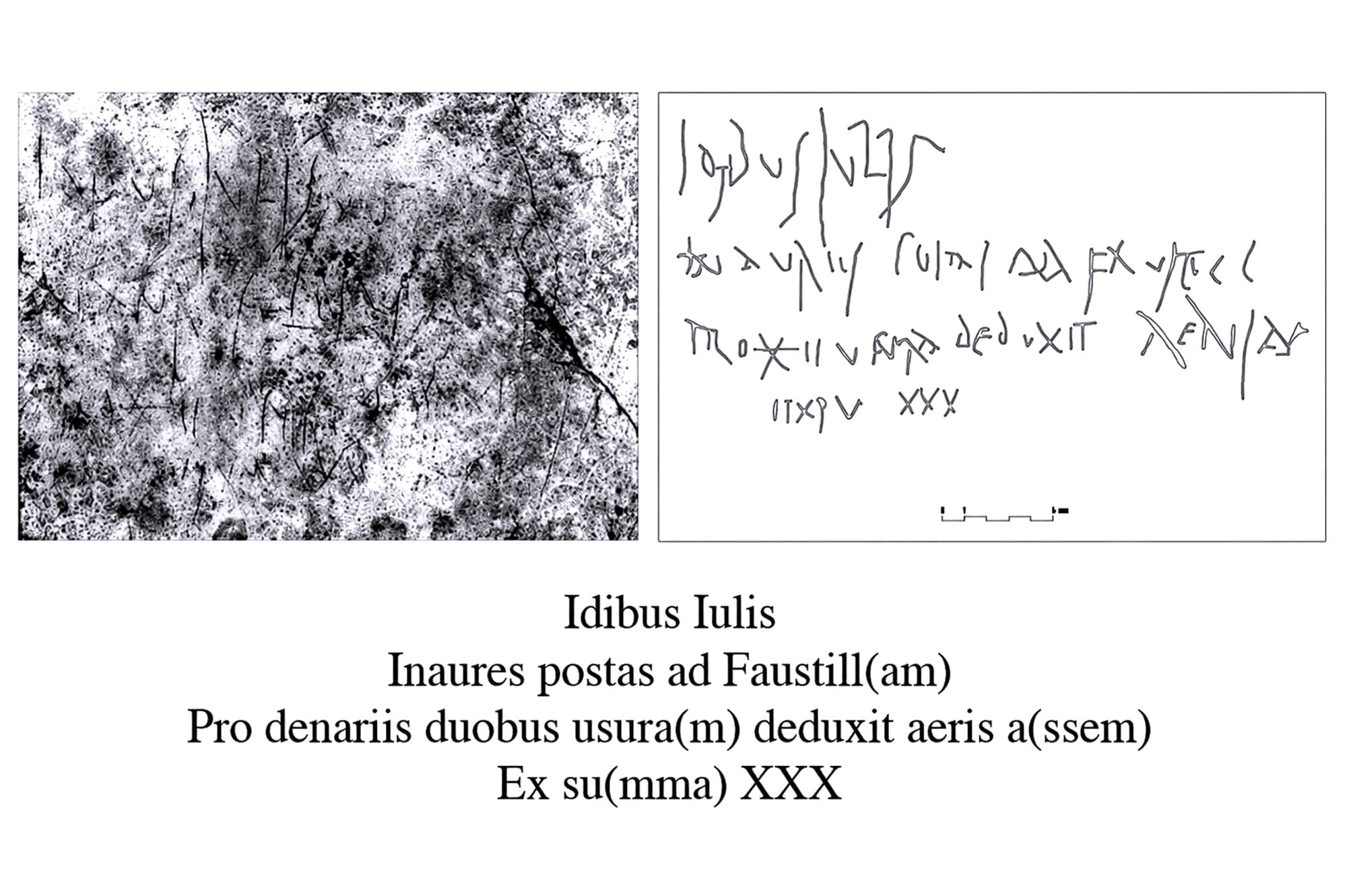
Women could operate at very different financial levels. Graffiti from Pompeii record a woman named Faustilla making several loans secured against property of limited value. The amounts involved were modest compared with some of the transactions at Puteoli, but the graffiti preserve the same basic activity: a woman advancing money to borrowers and taking security against repayment.
Other evidence reaches much larger sums. In the late Republic, Otacilia Laterensis claimed that Gaius Visellius Varro owed her 300,000 sesterces, although Varro disputed the nature of the transaction and claimed that the supposed debt concealed a private arrangement between them. The dispute itself nevertheless depended on the underlying possibility that a Roman woman could credibly claim to have advanced such a large amount.
Roman law treated female lending as an ordinary legal possibility. Gaius specifically addresses the situation in which a woman lends money without her guardian's authorization and states that the transaction creates an obligation upon the recipient because ownership of the money passes to the borrower.
Women also participated in maritime finance. A maritime loan financed a commercial voyage while assigning defined maritime risks to the creditor. Because the lender could lose the capital if the voyage failed under the agreed conditions, such arrangements could justify returns above those permitted on ordinary loans.
Two imperial rulings concern female maritime lenders. In 286 CE, Aurelia Cosmiana sought the enhanced return associated with maritime finance, but the ruling denied it because she had not actually accepted the relevant risk of loss at sea.
Another lender, Aurelia Iuliana, had accepted maritime risk, but her borrower's cargo was lost because he had acquired unlawful merchandise and the state seized it. Since the loss did not arise from the maritime hazards covered by the agreement, the ruling held that it could not be transferred to her.
The senatus consultum Velleianum, introduced around the middle of the first century CE, imposed an important limitation upon women but was not a general prohibition against female finance. It concerned intercessio: becoming responsible for another person's debt, whether through guarantee or by assuming the liability. Its protection operated through a legal defense rather than automatically invalidating every transaction, and the surviving legal discussion shows extensive debate over which arrangements qualified.
A woman could therefore lend her own money, borrow on her own account and participate in commercial finance despite the existence of the senatus consultum Velleianum.
Were There Female Bankers?
The evidence becomes less certain when the question is narrowed from lending and finance to the formal profession of argentarius.
A passage attributed to Callistratus has conventionally been understood as saying that women were excluded from the office of banker because the occupation was considered masculine. The occupational sourcebook follows that interpretation and explicitly distinguishes women's active participation in finance from formal work as bankers.
A different interpretation challenges the conventional translation of Callistratus. It argues that the Latin remotae videntur describes women as appearing removed from the public-facing practice of banking rather than legally excluded from it. Evidence offered for this position includes women who owned slaves engaged in banking and a possible inscription identifying a woman named Helena as an argentaria.
The surviving evidence does not require us to choose between those interpretations. Whether women formally practiced the profession of argentarius remains disputed. Women's participation in finance more broadly is much more securely established: they lent money, supplied capital, appeared as creditors and borrowers, entered maritime loans and used dependants to conduct transactions on their behalf.
Women in Shops, Workshops and Family Businesses
The inscriptions of Roman cities put names and occupations to women operating in very different parts of the urban economy.
Abudia Megiste was a freedwoman described as a negotiatrix of grain and vegetables at a location in Rome called the Middle Stairs. Aurelia Nais sold fish in or near the Horrea Galbae beside the Tiber. Pollecla sold barley on the Via Nova.
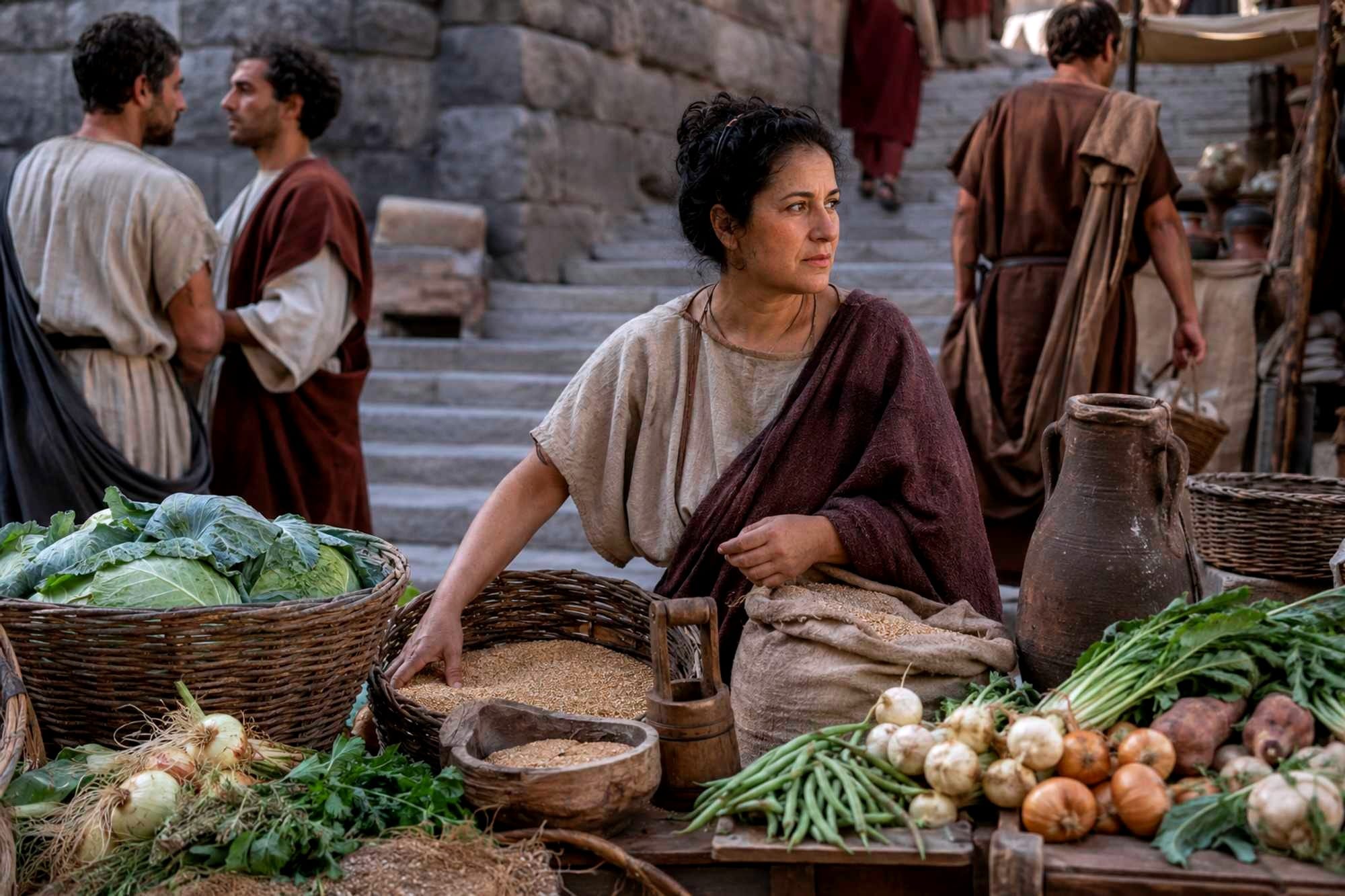
Atinia Tyrannis sold seeds near the triumphal gate together with her husband and daughter. Paulla Sergia Chrysis dealt in honey on the Via Sacra, while Aulia Hilaritas and her husband sold preserved foods around the barracks of the Praetorian Guard.
Women also worked in specialized luxury trades. Sellia Ephyre was an aurivestrix on the Via Sacra, producing or repairing garments decorated with gold thread. Babbia Asia belonged to a group of five jewelers working on the same street. Domitia Philematio worked with pearls, while Data was a sericaria, associated with silk. Female perfumers, incense dealers and purple workers also appear in occupational inscriptions.
Aulus Septicius Apollonius and Septicia Rufa were both explicitly described as gold-leaf beaters. Their shared tomb and occupational titles suggest that the freed couple worked together in the same workshop producing and selling gold leaf.
Women were not confined to trades conventionally associated with feminine labor. Cornelia Venusta was explicitly a clavaria, a nail-maker, while her husband was a clavarius. Laturnia Januaria was a lime burner.
Septimia Stratonice at Ostia is associated with shoemaking. Her funerary monument depicts her seated and holding a shoe-last, while the reconstructed inscription identifies her as a sutrix. The visual evidence is especially important here because the surviving stone is incomplete. Her high-backed chair has also led to the suggestion that she may have supervised shoe production and sale rather than necessarily carrying out every stage of manufacture herself.
Family businesses could be considerably more complicated than a husband owning a workshop in which his wife merely assisted. Cassia Domestica was herself a freedwoman and a linaria, working in linen. She was also the patroness of Gaius Cassius Sopater, another linen worker.
Two other freedwomen appear in the same inscription and may also have belonged to the working group. The monument therefore places a freedwoman inside a commercial hierarchy in which she herself possessed freed dependants.
Cameria Iarine presents another revealing arrangement. She commissioned a monument for her patron, her patron's patron and Lucius Camerius Onesimus, a man who had formerly been her own slave. She freed Onesimus and married him. All four were associated with the production or sale of fine clothing on the Vicus Tuscus, one of the important commercial streets leading toward the Forum.
Pollia Urbana worked as a hairdresser in the Aemilian district beside Marcus Calidius Apollonius, a barber. Nostia Daphne and Nostia Cleopatra were hairdressers on the Vicus Longus, where Marcus Nerius Quadratus, possibly connected to Daphne as her husband, worked as a goldsmith.
Urbanilla's epitaph is particularly valuable because it explicitly combines identities sometimes treated as opposites. Her husband commemorated her through traditional marital virtues but also as his companion and partner in business while they were in Rome. The same monument praises her household management, frugality and advice. Commercial partnership and domestic responsibility are presented together rather than as mutually exclusive roles.
Why Women's Work Is So Difficult to Count
The surviving occupational evidence cannot simply be divided into male and female job titles and treated as a census.
Roman commemorative practices themselves make women less visible. A husband's profession could be carved onto a family monument while his wife's economic activity was omitted. A mixed group of workers could also be described using a masculine plural occupational term.
Veturia Flora provides a clear example. She belonged to a group identified as purpurarii, purple workers or traders. The masculine plural includes her despite its grammatical form. Without the individual names preserved beside the occupational term, the workforce could easily appear exclusively male.
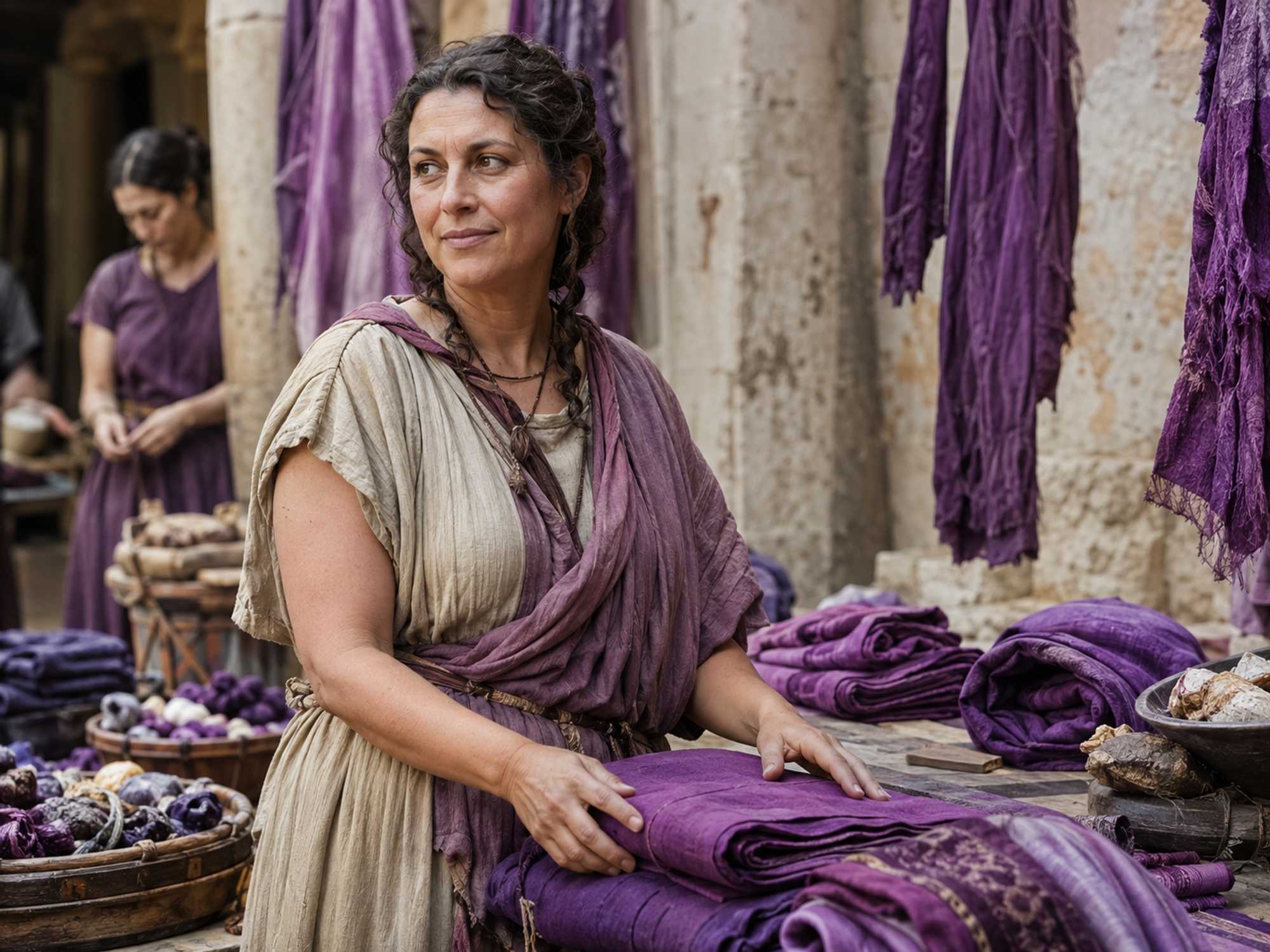
Another textile workshop contains Avillia Philusa among four freedpeople identified collectively by masculine plural terms. Again, the grammar alone would obscure the presence of a woman.
Textile production exposes the problem more broadly. Roman cultural ideals strongly associated spinning, wool preparation and textile work with women, yet surviving female occupational inscriptions account for only a small part of the labor that must have supported this enormous sector.
Low-status workers were less likely to receive occupational monuments, while respectable women could be commemorated as wives and mothers without any mention of economic activity.
Working wives are therefore particularly difficult to identify. Their participation cannot simply be assumed, but the absence of an occupational title cannot be treated as proof that they did not contribute to the family business. The sources record social identity selectively.
Images require similar caution. A painting on the facade of the Pompeian workshop associated with Marcus Vecilius Verecundus shows a woman behind a counter selling goods produced by the workshop. Her identity is unknown. She may have been a wife, relative, slave or another worker. The scene therefore establishes female retail activity but cannot establish that the woman owned the shop.
Another Roman relief shows a butcher cutting meat while a better-dressed seated woman holds wax tablets, apparently connected with accounts. She may have been the proprietor or manager, but the image does not identify their relationship. The possibility is worth preserving precisely because the uncertainty is preserved with it.
Recent Research Is Changing What We Know About the Roman Vilica
Recent research is changing the picture of one of the Roman countryside's most overlooked working women. The vilica, traditionally described as the villa's housekeeper, may also have supervised parts of the production of two of Rome's most important commodities: wine and olive oil.
The vilica was a female supervisor on a rural estate, and her title is attested across centuries of Roman evidence. Inscriptions record actual women occupying the position, independently of the agricultural writers.
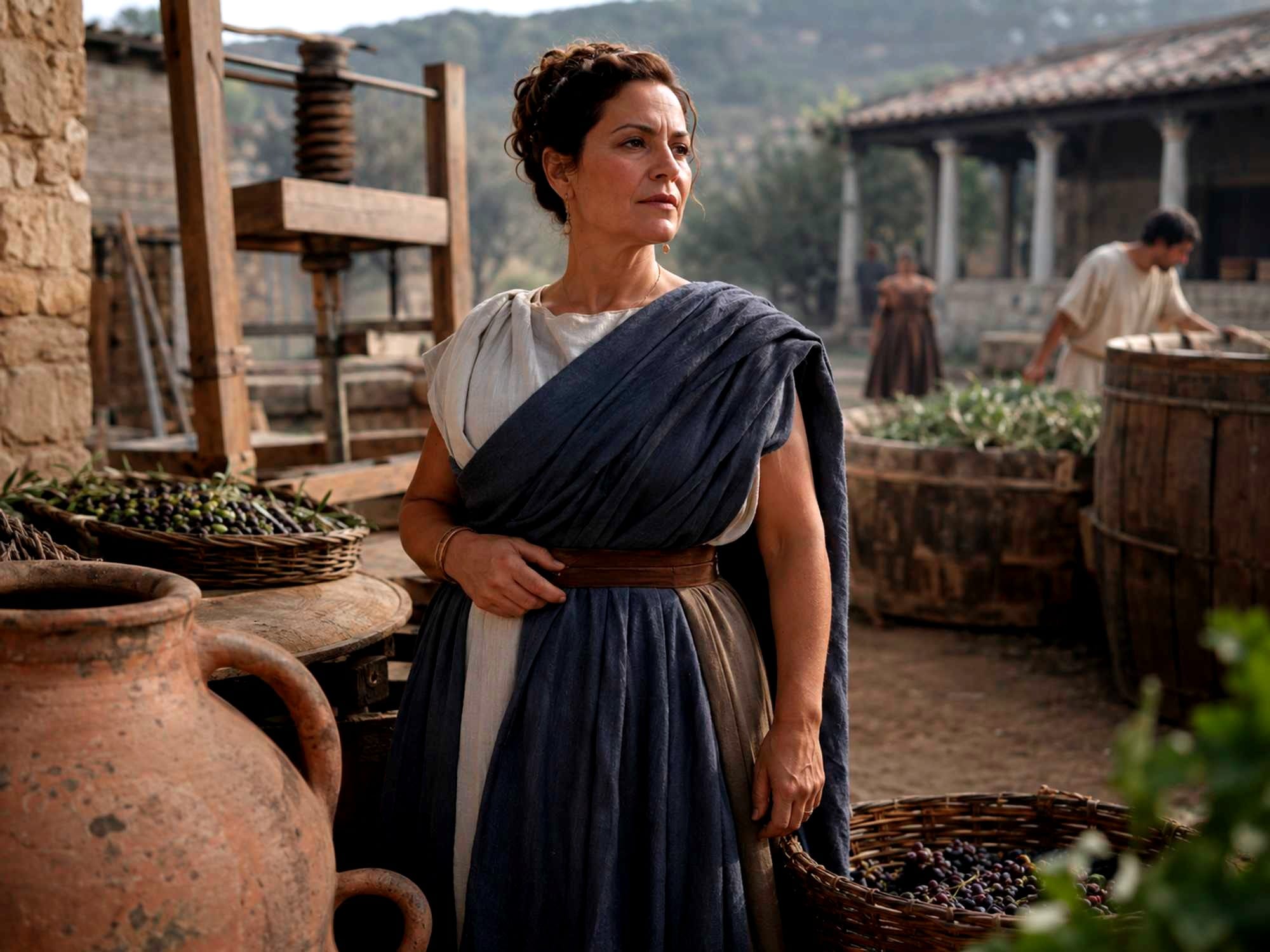
Cania Urbana was commemorated as a vilica and lived to the age of 55. Her inscription identifies her as the manager of an agricultural estate. Flora, another vilica, was married not to a vilicus but to Ursus, an actor responsible for the financial administration of estates.
Saturnina was a vilica of the emperor Claudius and died at the age of 30. At Atina, the freedman Gaius Obinius Epicadus and the freedwoman Trebia Aphrodisia are recorded as having managed an estate for fourteen years.
The inscriptional evidence already complicates the older assumption that a vilica was simply the wife of a male vilicus. The occupational evidence instead describes vilicae as professional agricultural managers in their own right, often freedwomen, with administrative and supervisory functions.
The newer research therefore does not discover that the vilica could be a manager. Its more important contribution is the reassessment of what that management involved.
Cato, writing in the second century BCE, provides one of the earliest descriptions of her duties. The older English translation renders vilica as “housekeeper,” and Cato certainly assigns her responsibilities involving the household, food and personal conduct. Yet these duties also extend into storage, preservation, poultry production and ritual connected with the working estate.
Cato expects her to keep the farmstead orderly, ensure that food is available and preserve agricultural produce for future use. Among the instructions are:
“She should have plenty of chickens and an abundance of eggs.
She should diligently put up all kinds of preserves every year.”
The surrounding instructions include drying and preserving fruits, grapes and nuts, grinding grain and maintaining stores. This is still household provisioning, but on a working agricultural estate where preserved production mattered throughout the year.
Cato's staffing calculations add another dimension. In his model for a 240-iugera olive estate, the vilicus and vilica appear among the thirteen people required to operate the property. His model 100-iugera vineyard again includes both positions as part of its workforce. The lists concern the personnel and equipment necessary for productive agricultural estates rather than a catalogue of domestic servants.
Cato also assigns the vilica ritual responsibilities. She is expected to maintain the hearth appropriately on religious days and to observe prescribed rites connected with the household gods and the prosperity of the estate. Agricultural production and religious practice were not separate spheres in Roman farming.
Columella's De Re Rustica, written roughly two centuries later, provides much fuller evidence. Book 12 is devoted to the responsibilities of the vilica. Its opening has greatly influenced the traditional interpretation because it presents a gendered division between men's outdoor activity and women's work under cover.
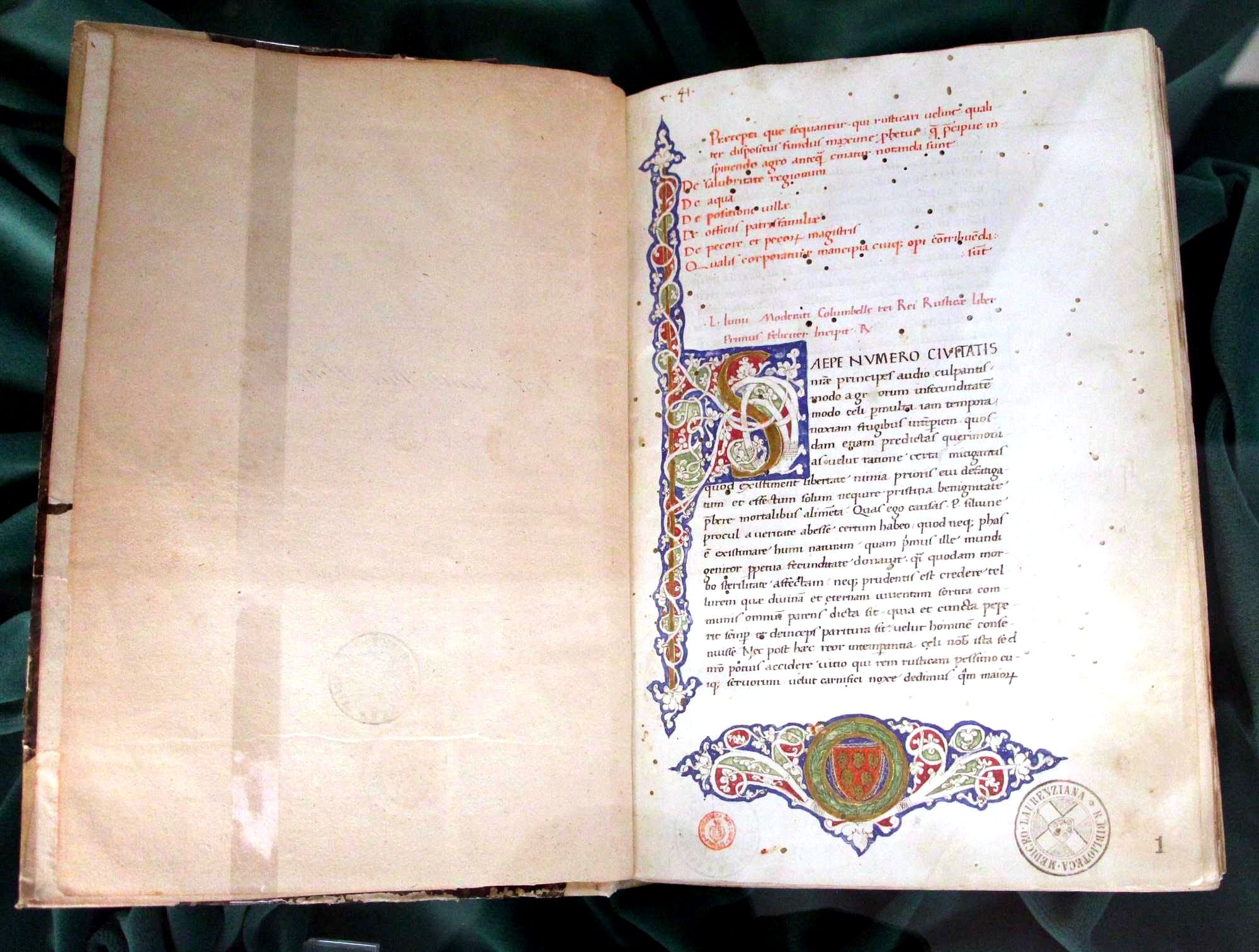
That introduction, however, depends heavily upon Xenophon's Oeconomicus, written in a very different Athenian context more than four centuries earlier. Columella himself identifies Xenophon as the source. The practical Roman agricultural material that follows, especially chapters 4–59, presents a considerably broader working environment.
The vilica moves through the productive areas of the estate. She supervises workers associated with storage, wine and oil facilities. She visits sheepfolds, cattle stalls and stables. Her responsibilities involve milk, wool, breeding and the care of animals.
She is expected to count fleeces, a duty implying at least practical numeracy. The agricultural text also indicates that female workers could perform outdoor agricultural labor when weather permitted and return to wool work when rain, frost or cold prevented such work outside.
Columella organizes much of the vilica's activity seasonally. She oversees the preservation and processing of fruits, vegetables, herbs and other produce so that crops harvested at one point in the year remain usable later. Such preservation supplied the estate but could also protect goods intended for storage, transport and sale.
Wine and olive oil form the strongest part of the new argument. Twenty-six of the 59 chapters of Book 12 deal with duties connected with those two products.
Columella explicitly places the olive harvest under the vilica's management, comparing the responsibility with her role during the vintage. He also assigns her the vintage operations performed sub tecto, under cover. When Books 11 and 12 are read together, the division is clearer: the vilicus is principally responsible for cultivation in the fields, vineyards and orchards, while the work performed intra villam can be delegated to the vilica.
That intra villam work included the transformation of harvested grapes into wine. Columella's instructions cover preparation for the vintage, pressing, treatment of the must, substances used in preservation and fermentation, and continued attention to the wine after the harvest itself had ended.
The olive harvest follows a similar pattern. The vilica's responsibilities extend into preparation of equipment and vessels, processing olives and producing different grades of oil. Columella even discusses what she should do with oil containers after merchants have emptied them, evidence that the process is being described within an economic context that includes sale beyond the estate. This is where archaeology substantially changes the interpretation of apparently “indoor” female work.
A Roman agricultural villa was not simply a country residence. Large estates could be divided between residential quarters and extensive productive areas containing wine presses, olive presses, storage rooms, animal buildings, workshops, courtyards and other working installations. Something taking place intra villam or sub tecto was therefore not necessarily taking place inside the owner's domestic living quarters.
Wine installations demonstrate how substantial these spaces could become. At Pisanella, the wine cellar contained more than 80 dolia and has been associated with production of roughly 80,000 liters. Large villas in Hispania could contain approximately 75–190 dolia.
At Vareilles in southern Gaul, an exceptional complex with hundreds of storage vessels had a maximum theoretical capacity of around 650,000 liters. The exceptional size of Vareilles should not be treated as representative of an ordinary Roman villa, but it illustrates what the productive section of a large estate could encompass.
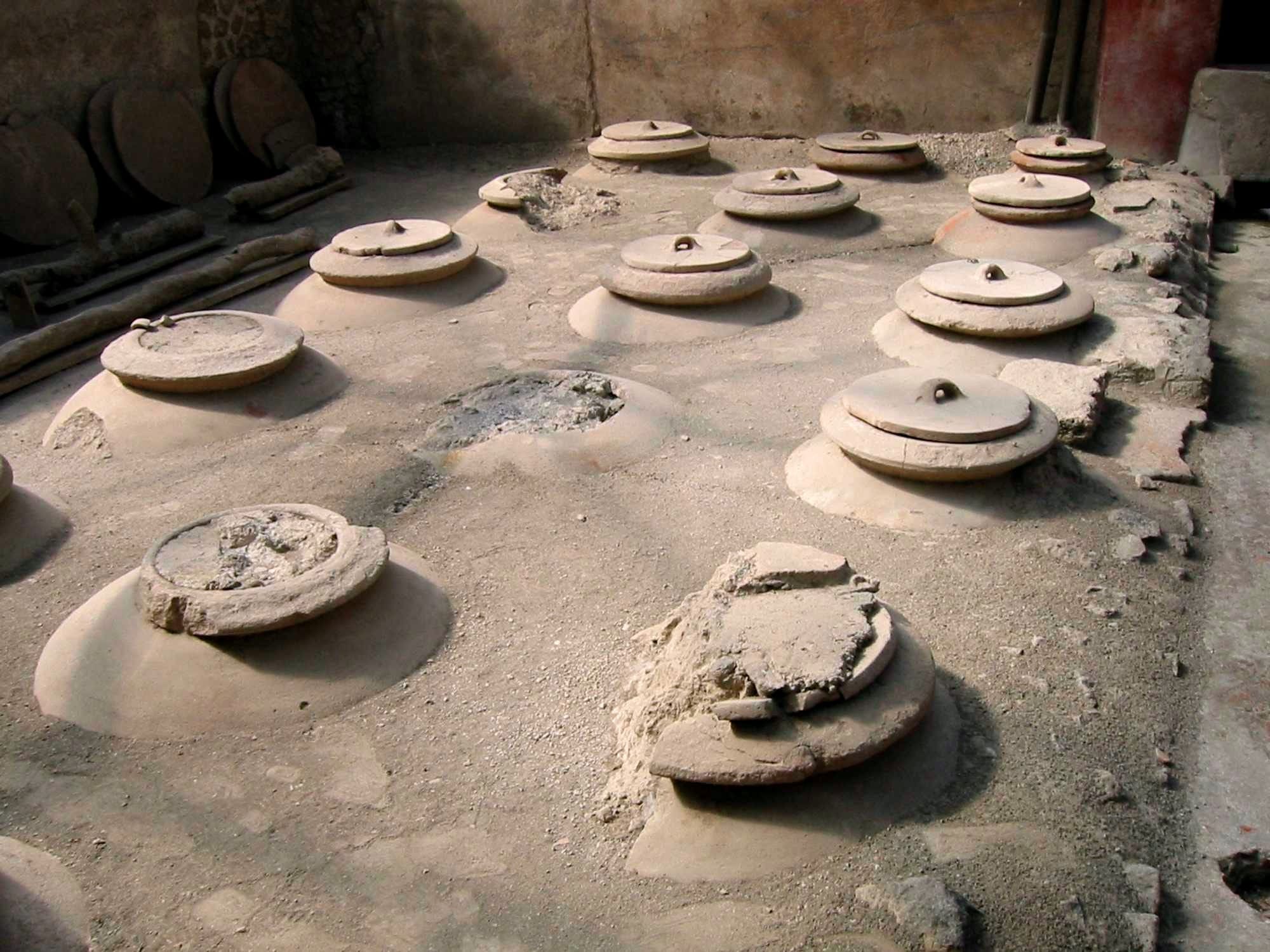
Olive-oil production could also require considerable infrastructure. At the Roman villa complex of Milreu, near modern Faro in southern Portugal, the agricultural installations included five olive presses occupying more than 200 square meters of working space, together with substantial storage facilities.
These installations cannot be reduced to kitchens preparing meals for a household. Their scale, combined with evidence for the commercial sale of agricultural produce, demonstrates that “inside the villa” could mean inside a substantial production complex.
The new interpretation therefore depends upon three distinct bodies of evidence that need to remain separate:
-First, Cato and Columella assign real productive and supervisory responsibilities to the vilica, with Columella giving her especially detailed duties in wine and olive-oil processing.
-Second, inscriptions independently demonstrate that she was an occupational title borne by real women who could serve as agricultural estate managers.
-Third, archaeology shows that the physical environments described as within or under cover in Roman villas could contain substantial wine and oil installations capable of commercial production.
Bringing these bodies of evidence together changes the older image of the vilica primarily as a housekeeper. It does not prove that every vilica throughout the Empire managed a large commercial winery or olive-oil operation. Columella wrote a prescriptive agricultural manual, not a census of Roman farms, and villa estates varied enormously in scale and organization.
The stronger conclusion is narrower and better supported: on some productive estates, she could supervise workers and processes involved in converting harvested produce into wine, oil and other commodities on which the estate's income depended.
There may also have been a ritual dimension to this productive role. Columella places sacrifices to Liber and Libera before the vintage within his book on the vilica's duties. Archaeological wine-production areas at several villas preserve altars, dedications or imagery associated with Bacchus-Liber. The evidence cannot prove that a named vilica performed any particular surviving ritual, but it places agricultural ritual within the same productive spaces for which she was assigned responsibility.
The reassessment therefore does more than replace the word “housekeeper” with “manager.” It changes the economic environment in which her apparently domestic responsibilities are understood.
Women Who Managed Roman Industry
The evidence for female management is not confined to agriculture. Roman brick production provides unusually strong evidence because stamped bricks can identify the owners of clay-producing estates and the managers responsible for individual workshops.
Within the surviving dataset summarized in the occupational evidence, women represent approximately 30–50% of identified owners, many belonging to senatorial families, while female workshop managers account for only about 6% of known managers. Most of the material belongs to the second and early third centuries CE.
These percentages should not be extrapolated across Roman industry as a whole. They belong to one body of surviving stamped material. What they demonstrate is that women could be highly visible at the level of ownership while remaining much less common among those recorded as day-to-day managers. Some brick stamps preserve women at both levels.
In 123 CE, Julia Albana, a woman from a senatorial family, owned the estate from which bricks were produced, while Procilia Phila managed the workshop.
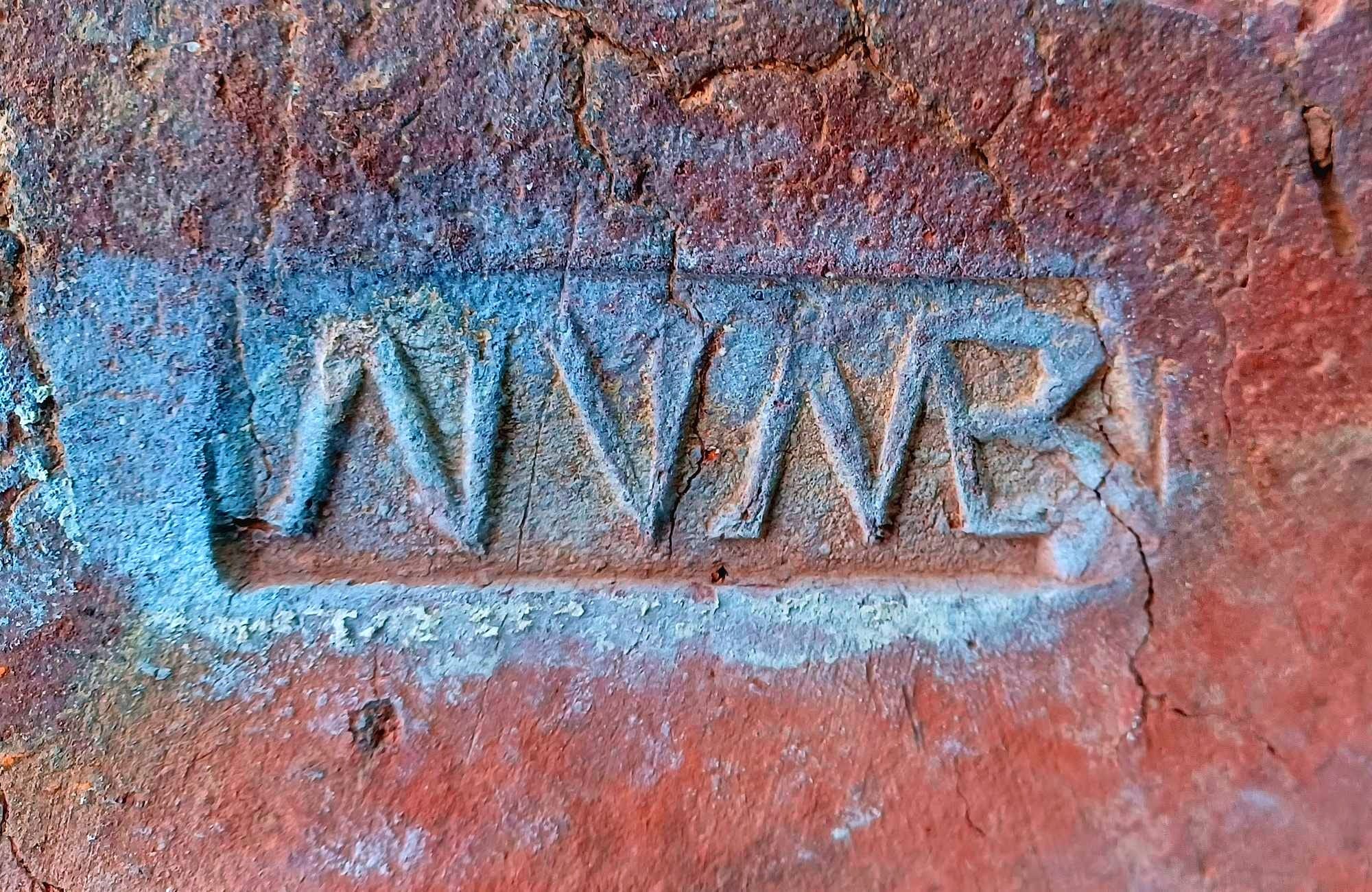
Around 134 CE, Memmia Macrina owned clay deposits whose workshop was managed by Procillia Gemella.
Between approximately 190 and 210 CE, Aemilia Severa owned the figlinae Publilianae, a brick-producing estate with clay deposits, and employed Junia Antonia and Junia Sabina in managerial roles. The terminology used with them may indicate responsibility for distribution of the products as well as manufacture.
Caecilia Amanda provides especially valuable evidence because her career can be followed over time. Fifteen identical stamps identify her as manager of the Domitianae Veteres clay deposits, and other stamps allow her activity in imperial brick production to be traced for roughly twenty years, from approximately 193–198 to 212–217 CE.
Lead-pipe manufacture provides another group of female managers. Annea Jucunda appears on pipes produced for Trajan in 116–117 CE. Aemilia Formiana appears on another lead-pipe stamp in the early third century, while Vetrania Zosime is identified as the female manager responsible for manufacture on property belonging to Claudia Vera, a woman of senatorial rank.
Aurelia Vernilla at Salona explicitly called herself a plumbaria, a female lead-worker or workshop manager.
Fish-sauce production supplies another case. Painted inscriptions on jars associate Umbricia Fortunata with the production of fish sauce connected with the famous Pompeian producer Aulus Umbricius Scaurus. The occupational evidence interprets her as a freedwoman managing production and distribution in one of the workshops.
The jars themselves securely establish her involvement in production; the precise structure of her relationship to the larger Scaurus business depends upon reconstruction from the group of inscriptions.
These stamps and painted labels are particularly valuable because they were created by productive processes themselves. Unlike funerary monuments, their purpose was not primarily to celebrate a socially ideal identity. They record people associated with ownership, manufacture and management.
Women in Wine, Olive Oil and Maritime Commerce
Women also participated in commercial networks connecting provincial producers with Rome. A second-century inscription commemorates an unnamed woman explicitly described as a negotiatrix dealing in olive oil from Baetica as well as wine.
Her daughter, Coelia Mascellina, erected the monument. A commercial amphora stamp bearing the daughter's name raises the possibility that she subsequently participated in or continued the family trade, although the identification remains uncertain.
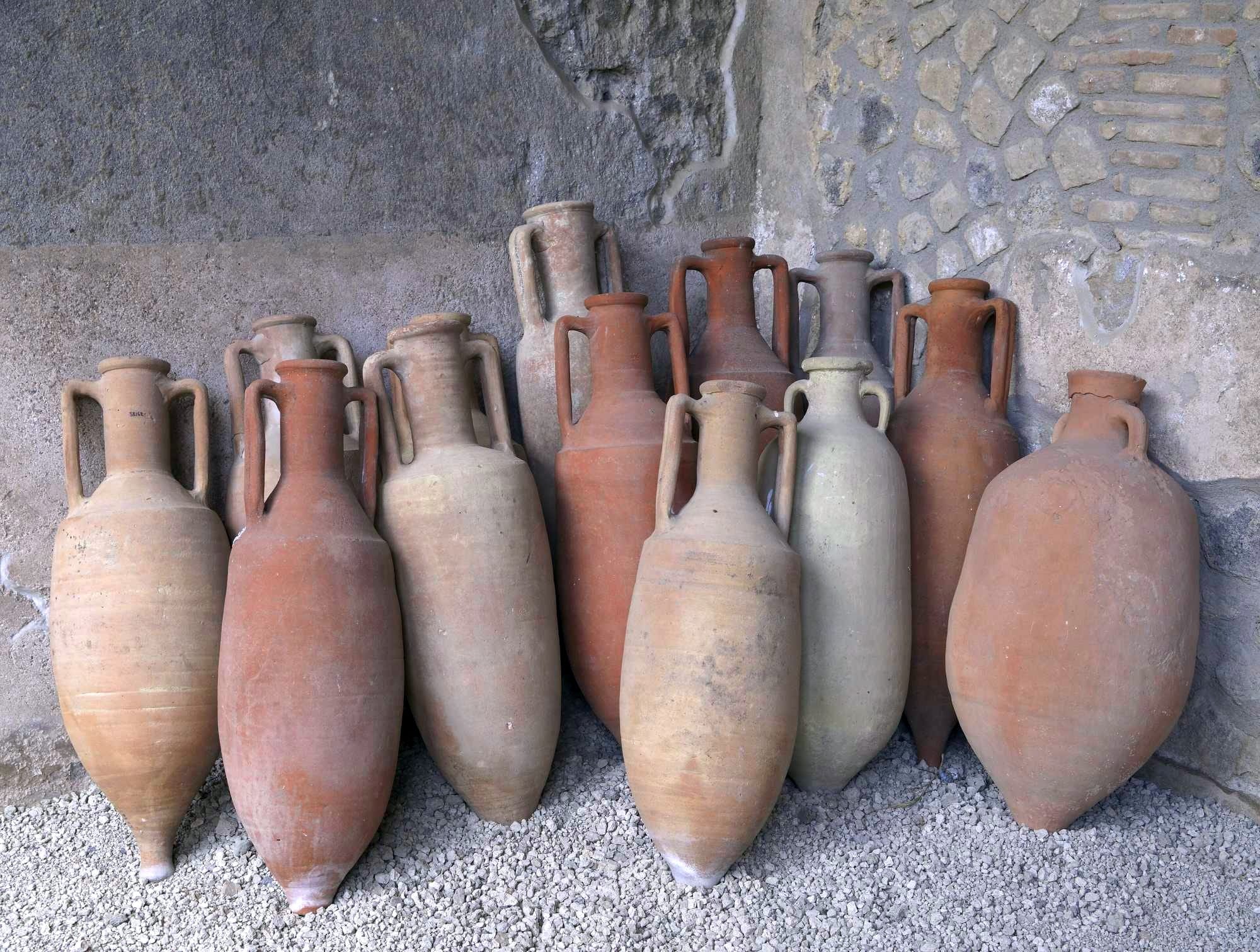
Other amphora evidence preserves women's names directly. Antonia Agathonica and Sempronia Epagatho appear together on a commercial amphora dated to 149 CE. Cornelia Placida and Maria Postumina occur on other containers, while Calvia Crispinilla's name appears on wine amphorae from more than one location.
The precise commercial meaning of individual names can differ, so a woman identified on an amphora should not automatically be described simultaneously as producer, merchant, shipper and owner.
Roman law explicitly contemplated women operating shipping enterprises. Ulpian states that it made little difference whether the exercitor of a ship was male or female. Another passage dealing with commercial managers likewise envisages a woman appointing a ship's captain or commercial manager. The law therefore did not construct maritime enterprise as something that could only have a male principal.
Imperial policy provides further evidence. When Claudius sought to encourage investment in merchant shipping and Rome's food supply, Suetonius records benefits offered to those who constructed merchant vessels. The privileges differed according to legal status and explicitly included women, who could receive the privileges associated with mothers of four children.
The measure cannot tell us how many female shipowners existed. It does demonstrate that the imperial government regarded female investment in merchant shipping as sufficiently plausible to include women specifically in the incentive scheme.
Combined with female maritime lenders and women's names in wine and olive-oil commerce, the sources place women at several different stages of Mediterranean trade: financing, productive ownership, shipping and distribution.
Slavery, Manumission and Business
Many of the women whose occupations survive were slaves or freedwomen, and their status is essential to understanding what their economic responsibilities meant.
An enslaved woman could administer a peculium, a fund or group of assets entrusted to her even though ultimate ownership remained with her master or mistress. Roman legal texts explicitly apply the relevant commercial actions to female slaves as well as male slaves.
A female slave could therefore manage assets and conduct transactions without legally owning the capital she controlled. Economic responsibility and legal freedom were separate questions.
Roman businesses relied extensively on slaves and freedpeople as commercial agents. Owners could provide capital, workshops, merchandise, ships or commercial connections while dependants handled production and transactions. Manumission did not necessarily end those relationships. A freedperson often continued working in the profession learned during slavery and could remain commercially connected to the former owner.
That background helps explain why freedwomen appear so frequently in occupational inscriptions. Sellia Ephyre, Cornelia Venusta, Cameria Iarine, Cassia Domestica and many others worked inside networks created by slavery, training, manumission, patronage and family relationships.
Trosia Hilara from Aquileia illustrates one possible trajectory. She was a freedwoman identified professionally as a lanifica circulatrix, a street vendor of woollen cloth. She had acquired sufficient resources to purchase a burial plot, and her monument provided for her freedmen and freedwomen.
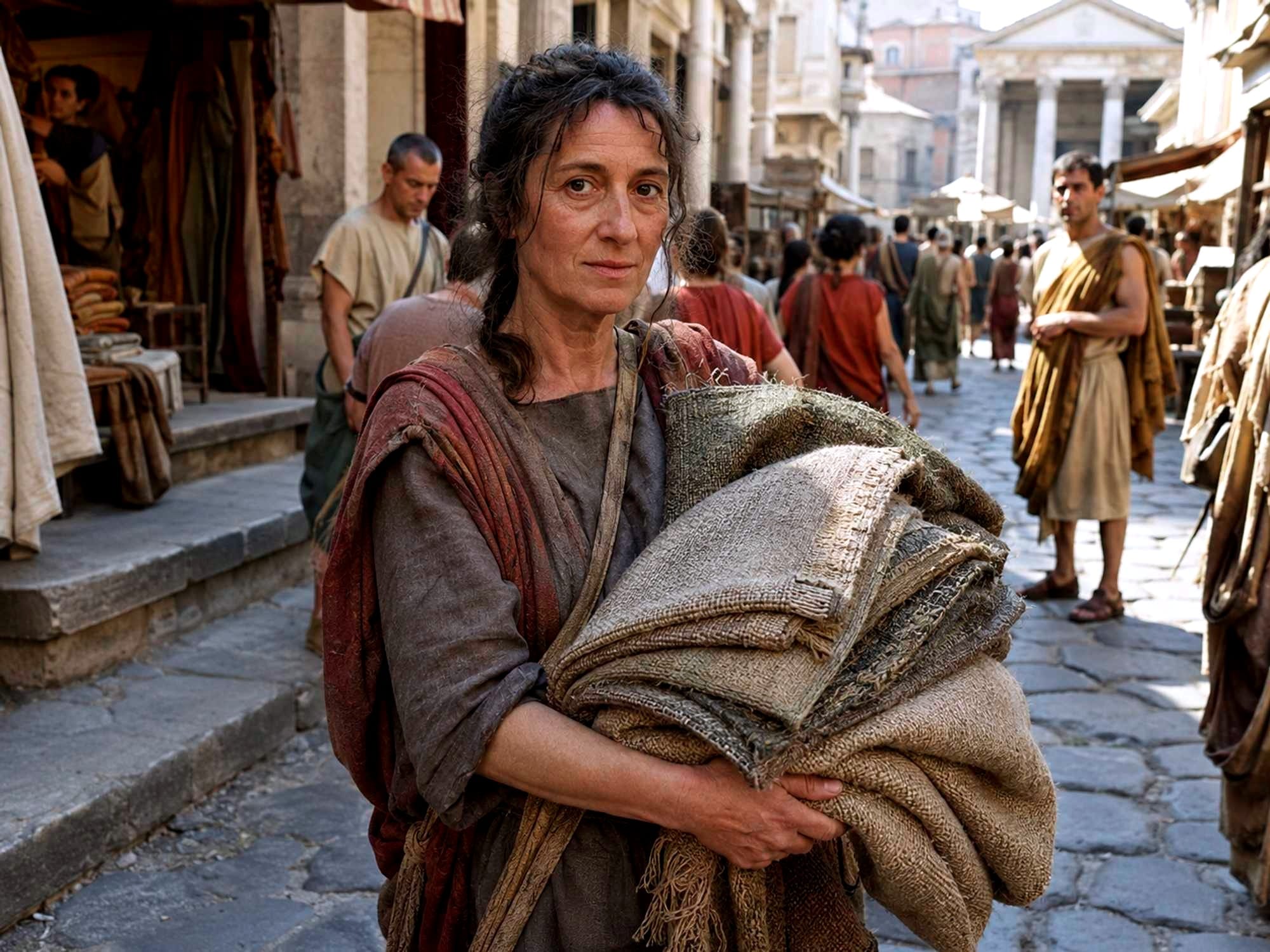
The evidence does not reveal the full organization or size of her business, but it records a formerly enslaved woman with a professional identity, property and dependants of her own.
Freeborn women appear differently. Wealthier women did not need to perform the visible daily labor of their businesses themselves. Roman commercial organization made it possible for property owners to provide capital and productive assets while slaves and freedpeople handled management, manufacture or distribution.
This distinction helps explain why women can appear prominently as owners in industries such as brick production while being much less frequent among named workshop managers. Female economic participation could exist at the level of manual labor, management, investment or ownership, and those roles should not be treated as interchangeable.
The Place of Women in the Roman Economy
Roman women did not participate in economic life on equal terms with men. Men held political office, exercised extensive authority within the family and dominate the surviving occupational record. A wealthy freeborn property owner, an urban freedwoman and an enslaved business manager also occupied profoundly different legal and social positions.
Nor can the surviving evidence tell us the percentage of Roman commerce controlled by women. Occupational inscriptions are selective. Documentary archives survive by accident. Legal texts preserve individual problems rather than statistical samples. Even the striking female representation among owners in Roman brick production belongs to a particular body of evidence and cannot be projected across the Empire.
The evidence securely establishes something more limited but still substantial. Women supplied credit and made loans. They owned and administered property. They sold food, textiles and luxury goods. They worked as artisans and managed workshops. They appear among the owners of productive industrial property, in Mediterranean wine and olive-oil commerce and within shipping and maritime finance.
The reassessment of the vilica adds an important rural dimension. Her duties had long been preserved in Roman agricultural writing, but understanding work intra villam or sub tecto primarily as domestic work obscured the character of the spaces in which Columella placed those responsibilities. Roman villas could contain substantial wine presses, olive presses, storage buildings, animal facilities and working courtyards within the villa complex. The distinction between a male vilicus working across the fields and a female vilica supervising processing inside that complex was therefore not simply a distinction between economic work and housework.
The same caution applies to urban evidence. A wife without an occupational title cannot automatically be turned into a business partner, but the absence of that title cannot prove that she performed no work. A woman holding tablets in a shop relief may have been an owner or manager, but the image cannot identify her. A woman's name on an amphora establishes involvement without necessarily revealing exactly where she stood within production and distribution.
Other evidence requires much less reconstruction. Abudia Megiste was explicitly a trader of grain and vegetables. Aurelia Nais sold fish. Cassia Domestica worked in linen and was herself patroness of another linen worker. Urbanilla was remembered as her husband's business partner. Caecilia Amanda can be followed through roughly two decades of industrial management. Women appear as substantial lenders and maritime financiers. Cania Urbana, Flora and Saturnina bore the professional title vilica.
These women did not belong to a separate female economy. They appear inside the same systems of property, credit, agriculture, slavery, patronage, manufacturing and long-distance trade that organized Roman economic life more generally. Their numbers cannot be recovered, but their participation can. The surviving evidence places Roman women at levels ranging from street selling and craft production to lending, industrial management, property ownership, maritime trade and the supervision of commercially important agricultural production.
Edward E. Cohen, Roman Inequality: Affluent Slaves, Businesswomen, Legal Fictions. Oxford University Press, 2023.
Emily A. Hemelrijk, Women and Society in the Roman World: A Sourcebook of Inscriptions from the Roman West. Cambridge University Press, 2021.
Lena Larsson Lovén, “Women, Trade, and Production in Urban Centres of Roman Italy,” in Andrew Wilson and Miko Flohr, eds., Urban Craftsmen and Traders in the Roman World. Oxford University Press, 2016.
Wim Broekaert, “Freedmen and Agency in Roman Business,” in Andrew Wilson and Miko Flohr, eds., Urban Craftsmen and Traders in the Roman World. Oxford University Press, 2016.
Verena Halbwachs, “Women as Legal Actors,” in Paul J. du Plessis, Clifford Ando and Kaius Tuori, eds., The Oxford Handbook of Roman Law and Society. Oxford University Press, 2016.
Tamara Lewit, “Not just a housekeeper: a new look at the work of the Roman vilica,” Journal of Roman Archaeology, 2026.
Gaius, Institutes, especially 1.190–192 and 2.81. Edward Poste trans., 4th ed., Oxford, 1904.
Cato the Elder, De Agricultura, especially 10–11 and 143. Fairfax Harrison trans., Roman Farm Management, 1918.
Columella, De Re RusticaBooks
Suetonius, Claudius 18–19.
Digest, 2.13.12, 14.1.1.16, 14.3.7.1, 15.1, 16.1 and 50.16.


About the Roman Empire Times
See all the latest news for the Roman Empire, ancient Roman historical facts, anecdotes from Roman Times and stories from the Empire at romanempiretimes.com. Contact our newsroom to report an update or send your story, photos and videos. Follow RET on Google News, Flipboard and subscribe here to our daily email.
Follow the Roman Empire Times on social media: