
Pompeii’s Luxury Funeral Beds Were Based on Military Designs
A new study compares bone ornaments from Porta Nola and the Casa del Fabbro, tracing military designs through Pompeii’s luxury furniture.

Helmeted heads, miniature shields and a garland retaining traces of gold leaf decorated the funeral beds of early imperial Pompeii. A new study brings together worked-bone ornaments from the Porta Nola cemetery and the Casa del Fabbro, a house inside the city, to examine how luxury furniture carried military imagery into Roman burial rituals.
Published in the Journal of Roman Archaeology on 13 November 2026, the research draws on more than 2,000 bone fragments. It compares their subjects, carving and attachment methods, identifying close similarities between material burned during funerals and pieces stored in a building associated with craft activity.
The beds served several stages of a funeral: displaying the deceased, carrying the body and supporting it on the pyre. Their decoration included carefully incised surfaces, sculpted faces and coloured details. The comparison suggests connections between the city's furniture trades and the elaborate objects consumed in its cemeteries.
Funeral beds recovered from the ashes
At Porta Nola, the material comes from the tomb of Marcus Obellius Firmus, neighbouring cremation burials and ritual pits. Excavations in 1976 first recovered many of the fragments. Further investigations in 2015, 2016 and 2017 revisited the burial spaces, relocated earlier finds and recovered additional pieces.
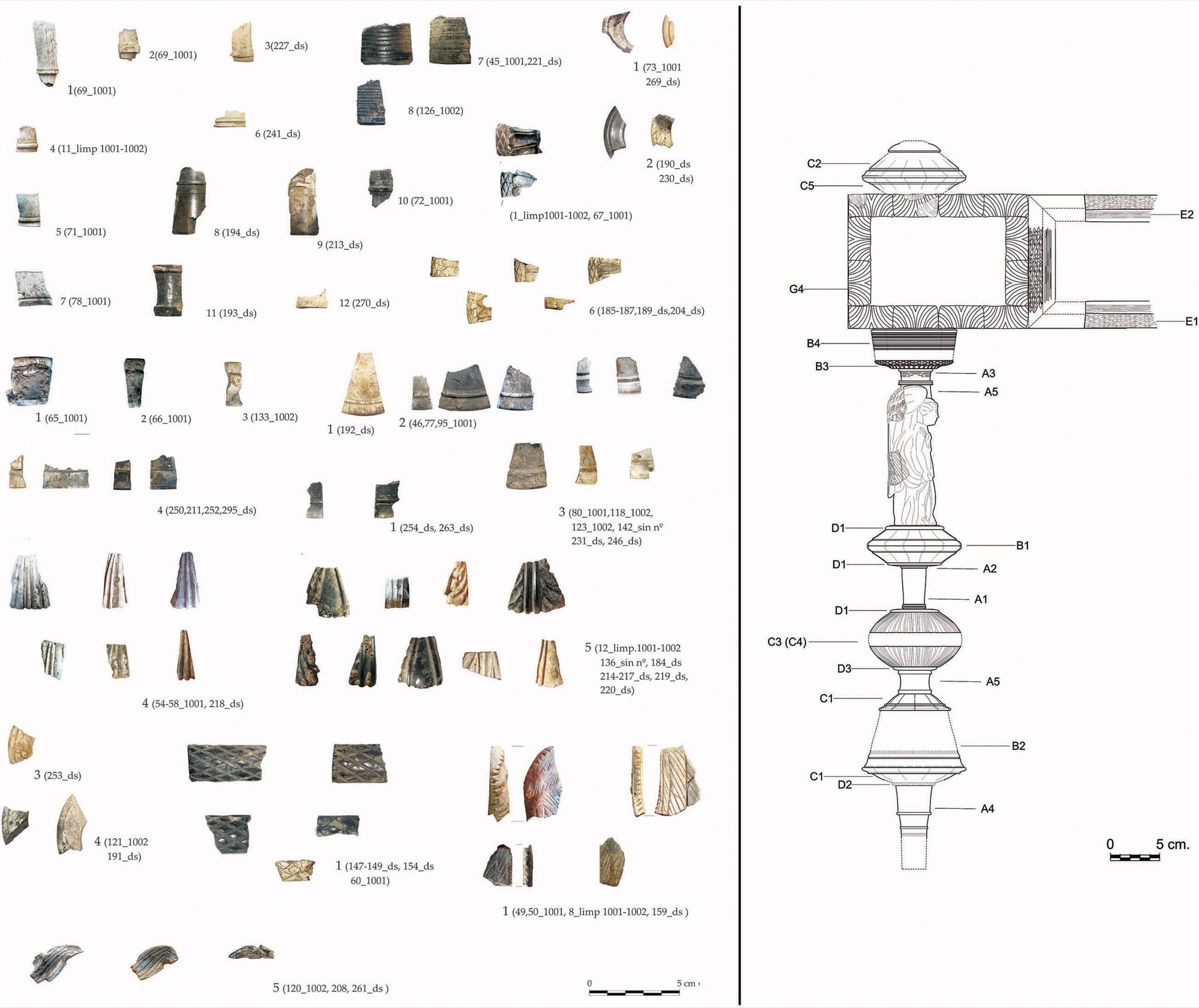
One deposit inside the enclosure of Obellius Firmus contained 450 studied fragments of bed decoration. Behind the monument, Tomb A yielded 540 pieces from its burial pit and urn. A nearby pit held ashes, charred wood and approximately 500 further fragments, including a nearly complete bed leg and part of its decorated frame.
These finds preserve different parts of the equipment used in Roman funeral rites and cremation. Bone ornaments survived among the residues of the pyre, while fragments also accompanied the cremated remains into urns. The relationship between the nearby pit and the individual burials remains under study.
Helmeted faces formed part of the display
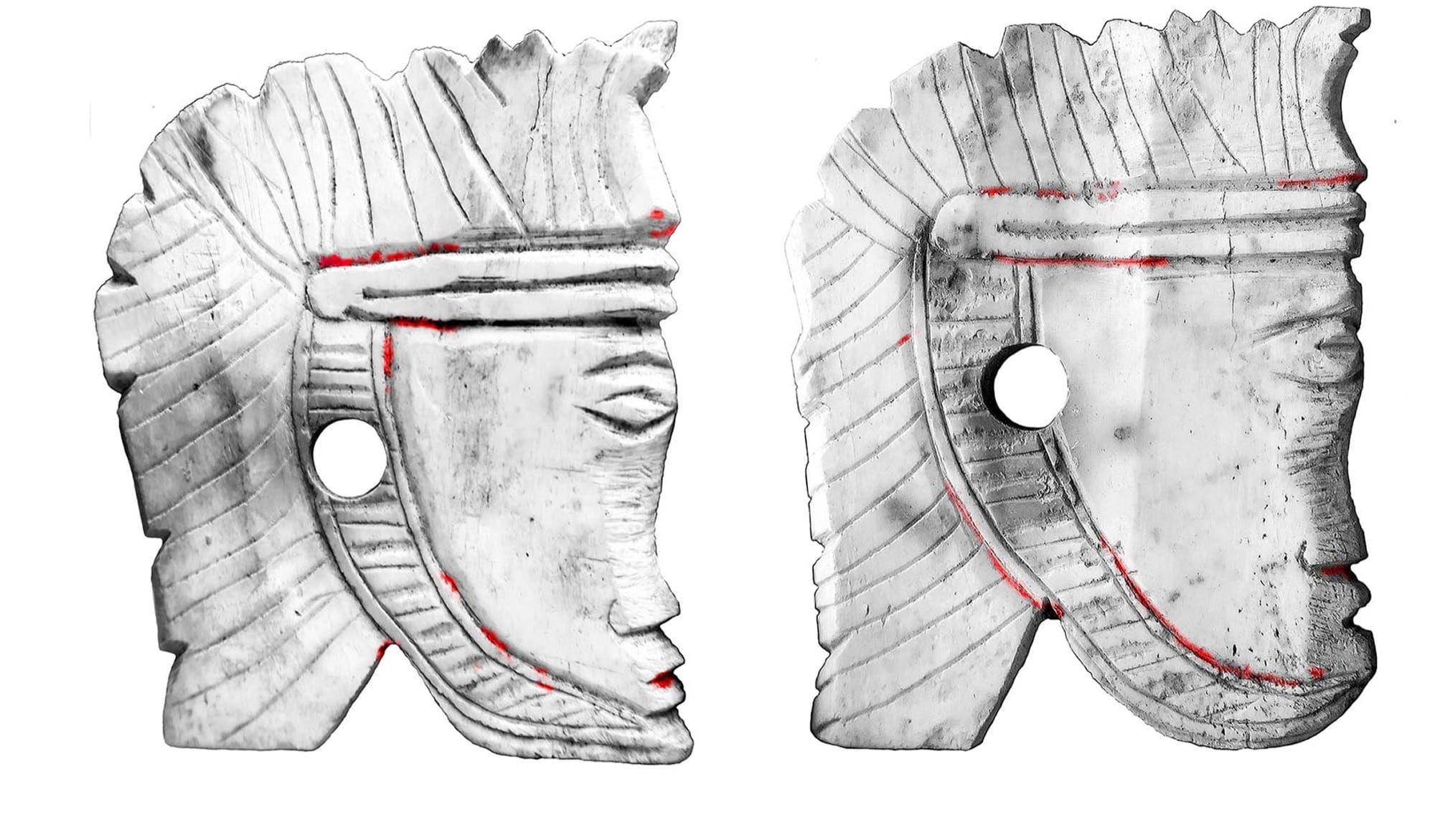
The study separates the helmeted heads into two broad types. The first consists of profiles cut into thin bone supports, with incised details and relatively shallow relief. Their headgear includes crests, cheekpieces and small neck guards, drawing on helmet forms familiar from Hellenistic and Roman imperial art.
Two complete examples from the Casa del Fabbro face to the right. Red pigment survives in details including a cheekpiece and a mouth. A green stain around an attachment hole points to contact with a bronze nail, providing a practical indication of how the decoration was fastened to its wooden support.
The second type has a face carved into a medallion assembled from several bone pieces. Fragments from the area behind Obellius Firmus's tomb preserve faces looking in both directions, together with helmet crests and folds of clothing. The figures are interpreted as idealised military images, rather than portraits of named individuals.
Shields borrowed a Hellenistic vocabulary
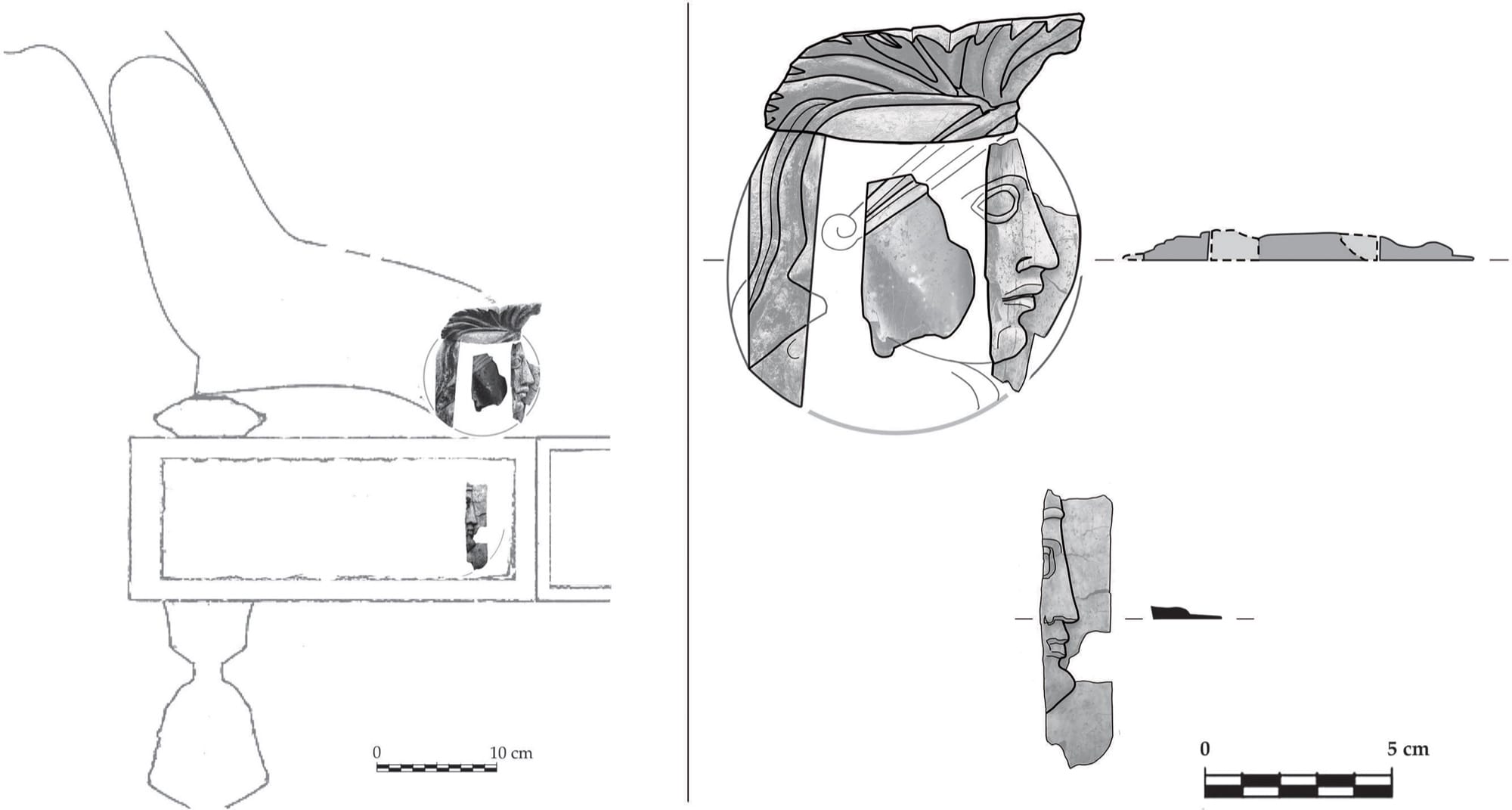
The shield ornaments include elongated hexagonal shapes and crescent-shaped examples known as peltae. Carved lines imitate bindings, stitching or coverings made from organic materials. Some surfaces carry intersecting grooves, while others have a repeated pattern resembling scales, adding texture to the small bone plaques.
Thirteen shield-shaped pieces were recovered together in room 8 of the Casa del Fabbro. Their similar workmanship and repeated forms led the researchers to associate them with the decoration of a single piece of furniture. Several preserve traces of red pigment or staining from bronze fastenings.
The designs belong to a broader artistic vocabulary of Hellenistic weaponry and military trophies. Related ornaments occur on furniture elsewhere in the Roman world, including finds from France, Germany and Britain. The Pompeian material establishes a local group within that wider tradition, with comparable subjects appearing in both a cemetery and an urban building.
Gold leaf and colour enriched the bone
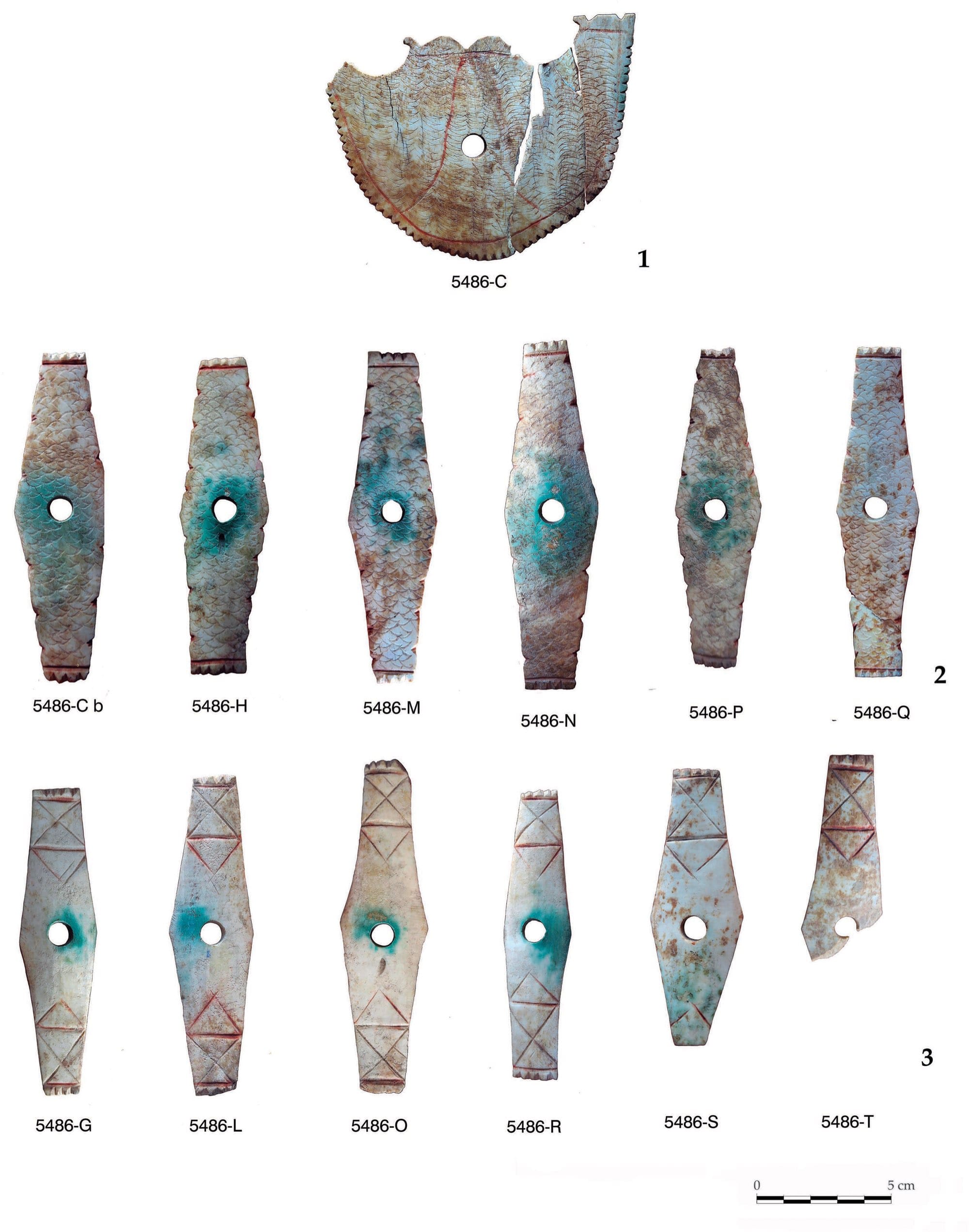
Three garland fragments from the tomb of Obellius Firmus carry schematic plant decoration. Incised lines form a grid, and a central strip suggests the ribbon binding the garland. One fragment retains traces of gold leaf, evidence that at least part of the ornament had a gilded finish.
Colour also survives on pieces from the Casa del Fabbro. Red pigment occupies grooves on shields and helmeted heads, picking out details within the carved decoration. These remains preserve elements of the surface treatment as well as the shapes of the objects to which it was applied.
A distinctive cutting technique provides another connection between the two locations. Curved impressions on certain shields are interpreted as marks made by a gouge applied perpendicular to the surface. Repeated cuts produced the scale-like pattern, linking shared decoration with a specific method of manufacture.
A house held the materials of a furniture trade
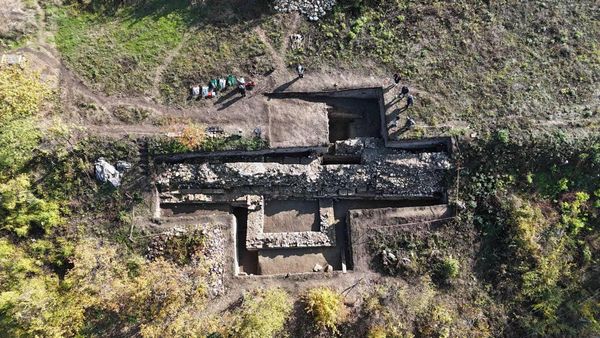
The Casa del Fabbro stands in the Insula of the Menander, a block of houses within Pompeii. Excavated between 1926 and 1933, it contained tools and objects associated with working metal, wood and bone. The study interprets its later use as a possible workshop and storage facility after the earthquake of AD 62.
In the northeast corner of room 8, excavators found 20 decorative bone plaques and 322 fragments of worked-bone strips. Some pieces showed previous use. They may have been kept for reworking or as models for further manufacture, while other bone objects represented earlier stages of production.
Room 10 contained additional bed components, including a medallion and trapezoidal plaques associated with leg decoration. These came from a cupboard or chest alongside vessels and tools, placing them among the cupboards and household possessions of Pompeii. Whether the military ornaments from room 8 were intended for domestic or funerary furniture remains uncertain.
Praetorian graves contained decorated beds
The Porta Nola material also includes finds from a burial area associated with soldiers of the Praetorian Guard. In the tomb identified as belonging to Lucius Betutius Niger, the combined investigations recorded 91 decorated bone fragments. Most are small, but they place ornamented funeral furniture within an explicitly military burial setting.
The study interprets the helmets, shields and garlands as expressions of social standing and military prestige. It also proposes a funerary meaning for the imagery: victory could signify triumph over death. These possible associations sit alongside the practical role of the bed as an object displayed, transported and ultimately burned with the deceased.
Similar subjects and carving methods suggest connections between furniture working inside Pompeii and the beds used outside its walls. Used pieces in the Casa del Fabbro also leave open a further possibility: some luxury beds may have served in life before accompanying their owners to the pyre.

About the Roman Empire Times
See all the latest news for the Roman Empire, ancient Roman historical facts, anecdotes from Roman Times and stories from the Empire at romanempiretimes.com. Contact our newsroom to report an update or send your story, photos and videos. Follow RET on Google News, Flipboard and subscribe here to our daily email.
Follow the Roman Empire Times on social media: