
The Roman Fear of Luxury
Romans did not see luxury as harmless pleasure or refined taste. They feared it as a force that could soften character, blur social boundaries, and turn the rewards of conquest into the seeds of decline.

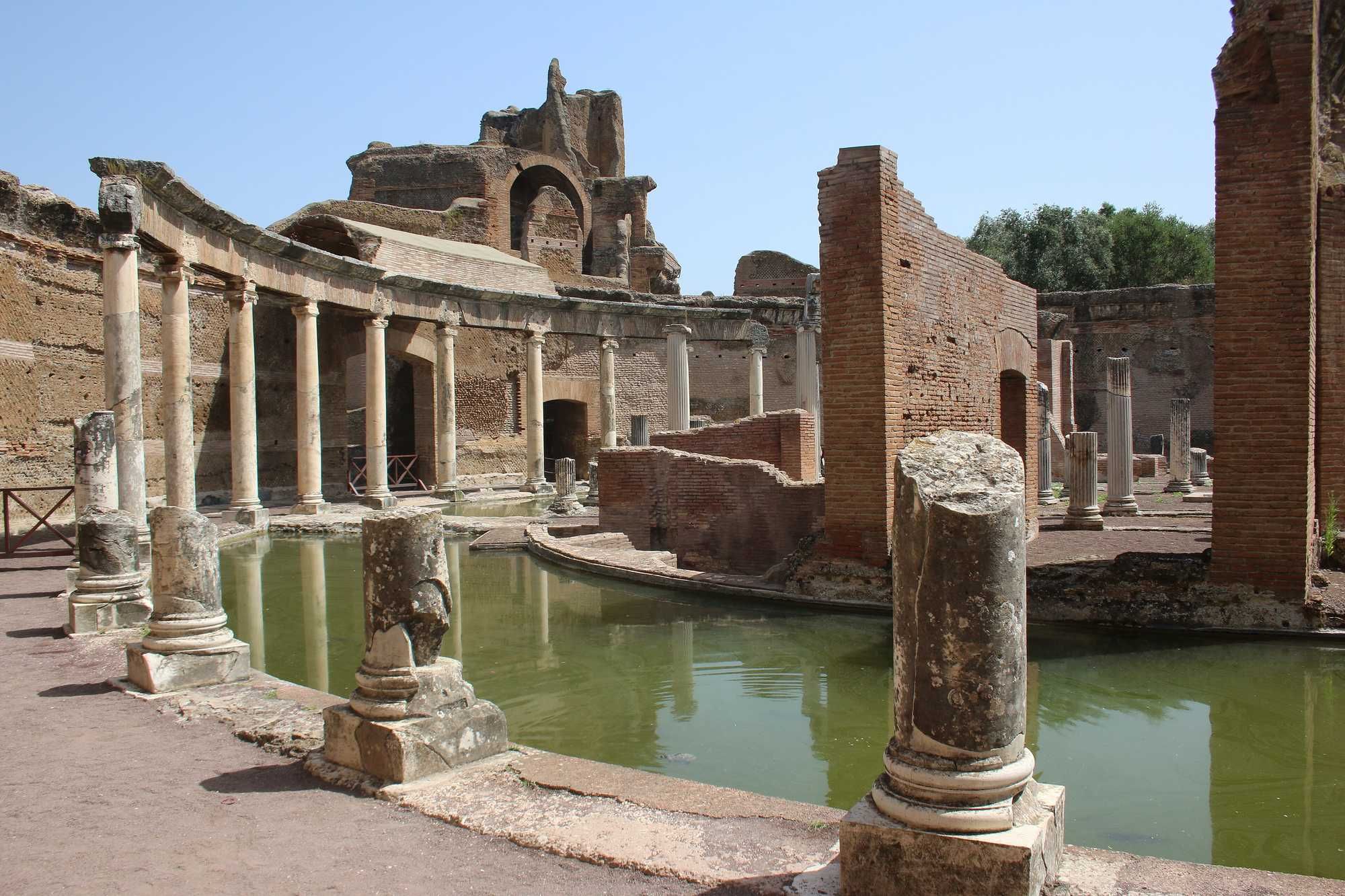
The Romans conquered a vast world and filled it with spoils, perfumes, silks, marble, rare foods, and glittering display, yet few things troubled their moral imagination more than luxury. Again and again, Roman writers spoke of comfort, indulgence, and extravagance not as signs of success, but as symptoms of decline. To them, luxury was never just a matter of expensive taste. It threatened discipline, softened character, blurred social boundaries, and raised the unsettling possibility that Rome might be undone not by its enemies, but by its appetites.
Why Luxury Troubled Rome
Rome was a city of sharp inequality. Poverty was widespread, yet it existed alongside extraordinary concentrations of wealth. As the political center of a vast empire, Rome drew in senators, equestrians, freedmen, and other wealthy residents whose fortunes gave the city enormous purchasing power.
Provincial elites, too, were required to spend at least part of their lives there, bringing still more money into the capital. It was therefore no surprise that Rome became the main destination for luxury goods from across the empire and beyond.
That wealth was visible everywhere. Public buildings were decorated with imported colored marbles, and elite demand encouraged a taste for rare, exotic, and expensive goods. Roman writers imagined the city as a place where the profits of conquest were consumed in dazzling form — jewels, silver, ivory, purple cloth, spices, incense, fine woods, and luxury foods. Rome did not merely rule the Mediterranean world; it absorbed its riches and displayed them.
Yet this abundance created a moral problem. In modern language, luxury is often treated as a positive quality, but Roman moral discourse did not see it that way. Luxury was associated with corruption, weakness, and decline. Ancient writers repeatedly insisted that new wealth, especially the wealth flowing into Rome after eastern conquests and the destruction of Carthage, had damaged Roman character.
They disagreed over the precise turning point, but they largely agreed on the result: wealth had made Romans softer, greedier, and more vulnerable to moral decay.
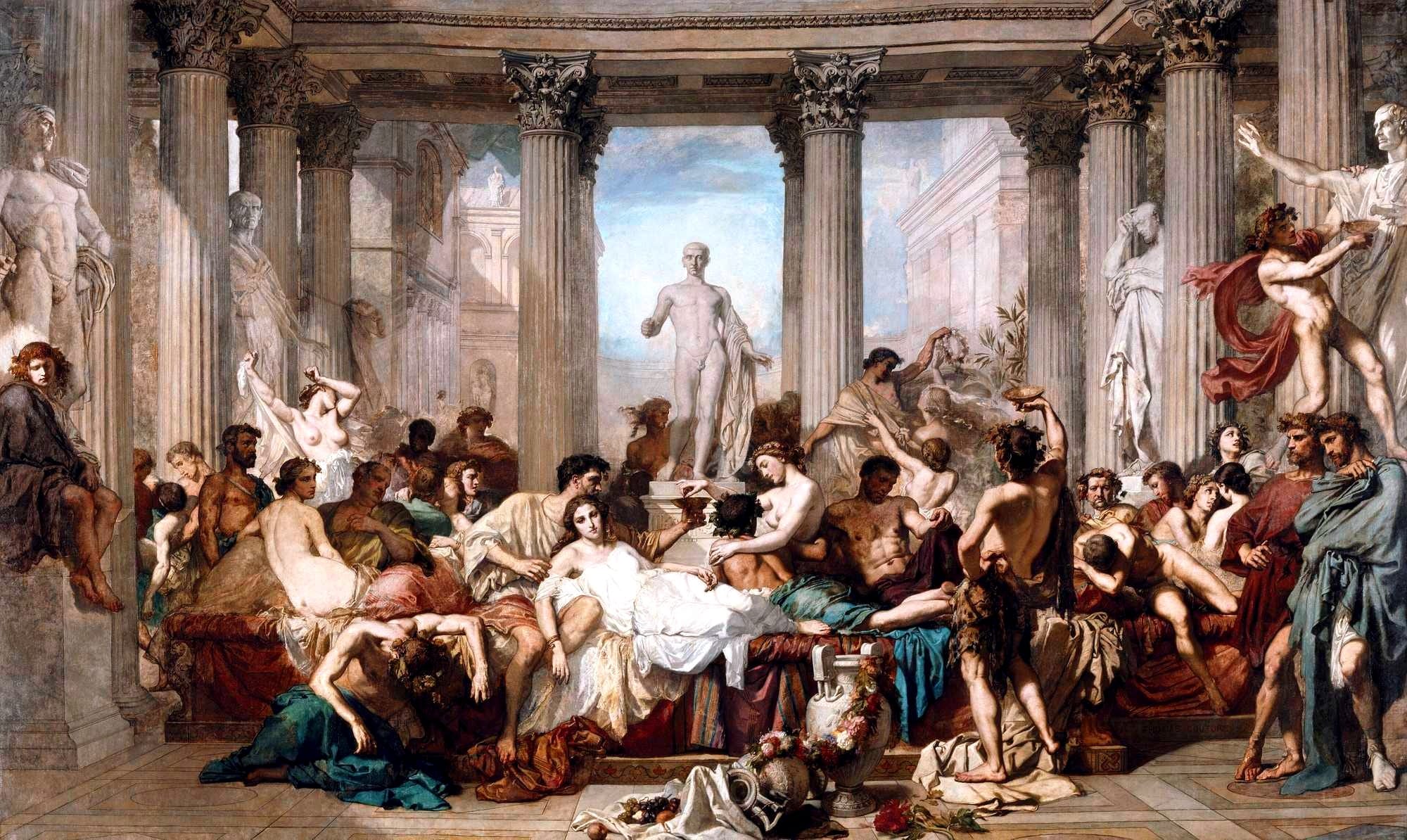
What mattered was not wealth in itself, but how it was used. Spending on public magnificence could be praised, because it enhanced the city and reflected honorably on the giver. Spending on private indulgence was another matter. Roman thought therefore drew a distinction between magnificentia and luxuria.
This helps explain why Rome developed sumptuary laws intended to restrain private extravagance, especially in the late Republic. These laws focused overwhelmingly on banquets — limiting guests, food, entertainment, and expense — rather than trying to control every form of elite display.
That narrow focus may seem strange at first, since Roman houses could still be furnished with extraordinary luxury. Villas, tables of rare wood, ivory furniture, silver vessels, elaborate décor, and richly adorned dining rooms all remained available to the wealthy. But the banquet was not just another form of consumption. It was one of the clearest arenas in which wealth could be displayed before others.
A successful dinner could bring admiration, influence, and social prestige. Exotic dishes, rare ingredients, and lavish hospitality could make a host famous. Because banquets were public performances of private wealth, they attracted moral scrutiny more readily than expensive furnishings did.
Roman literature reinforced this pattern. Lavish dining became one of the standard ways of discussing corruption, especially in satire. The extravagant gourmand became a recognizable moral type, opposed to the ideal of frugal simplicity. Writers used food, display, and excess to pass judgment on character, and the literary banquet became a stage on which moral decline could be dramatized. This is one reason why so many famous descriptions of luxury center on meals.
At the same time, the concern was not purely moral. Banquets mattered politically. They helped build alliances, win support, increase influence, and display the host’s power over guests and dependants. In that sense, they were dangerous because they allowed wealth to compete directly with lineage, reputation, and moral standing as a route to public power. Restricting luxury at table may therefore have been as much about controlling elite competition as about defending old-fashioned virtue.
Even so, the legislation was not very effective. Luxury consumption continued, and the wealthy in Rome did not stop buying rare goods, enlarging houses, decorating villas, or cultivating expensive tastes. Over time, some forms of luxury that had once drawn criticism became easier to praise openly. This reveals one of the central tensions in Roman life: luxury was condemned in principle, yet often required in practice.
That contradiction lay at the heart of elite existence. In a competitive society, wealth had to be displayed, but never too crudely. A senator needed a house appropriate to his rank. He had to entertain, receive guests, and live in a way that matched his status. But he also had to avoid appearing vulgar, boastful, or excessive. Roman elite culture therefore demanded a delicate balance between austerity and display, restraint and splendor.
The ideal was not the absence of luxury, but the right style of luxury. Good taste mattered. Refinement mattered. One had to possess fine things without seeming enslaved to them, and spend generously without appearing ostentatious. Roman consumption thus operated through a coded language, in which the meaning of an object depended not only on what it was, but on how it was chosen, displayed, and acquired.
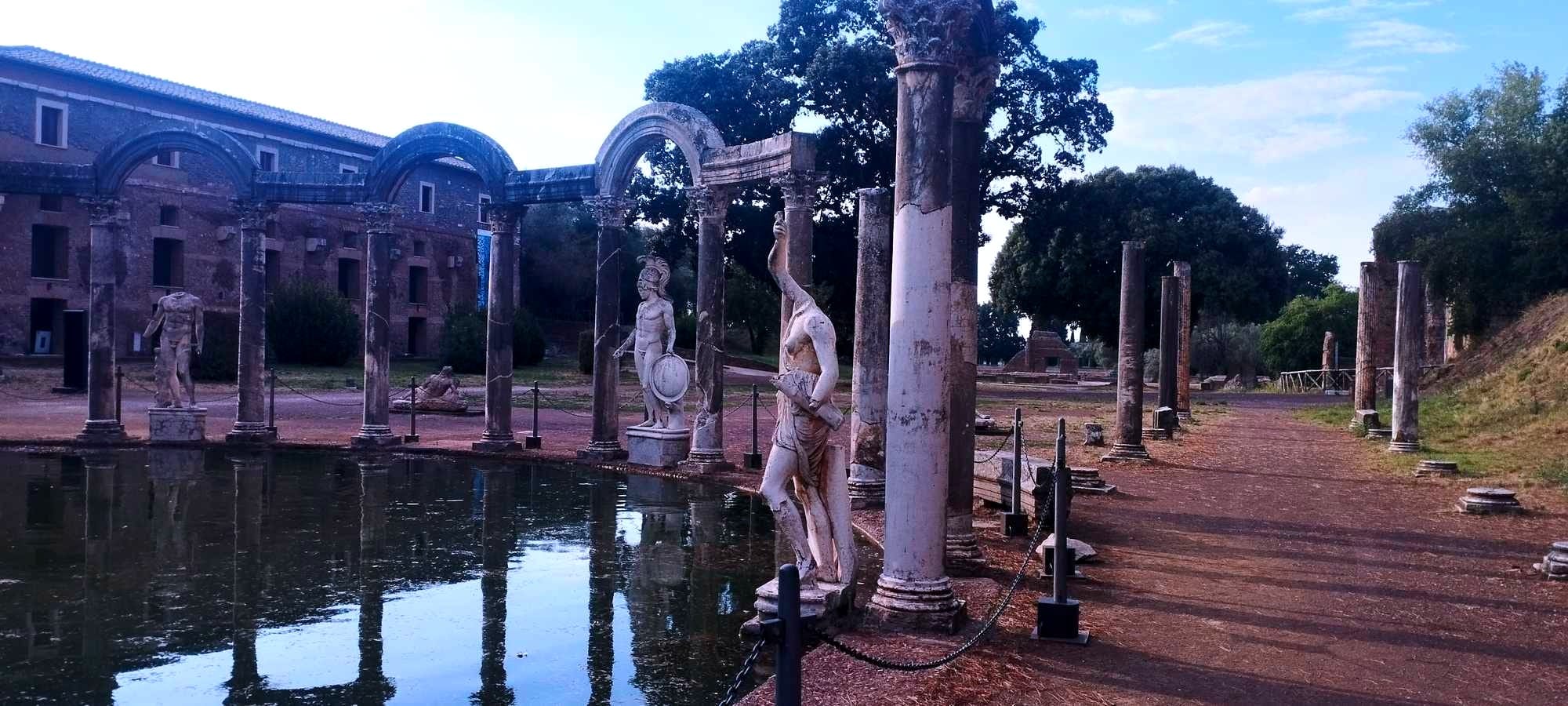
That same sensitivity extended to shopping and acquisition. Roman elite behavior was shaped not only by what one consumed, but by the setting and manner in which goods were obtained. Food eaten in the wrong place, or bought in the wrong way, could damage status. Ideally, provisions came from one’s estate or through acceptable channels rather than through openly commercial behavior. The process of acquiring goods, like the goods themselves, carried social meaning.
So Rome’s fear of luxury was never simply a fear of beautiful things. It was a fear of what private consumption could do to character, hierarchy, and political life. Luxury threatened to turn wealth into social power too openly, to blur distinctions between refinement and vulgarity, and to expose how dependent Roman public life had become on private display. (“Shopping in Ancient Rome. The Retail Trade in the Late Republic and the Principate" by Claire Holleran)
Why Roman writers condemned luxury
Roman writers did not treat luxury as a harmless fondness for beautiful things. They spoke of it as a danger, and often as a danger from within. Again and again, Roman moralising returned to the same pattern: the enemies outside the state might threaten Rome’s frontiers, but luxury, pleasure, and indulgence threatened Rome’s character. In that sense, moral decline could be imagined as an internal war, one fought not against foreign armies but against appetites, habits, and desires that seemed to soften the people who ruled the world.
This is one reason Roman attacks on luxury were rarely narrow. They did not isolate expensive houses, lavish dinners, sexual license, and self-indulgence into separate moral categories. They tended to treat them as related symptoms of the same deeper failure: lack of self-control.
Luxury and lust repeatedly appear side by side in Roman writing, joined by the belief that a person who could not master one appetite would likely fail to master others. The real problem, then, was not simply wealth or pleasure, but surrender to them.
That language was never just personal. Roman moralising was bound up with power. Questions that might now seem political or economic were often cast as moral ones, caused by greed, ambition, weakness, or self-indulgence. Attacks on immorality helped the Roman elite discipline its own members, defend its status, and define who truly belonged within it.
Luxury mattered because it exposed tensions at the heart of Roman hierarchy: who deserved wealth, who used it properly, and who could claim to embody Roman virtue.
Those anxieties became especially visible in discussions of building. Luxurious houses and villas were not condemned merely because they were expensive. They were troubling because they seemed to overturn proper limits. Roman moralists repeatedly described elite houses as too large, too elaborate, too theatrical, too much like palaces.
The rich were accused of reshaping coastlines, extending houses into the sea, creating vast fishponds, and forcing nature itself to yield to display. Such behavior was represented as more than vanity. It was treated as a form of disorder, a confusion of boundaries in which social excess and unnatural excess became mirrors of one another.
That is why Roman attacks on luxurious building so often dwell on confusion, inversion, and novelty. Wealth was essential for success in Roman public life, but there was no guarantee that it would remain in the hands of the “right” people. Moralising writers worried that visible excess revealed an improper distribution of wealth and, with it, a deeper disruption of the social order.
Extravagant building became one of the clearest signs that hierarchy itself was under strain. A house was never just a house. It was an announcement of power, taste, and rank. If that announcement was too loud, too novel, or too obviously dependent on money rather than inherited standing, it became suspect.
Pleasure raised a related but slightly different fear. Buildings at least endured. They could lend distinction to a family and leave behind something visible. Costly pleasures, by contrast, were often represented as pure private waste. Roman moralists returned obsessively to the image of noble fortunes poured away in drinking, feasting, sex, gambling, and self-gratification.
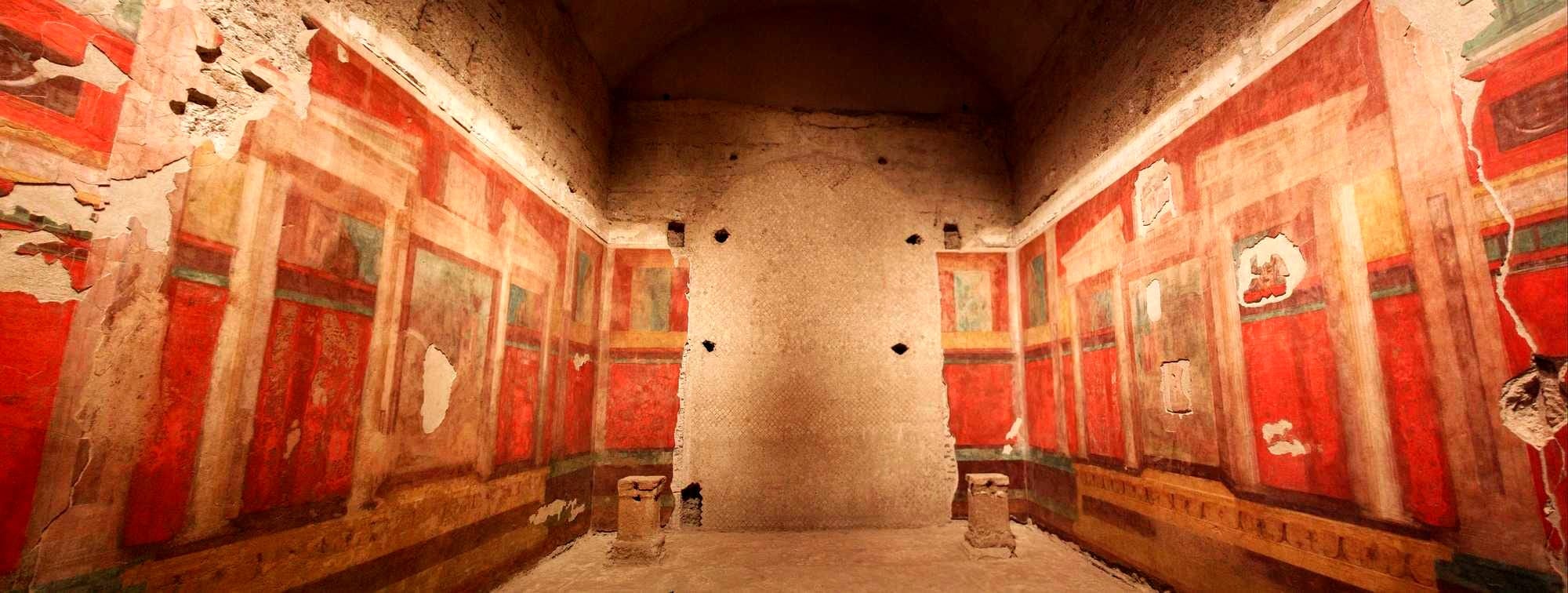
Such pleasures did not build anything, improve anything, or glorify the community. They consumed wealth and left behind only ruin, debt, and shame. In that sense, pleasure frightened Roman writers not simply because it was pleasurable, but because it appeared sterile and self-directed.
This distinction helps explain why Roman moralising often tolerated public magnificence more readily than private indulgence. Money spent on temples, monuments, spectacles, or other civic forms of display could at least be defended as benefiting the state or the people. Money poured into sensual enjoyment was harder to justify.
Roman denunciations of prodigality therefore cast the spendthrift not only as a fool, but as a threat to his family and to Rome’s wider structure of rank and authority. If the upper classes dissolved their fortunes in private pleasure, they also weakened the foundations on which the state rested.
Even here, however, the story was not simple. Roman moralists did not condemn all pleasure equally, nor did they imagine that status could exist without display. The wealthy were expected to live in ways appropriate to their rank. Houses, hospitality, and carefully managed expenditure were part of elite life. What they feared was not comfort in itself, but the loss of measure.
Pleasure became dangerous when it was tied too openly to money, when expense itself became the measure of delight, and when the desire to outshine one’s peers drove luxury into an endless competition of display. At that point, indulgence ceased to be refinement and became a social contagion.
That competitive side of luxury mattered enormously. Roman moralists often portray the luxurious not as people quietly enjoying their wealth, but as people seeking attention through it. Their feasts, houses, furnishings, and pleasures are presented as bids for notoriety, ways of proving superiority over rivals.
Luxury therefore belonged not only to appetite, but to status struggle. It was dangerous because it turned wealth into a weapon in elite competition and threatened to make money, rather than character, restraint, or ancestry, the decisive measure of standing.
Seen this way, Rome’s fear of luxury was never really about objects alone. It was about what those objects revealed and what they made possible. A marble floor, a fishpond, a jeweled cup, an extravagant dinner, a costly pleasure — each could become evidence that desire was escaping control, that social distinctions were blurring, and that Rome’s leaders were being remade by abundance.
Luxury was frightening because it suggested that conquest had not only enriched Rome, but altered it. The empire had brought the world’s riches into the city, and Roman writers could not stop asking what those riches were doing in return. ("The Politics of Immorality in ancient Rome" by Catharine Edwards)
The Lost Ideal of Roman Frugality
Roman writers liked to imagine an earlier Rome shaped by restraint. In that vision, the ancestors lived with sobriety, self-control, and careful management of resources, untouched by the greed and extravagance that later generations would come to condemn. The great turning point, in their telling, came with conquest.
As Rome expanded across the Mediterranean and absorbed the wealth of the East, luxury flowed into the city and frugality began to weaken. What followed, in this moral narrative, was not simply greater prosperity, but corruption: ambition, display, indulgence, and the gradual unraveling of the old discipline that had supposedly made Rome strong.
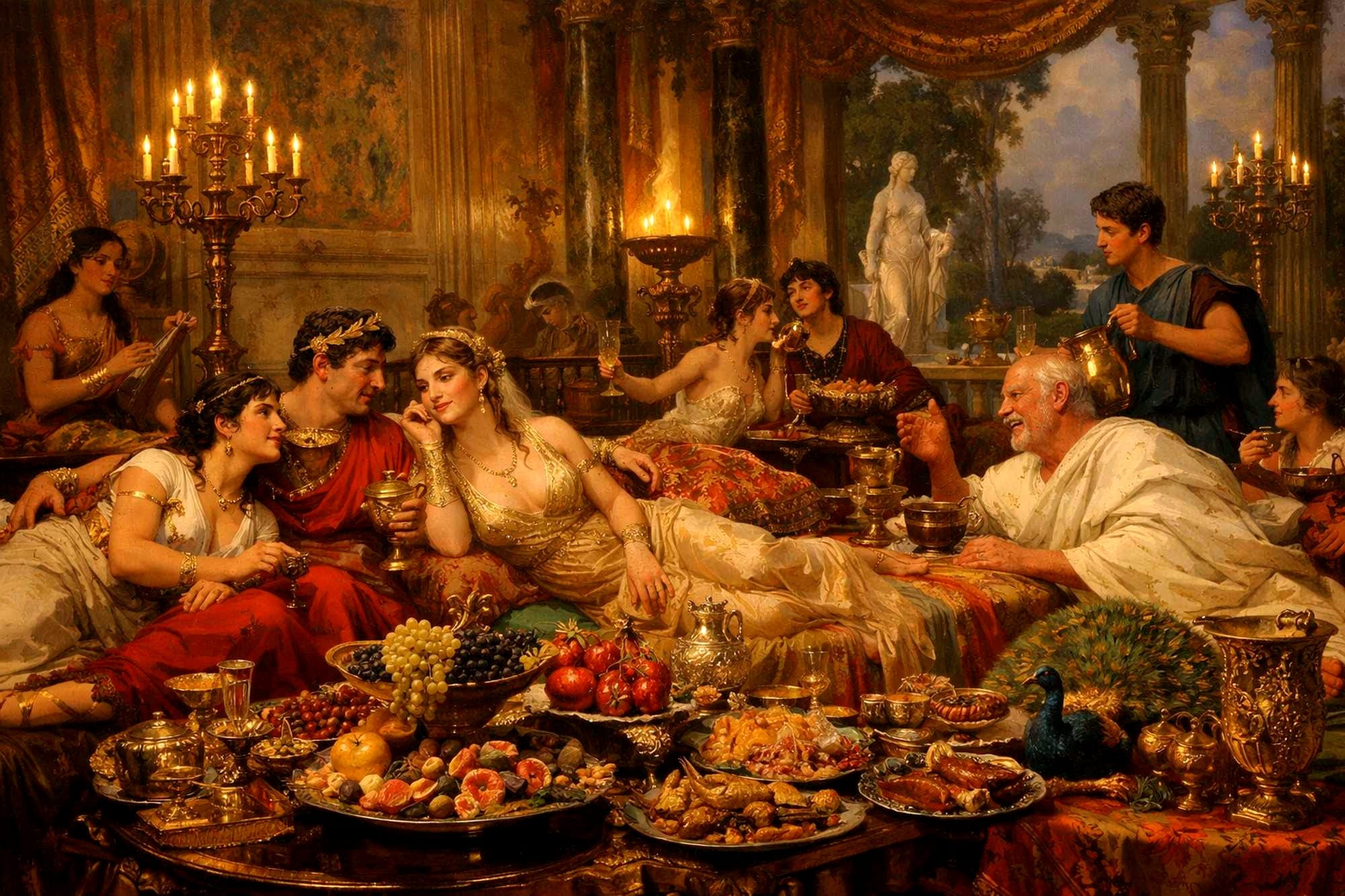
That story mattered enormously in Roman culture, but it should not be taken as simple fact. Modern scholarship treats it less as a transparent account of what “really happened” and more as a revealing form of Roman self-description. The idea of an early Rome defined by frugality, followed by a fall into luxury, was itself a historical construction shaped by later anxieties.
Roman frugality was not some fixed national essence. It was a changing ideal, invoked at different moments for different purposes, especially when writers wanted to explain social tensions, moral unease, or the unsettling effects of wealth. In that sense, the language of frugality and decline tells us less about a lost golden age than about the fears Romans attached to success itself. (“Roman frugality. Modes of moderation from the Archaic Age to the early empire and beyond” edited by Ingo Gildenhrd and Christiano Viglietti)
When Romans Thought Luxury Began to Corrupt Them
Romans did not treat luxury as a private weakness alone. They saw it as a political danger. Extravagance was thought to weaken character, soften discipline, and expose the state itself to decline. In that sense, luxury was both a symptom of success and a threat created by it: wealth had made Rome powerful, but it also seemed to be making Romans less capable of bearing the burdens that power required.
At the heart of this moral imagination stood an ideal of old Rome, summed up in the famous line quoted by Cicero:
“moribus antiquis res stat Romana virisque”
– “the Roman commonwealth stands firm on ancient customs and on men of valour.”
In that vision, Rome’s strength rested not simply on arms or institutions, but on character: austerity, self-restraint, discipline, and fidelity to ancestral ways. Luxury mattered because it seemed to attack that very foundation.
Roman writers repeatedly told the story of decline in similar terms, even if they disagreed on when it began. Livy traced the beginnings of luxury to the return of Manlius Vulso’s army from Asia in 187 BC, bringing with it rich furnishings and a new extravagance in banquets.
Polybius pointed instead to the influx of Macedonian wealth. Sallust made the destruction of Carthage decisive, arguing that once Rome no longer faced a great external rival, greed and ambition grew unchecked. As he put it,
“the fear of the enemy preserved the good morals of the state.”
So long as Rome had something to fear, discipline held. Once that fear disappeared, the old restraints began to weaken.
What unites these accounts is not agreement on chronology, but a shared conviction that conquest had changed Rome itself. Success had filled the city with money, spoils, and imported habits, yet Roman writers often described these gains as morally dangerous. Luxury rarely appears in their accounts as something native. It comes from outside, especially from the East, and enters Rome almost like an invading force. They speak of it in the language of infection, corruption, and assault, as though extravagance were not simply a taste for finer things but an enemy power breaking down the old order from within.
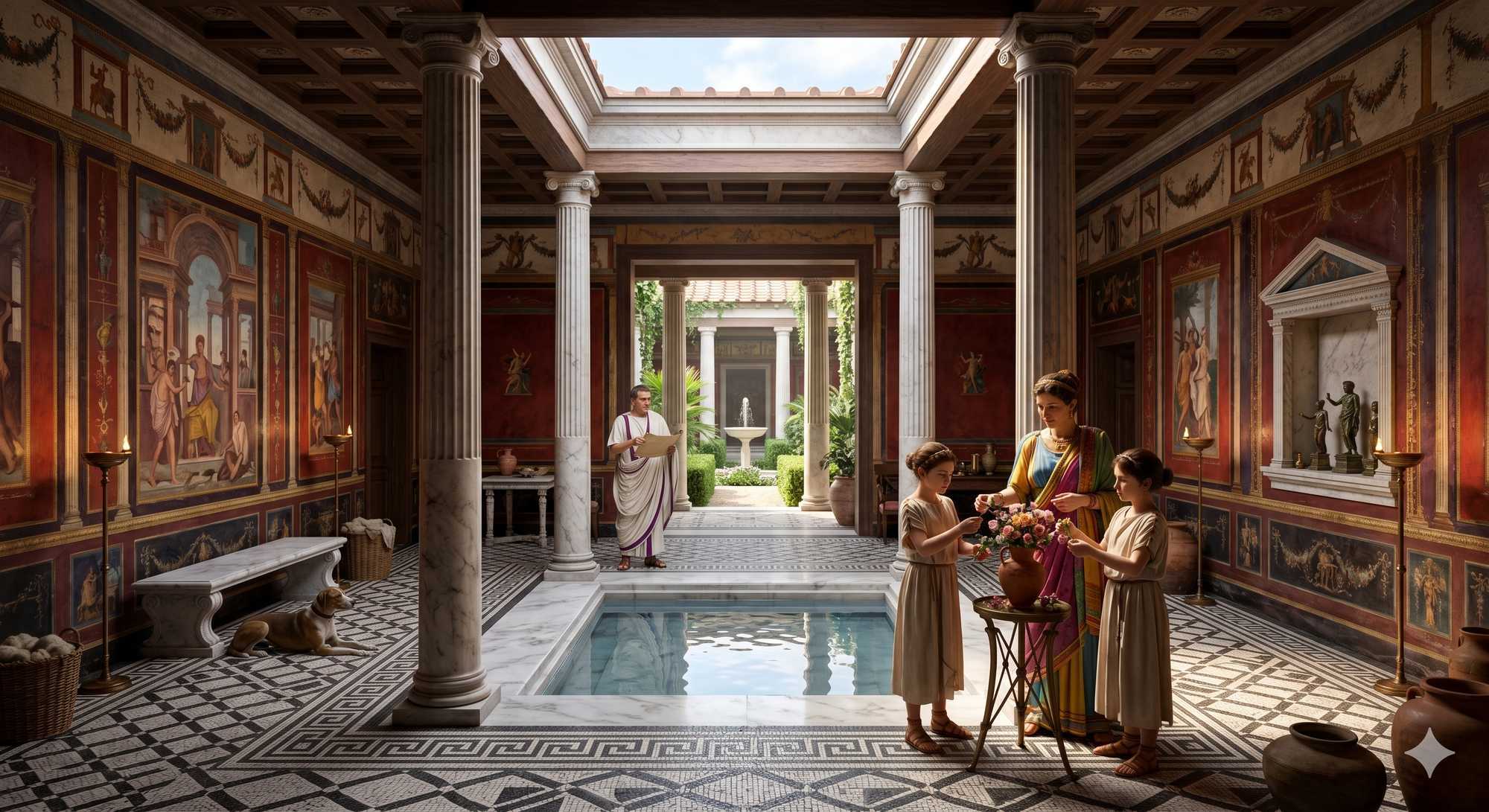
That imagery reveals how deeply the danger was felt. Luxury did not merely decorate Roman life; it threatened to conquer it. The more Rome expanded, the more its writers worried that the riches of empire were undoing the very discipline that had made empire possible in the first place. Prosperity, in this telling, did not simply reward virtue. It tested it, and perhaps destroyed it.
At the same time, Roman thought drew an important distinction. Private luxury was condemned because it served personal pleasure alone, while public magnificence could still be praised. Wealth spent on temples, public buildings, ceremonies, and games might honor the community; wealth poured into banquets, indulgence, and private display was another matter.
Rome could admire splendor in public while denouncing extravagance at home, and this was not seen as a contradiction. The difference lay in whether wealth served the commonwealth or the appetites of the individual.
That is why luxury frightened Roman writers so deeply. It was not simply expensive. It was private, weakening, morally corrosive, and often imagined as foreign. It seemed to turn the rewards of victory into the seeds of decline and to expose the unsettling possibility that Rome might not be ruined by its enemies, but by its own success. ("Fighting Hydra-Like Luxury" by Emanuela Zanda)
Roman fear of luxury was never just a complaint about rich food, fine houses, or expensive objects. It was a deeper anxiety about what abundance was doing to power, discipline, and identity. Wealth had made Rome great, but Roman writers could not shake the suspicion that it had also made Romans softer, greedier, and less equal to the burdens of empire. In that fear lies one of the central paradoxes of Roman history: the same success that elevated Rome seemed, in the moral imagination of its own elite, to contain the possibility of its undoing.

About the Roman Empire Times
See all the latest news for the Roman Empire, ancient Roman historical facts, anecdotes from Roman Times and stories from the Empire at romanempiretimes.com. Contact our newsroom to report an update or send your story, photos and videos. Follow RET on Google News, Flipboard and subscribe here to our daily email.
Follow the Roman Empire Times on social media: