
Augustus’ Secret Syracuse: The Mystery of the Emperor’s Private Room
Augustus called one private retreat “Syracuse,” a strange nickname that opened onto Archimedes, conquest, tyranny, Sicily, and imperial memory.

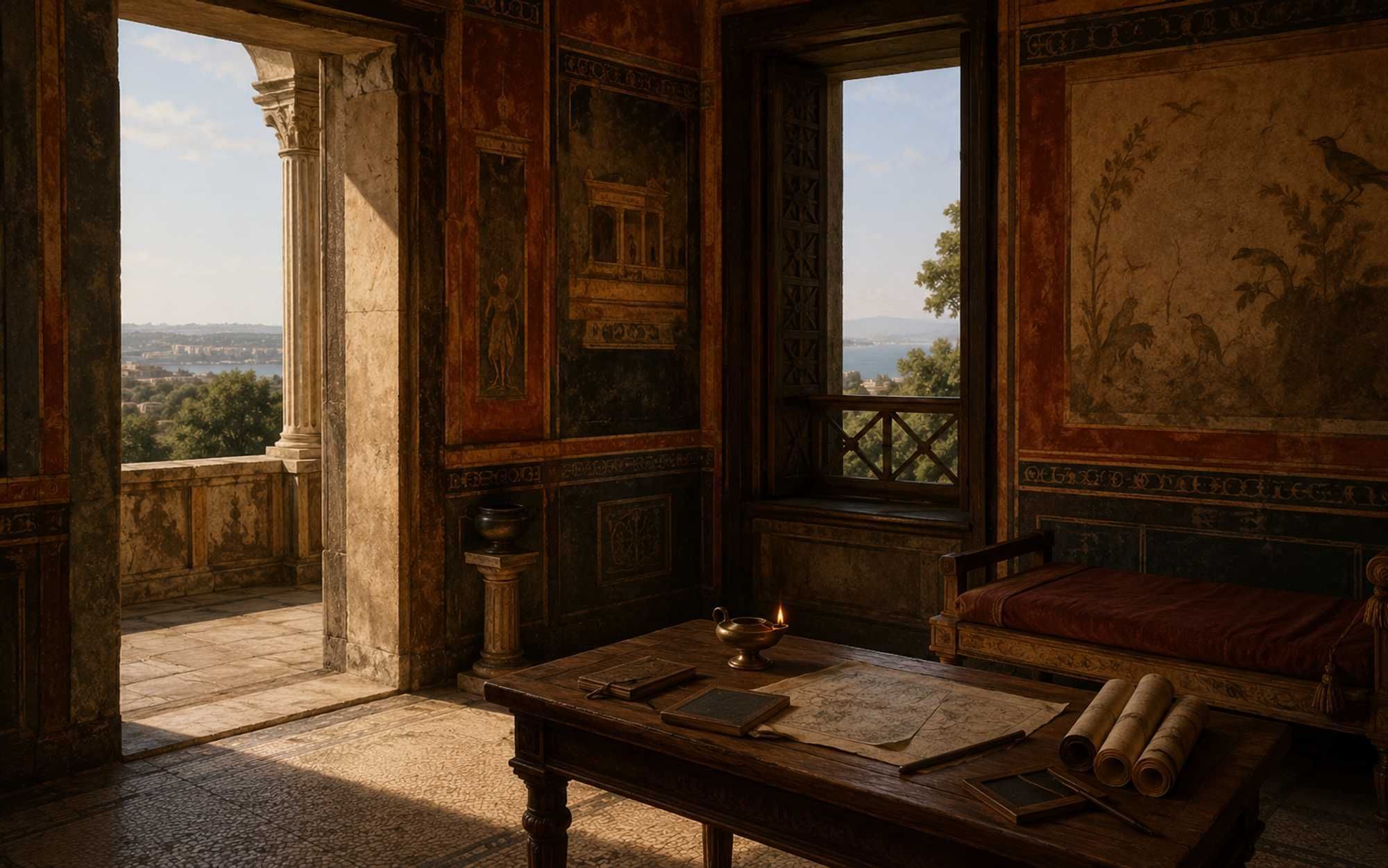
Some details in Roman history survive almost by accident, yet they open doors into much larger worlds. One of them is a private nickname: “Syracuse.” Suetonius tells us that Augustus, the man who reshaped Rome after civil war, used this name for a place where he could withdraw from interruption. It sounds like a small domestic habit — almost a joke. But why would Rome’s first emperor name his private retreat after a Greek city in Sicily?
The Strange Name in Suetonius
Suetonius gives the detail in the part of the Life of Augustus devoted to the emperor’s private life. When Augustus wanted to do something secretly or without interruption, he had a special place, set apart and high up, which he called “Syracuse” and his technophuon.
“If ever he proposed to do anything secretly or without interruption, he had a particular place high up, which he called ‘Syracuse’ and his technophuon.” Suetonius, Life of Augustus 72.2
The second name is difficult. The Greek term is rare, and its exact manuscript form is uncertain. But it seems to mean something like a workshop, laboratory, or “scheme-generating” place. The first name is clearer and stranger. Syracuse was a real city, but here it became the name of an imperial retreat.
The simplest explanation points to Archimedes. Syracuse was his city. He was remembered as the famous mathematician and inventor whose machines helped defend it during the Roman siege of 212 BC. Ancient stories imagined him absorbed in his diagrams while the city fell around him. He was the man so taken up with thought that interruption became almost an attack.
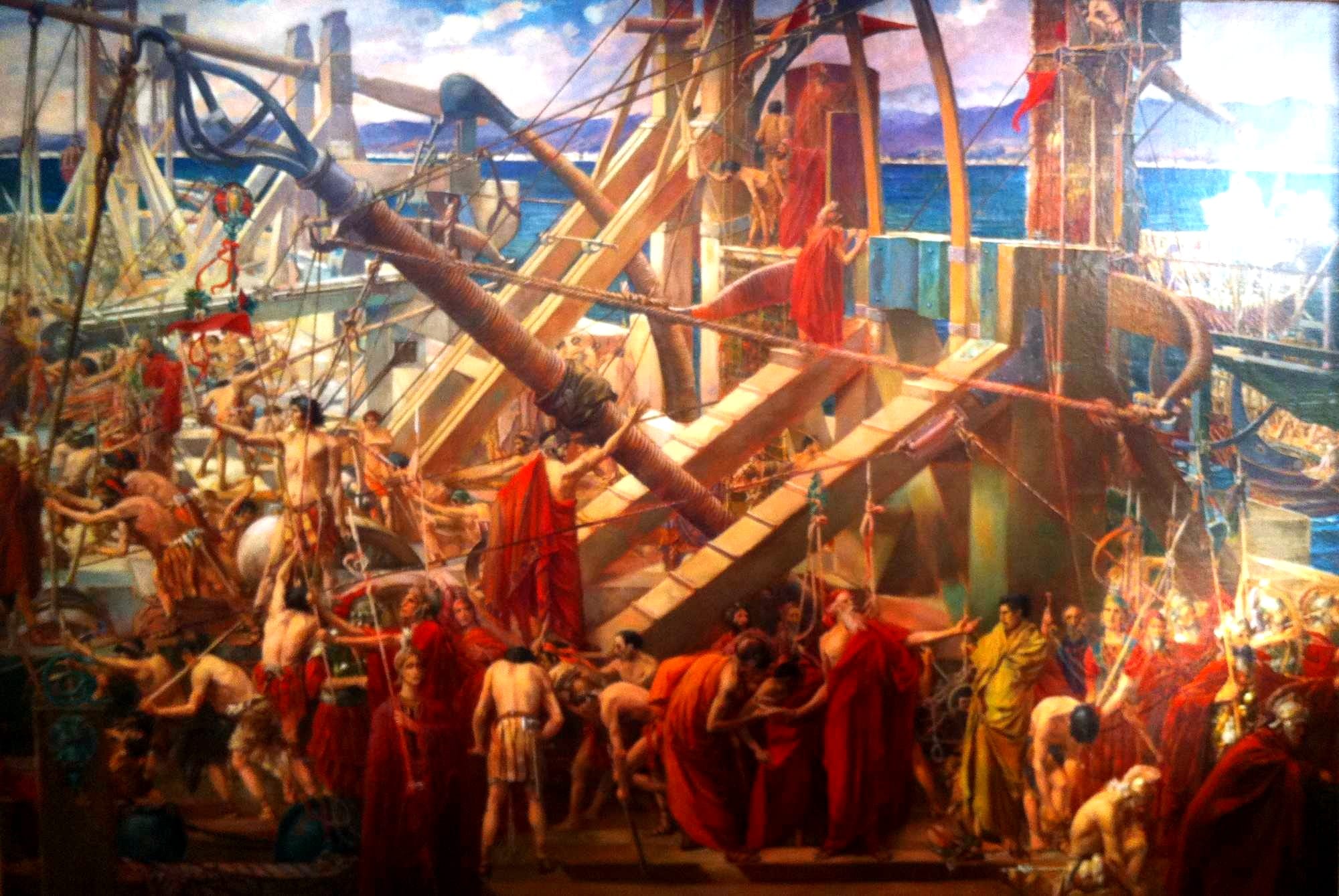
In that sense, Augustus’ “Syracuse” may have worked like an elegant “do not disturb” sign. The ruler of the Roman world could disappear into his private workshop and, for a moment, play the part of Archimedes: the thinker, planner, and inventor hidden away from noise.
But the name did not stop there. Syracuse was too heavy with memory to be reduced to one man.
A Room No One Can Safely Find
Modern visitors to the Palatine may be tempted to identify Augustus’ “Syracuse” with a real room in the so-called House of Augustus. A small painted upper chamber has sometimes been presented as the emperor’s study. The idea is attractive, but certainty is impossible. The ancient wording does not prove that the place was inside his main residence, and Suetonius’ language may suggest that Augustus “crossed over” somewhere else.
The room itself may never be located. That uncertainty is not a failure; it may be part of the point. What survives most clearly is not a floor plan, but a name. “Syracuse” becomes an imaginary location, a place on Augustus’ personal map. It was private, but not empty. It was hidden, but not meaningless.
Roman elite culture gave importance to such spaces. Private rooms could be places for reading, writing, thinking, pleasure, secrecy, philosophical retreat, or escape from daily business. A named room could say something about its owner. It could create a small world inside a larger house. In Augustus’ case, that small world had the name of a city.
To go to “Syracuse” was therefore almost to make a miniature journey. The emperor did not simply withdraw from interruption. He entered a symbolic place — distant and nearby, Greek and Roman, conquered and admired, playful and dangerous.
Why Syracuse?
Syracuse was not just another Greek city. It had once been one of the great powers of the western Mediterranean. It had defeated Athens’ Sicilian expedition, faced Carthage, produced tyrants, sheltered luxury, and later fallen to Rome. In Roman memory, it was a place where empires rose and declined, where Greek splendour met Roman conquest.
Ancient writers described Syracuse with extraordinary admiration. Cicero called it the greatest of Greek cities and the loveliest of all cities. Theocritus had called it the “marrow” of Sicily, the choicest part of the island. Yet the city also carried darker associations: tyranny, guarded power, luxurious excess, and the uneasy afterlife of conquest.
Its geography added to the symbolism. Syracuse belonged to Sicily, an island close to Italy but separated by sea. It was near enough to Rome to seem almost attached to it, but far enough to feel like another world. The city itself had its island-like heart, Ortygia, joined to the rest by a narrow connection. Syracuse could suggest retreat, distance, protection, and a place that was both connected and separate.
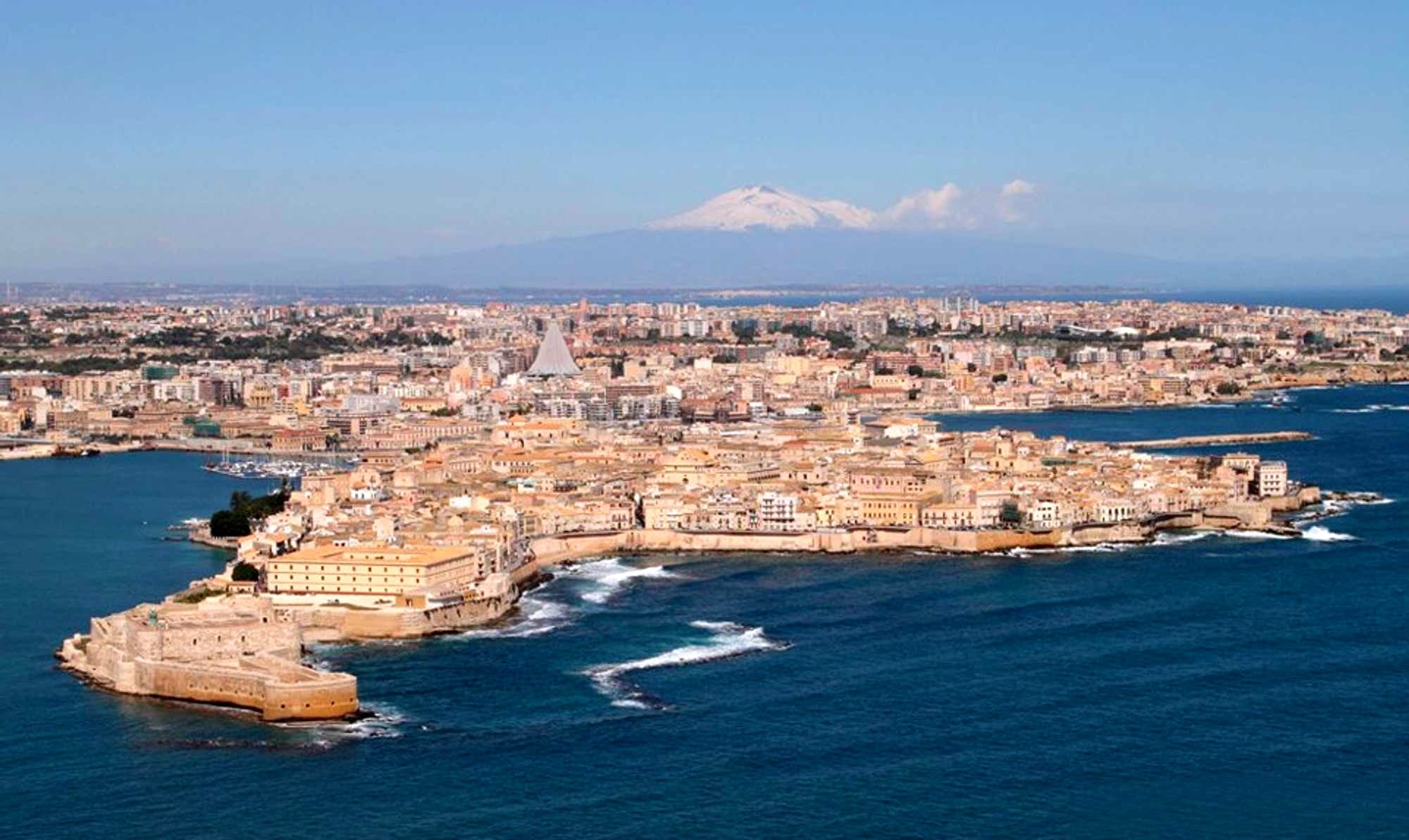
That made it a fitting name for an imperial hideaway. Augustus’ “Syracuse” could be imagined as a little island inside Roman power: close to the centre, yet apart from it; domestic, yet full of history; private, yet looking outward onto the Mediterranean past.
Archimedes, Marcellus, and the Roman Unease of Conquest
The Archimedes association is charming, but Syracuse also recalled Marcellus, the Roman general who captured the city in 212 BC. Ancient accounts lingered over the emotional weight of that conquest. Marcellus was remembered as the Roman victor who looked upon a great Greek city and understood that Rome was destroying something magnificent.
The conquest of Syracuse became a story of victory mixed with cultural unease. Rome gained the city, but the capture brought Greek treasures to Rome and raised uncomfortable questions about art, plunder, admiration, and power. Marcellus’ spoils were later remembered both as a civilizing moment and as the beginning of a more acquisitive Roman relationship with Greek culture.
Archimedes and Marcellus were therefore linked in the Roman imagination. One represented Greek genius, invention, abstraction, and the life of the mind. The other represented Roman conquest, military success, and the uneasy admiration of the victor for what he had overcome. A Roman ruler thinking of Syracuse could hardly avoid both figures.
Augustus’ private name may have allowed him to hover between them. As Archimedes, he could imagine himself as the absorbed planner in a workshop. As Marcellus, he could stand in the Roman tradition of conquest softened by cultural reverence. Each role was attractive. Each was also dangerous. The conqueror might admire what he has conquered, but conquest remains conquest. The thinker might retreat from the world, but Augustus could never truly cease to be ruler of it.
The Shadow of Dionysius
Syracuse also belonged to the memory of Dionysius, the famous tyrant. That association made the name more troubling. Dionysius was linked with guarded spaces, suspicion, fortified rule, and the fear that surrounds absolute power. Ancient stories about Syracusan tyrants often turned private rooms, palaces, towers, islands, and hidden places into symbols of political anxiety.
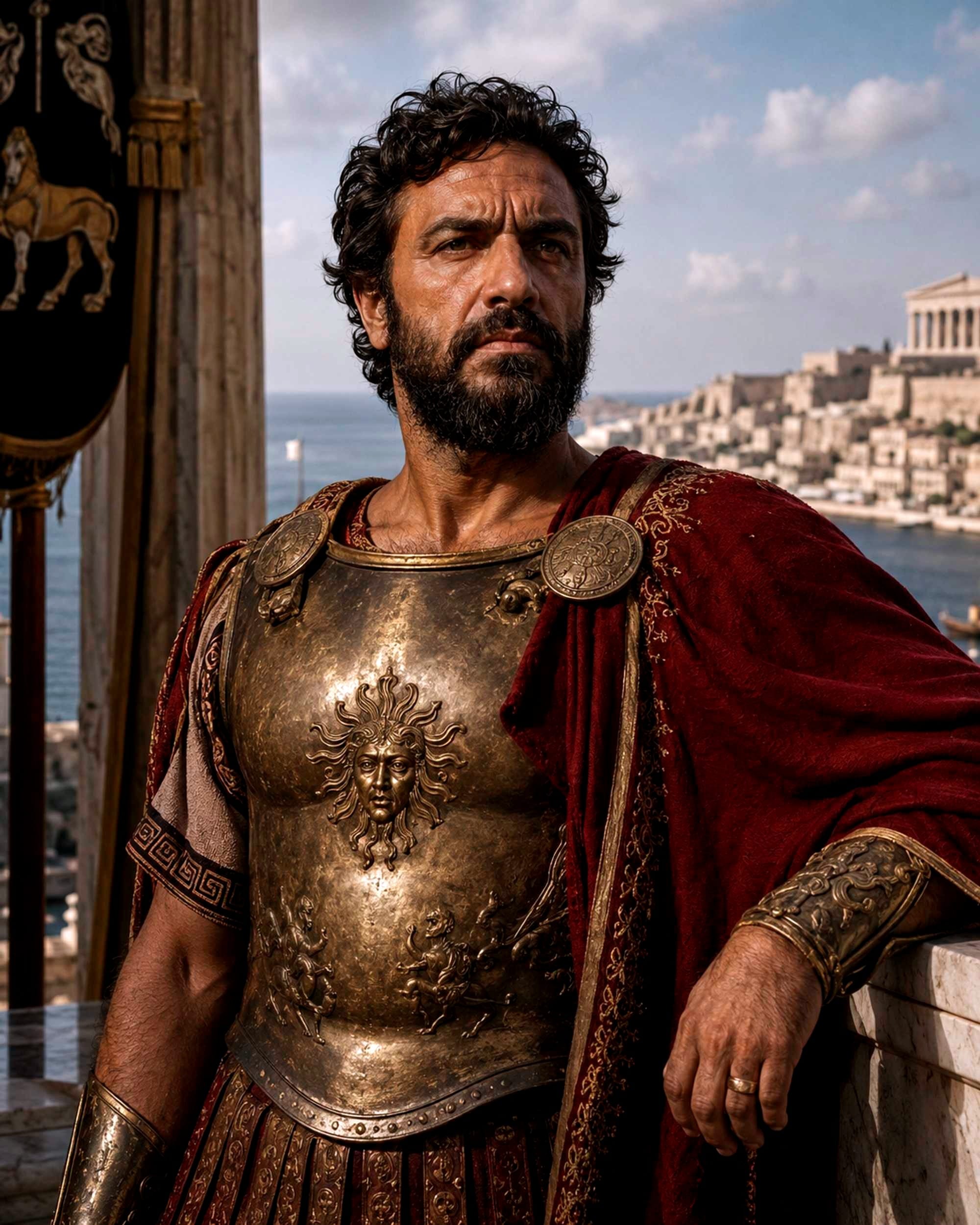
That matters because Augustus’ power always had to avoid the appearance of tyranny. He held a position no Republican magistrate had ever held, but he did not call himself king. He presented himself as restorer, citizen, princeps, and guardian of order. The language of monarchy was dangerous. The memory of tyrants was worse.
A private retreat called “Syracuse” therefore carried a risk. The name could point to Archimedes’ workshop, but it could also whisper of Dionysius’ guarded palace. It could suggest a thinker’s study, but also a tyrant’s hidden room.
The ambiguity may have been part of the appeal. Augustus often succeeded by letting dangerous meanings remain present but softened, playful, deniable, or absorbed into older Roman forms. His “Syracuse” may have been exactly that kind of space: a room where the emperor could seem like an inventor rather than a monarch, a private man rather than a tyrant, a playful imitator rather than a dangerous ruler.
Sicily in Augustus’ Own Memory
The name also touched Augustus’ own life. Sicily was not merely a literary landscape from the Punic Wars. It had been part of his rise to power. The war against Sextus Pompeius made Sicily central to the struggle for control of Rome. Sextus used the island and the sea routes around it to threaten grain supplies and challenge Octavian’s position in the West. Victory in Sicily helped remove one of the most serious obstacles from Octavian’s path.
After that victory, Syracuse itself was drawn more tightly into Roman control. Veterans were settled there, and the city’s status changed. Later, in 21 BC, Augustus visited Syracuse and began a symbolic restoration of the city. That restoration should not be treated as simple generosity.
It belonged to the long Roman pattern of conquering, possessing, admiring, and then “restoring” famous Greek cities. To restore Syracuse was also to display power over Syracuse.
The city may also have carried family echoes through the Marcelli. The great Marcellus who captured Syracuse belonged to the ancestral memory of the family into which Augustus’ sister Octavia had married. The young Marcellus, once a dynastic hope for Augustus, brought that name into the centre of Augustan family politics. This connection should not be overstated, but it adds another possible layer to the Sicilian memory surrounding Augustus.
Syracuse therefore touched several parts of Augustus’ world: his civil-war past, his relationship with conquered Greek culture, his dynastic imagination, and his ability to turn restoration into rule.
The City with a View
Suetonius says Augustus’ place was in edito — high up. That detail may matter. Syracuse itself could be imagined as a place of view and distance. Sicily was often treated as a kind of watchtower in the Mediterranean, a place from which Italy, Greece, and Africa could be conceptually surveyed. Ancient stories played with the visibility of ships, straits, islands, and coastlines.
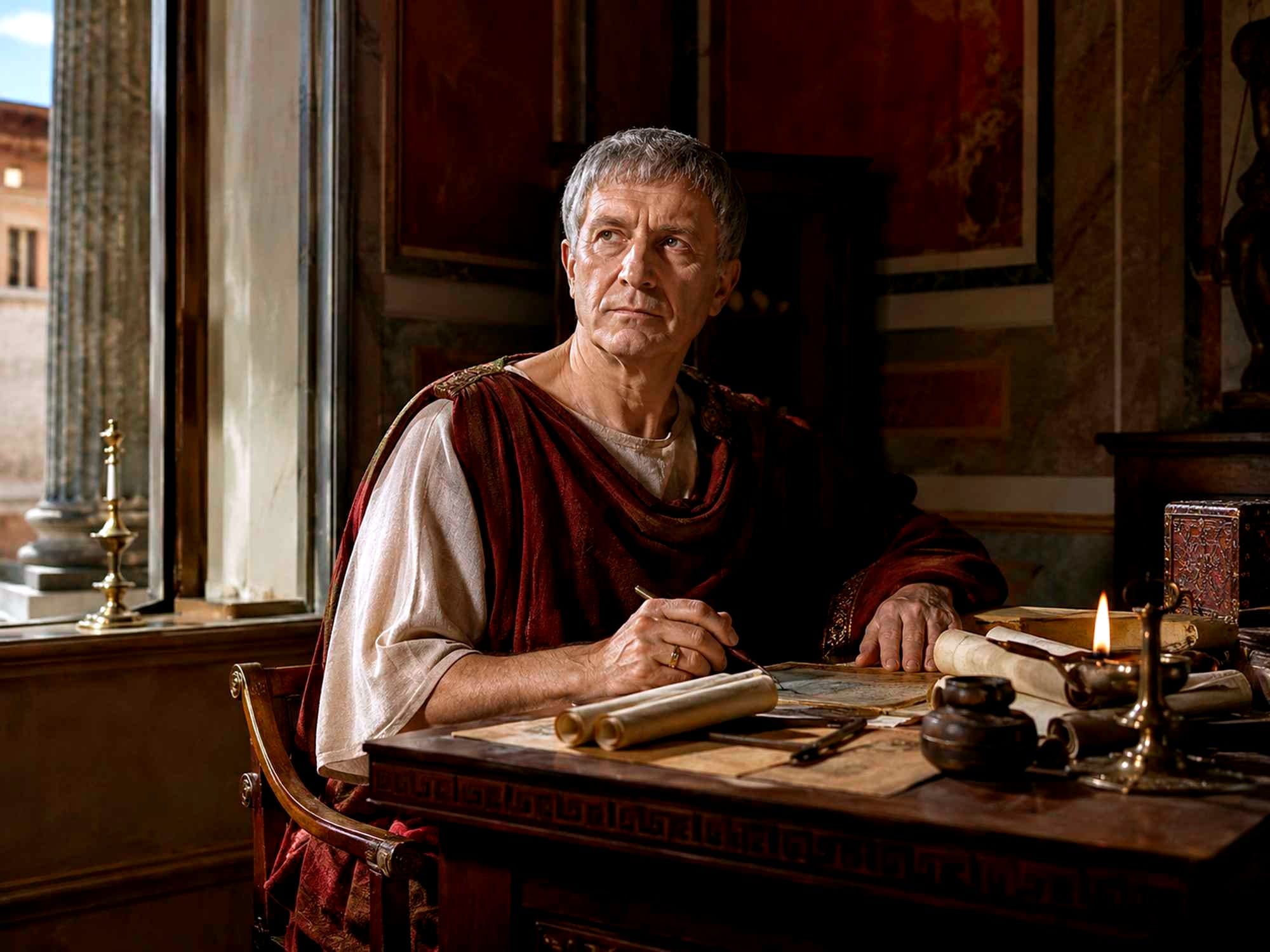
A high “Syracuse” in Rome could therefore suggest not only a place of hiding, but a place of looking. A private retreat is usually imagined as inward-facing. But Augustus’ “Syracuse” may have been the opposite as well: a room apart from the world, yet symbolically looking out over it.
That is why the modern identification with a windowless Palatine chamber is not fully satisfying. The name suggests more than enclosure. It suggests perspective.
From “Syracuse,” Augustus could be imagined as withdrawing, but also surveying. That double movement suits him: the ruler who steps away from interruption, yet never truly leaves power behind; the private man whose solitude remains imperial.
A Joke, a Mask, or a Workshop?
There is still one possibility that should not be lost: the name may have been funny. Augustus was remembered for jokes, verbal play, and deliberately homely behaviour. Calling his private retreat “Syracuse” may have been a small performance of wit, as if he were saying he was just “crossing over” to Sicily when he slipped away from business.
The second name, technophuon, strengthens that possibility. It sounds like a playful Greek label for a workshop of schemes. Yet jokes around Augustus were rarely meaningless. They could soften the reality of power. They could make something grand appear small. They could turn a ruler’s private planning into something almost domestic, experimental, or amateur.
This is the brilliance of the name. “Syracuse” could be serious and unserious at once. It could be Archimedes’ study, Marcellus’ conquered city, Dionysius’ guarded retreat, Sicily’s civil-war memory, and Augustus’ own little joke about stepping aside to think.
The emperor did not need the name to have one meaning. Its power came from the fact that it had too many.
The Little Room with the Large Past
Augustus’ “Syracuse” was more than a study, if it was ever a study at all. It was a tiny theatre of imperial imagination. Behind its closed doors, the ruler of Rome could appear to become private, playful, thoughtful, or withdrawn. Yet the name he gave that retreat pulled in the whole Mediterranean past.
Syracuse carried Archimedes and his diagrams, Marcellus and his conquest, Dionysius and his tyranny, Sicily and its uneasy closeness to Rome, Sextus Pompeius and the civil wars, Greek brilliance and Roman power. It was a city conquered by Rome but never emptied of meaning.
That is why the detail is so fascinating. Augustus’ privacy was not simple. Even when he stepped out of sight, the language around him created images of rule. His secret room did not erase empire. It miniaturized it.
The most powerful man in Rome went to “Syracuse” to be alone. But the name made sure he never went there without history. ("Augustus and 'Syracuse.' " by Emily Gowers)
About the Roman Empire Times
See all the latest news for the Roman Empire, ancient Roman historical facts, anecdotes from Roman Times and stories from the Empire at romanempiretimes.com. Contact our newsroom to report an update or send your story, photos and videos. Follow RET on Google News, Flipboard and subscribe here to our daily email.
Follow the Roman Empire Times on social media: