
Sidonius Apollinaris: A Life Told Through Letters
Sidonius Apollinaris lived through the passage from Roman to Visigothic Gaul. His letters preserve a world of villas, bishops, Gothic kings, Roman law, exile, and the fight to keep Latin culture alive.

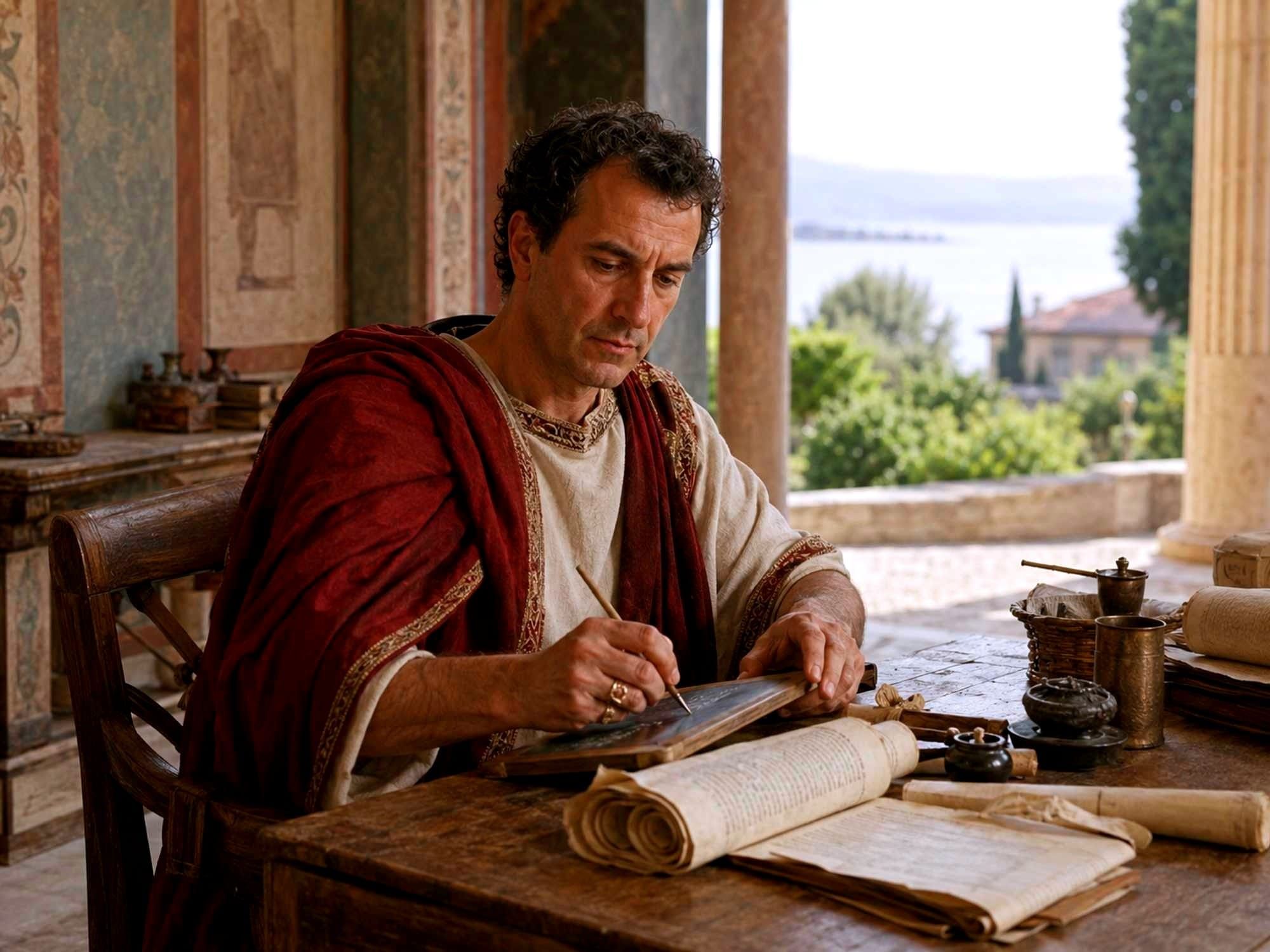
Sidonius Apollinaris was born under the Roman Empire around 430, probably at Lyons. He died sometime between 480 and 490 as a subject of Euric, king of the Visigoths. He was a Gallo-Roman aristocrat, the son-in-law of an emperor, a poet, an officeholder, a landowner, bishop of Clermont, exile, and witness to the passage from Roman to Visigothic Gaul.
As a young man, Sidonius married Papianilla, daughter of Avitus, who became western emperor in 455. Through that marriage, he acquired Avitacum, an estate near Clermont in the Auvergne, which became his “second homeland.” His surviving letters fill nine books. The first seven appeared in 477, and two more were added later.
The letters are among the most important sources for fifth-century Gaul, but they were reworked for publication. They were not arranged in strict chronological order, and they often give only incidental dating clues. They belong to a literary genre, not to a private diary.
A Gallo-Roman Aristocrat
Sidonius came from the high aristocracy of Roman Gaul. His father and grandfather had both held the office of praetorian prefect of Gaul, governing western imperial territory from Britain to Spain. In 452, Sidonius married Papianilla, daughter of Eparchius Avitus, another praetorian prefect of Gaul and later emperor.
His public life joined literature and politics. A panegyric for Avitus in Rome brought him honor. After Avitus fell, Sidonius returned to Gaul. In 458, he composed a panegyric for Majorian. In 468, after leading a delegation of the Arverni to Rome, he delivered a panegyric for Anthemius and received the urban prefecture and patrician rank.
After Clermont was handed over to the Visigoths, Sidonius was exiled to Liviana, near Carcassonne, and later appeared at Euric’s court in Bordeaux. He eventually returned to Clermont as bishop. His life moved from imperial Rome to Gothic rule, from aristocratic office to episcopal leadership, and from public panegyric to letters written after political defeat.
Letters, Not a Diary
The opening of the letter collection explains the project. Constantius had urged Sidonius to
“correct, revise, and bring together in one volume”
the letters that
“matters, men, and times”
had drawn from him.
Sidonius places the collection in a Roman literary line. The path before him had been traced by
“Symmachus of the ample manner”
and
“Pliny of the perfected art.”
Cicero is treated as too large a model to approach easily:
“Of Cicero as letter-writer I had best be dumb.”
The letters were therefore arranged and revised. They should not be read as simple notes in the order in which events happened. The book as a unit matters. Book 2 begins with political danger and then moves into villa leisure. Books 7 to 9 hold the hardest material: Clermont, betrayal, exile, Visigothic rule, and the weakening of Roman power.
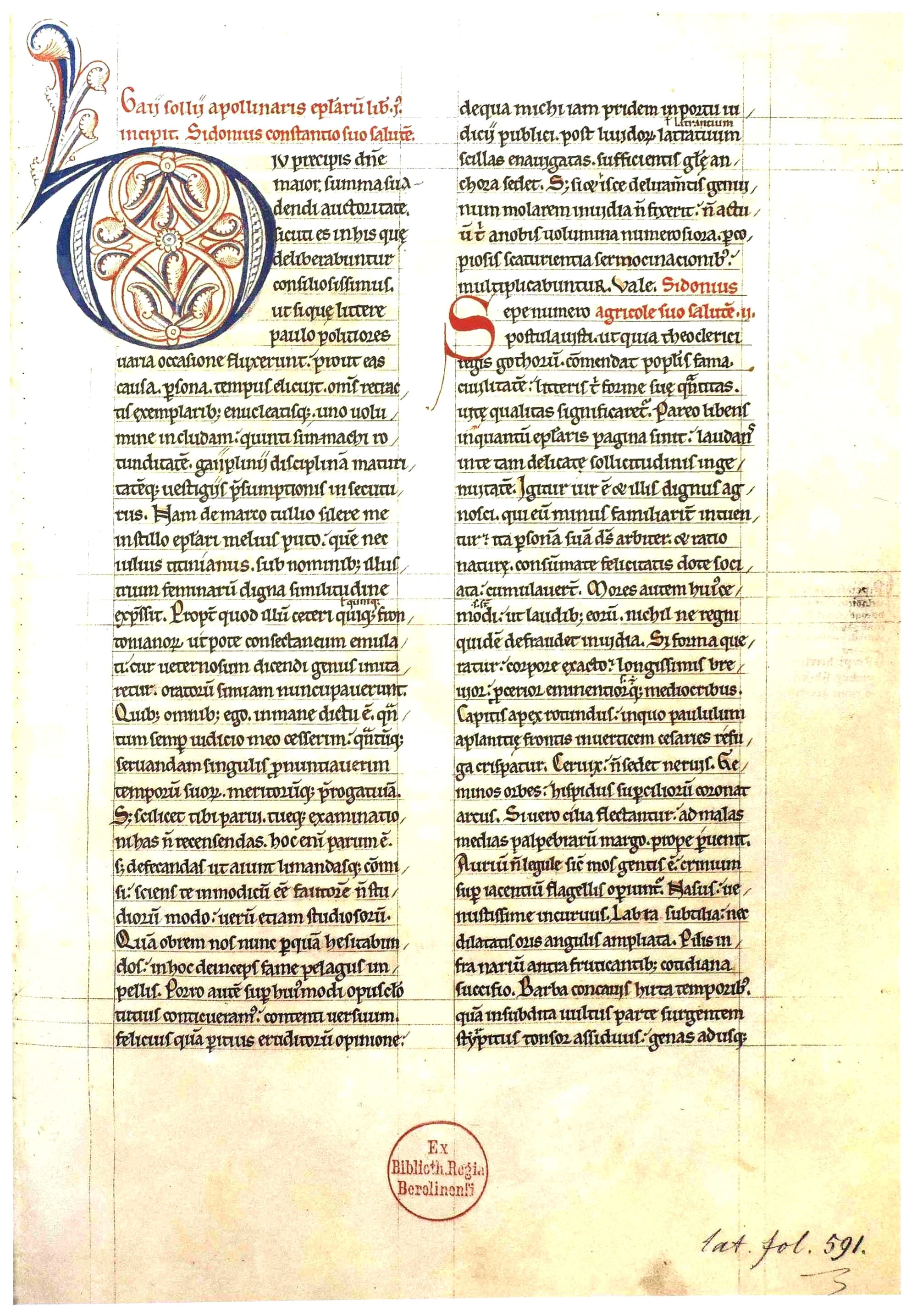
The refusal to write history is part of the same caution. When Sidonius is asked to turn from letters to history, contemporary history is treated as dangerous ground. Falsehood would be shameful, while truth could bring danger. Writing about good men brings little gratitude; writing about infamous men brings offence.
Rome and the Duties of an Aristocrat
On his way to Rome, Sidonius writes to Eutropius and urges him to leave rural ease for public service. Rome is not treated as foreign territory for a man of senatorial descent. It is
“the abode of law,” “the training-school of letters,” “the fount of honours,” “the head of the world,” and “the motherland of freedom.”
Rome is also
“the city unique upon earth, where none but the barbarian and the slave is foreign.”
The line places Roman identity in law, letters, honor, liberty, and public life. The rebuke is direct. Eutropius should not bury himself among
“cow-keeping rustics”
and
“grunting swineherds.”
Sidonius tells him that ease has weakened his mind, then asks:
“Is it a less duty in a man of your descent to cultivate himself than his estate?”
The letter presents noble life as more than landholding. Vineyards, granaries, and herds are not enough. A Roman aristocrat must cultivate himself, seek public service, and connect birth with education and office.
A Gothic King Seen Through Roman Eyes
One early letter describes Theodoric II, king of the Visigoths. Agricola, the addressee, was the son of Avitus and Sidonius’ brother-in-law. The Gothic settlement in Aquitaine had already existed for more than a generation when the letter was written.
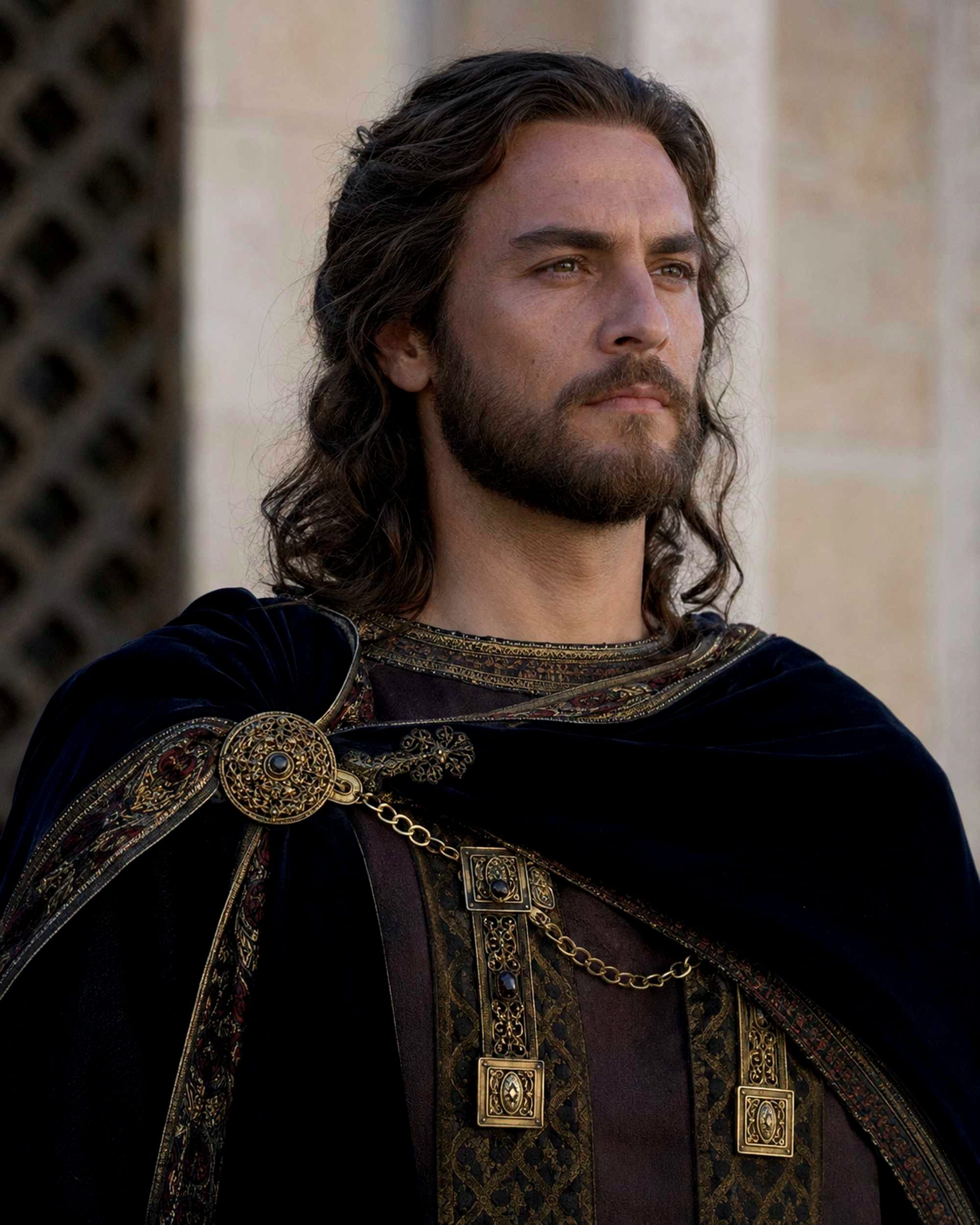
Theodoric is introduced as
“a man worth knowing.”
The portrait begins with his body: height, head, hair, eyes, nose, lips, beard, skin, shoulders, arms, chest, waist, back, thighs, knees, ankles, and feet. The letter then moves from appearance to conduct. Before daybreak, Theodoric attends the service of his priests. He hears envoys, receives petitions, inspects the treasury or stable, hunts, eats, plays, and returns to government business.
Sidonius also describes the king’s meals.
“The board does not groan beneath a mass of dull and unpolished silver.”
The weight lies
“rather in the conversation than in the plate.”
At table, there is
“elegance of Greece, good cheer of Gaul, Italian nimbleness,”
public dignity, private service, and
“the discipline of a king’s house.”
The portrait remains a letter, not a history. Sidonius stops himself:
“I never promised a whole chapter on the kingdom, but a few words about the king.”
His aim was
“to write a letter, not a history.”
When Roman Law Gave Way to Gothic Power
Book 2 opens with Auvergne in trouble. Sidonius writes to Ecdicius and attacks Seronatus, a Gallic official connected with Gothic power. Seronatus is presented as
“This Catiline of our day,”
a destructive figure inside the Roman world.
The accusations are fierce. Seronatus is charged with cruelty, greed, theft, corruption, and contempt for Roman order. His actions are
“filling the woods with dangerous fugitives from the estates, the churches with scoundrels, the prisons with holy men.”
He
“cries the Goths up and the Romans down.”
He
“tramples under foot the Theodosian Code to set in its place the laws of a Theodoric.”
The appeal ends in urgency:
“Our people are at the last gasp; freedom is almost dead.”
If the state cannot help, and if Emperor Anthemius is without resources, the nobility must follow Ecdicius and choose whether to give up
“their country or the hair of their heads.”
Seronatus stands at the point where Roman law, Gothic authority, local elites, and Auvergne’s freedom meet. Book 2 is a book of leisure, but it begins with political alarm. The quiet leisure of the following letters is framed by the threat that opens the book.
Avitacum, Sidonius’ Roman Retreat
After Seronatus, Book 2 turns to Avitacum. The estate stood near present-day Aydat in Auvergne, southwest of Clermont-Ferrand. Its name came from Avitus, Papianilla’s father. The estate reached Sidonius through marriage, either as dowry or inheritance.
Sidonius presents the estate through heat, escape, architecture, water, and social display. The letter to Domitius begins with summer discomfort.
“The whole world glows.”
The snow melts on the Alps, the earth is seamed with heat-cracks, the streams barely move, and the water “boils.” Avitacum offers relief from that heat.
The estate is also dear because of Papianilla. Sidonius describes Avitacum as
“a name of sweeter sound in my ears than my own patrimony because it came to me with my wife.”
The wife’s estate is preferred over the father’s estate, while the letter also presents marital harmony.
The villa includes baths, rooms, water channels, lake views, shade, fishing, birds, games, and places for guests. The bath receives detailed attention. The hot bath is close to the wooded slope, so cut timber can slide almost by its own weight toward the furnace. Hot water presses through
“sinuous lead pipes”
and issues
“with a sobbing sound.”
The piscina receives water from the hill through channels that curve around the basin. The water comes through six pipes ending in lions’ heads, which seem to show
“real fangs, authentic fury of eyes, indubitable manes.”
When people stand there together, the noise of falling water forces ordinary conversation into
“an amusing air of secrecy.”
The portico commands the lake. The dining room opens toward the water and has almost the whole lake in view. From the table, the guest can watch fishermen row out, spread nets with cork floats, or set lines for trout. The description moves like a tour. The guest is led through bath, lunch, siesta, and afternoon at the lake.
The sounds of the estate are also listed: cicalas at noon, frogs in the evening, swans and geese at night, cocks before dawn, rooks greeting the morning, nightingales in the bushes, and swallows under the eaves. These sounds are not separate from the villa. They belong to the same presentation of cultivated retreat.
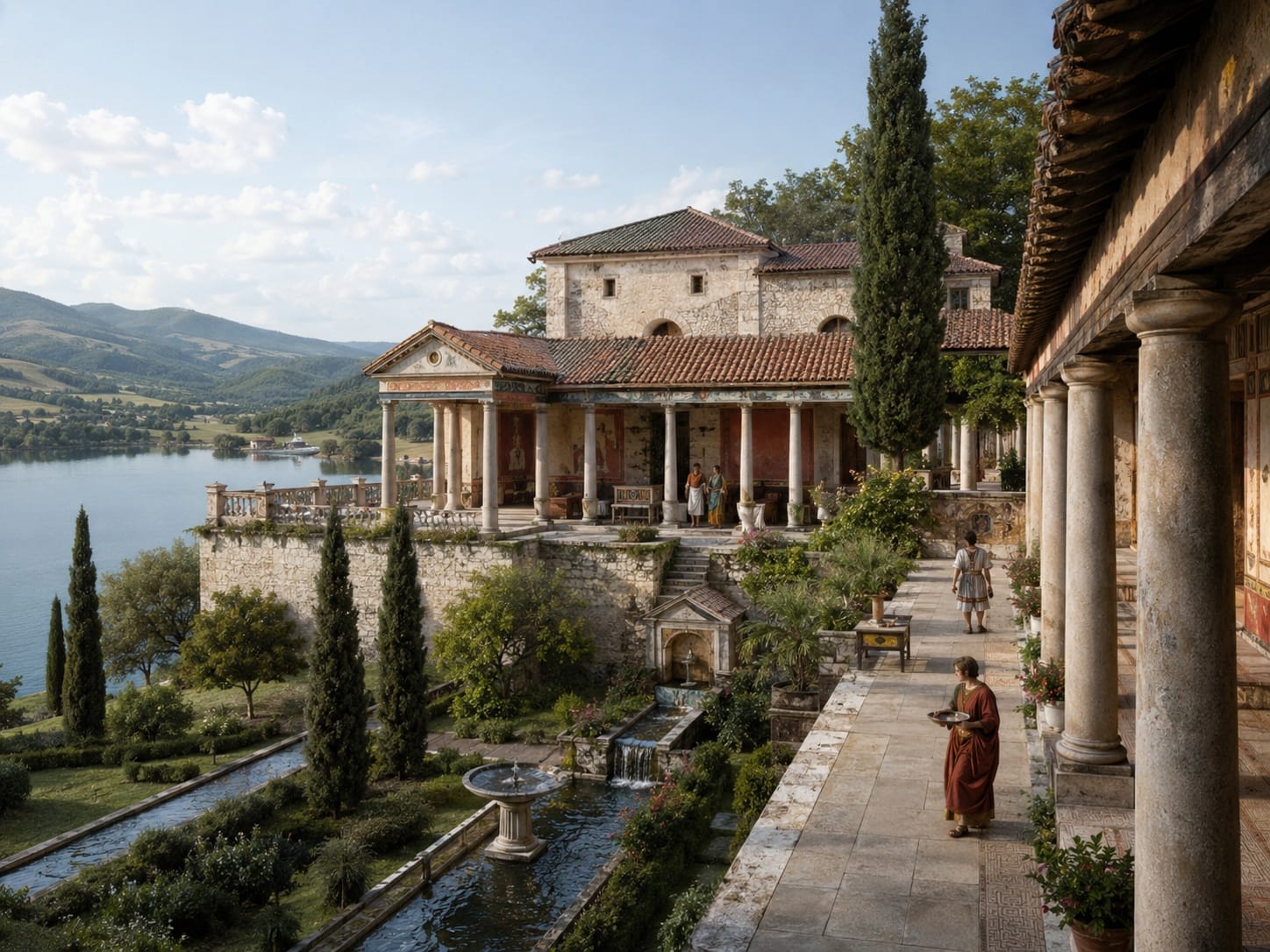
Writing about villas was also a form of self-presentation. Avitacum displays cultural identity, social status, and the obligations of an aristocrat in residence. Book 2’s villa material does not present idleness. The book contains congratulation, recommendation, legal help, mourning, marriage, friendship, and hospitality. Sidonius appears retired from office, but not inactive. He remains friend, patron, helper, and writer.
The Daily Life of a Roman Aristocrat
The second villa letter, 2.9, moves from architecture to daily life. Sidonius describes stays at the adjoining villas of Tonantius Ferreolus and Apollinaris. The day includes ball games, dice, reading, scholarly conversation, a library, lunch, stories, siesta, and a bath.
The library is carefully described. Books are
“in abundance ready to your hand.”
A visitor might think himself among
“the shelves of some grammarian,” “the tiers of the Athenaeum,” or “a bookseller’s towering cases.”
Devotional works stand near the ladies’ seats, while the books near the master are those
“ennobled by the great style of Roman eloquence.”
The hosts compete to entertain him and make him feel at home. The leisure is social, literary, and aristocratic. It is a world of visits, books, meals, games, baths, conversation, and hospitality.
Book 2 also contains mourning. Letter 2.8 consoles the bereaved and includes an epitaph for Filimatia. The epitaph is part of friendship and commemoration. Sidonius’ correspondence preserves not only public office and political fear, but also family reputation, grief, literary gifts, and social duty.
The Fight to Preserve Latin
Sidonius’ concern for Latin appears in Book 2, Letter 10. He warns that, unless his circle preserves
“the purity of the Latin tongue,”
they may soon mourn its
“abolition and decease.”
The threat is described as
“the rust of sorry barbarisms.”
The concern is elite literary culture, not ordinary speech. It belongs with the opening of the collection, where Symmachus, Pliny, and Cicero stand behind Sidonius’ letters. Latin is part of aristocratic identity, literary memory, education, and social rank.
The same concern appears in his praise of younger talent. Literary education is something to be handed on. Younger minds growing into discipline give Sidonius
“the richest reward”
of his labor.
Clermont, the Last Roman Holdout
Book 7 opens with danger.
“Rumour has it that the Goths have occupied Roman soil.”
Auvergne is always
“their gateway.”
The Arverni are hated because,
“by Christ’s aid,”
they are the
“sole obstacle”
to Gothic ambition.

That ambition is to extend Gothic frontiers to the Rhône and hold all the country between that river, the Atlantic, and the Loire. Clermont and Auvergne are therefore not presented as an isolated local problem. They are placed on the frontier of Roman survival in Gaul.
Book 7 moves into Clermont, the surrender of Auvergne, exile, and the new reality of Visigothic rule. The language is no longer the calm language of Avitacum. It is the language of a threatened city.
Clermont is shown as a city with weak defenses. Sidonius does not rely on burned walls, rotting palisades, or ramparts worn by exhausted sentries. Help is sought through the Rogations associated with Mamertus.
A later Book 7 letter places Clermont in its provincial setting. It is the last city in Aquitanica Prima left to Rome by the fortune of war. The city is not only a local trouble spot. It is the remaining Roman point in the province.
Euric and Christian Law
Book 7 also presents pressure on Catholic communities under Euric. Sidonius writes that Euric has broken the old treaty and extends the boundaries of his kingdom
“by armed force.”
The danger is not only military. Sidonius fears Euric less as the attacker of walls than as
“the subverter of our Christian laws.”
The word “Catholic” is said to embitter the king’s face and heart. Euric is presented as closer to a leader of his Arian sect than a monarch of his people.
The letter describes a
“hidden malady”
of the Catholic church and asks for an open remedy. Cities including Bordeaux, Périgueux, Rodez, Limoges, Javols, Eauze, Bazas, Saint-Bertrand-de-Comminges, and Auch are listed as deprived of bishops by death.
The request is practical. If these regions cannot be kept for the Roman state by treaty, they should at least be held
“by religion for the Roman Church.”
The bishop’s concern is territorial, political, and ecclesiastical. Walls play their role, but churches, bishops, ordinations, Catholic law, and Arian pressure are also important.
The Peace That Ceded Auvergne
The strongest letter is 7.7, addressed to Graecus of Marseille. The setting is the peace of summer 475, by which Auvergne was ceded to the Visigoths in exchange for Provence. Graecus acted on the Roman side with bishops Basilius of Aix, Leontius of Arles, and Faustus of Riez, while Julius Nepos was in Italy.
The letter begins in grief. The condition of Auvergne had been
“better in war-time”
than after peace was concluded. Sidonius writes:
“Our enslavement was made the price of security for a third party.”
The Arverni are placed inside Roman memory. By old tradition, they claimed
“brotherhood with Latium and descent from the sons of Troy.”
In their own time, they had stood alone
“to stay the advance of the common enemy.”
Even when closely besieged, they
“so little feared the Goth”
that they sallied out against him and put fear into his heart. Their common soldiers were
“as good as captains,”
but the benefit of victory passed elsewhere, while they bore
“all the crushing burden of defeat.”
They also brought Seronatus to judgment. He is called a
“betrayer of imperial provinces to the barbarian.”
The state for which the Arverni had risked so much barely had the courage to carry out the capital sentence after conviction.
The letter is not simple autobiography. The crisis is written through epic and history: Troy, Lucan, Decius, Capua, Hannibal, Roman fidelity, and resistance. The Arverni are cast as kin of Rome, and the cession of Auvergne is framed through Roman memory and literary example.
The suffering is physical. Sidonius asks whether this is the reward for
“destitution, fire, sword, and pestilence,”
for fighting the enemy, and for going
“starved into battle.”
The peace once dreamed of is remembered bitterly. It was dreamed of
“when we tore the grass from the crannies in the walls to eat,”
and when they sometimes ate poisonous weeds by mistake, plucking them
“with livid hands of starvation, hardly less green than they.”
The appeal to the negotiators is direct:
“may you live to blush for a peace without either honour or advantage.”
Sidonius asks pardon for telling
“hard truths.”
His distress, he writes, must take
“all colour of abuse”
from what he says.
The later appeal becomes sharper. The conditions of the agreement must be broken.
“Oh, break this infamous peace at any cost.”
If necessary, the people are ready
“to continue the struggle and to undergo more sieges and starvations.”
Then comes the central line:
“But if we are to be betrayed, we whom force failed to conquer,”
then they will know that
“a barbarous and cowardly transaction”
was inspired by those who negotiated it.
The ending moves from anger to survival. Other conquered regions can expect only servitude, but Auvergne must prepare for punishment. If liberty cannot be saved, the people must live. Sidonius asks for land for exiles, ransom for captives, and provision for emigrants.
The last request is personal and communal at once:
“If our own walls must offer an open breach to the enemy, let yours be never shut against your friends.”
Sidonius Under Gothic Rule
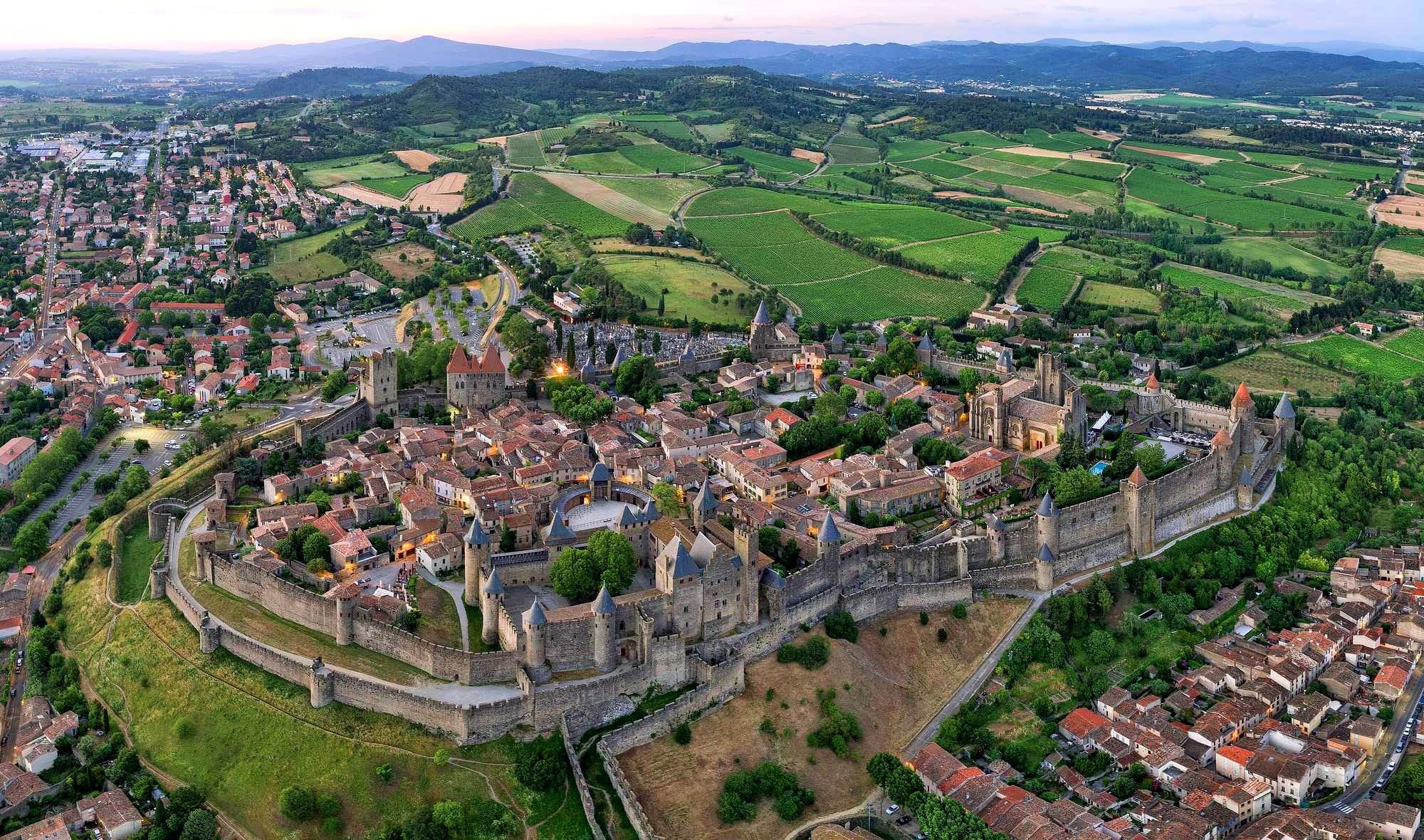
After the cession of Auvergne, Sidonius suffered exile and confinement. He was lodged at Liviana, near Carcassonne. Later letters belong to life under Euric’s rule.
The conditions of communication also changed. In one letter, regular correspondence between distant cities becomes dangerous because of the movements of peoples. Letter-carriers face questioning from guards. A nervous answer may make them suspected of carrying secret instructions.
Book 4 had shown restraint about the most painful material. Sidonius could mention that exile had broken him, but the fuller treatment of Clermont, surrender, and exile comes later, especially in Books 7 and 8.
In Book 8, the realities of Visigothic rule appear more openly. Sidonius had been in Bordeaux for two months and gained access to Euric only once. He had been deprived of estates connected with his mother-in-law and denied equal treatment with Goths at court. Under these conditions, even poetry gives way to losses; he dreams of
“losses rather than poems.”
Culture as the Last Roman Status
Book 8 gives one of Sidonius’ clearest statements about what remained after older Roman structures weakened. Writing to Johannes, he praises him for delaying the
“decease of Literature.”
Literature seemed
“dead and buried,”
but Johannes revived, supported, and championed it.
The image is maritime. In the
“tempest of war which has wrecked the Roman power,”
Johannes brought
“the Latin tongue safely into port.”
The social conclusion follows. The old grades of rank had been abolished. Those grades had once distinguished the high from the low. Now,
“in future culture must afford the sole criterion of nobility.”
The sentence remains aristocratic. It belongs to elite education, literary memory, and Roman speech. But it shows a changed situation. When offices and ranks lose force, letters carry identity.
The Last Roman Language of Sidonius
Sidonius appears first as a Gallo-Roman aristocrat born under the empire. He is linked by family to Avitus, by office to Rome, by property to Avitacum, by letters to Pliny and Symmachus, by bishopric to Clermont, and by later life to Euric’s Visigothic kingdom.
His letters show Rome as
“the abode of law,”
and
“the motherland of freedom.”
They show Theodoric II as a Gothic king observed in detail by a Roman aristocrat. They show Seronatus trampling the Theodosian Code and offering the laws of Theodoric in its place. They show Avitacum as a house of baths, water, guests, family, and literary identity.
They also show Clermont and Auvergne under pressure. The Goths occupy Roman soil; the Arverni are
“always their gateway.”
Euric is feared as a threat to
“Christian laws.”
The peace of 475 makes Auvergne the price of another region’s security. In the bitterest letter, the Arverni claim Roman and Trojan kinship, remember hunger, and ask that if liberty must die, their people at least survive.
The letters do not give a simple history of the end of the Roman West. They give a shaped collection of Roman aristocratic memory. Through Sidonius, the end appears in villas and letters, in law and rank, in bishops and city walls, in hunger and exile, in Gothic courts and Latin schooling.
The final note is preservation. When Roman power has suffered shipwreck, the Latin tongue can still be brought into port. When old ranks are swept away, culture can still remain
“the sole criterion of nobility.”
Sidonius Apollinaris, Letters, translated by O. M. Dalton, 1915.
Alexander Callander Murray, ed. and trans., From Roman to Merovingian Gaul: A Reader. University of Toronto Press, 2008.
Judith Hindermann, Sidonius Apollinaris’ Letters, Book 2: Text, Translation and Commentary. Edinburgh University Press, 2022.
Roy Gibson, “Reading the Letters of Sidonius by the Book,” in New Approaches to Sidonius Apollinaris, edited by Johannes A. van Waarden and Gavin Kelly. Peeters, 2013.
Sigrid Mratschek, “Creating Identity from the Past: The Construction of History in the Letters of Sidonius,” in New Approaches to Sidonius Apollinaris, edited by Johannes A. van Waarden and Gavin Kelly. Peeters, 2013.

About the Roman Empire Times
See all the latest news for the Roman Empire, ancient Roman historical facts, anecdotes from Roman Times and stories from the Empire at romanempiretimes.com. Contact our newsroom to report an update or send your story, photos and videos. Follow RET on Google News, Flipboard and subscribe here to our daily email.
Follow the Roman Empire Times on social media: