
Roman Sarcophagus at Westminster Abbey May Have Held an Abbot
A new study links the skeleton in a Roman coffin to Westminster’s early medieval abbots, using radiocarbon dates, burial clues and the sarcophagus itself.


A Roman sarcophagus at Westminster Abbey may have held the remains of an Anglo-Saxon abbot who died about six centuries after the coffin was made. A new archaeological study identifies Ælfwig, abbot from 993 until about 1020, as the strongest candidate for the man buried inside the ancient limestone chest.
The coffin still carries a Roman father’s name, Valerius Amandinus, and the dedication commissioned by his sons. Its surviving skeleton, however, has been radiocarbon dated to AD 987–1052. A large cross carved into the Roman lid belongs to the same broad period of medieval reuse, joining a Roman family memorial to a medieval burial.
Published on 20 October in the Journal of the British Archaeological Association, the research combines the coffin’s decoration, excavation records, bone analysis and traces of a wooden coffin. It proposes a history extending from the communities of Roman Britain through an important monastic burial to a thirteenth-century reinterment beside the abbey church.
A Roman father’s name survives in stone
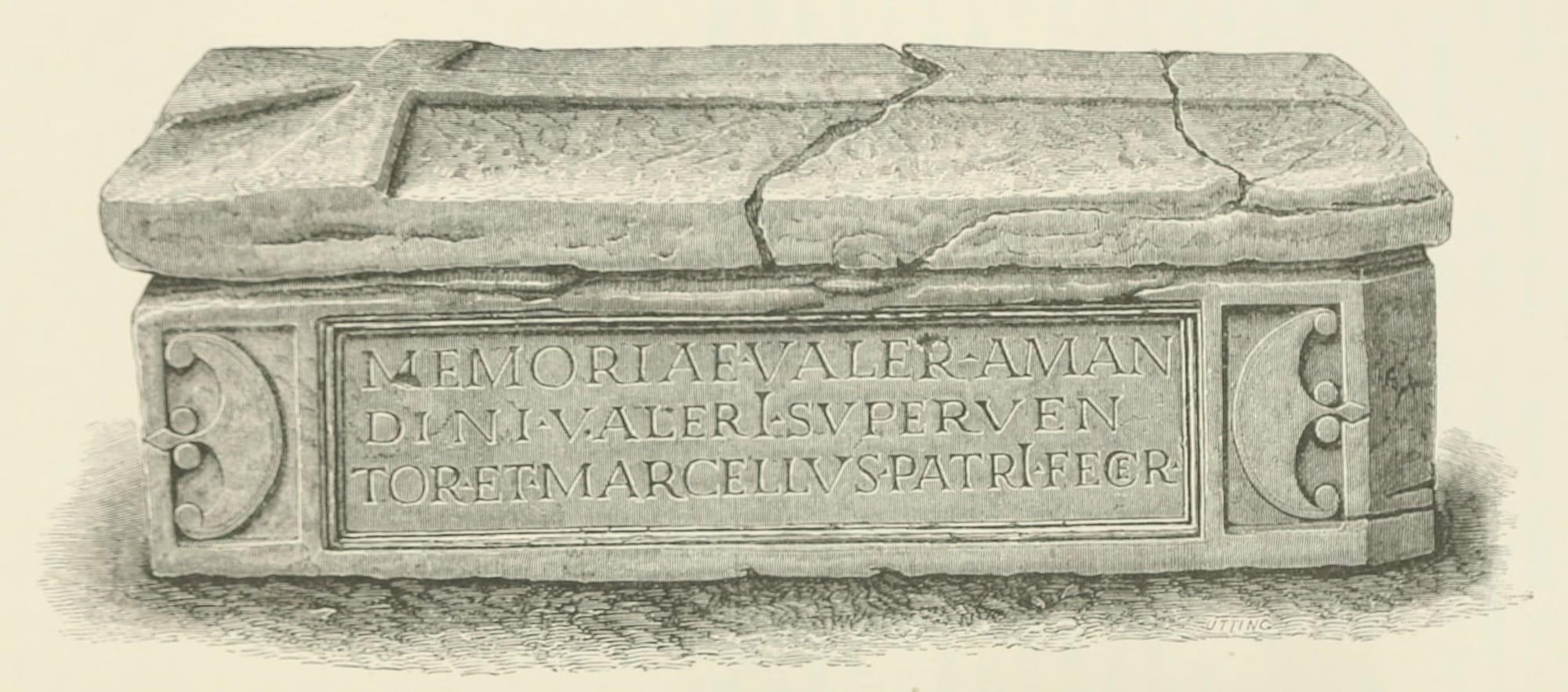
The sarcophagus is generally dated to the fourth century. Its three-line Latin inscription names Valerius Amandinus and records that Valerius Superventor and Marcellus had the memorial made for their father. That family dedication identifies the person for whom the Roman coffin was originally commissioned, centuries before its medieval occupant was born.
Carved from a single block of limestone, the chest measures approximately 2.09 by 0.71 by 0.46 metres (6.86 by 2.33 by 1.51 feet). Microscopic examination of stone samples identified its source as the Taynton stone of south Oxfordshire. The decorated front has a central inscription panel between two panels with crescent-shaped shield ornament.
The back and ends received a much rougher finish. The study interprets this contrast as evidence that the coffin originally stood in a wall recess inside a mausoleum, with its inscribed face visible. Its proposed original locations include a cemetery around Londinium, the Roman city of London, or the burial ground beneath St Martin-in-the-Fields.
A cross reshaped the Roman lid
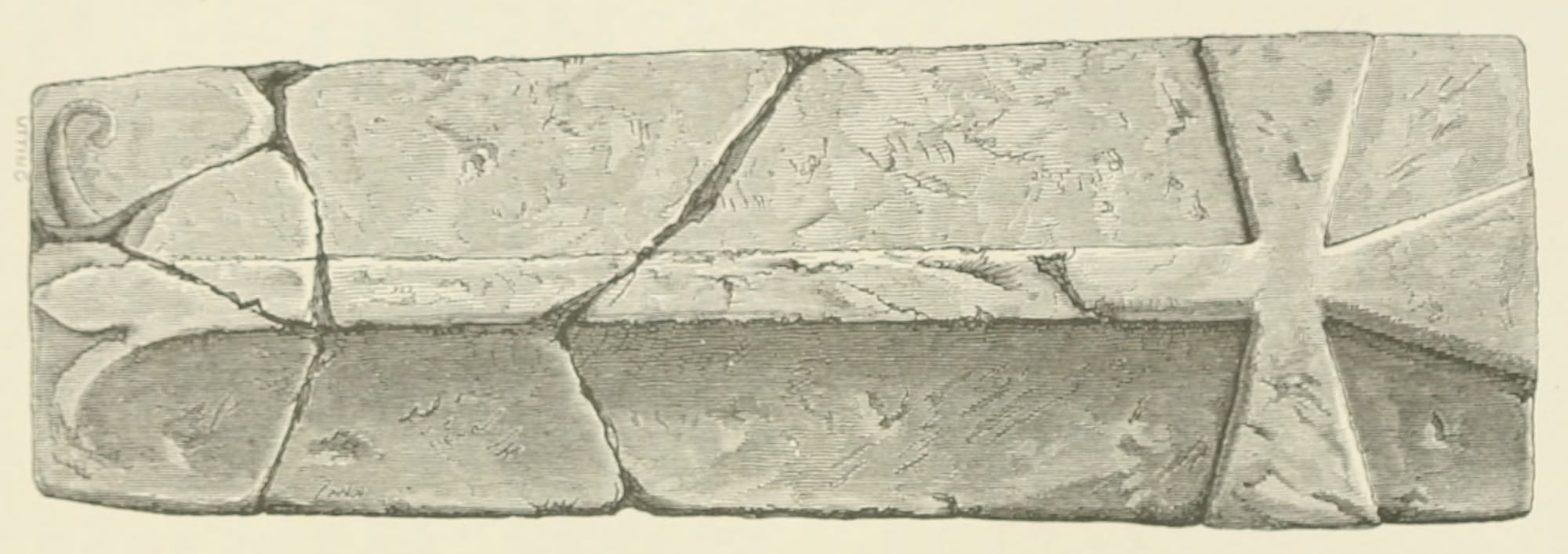
The lid combines Roman stonework with a conspicuous medieval alteration. Earlier writers sometimes treated it as a replacement, but geological examination found that coffin and cover came from the same stone bed. The study identifies it as the original Roman lid, subsequently recarved with a long cross in a late Anglo-Saxon style.
Its spreading arms reach the sides of the slab, while the lower end terminates in a worn plant-like design. The proposed medieval arrangement placed the coffin beneath the church floor and left the recarved lid visible as a grave marker. Under that arrangement, the Roman inscription would have been hidden below ground.
Wear on the cover fits its proposed use at floor level. The cross therefore belongs to the coffin’s later history, while the dedication preserves its Roman commission. The possibility that Amandinus himself was Christian rests on the wording of the inscription; the study treats that interpretation as probable rather than established.
Workmen broke into the coffin in 1820
The sarcophagus is usually associated with its excavation in 1869, but an annotated pencil sketch records an earlier encounter on Easter Monday, 3 April 1820. Found on the abbey’s north side, the lid was broken by workmen. The coffin was subsequently repaired and covered again, leaving that first opening largely forgotten.
In 1869, clearance of accumulated soil and rubble exposed the foundations of Henry III’s medieval sacristy, a building used for church vestments and equipment. The coffin lay beside its inner wall, in the former courtyard. On 29 November, the opening was recorded in detailed drawings that showed both the fractured lid and the disordered bones.
Those drawings provide a record against which later examinations can be compared. The skull had been moved towards the foot of the coffin, and major leg bones were displaced. The study attributes this disturbance to the earlier intrusion, with some smaller bones concealed beneath rubble introduced at the broken end.

The supposedly lost skeleton was still inside
An 1873 letter reported that the skeleton had been lost after building work, and subsequent researchers accepted that account. When the coffin was opened in a conservation studio in 2016, it still contained an almost complete skeleton. The bones had been returned to it after the Victorian examination, together with a repaired skull.
Modern analysis found that approximately 90 per cent of the skeleton survived. It belonged to a man aged between 35 and 49, with an estimated height of approximately 1.75 metres (5 feet 9 inches). His bones showed joint disease and two well-healed rib fractures; surviving teeth had deposits of calculus but were free from decay.
A bone sample submitted to the Scottish Universities Environmental Research Centre produced a calibrated date of AD 987–1052 at 95.4 per cent probability. That result places the man’s death in late Anglo-Saxon England, long after Roman provincial government in Britain had ended. The modern examination thus gives the surviving bones a medieval date independently of the Roman name on their container.
Lime preserved the outline of a wooden coffin
Cleaning exposed a white deposit on the stone floor of the sarcophagus. Its straight edges described a rectangle inside the larger chest, marking the outline of a vanished wooden coffin. Lime also remained on several bones, including parts of the shoulder, ribs and pelvis, helping reconstruct the arrangement of the burial.
The study concludes that the body had been covered with lime inside a timber coffin, which was then placed within the Roman sarcophagus. The wood eventually decayed, while the white residue retained its footprint. Victorian analysis had identified the material as carbonate of lime, distinguishing it from gypsum used in some Roman burials.
Medieval timber coffins could be assembled with wooden pegs and dowels instead of metal fastenings. Preserved examples from Barton-upon-Humber provide a comparison. A later burial there also retained a lime outline after its coffin disappeared, illustrating how the deposit at Westminster could preserve evidence of otherwise vanished wood.
Two abbots fit the medieval burial
The substantial reused sarcophagus and its prominent cross suggest a prestigious church burial. The radiocarbon range accommodates two plausible abbots: Ælfwig, who held office for about twenty-seven years, and his successor Wulfnoth, who died in 1049 after roughly twenty-nine years as abbot. Both are presumed to have been buried at Westminster.
Ælfwig had already been a monk at Westminster when elected in 993. His established connection with the community makes him the preferred candidate in the study. The proposed identification remains a historical interpretation: either man could fit the estimated age at death if appointed in his early twenties and dying close to fifty.
Their predecessor Wulfsige had left Westminster to become bishop of Sherborne in 993, which excludes him from this proposed Westminster burial. The argument therefore brings the surviving man into the abbey’s documented leadership before Edward the Confessor rebuilt its church, with the radiocarbon date providing the chronological framework for the comparison.

Reburial beside Henry III’s new sacristy
The study places the first medieval interment in the eastern arm of the Anglo-Saxon abbey church. Henry III began rebuilding the Confessor’s church in 1245, a project involving the removal and relocation of important burials. A further phase began in 1258, when more of the earlier church gave way to the present nave.
The sarcophagus is proposed to have been moved during these works and reburied in the sacristy courtyard around 1258. Excavations in 2019–20, completed in 2025 after interruption by the pandemic, relocated the pit from which it had been removed in 1869. The investigation identified no other contemporary courtyard burial aligned on the sacristy wall.
Today the sarcophagus is displayed in the Queen’s Diamond Jubilee Galleries. Its Roman dedication, recarved cross and surviving contents record successive uses of the same monument. The new study’s strongest candidate is Ælfwig, whose proposed burial would connect a fourth-century family memorial with the abbey’s community around the turn of the eleventh century.


About the Roman Empire Times
See all the latest news for the Roman Empire, ancient Roman historical facts, anecdotes from Roman Times and stories from the Empire at romanempiretimes.com. Contact our newsroom to report an update or send your story, photos and videos. Follow RET on Google News, Flipboard and subscribe here to our daily email.
Follow the Roman Empire Times on social media: