
The Enemy Kings Rome Paraded in Chains
They once ruled kingdoms and commanded armies. Then Rome paraded them before cheering crowds. But what awaited these captive rulers after their humiliation?

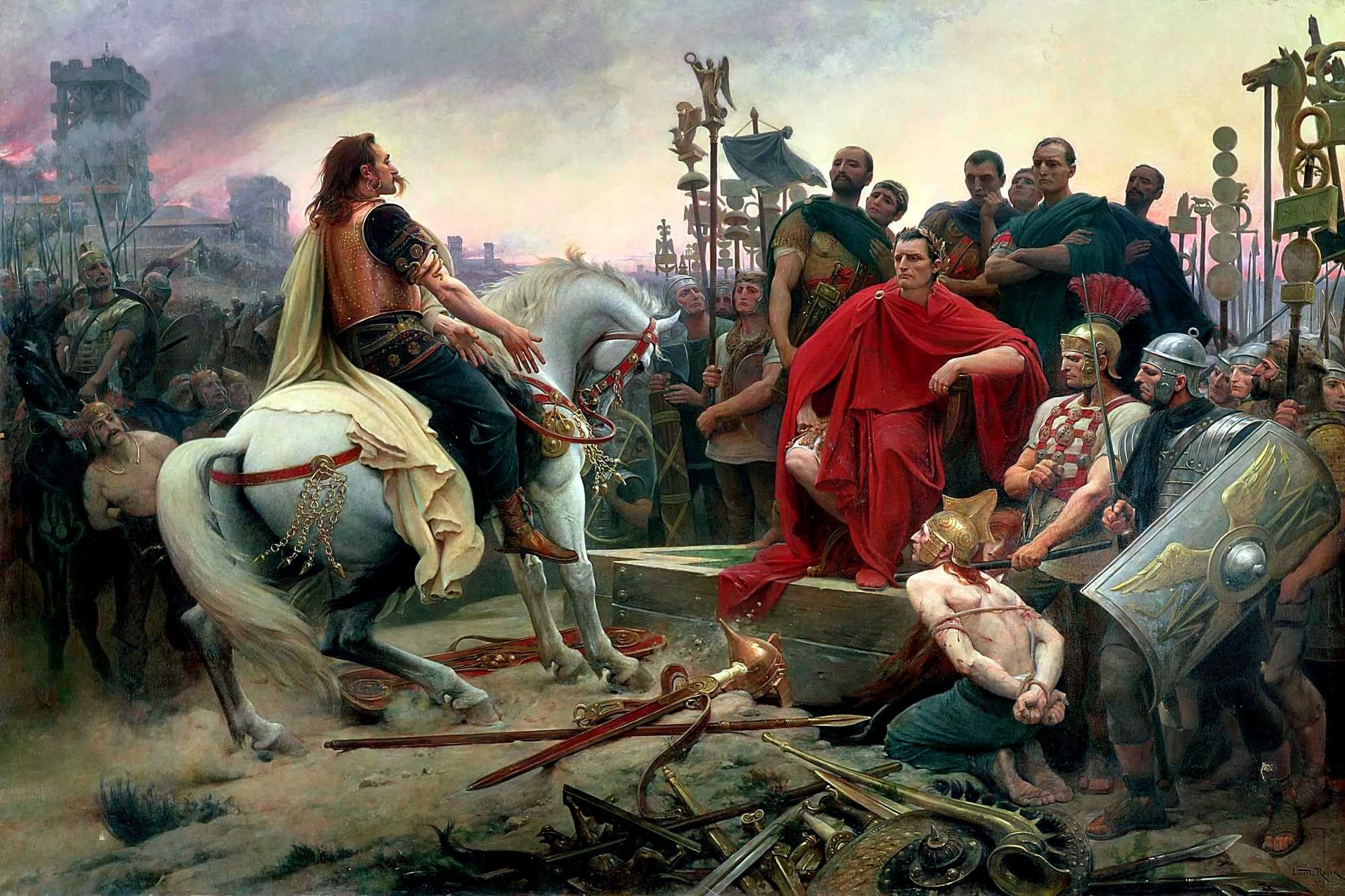
For a defeated king, the journey to Rome could be more humiliating than the loss of his kingdom. Men who had once commanded armies, received foreign ambassadors and ruled vast territories were brought into the capital as prisoners. Some walked in chains, others rode in the very chariots that had once announced their royal status. Their families sometimes accompanied them, while Roman spectators gathered to see rulers whose names had previously been associated with distant wars.
Their appearance was one of the most memorable features of the Roman triumph, the procession celebrating a victorious general's military achievements. Yet the fate awaiting these prisoners was not always the same. Some were executed, sometimes immediately after the celebrations. Others were imprisoned for years, while a few were released and eventually found a place within the Roman political world.
Perseus of Macedon: A King and His Children Before Rome
In 168 BC, the Roman commander Lucius Aemilius Paullus defeated Perseus, the last king of the Antigonid dynasty, at the Battle of Pydna. The victory ended the monarchy that had ruled Macedonia for generations. Perseus, his children and numerous members of the Macedonian aristocracy were taken into Roman custody.
The following year, Paullus celebrated a triumph lasting three days. The procession displayed the spoils of the Macedonian royal court, including precious metals, weapons, elaborate furniture and objects associated with the king's authority. Among them were his chariot, armour and royal diadem, which were exhibited separately from their former owner.
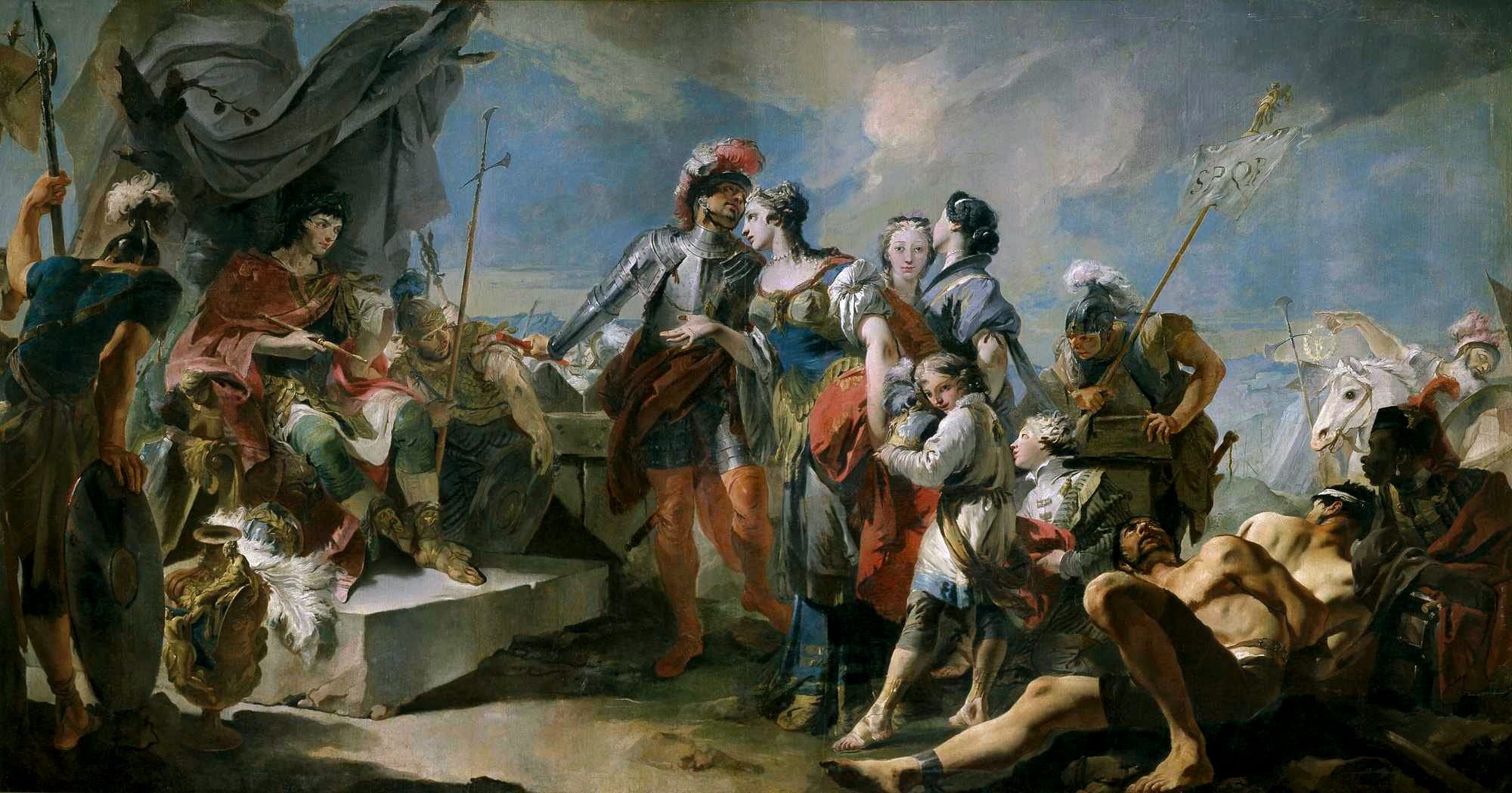
The royal children appeared before Perseus. Plutarch describes their attendants, tutors and guardians weeping as they accompanied them, urging the children to stretch out their hands towards the spectators and ask for sympathy. The youngest were too small to understand what was happening, and the sight of their distress moved the Roman crowd.
Perseus followed on foot. He had been stripped of the royal ornaments that had distinguished him as king, and Livy's account describes him walking in chains. His former courtiers and companions accompanied him, while Paullus entered in the splendour of his triumphal chariot.
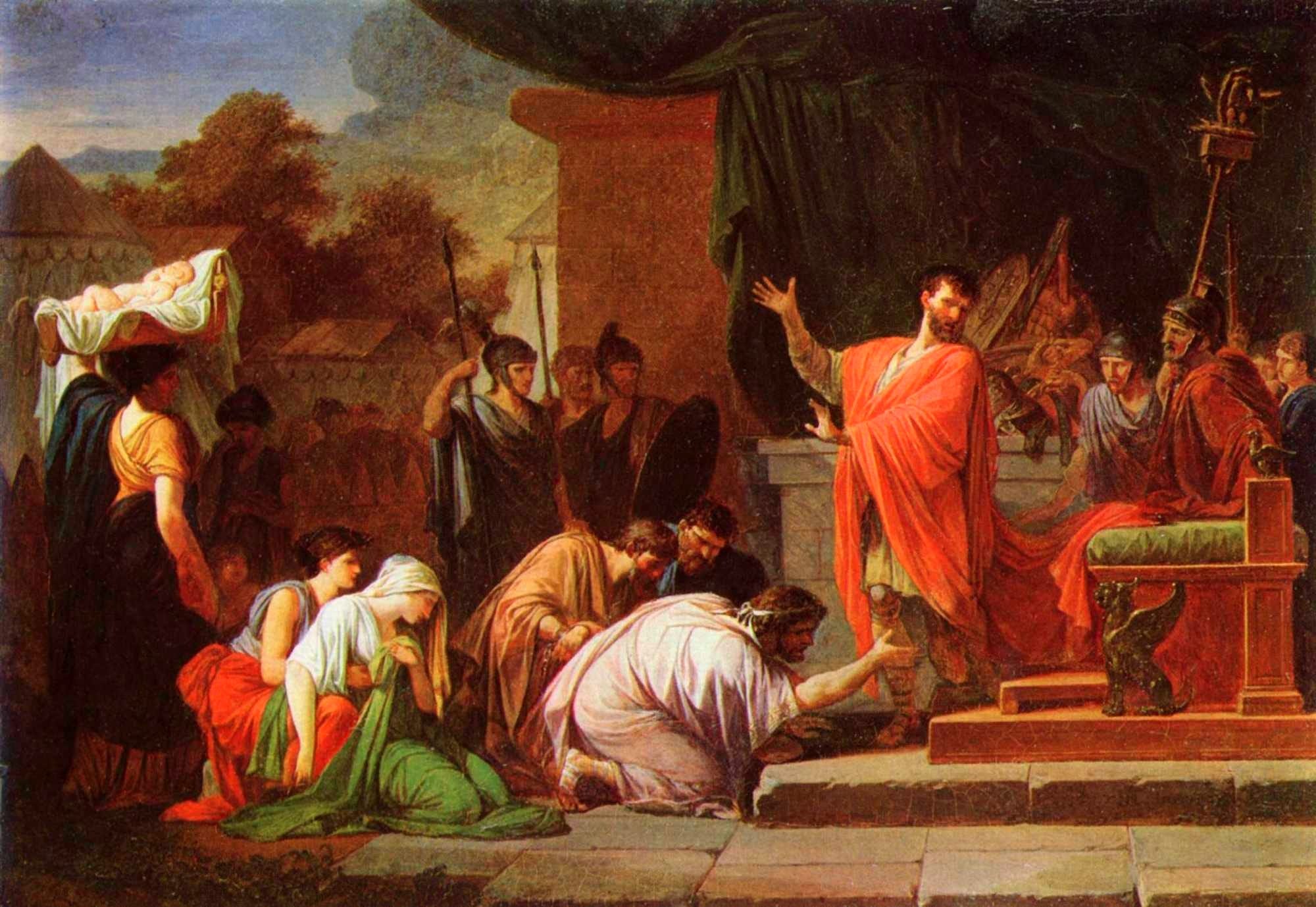
Perseus was not executed after the procession. He and his children remained in captivity, eventually being detained at Alba Fucens in central Italy. Plutarch preserves two different accounts of his death. According to one, the former king refused food and starved himself. Another maintained that his guards deliberately prevented him from sleeping until he died from exhaustion.
His children also suffered during their captivity. Two died after their father, while Alexander, the surviving son, followed a very different course. Plutarch records that he became skilled in engraving and metalwork, learned to speak and write Latin, and eventually worked as a clerk for Roman magistrates.
The contrast between Perseus's fate and that of his conqueror became even more striking because Paullus suffered a personal tragedy around the time of the triumph. Two of his young sons died within a short period, one shortly before and another shortly after the celebration. Plutarch reports that Paullus reflected on his own misfortune while speaking about the defeated king, who at least still had his children.
The captive Macedonian monarch had lost his throne and freedom, but he was allowed to live. His humiliation also survived in Roman art. A silver denarius minted approximately a century later showed Aemilius Paullus, a trophy and the defeated Perseus with his sons, preserving the image of the royal family's defeat for another generation.
Gentius of Illyria: A Royal Family Sent into Captivity
Perseus was not the only king exhibited in Rome in 167 BC. Gentius, the ruler of the Illyrian kingdom centred on Scodra, had allied himself with Perseus during the war. His resistance collapsed after a short Roman campaign under Lucius Anicius Gallus.
Gentius surrendered and was taken prisoner together with members of his family. Anicius celebrated his victory in Rome, displaying the defeated king, his wife, children and brother Caravantius. Livy's account places the royal family among the captives accompanying the procession, while the spoils of the campaign were exhibited before the Roman people.
The king and his relatives were not put to death. Instead, the Senate decided that they should be held at Spoletium, a town in central Italy. Its inhabitants objected to the responsibility of keeping such important prisoners, and the captives were subsequently transferred to Iguvium.

The account is unusual because it preserves a glimpse of the arrangements made after the triumph. Once the public celebration had ended, the Romans still had to decide where to house their prisoners and who would be responsible for guarding them.
Gentius disappeared from political life, and the surviving accounts provide little information about his remaining years. His kingdom had been dismantled, and his family's continued existence under Roman supervision presented no immediate opportunity for him to recover his former authority.
Bituitus: The Gallic King in a Silver Chariot
More than forty years later, Rome displayed another defeated monarch whose appearance attracted exceptional attention. Bituitus, king of the Arverni in Gaul, was captured following the Roman campaigns against the Arverni and Allobroges in the late second century BC.
The Roman commander Quintus Fabius Maximus celebrated his victory in 120 BC. According to Florus, Bituitus was the most striking figure in the procession, appearing in his brightly coloured armour and standing in a silver chariot.
Florus describes him as he had appeared in battle. The Romans had not simply stripped the king of his royal equipment and placed it among the spoils. They displayed him with the objects that made his high status recognizable, allowing the spectators to see the defeated monarch in something resembling his former magnificence.
The silver chariot was particularly significant. It was both a prestigious possession and an emblem of the king's position among the Gallic aristocracy. A Roman silver coin issued after the campaign depicts a Gallic warrior standing in a two-horse chariot, an image associated with Bituitus and the victory over his people.
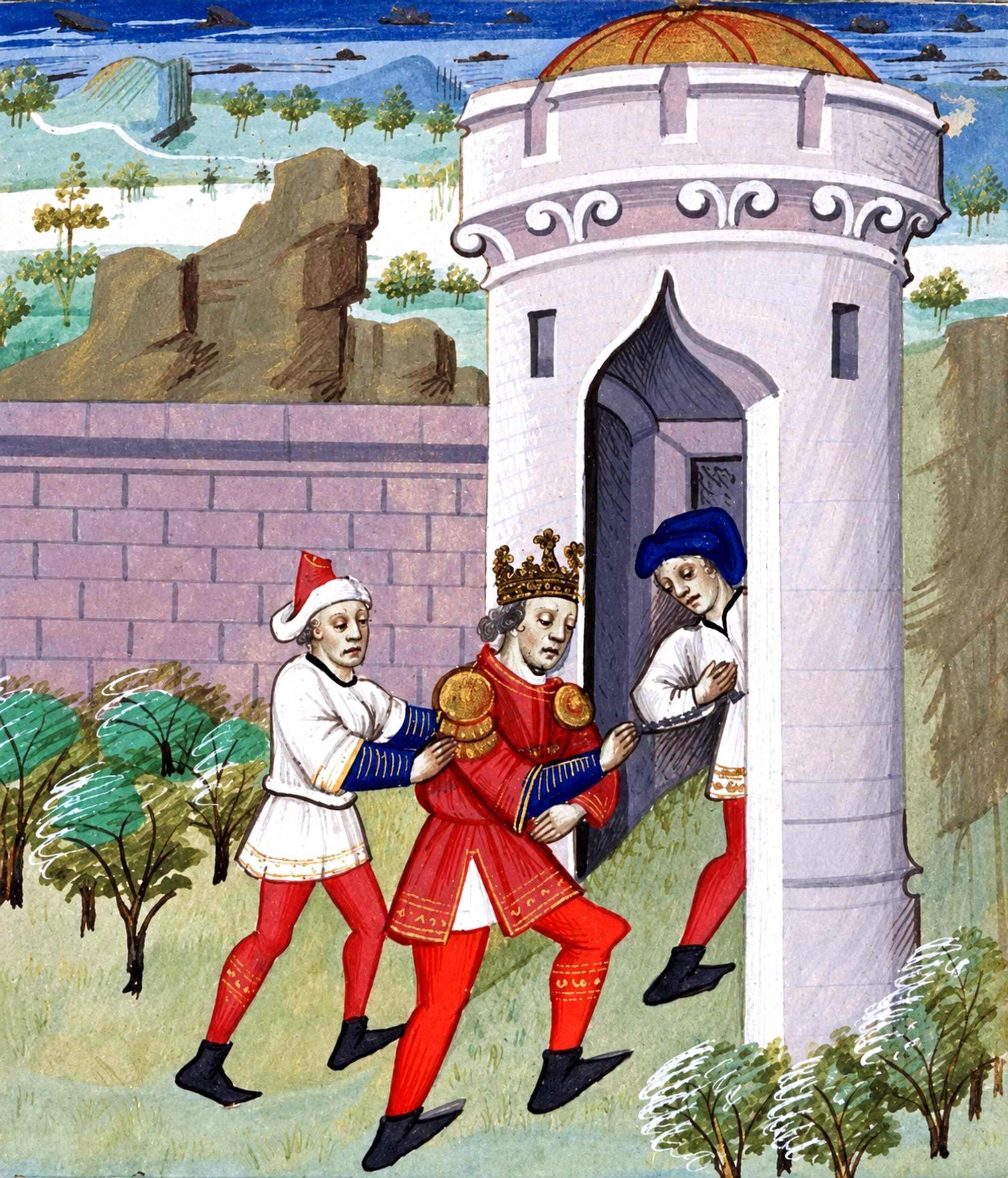
His splendid appearance did not prevent his continued captivity. Bituitus was sent to Alba Fucens, where he remained under Roman control. Little is known about his remaining years, although he was spared the execution that awaited some other defeated rulers.
His triumph also differed from the fate of many anonymous prisoners of war. Those captives might be sold into slavery or dispersed after their arrival in Roman hands. Bituitus, by contrast, retained a distinctive identity as a captured king, valuable enough to be displayed and important enough to be kept under supervision.
Jugurtha: The King Who Died Beneath Rome
Jugurtha's fate was far more severe. The Numidian king had fought a prolonged war against Rome, exploiting political divisions and continuing resistance despite repeated Roman campaigns. His final defeat came through the efforts of Gaius Marius and his subordinate Lucius Cornelius Sulla, who arranged his capture through negotiations with King Bocchus of Mauretania.
On 1 January 104 BC, Marius celebrated his triumph in Rome. Jugurtha appeared before the victor's chariot, accompanied by two of his sons. The sight attracted particular interest because the king had resisted capture for so long, and his continued survival had been associated with Rome's difficulties in bringing the Numidian war to an end.
Plutarch gives a detailed account of what followed. After the procession, Jugurtha was taken into prison, where his captors stripped away his clothing. In the struggle to remove a golden earring, they tore off part of his ear. He was then lowered naked into the underground dungeon.
Plutarch attributes to him a remark that has become one of the most memorable quotations associated with a captive king:
“Hercules! How cold this Roman bath is!”
Jugurtha died in prison. Plutarch states that he struggled with hunger for six days before his death, while Eutropius and Orosius describe him as strangled after the triumph.
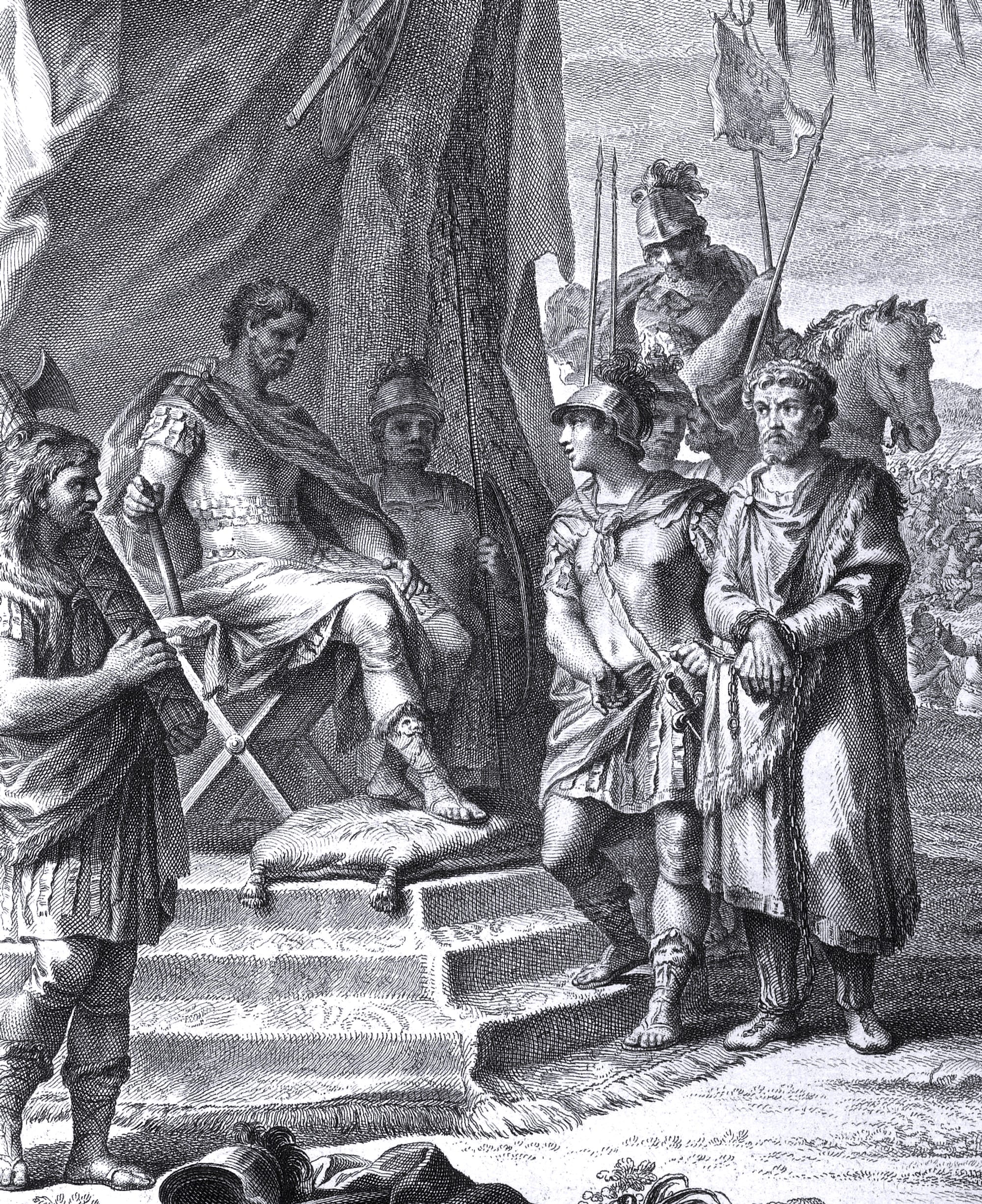
The different descriptions of his death preserve the violence surrounding the end of his captivity, even though they differ over its precise manner. Unlike Perseus or Bituitus, Jugurtha had no future as a detained royal prisoner. His appearance in the triumph marked the final stage of his defeat, and his death followed soon afterwards.
His two sons survived their father's appearance in the procession, although little is recorded about their immediate circumstances. One of them, Oxyntas, remained in Roman captivity and later appeared during the Social War. Appian records that the Italian commander Papius brought him before Numidian troops serving Rome, dressed in royal purple, in an attempt to persuade them to desert.
The celebration also strengthened Marius's political reputation. Jugurtha had been one of Rome's most troublesome enemies, and the procession brought the captured king before the Roman people as visible proof that the war had ended.
Pompey's Royal Prisoners: Princes, Kings and Their Families
Pompey the Great's triumph in 61 BC brought an extraordinary collection of eastern royal prisoners to Rome. The celebration followed his campaigns against Mithridates VI of Pontus and the reorganization of large parts of the eastern Mediterranean. For two days, the Romans watched a procession containing immense quantities of treasure, military spoils, foreign captives and representations of defeated territories.
Mithridates himself was absent. He had died before Pompey could bring him to Rome, and the procession instead displayed images of his defeat and death. Several of his children were present, however, including sons and daughters who had fallen into Roman hands.
Other royal captives included Tigranes the Younger of Armenia, together with his wife and daughter, and Aristobulus II of Judaea and members of his family. Their appearance allowed Pompey to display the consequences of his victories over several different kingdoms in a single procession.
Tigranes the Younger was the son of Tigranes II of Armenia, who had survived Pompey's campaigns by submitting to Roman authority. The elder king retained his throne, while his son, after falling out with Pompey, became a prisoner. Their contrasting experiences illustrated how submission could preserve one ruler's position while leaving another in Roman custody.
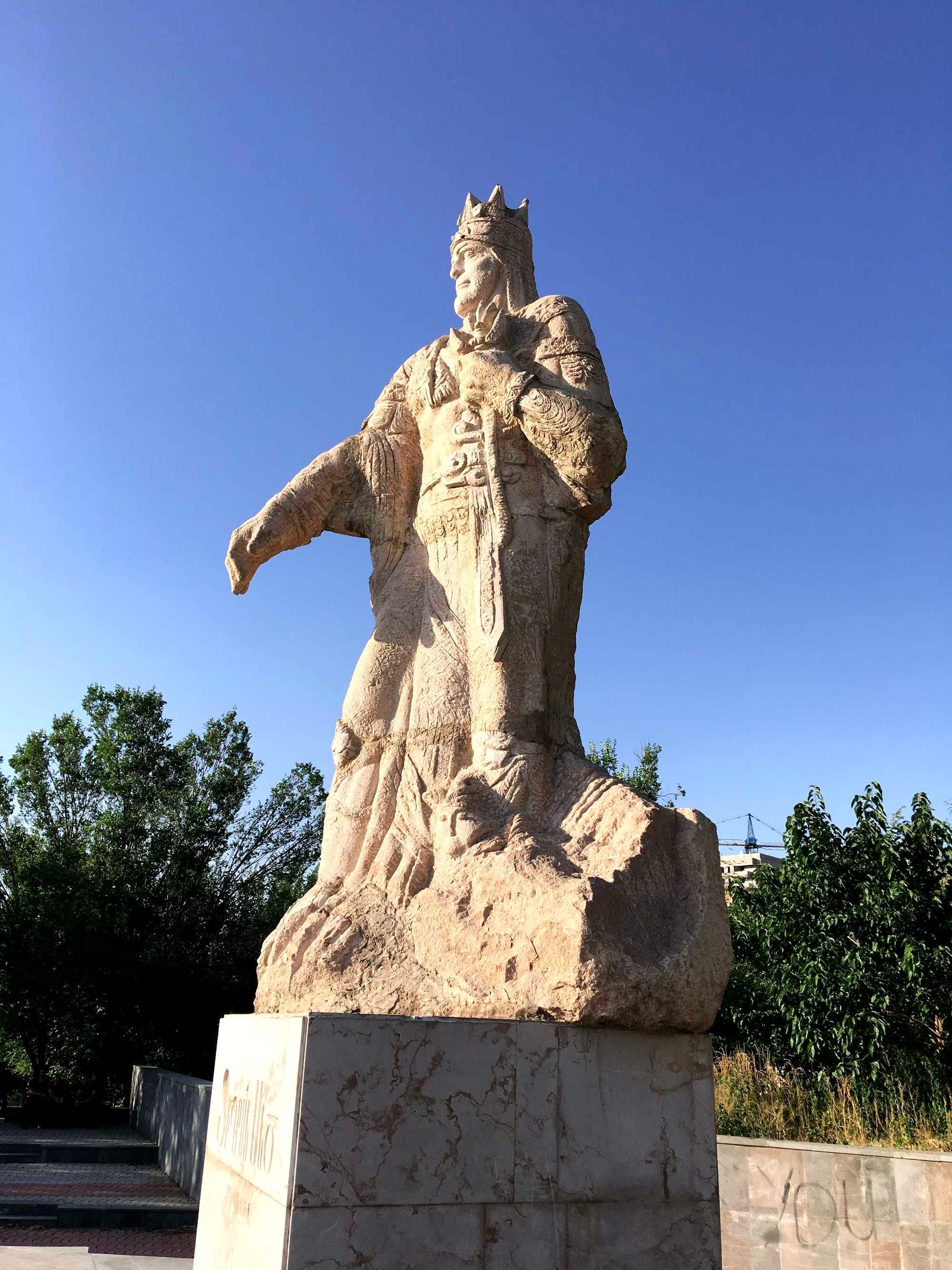
Aristobulus had been involved in a struggle for power within Judaea before Pompey's intervention. He was carried to Rome as a prisoner following the Roman settlement of the region, and his appearance in the triumph marked the loss of his political independence.
The fate of these prisoners is complicated by conflicting ancient accounts. Appian states that Aristobulus was executed following Pompey's triumph and that Tigranes the Younger was killed later. Yet Aristobulus survived for many more years. He escaped Roman custody and became involved in further disturbances in Judaea before being returned to Rome.
During the civil war between Caesar and Pompey, Caesar intended to send Aristobulus east to raise support for his cause. The former king was poisoned by Pompey's supporters in 49 BC, before the plan could be carried out.
Tigranes the Younger also survived the procession and remained in Roman hands as a hostage. His subsequent fate is not clearly documented.
Pompey's treatment of the prisoners was also associated with a public display of clemency. Appian describes many captives being allowed to return home at Roman expense, while those belonging to royal families were treated differently. Aristobulus and Tigranes the Younger remained in Roman custody after the celebrations, although their subsequent lives took different paths.
Vercingetorix: Six Years Between Defeat and Death
Vercingetorix, the Arvernian leader of the Gallic resistance against Julius Caesar, surrendered after the siege of Alesia in 52 BC. His defeat effectively ended the principal organized resistance to Caesar's conquest, although further operations continued in Gaul.
Caesar did not immediately bring Vercingetorix to Rome for a triumph. The Gallic leader remained in custody for approximately six years, while Caesar pursued his political and military struggle with Pompey and his supporters.
The long delay ended in 46 BC, when Caesar celebrated a series of triumphs following his victories in Gaul, Egypt, Pontus and Africa. Vercingetorix appeared as the principal captive associated with the Gallic procession.
Cassius Dio records that the celebrations included important prisoners whose treatment differed considerably. Arsinoë of Egypt, who also appeared in the festivities, was spared. Vercingetorix was not.
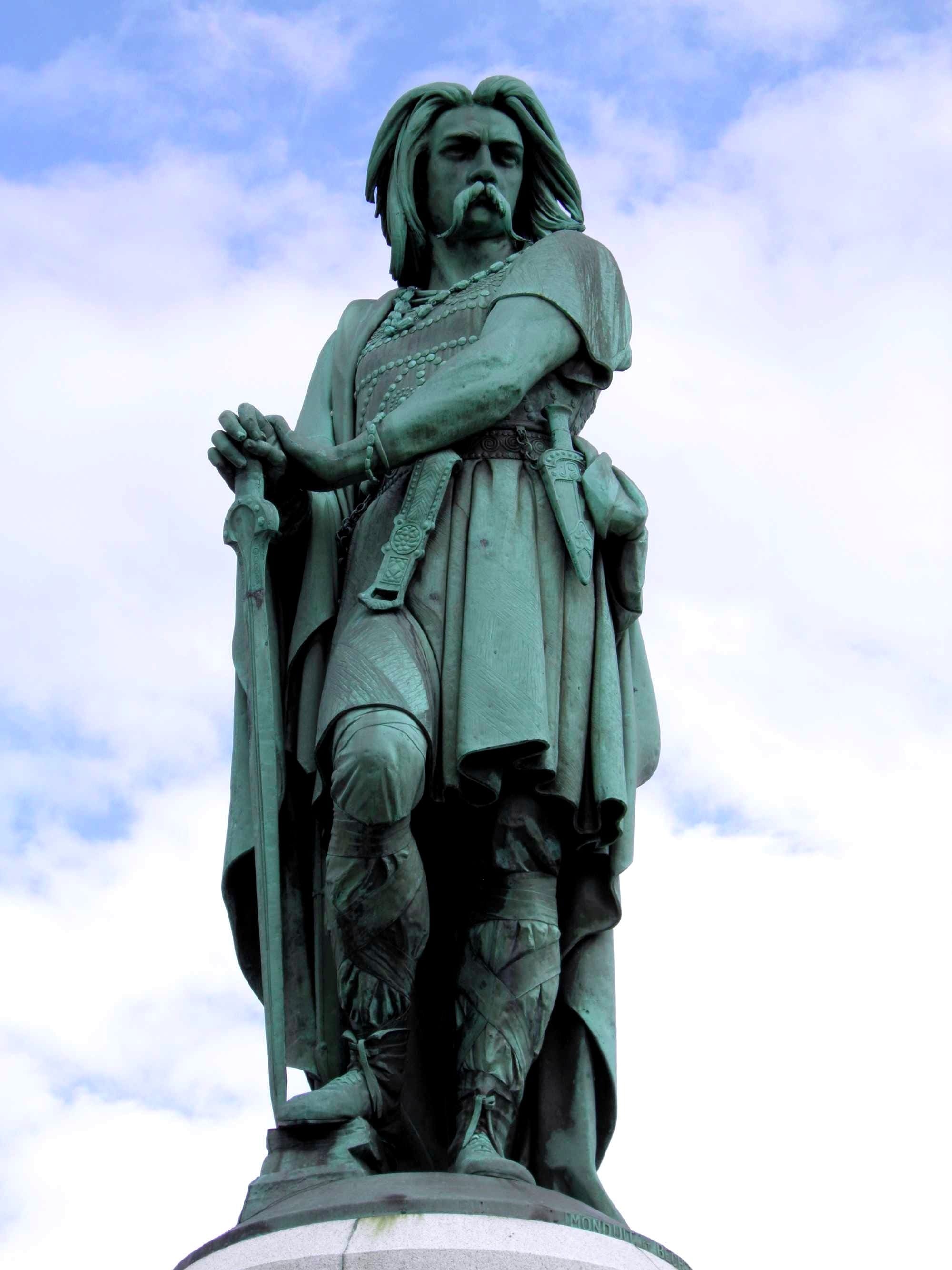
After being displayed before the Roman people, the Gallic leader was executed. Dio explicitly records his death, although the surviving accounts do not establish the exact method of execution. The common description of his being strangled is not stated so precisely in all the ancient evidence.
His years of detention had kept him alive until Caesar could publicly celebrate the victory over Gaul. Once that ceremony was completed, his life ended.
Vercingetorix was not a crowned king in the same sense as Perseus or Jugurtha, but his position as the leader of a large coalition of Gallic peoples made him an especially prominent captive. Six years had passed between his surrender at Alesia and his appearance in Rome, but his captivity ended with his execution.
Arsinoë IV: The Egyptian Princess Whom Rome Pitied
Among Caesar's triumphal prisoners, Arsinoë IV experienced an unusually different outcome. She was a daughter of Ptolemy XII and a sister of Cleopatra VII, and had become involved in the struggle for control of Egypt during Caesar's Alexandrian War.
Arsinoë emerged as a rival to Cleopatra and had been associated with the Egyptian forces opposing Caesar. After the Roman victory, she was taken into custody and eventually transported to Rome.
Her appearance during Caesar's Egyptian triumph in 46 BC provoked a reaction that the Romans did not commonly associate with the display of a defeated enemy. Cassius Dio records that the spectators were disturbed by the sight of a woman who had held royal authority being exhibited in chains.
Dio writes that her appearance:
“aroused very great pity”
The display of Arsinoë was unusual because she appeared as the principal Egyptian enemy of Caesar's campaign rather than merely as the wife or daughter of a defeated king. The procession also featured representations of Egypt, the Nile and the Pharos of Alexandria, identifying the war that Caesar was celebrating.
The spectators' sympathy did not undo her humiliation, but Arsinoë was spared. Dio states that Caesar released her out of consideration for her brothers. She subsequently took refuge at a sanctuary of Artemis in Asia Minor.
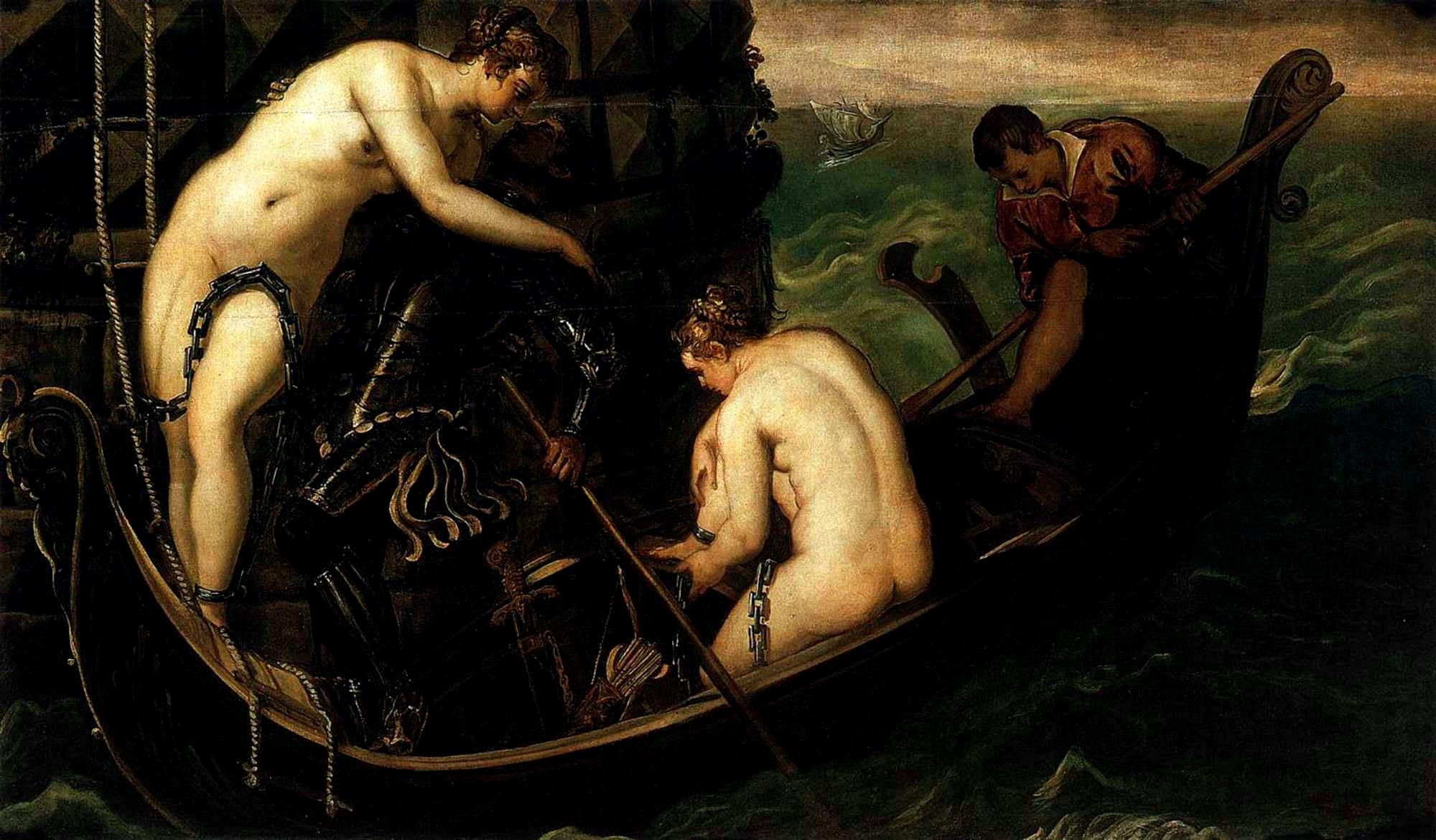
Her survival was not permanent. Several years later, during the struggle between Mark Antony and Octavian, Arsinoë was killed on Antony's orders. Josephus places her death at Ephesus and attributes it to Cleopatra's request, while Appian places the killing at a sanctuary of Artemis in Miletus.
The princess had escaped execution at the end of Caesar's triumph, only to die because of the continuing struggle within the Ptolemaic royal family. Her experience contrasts sharply with that of Vercingetorix, who was displayed during the same series of celebrations but was executed afterwards.
Cleopatra Selene: From Captive Child to Queen
When Octavian celebrated his victory over Egypt in 29 BC, Cleopatra VII and Mark Antony were already dead. The defeated queen had taken her own life after the collapse of her position, avoiding the possibility of appearing as a captive in Rome.
Her children, however, were still available for display. Cleopatra Selene, the daughter of Cleopatra and Antony, appeared in Octavian's triumph together with her twin brother Alexander Helios. The children had inherited distinguished royal connections, but neither possessed the power to resist Rome.
An image of their dead mother was also carried in the procession. Cassius Dio describes Cleopatra represented upon a couch, while her children appeared among the captives. The queen who had avoided being led through Rome was nevertheless represented in the celebration of her defeat.
Following the triumph, Cleopatra Selene was placed in the household of Octavia, Octavian's sister and Antony's former wife. She grew up under Roman supervision, alongside other children connected with defeated royal families.
Her later marriage brought an extraordinary reversal of circumstances. Around 25 BC, Cleopatra Selene married Juba II, himself a former royal captive who had appeared in Caesar's triumph as a very young child.
Juba was the son of Juba I of Numidia, whose defeat and death had accompanied the destruction of Pompeian resistance in North Africa. He had been taken to Rome, educated within the Roman aristocratic world and eventually entrusted with royal authority under Augustus.
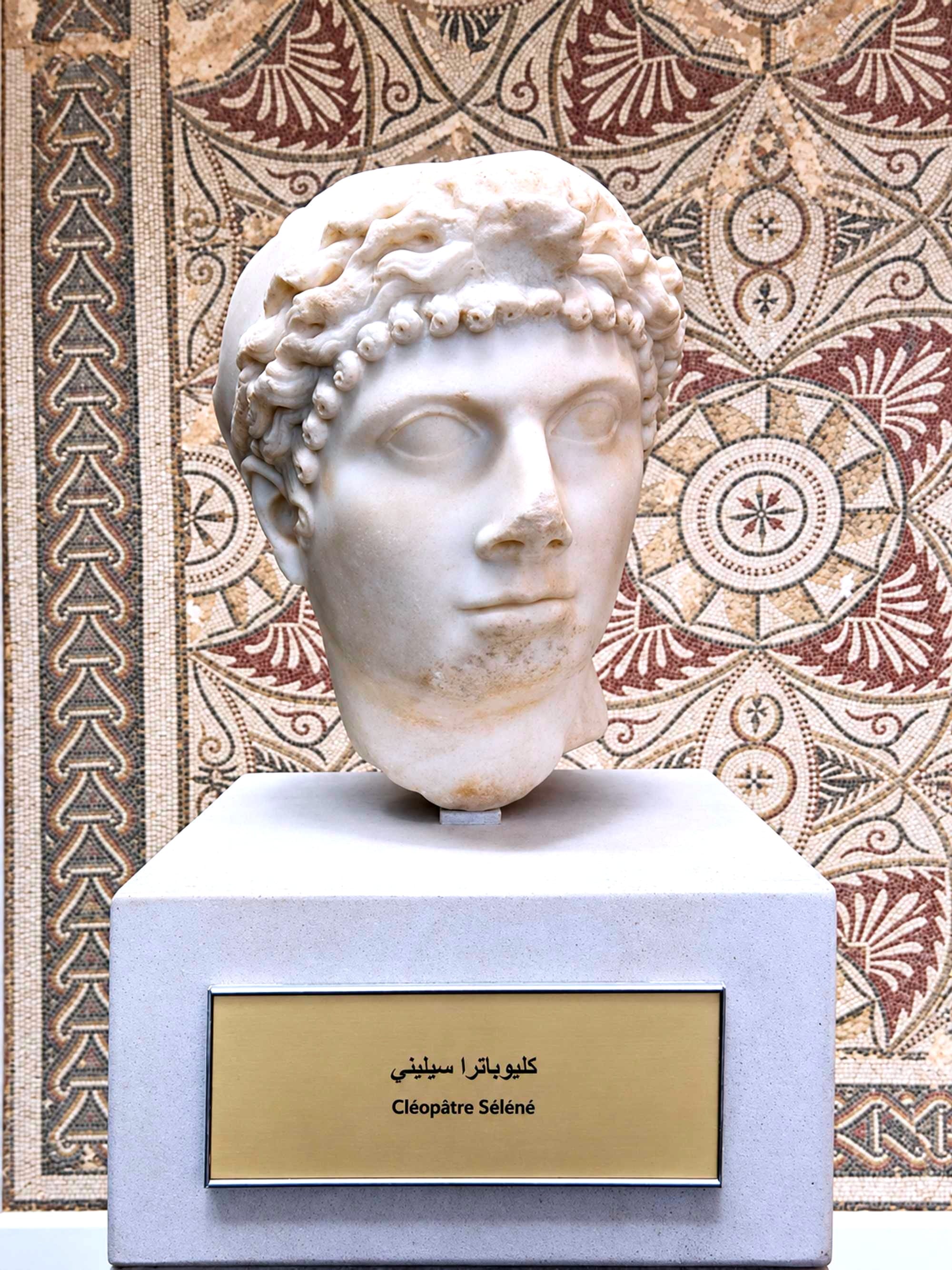
Together, Juba and Cleopatra Selene became rulers of Mauretania. Both had entered Rome as children representing defeated kingdoms, yet later received the right to govern another kingdom under Roman authority.
Their marriage united descendants of two royal houses that Rome had defeated. They remained dependent on the emperor, but their position was entirely different from that of the imprisoned Perseus or the executed Jugurtha.
Cleopatra Selene's experience demonstrates how Roman control over royal prisoners could extend beyond imprisonment. Children brought to Rome might grow up within elite households and later become useful participants in the political arrangements through which Rome governed its territories.
Her brother Alexander Helios did not enjoy an equally well-documented future. After his appearance in Octavian's triumph and his subsequent placement within the Roman household, he disappears from the surviving historical record.
Zenobia: The Queen in Golden Chains
The third-century ruler Zenobia of Palmyra became one of the most famous royal captives associated with a Roman triumph. Following the death of her husband Odaenathus, she exercised authority in Palmyra and extended her control over territories that had previously acknowledged Roman supremacy.
Her conflict with the emperor Aurelian ended in defeat in AD 272. She was captured during the collapse of Palmyrene resistance, and ancient accounts preserve different versions of what happened afterwards.
According to the Historia Augusta, Zenobia was displayed in Aurelian's triumph in AD 274, adorned with magnificent jewels and bound with golden chains. The account describes her jewellery as so heavy that she frequently had to stop while walking, and attendants were required to help support the weight of her ornaments.
Her feet were fastened with golden shackles, her hands secured with golden fetters and a heavy chain hung around her neck. The precious materials emphasized her former wealth while simultaneously marking her captivity.
The procession also displayed royal vehicles associated with Palmyra. The Historia Augusta claims that Zenobia had intended to enter Rome in a magnificent chariot after conquering the city. Instead, the captured vehicle was exhibited as part of Aurelian's victory.
According to the same biography, Aurelian spared Zenobia's life and granted her an estate near Tibur, where she lived with her children in the manner of a Roman aristocratic woman.
Other ancient accounts tell a different story. Zosimus records that Zenobia died during the journey towards Rome, either through illness or by refusing food. In this version, she never appeared in Aurelian's triumph.
The celebrated image of Zenobia walking through Rome in golden chains therefore belongs to one ancient tradition rather than an account confirmed by every surviving source. It nevertheless became the enduring representation of her defeat.
If she survived and settled near Tibur, as the Historia Augusta claims, her final years resembled the more fortunate outcomes experienced by some earlier royal prisoners. If she died before reaching Rome, the spectacle for which she became famous never took place.
Beard, Mary. The Roman Triumph. Cambridge, MA: Belknap Press of Harvard University Press, 2007.
Östenberg, Ida. Staging the World: Spoils, Captives, and Representations in the Roman Triumphal Procession. Oxford: Oxford University Press, 2009.
Cosgrave, Elinor Grace. Captive-taking in the Late Roman Republic and Early Principate: Historical Realities and Elite Representations. PhD thesis, University of Leeds, 2021.
Strootman, Rolf. “‘The Glory of Alexander and Philip Made Spoil by Roman Arms’: The Triumph of Aemilius Paullus in 167 BCE.” In Reading Greek and Hellenistic-Roman Spolia: Objects, Appropriation and Cultural Change, 189–214. Leiden: Brill, 2024.
Appian, Mithridatic Wars, 117; Civil Wars, Books 1–2.
Cassius Dio, Roman History, 43.19 and 51.21.
Eutropius, Breviarium, 4.27.
Florus, Epitome of Roman History, 1.37.
Historia Augusta, Aurelian, 33–34; Thirty Pretenders, 30.
Josephus, Jewish Antiquities, Book 14.
Livy, History of Rome, Book 45.
Orosius, Histories Against the Pagans, 5.15.
Plutarch, Aemilius Paullus, 32–37; Marius, 12; Pompey, 45; Caesar, 27 and 55.
Zosimus, New History, 1.59.
About the Roman Empire Times
See all the latest news for the Roman Empire, ancient Roman historical facts, anecdotes from Roman Times and stories from the Empire at romanempiretimes.com. Contact our newsroom to report an update or send your story, photos and videos. Follow RET on Google News, Flipboard and subscribe here to our daily email.
Follow the Roman Empire Times on social media: