
Michigan’s Kelsey Museum Shows Roman Colorful Art Beyond White Marble
Glass vessels, woven roundels and carved sarcophagi bring a less familiar Roman visual world into a new Ann Arbor exhibition.

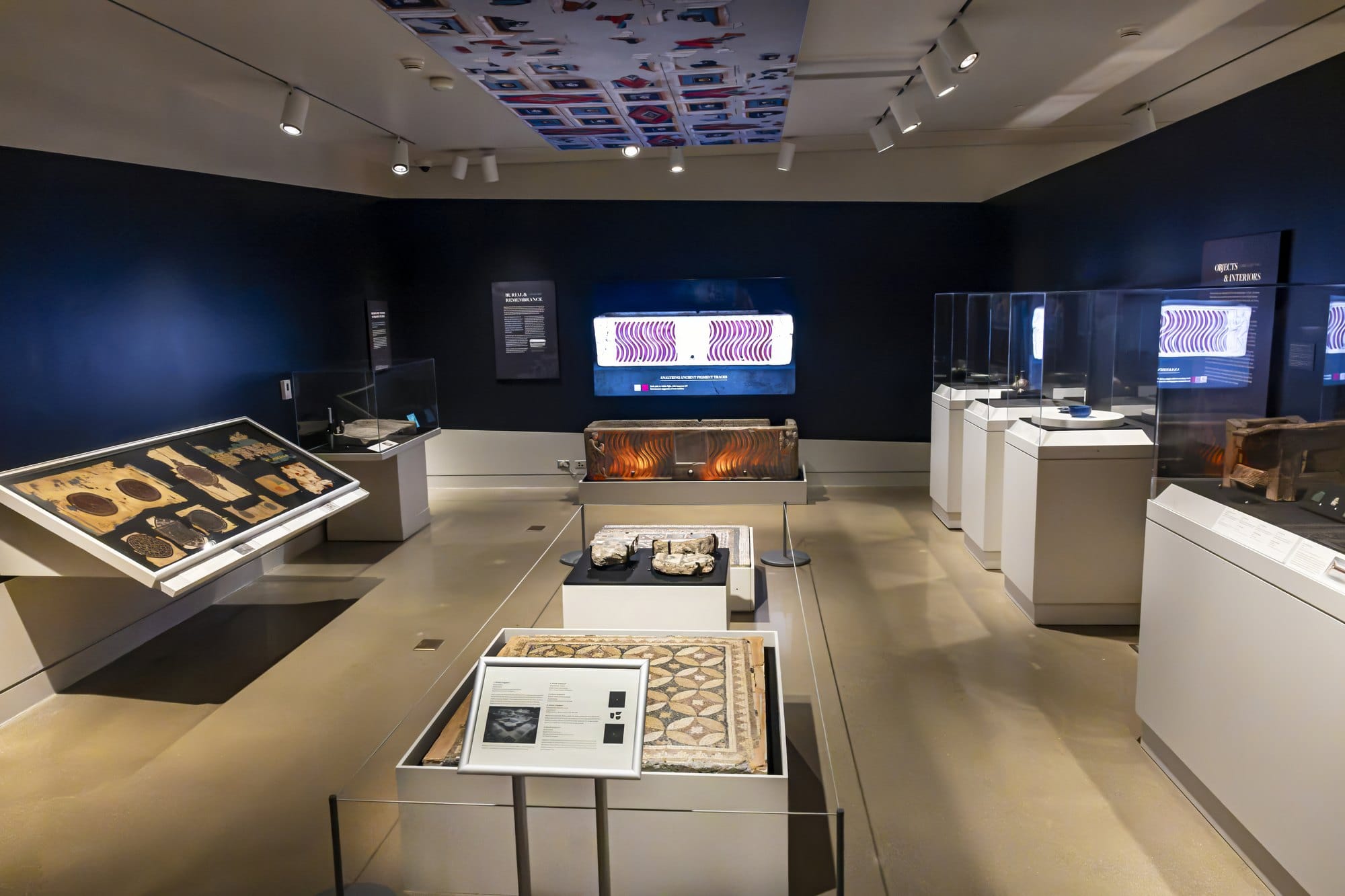
A new exhibition at the University of Michigan’s Kelsey Museum of Archaeology places the patterned surfaces of Roman art at the centre of the gallery. Opened in Ann Arbor on 5 November, Ancient Abstractions: Roman Visual Trends Beyond Naturalism brings together glass, textiles, mosaics and sculpture to examine the appeal of colour and repeated forms.
The display moves from objects small enough to hold to designs that once surrounded the human body. Its subject extends beyond the painted clothing of Roman portraits: linked circles, curling grooves, interlaced shapes and broad fields of colour appear across the works assembled for the exhibition.
Curated by Nicola Barham, the Kelsey’s assistant curator in ancient art, the show presents these effects as a persistent part of Roman visual culture. It combines objects from the museum’s collections with loans, large reproductions and projections, allowing visitors to see patterns both as details on individual objects and as elements of larger spaces.
Roman ornament carried its own value
The exhibition’s approach draws attention to a difference between ancient and modern ways of classifying art. Research into Roman aesthetic language has challenged the familiar division between an important representational image and its supposedly secondary ornament. The Latin word figura could refer to a shape of any kind, extending beyond a recognisable human or animal figure.
The same research finds that ornamentum described something valued for its visual impact. Its ancient use does not fit a simple hierarchy in which decoration always occupies a lesser position. Literary, documentary and inscribed evidence provides a broader setting for the patterned objects that survive from the Roman world.
At the Kelsey, that question takes a material form. The exhibition groups works that emphasise colour, shape, repetition and optical effects alongside, or instead of, lifelike representation. The museum’s curatorial argument is that these interests appeared repeatedly across different periods, materials and regions, and deserve a more prominent place in accounts of Roman art.
Glass turns colour into a handheld object
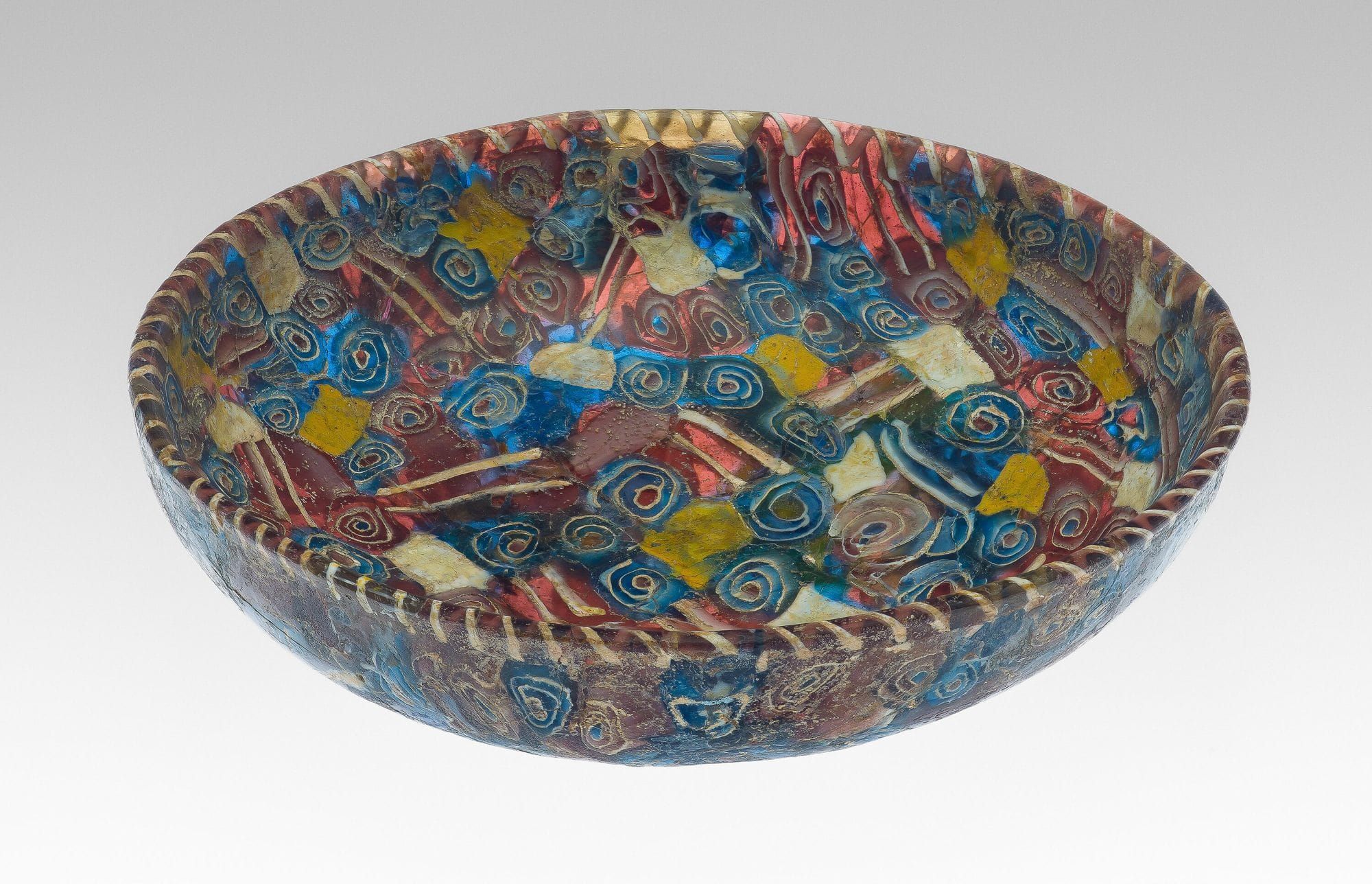
A glass dish on loan from the Toledo Museum of Art supplies one of the exhibition’s examples of colour on a small scale. Dated to the first century BCE, the millefiori vessel combines a strong blue ground with swirling white, gold and turquoise effects. Its intricate surface makes pattern a principal feature of the object.
Lighting is part of the museum’s interpretation of these vessels. Overhead illumination would intensify the dish’s colours, while a nearby lamp flame would give the glass a translucent glow. The exhibition asks visitors to consider the vessels in relation to the light around a Roman table, as well as their shapes and patterned surfaces.
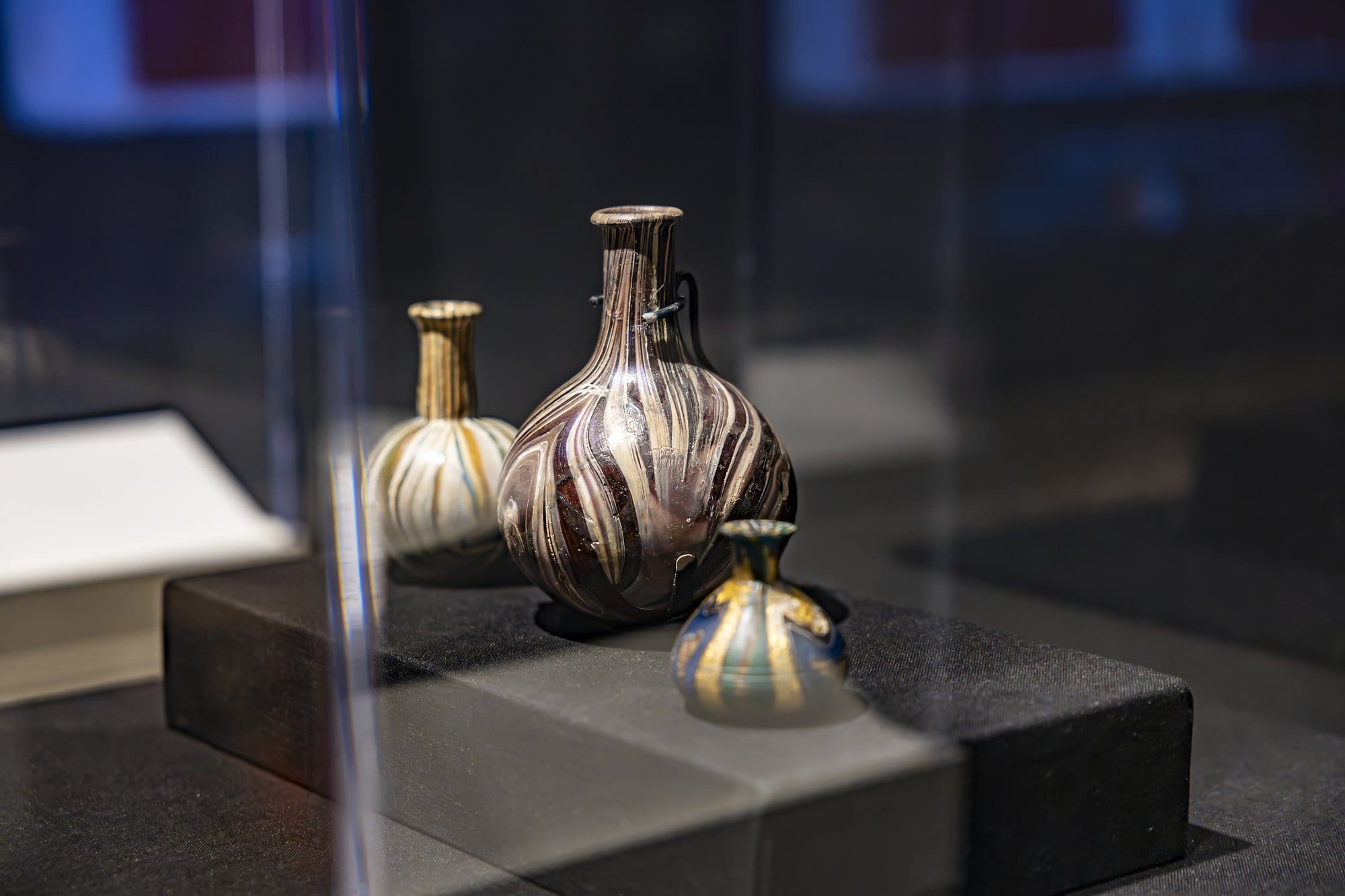
Other glass loans come from the Newark Museum of Art and the Corning Museum of Glass, alongside examples belonging to the Kelsey. The display includes bottles whose surfaces carry curving lines and other abstract effects. Together, the vessels show how colour and pattern could occupy objects used at an intimate scale.
Egyptian textiles bring patterns onto the body
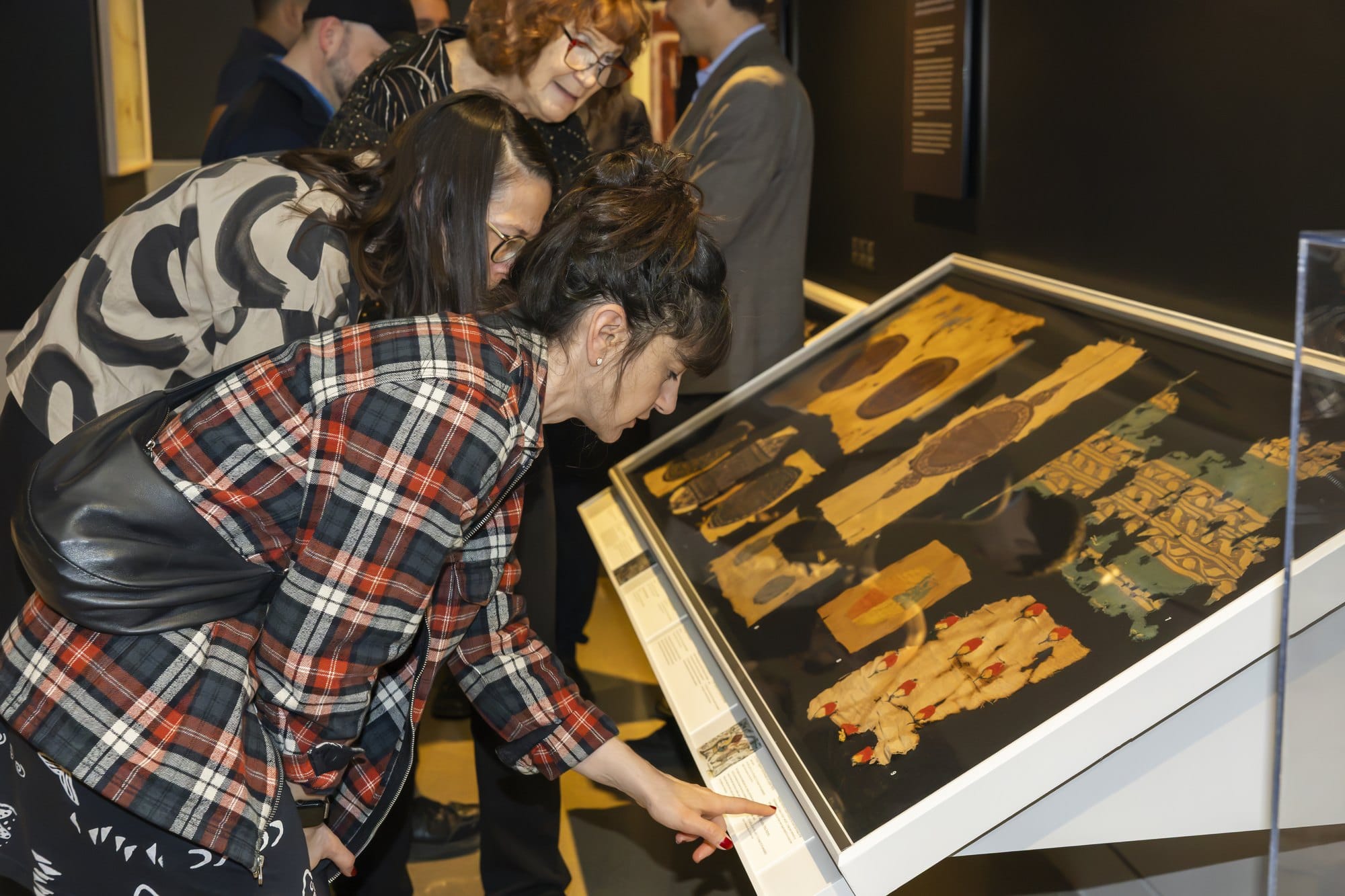
Textile fragments from the Kelsey’s collection carry abstract designs into clothing. Their tapestry roundels include connected circles, interlaced stars and leaf-like forms. Such decoration appeared at the shoulder or hem of garments, placing repeated shapes on the body itself. The fragments add surviving fabric to the wider evidence for Roman clothing and textile production.
The dry environment of Egypt has preserved many ancient textiles that would have decayed elsewhere. These objects were long grouped broadly under the label “Coptic” and associated with Egypt’s early Christian period. Recent radiocarbon dating has given the Kelsey a more specific chronology for the fragments displayed in the exhibition.
According to the museum, the tested exhibition textiles belong between the middle of the third century and the beginning of the fifth century CE. This places them in the late Roman period and provides a dated group of examples for the continued use of abstract designs in clothing. Their woven patterns therefore contribute to the show’s chronological argument as well as its visual range.
Floors and ceilings restore the scale of a room
Mosaic fragments from the Kelsey, Cleveland Museum of Art and Sam Noble Oklahoma Museum of Natural History shift attention from clothing to interiors. Their interlocking forms and repeated motifs show how patterned surfaces could extend beneath a viewer’s feet. The loans introduce a larger architectural scale into the sequence of objects.
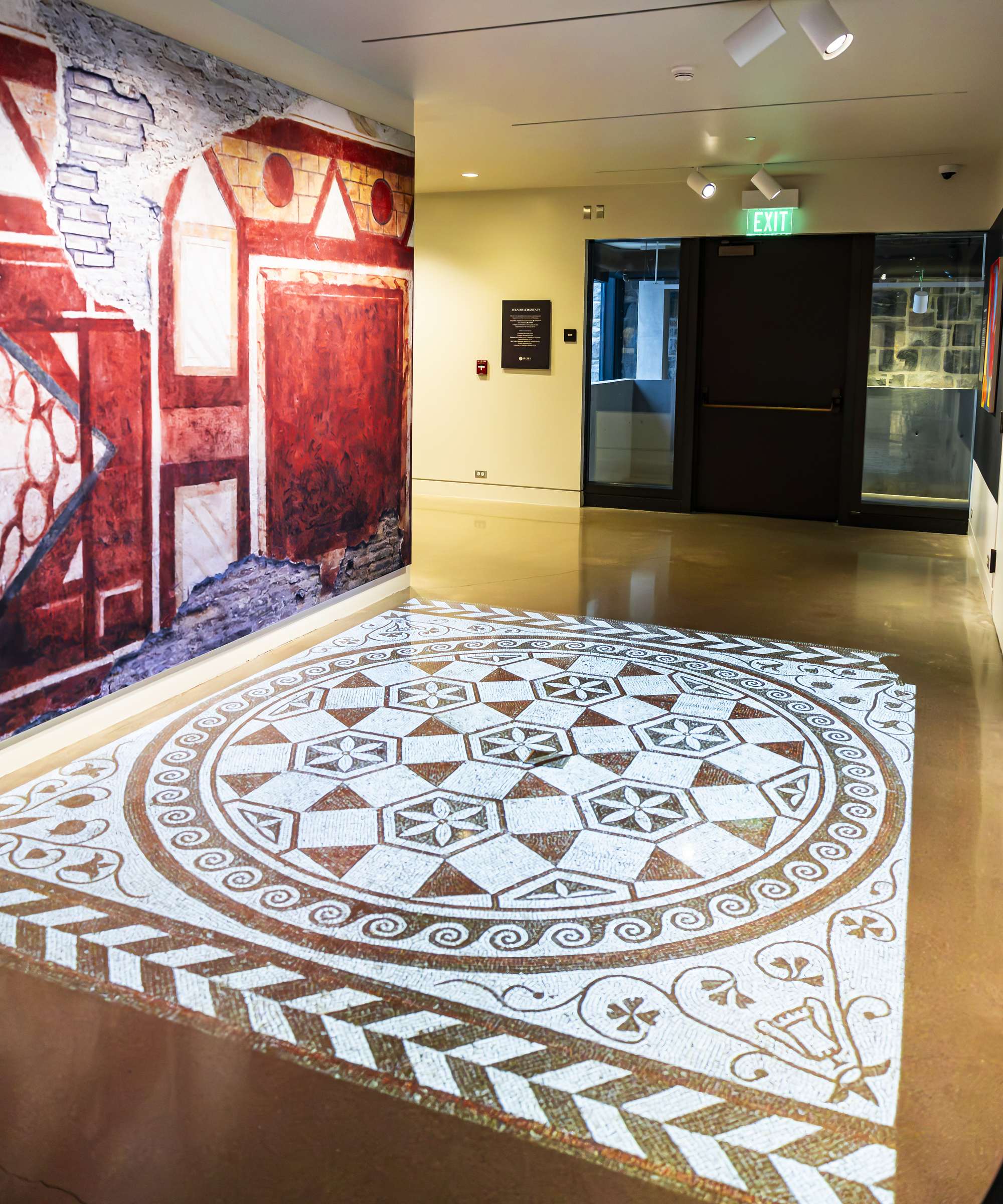
Rotating light projections then present mosaic and opus sectile, or cut-marble, floor designs at their intended scale. Visitors can walk across the projected patterns. The installation makes the relationship between a design and a moving body part of the gallery experience, extending the display beyond fragments placed in cases.
The exhibition also recreates the coloured surfaces of Roman interiors above floor level. A full-scale reproduction of a wall painting from Rome’s Case Romane del Celio presents large fields of deep red. Overhead, a ceiling print reproduces an illusionistic geometric design from the Ramp Room in the House of Augustus on the Palatine Hill.
Red and pink remain in the carved grooves
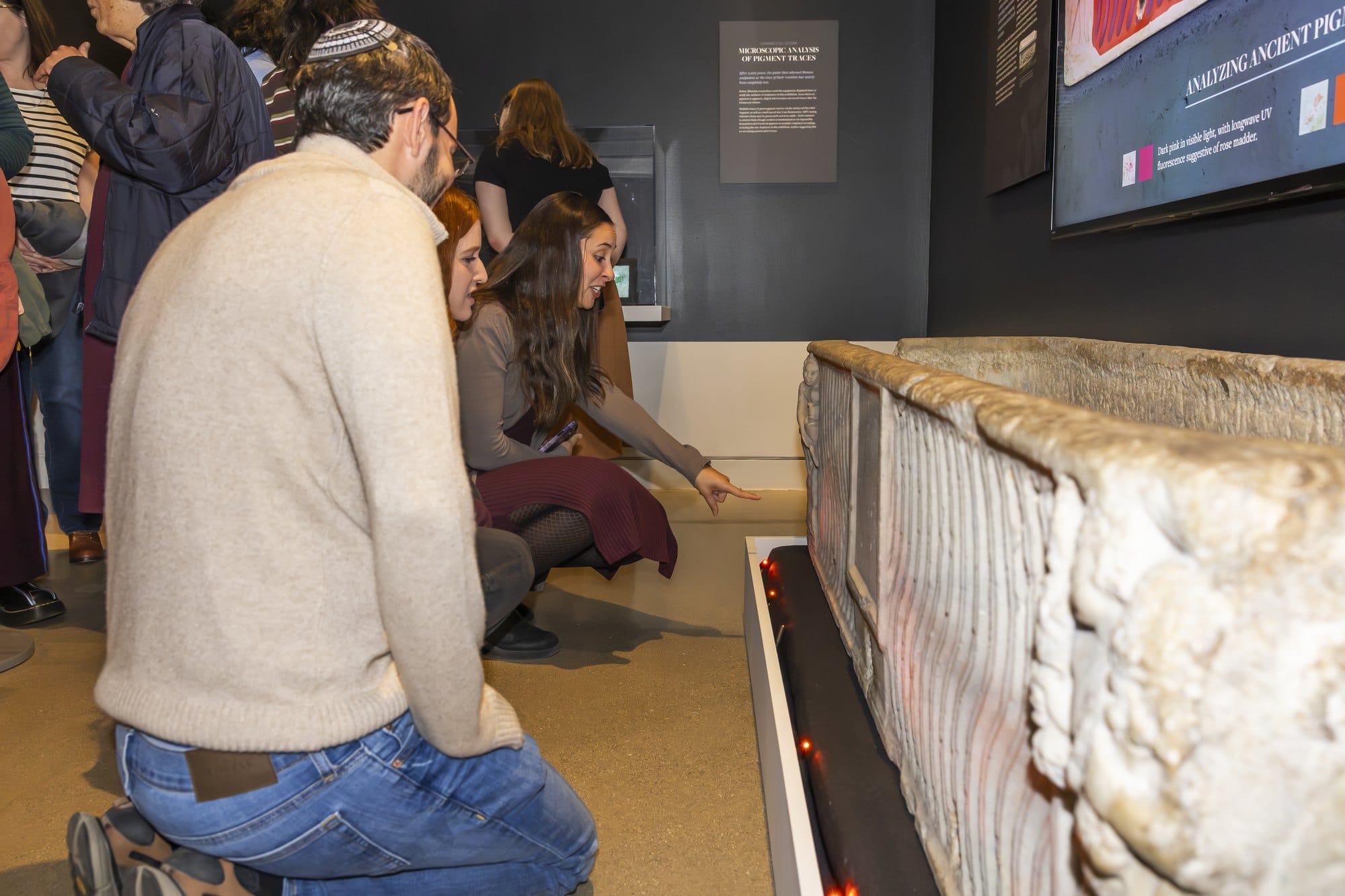
A marble sarcophagus from the Memorial Art Gallery of the University of Rochester carries the exhibition into a funerary setting. The late third-century coffin belongs to the strigilated type, with deep, wave-like grooves running across much of its surface. A fisherman and a shepherd occupy the edges of the composition.
The coffin also forms part of ongoing research. Preliminary examinations reported by the Kelsey found red and pink paint in raised and recessed parts of carved lines. The work involved the Rochester sarcophagus and comparable examples at the Toledo Museum of Art and Detroit Institute of Arts, examined by the curator and a Kelsey conservator.
A monitor above the Rochester loan cycles through hypothetical colour reconstructions informed by the research. The gallery also draws attention to the interaction of light and carved lines, asking visitors to imagine the effect of a painted surface under flickering tomb illumination.
The gallery’s research will continue online
The museum plans to extend the exhibition through a forthcoming digital catalogue. A three-dimensional model of the installation is also being developed with the local digital media company Sagenverse. Both projects are intended to carry the exhibition and its research beyond the physical display in Ann Arbor.
The ongoing work connects the close examination of materials with the arrangement of whole spaces. Paint traces contribute to the sarcophagus display; radiocarbon dates refine the textile chronology; reproductions and projections restore the scale of architectural designs. The exhibition brings those different forms of investigation together around Roman colour and pattern.
Ancient Abstractions: Roman Visual Trends Beyond Naturalism remains on view through 28 February 2027 at the Kelsey Museum of Archaeology, 434 South State Street, Ann Arbor. Admission to the museum is free. Its galleries place the small coloured vessel, the decorated garment and the patterned room within the same investigation of Roman visual experience.

About the Roman Empire Times
See all the latest news for the Roman Empire, ancient Roman historical facts, anecdotes from Roman Times and stories from the Empire at romanempiretimes.com. Contact our newsroom to report an update or send your story, photos and videos. Follow RET on Google News, Flipboard and subscribe here to our daily email.
Follow the Roman Empire Times on social media: