
Roman Glass Found in a Monumental Tomb in Mongolia
A handled glass vessel, jade and crystal-set ornaments from Duurlig Nars reveal the distant connections of a Xiongnu elite burial.

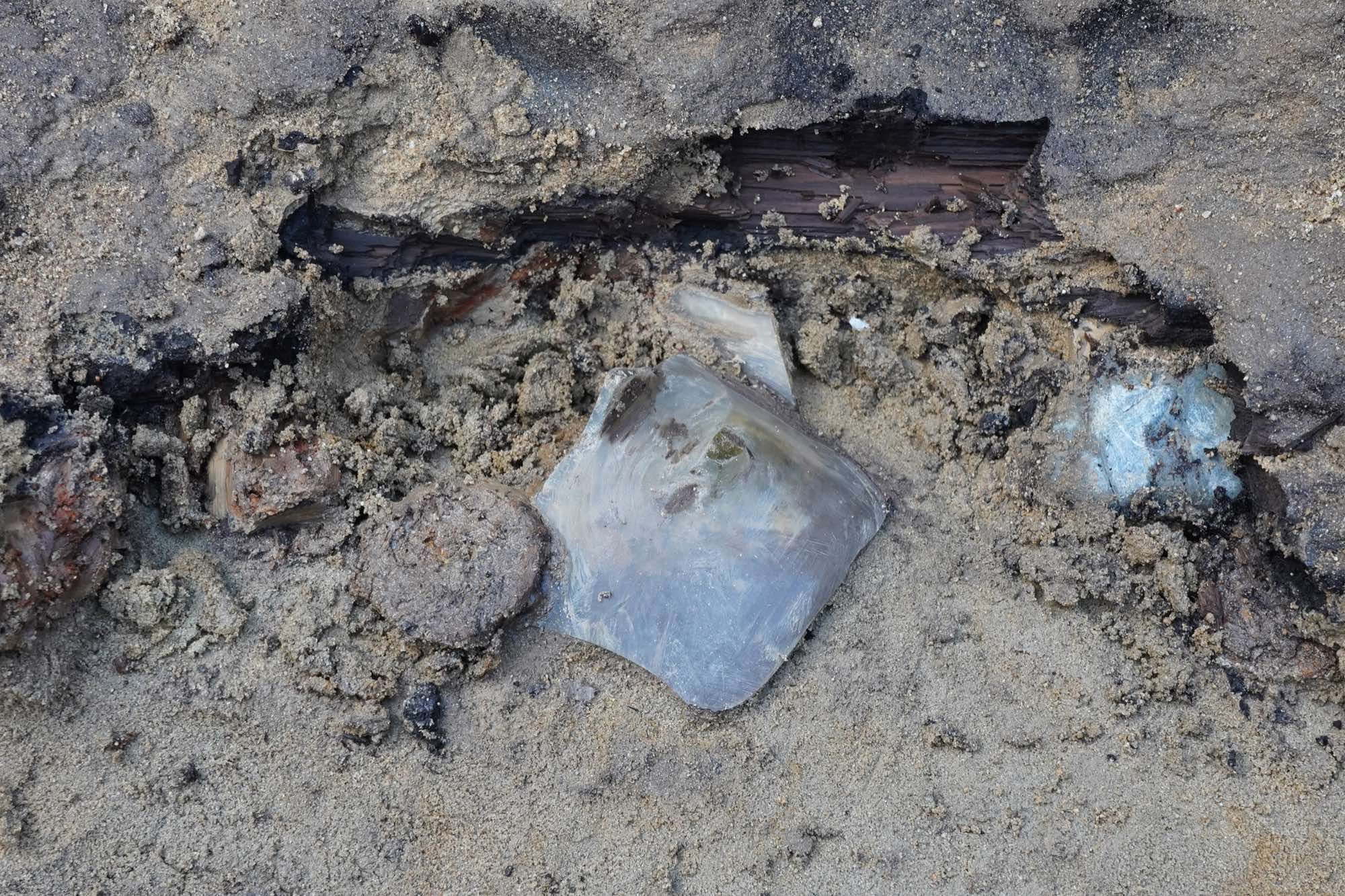
A transparent glass vessel with a handle, possibly made within the Roman Empire, has been recovered from a monumental Xiongnu tomb in eastern Mongolia. It is among 413 finds reported by the National Museum of Korea, alongside jade objects, silver horse equipment and an unusual gold ornament assembled around transparent crystal.
The museum announced on 6 November that a Korean–Mongolian team had completed four years of excavation at Tomb 160 in the Duurlig Nars cemetery. The project, carried out from 2023 to 2026, brought together the museum, the Institute of Archaeology of the Mongolian Academy of Sciences and the National Museum of Mongolia.
The burial dates to the late first or second century AD, when the Xiongnu occupied the Mongolian steppe during Rome’s imperial period. Its contents bring together a possible Roman product and objects associated with Han Chinese funerary culture and the ancient Lelang region around present-day Pyongyang. The excavators are now turning to scientific analysis to investigate the glass and the person buried with these possessions.
A glass vessel awaiting its birthplace
The handled vessel supplies the excavation’s most direct potential connection with the Roman world. The museum describes production in Roman imperial territory as a possibility and plans to investigate the glass’s composition to establish its place of manufacture.
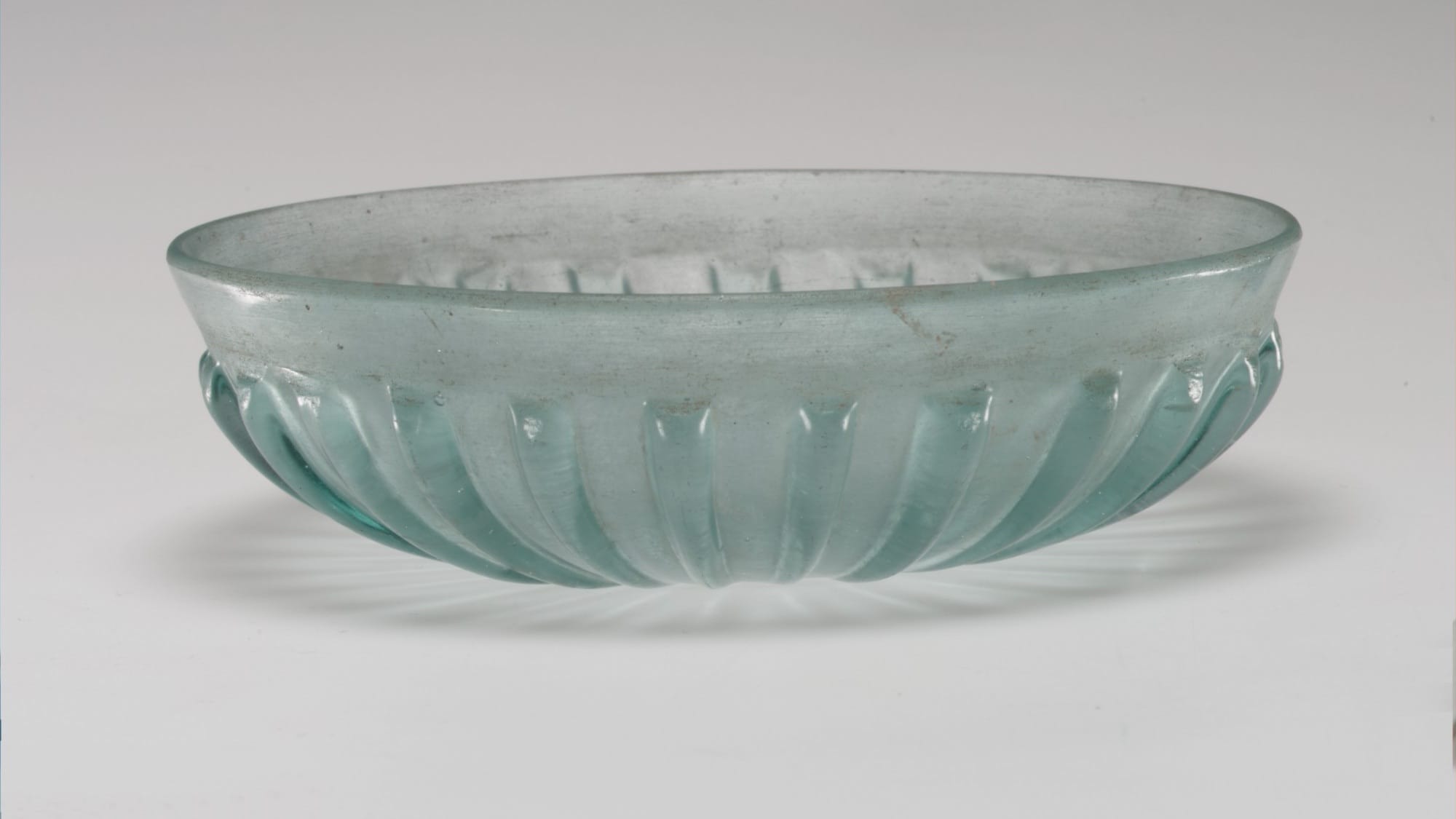
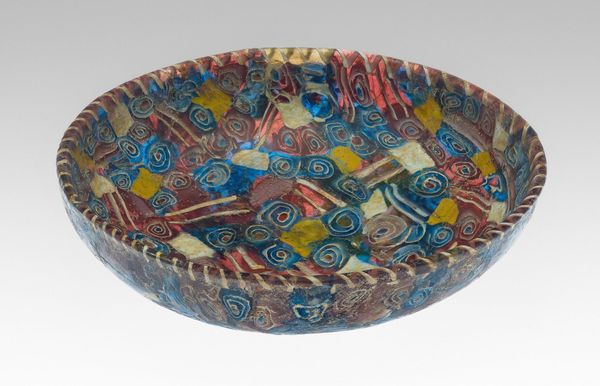
By the first century AD, glassmaking had become a mature Roman industry, drawing heavily on eastern Mediterranean skills and techniques. Glassblowing expanded the forms craftspeople could produce, while casting remained important for certain fine vessels. The resulting objects served many purposes, from drinking and storage to the small perfume containers represented by the glass scent bottle in a Pompeii cupboard.
Roman glassware also reached lands beyond the empire’s frontiers. That wider circulation belongs alongside Rome’s eastern trading connections, through which luxury objects travelled across several regions. For the Duurlig Nars cup, identifying where the material was made is the next step towards placing a particular object within that larger history.
A monument built with nine layers of stone
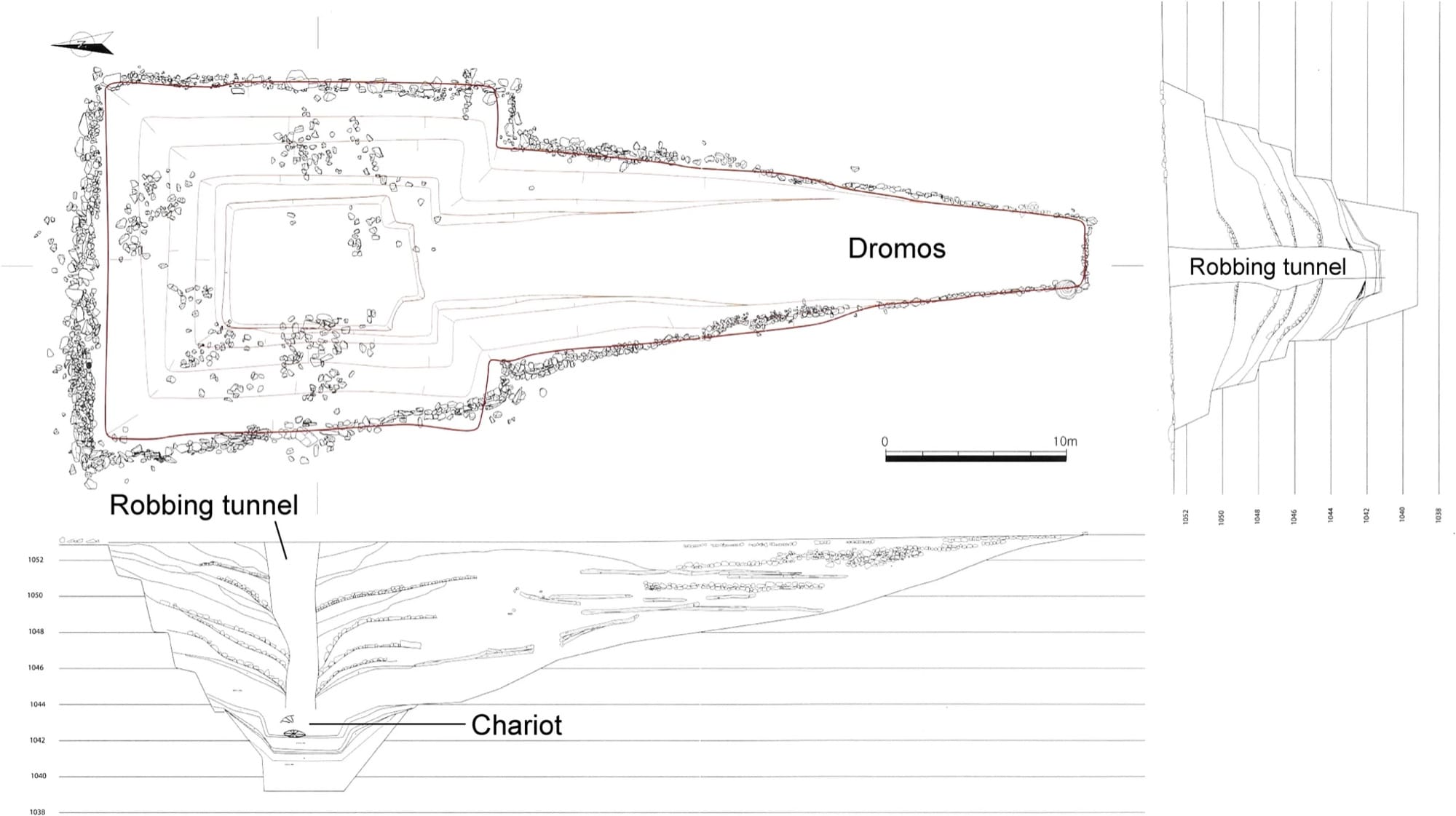
Tomb 160 measures approximately 73 metres (240 feet) including its passage extending to the south. The museum describes it as the largest Xiongnu tomb identified in Mongolia. Its builders cut a stepped excavation into the ground and filled it through nine successive episodes of stone deposition, creating a structure that required substantial labour.
At the centre, two timber enclosures surrounded the coffin. A lacquered carriage had been buried directly above the central burial area. The excavators interpret the monument’s scale and the carriage as expressions of the occupant’s high position, with the arrangement of the burial adding to the evidence supplied by its valuable contents.
The cemetery itself has been known since 1974. It lies approximately 450 kilometres (280 miles) northeast of Ulaanbaatar, near Bayan-Adarga in Khentii Province. Earlier Korean–Mongolian work investigated other large tombs and their accompanying graves. The new announcement concerns the completion of the latest Tomb 160 campaign within that longer programme of research.
Gold and silver arranged around crystal
One round gold ornament contained gold foil and red and blue material beneath transparent crystal. The museum describes light and colour showing through the crystal, an effect produced by the layered construction. It identifies this kind of ornament as a form recorded for the first time in a Xiongnu tomb.
A separate silver object belonged to horse equipment. Craftspeople hammered a thin silver sheet into a gourd shape and set rock crystal into its centre. Its form resembles ornaments from Lelang burials, including an example excavated from Tomb 219 at Seokam-ri near Pyongyang and now held by the National Museum of Korea.
The crystal setting distinguishes the new silver find from that comparison. The museum places the objects within a broad history of exchange linking the steppe with surrounding societies. Their materials, construction and parallels provide different kinds of evidence: the gold ornament’s unusual arrangement and the horse fitting’s resemblance to an excavated Lelang object each contribute to the interpretation of the burial.
Han funerary jade given different forms
Fifteen jade objects lay overlapping on the bottom of the coffin. The excavators connect them with bi, the jade discs used in Han Chinese funerary practice. The comparison rests on their relationship to that tradition, while the pieces from Tomb 160 have a different appearance from its familiar circular discs.
The newly reported objects are irregular in shape and carry finely worked decoration on their surfaces. The museum interprets them as an adaptation of Han burial culture, in which an established funerary form was taken up and changed. Their position inside the coffin also gives them a specific place within the deceased’s burial arrangements.
The assemblage therefore combines several categories of possession within one funeral: jade inside the coffin, ornaments, horse equipment and a carriage above the central burial. Alongside the possible Roman glass, these finds are the basis for the museum’s interpretation of an elite burial connected with a wide Eurasian world.
A small burial chamber beneath an enormous exterior
The central burial area was unexpectedly small and shallow in relation to the monument around it. Tomb 160 reached approximately 14.5 metres (48 feet) below ground, whereas comparable large Xiongnu tombs in central Mongolia can reach approximately 22 metres (72 feet). The difference is one of the excavation’s principal architectural findings.
Similar features appeared in the accompanying graves investigated in 2019. The museum places Tomb 160 in a period of declining Xiongnu power and suggests that the reduced central burial area may reflect contemporary social change.
Objects and their positions also help researchers reconstruct individual funerals. Within the Roman world, the varied glass vessels deposited in a Salona burial provide another example of the information preserved by a grave assemblage. At Duurlig Nars, the relationship between the coffin, surrounding timber structures and accompanying burials makes the entire complex important to the investigation.
Teeth, hair and glass move into the laboratory
Teeth and hair recovered inside the coffin will be investigated alongside the artefacts. The museum hopes that DNA analysis can clarify the occupant’s biological profile and relationships with people in the accompanying graves. The work follows earlier genetic research at Duurlig Nars, where another group of burials has already been studied.
A 2023 study examined mitochondrial DNA from six people in satellite graves around a different elite tomb at the cemetery. The six had different maternal lineages, suggesting no maternal kinship among those sampled. That result concerns the earlier grave group; the new Tomb 160 material offers a separate opportunity to investigate how people within a burial complex were related.
The museum plans to bring the excavated objects to South Korea before the end of 2026 for conservation and scientific analysis, with two Mongolian researchers joining as conservation trainees. A comprehensive excavation report will follow further study. Establishing the glass vessel’s origin and the occupant’s relationship to the accompanying burials are now central questions for understanding this elaborate funeral and its distant connections.

About the Roman Empire Times
See all the latest news for the Roman Empire, ancient Roman historical facts, anecdotes from Roman Times and stories from the Empire at romanempiretimes.com. Contact our newsroom to report an update or send your story, photos and videos. Follow RET on Google News, Flipboard and subscribe here to our daily email.
Follow the Roman Empire Times on social media: