
ARTE Brings The Fall of the Roman Empire Back Into View
Anthony Mann’s epic returns to ARTE with a reconstructed Forum, a philosopher-emperor and a vision of decline that still invites comparison with Roman history.

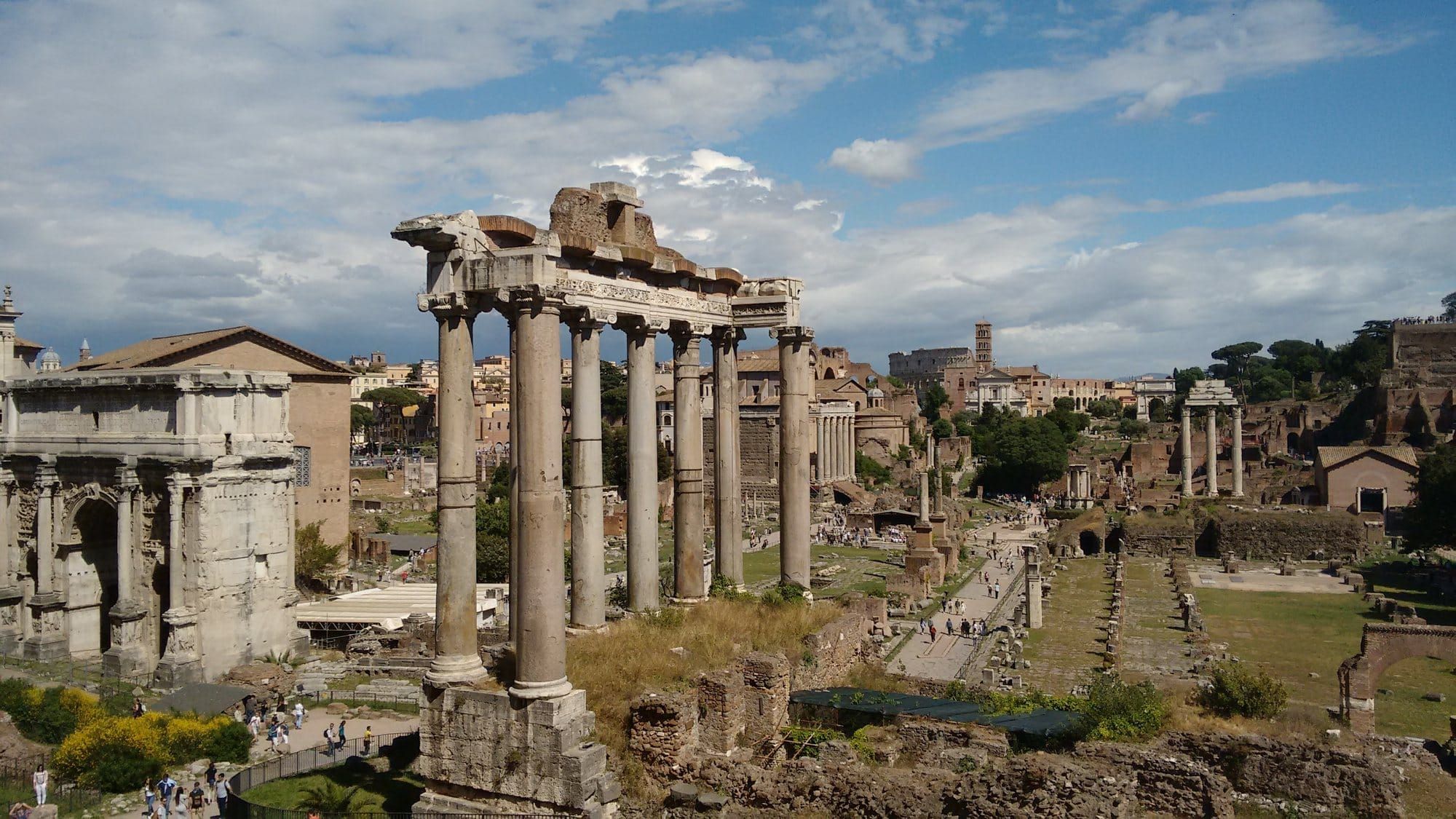
ARTE has brought Anthony Mann’s The Fall of the Roman Empire back into its catalogue, with a French-channel broadcast listed for 27 December at 21:00 and online availability advertised until 28 February 2027. The 1964 epic returns with an unusually expansive vision of Rome: a city of public buildings, political argument and imperial ceremony, as well as battles and rival claimants to power.
The broadcaster’s current French listing runs to 173 minutes and names Stephen Boyd, Sophia Loren, Alec Guinness and Christopher Plummer among its cast. Availability is territorial: the player currently displays a country restriction from Portugal. Readers should check the official programme page for access in their own location rather than assume that the French listing means worldwide streaming.
For Roman-history audiences, the renewed listing offers a reason to revisit a film whose architecture and political ambitions have attracted sustained scholarly attention. Its reconstructed Forum provides a particularly revealing visual reference for how cinema imagines ancient Rome, while its account of imperial decline belongs to a long tradition of interpreting the transition from Marcus Aurelius to Commodus.
A succession crisis on the Danube
The story opens in AD 180, with Marcus Aurelius campaigning on the Danube frontier. In ARTE’s synopsis, the emperor considers passing power to the general Livius instead of his son Commodus. His sudden death clears the way for Commodus, separating the general from Marcus’s daughter Lucilla and setting the family’s ambitions against the future of the empire.
Guinness plays Marcus, Boyd plays Livius, Loren plays Lucilla and Plummer plays Commodus. James Mason appears as Timonides, while Omar Sharif plays the Armenian ruler Sohamus. The screenplay is credited to Ben Barzman, Basilio Franchina and Philip Yordan, with Samuel Bronston producing and Robert Krasker responsible for the cinematography.
ARTE presents the film as a conflict between competing approaches to government, carried through betrayal, divided loyalties and frustrated love. The setting makes Marcus Aurelius’s life and writings central to the drama. His authority supplies the standard against which the conduct of the next ruler will be judged.
The Forum becomes the centre of Rome
The Roman Forum, rather than the Colosseum, is the film’s principal urban setting. That choice gives the city a different emphasis from the arena-centred Rome of Gladiator. Public space becomes a setting for the display and negotiation of power, allowing the architecture to carry part of the film’s argument about the society behind the imperial court.
Designers Veniero Colasanti and John Moore created a life-sized Forum reconstruction outside Bronston’s studios in Madrid. The production’s American souvenir programme also included an account of the ancient Forum’s development. Buildings and open spaces were therefore presented both as a spectacle for the audience and as a way into Rome’s civic history.
Scholarly analysis treats this Forum as the visible expression of the film’s ideal Rome and a decisive setting in its second half. Its usefulness as a visual reference lies in that relationship between space and action. A reconstructed city can communicate political scale and public ceremony while remaining a designed interpretation of the ancient place.
Marcus Aurelius supplies the political ideal
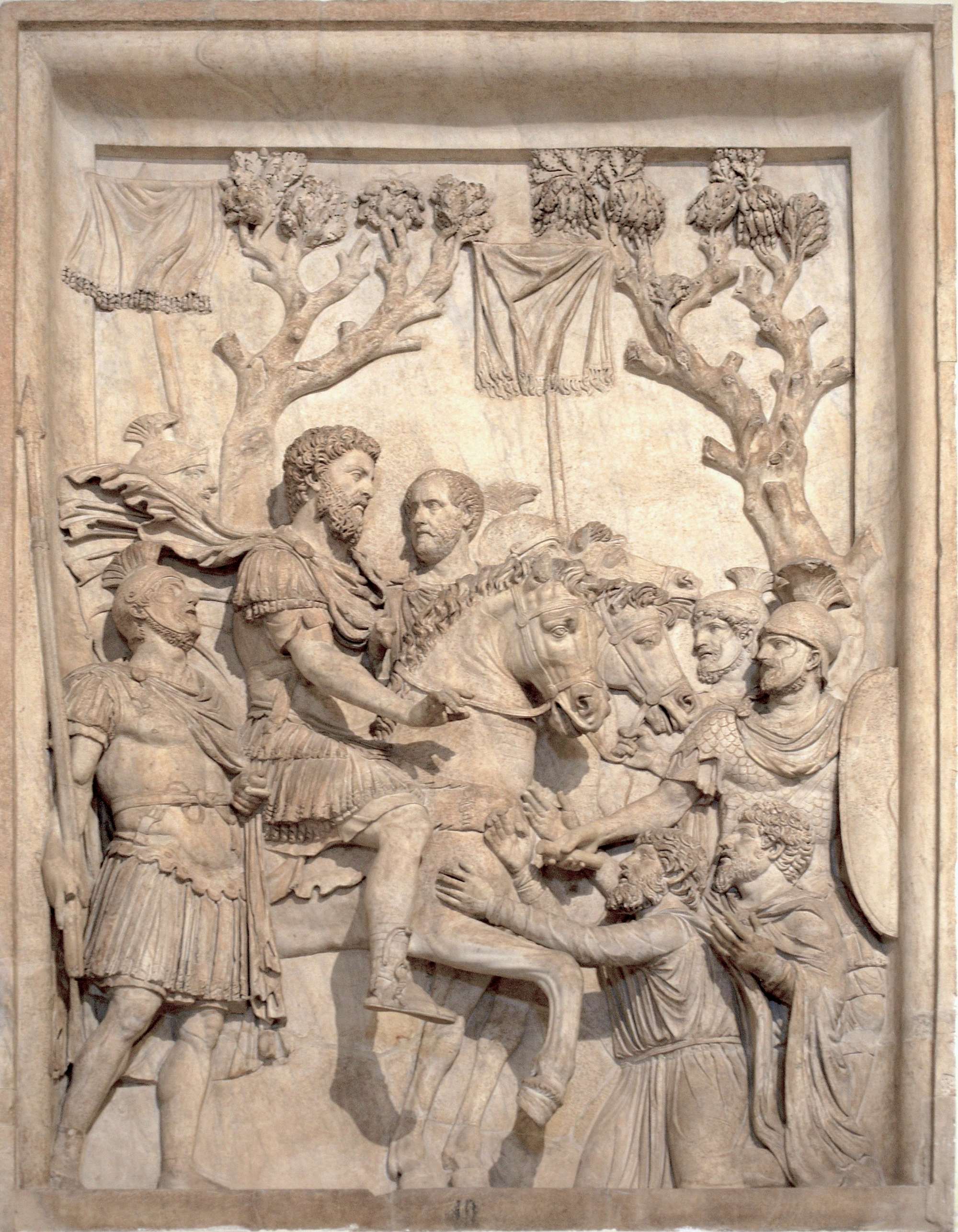
Marcus dominates the first half of Mann’s film. He makes military and political decisions, addresses representatives of the empire and confronts Commodus. The character’s significance extends beyond the question of who should succeed him: his government represents the kind of Rome that the narrative places at risk when authority passes into different hands.
His philosophy is also given an explicit place in the story. The Meditations, his personal reflections, help connect the emperor’s private thought with the civilisation the film depicts. Scholarship identifies a scene in which Marcus mentally confronts Death as a cinematic treatment of ideas found in those writings, bringing reflection into a genre associated with physical spectacle.
Lucilla’s concern for preserving his writings continues that theme after his death. The film makes a text into part of Rome’s inheritance, linking the fate of ideas to the fate of government. The separate history of the survival of the Meditations provides a useful counterpart to this dramatic role for the emperor’s words.
Commodus carries a contested historical reputation
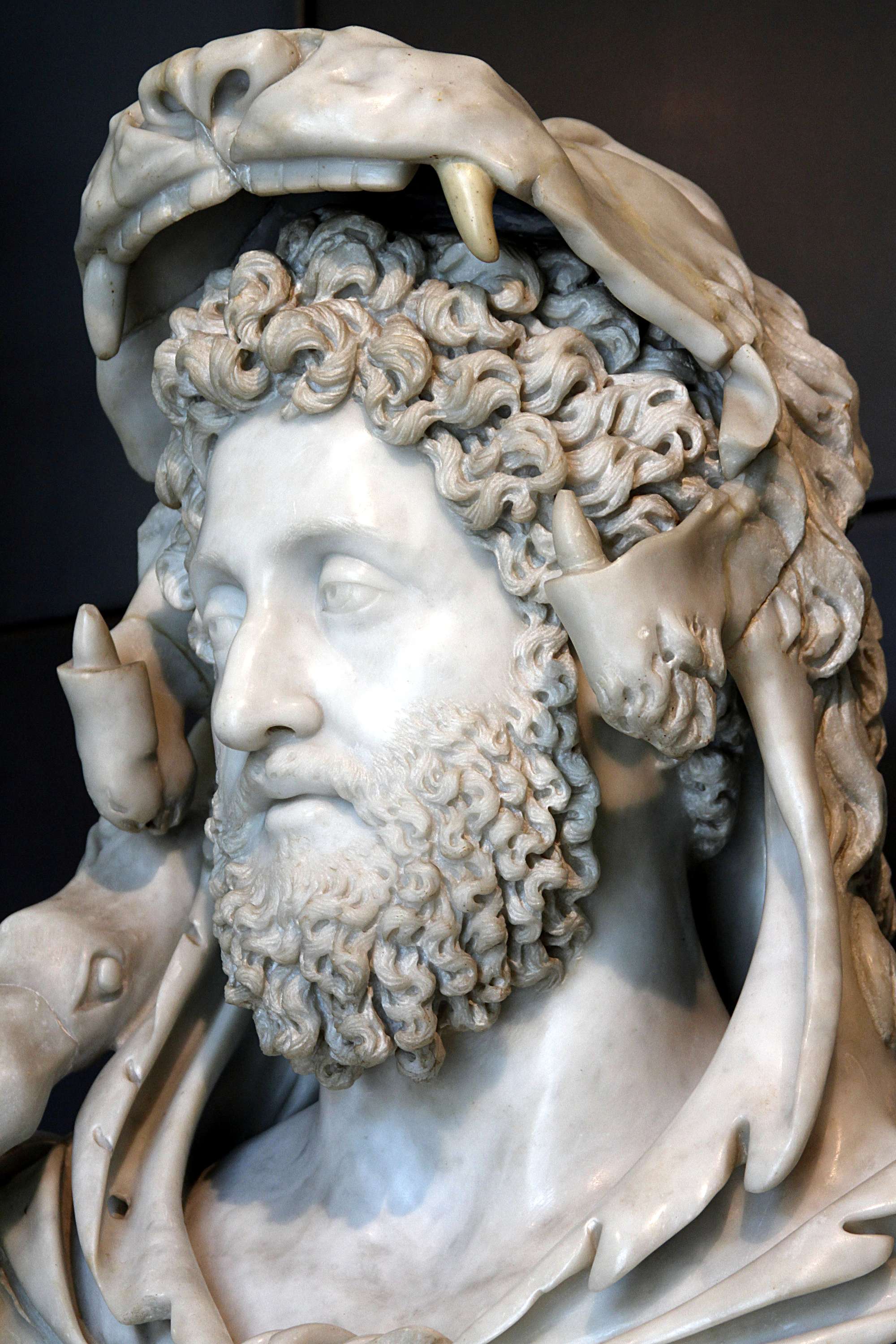
Plummer’s Commodus belongs to the tradition that contrasts a philosophical father with a destructive son. That contrast gives the succession its dramatic force, but the scholarly discussion around the film also examines how the emperor’s reputation was constructed. Hostile ancient writing and later storytelling have both shaped the familiar image of Commodus as the opposite of a good ruler.
The academic collection devoted to the film includes a reassessment of Commodus that tests the literary conventions behind that image. Its treatment considers more favourable or ambivalent traditions alongside the strongly negative portrait. Our account of Commodus’s reputation as a gladiator emperor follows that wider debate beyond the screen character.
This history of representation gives the performances a specific context. The film adapts ancient material to construct a story about power, rather than simply reproducing a neutral record of personalities. Its choices about whom to idealise and whom to condemn are part of the historical interpretation viewers encounter alongside the costumes, monuments and military formations.
The title follows an argument about decline
The events around Marcus and Commodus take place centuries before the end of the western imperial government in AD 476. Mann’s title concerns the beginning of a process of decline. The film turns a change of ruler into a turning point for Roman civilisation, giving the personal conflict a much longer historical consequence within its narrative.
Edward Gibbon’s history helped establish the importance of this transition in later accounts of Rome. Scholarship on the film traces that influence through its speeches and its presentation of imperial government. The resulting story frames decline primarily through the loss of a political and moral ideal, rather than through a chronological account of the empire’s final military defeats.
The ending develops that argument beyond the fate of a single tyrant. In the scholarly reading, corruption reaches further into Roman society than one emperor’s behaviour, so the defeat of the villain cannot by itself restore the earlier ideal. The narrative’s pessimism distinguishes it from historical epics that resolve their political crisis through a victorious hero.
A Roman epic with a later cinematic afterlife
The film’s relationship to Ridley Scott’s Gladiator has become a recurring subject of criticism. Both organise their stories around Marcus’s death, Commodus’s accession and a Roman general caught in the struggle. Their different settings and conclusions give those shared elements different meanings, making comparison more useful than treating either film as a substitute for the other.
The 2009 academic volume The Fall of the Roman Empire: Film and History examines the production through ancient history, historiography and cinema. Its contributors also consider the political concerns of the early 1960s, including the relationship between Rome’s imperial ambitions and modern American power. The reconstructed ancient world thus carries questions from the period in which the film was made.
ARTE’s renewed listing brings this combination of monumental design and political interpretation back into view. The Forum provides a physical setting for the film’s ideal of Rome, while Marcus’s writings connect that ideal with the civilisation’s intellectual inheritance. Those elements give the succession drama a wider subject: the relationship between individual rulers, public institutions and the values through which the film defines Roman civilisation.


About the Roman Empire Times
See all the latest news for the Roman Empire, ancient Roman historical facts, anecdotes from Roman Times and stories from the Empire at romanempiretimes.com. Contact our newsroom to report an update or send your story, photos and videos. Follow RET on Google News, Flipboard and subscribe here to our daily email.
Follow the Roman Empire Times on social media: