
Roman Sites Lie in the Path of the 2027 Total Solar Eclipse
A Roman theatre, a legionary base and cities in North Africa sit in the eclipse’s path. Their settings differ, as do totality and access on the day.

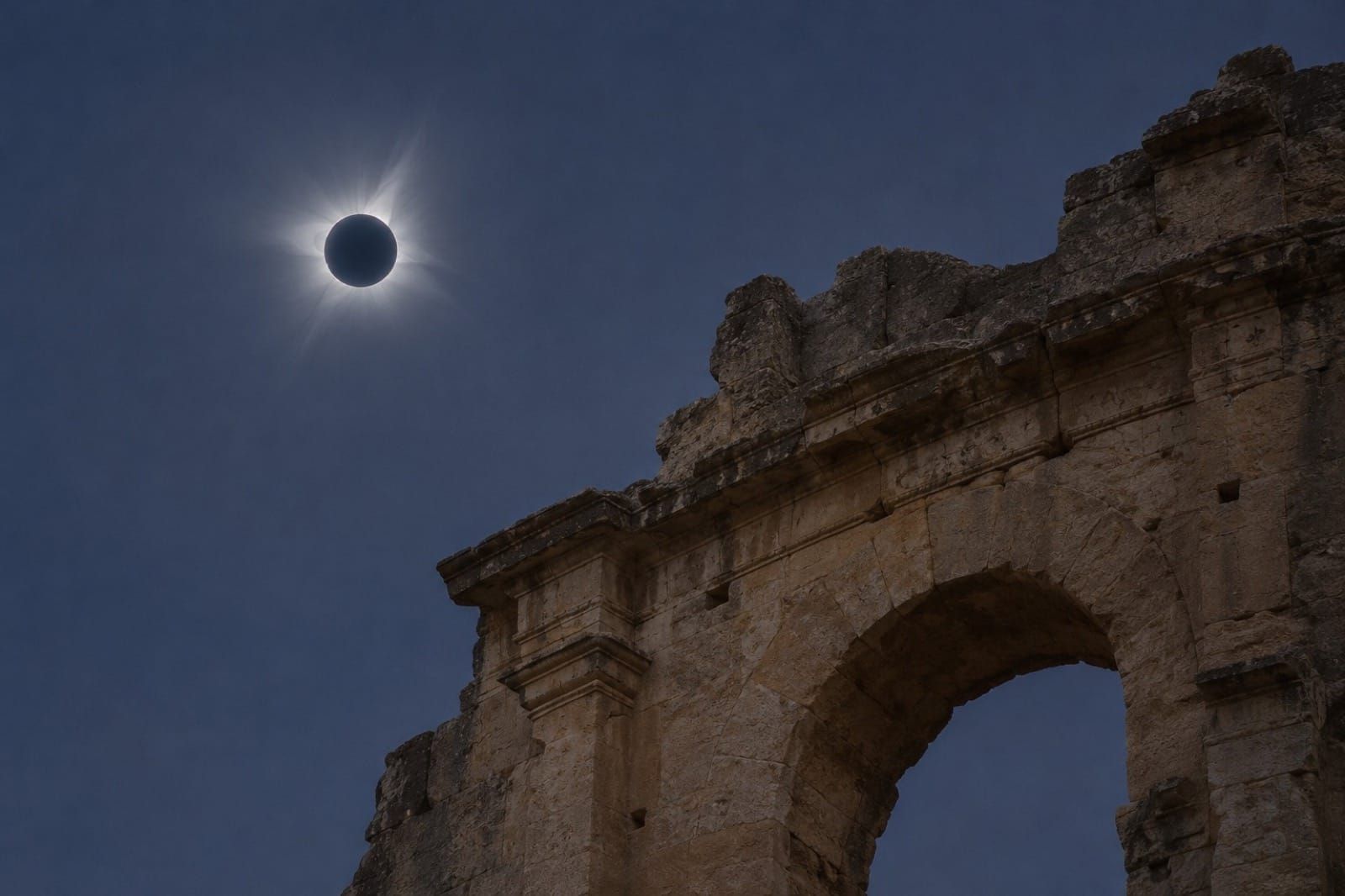
Roman theatres, military sites and ancient cities across the western Mediterranean lie in the path of the total solar eclipse on 2 August 2027. The Moon’s shadow will cross southern Spain and North Africa before continuing east, bringing a brief period of daytime darkness to monuments in several former Roman territories.
A report published by Space on 12 November identifies eight archaeological settings along that route: Baelo Claudia and Málaga’s Roman theatre in Spain; Tamuda in Morocco; Timgad, Lambaesis and Djémila in Algeria; and Sbeitla and El Jem in Tunisia. Together, they represent very different parts of Roman provincial life, from an army base to a large arena.
The astronomical event is firmly dated, while the experience will vary considerably between locations. The report’s estimates range from about two minutes of totality at Málaga and Djémila to more than five minutes around Timgad and Sbeitla. Access arrangements, the local horizon and the weather will determine what visitors can actually see from each archaeological setting.
A Morning Shadow Across the Mediterranean
A total solar eclipse occurs when the Moon passes between Earth and the Sun and completely covers the Sun’s bright face for observers within a narrow track. The National Solar Observatory’s overview places the 2027 track across Spain, Morocco, Algeria, Tunisia and countries farther east, including Libya and Egypt.
NASA’s published calculations give a maximum duration of approximately six minutes and 23 seconds in Egypt. The western Mediterranean sites fall along earlier stretches of its eastward passage. Location within the track also affects the duration, as a monument near its edge receives a shorter period of totality than a comparable location nearer the centre.
Spain’s Theatre and Coastal Town
Baelo Claudia stands beside Bolonia on the coast near Tarifa. Andalucía’s official tourism record describes a carefully planned Roman town, with administrative buildings grouped around its forum. Although some structures belong to the Augustan period, much of the monumental building dates to Claudius. Its preserved streets and columns give the Spanish part of the eclipse route a substantial urban setting.
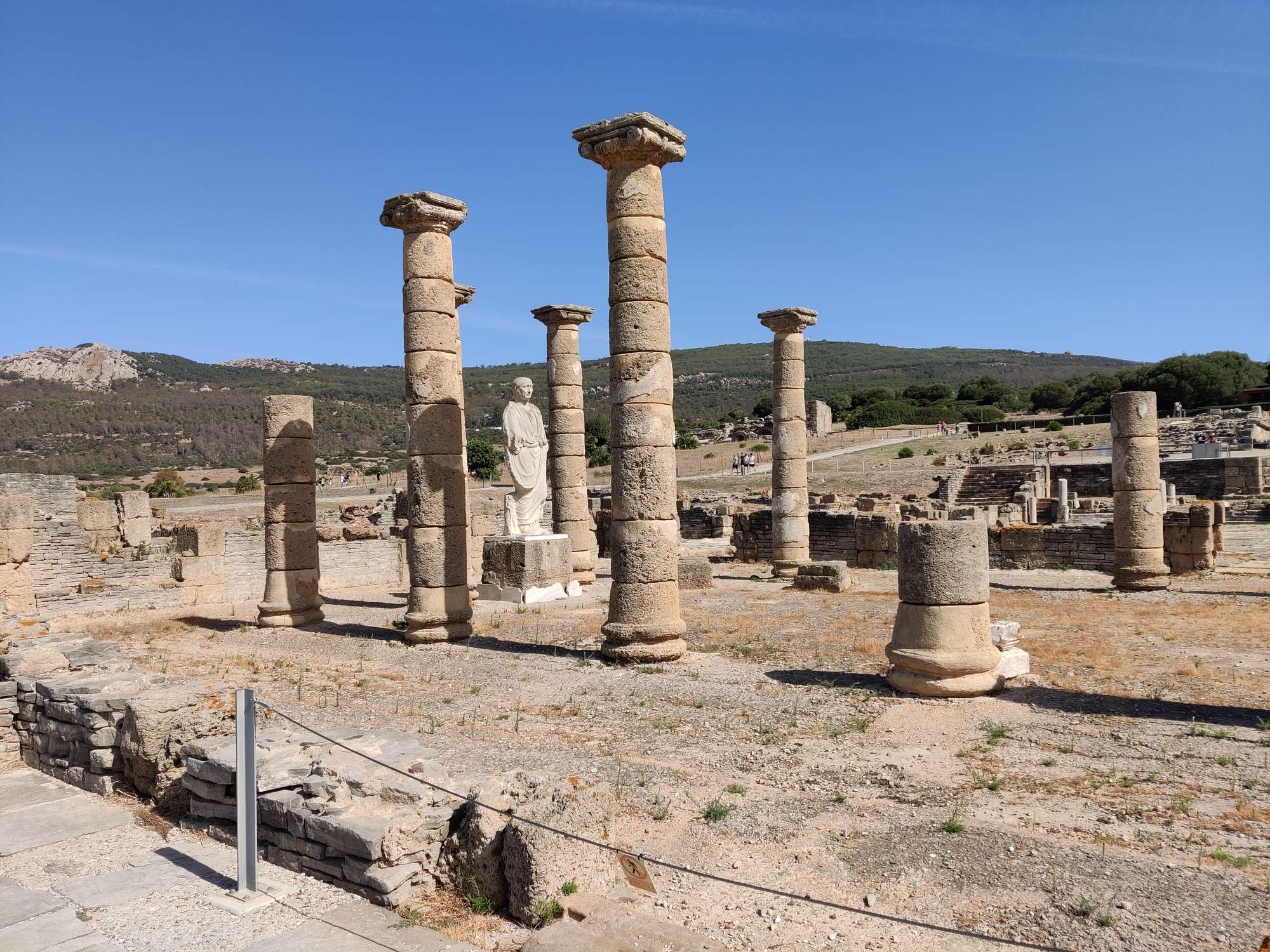

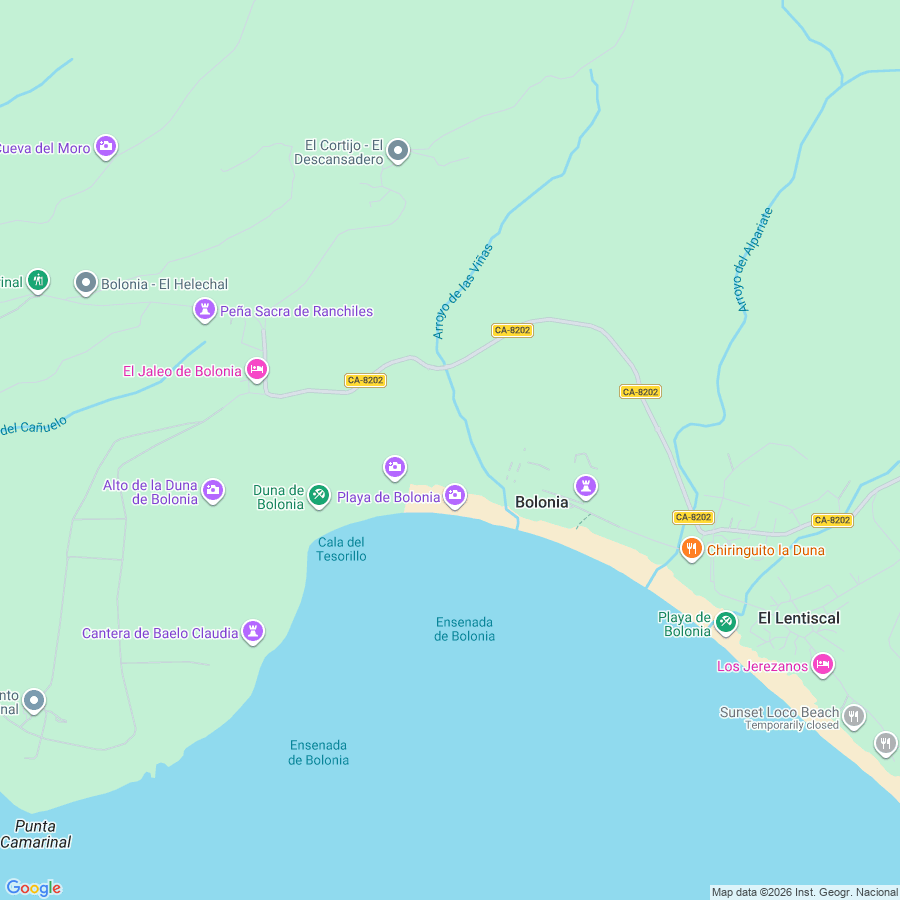
Baelo Claudia
Málaga offers a different survival, immediately below the Alcazaba fortress. The official Spanish tourism service dates its theatre to the reign of Augustus and records its use until the third century. Rediscovered in 1951, the theatre had spent centuries underground; building materials from it were reused in the later fortress.
The two sites also offer different eclipse lengths. Space gives Baelo Claudia approximately four and a half minutes of totality, compared with just under two minutes at Málaga.

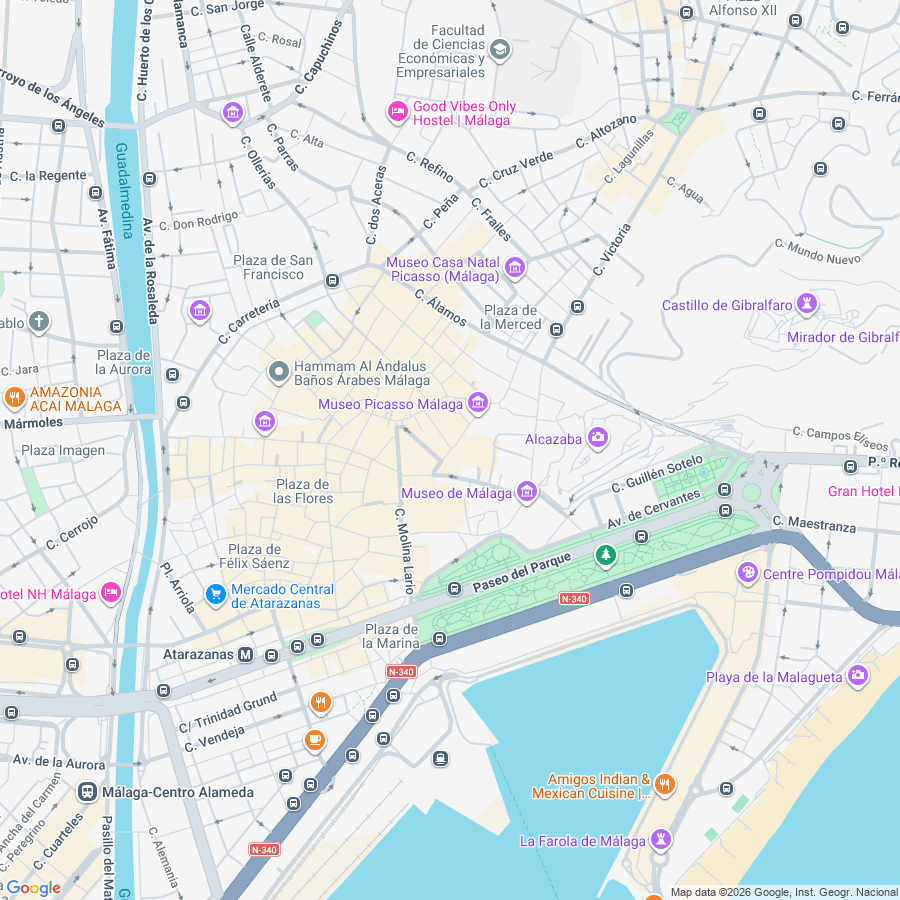
Málaga Roman Theatre
A Fort Built Over Older Tamuda
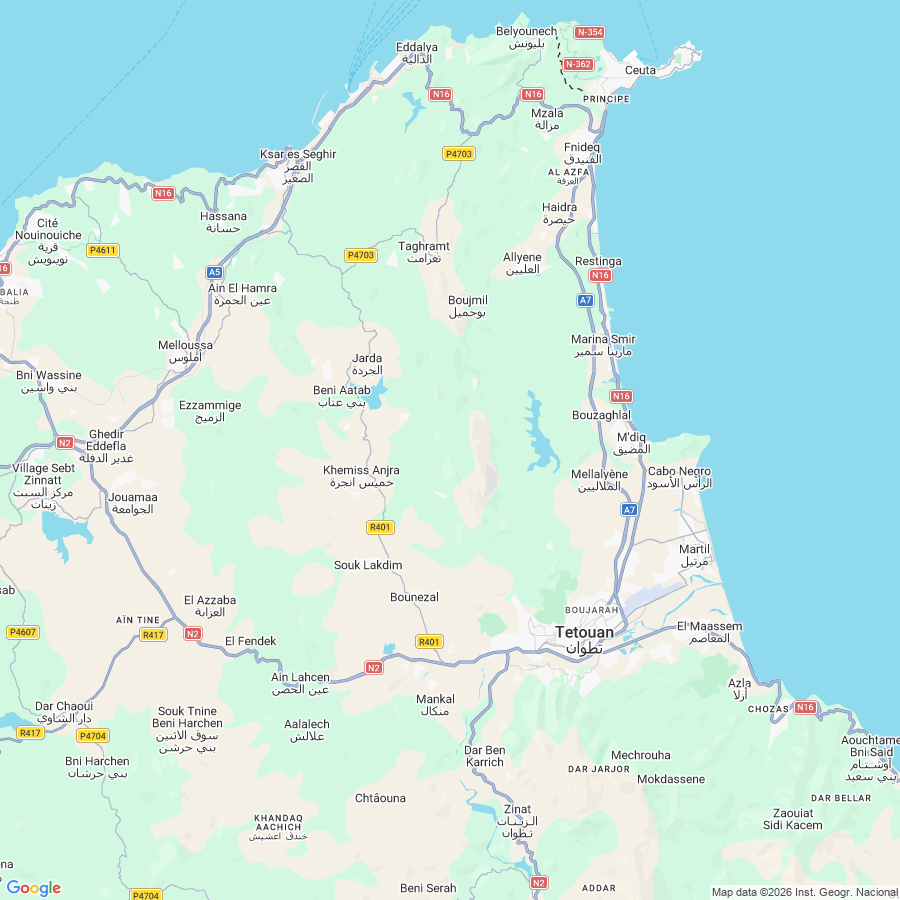
Across the Strait of Gibraltar, Tamuda lies near Tétouan in northern Morocco, on a terrace above the Martil River. Its Roman remains occupy a place with a substantial earlier history. Archaeological research identifies a Mauretanian town with streets, public spaces and private buildings before the construction of the Roman military installation.
An open-access study in African Archaeological Review describes the later establishment as a small castellum, or military fort, built under the emperor Claudius over the older town’s ruins. The fort’s standing structures therefore belong to a different phase from the pre-Roman neighbourhood investigated by the study’s excavation team.
That earlier neighbourhood preserves evidence of craft production and changing uses of urban space. The study traces repeated occupation and abandonment in its sampled rooms, including food-processing activities. For an eclipse visitor, Tamuda consequently brings together a Roman military site and the archaeological traces of the community that preceded it.

Archeological Site of Tamuda
Three Cities in Roman Algeria
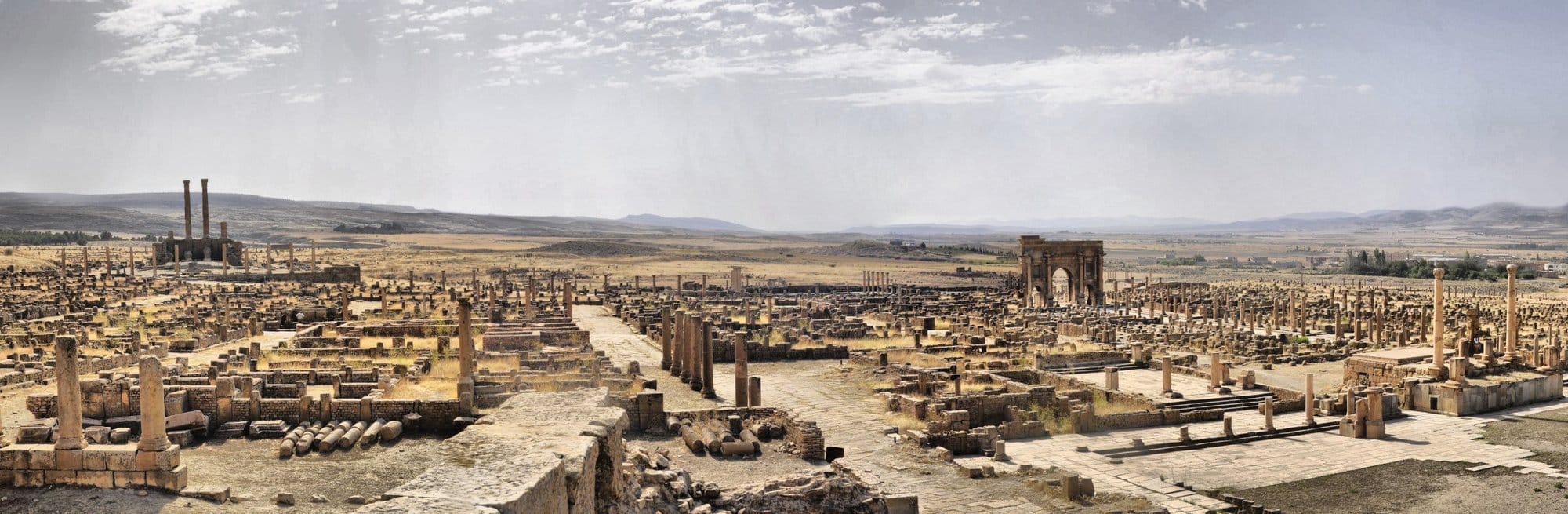
Timgad, ancient Thamugadi, was founded under Trajan in AD 100. UNESCO identifies its perpendicular main streets and original square plan as a particularly clear example of Roman town planning. The growing city subsequently extended beyond that first enclosure, acquiring further temples, markets and baths.
Nearby Lambaesis adds the army’s presence to this part of the route. It became the base of the Third Augustan Legion, a formation central to the history of Rome’s frontier in Numidia. Space places both Lambaesis and Timgad in the area receiving more than five minutes of totality, giving these neighbouring sites a longer eclipse than Djémila.
Djémila, known in antiquity as Cuicul, demonstrates how Roman urban building adapted to mountainous terrain. Founded during Nerva’s reign, the city developed forums, temples, baths, houses and a theatre. UNESCO emphasises the relationship between its plan and the rocky setting: the surviving monuments belong to a town shaped by slopes and restricted building space.
Temples and an Arena in Tunisia
At Sbeitla, ancient Sufetula, three separate temples stand at the end of the forum. Tunisia’s heritage agency identifies them with Jupiter, Minerva and Juno. Their arrangement makes the religious centre particularly recognisable, while the entrance to the forum passes through a monumental gate dedicated to Antoninus Pius in AD 139.
The city’s remains extend beyond that familiar view. Baths, shops, houses, fountains and Christian churches preserve different periods of its development. The heritage agency associates Sufetula’s prosperity with its road connections, olive cultivation and water supplies. Space estimates a little over five minutes of totality here, bringing the eclipse to a setting with extensive civic and religious architecture.
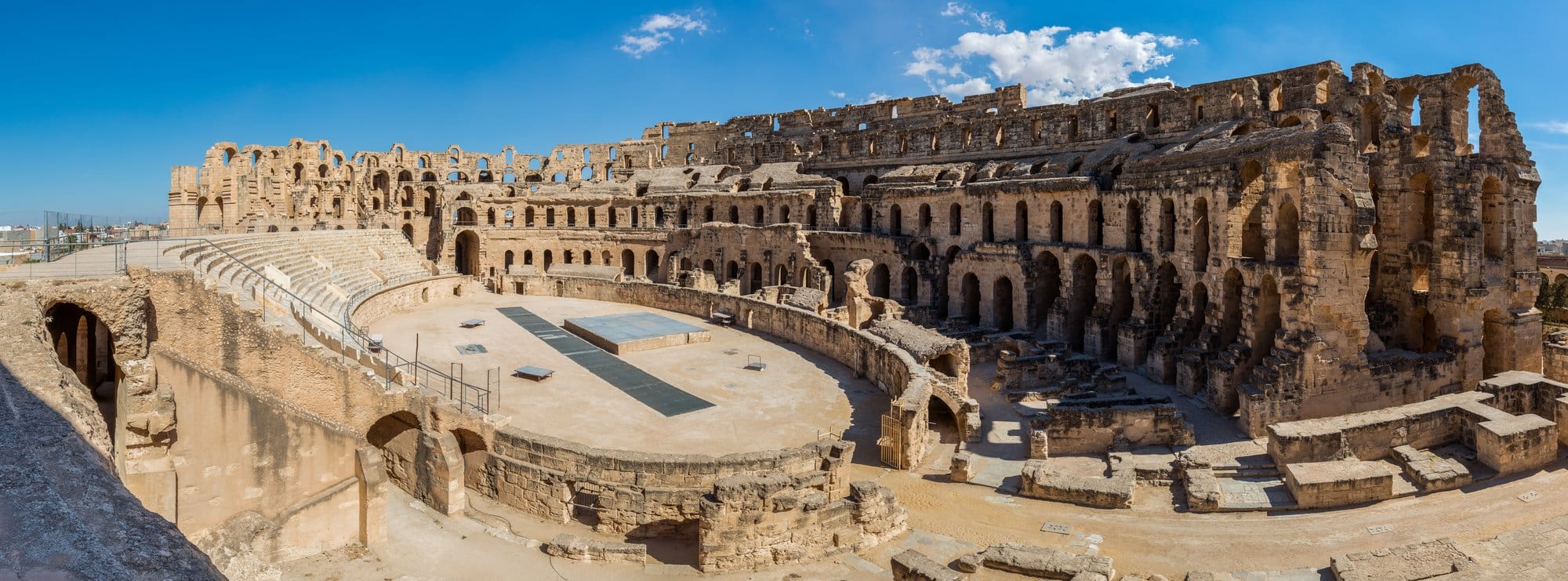
El Jem’s principal monument served a different purpose. Its third-century amphitheatre, in ancient Thysdrus, was constructed as a freestanding structure supported by arches. UNESCO estimates room for as many as 35,000 spectators and records the survival of much of the arena’s supporting infrastructure and underground passages. Space places its totality at approximately four minutes and 23 seconds.
Access Comes Before the Viewpoint
The date presents an immediate issue at Baelo Claudia. The eclipse falls on a Monday, and the published summer timetable lists Mondays as closed. An eclipse-specific opening would need confirmation from the site. The same distinction between the archaeological grounds, nearby public space and a booked viewing arrangement belongs in any plan involving these monuments.
Eye protection is equally specific. NASA advises using eclipse glasses or a safe handheld solar viewer during the partial phases before and after totality. Direct viewing without that protection is safe only while the Moon completely covers the Sun’s bright face; protection must be restored as soon as any part of that face reappears.
Cameras, binoculars and telescopes require appropriate solar filters over the front of their optics during the partial phases. Once access, local circumstances and a clear viewing position are settled, the choice among these sites becomes concrete: a coastal Roman town, an older settlement beneath a fort, an Algerian city or a Tunisian arena, each beneath the same moving shadow.
🏛️ Sources used:
Fred Espenak, NASA GSFC, “Path of the Total Solar Eclipse of 2027 Aug 02”
National Solar Observatory, “Total Solar Eclipse Map — August 2, 2027”
Andalucía Tourist Board, “Conjunto Arqueológico de Baelo Claudia”
Turespaña, “Málaga Roman Theatre”
UNESCO World Heritage Centre, “Timgad”
UNESCO World Heritage Centre, “Djémila”
Agency for the Development of Heritage and Cultural Promotion, “The Archaeological Site of Sbeitla”


About the Roman Empire Times
See all the latest news for the Roman Empire, ancient Roman historical facts, anecdotes from Roman Times and stories from the Empire at romanempiretimes.com. Contact our newsroom to report an update or send your story, photos and videos. Follow RET on Google News, Flipboard and subscribe here to our daily email.
Follow the Roman Empire Times on social media: