
Forget Quiet Luxury: A Roman Fashion Exhibition Puts Power in Colour
A pink Tiberius, surviving tunics and imperial boots anchor the Glyptotek’s new exhibition on how Romans used appearance to present authority.

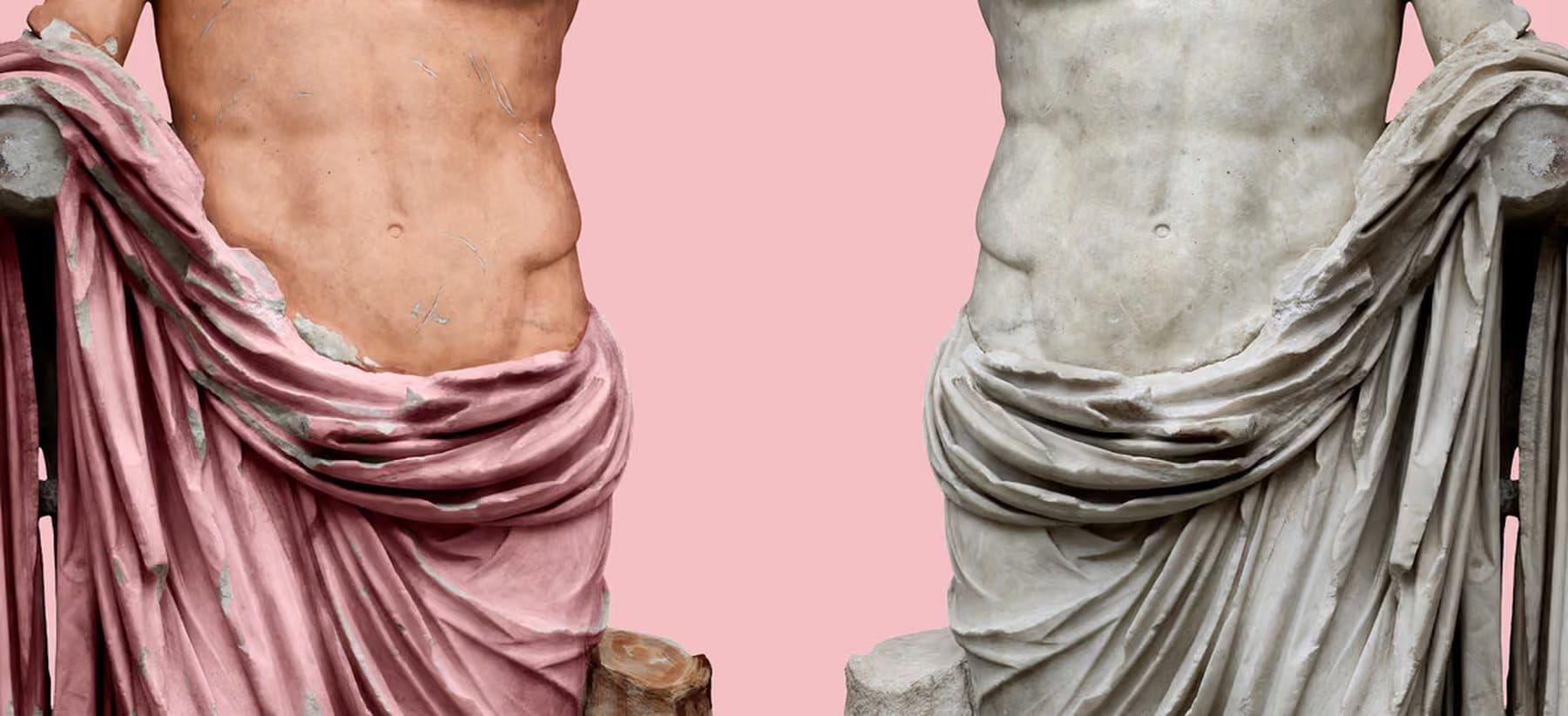
The Roman emperor Tiberius appears in a pale pink draped garment in a new visualisation at Copenhagen’s Ny Carlsberg Glyptotek. The colour is based on the museum’s study of a portrait sculpture, that although now looks largely white, its original appearance was painted; and is one of the central exhibits in The Power of Fashion in the Roman Empire, which opened on 1 October 2026 and runs until 29 March 2027.
The show asks visitors to look at Roman portraits as carefully staged images. Drapery, colour, jewellery and footwear could communicate the position a person wanted to occupy in public. The museum calls this its largest exhibition on antiquity and has assembled its own sculptures with loans from other collections across more than 1,000 square metres.
That visual language belonged most conspicuously to people who could commission a statue. Actual garments, texts and research into the paint once applied to marble, tell us different parts of the story. Together, the exhibits puts a more varied Roman wardrobe alongside the ideals projected by rulers and other prominent figures.
A statue dressed for an audience
The exhibition centres on Roman portraiture. Its sculpted figures are chiefly members of the upper ranks, and the Glyptotek treats their poses and clothing as deliberate choices. The emphasis is on how an image presented its subject, rather than a complete record of what everyone in the empire wore.
The Art Newspaper reports that the display contains 171 objects, including a statue of the freedman Gaius Fundilius Doctus in an elaborate toga (a freedman was a formerly enslaved person). In such portraits, the cut and arrangement of a garment could help establish a public identity; an elaborate sculpted costume need not have been ordinary daily dress.
The exhibition builds on the wider world of Roman textile production and clothing trades, which supplied garments across different materials, qualities and prices. Those trades are part of the background to the museum’s question: how did people turn clothing and its representation into signs of position and authority?
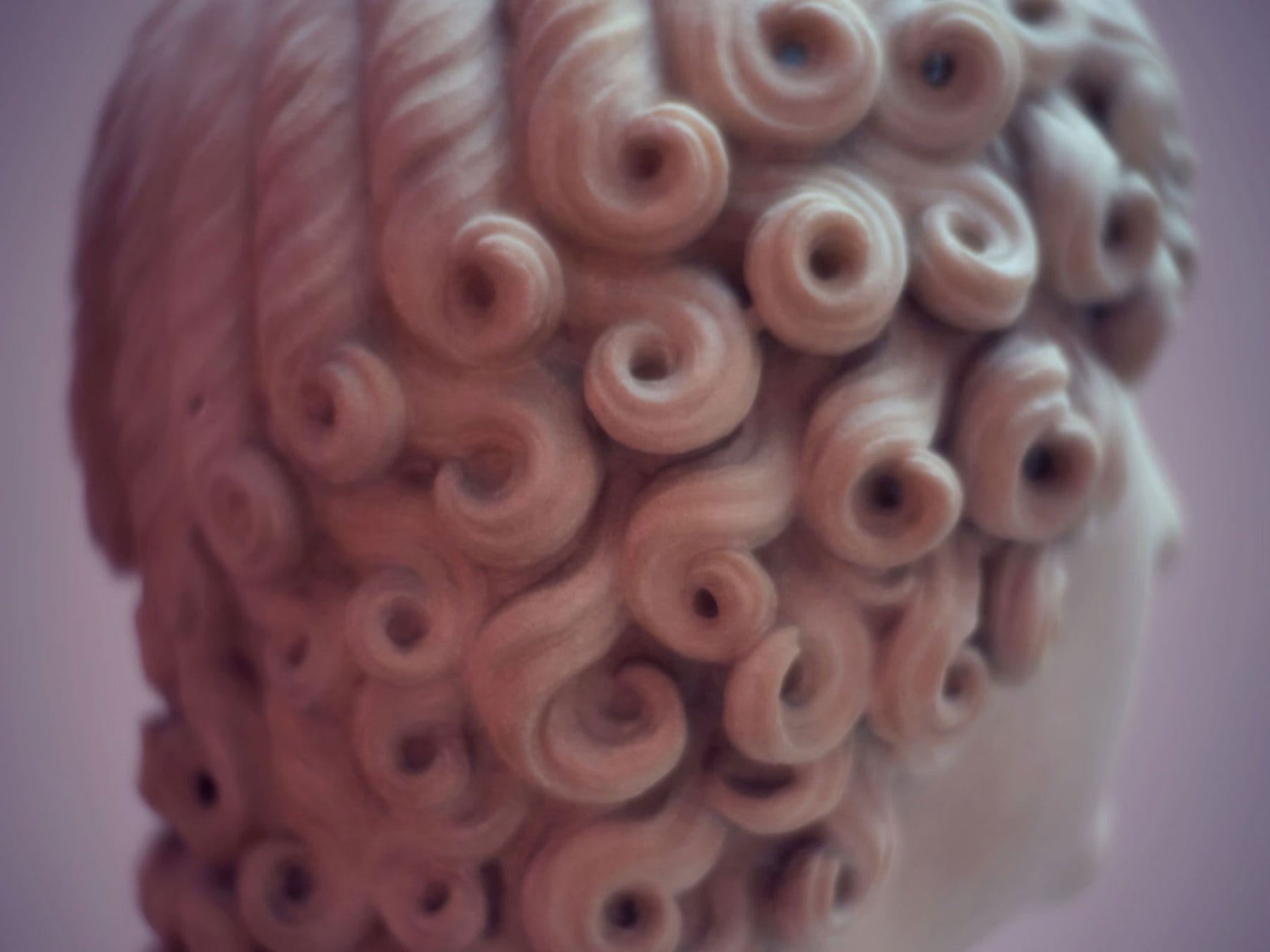
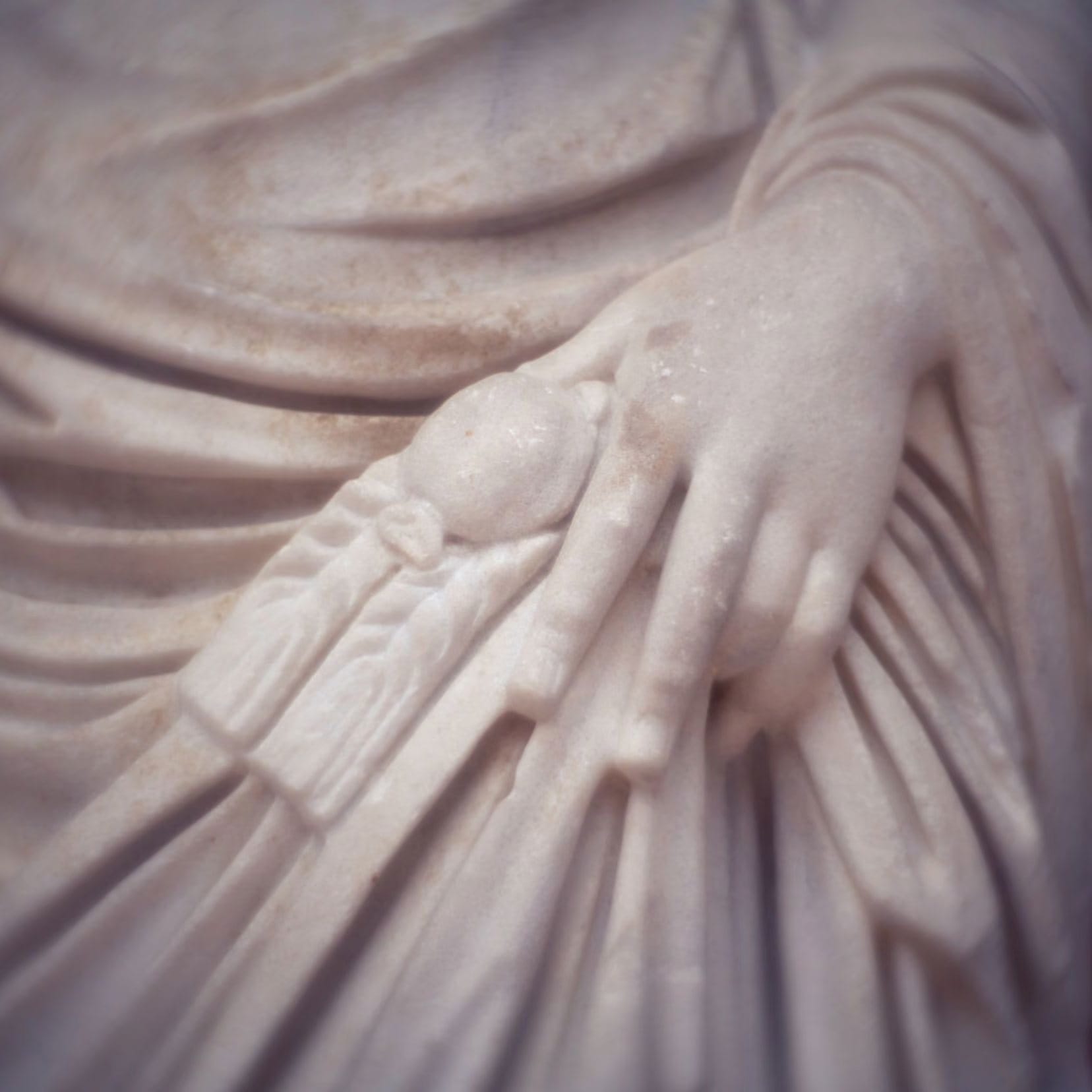
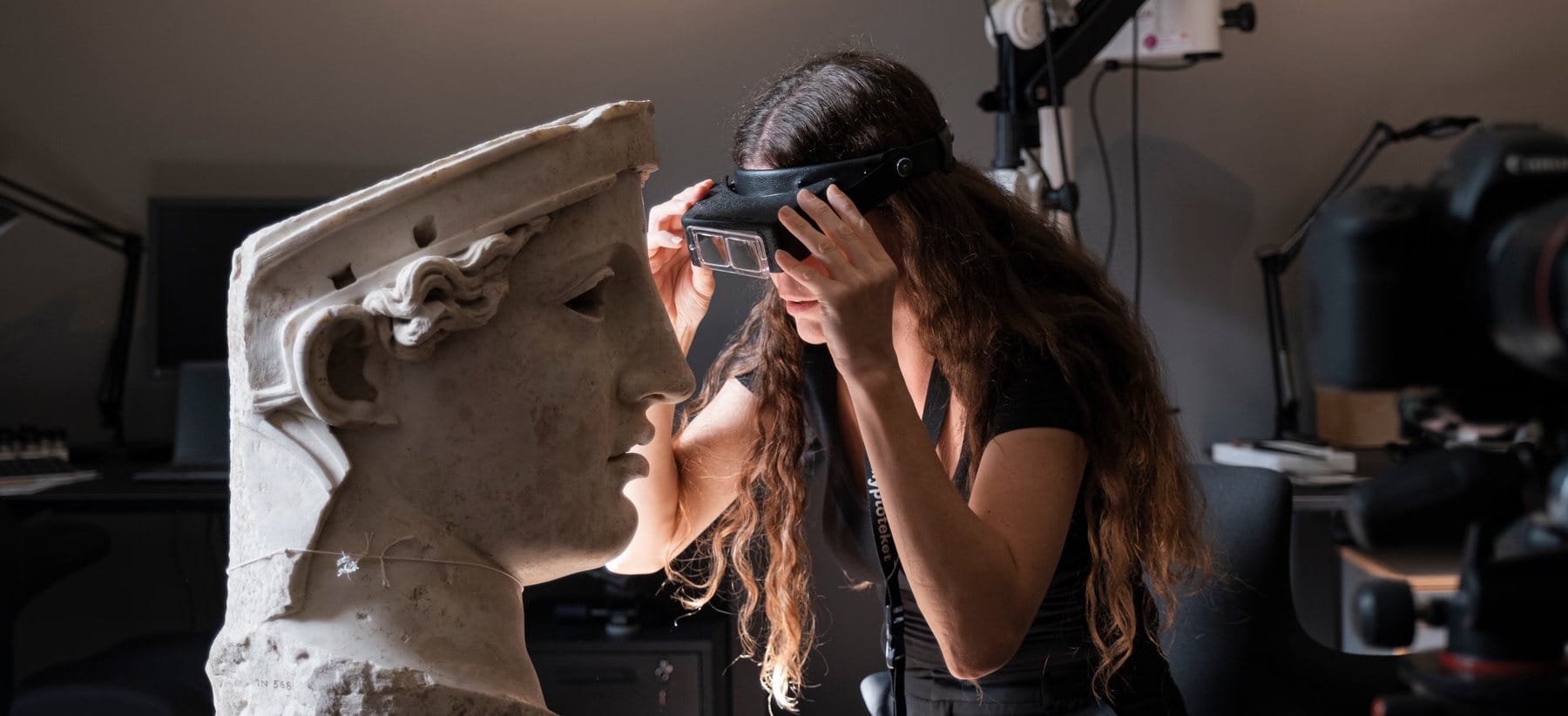
Close-up views of sculpted curls and a hand resting against drapery in the Glyptotek’s exhibition. Images: Ny Carlsberg Glyptotek.
Tiberius in pink
The Glyptotek’s portrait of Tiberius provides the exhibition’s most immediate change of perspective. The museum says recent research found that the draped garment was originally a delicate pink. Its digital visualisation shows how paint can alter the reading of a sculpture whose surviving stone no longer displays its full colour.
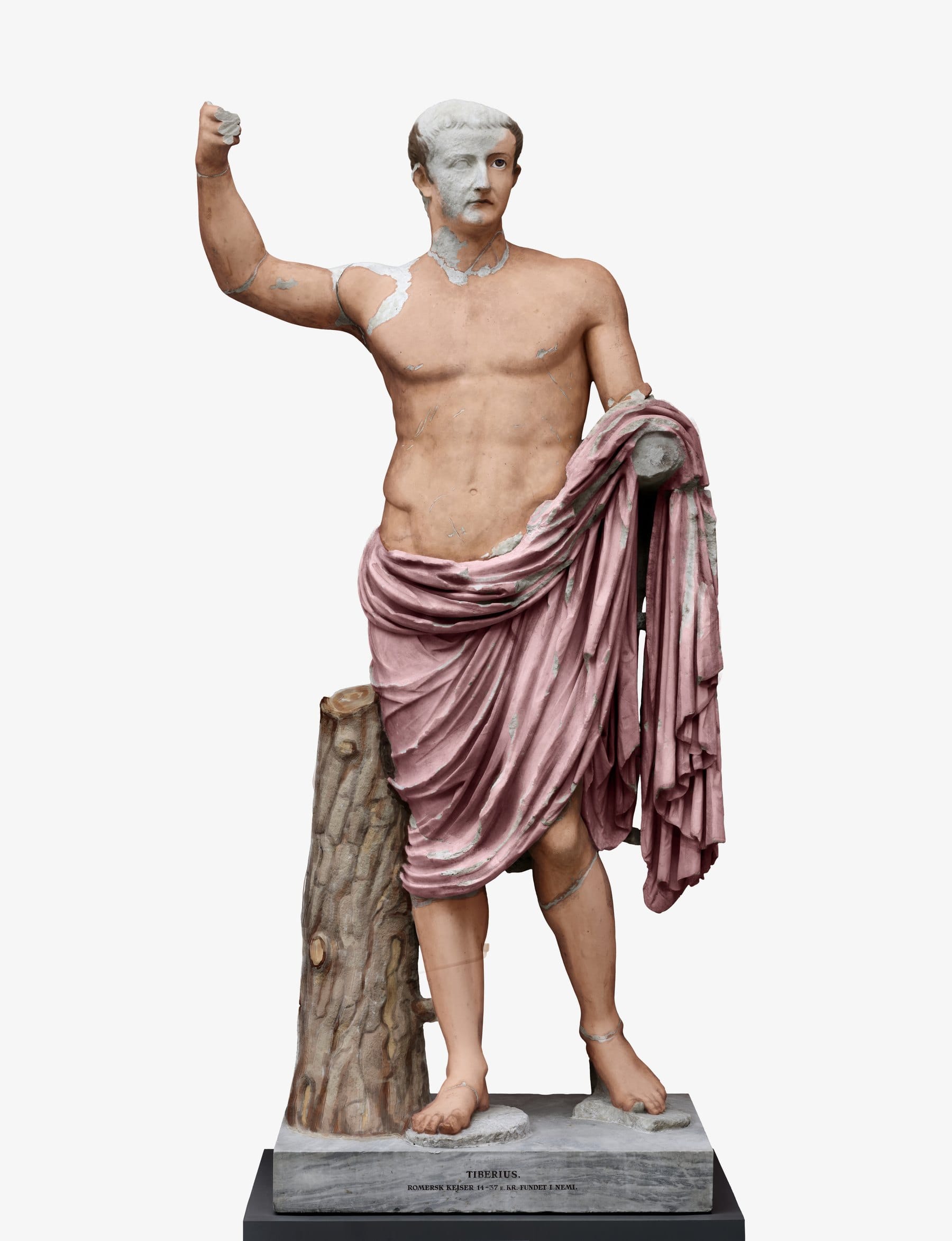
The museum interprets the emperor’s partly bare body and coloured drapery as a statement of luxury, authority and divine association. That formal portrait does not of course represent that Tiberius habitually dressed this way, since it was common practice for portraits to over-exaggerate on the actual physical properties of their subjects, or the way they dressed. The reign of Emperor Tiberius provides the political setting for a work made to present an imperial figure to viewers.
The Art Newspaper describes the garment as pinkish purple and relates it to the Roman colour category purpura, or commonly known as the Tyrian purple. That term and the visual reconstruction do not by themselves identify the exact dye of a real textile. The exhibition’s point is visible without making that leap: colour was part of the message, and a pale modern statue can conceal it.
What marble can and cannot tell us
Painted sculpture and preserved clothing answer different questions. A statue records an artist's and the subject's choice about representation; a surviving tunic is a piece of fabric that someone made and used. The exhibition places both kinds of evidence in view, allowing visitors to compare an idealised public image with material objects.
Research on the coloured garments of Roman statues has found that surface texture and surviving paint can complicate older classifications based mainly on literary descriptions and unpainted marble. A published study of the Fundilius Doctus statue, for example, identifies traces of colour on its sculpted clothing. The presence of paint is evidence about the statue’s appearance, while the appearance of the lost original textile remains a separate question; was it the same as the one represented on the marble?
The Art Newspaper gives a military portrait of Trajan as another example. It depicts the emperor with a tunic, armour and a ceremonial cloak known as a paludamentum. The museum’s interpretation is that the ensemble asserts command to an audience, that being Roman citizens of the past, or modern museum visitors.
Rare garments beside imperial portraits
Three Roman-period tunics on loan from the British Museum offer a closer look at cloth itself. According to the Glyptotek, they are being shown outside the British Museum for the first time. One pictured on the exhibition page comes from Roman-period Egypt and preserves a broad, light-coloured surface marked by dark vertical bands.
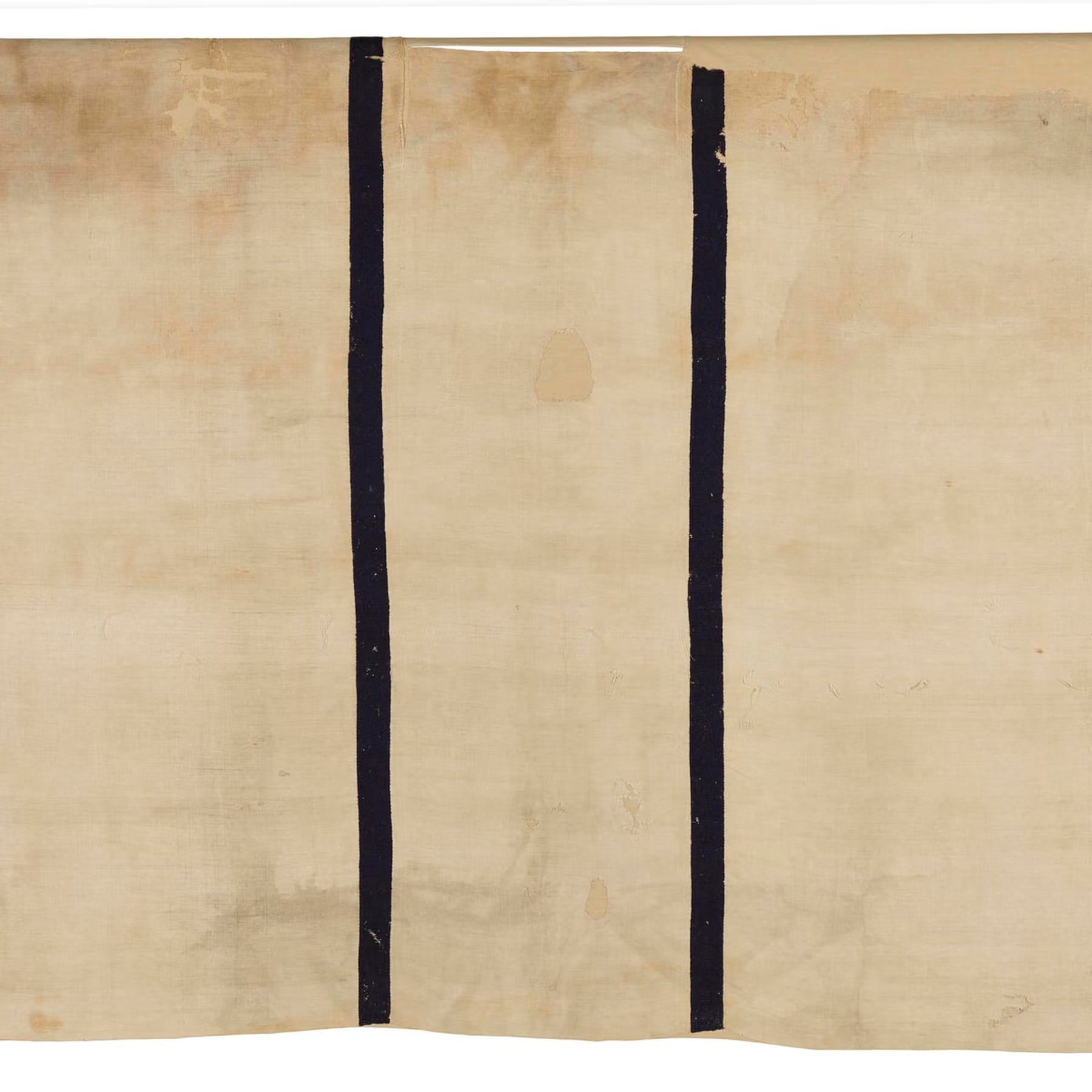
These tunics help anchor the portraits in textile evidence, although they cannot stand for every place or century under Roman rule. The empire contained many clothing practices, and fabrics survive unevenly. The contrast between a surviving tunic and a carved toga also helps explain why a statue’s costume is best read as a selected public image.
The loans extend to footwear. The museum says a colossal portrait sculpture of Septimius Severus from the archaeological museum in Burdur, Türkiye, includes lionskin boots and is being displayed outside Türkiye for the first time. The boots make a specific visual claim about the emperor’s image; the exhibition presents them alongside drapery and colour as parts of the language of power.
Luxury, criticism and control
Roman writing about dress was often argumentative. The exhibition has 12 listening posts built around ancient remarks and satire about prominent people’s appearance. According to the museum, authors used clothing and grooming to question a ruler’s morality and fitness to lead. Such remarks tell us about political criticism as well as about garments.
A University of Copenhagen research project on imperial dress reached a similar methodological warning after comparing written, sculptural, legal and textile evidence. Its report says moralising authors frequently cast unfamiliar or luxurious dress as a fault of supposedly bad emperors. Court poetry and legal material could give a different picture, so a hostile literary portrait cannot simply be treated as a wardrobe inventory.
The same research traces continuing negotiation over who could display costly materials. By the fourth century, imperial regulations sought to reserve certain silks, purples, gold and jewels.
Beyond the garment
The Glyptotek also addresses scent and grooming. It has worked with Danish skincare company Karmameju on four scent stations based on ancient perfume recipes. The museum presents perfume as another possible marker of gender, status and belonging, extending the exhibition beyond the sculpted folds of a toga.
The show includes modern interpretations by three graduates of the Royal Danish Academy, displayed in the museum’s Central Hall. These designs are a contemporary response to its question about who defines fashion and power. They are separate from the ancient objects and do not serve as evidence for Roman clothing, rather an inspiration from it.
An accompanying catalogue edited by the museum’s curators brings together studies of portraiture, fashion and identity. For visitors, the exhibition’s clearest lesson comes from the objects side by side: Roman power could be represented through colour, costume and bodily display, while a painted statue, a preserved tunic and a critical text each require their own kind of reading.
Ny Carlsberg Glyptotek, “The Power of Fashion in the Roman Empire,” exhibition page (accessed 5 October 2026).
J. S. Marcus, “Copenhagen’s Glyptotek is thinking about the Roman Empire with new ancient fashion exhibition,” The Art Newspaper (29 September 2026).
European Commission CORDIS, “The Emperor’s New Clothes: Power Dressing in the Roman Empire from Augustus to Honorius,” University of Copenhagen project report (updated 2 February 2016).
Cecilie Brøns and Amalie Skovmøller, “Colour-Coding the Roman Toga: The Materiality of Textiles Represented in Ancient Sculpture,” Antike Kunst 60 (2017), 55–79.
About the Roman Empire Times
See all the latest news for the Roman Empire, ancient Roman historical facts, anecdotes from Roman Times and stories from the Empire at romanempiretimes.com. Contact our newsroom to report an update or send your story, photos and videos. Follow RET on Google News, Flipboard and subscribe here to our daily email.
Follow the Roman Empire Times on social media: