
Roman Laws Reveal the Machinery Behind Arena Animal Fights
Two late Roman laws expose the pressures behind animal spectacles: protected supplies of lions, costly military convoys and penalties for overstaying in cities.

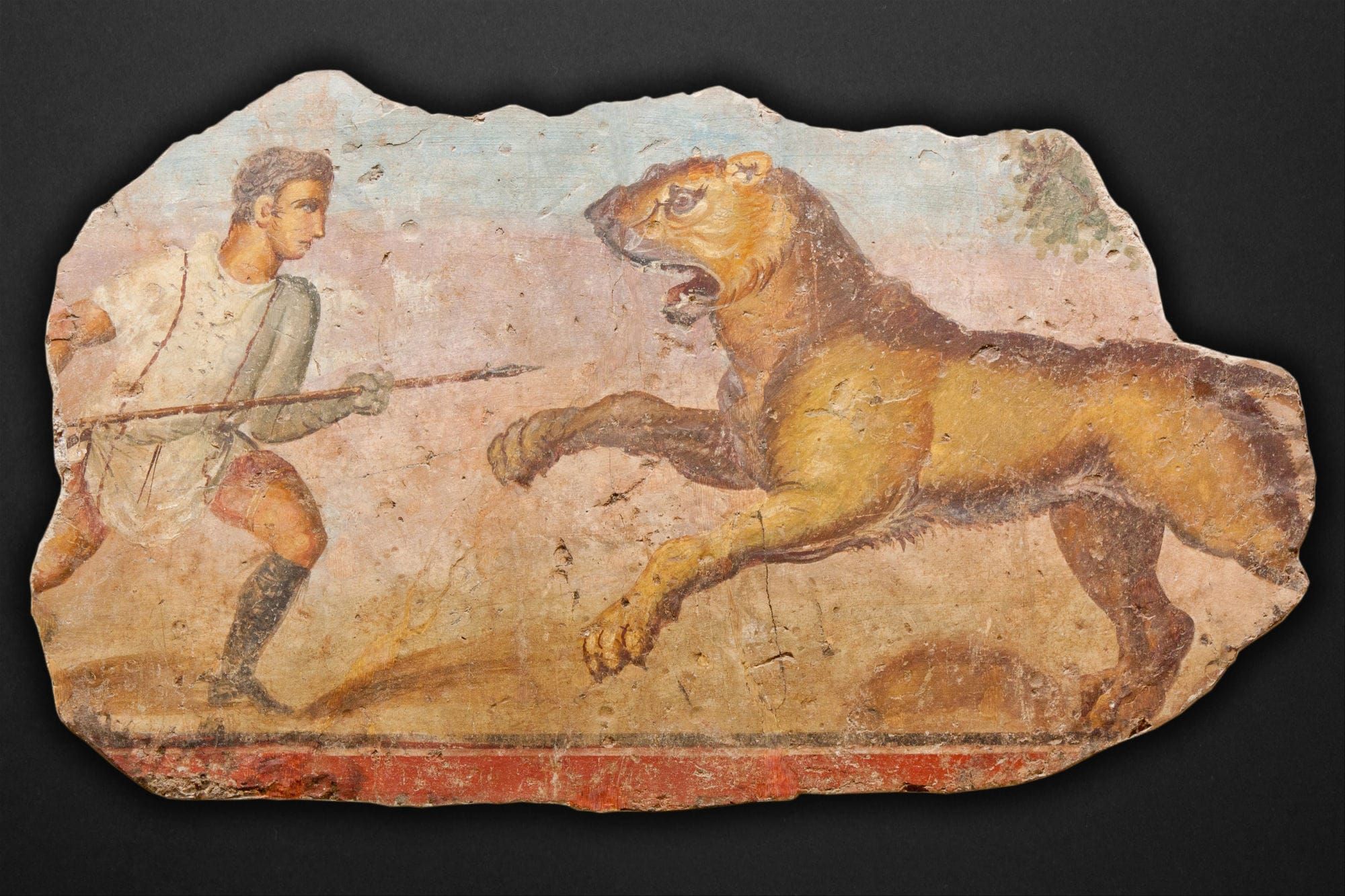
A study publicised in September 2026 examines the laws that helped supply Roman arenas with wild animals. Its subject is the work behind the spectacle: catching dangerous beasts, moving them through the provinces and protecting the emperor’s supply while limiting the demands placed on local communities.
The research, announced by Carlos III University of Madrid on 4 September, centres on two imperial constitutions preserved in the Theodosian Code. Issued in AD 414 and 417 under Honorius and Theodosius II, they address lion killing and the movement of animals towards the imperial court. The study considers a possible imperial monopoly on lion capture.
Animal spectacles, known as venationes, ranged from displays and staged hunts to fights between animals or encounters with human performers. Their organisation required hunters, handlers, transport and money. The legal record identifies the officials responsible for part of that system and preserves a complaint from a city that had borne its costs for months.
Arena hunts had their own performers
A venatio was a public entertainment rather than an ordinary expedition into the countryside. Animals could be exhibited, set against one another or confronted by specialist fighters. These events belonged to the wider programme of Roman spectacles, alongside the gladiatorial contests associated with the Colosseum’s programme of games.
The trained hunters were called venatores. Their equipment and work differed from those of gladiators, whose principal opponents were other human fighters. The distinction also extends to executions: damnatio ad bestias, the condemnation of a prisoner to death by animals, was a punishment, a subject examined in our account of executions involving wild beasts.
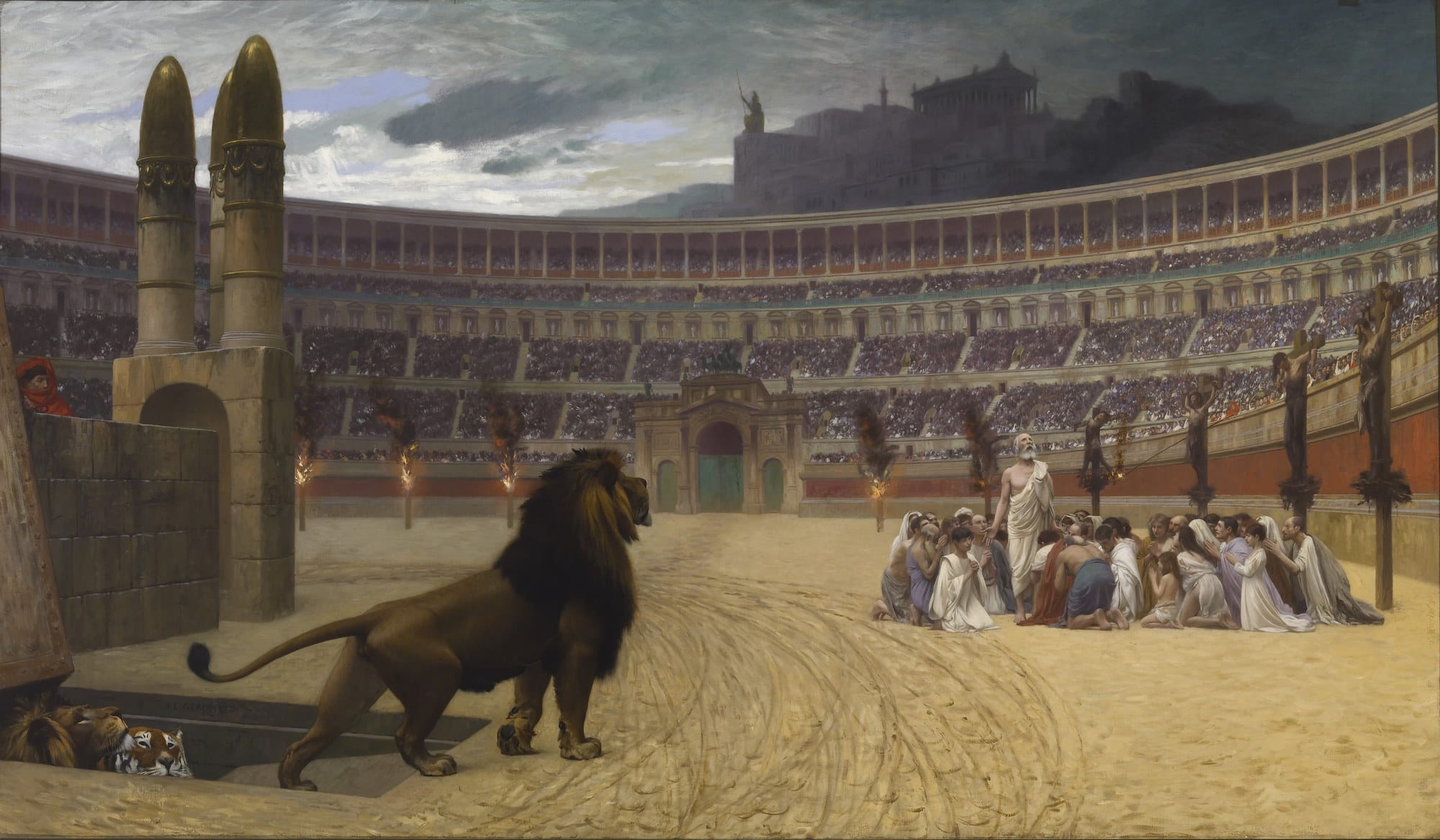
Hunts were attractions worth announcing in advance. The animal hunts advertised on Pompeii’s walls appear in notices for arena events. Some advertisements name a venatio without listing particular animals. Procuring the beasts and presenting them on the promised occasion remained separate practical tasks.
Killing a lion was not permission to sell it
The constitution dated 20 May 414 gave everyone permission to kill lions without fearing prosecution. It expressly placed the safety of provincial inhabitants above imperial pleasure. People living near dangerous animals were therefore allowed to protect themselves even when those animals were valuable to the emperor’s entertainments.
The permission did not extend to hunting lions for sale. The new study treats that commercial restriction as evidence of a possible imperial monopoly on capture. The emperors explicitly maintained that allowing people to kill dangerous beasts would leave their own entertainment available.
The constitution was addressed to Maurianus, a senior military official acting as magister militum, or master of the soldiers. Its final instruction required military commanders and their offices to be informed of the permission to kill lions. The exemption had to reach the officials responsible for these animals.
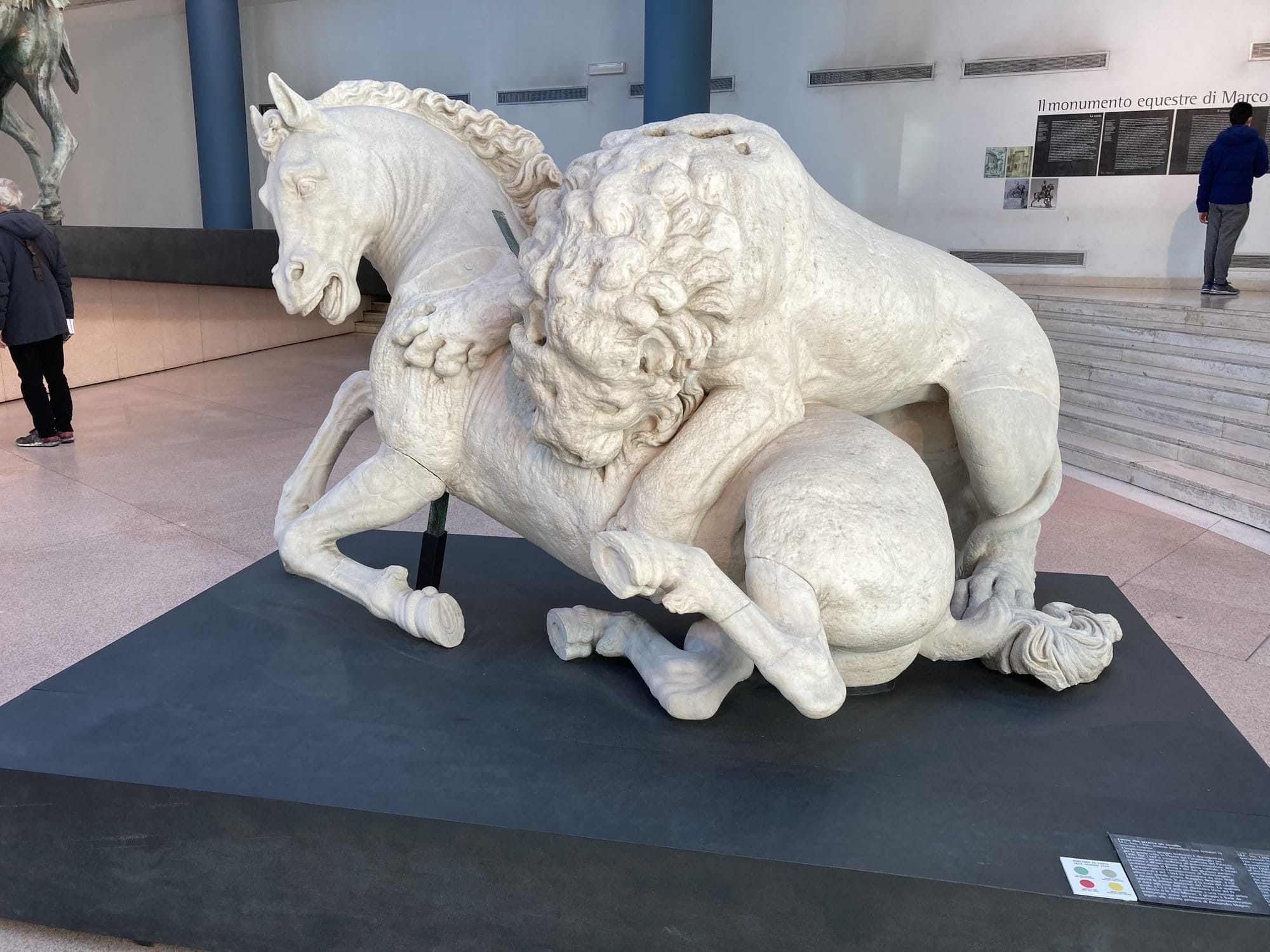
Soldiers joined a wider animal trade
Military hunting left evidence far beyond the two late Roman laws. An inscription from Cologne credits a centurion of the First Minervan Legion with capturing fifty bears in six months. A papyrus from Egypt records soldiers hunting wild animals and birds under orders from their prefects.
Earlier imperial evidence shows several ways of obtaining animals. It includes military hunters, commercial intermediaries and organised hunting troupes. A reconstruction of the trade in the first to third centuries identifies different supply arrangements operating across the empire, with local circumstances shaping how animals were obtained.
North African hunting troupes could provide animals and performers. The Magerius mosaic at Smirat records payment to one such group, the Telegenii, and names four leopards: Romanus, Luxurius, Crispinus and Victor. The animals are depicted wearing garlands tied around their bodies.
A seven-day stop became several months
The constitution of 27 September 417 followed a complaint from the governor’s office in Euphratensis, a province in the eastern empire. Officers responsible for transporting wild animals had remained at Hierapolis for three or four months, although their authorised stay was supposed to last seven or eight days.
The city had paid the expenses of this extended visit. The transport officers then demanded cages as well, although the law states that custom did not require the city to provide them. The complaint concerned both the prolonged stay and an additional requisition imposed after the inhabitants had already supported the convoy.
Honorius and Theodosius responded with a general rule: animals sent by frontier commanders to the imperial court could remain no longer than seven days in each city. Commanders and their staffs faced a fine in gold for a breach. The order made them answerable for a journey whose costs fell upon the communities along its route.
Even purchased panthers could miss the games
Supply problems long predated the fifth-century legislation. In a letter to Maximus, Pliny the Younger discussed a spectacle offered to the citizens of Verona. Maximus had promised gladiatorial entertainment, and African panthers had been obtained for the occasion. Their arrival depended on conditions beyond the organiser’s control.
“I wish the African panthers, which you had largely provided for this purpose, had arrived on the day appointed, but though they were delayed by the stormy weather, the obligation to you is equally the same, since it was not your fault that they were not exhibited.”
Pliny the Younger, Letters 6.34.3.
Pliny reassured Maximus that the failed arrival did not diminish the citizens’ obligation to him. The games commemorated Maximus’s deceased wife, who came from Verona, and the citizens had urged him to provide them. Pliny praised the generosity of the entertainment even though the panthers had not appeared.
The panthers’ delay and the Hierapolis complaint record different obstacles. At Verona, weather prevented an expected attraction from appearing. At Hierapolis, transport personnel prolonged their stay at the city’s expense. Both accounts preserve the journey before the spectacle, with its timetable, responsibilities and consequences for people away from the arena.
Justinian retained the seven-day limit
Animal spectacles continued as gladiatorial combat declined. Late antique legislation regulated their expenses, their place in the calendar and the conduct of those involved. Restrictions separated entertainments from Christian feast days, while later rules addressed the spectacles that consuls could offer during their year in office.
In the sixth century, Justinian’s Code brought together provisions from the two earlier constitutions. It retained the permission to kill lions and the seven-day limit on keeping transported animals in a city. The gold penalty also survived in this later legal formulation.
The September announcement directs attention to that administrative history. The rules preserve an emperor’s interest in animal supplies alongside the safety of provincial inhabitants and the finances of cities. At Hierapolis, the complaint produced a clear restriction on the convoy’s stay: the animals had to move on within a week.
🏛️ Sources used:
Universidad Carlos III de Madrid, “A UC3M study reveals the military apparatus and laws that made it possible for wild beasts to be brought into the amphitheaters” (4 September 2026).
Eugenia Franciosi, “Il regime giuridico delle venationes nel mondo romano,” Ius Romanum 2019/2, 76–93.
Jordon Alex Houston, “Exotics for Entertainment: A Reconstruction of the Roman Exotic Beast Trade (First to Third Centuries AD),” Theoretical Roman Archaeology Journal 7(1) (2024), 1–39.
Theodosian Code 15.11.1–2, Latin text submitted by Alexandr Koptev, Roman Law Library, Université Grenoble Alpes.
Pliny the Younger, Letters 6.34.3, translated by William Melmoth, revised by F. C. T. Bosanquet; Project Gutenberg, ebook 2811, selection LXXII.



About the Roman Empire Times
See all the latest news for the Roman Empire, ancient Roman historical facts, anecdotes from Roman Times and stories from the Empire at romanempiretimes.com. Contact our newsroom to report an update or send your story, photos and videos. Follow RET on Google News, Flipboard and subscribe here to our daily email.
Follow the Roman Empire Times on social media: