
Musk’s Roman Birth-Rate Claim Gets the History Wrong
Elon Musk links Roman fertility to war, security and prosperity. Ancient texts, census figures and demographic research expose the flaws in his claim.


Elon Musk’s claim that Rome’s birth rate collapsed after it defeated its existential enemies turns a complicated population history into an unsupported rule about prosperity. Is the chronology wrong? Serious foreign threats followed the destruction of Carthage. We should look into the demographic evidence for accuracy or fails in establishing the proposed sequence of exceptionally high wartime fertility followed by a collapse caused by comfortable living.
In a post dated 28 November 2026 in UTC, Musk described Rome as having a “very high birth rate during existential wars with Carthage”. He said births subsequently fell after the elimination of external threats and “several generations of prosperity”, with no Roman birth-rate figures, dates for that decline or demographic study demonstrating the connection.

The immediate context was a post by Homer Pavlos, who used Polybius to blame demographic problems on prosperity, laziness and the pursuit of pleasure. That is an explicitly moralising argument for having children. Testing it against Roman history requires following the wars, identifying whom ancient writers were describing and separating births from the number of people who survived.
The passage behind the argument concerns Greece
Pavlos’s post cites Book 36 of Polybius’s Histories. The geographical subject appears at the beginning of the relevant passage: “In our own time the whole of Greece has been subject to a low birth-rate and a general decrease of the population” (Histories 36.17.5). Musk’s subsequent Roman example extends beyond the population identified in the quoted ancient evidence.
Polybius links depleted Greek communities to reluctance to marry and rear children, and to a preference for preserving wealth for a small number of heirs. His discussion also includes children dying through war or illness. The passage addresses the formation and survival of households, with particular attention to the choices of people possessing wealth to transmit.
The distinction between giving birth and rearing a child is key for the implied connection both posts are making. An ancient complaint about parents keeping few heirs can involve infant abandonment, subsequent deaths and inheritance decisions. Modern research on Italian families identifies this wealthy Greek example among the problems with treating elite literary complaints as population-wide Roman birth-rate measurements.

Carthage’s destruction did not eliminate danger
The Second Punic War lasted from 218 to 201 BCE. Hannibal’s invasion of Italy made it a struggle with devastating consequences for Roman communities. Carthage itself survived the peace settlement. Its destruction came in 146 BCE, at the end of the separate Third Punic War, fought from 149 BCE. Those dates leave a substantial interval between Hannibal’s defeat and the city’s destruction.
Rome’s overwhelming Mediterranean position after 146 BCE was real. Scipio Aemilianus nevertheless returned to major warfare in Spain, where Numantia fell in 133 BCE. Our account of Scipio’s campaigns against Carthage and Numantia follows the commander across both conflicts. Roman expansion continued to mobilise soldiers, move populations and expose families to prolonged military service.
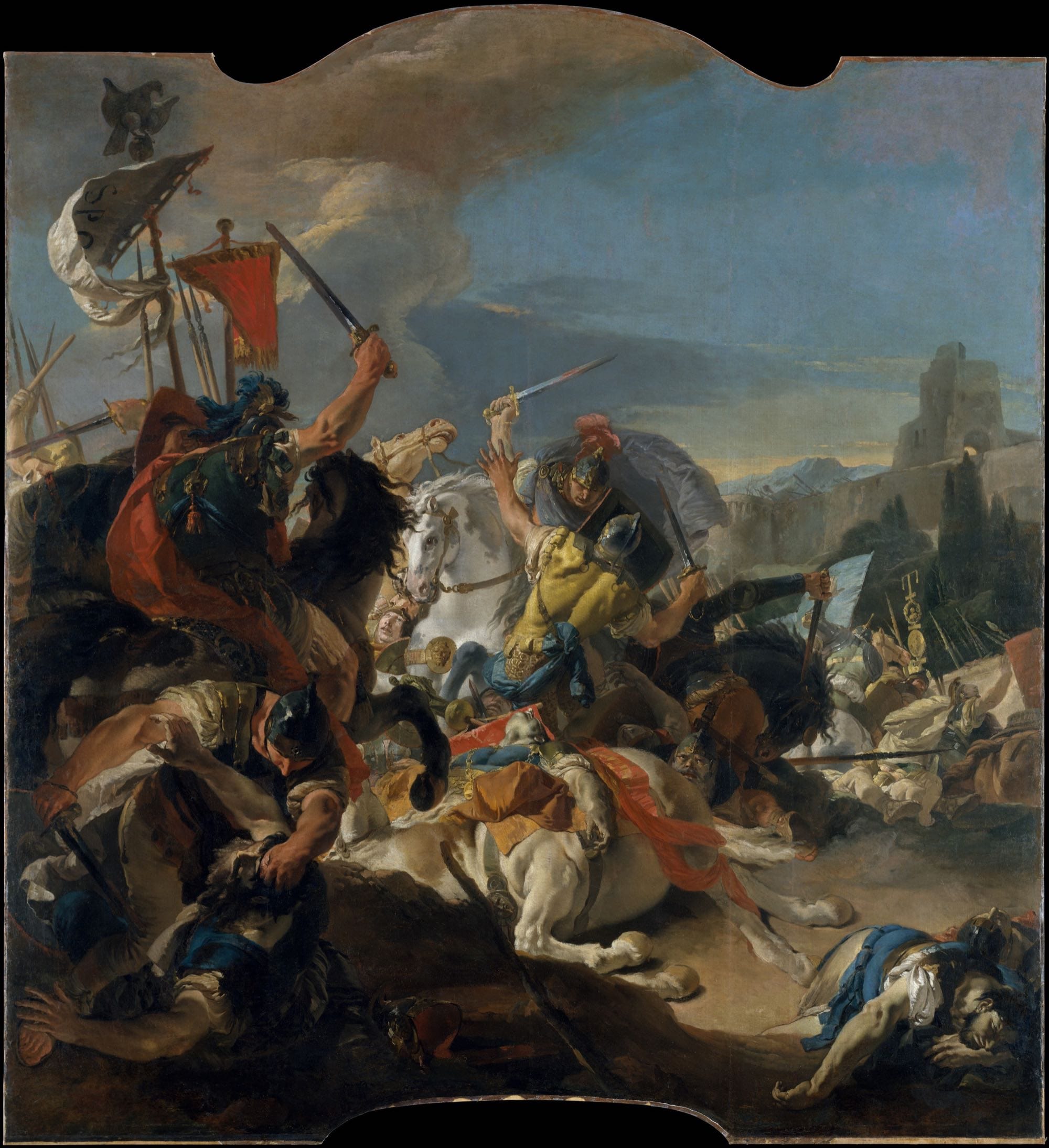
More decisively for Musk’s claim, northern enemies inflicted a catastrophic defeat on Roman armies at Arausio in 105 BCE. The Cimbri and Teutones subsequently threatened Italy; Marius’s victories came in 102 and 101 BCE. These were serious dangers within generations of Carthage’s destruction. The proposition that Rome had destroyed every external threat is false, especially when we are talking about an Empire that had, aside many enemies, its eyes on vast – yet unconquered – land.
The surviving numbers count citizens
Augustus recorded three census totals in his Res Gestae: 4,063,000 Roman citizens in 28 BCE, 4,233,000 in 8 BCE and 4,937,000 in AD 14. These are actual ancient numerical claims with identifiable dates. They record people entered on a citizen register, a population shaped by Roman law and the reach of registration.
Interpreting those totals remains a major scholarly dispute amongst the most renowned historians. Republican enumerations generally concern adult male citizens. Reconstructions differ over whether Augustus’s much larger figures retained that category or included citizen women and children. Neither interpretation turns the numbers into a count of everyone living across the empire, since both enslaved people and inhabitants lacking citizenship were not calculated and require separate consideration.
Citizenship itself had changed enormously. The conflict described in our account of the Italian allies’ struggle over Roman citizenship was followed by their incorporation into the citizen body. Enfranchisement and registration therefore affect the totals alongside births, deaths and movement. Those changing legal categories underpin competing reconstructions of the population of Roman Italy.

War losses and recovery complicate the story
A peer-reviewed reconstruction combining Republican censuses with evidence from buried coin hoards finds population contraction during the Second Punic War, followed by sustained growth during the second century BCE. It then reconstructs further contraction during the later civil wars. This supplies a historically specific alternative to Musk’s smooth transition from wartime reproduction to prosperous demographic decline.
The study uses hoarding as evidence of insecurity and models its relationship with population change. Its results concern reconstructed population dynamics, with assumptions that remain open to scrutiny. The fitted model locates destructive episodes and recovery within a dated sequence, allowing the demographic consequences of warfare to be examined across successive periods.
Population change combines fertility, mortality and migration. A war can kill existing adults and children and displace survivors. A subsequent recovery can reflect several changes occurring together. Musk’s argument collapses those separate processes into a single supposed response to prosperity, leaving the mechanism and the relevant demographic observations unestablished; especially when aeons are separating the core events. It feels like predicting the 'end of the Western civilization' because of current events; but the actual end arriving 200 years later, after a myriad other micro or mega causes led to it.
A small surviving family could follow many births
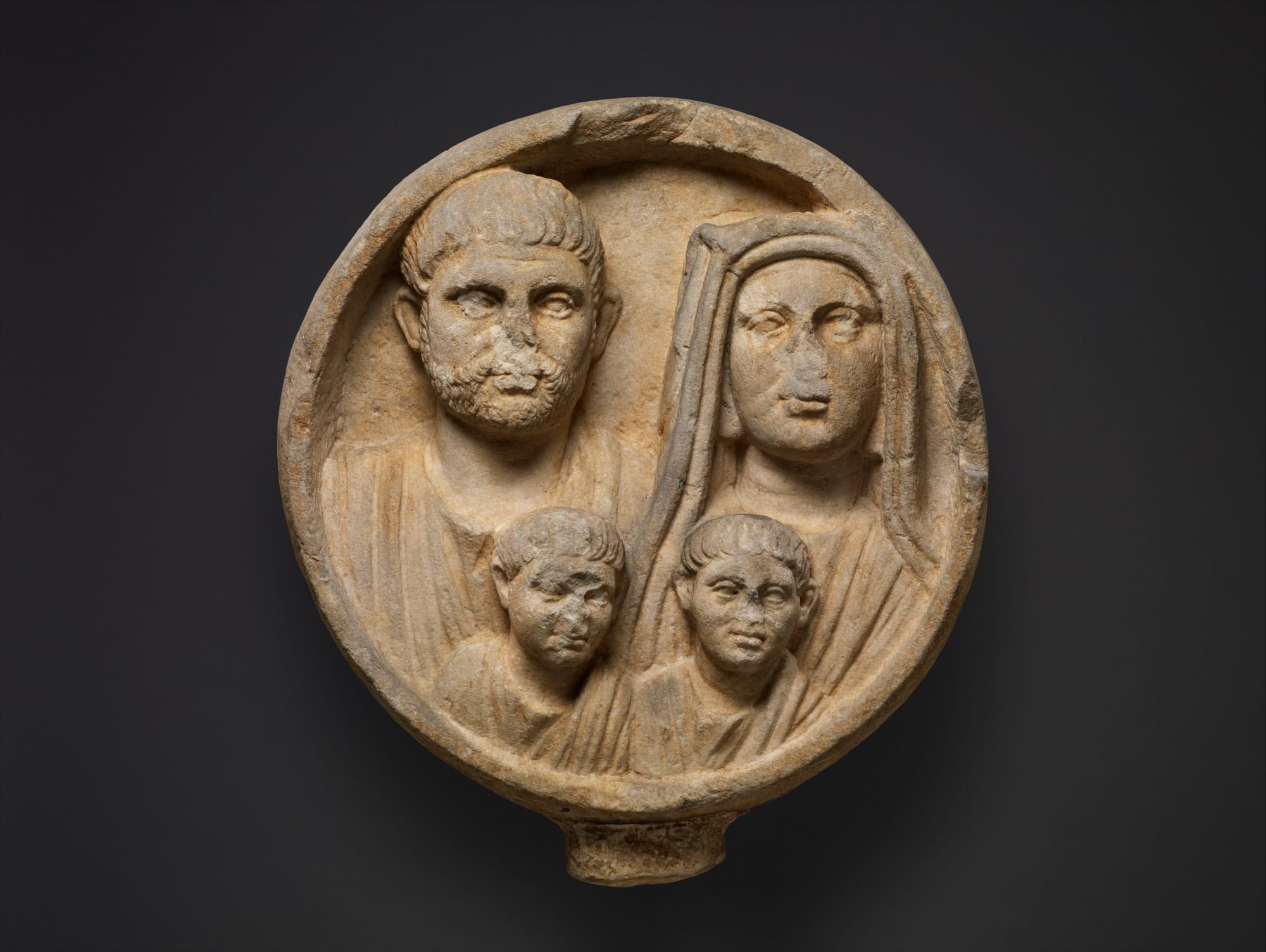
Roman reproductive decisions also differed sharply between different household incomes. Wealthy families could try to preserve estates by limiting the number of surviving heirs. Other families spaced births through breastfeeding and periods of sexual abstinence. Material hardship could bring pressure to abandon a newborn. These practices arose within different circumstances and affected households at different stages of reproduction.
Medical writing, legal discussion and religious appeals document sustained efforts to conceive and secure family continuity. Adoption offered some childless households another route to an heir. An adult lacking surviving children might have experienced infertility or bereavement. These experiences gave households powerful reasons to seek medical help or arrange the transfer of an heir from another family.
The scholarship behind our account of Roman women’s work and family formation shows why general claims about widespread reproductive refusal require care. The Roman evidence encompasses attempts to have children, regulate spacing and protect inheritance. Treating all small families as the product of prosperous indifference strips away the circumstances recorded in the sources.
A pronatalist argument dressed as a historical law
Musk’s intervention promotes a pronatalist explanation of social behaviour: prolonged comfort and security supposedly produce demographic failure. The post he quoted explicitly rejects economic difficulty as an explanation and condemns modern people’s choices. His Roman comparison gives that present-day moral argument the appearance of a recurring historical law, following the 'History repeats itself' well-known saying.
There is also an ancient precedent for linking Carthage’s destruction with moral deterioration. In the Jugurthine War, Sallust connects the removal of fear of an enemy with arrogance, faction and abuses of power. His account also describes ordinary people burdened by military service and poverty while powerful men acquired spoils. Even that moral narrative presents prosperity as unequally distributed.
Bottom line, using that tradition as a universal fertility law is treating history superficially; a defined population, a dated fertility change and evidence connecting it to prosperity are missing from Musk’s argument. The documented history includes repeated military emergencies: in 102 BCE, forty-four years after Carthage’s destruction, Rome was short of soldiers and faced an imminent invasion of Italy. Rome was not built in a day, and such a complex system did not fall because of a single reason, either.



About the Roman Empire Times
See all the latest news for the Roman Empire, ancient Roman historical facts, anecdotes from Roman Times and stories from the Empire at romanempiretimes.com. Contact our newsroom to report an update or send your story, photos and videos. Follow RET on Google News, Flipboard and subscribe here to our daily email.
Follow the Roman Empire Times on social media: