
No, Rome Did Not Fall Because Women Chose Careers Over Children
A Fox News claim blames Rome’s fall on women choosing careers over babies. Roman demographic research and evidence of working mothers tell a different story.


No, the Roman Empire did not fall because women chose careers over children. Katie Miller’s claim on Fox News turns a modern argument about motherhood into an explanation of ancient history. Research on Roman population and women’s work gives a substantially different account, while histories of the western empire’s collapse focus on the destruction of political and military power.
Appearing on The Will Cain Show on 14 October 2026, Miller argued that women should direct more energy towards marriage and finding a spouse. She connected Rome’s downfall with a time “when women stopped having babies, and you started putting energy elsewhere.” The following day, Republican strategist and CNN commentator Shermichael Singleton criticised the claim as “historically illiterate”.
The historical evidence separates several questions that her explanation combines: how Romans formed families, how women earned a living, and why imperial government broke down in the west. Those questions involve different sources and different centuries. Roman family strategies also varied with wealth, mortality and the demands of inheritance.
Katie Miller: If more women put the same energy into their marriages and into finding a spouse than they do into their careers, you would see society have a lot more babies. That's what led to the downfall of Rome. pic.twitter.com/H3PLXLNCiB
— FactPost (@factpostnews) October 15, 2026
Fox News host Will Cain, left, and Katie Miller, right, in a clip about women’s careers, childbearing and the fall of Rome. Video: Fox News, shared by FactPost on 15 October 2026. Watch the original post on X.
Augustus’s marriage laws came centuries before 476
Augustus introduced marriage legislation in 18 BCE and AD 9, roughly five centuries before the conventional date for the western empire’s fall. The measures penalised unmarried or childless people and offered advantages to parents, with elite marriage and inheritance particularly prominent. Concern about reproduction therefore belongs to the empire’s beginnings as well as its later history.
Suetonius describes resistance to the legislation in his Life of Augustus. His account places men among those resisting imperial pressure to marry and raise families. When the equestrian order demanded repeal, the emperor answered by presenting Germanicus’s children as an example:
When the knights even then persistently called for its repeal at a public show, he sent for the children of Germanicus and exhibited them, some in his own lap and some in their father's, intimating by his gestures and expression that they should not refuse to follow that young man's example.
This was a conflict over Roman marriage and family obligations, recorded by an ancient biographer. It shows the government attempting to influence household decisions and encountering opposition. The scene places male resistance and imperial pressure at the centre of a family-policy dispute during Rome’s expansion.
An elite family was not the empire’s population
Demographic research distinguishes the behaviour of wealthy families from wider population trends. Landed elites had reasons to avoid dividing an inheritance among numerous surviving heirs. Some may have restricted their legitimate offspring. That possibility concerns a particular social group whose concerns dominate much Roman literature.
A scholarly reassessment of ancient fertility finds support for a broadly stable population in the early empire, with high fertility and high mortality. It challenges the older assumption that family limitation produced a general demographic contraction. The fragmentary census evidence from Roman Egypt contributes to that reconstruction, although its regional scope remains important.
Births, deaths and the duration of marriage all affected family size. Early widowhood or divorce could interrupt childbearing, and frequent deaths meant that births and surviving children were very different quantities. Reading complaints about childlessness as proof that ordinary women collectively abandoned motherhood confuses these demographic processes with elite moral commentary.
Roman mothers already worked
Egyptian papyri document women producing textiles for customers and earning money through skilled work. A second-century letter records Sarapias and her mother Thermouthis completing a garment and receiving another request involving yarn. Their family relationship and commercial activity appear together in the same evidence.
A particularly clear example comes from AD 271. Aurelia Libouke, a freewoman and master weaver, entered an apprenticeship agreement. The document identifies her as acting independently through the legal privilege attached to her children. Here, motherhood and professional standing were compatible parts of one woman’s recorded position.
These examples belong within the wider history of women’s businesses in ancient Rome. Textile manufacture could take place in a residence and involve several relatives while supplying a commercial market. Household work, income and childrearing overlapped; a modern division between staying home and pursuing a career fits that organisation poorly.
Family planning also meant trying to have children
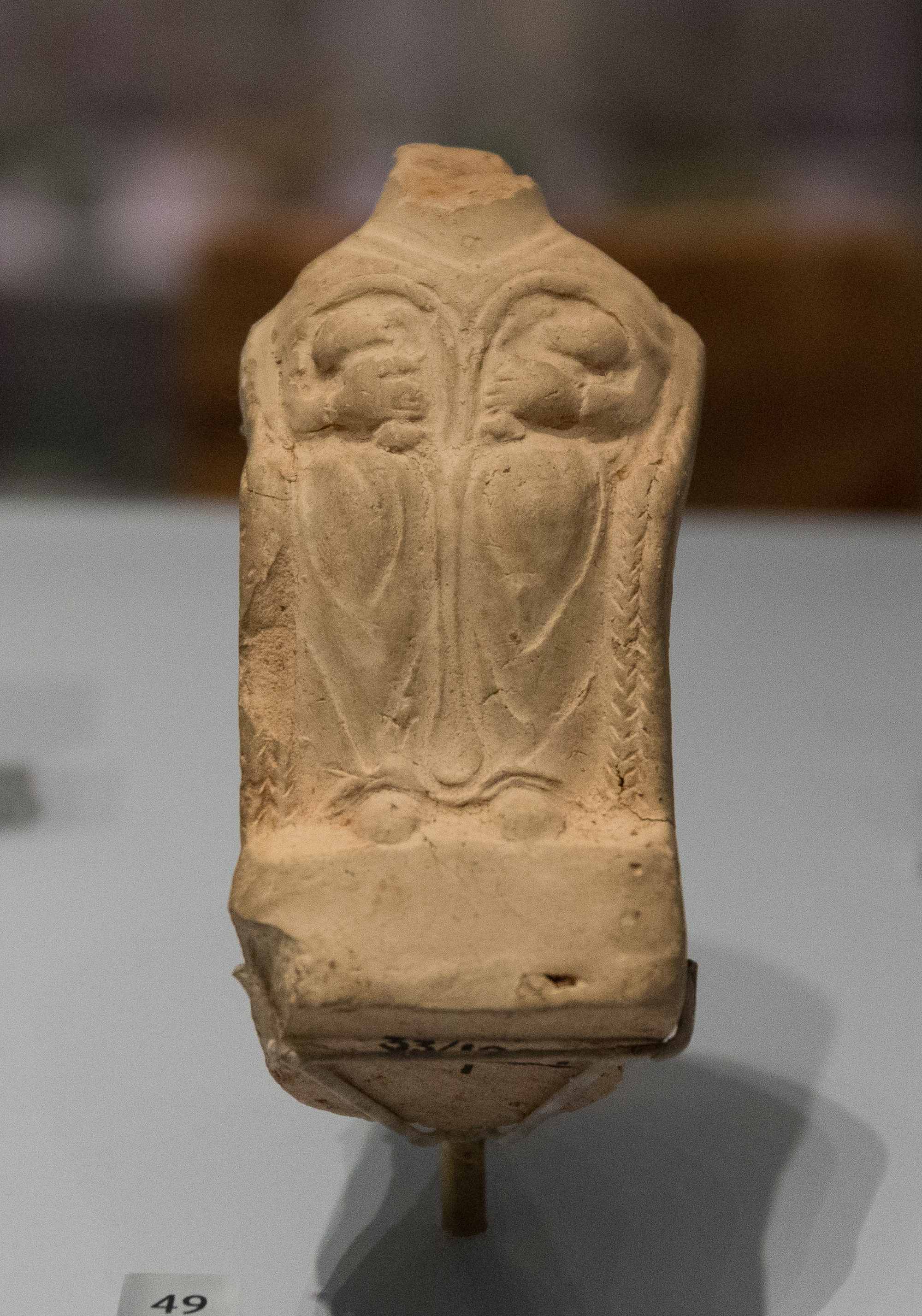
Roman reproductive strategies included efforts to conceive, preserve a pregnancy, raise healthy children and secure an heir. Medical advice, religious appeals and legal arrangements served those objectives. Research on fertility control places attempts to prevent pregnancy alongside this sustained concern with continuing a family.
Soranus, a physician writing in the early second century, addressed both childbirth and the physical damage that repeated pregnancies could cause. He accepted measures to prevent or end pregnancy in circumstances involving danger to the woman. The medical discussion balanced reproduction with maternal health within a society that valued legitimate children.
Families also used breastfeeding and abstinence to space births, while wealthy households could seek continuity through adult adoption. Among ordinary families, crises such as food shortages could place existing reproductive plans under severe pressure. These strategies responded to different pressures on health, resources and inheritance.
The western army depended on taxable territory
The fifth-century crisis involved armies, frontiers and control of revenue. One influential historical reconstruction emphasises the impact of migrating military groups and the growing strength of Rome’s neighbours. Defeats and territorial losses reduced the western government’s ability to collect the taxes needed to rebuild its forces.
As imperial territory passed under other rulers, the state lost both resources and political allegiance. Local landowners could accommodate the powers controlling their districts. The resulting weakness fed further losses: the government had less revenue to replace armies precisely when it faced continuing military pressure.
This military and fiscal explanation remains part of a broader scholarly debate, but it identifies a concrete mechanism linking provincial losses to imperial failure. Our account of the western court’s final decades follows the repeated struggles to restore that authority. Its immediate problems were governing territory and sustaining armed power.
The empire’s history continued after 476
The conventional date of 476 marks the removal of Romulus Augustulus from power in Italy. Imperial government continued in the east, centred on Constantinople. Historians therefore distinguish the end of western imperial rule from the longer transformation of Roman society across the Mediterranean.
Scholarly disagreements concern how heavily to weight warfare, internal politics, economic disruption and regional continuity. Archaeological studies also trace changes in production and living standards after western rule ended. The timing and severity of those changes varied, making the relationship between state collapse and social transformation a continuing historical question.
The evidence gives Roman women substantial roles as mothers, producers and participants in family businesses. It also places family decisions within legal, medical and economic circumstances that changed across the empire’s long history. Their economic work belonged to the functioning Roman world; the contested question is how the western government lost the resources and authority to hold that world together.





About the Roman Empire Times
See all the latest news for the Roman Empire, ancient Roman historical facts, anecdotes from Roman Times and stories from the Empire at romanempiretimes.com. Contact our newsroom to report an update or send your story, photos and videos. Follow RET on Google News, Flipboard and subscribe here to our daily email.
Follow the Roman Empire Times on social media: