
Rome in the Empire’s Last Act: The Western Court from 455 to 476
Rome was still the western empire’s greatest stage after 455, but behind the ceremony stood a court losing its grip on money, armies, and survival.

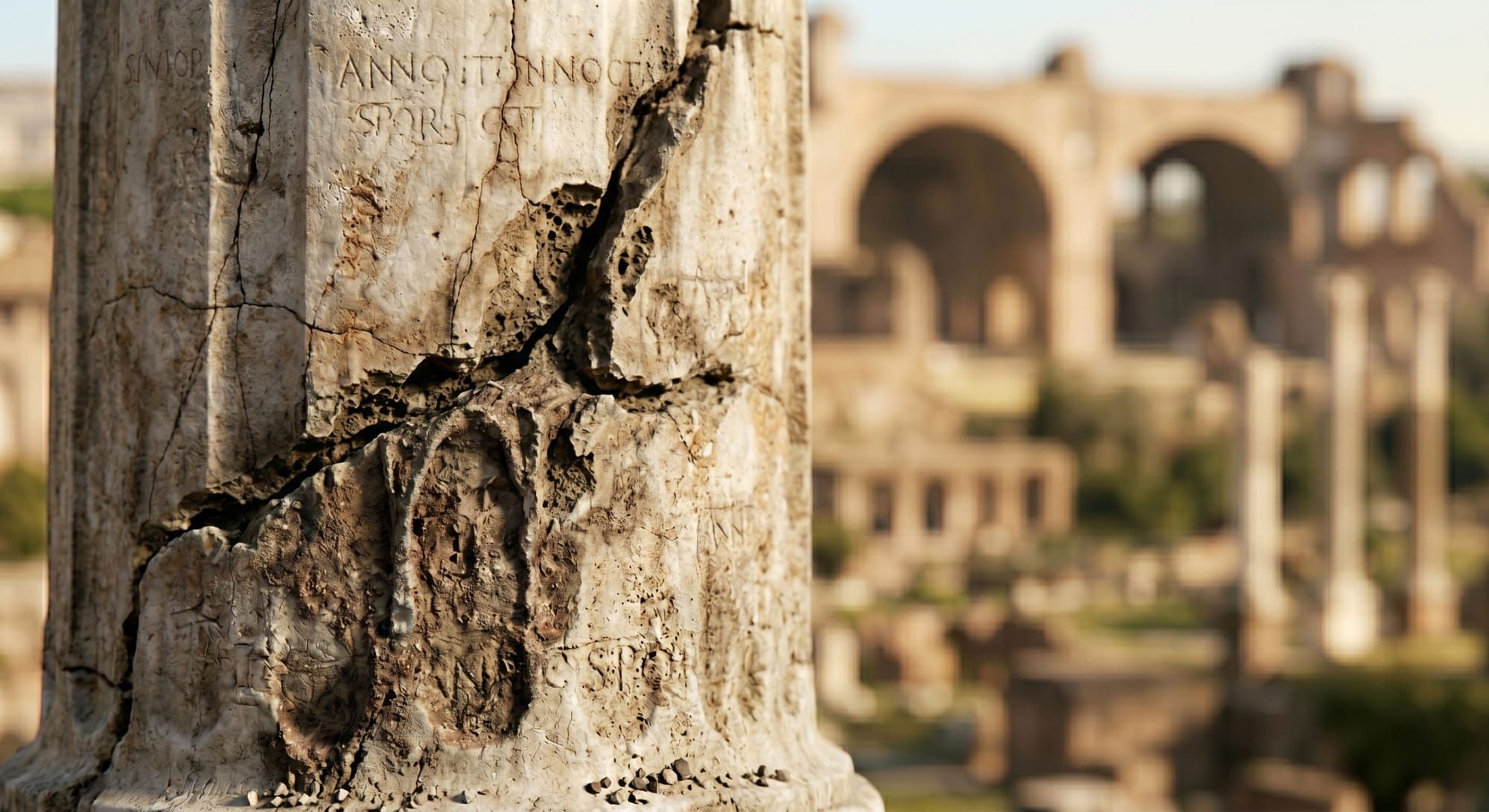
Between 455 and 476, the western Roman Empire did not vanish in a single dramatic moment. It passed instead through two decades of coups, sieges, failed restorations, and rapidly changing emperors, while Rome remained at the center of the struggle.
The old capital was still a place of immense symbolic weight, still capable of hosting imperial rule in all its ceremony and display, yet it had also become a city exposed to the full violence of a court that could no longer secure the empire it claimed to govern.
Rome in the Last Western Crisis
The western empire entered its final and most unstable phase in 454, when Valentinian III killed Aetius, the general who had dominated imperial military affairs for decades. The consequences followed with brutal speed. Within months Valentinian himself was dead, Petronius Maximus had taken the throne, and in 455 Rome was sacked by the Vandals. From then on, western emperors rose and fell in rapid succession, and Rome stood behind much of what is known about their reigns.
These years were not simply the fading aftermath of a dying court. The imperial office still mattered, and Rome still mattered with it. The city remained a place where imperial power could be displayed, negotiated, and contested. It was not merely a refuge left behind by contraction and loss.
It continued to be chosen because it still carried immense symbolic authority, because it still possessed the ceremonial and architectural setting needed for the display of majesty, and because it remained one of the main political centres of the western empire.
That pattern becomes clearer once the rulers of these last decades are viewed individually rather than treated as a single blur of weak emperors. Petronius Maximus spent his short reign entirely in Rome. Libius Severus, though raised at Ravenna, is then attested only at Rome. Olybrius also ended his brief reign there.
Avitus came to Rome soon after his elevation and remained based there until revolt forced him out. Anthemius spent the whole of his reign in the city. Glycerius moved there soon after his accession, and Julius Nepos also came to Rome and remained there until he fled ahead of Orestes.
Only Majorian and Romulus Augustulus are not known to have visited Rome at all. Rome was still being treated not as a monument to a vanished past, but as the proper setting from which imperial authority could be shown.
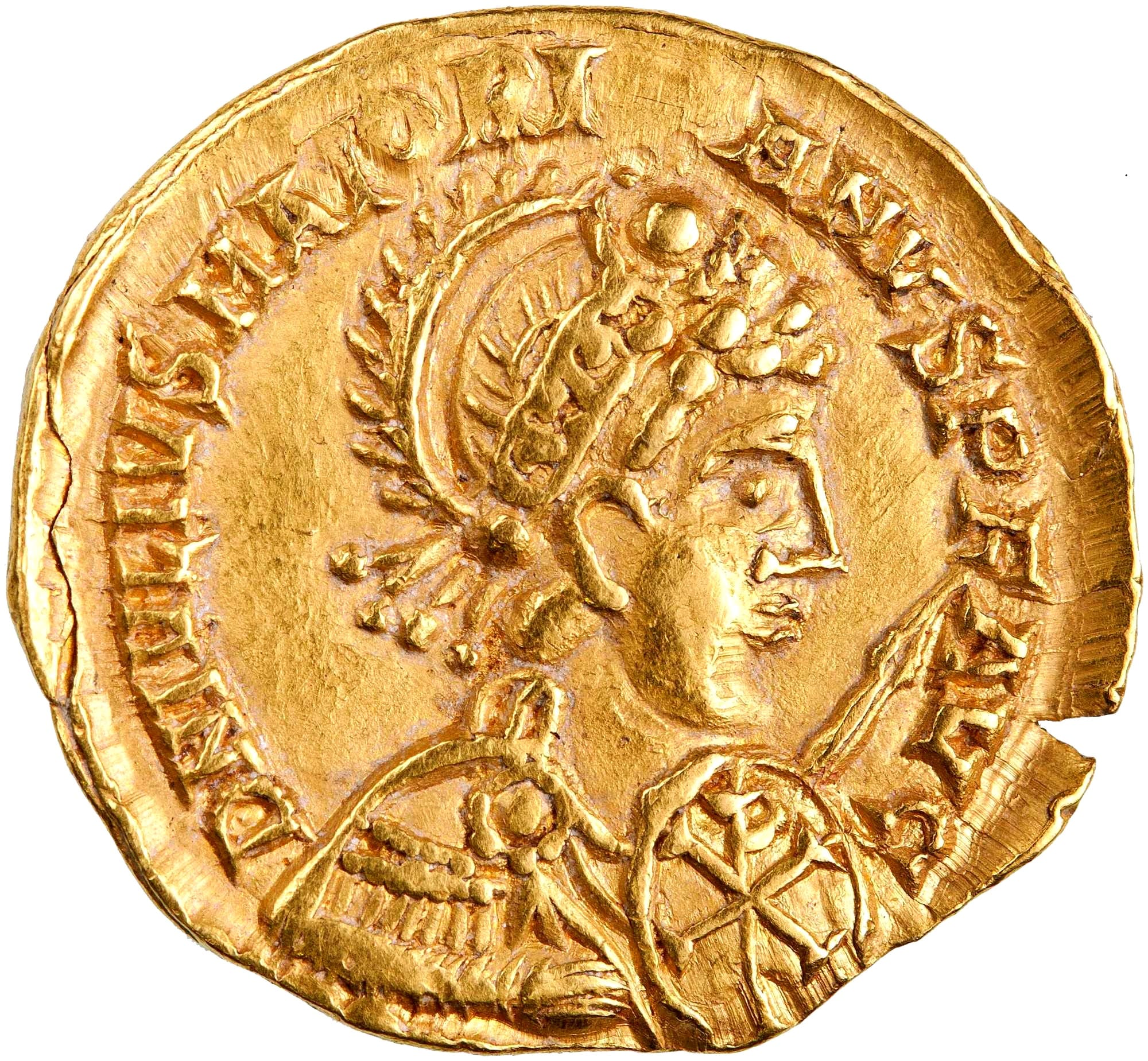
Yet the emperors who ruled between 455 and 476 were far from identical. Some came from senatorial backgrounds, others from the army, others from the eastern court, and the last was a child placed on the throne by his father. That variety matters, but so does the deeper continuity beneath it. Military strength remained the decisive force in western politics.
Even when senators appeared on the throne, their rule was often fragile and heavily dependent on generals. The repeated return to Rome did not amount to a senatorial recovery of power. The city could still host imperial rule, but it did not control the forces that made and unmade emperors.
Petronius Maximus shows how unstable the throne had become. A senator of high rank and long experience, he tried to secure power through money, coercion, and marriage politics, forcing Licinia Eudoxia to marry him and trying to bind his son Palladius to the imperial family. The whole arrangement collapsed almost immediately.
As the Vandals approached, he attempted to flee and was killed before the sack of the city began. With the imperial women then carried off to Africa, the remaining western dynasty could no longer be used so easily to support the next regime.
The military emperors reveal the same instability in a different form. Avitus was both senator and general, but came to power as a military ruler in the aftermath of the Vandal sack. He entered Rome with recognition and at least some dynastic possibilities of his own, yet his position soon collapsed under pressure from Ricimer and Majorian. Majorian, unlike most of the rulers of the period, is not known to have visited Rome at all.
He remained instead a campaigning emperor, moving through Ravenna, Gaul, Arles, and Spain, trying to act as a ruler who still commanded armies in person. Even so, Rome remained part of the political horizon of his reign, since one source places him on his return to attend to matters essential to the empire and to the dignity of Rome when Ricimer had him killed.
The strongest possibility for renewal came with Anthemius. He arrived from the east with military prestige, imperial connections through his wife Euphemia, and sons who offered the prospect of succession. More than any western emperor after 455, he looked capable of founding a durable new ruling house. He then spent the whole of his reign in Rome. That fact is important. It shows that the city was still entirely viable as an imperial residence, and that ruling from Rome could still appear natural rather than extraordinary.
But his reign also revealed the dangers of that choice. Once relations with Ricimer broke down, the conflict was not pushed to the margins of the empire. It unfolded in and around Rome itself. In 472 the city was besieged for months, fell to Ricimer’s forces, and Anthemius was killed soon afterward.
The same pattern continued after him. Olybrius, despite his aristocratic standing and dynastic value, survived only a few months. Glycerius was raised through military backing and moved quickly from Ravenna to Rome. Julius Nepos also came to Rome and remained there until the advance of Orestes forced him to flee. Even repeated failure did not break the city’s pull. Again and again, rulers or the men who made them still turned toward Rome.
An emperor in residence could still offer Rome visibility, ceremony, and political access. The city could still host embassies, accessions, consular celebrations, and the daily theatre of imperial presence. Its elites could still hope to benefit from proximity to the court. But the balance was not favourable. Rome paid heavily for remaining at the centre of western politics.
Imperial residence exposed the city directly to the great crises of the age: sack, siege, unrest, factional violence, and the destructive pressure of repeated struggles for the throne. The presence of emperors did not restore the old security of the imperial capital. It made Rome more vulnerable to the violence that now surrounded the western court.
One of the clearest signs of shifting power lies in public benefaction. In these final decades, emperors left surprisingly little visible mark on the city when compared with powerful generals. Men such as Ricimer and Valila appear more clearly in acts of patronage and ecclesiastical giving than the emperors themselves.
Authority was still being displayed in Rome, but increasingly the men most able to display it were commanders rather than rulers. The city still had emperors, yet more and more the effective weight of power had passed into other hands.
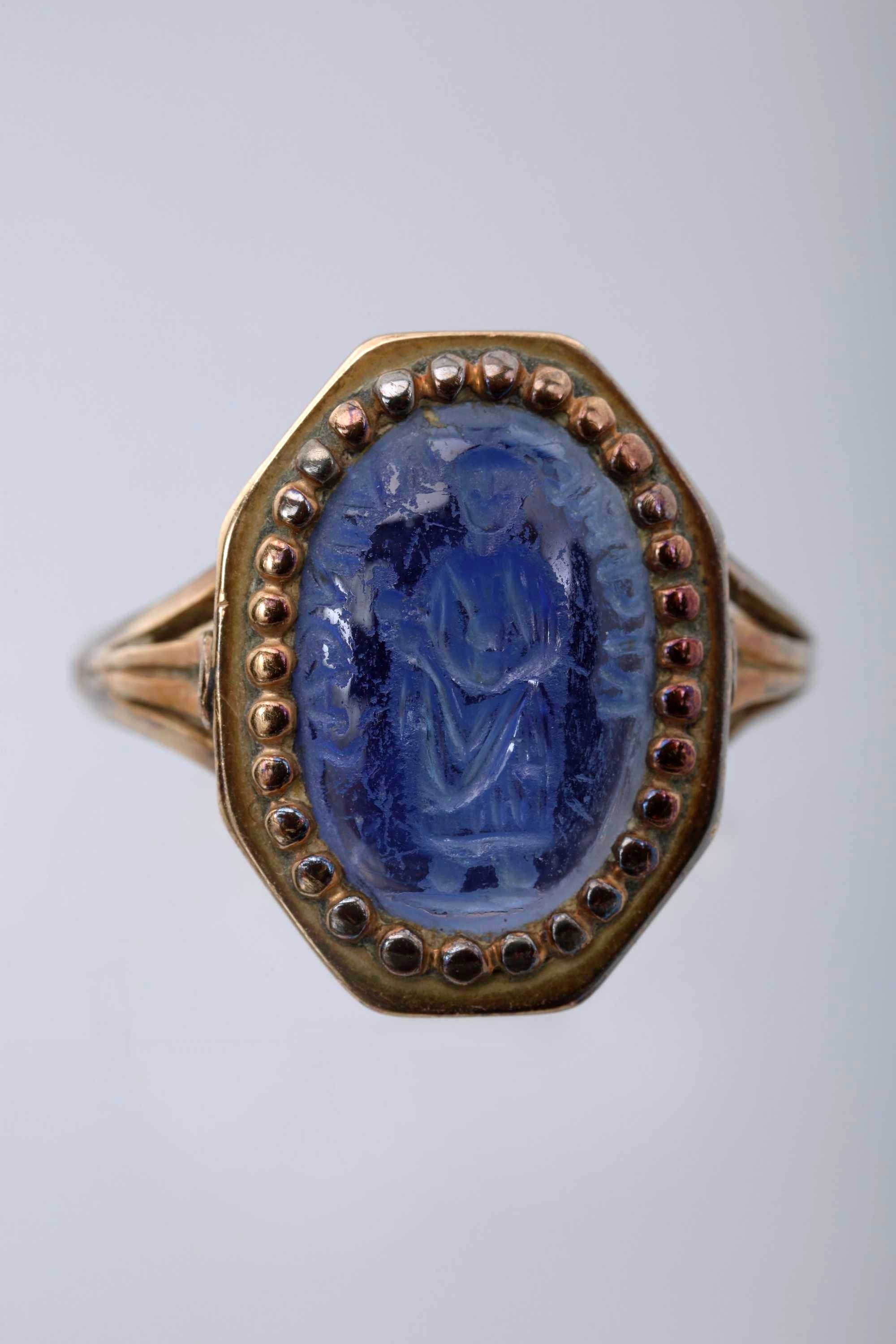
The years 455–476 were therefore not simply the final chapter of a shrinking empire. They were the last decades in which Rome remained intensely important – as residence, as symbol, as political arena, and as prize. Emperors continued to choose it because it still carried the full weight of imperial memory and legitimacy. But by remaining at the centre, Rome also endured the full violence of the struggle for the western throne. (Meaghan McEvoy, “Shadow Emperors and the Choice of Rome (455–476 AD).”)
Africa, Not Rome, Was the Key to Survival
The struggle for the western empire in its final decades was not fought only through accessions, court intrigue, and the rapid turnover of emperors. Beneath all of that lay a harder reality. The western state could still produce capable rulers, still field armies, and still attempt recovery. What it could no longer do was easily replace what had already been lost. The decisive loss was North Africa.
That was why the most serious western emperors of the age turned toward the Vandal kingdom. Control of Africa meant far more than prestige. It meant revenue, supply, and the resources needed to rebuild wider imperial power. As long as Carthage and the wealthy African provinces remained outside western control, recovery elsewhere rested on a weak foundation.
Trouble in Gaul could be managed for a time, especially with eastern help, but Gaul was not the true key to restoration. Africa was.
This gives a sharper meaning to the reign of Majorian. His rule was not simply another brief episode in the parade of failing emperors. He pulled much of the surviving western empire back together and then committed himself to the one strategy that offered a real chance of renewal: the reconquest of North Africa.
The expedition was not a sideshow, but the central gamble of his reign. When it failed in Spain in 461, he was removed and executed, and Ricimer’s control over Italy became effectively unchallenged.
The same strategic logic returned under Anthemius. His regime also turned toward Africa, and the great joint expedition of 468 represented the last large-scale attempt to restore the west on a durable basis. Its failure mattered far beyond the battlefield. It was not just another defeat to add to a growing list.
It marked the collapse of the final serious effort to recover the financial and military base on which a revived western empire might have stood. After that, the political story continued, but on much narrower terms. Emperors could still be raised, recognized, betrayed, and replaced, yet the resources required for real restoration were slipping out of reach.
From that point, the sequence of collapse accelerated. Anthemius, who had come west with eastern backing and stronger credentials than most of the emperors around him, ended not in recovery but in civil war. Ricimer broke with him, besieged Rome for months, and had him killed in July 472. Even before Anthemius died, Ricimer had already promoted Olybrius as a replacement.
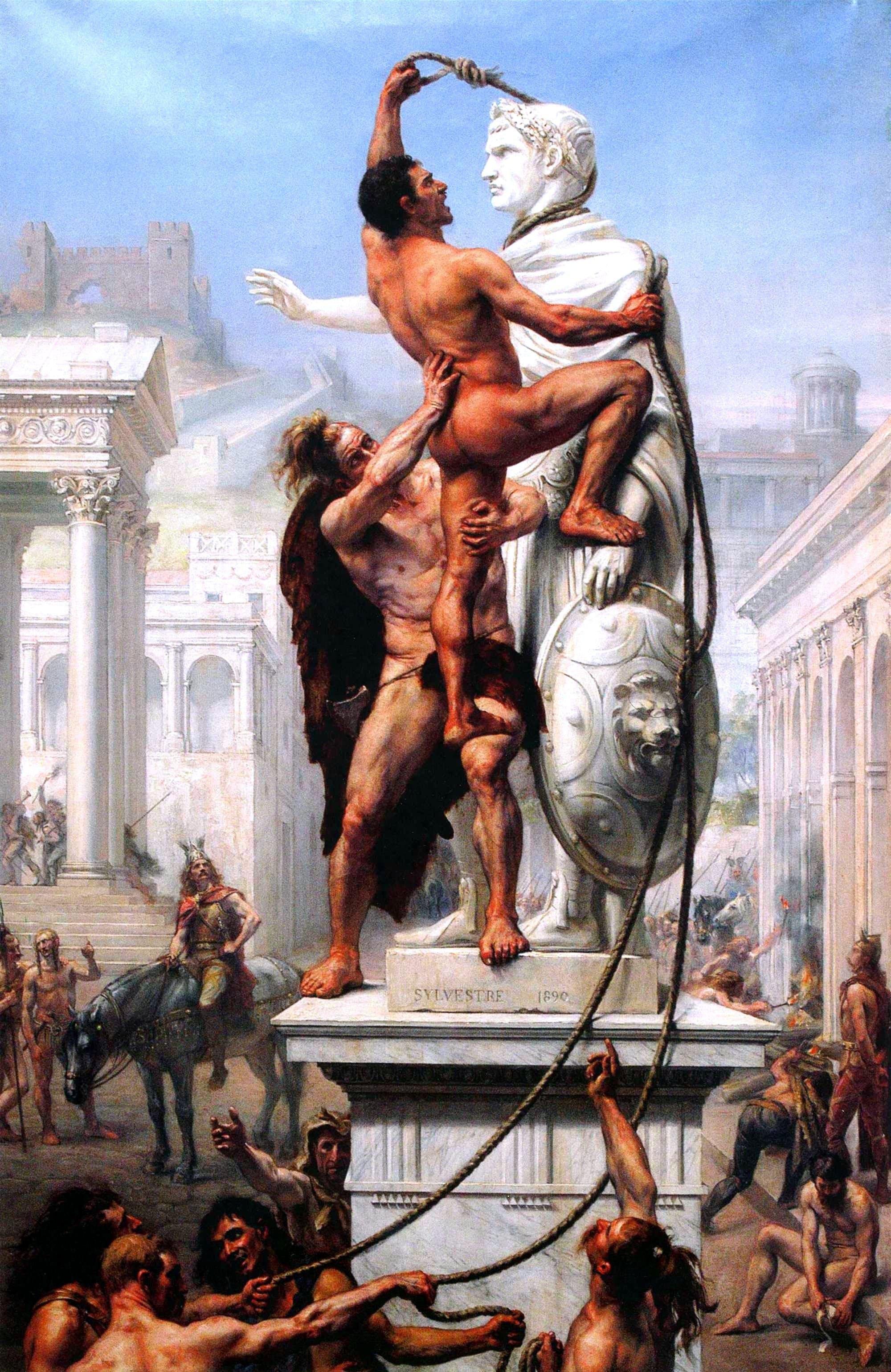
But Olybrius survived only a short time, dying in November of the same year, just after Ricimer himself. The west was still producing emperors, but now at a pace that made the office look increasingly fragile and disposable.
Ricimer’s death did not restore stability. Power briefly passed to his Burgundian ally Gundobad, who elevated Glycerius in 473. Yet the scale of what remained under western imperial control had become painfully small. Italy still mattered, but outside it the position was deteriorating fast.
While emperors were being raised and removed in Italy, the Visigoths, Burgundians, and Vandals were extending their own realms. The contest for the western throne had become, in effect, a murderous struggle over a shrinking core.
The next move came from Dalmatia. Julius Nepos, heir to the power once built there by Marcellinus and backed by the eastern court, landed near Rome in 474, removed Glycerius without a fight, and took the western throne. His accession showed that the imperial title still carried weight and that Constantinople had not yet abandoned all interest in the west. But it also showed how narrow the margin had become.
Nepos never won over the army of Italy, and the man he appointed to restore order, Orestes, turned against him instead. In August 475 Nepos fled back across the Adriatic to Dalmatia, leaving the west exposed once again.
Orestes then placed his own son Romulus on the throne. The choice itself was revealing. By this stage, the western imperial office could still be used, but more and more as a tool in the hands of military strongmen. Romulus was little more than a figure placed at the centre of a collapsing system by the real power behind him.
Less than a year later, Orestes and his brother were dead, and Romulus Augustulus was deposed. The imperial vestments were sent to Constantinople, along with the message that the west no longer required a separate emperor. At almost the same moment, the Visigothic kingdom tightened its hold over the Iberian peninsula and absorbed the rest of Provence, underlining how much political substance had already passed away from the Italian court.
Seen in that light, 476 works better as the end of a process than as a single dramatic collapse. The western throne did not suddenly lose meaning in that year. It had already been weakened by the failure to recover Africa, by the inability of successive emperors to master their generals, and by the expansion of successor kingdoms across the provinces. What disappeared in 476 was not a still-powerful imperial system, but the last western emperor in Italy.
The court still generated plans, campaigns, and ambitious regimes, but after the failure to recover Africa those efforts had less and less with which to work. Rome could still supply legitimacy, ceremony, and political theatre. It could not by itself restore the fiscal and military strength the west had lost. That is why the emperors of these years still mattered, but why, in the end, they could no longer save the empire. (Peter Heather, “The fall of the Roman Empire. A new history”)
The last western emperors still ruled in the shadow of Rome’s greatness, and that shadow was not empty. It could still lend dignity, legitimacy, and political force to those who occupied the throne. But symbol and ceremony were no longer enough. Once Africa was lost and every major attempt at recovery failed, the west could still stage empire without being able to restore it. That is what gives these final decades their tragic character: Rome remained the center of imperial meaning long after it had ceased to guarantee imperial survival.
About the Roman Empire Times
See all the latest news for the Roman Empire, ancient Roman historical facts, anecdotes from Roman Times and stories from the Empire at romanempiretimes.com. Contact our newsroom to report an update or send your story, photos and videos. Follow RET on Google News, Flipboard and subscribe here to our daily email.
Follow the Roman Empire Times on social media: