
Survey at Glac Investigates a Possible Roman Imperial Palace
A Polish–Serbian team has examined the southern edge of Glac, where mosaics and imported stone enrich a complex linked to Emperor Maximian.

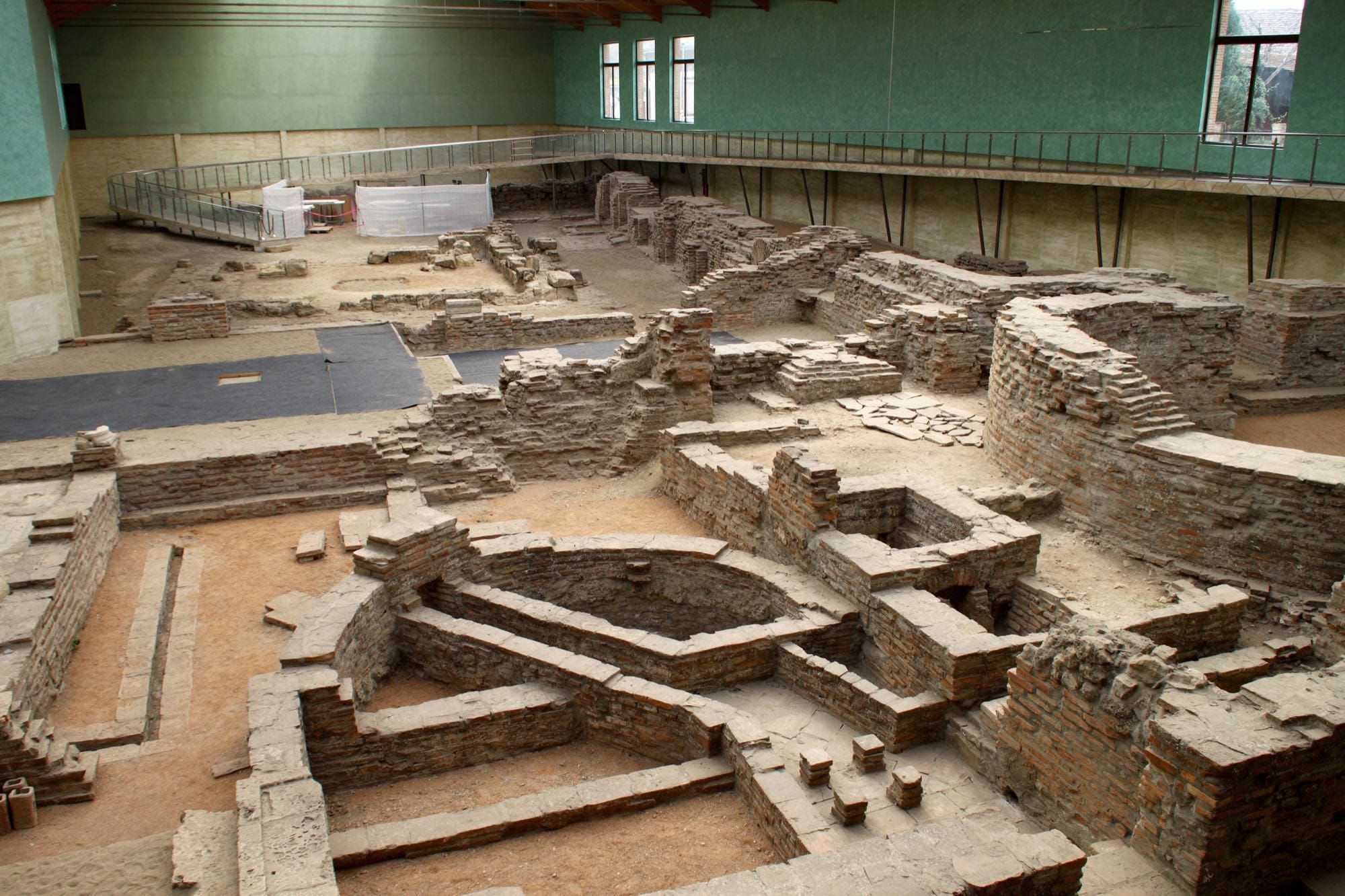
A Polish–Serbian archaeological team has completed a first season of joint research at Glac, a monumental late Roman complex near Sremska Mitrovica in Serbia. The campaign examined its southern area, extending investigation towards the Sava River at a site associated with a possible palace of Emperor Maximian Herculius.
The Polish Centre of Mediterranean Archaeology at the University of Warsaw announced the work on 16 November 2026. Ground-penetrating radar, geological investigations and geoarchaeological research were used to examine an area that had previously been outside the archaeological investigation. Clearance of the ground had made the southern part accessible for this campaign.
Glac already contains substantial architectural remains, including a reception hall, a peristyle and rooms decorated with mosaics, wall paintings and imported stone. The new campaign focused on buried structures and the surrounding landscape. Its preliminary results begin a new stage of research into the extent and setting of the complex.
A Riverside Complex Outside Sirmium
Glac stands beside the Sava approximately 4 kilometres (2.5 miles) from Sremska Mitrovica, along the road towards Jarak. In Late Antiquity, this area lay on the outskirts of Sirmium, an important Roman urban centre. The present investigation concerns this outlying complex and the land extending south towards the river.
The Institute of Archaeology in Belgrade describes Glac as a large group of buildings whose layout has emerged through excavation and geophysical investigation. Centrally positioned rooms include a particularly large reception room with mosaic flooring. Mosaics have also been recorded in the eastern part of the site, within land occupied by the Mitro-Srem company.
The university announcement places the monumental complex in the Tetrarchic period. It identifies a reception hall, described as an aula, and an extensive peristyle among its principal architectural features. These spaces formed part of an elaborate building ensemble with several forms of interior decoration.
Radar Reaches the Southern Edge
The latest fieldwork concentrated on the southern part of Glac, which the announcement describes as previously uninvestigated archaeologically. This was a reconnaissance campaign, bringing several methods together to establish what lay beneath the newly accessible ground and to examine the environment around the monumental buildings.
Ground-penetrating radar supplied preliminary information about structures below the surface. Geological work examined the composition of the underlying ground and the sediments present there. The geoarchaeological investigation brought the archaeological site into a wider study of the landscape and the changes that had affected the Sava valley.
The southern extent of the complex was a particular focus. Researchers investigated the possibility of further structures in the riverside zone that might have been connected with its operation. The campaign therefore addressed both the distribution of buildings and the relationship between the built complex and its natural surroundings.
Mosaics and Stone From Distant Quarries
The rooms already known at Glac preserve several kinds of costly decoration. Mosaics covered important floors, while wall paintings and stone facing embellished the interiors. The reception spaces and the range of materials form part of the archaeological basis for regarding the complex as a residence of exceptional status. Our account of Mesmont’s possible palatial complex follows a separate investigation of substantial buildings and privileged occupation in late antique and early medieval Burgundy.
The university reports fragments of red Egyptian porphyry, green porphyry from the Peloponnese in southern Greece, and Numidian marble from Chemtou in modern Tunisia. It describes these stones as particularly prestigious materials used in imperial architecture and other representative buildings of Late Antiquity.
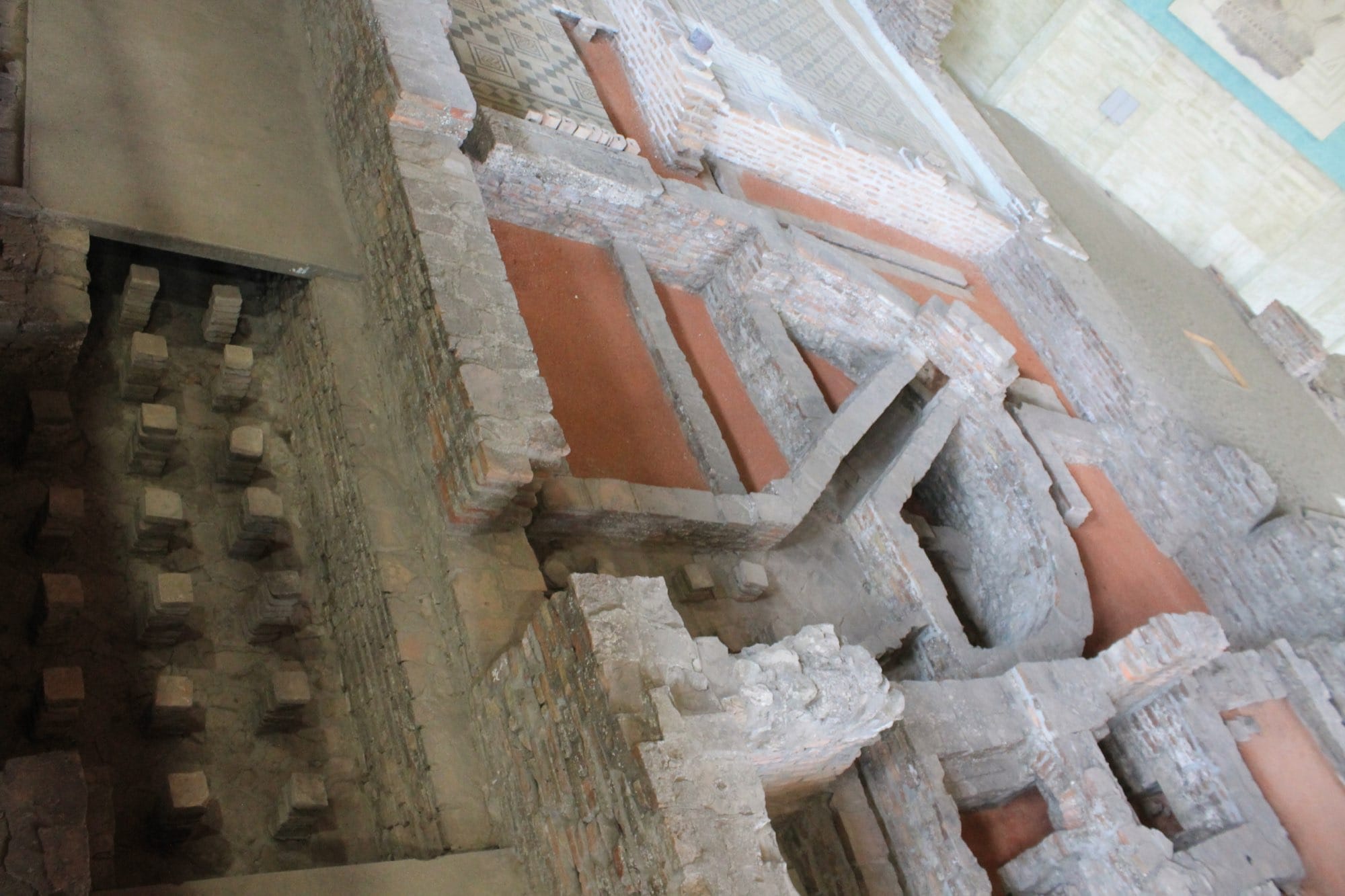
The Serbian project overview records the same principal stone varieties and also identifies polychrome breccia from Akrini. Together, the surviving floors and decorative fragments document an architectural programme that drew on several quarrying regions. For another view of late antique interior decoration, our report on Smyrna’s mosaic floors and wall paintings follows excavations around that city’s agora and theater.
A Site Recorded Long Before This Season
Knowledge of ancient remains at Glac reaches back to the nineteenth century. Ignjat Jung, a local teacher and researcher of Sirmium, recorded Roman buildings in several places on the property. His descriptions included rooms with marble slabs and green porphyry, as well as a semicircular room with a mosaic floor and limestone column elements.
Further finds were recorded during the First World War, when defensive trenches were dug around the Sava. A military report described a mosaic covering approximately 80 square metres (860 square feet), together with a sarcophagus and the head of a marble sculpture. The excavation institute retains these observations within its account of the site’s research history.
Detailed archaeological investigation followed in 1994. A geomagnetic survey in 2014 examined approximately 4 hectares (9.9 acres), and another geophysical survey took place in 2019. These earlier campaigns established the presence of extensive buried buildings and helped place the excavated rooms within a much larger complex.
The Proposed Connection With Maximian
The proposed identification brings together Glac’s position outside Sirmium, its monumental architecture and an ancient account of Maximian’s origins. The Epitome de Caesaribus, traditionally attributed to Aurelius Victor, describes a palace near Sirmium at the place where the emperor’s parents had worked. The passage supplies the historical reference behind the archaeological hypothesis.
The Institute of Archaeology also reports a coin struck during the reign of Maximianus Herculius beneath one of the mortar floors. Its overview identifies this as an important element in the dating of the complex. The coin supplies a chronological clue within the building sequence, alongside the architecture and decorative material.
The Serbian project account distinguishes the palace in central Sirmium from the residence that historical sources place near the city. Glac’s position outside the urban centre is part of the proposed identification. Its monumental reception rooms and elaborate decoration add to the evidence being considered in that assessment.
Mapping the Buildings Into the Sava Landscape
Earlier landscape research placed Glac within a much wider regional study. An Australian–Serbian survey began in 2017, examining settlement patterns, environmental conditions and the rural economy. Its study area covered approximately 700 square kilometres (270 square miles) on both sides of the Sava. Work around Glac itself included searches for outbuildings, cemeteries, water supplies and transport routes.
A study published in Starinar in 2021 examined the main Roman road running east from Sirmium towards Bassianae. It combined field survey with LiDAR, satellite images, aerial photography and written evidence to trace the route. The study identifies the road and the Sava as the region’s two principal transport corridors, carrying people, goods and troops through the countryside around the city.
The completed reconnaissance has begun to connect the southern architectural remains with the environmental history of the Sava valley. Preliminary radar information and the geological observations now provide a basis for further examination of the riverside zone, where the team is investigating the reach of the complex and structures associated with its operation.



About the Roman Empire Times
See all the latest news for the Roman Empire, ancient Roman historical facts, anecdotes from Roman Times and stories from the Empire at romanempiretimes.com. Contact our newsroom to report an update or send your story, photos and videos. Follow RET on Google News, Flipboard and subscribe here to our daily email.
Follow the Roman Empire Times on social media: