
Wall Paintings Found Near Ancient Smyrna’s Agora and Theater
Three late-antique rooms with mosaic and marble floors accompany newly reported wall paintings around Smyrna’s agora and theater in modern İzmir.

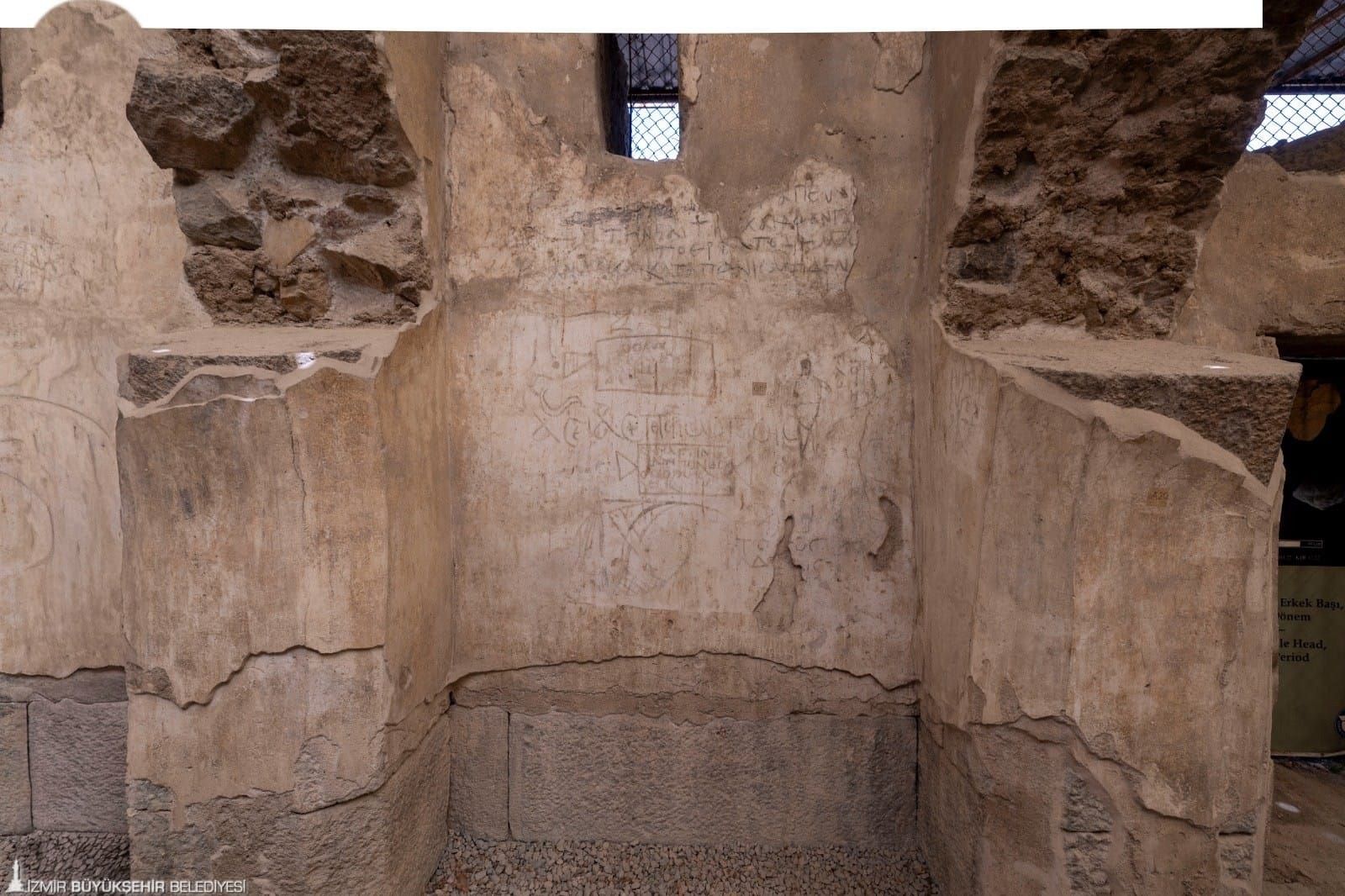
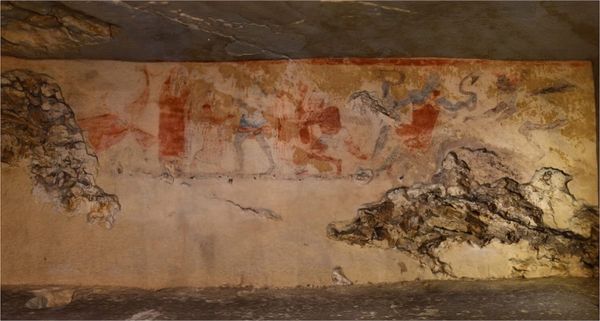
Excavators in ancient Smyrna, beneath modern İzmir in western Türkiye, have reported wall paintings in work around the agora and theater. They also uncovered three adjoining rooms near a mosaic floor identified last year. The finds were announced on 31 August 2026 by İzmir Metropolitan Municipality, which supports the excavation.
Two of the newly exposed rooms have mosaic floors, while the third has marble paving. The excavation team dates the structures to the fifth and sixth centuries AD, when Smyrna was part of the eastern Roman world. Their use is still being studied: the excavation director has suggested a public function, but has not identified a specific building.
The claim that the paintings are a first is local to the excavated areas; the team says it had not previously encountered wall paintings in the agora or around the theater. The announcement gives no specific inventory of the paintings' subjects, colours or precise dates, so the decoration cannot yet be used to identify what actually happened in the rooms.
Three rooms beside an earlier mosaic
The new rooms emerged as archaeologists followed a mosaic floor found in the previous excavation season. Their differing surfaces show that the decorated area was larger than a single isolated pavement. The municipality describes two mosaic-floored spaces and one paved with marble, but has not published a full plan or a room-by-room account of the finds.
The excavation director compared aspects of the architecture with the Terrace Houses at Ephesus, another ancient city in western Türkiye. He nevertheless proposed that the Smyrna rooms may have had a public use.
The public-building interpretation remains provisional while work continues around the rooms. The announcement does not identify their occupants or describe equipment associated with a particular activity. A different kind of room identification appears in our account of the Roman kitchen excavated at Segisamo, which describes a probable oven, ash and cooking vessels found together.
Painted walls in a changing Roman city
The municipality places the new rooms in the fifth and sixth centuries, several centuries after the agora and theater first took shape. That date falls within Late Antiquity, a period in which parts of the older city were adapted to new uses. The excavation director links the buildings to Smyrna's changing architectural and social life after the division of imperial rule in AD 395 and the spread of Christianity.
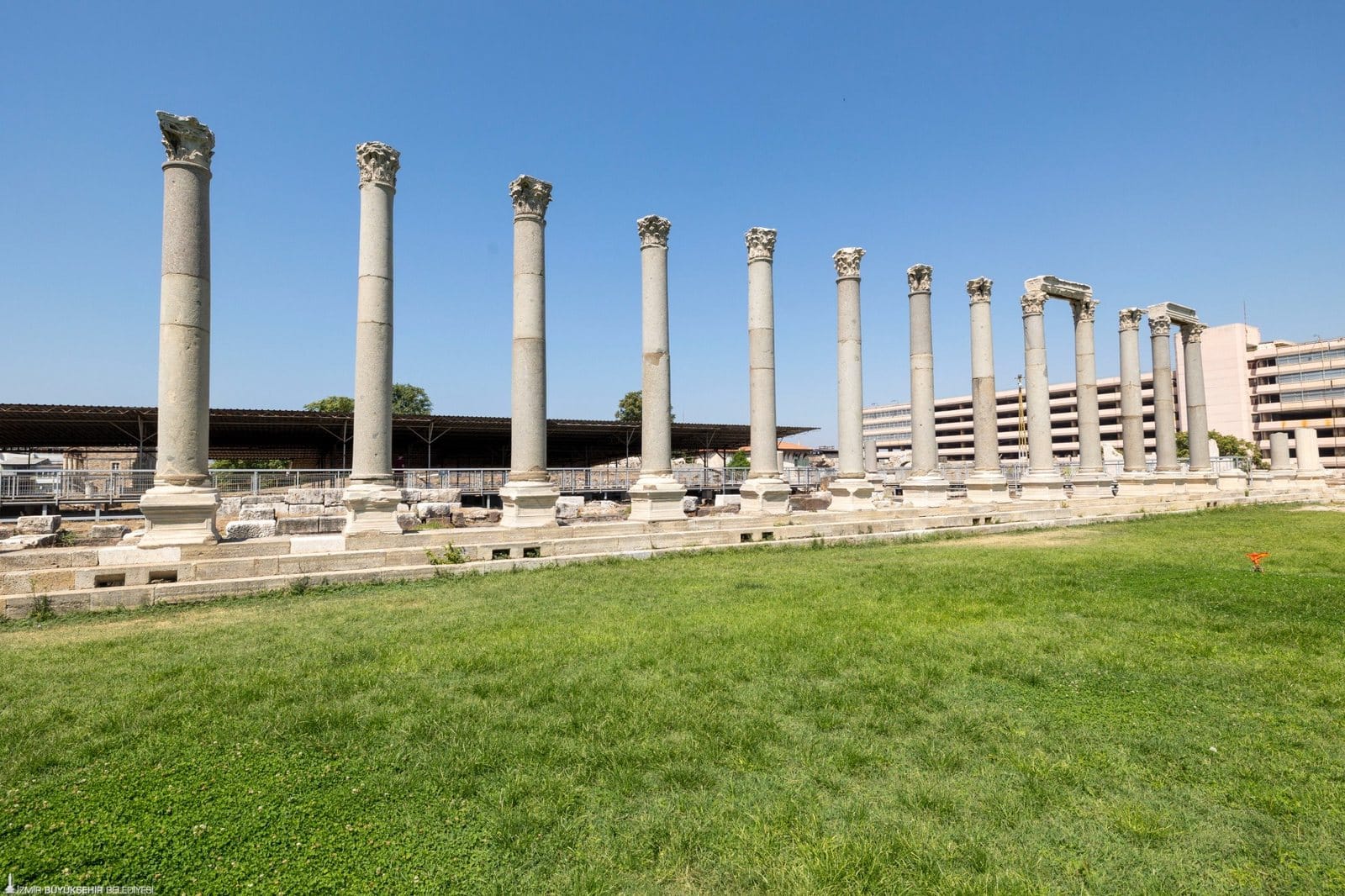
The theater occupies the slope between the agora and the acropolis at Kadifekale. The archaeological study places it within the city's planned street system and notes the solid andesite bedrock beneath it. Its hillside position and relationship to the agora form part of the older urban setting into which the later buildings developed.
The theater study describes several other surviving parts of Roman Smyrna around the agora, including its basilica, western portico and Faustina Gate. The excavated urban remains also include a council building, a mosaic hall and baths. The new rooms add to an investigation spread across several monuments within the modern city.
The theater’s earlier imperial phases
The wall paintings were reported from work around both the agora and the theater. A 2026 study in the archaeological journal Höyük supplies a separate, much fuller record of the theater itself. Its authors examine excavated architecture, inscriptions and earlier research, tracing a monument built in the Hellenistic period and repeatedly altered under Roman rule.
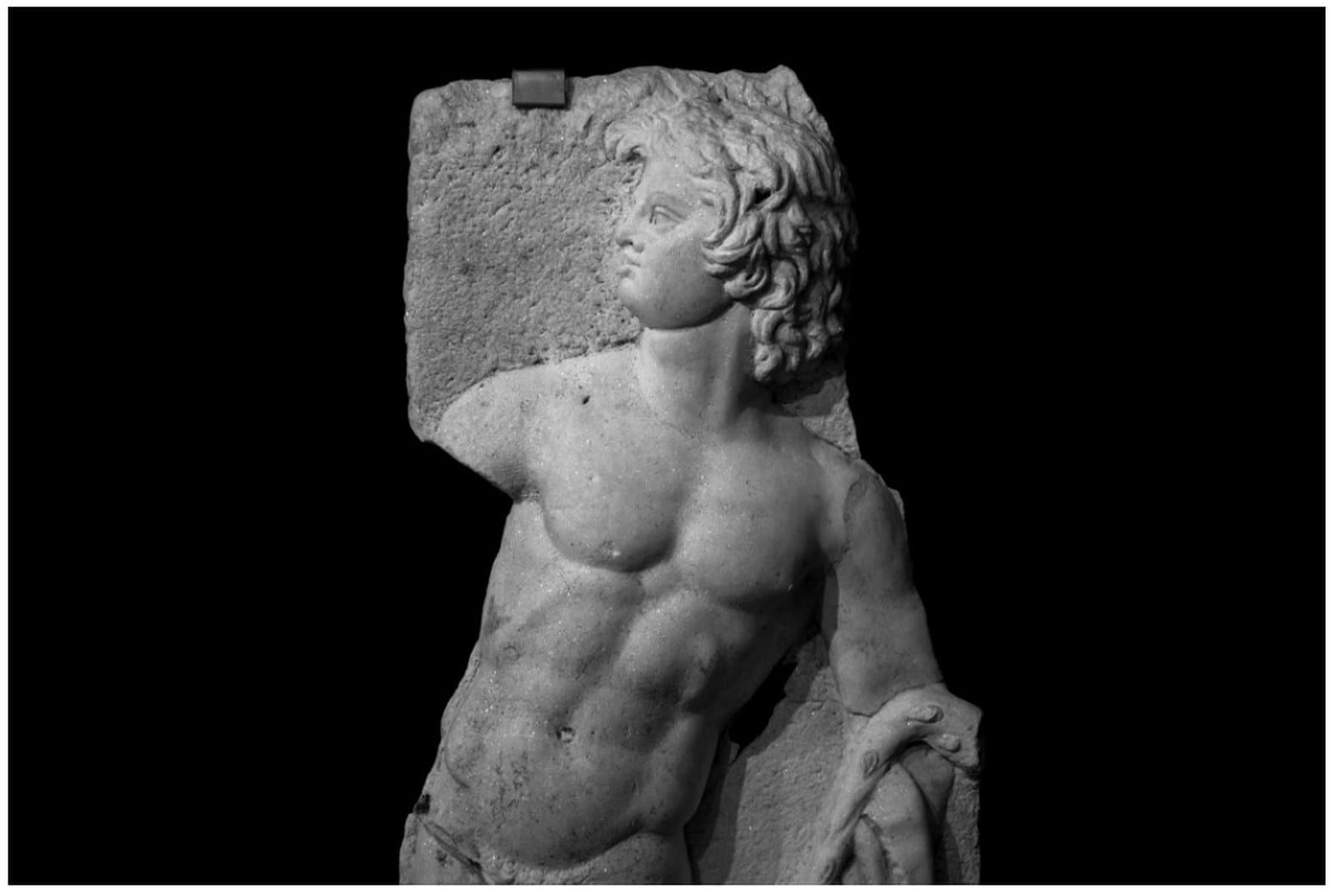
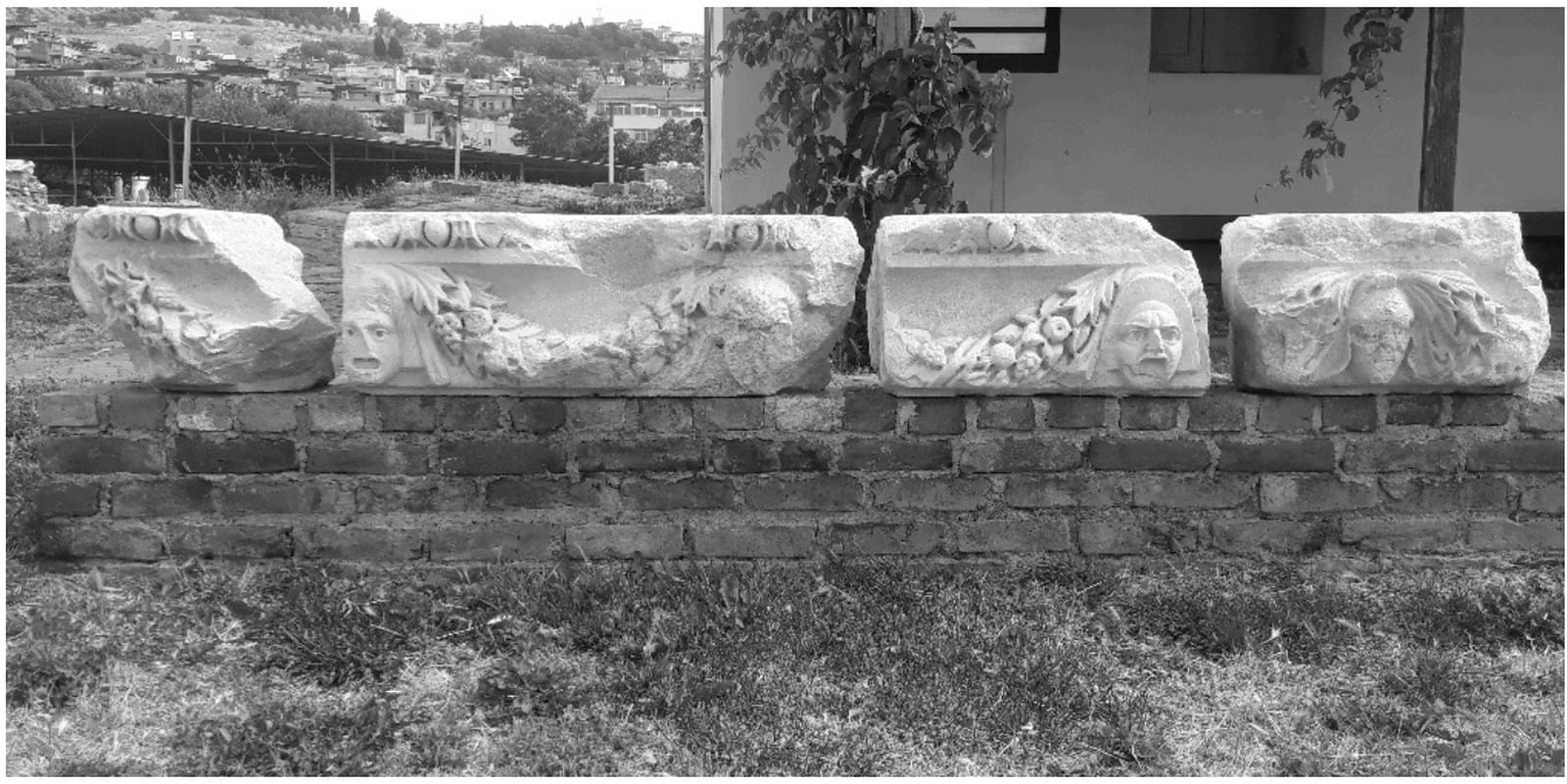
According to that study, the theater's most extensive known construction after its initial phase occurred under Trajan and Hadrian in the early second century AD. A two-storey stage building rose behind the front of the stage, with architectural sculpture and a façade that included theatrical masks and Dionysiac figures. The authors also report later repairs associated with the earthquake of AD 177 or 178.
Modern excavation is revising older reconstructions of the seating area, or cavea. The study gives its diameter as approximately 155 metres, while stressing that excavation has not yet confirmed that measurement. Published capacity estimates range from 16,000 to 20,350 spectators; these are estimates based on the reconstructed monument, not a count established by a fully excavated auditorium.
Rooms behind the stage
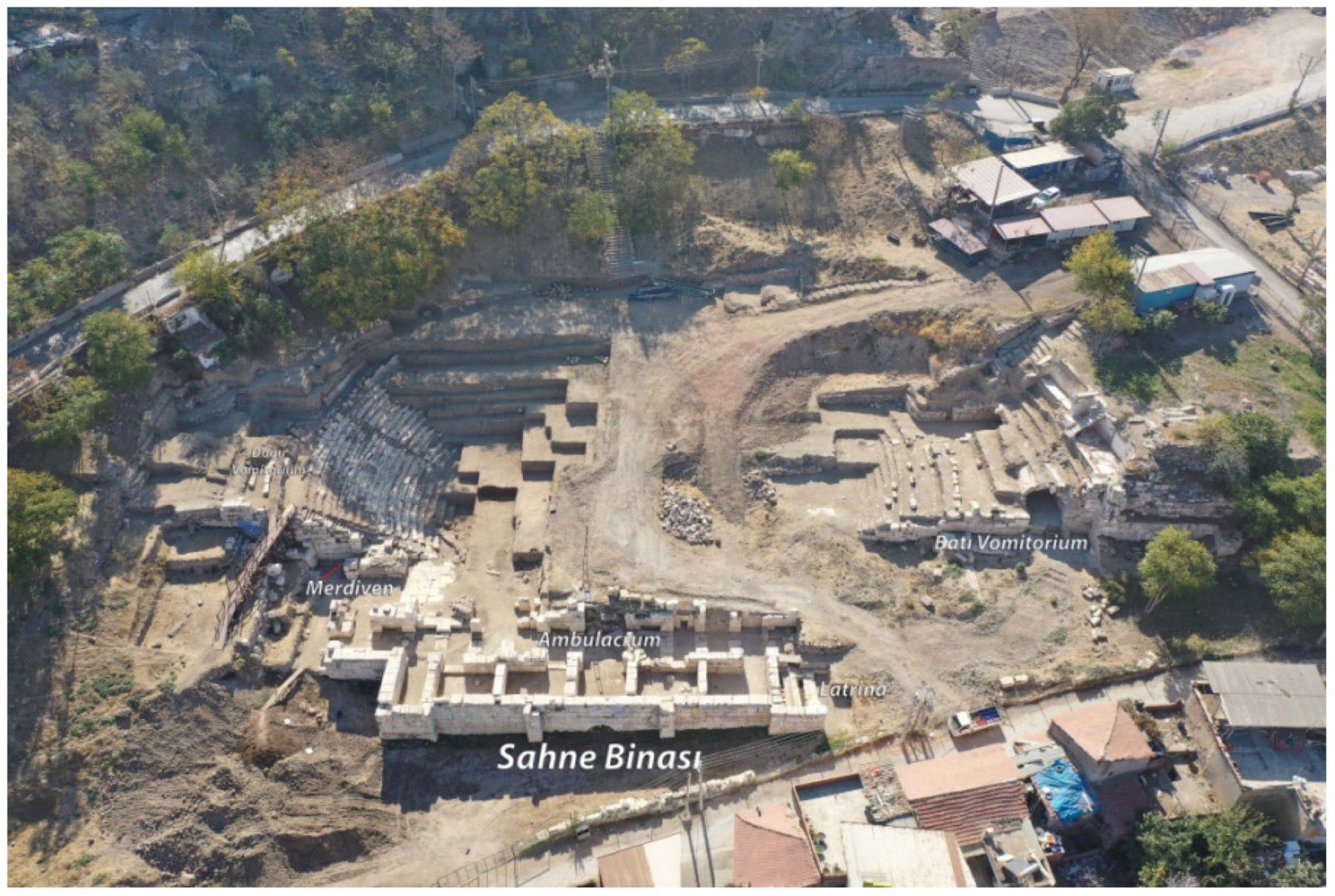
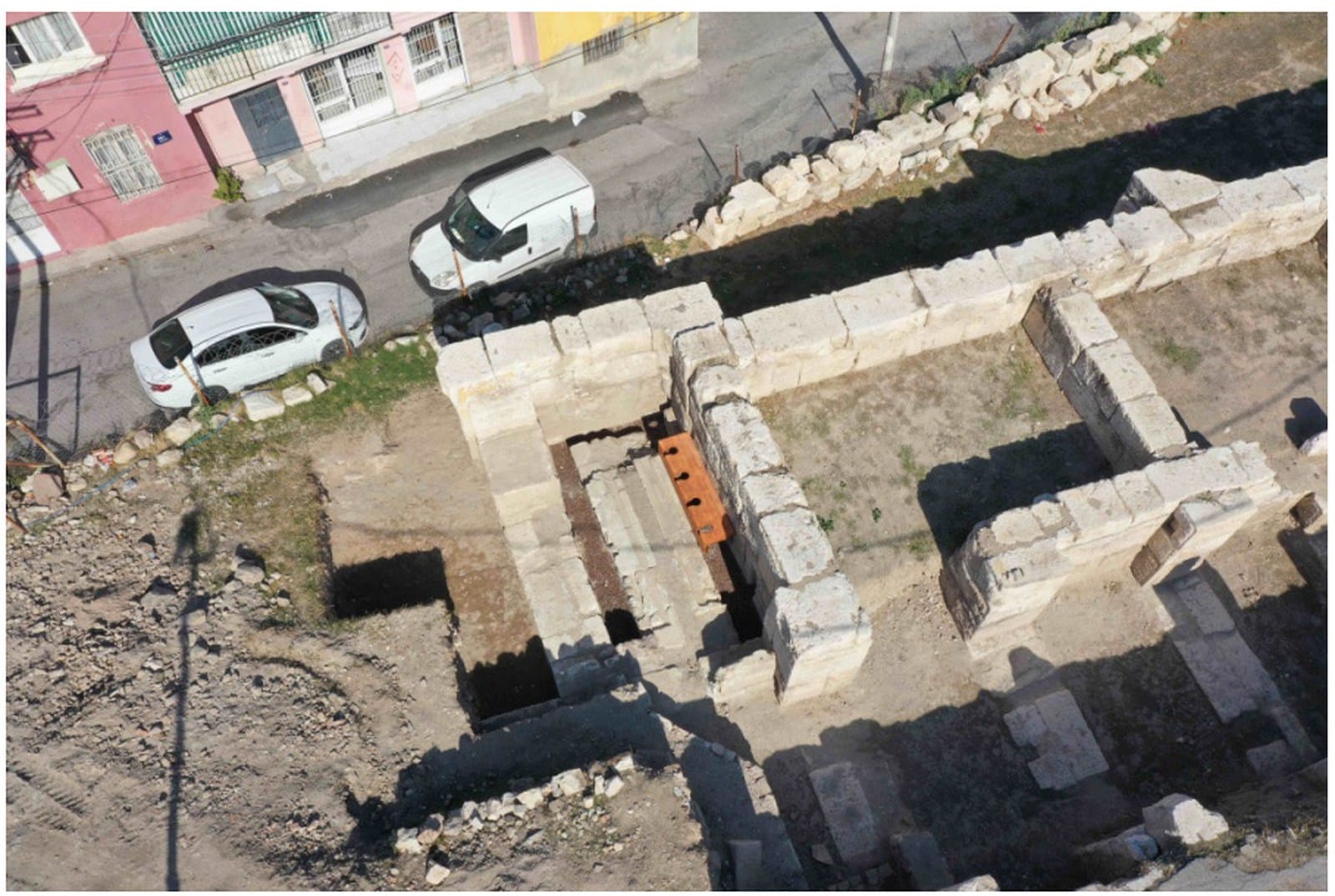
Excavation of the theater has exposed seven rooms along a corridor about 3.6 metres wide on the first-storey level of the stage building. At the western end, a room measuring approximately 5.35 by 2.6 metres served as a latrine. Its position restricted access to performers and staff. The study tentatively associates its installation with alterations under Hadrian, while leaving the date open to further investigation.
Writing inside the stage building adds evidence of the people who used these spaces. One inscription refers to equipment belonging to Bassos and to young men from Thessalonica; the researchers associate it with performers who stayed long enough to leave their names. Other inscriptions record civic honours and reserved seating, connecting the theater to the organisation of public life in Roman Smyrna.
The theater eventually acquired uses beyond performance. Lamp-production fragments point to workshops in the stage building by Late Antiquity, while later activity included the removal of building stone. Parts of the upper seating have not survived in place, and the study connects this loss with quarrying. The excavated rooms therefore preserve several phases of activity within the same monumental shell.
New paintings and older graffiti
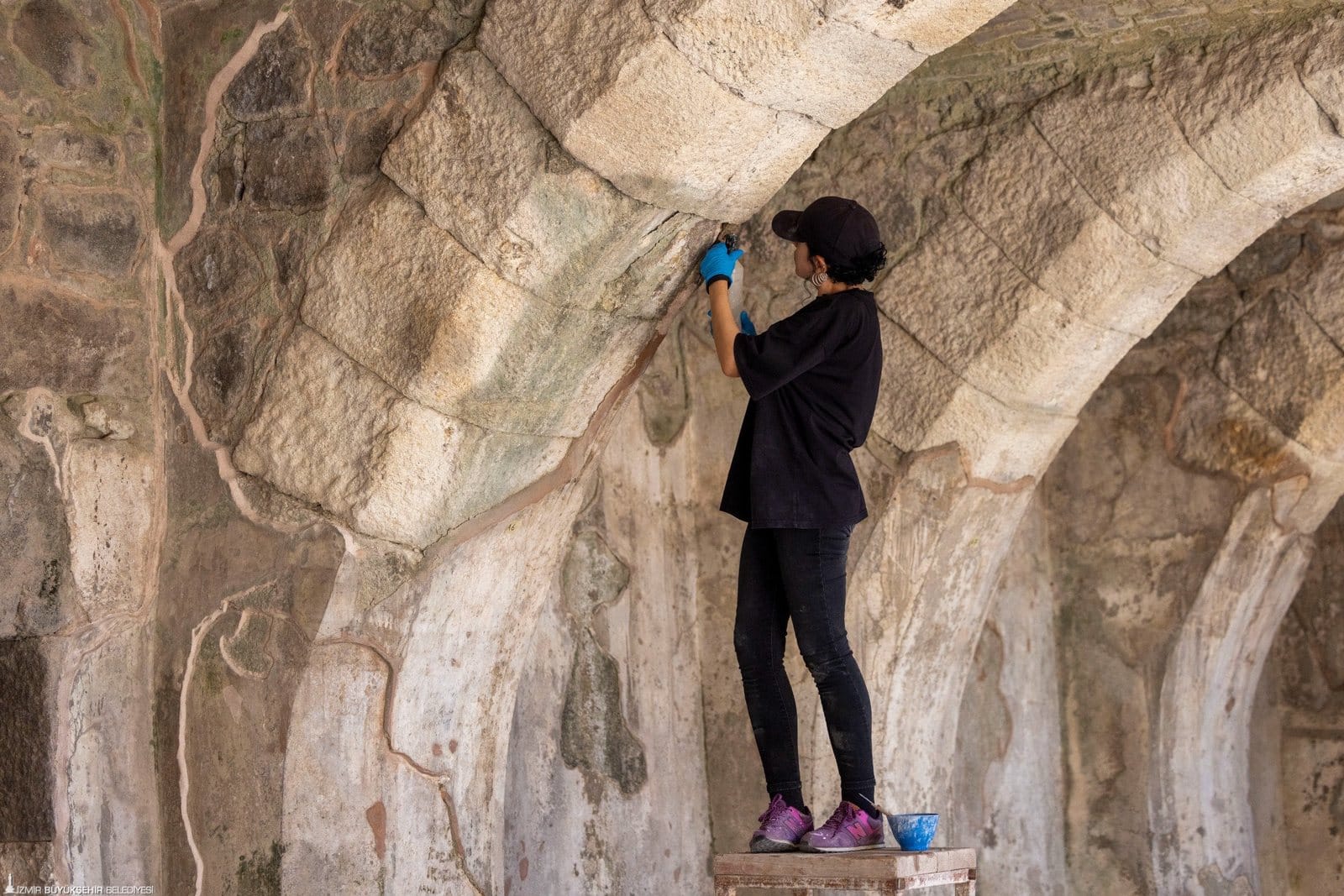
The agora also preserves graffiti on plaster, which are receiving conservation treatment along the visitor route. The municipality reports that part of the Graffiti Hall is open at specified times. These older recorded surfaces and the newly encountered wall paintings form separate parts of the excavation announcement.
Without a published description, it is too early to compare the paintings' themes with other Roman wall art. A separate discovery in Rome, covered in our report on the Painted City fresco and Great Mosaic, describes a painted urban view and a floor mosaic within an earlier building beneath Trajan's baths. The Smyrna announcement does not yet offer a comparable account of its painted subjects.
The excavation is conducted on behalf of İzmir Kâtip Çelebi University with permission from the Ministry of Culture and Tourism. İzmir Metropolitan Municipality is its principal sponsor. Students from the university’s tourism-guiding department also take part through internships, giving visitors information in Turkish and English while archaeological work continues.
A water channel and the next excavation
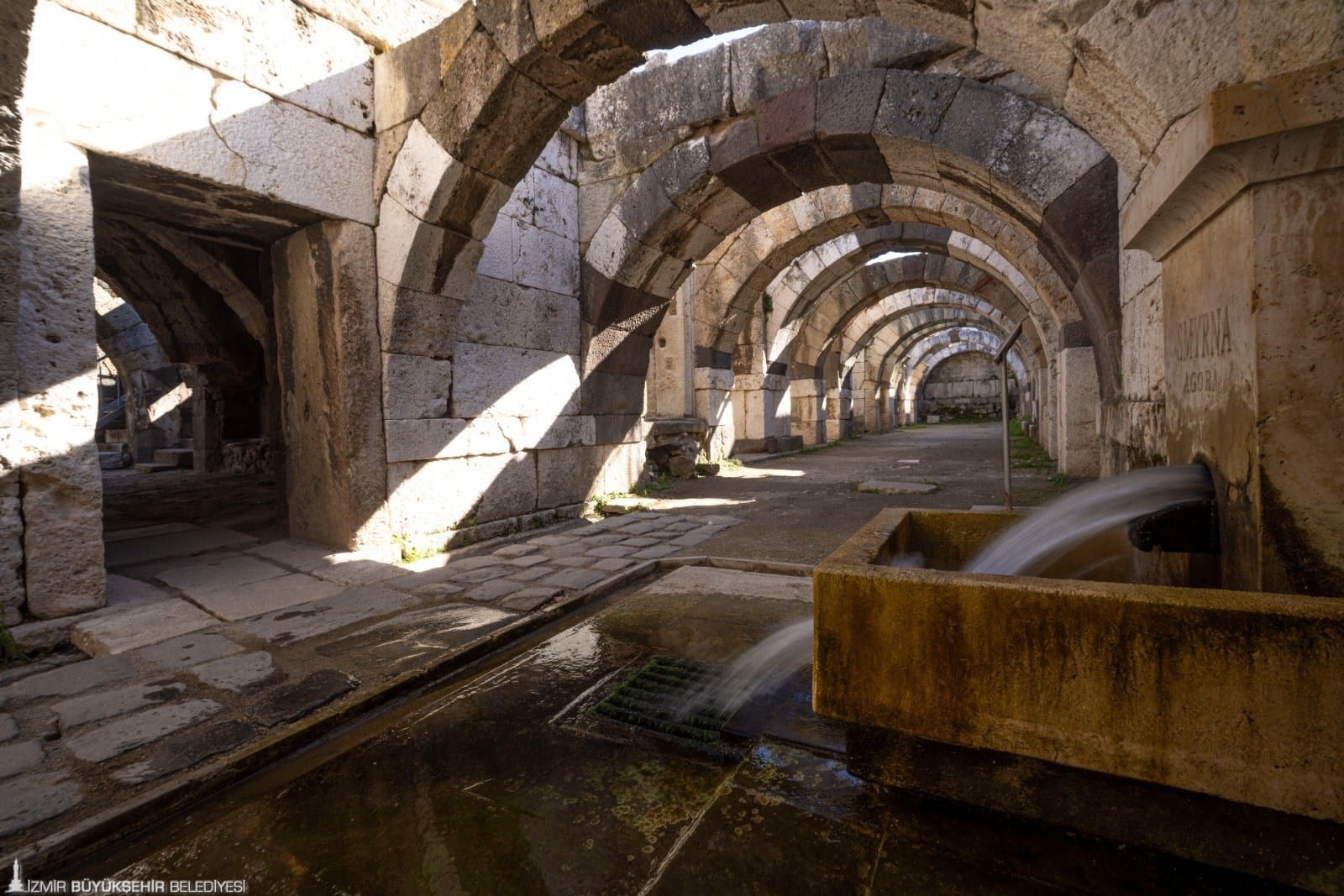
The municipal announcement also reports work on a Roman-period water channel that still carries water toward the agora. Excavators have traced about 150 metres of its route, but have not established its source. The excavation director suggests a spring near the Namazgah Bath and Kurşunlu Mosque, south of the agora, as one possibility under investigation.
At the theater, modern housing once covered much of the monument. Clearance associated with land acquisition continued until 2014, exposing parts of the stage building among the demolished houses. Excavations concentrated on the stage building and seating from 2016 onward. The orchestra remains incompletely excavated, leaving questions about the building’s proportions and plan unresolved.
Excavators plan to follow the mosaic rooms further and study the bath-gymnasium complex after that. A more detailed record of the paintings, floor sequences and connections between rooms will determine whether the proposed public function holds. For now, the securely reported result is three late-antique rooms with mosaic and marble floors, alongside the wall paintings newly encountered in the agora and theater excavation areas.
About the Roman Empire Times
See all the latest news for the Roman Empire, ancient Roman historical facts, anecdotes from Roman Times and stories from the Empire at romanempiretimes.com. Contact our newsroom to report an update or send your story, photos and videos. Follow RET on Google News, Flipboard and subscribe here to our daily email.
Follow the Roman Empire Times on social media: