
2,000-Year-Old Roman Kitchen Found in Spain’s Ancient Segisamo
A kitchen from the age of Augustus and Tiberius preserves imported Roman cookware beside pottery rooted in local Turmogi traditions.

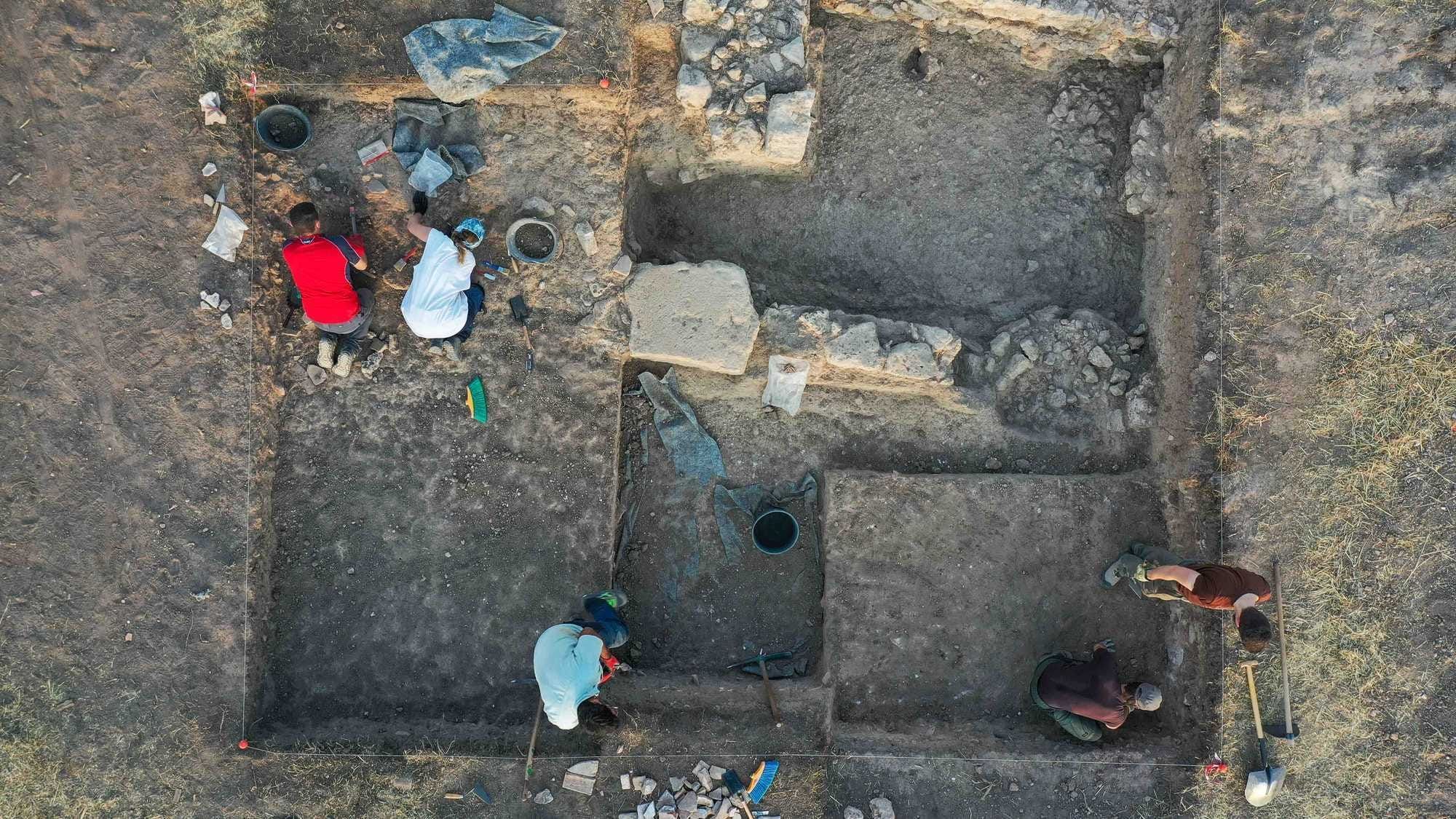
Archaeologists working in Sasamón, in northern Spain, have uncovered a room that they provisionally identify as a Roman kitchen. The University of Salamanca announced the find on September 18, 2026, at the close of the tenth archaeological campaign in the area of ancient Segisamo.
The room belongs to the early Roman city and dates to the time of Augustus and Tiberius. Its compacted floor, probable oven, thick deposit of ash and charcoal, and varied ceramic vessels form the main evidence for interpreting the space as a kitchen used about two thousand years ago.
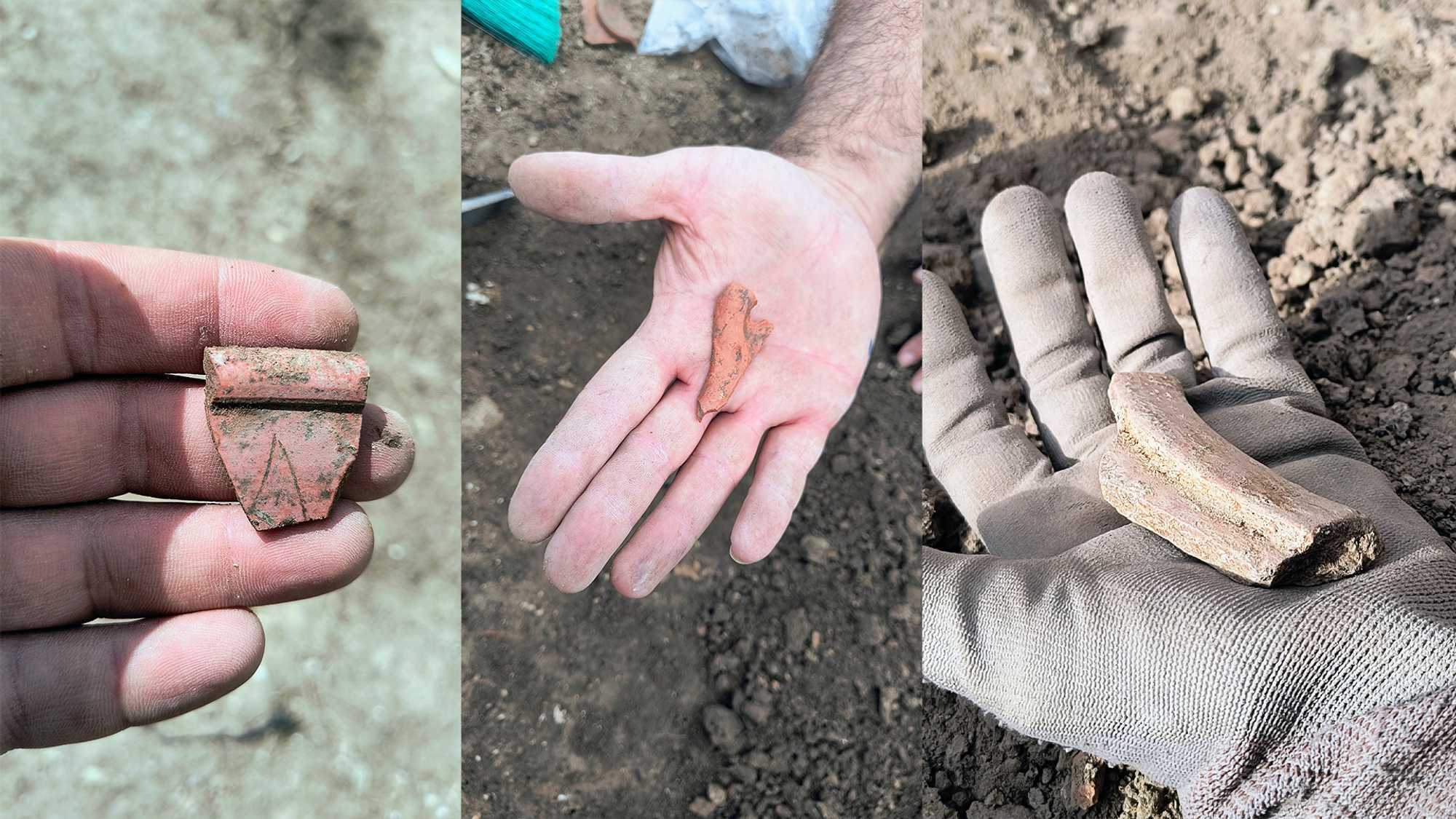
The pottery brings together objects made in the Italian peninsula and others that continued local Turmogi traditions. The excavators compared that combination, humorously, to the kitchen of a Turmogi grandmother who used “a little of the new” and “a little of the old.” The phrase describes the mixed ceramic assemblage; it does not identify a particular ancient cook.
A Kitchen Beneath Modern Sasamón
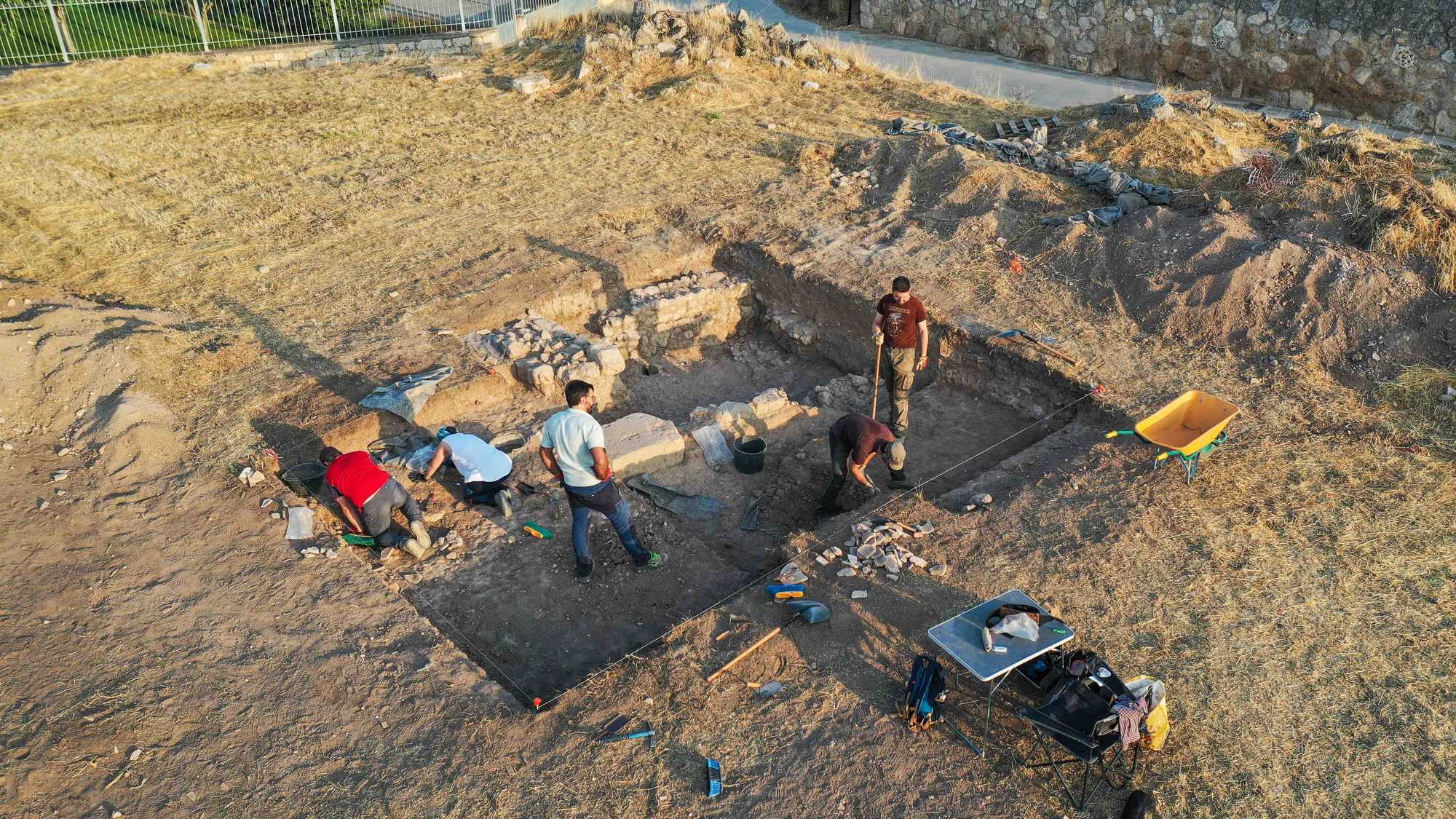
The room was found at La Era, an archaeological reserve beside the church of Santa María la Real in Sasamón, Burgos. Excavation there forms part of a longer project investigating settlement in the region from the first century BCE to the seventh century CE.
The research has moved from the Turmogi Iron Age settlement at nearby Cerro Castarreño and the Roman siege works around it to the city of Segisamo. Earlier study using aerial photography, drones, magnetometry and ground-penetrating radar mapped approximately twelve hectares of the ancient city outside the modern built-up area, with another eight or nine hectares estimated beneath Sasamón itself.
The 2026 campaign combined excavation in the town with aerial and geophysical survey elsewhere in the district. La Era offers a rare opportunity to investigate the Roman city directly because the land, recently transferred for archaeological research, has not been covered by new construction.
A Fire Area and a Simple Floor
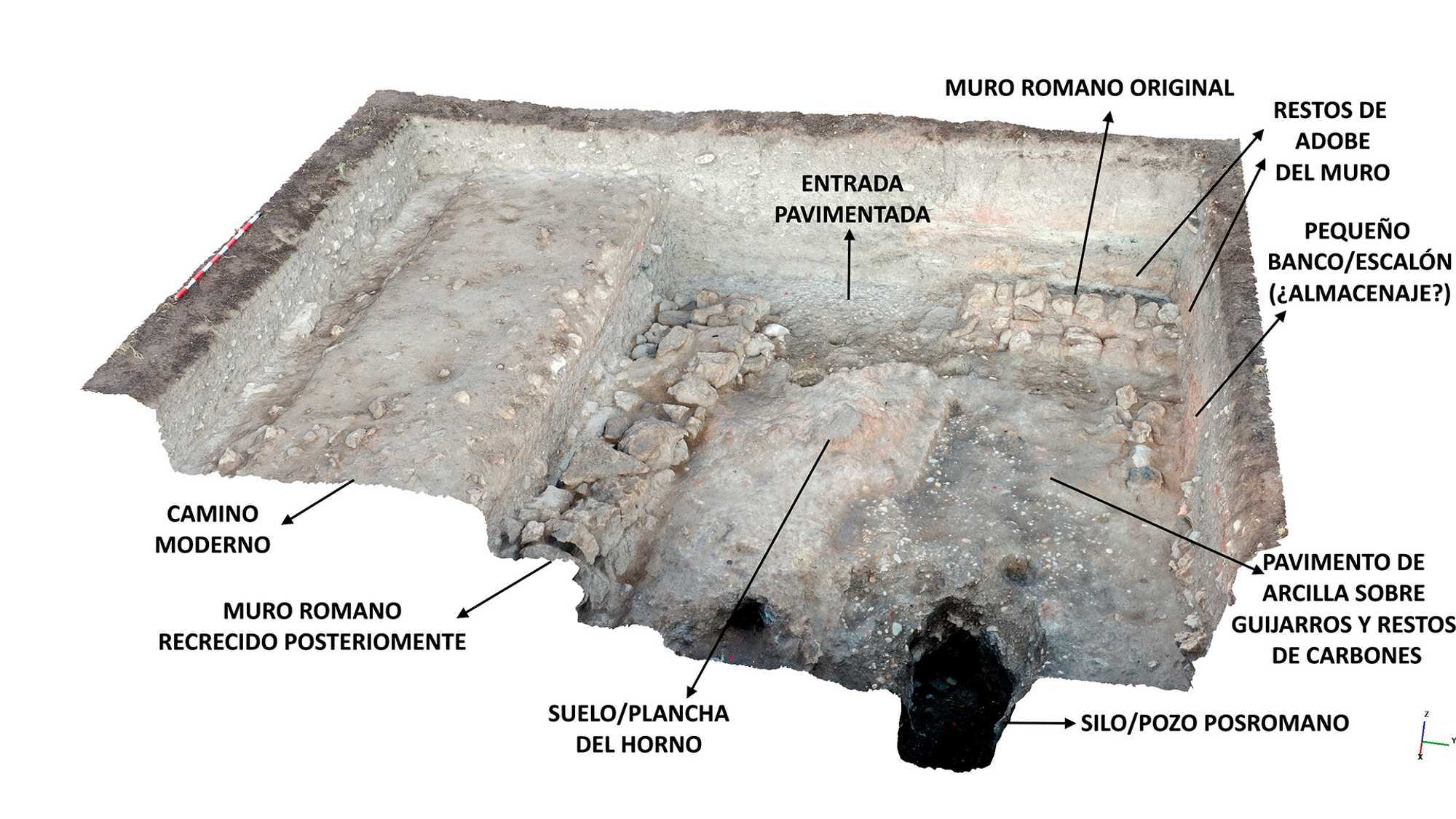
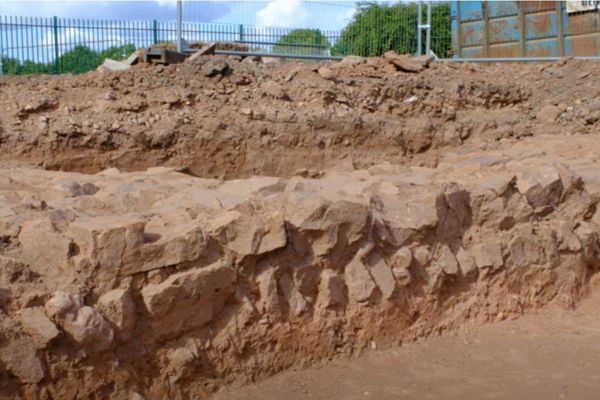
The kitchen’s walls were made of adobe resting on stone foundations and may originally have been plastered. The floor was equally practical: compacted clay laid over a bed of small stones, a construction that created a durable surface that could be cleaned.
A low step separated a slightly raised area that probably supported an oven, although most of that feature has been destroyed. The excavators found a substantial layer of ash and charcoal where the fire would have burned. These remains, together with the equipment recovered from the room, support the kitchen interpretation.
The room should not be imagined as one of the richly decorated interiors that dominate popular images of Roman houses. Academic study of kitchens in the northern Meseta shows that domestic and productive areas have often received less archaeological attention than reception rooms, baths and mosaics. Many known examples consist only of hearths or incomplete working spaces.
Pots for Storage, Grinding and Cooking
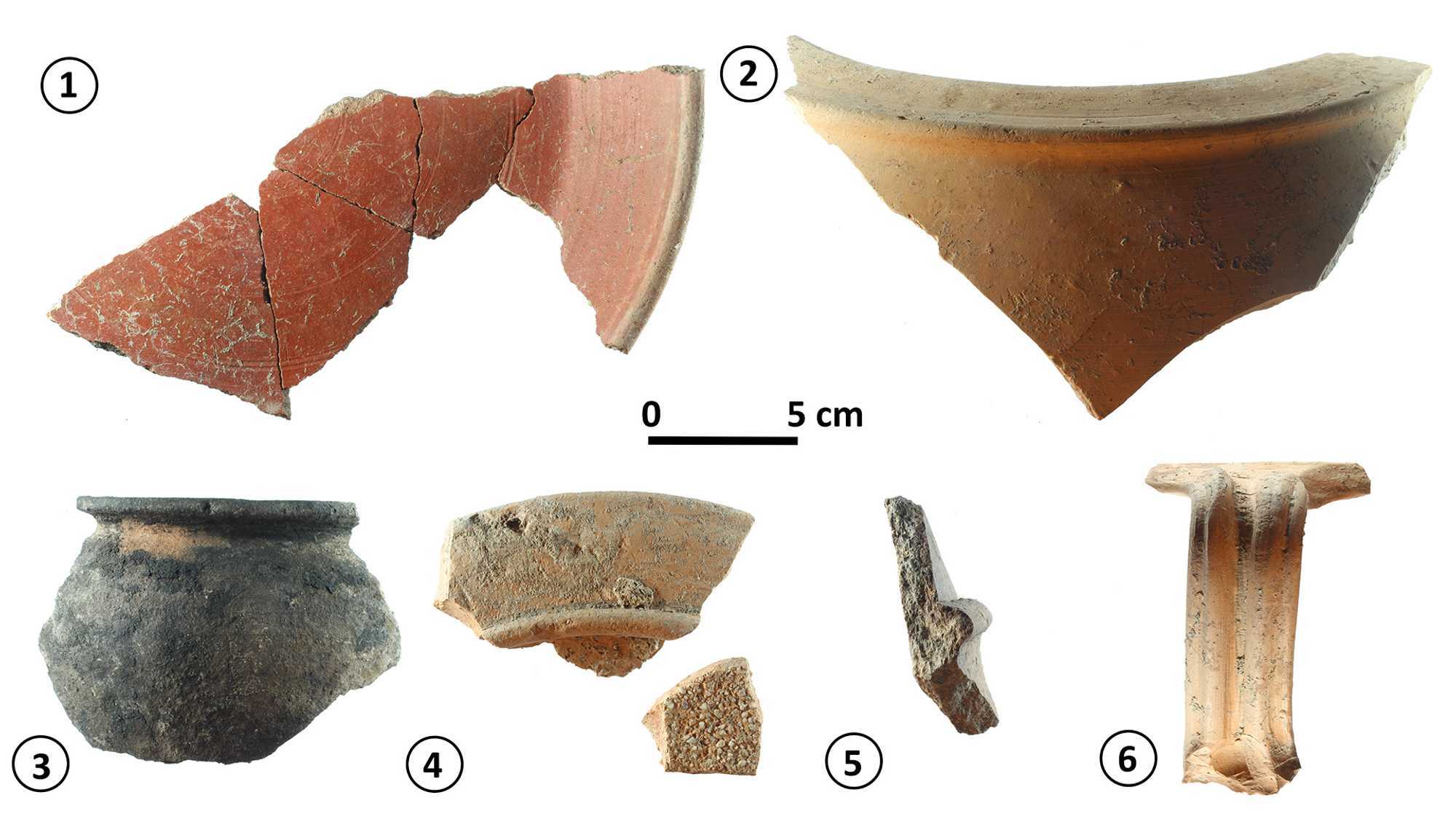
Large ceramic containers known as dolia provided storage, while jars and bowls served other household needs. Mortars show that ingredients were crushed or mixed in the room. Ordinary cooking pots supplied the most direct equipment for preparing food over heat.
The assemblage also includes pans with Pompeian red-slip coating. These vessels had cooking surfaces designed to reduce sticking. Fragments of a clibanus, a portable ceramic oven, indicate that bread could be baked against or over a heated refractory surface.
The objects identify different stages of food preparation rather than a single dish or meal. Storage, grinding, heating and baking are all represented, but no published analysis yet establishes what specific foods were cooked. The excavators are still studying animal bones and other waste that may provide firmer evidence about diet.
Imported Ware and Local Tradition
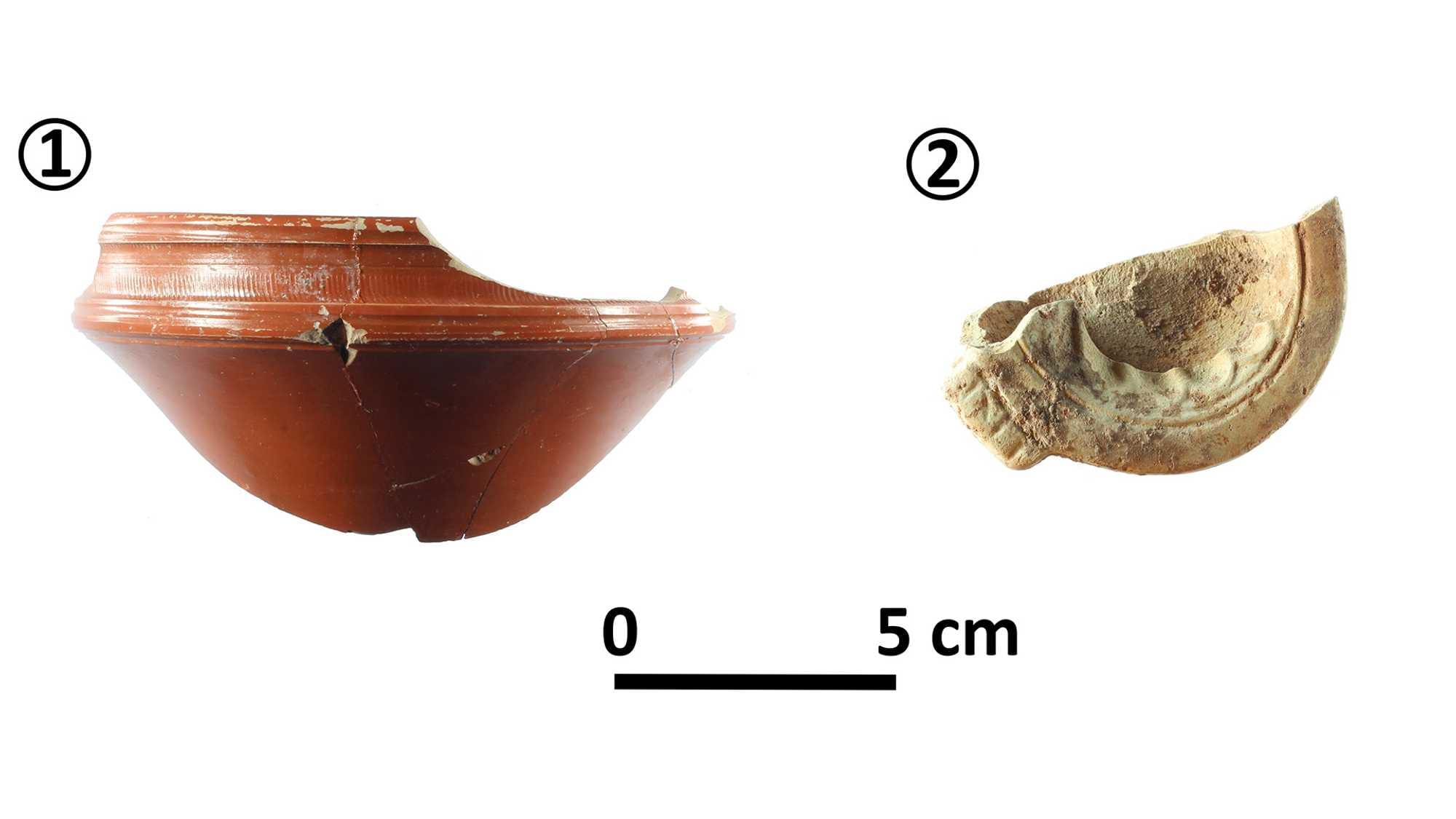
Some vessels came from the Italian peninsula, while others were produced locally. A small bowl of Italian terra sigillata and other fine wares show that imported tableware reached Segisamo, alongside the cooking and storage equipment found in the kitchen.
The same urban assemblage preserves ceramics made in Turmogi traditions. Archaeological research on Segisamo has already recorded this overlap in its earliest levels, where locally rooted pottery appeared with imported black-gloss ware and Italian and Gaulish terra sigillata.
This coexistence is evidence for culinary practices that were Roman in form without requiring every resident to have come from outside the region. The objects document access to imported products and the continuation of local manufacture within the same early imperial city.
What the “Turmogi Grandmother” Inside Joke Means
The excavators’ “grandmother” comparison was presented as a joke about the mixture of old and new objects. It turns a technical observation—the presence of Roman and Turmogi ceramic traditions in one room—into a familiar image, but it does not establish the age, gender or identity of anyone who worked there.
The Turmogi context is nevertheless central to the site. The nearby settlement at Cerro Castarreño was occupied from the Iron Age and abandoned no later than around the turn of the era. Roman military material and siege works have complicated the older account in which the Turmogi of the region appeared simply as allies of Rome.
The kitchen belongs to the city that developed after that period of conflict and change. Its imported and locally rooted vessels provide evidence from daily life, complementing the military installations, streets and large buildings that have shaped earlier accounts of Segisamo.
Why the Kitchen Is an Unusual Find
Roman kitchens are difficult to identify securely in the northern Meseta. A major academic survey published in 2021 found that very few urban houses in the region had been excavated across their complete plans, while work on rural villas had concentrated mainly on prestigious residential areas.
That survey distinguished a complete kitchen from an isolated hearth by looking for connected structures and objects used to prepare and cook food. At Segisamo, the probable oven, fire residue, storage vessels, mortars, pans, cooking pots and portable oven fragments make the interpretation stronger than it would be from a hearth alone. The find also adds a domestic working space to a city previously mapped mainly through non-invasive survey and scattered excavation.
What the Excavation Has Not Yet Settled
The identification remains provisional because later looting damaged the room and the probable oven is poorly preserved. The announcement describes the ceramic assemblage as consistent with use as a kitchen, rather than presenting the interpretation as beyond revision.
The chronology is also broader than the headline phrase “two thousand years old” might suggest. As aforementioned, the official account places the kitchen in the reigns of Augustus and Tiberius, while earlier research stresses that the precise foundation date of Roman Segisamo has not yet been established securely.
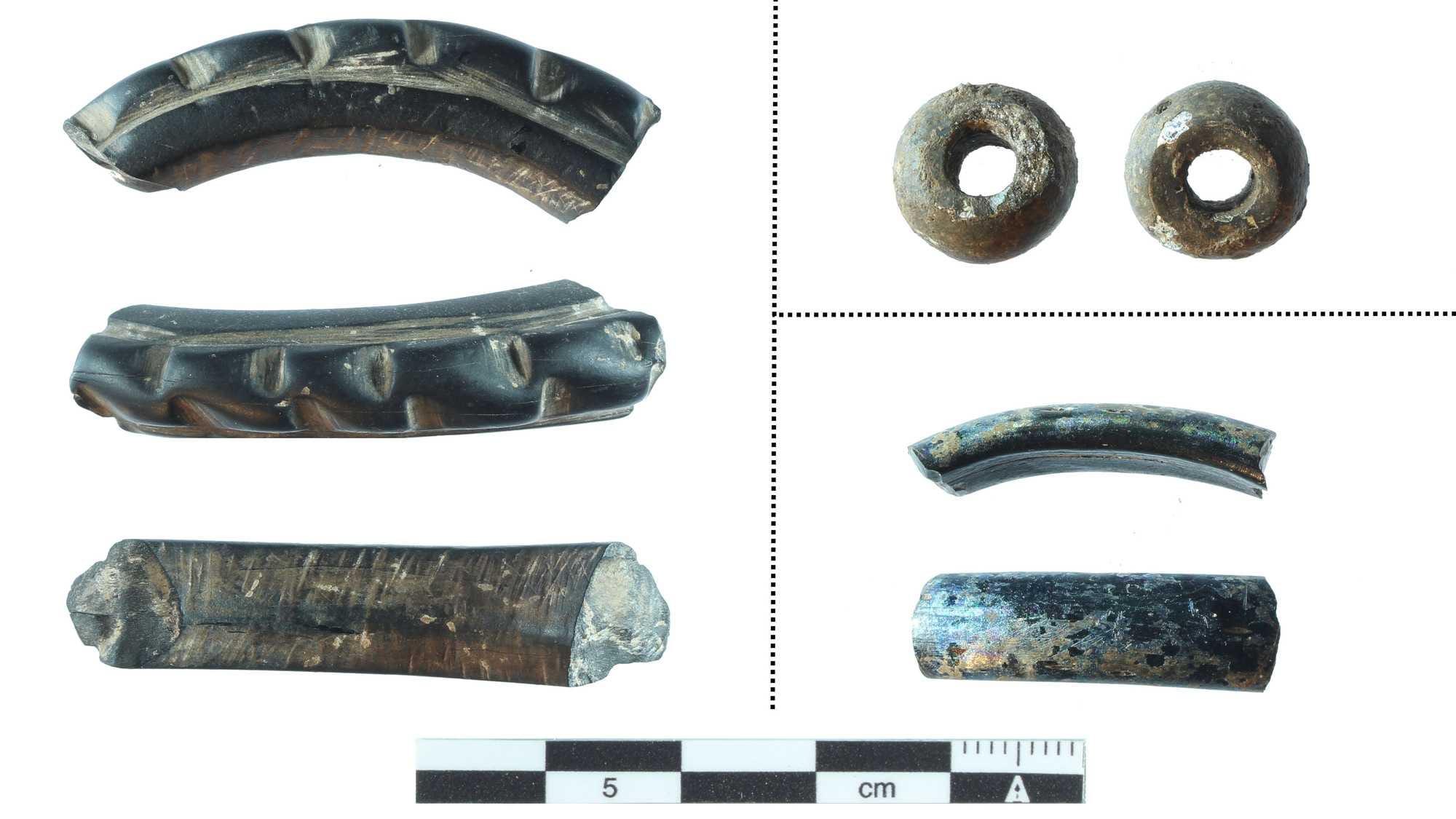
Study of the recovered material is continuing. The team expects the pottery, animal remains, personal ornaments, tools, lamps, graffiti and even footwear impressions preserved in bricks to clarify how the community lived and how the city changed. For now, the kitchen offers a closely documented group of structures and objects from daily life in early imperial Segisamo.
Universidad de Salamanca, “Investigadores de la USAL y el CSIC descubren una cocina romana de dos mil años de antigüedad,” September 18, 2026.
Jesús García Sánchez and José M. Costa-García, “Urbanismo y cultura material en Segisamo (Sasamón, Burgos). Una síntesis interpretativa,” in Small Towns: Una realidad urbana en la Hispania romana, MYTRA 10, 2022, pp. 263–271.
Carmen García-Merino, “Cocinas de ámbito urbano y rural de la Submeseta Norte,” in Carmen Fernández Ochoa, Javier Salido Domínguez and Mar Zarzalejos Prieto, eds., Culinae: Cocinas y espacios culinarios en Hispania, 2021, pp. 213–240.
About the Roman Empire Times
See all the latest news for the Roman Empire, ancient Roman historical facts, anecdotes from Roman Times and stories from the Empire at romanempiretimes.com. Contact our newsroom to report an update or send your story, photos and videos. Follow RET on Google News, Flipboard and subscribe here to our daily email.
Follow the Roman Empire Times on social media: