
Edicta Munerum: How Romans Advertised Gladiator Games
Painted across houses, baths and tombs, edicta munerum advertised gladiator games with dates, sponsors, fighters and extra attractions.

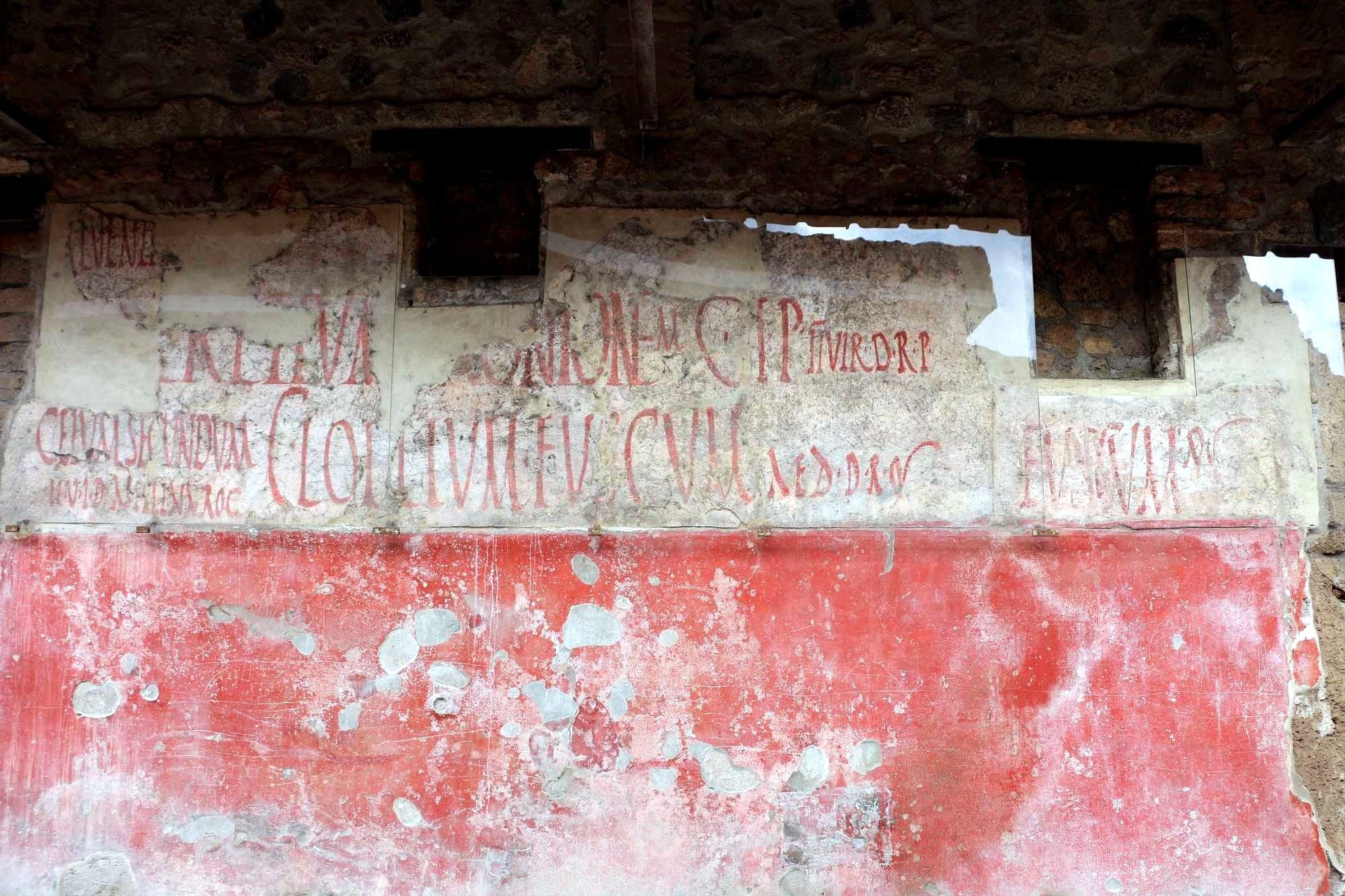
A gladiatorial spectacle began well before anyone entered the amphitheatre. The fighters had to be assembled, the programme arranged and the date fixed, but an audience also had to know that the event was coming. At Pompeii, much of that information was painted directly onto walls.
These announcements are known today as edicta munerum, a modern scholarly name for professionally painted notices advertising forthcoming gladiatorial spectacles. Pompeii preserves exactly eighty identifiable examples from the city and the cemeteries around it, an exceptional body of evidence for something that was normally temporary.
The notices could be whitewashed, covered by new writing or simply become irrelevant once the advertised date had passed. A further fragment from Boscoreale may have belonged to an edictum, but its archaeological context and surviving wording are too uncertain for it to be securely included with the Pompeian advertisements.
The surviving notices range from small and fragmentary texts to inscriptions several metres long. They name sponsors, give dates and destinations, advertise ten, twenty, thirty, forty or even forty-nine pairs of gladiators, and add attractions such as animal hunts, athletes, processions, awnings and sprinklings.
Some advertise spectacles in Pompeii; others promote games in Nola, Cumae, Puteoli, Capua, Nuceria and other Campanian towns. Their painters manipulated letter size, position and colour, sometimes signed their work and occasionally added private comments of their own.
The walls also preserve what happened around these announcements. New notices were painted over old ones. An advertisement could be crossed out when the event was cancelled. The same spectacle could be promoted in more than one part of Pompeii. Sponsors were praised beside advertisements, while other inscriptions recorded individual gladiators and the results of fights after the event was over. The preservation of Pompeii allows the different stages to be seen together.
Romans Already Had Ways to Spread the News
Painted gladiatorial advertisements belonged to a wider system of communication rather than existing in isolation. Information about public events could circulate orally and in writing, and Roman literary sources refer to heralds, public proclamations, posted notices and written programmes.
The distinction between simply announcing something and advertising it is important. A notice giving only a fact did not necessarily try to persuade anyone. The edicta munerum combined factual information with details that could make an event attractive. Once the reader knew that gladiators would fight on a particular day, the notice might also promise an animal hunt, athletes, shade from awnings or a particularly large number of combatants.
Literary evidence suggests that spectacle organisers used several methods at the same time. Information could be proclaimed orally, while written announcements allowed readers to return to dates, programmes and names. A fresco from the Praedia di Giulia Felice in Pompeii depicts people gathered around notices displayed in the forum, evidence for the ordinary act of stopping to read public information in the city.
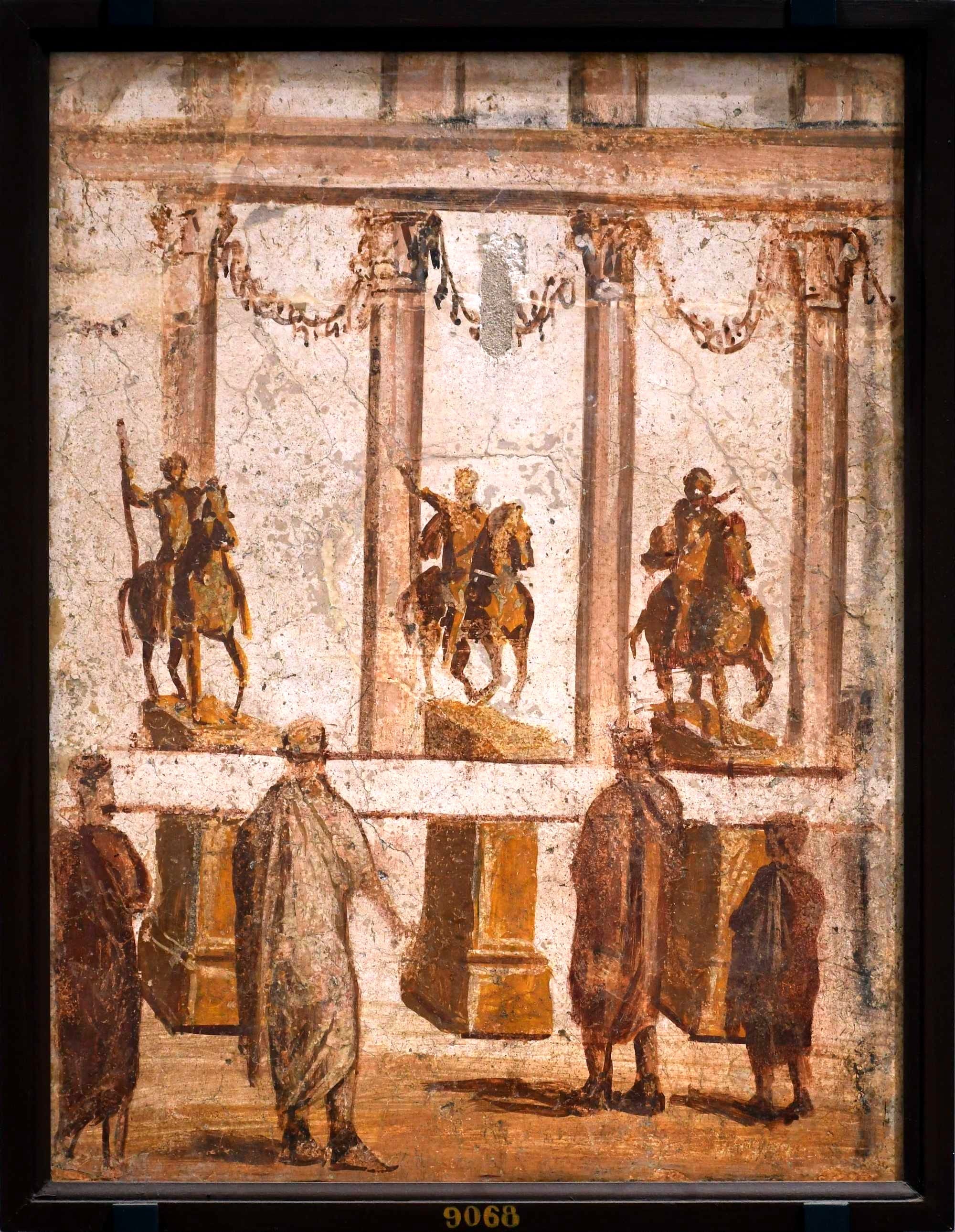
Seneca also refers to a person in a hurry not stopping to read an edictum and the order of games, suggesting that such information was something a passer-by might normally pause to examine.
The painted advertisements at Pompeii were therefore part of an already crowded written environment. Electoral programmata urged support for candidates. Graffiti covered public and private surfaces. Official information appeared in appropriate civic locations. Shops and houses carried painted decoration and other writing. A gladiatorial advertisement had to be recognisable within this visual competition.
The practice was not new in the final years before Vesuvius. The surviving corpus extends back into the late first century BC, by which time painted announcements had developed into a regular method of publicising gladiatorial spectacles. The political importance of providing munera had also changed the audience for such information. A spectacle given by a prominent citizen was no longer simply a private family occasion. Large numbers of people had to be informed about what was being provided and by whom.
That political background is important, but it does not mean every edictum should be reduced to an electoral poster. Some sponsors were magistrates or men with political ambitions, and the publicity could enhance their reputation. At the same time, the notices had a practical purpose: they told potential spectators when and where something was happening and what they could expect to see.
The evidence remains heavily concentrated in Campania. Pompeii provides the only surviving group large enough for this kind of detailed reconstruction, and patterns seen there cannot simply be assumed for every Roman city. What the evidence does show securely is that within Pompeii and its surrounding region, professionally painted promotion of arena spectacles was well established.
Twenty Pairs, a Hunt and Awnings
The wording of the advertisements was compact, but there was considerable room for variation. Sponsor, number of gladiators, date and place formed the core of many notices, while extra attractions could be added according to the programme.
The number of gladiators was often made prominent. Ten pairs is the lowest securely attested figure in the Pompeian corpus and forty-nine the highest. Twenty pairs occur particularly often, and the abbreviated formula glad(iatorum) par(ia) became one of the most immediately recognisable parts of an advertisement. The number itself could be enlarged or separated visually from the rest of the message.
CIL IV 7991, on the use of Aulus Trebius Valens, advertised twenty pairs belonging to Gnaeus Alleius Nigidius Maius together with their substitutes. The notice also contained the phrase sine impensa publica: the spectacle was being provided without public expenditure. The words told readers something about the financing of the event as well as the entertainment itself. The sponsor was making clear that the cost did not fall on municipal funds.
Another advertisement, CIL IV 1179, announced thirty pairs belonging to the same sponsor, together with substitutes, for three days of fighting in Pompeii in November. The notice also promised a venatio. The presence of suppositicii, reserve gladiators, occurs in several advertisements, although the inscriptions do not explain exactly how or under what circumstances they were used.
CIL IV 7994 advertised a much larger company: forty-nine pairs from the Capiniana familia would appear at Puteoli in May. The surviving inscription also promised awnings. Its painter, Magus, left his name on the notice. The forty-nine pairs make it the largest number specified in the Pompeian corpus.
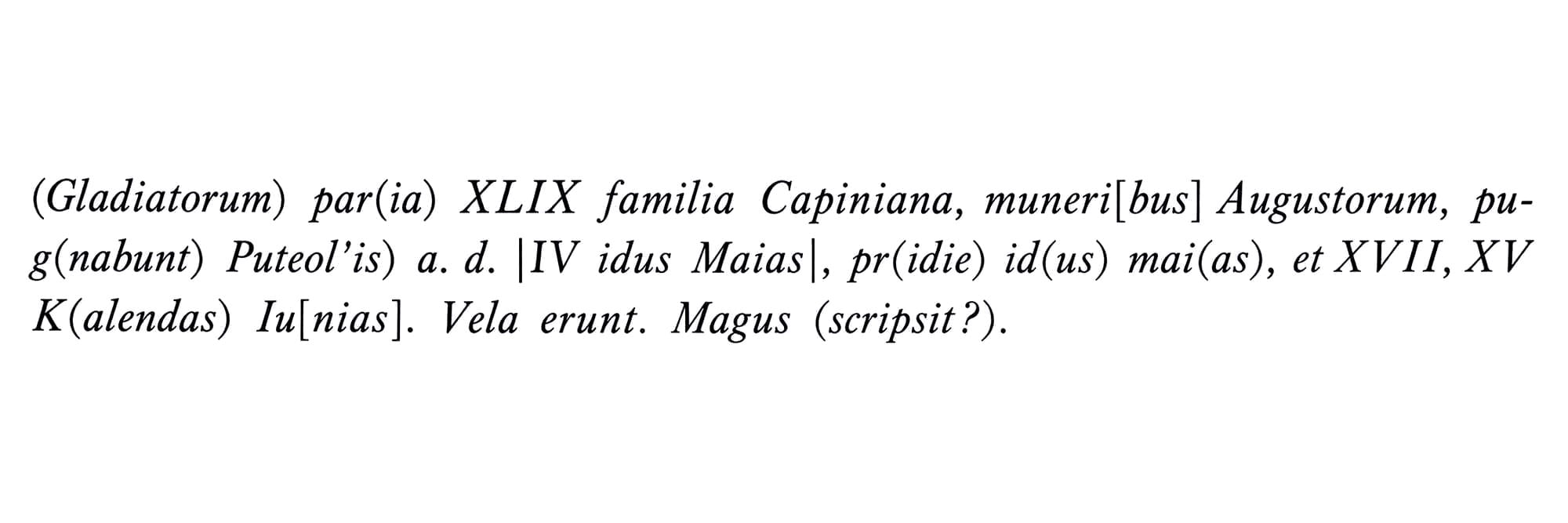
Of course a group of 49 was significant, but the surviving evidence does not suggest that simply offering the largest possible field was everything. In Campanian towns, twenty pairs remained a common figure over a long period. The notices also drew attention to the character of the programme, the identities of the fighters or troupe, and the attractions accompanying the combats.
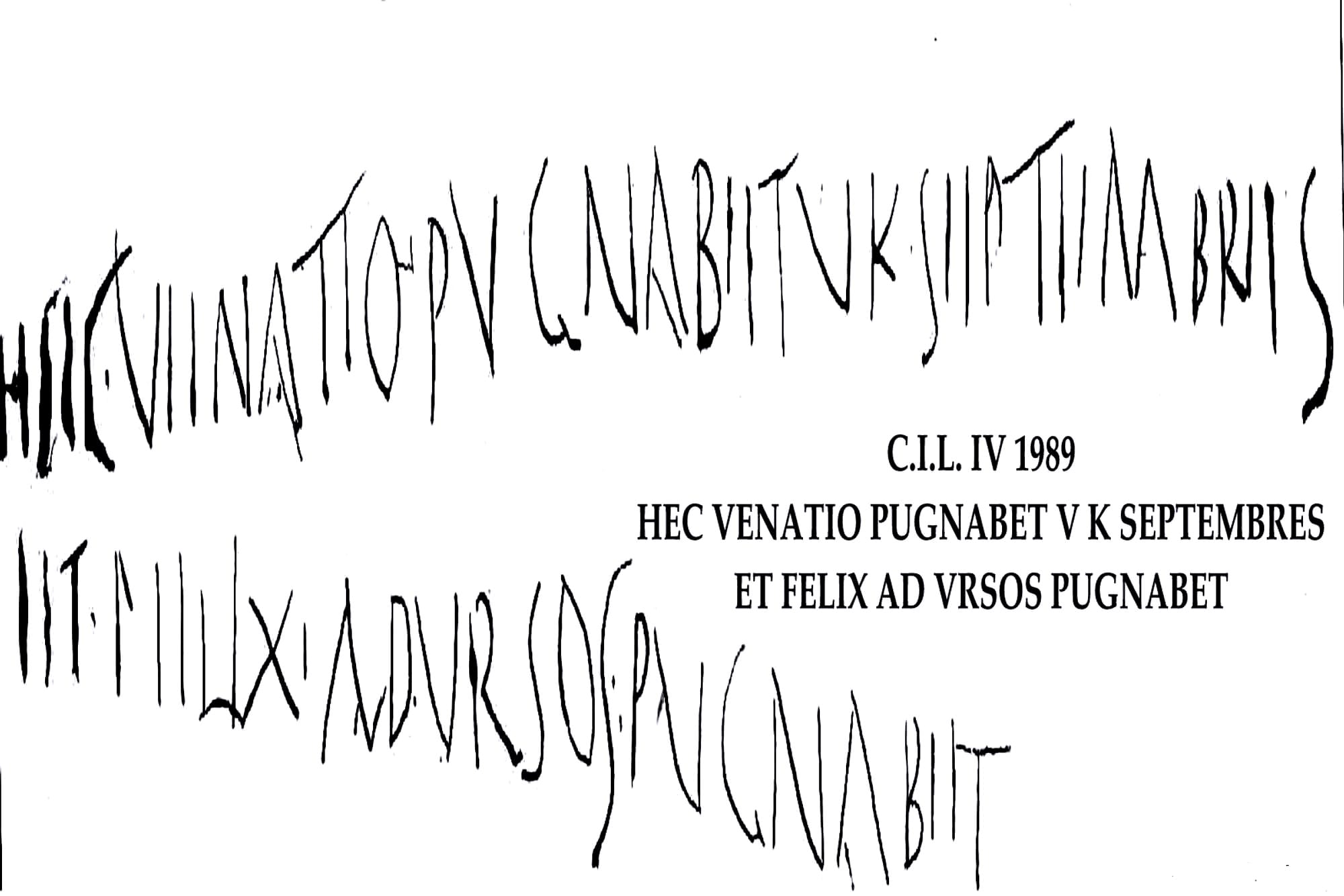
Venationes are among the most common extras. Most notices provide no details about the number or species of animals, and the names of venatores or bestiarii are generally absent. A few inscriptions, however, give the hunt unusual prominence. CIL IV 1989, from the forum area, goes further and names Felix in connection with fighting bears. The performer himself therefore formed part of what readers were being told to expect.
Other advertisements added athletes. After AD 59 in particular, athletic contests become more conspicuous in some notices. Processions could also be mentioned, as could sparsiones and vela. CIL IV 3883, for example, advertised an event on 13 June with a pompa, venatio, athletes, sprinklings and awnings.
The water could be perfumed with substances such as balsam, saffron or other aromatic oils, producing a fragrant mist over the audience. This made the experience more comfortable in the heat and also added a more luxurious element to public entertainment.
Awnings occur with striking frequency. They did not change what happened in the arena, but they changed the conditions in which the audience watched it. The repeated promise of vela shows that spectator comfort was important enough to advertise.
Sparsiones likewise appear among the attractions. They involved sprinkling and are commonly connected with refreshment and relief from heat and odour. Some interpretations of individual notices have proposed additional distributions, including fruit, but those readings are uncertain and should not be treated as part of the normal meaning of sparsiones. (The Latin term sparsiones can be translated roughly as “sprinklings” or “scatterings.” Literary sources indicate that the practice involved spraying scented water over spectators in Roman amphitheatres and theatres, helping to cool the crowd while also reducing unpleasant smells during the performances.)
CIL IV 9983, advertising games at Cumae, shows how far the programme could extend. It promised twenty pairs of gladiators and substitutes, a venatio, awnings and cruciarii. The latter were people condemned to crucifixion. Execution could therefore appear in the same advance notice as gladiatorial combat and an animal hunt.
CIL IV 1203 adds another type of attraction. Its fragmentary text advertises a hunt, awnings and pyrricharii, performers associated with Pyrrhic dancing. Arena advertising could cover a mixed programme rather than gladiatorial bouts alone.
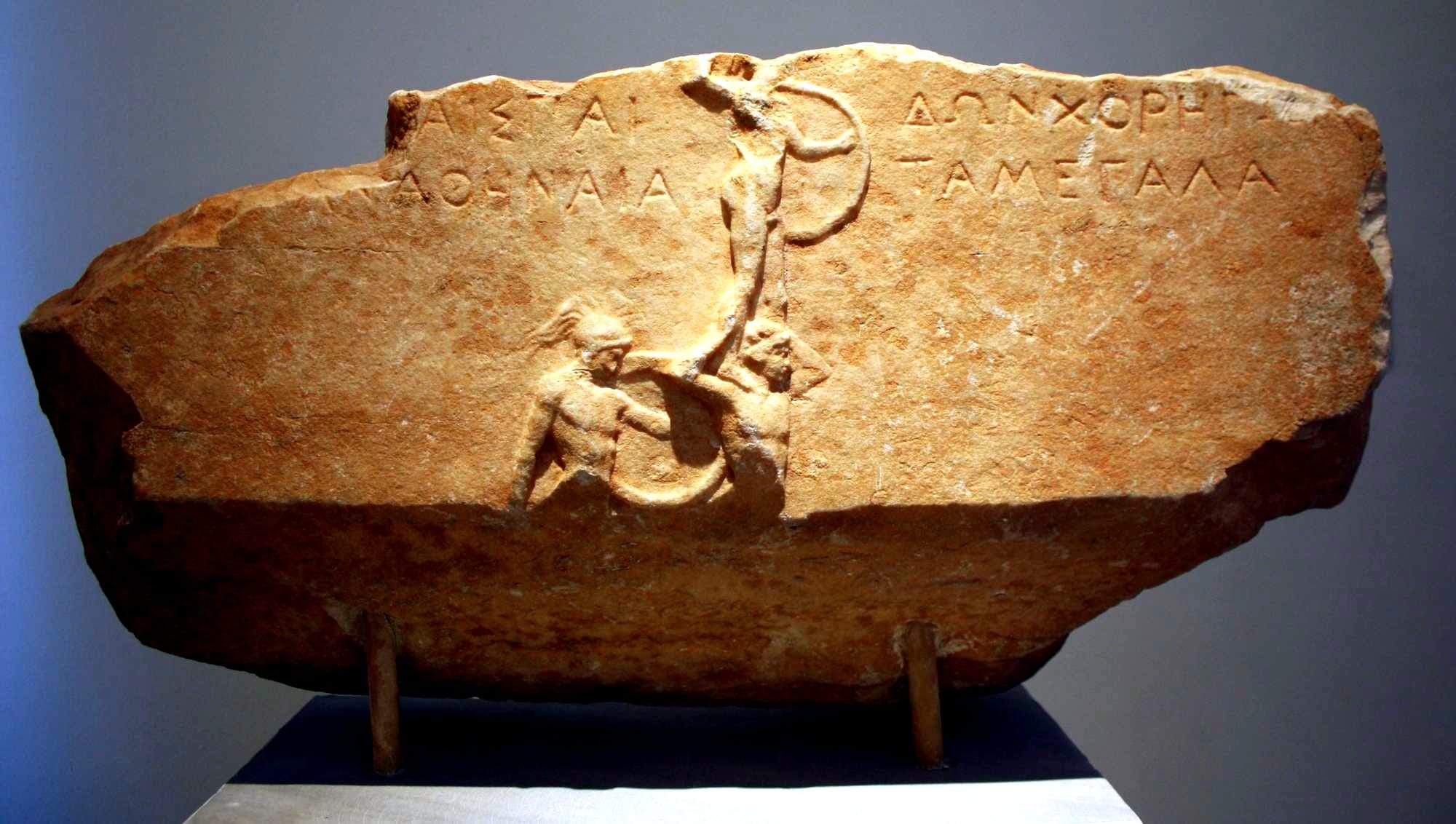
Even the order of the words could be used to emphasise what was being offered. In some notices venatio appears before the gladiatorial pairs, reversing the more usual hierarchy. Another inscription commemorating games provided by Aulus Clodius Flaccus builds through athletes and smaller groups of gladiators before reaching a much larger group of thirty-five pairs. The ordering of the attractions gives the text a sequence rather than merely presenting an undifferentiated list.
The dates themselves were necessary information but were not normally the dominant visual element. The sponsor’s name, gladiatorial pairs and especially attractive features could receive greater emphasis. A passer-by did not necessarily have to read every abbreviation before recognising that a munus was being advertised.
Where Pompeii Put Its Advertisements
The distribution of the edicta is one of the most revealing parts of the surviving evidence. The obvious locations were not always the most heavily used, and some apparently excellent streets preserve surprisingly little.
The amphitheatre itself is a good example. Only two known advertisements survive directly on its external façade. Much more advertising appeared around the neighbouring Grande Palestra and along Via di Castricio.
The northern wall of the Grande Palestra offered a long surface facing an unusually broad street. Large notices could be seen from a useful distance rather than forcing the reader to stand directly beneath oversized letters. Some lettering in this area reached around half a metre in height, and the scale of the wall allowed several large advertisements to coexist.
The same relationship between lettering and viewing distance appears on Via dell’Abbondanza. At least one large advertisement could not be comfortably taken in from immediately beside the wall; a person needed to move across the street to see it properly. The dimensions of the letters were therefore connected to the physical space available to the reader.
The forum presents another surprise. Despite its civic importance and heavy use, only one surviving advertisement for an arena spectacle has been securely identified within the rectangular forum itself. CIL IV 1989 advertised a venatio involving Felix and indicated that the event would take place “here.” The forum was clearly capable of carrying such information, but it was not the principal concentration point for the surviving edicta.
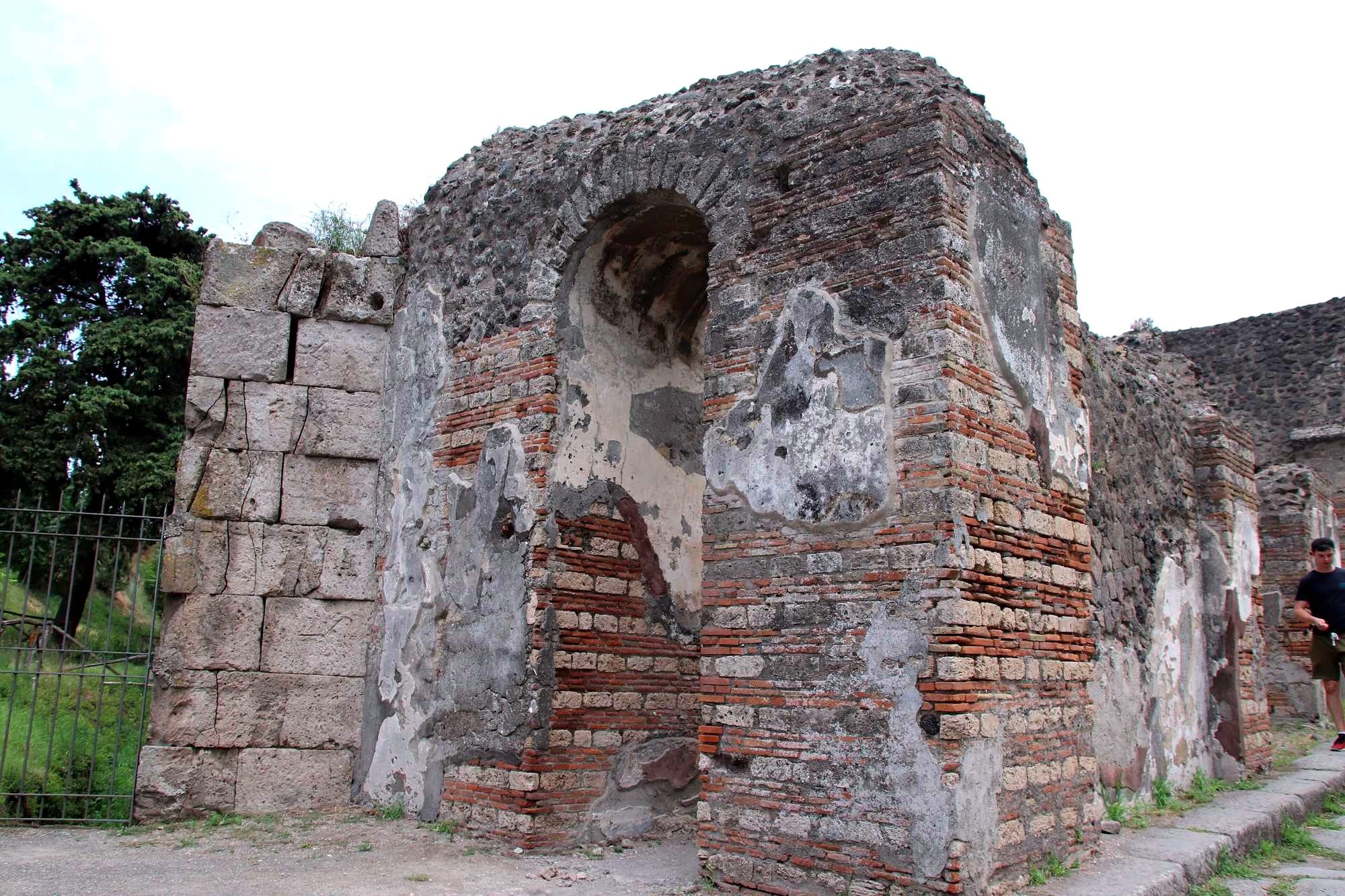
Baths were used much more extensively. The publicly accessible bath complexes preserve gladiatorial advertisements with the exception of the unfinished Central Baths. At the Forum Baths, three surviving notices were found at different entrances. Their placement suggests that the painters considered how people approached and entered the building rather than simply selecting any available exterior wall.
One of the Forum Baths notices was located between the smaller boiler area and the entrance to the women’s bathing section. That position is very important because it shows that at least one advertisement stood where women using the baths could encounter it. The evidence does not support treating the intended readership of the edicta as exclusively male.
Other advertisements appeared near the theatre district and gladiatorial barracks. CIL IV 1180, in the passage between the ludus and the Small Theatre, announced an event associated with Gnaeus Alleius Nigidius Maius for the welfare of Vespasian and his sons. It promised a hunt, awnings and probably sprinklings and added sine ulla dilatione, an assurance that there would be no delay.
This is a useful reminder that a street with relatively modest everyday traffic could become much busier when performances were taking place. The routes used by theatre audiences or people approaching the gladiatorial barracks provided access to a particularly relevant group of readers.
Via Stabiana complicates any simple equation between traffic and advertising. It was a major north-south artery with abundant writing of other kinds, yet gladiatorial edicta are conspicuously absent from much of it. A heavily travelled street was not automatically selected.
Via dell’Abbondanza provides the opposite case. It was Pompeii’s busiest commercial and service avenue, connecting important parts of the city and receiving people engaged in commerce, official business and recreation. Gladiatorial advertisements occur repeatedly along it, but even here their distribution was selective.
Most strikingly, no surviving edictum munerum has been found directly on a shop façade along Via dell’Abbondanza. That absence cannot easily be explained by preservation because the same shopfronts retain many electoral programmata, graffiti and painted decoration. The large gladiatorial notices instead appear prominently on private house façades.
The House of Aulus Trebius Valens is the clearest example. Its façade carried three substantial advertisements for gladiatorial combats and venationes, including some of the largest and most visually elaborate notices on the street. The broad domestic frontage supplied room that the entrances and openings of commercial premises often did not.
The precise arrangement by which a sponsor obtained permission to use a private house is unknown. Payment for wall space has been proposed, and relationships between sponsors and property owners may sometimes have played a part, but the evidence does not reveal a normal fee or contractual system. The surviving wall can establish that the advertisement was there, not why the owner agreed to it.
Advertisements also appeared near inns, drinking places and brothels. In the Vicolo del Lupanare area, entertainment, accommodation, food and prostitution brought local residents and visitors into the same network of streets. Notices placed there could reach people who had come to Pompeii from elsewhere as well as inhabitants of the city.
The pattern is therefore more complicated than a map of the heaviest traffic. Large available surfaces, sight lines, routes to entertainment, bath entrances, private façades and places frequented by visitors all contributed to where the advertisements survived.
The Roads of the Dead Were Also Advertising Space
Almost half of the surviving Pompeian corpus lies outside the city proper. Thirty-five advertisements are associated with funerary monuments, especially in the cemeteries around the Porta Ercolano and Porta di Nocera.
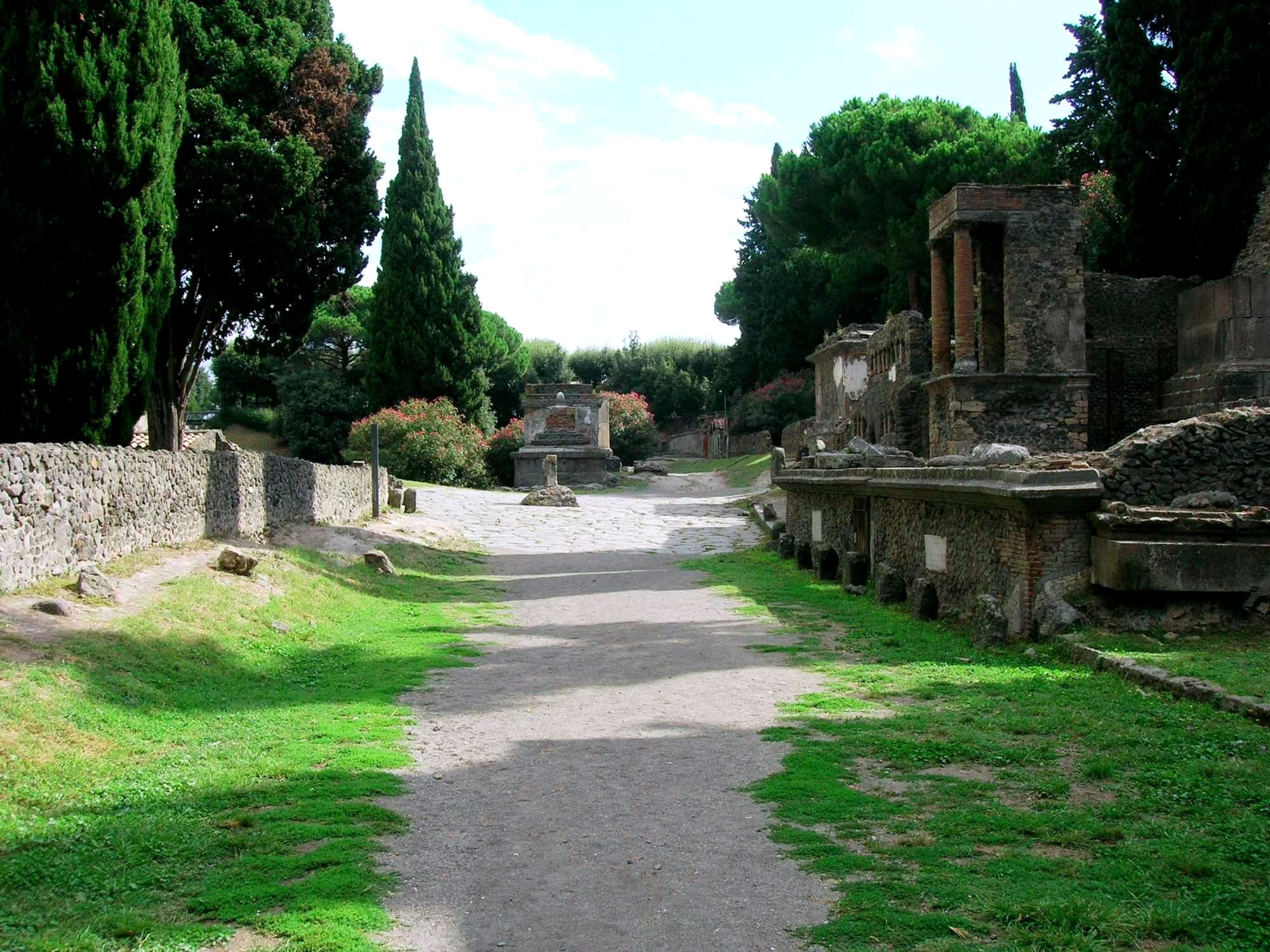
Those cemetery roads should not be imagined as isolated spaces detached from urban life. Via dei Sepolcri outside the Porta Ercolano contained funerary monuments and shrines alongside shops and suburban villas. The roads beyond the gates continued the routes used inside the city and carried people arriving, departing and visiting properties beyond the walls.
The tombs also offered unusually large surfaces. Some advertisements were placed high on façades, while others spread across several metres of wall. Their scale could rival or exceed that of the funerary inscriptions commemorating the deceased.
The Porta Nocera cemetery is particularly rich. Fourteen tombs preserve twenty-eight edicta, making the funerary zone one of the densest concentrations of spectacle advertising around Pompeii.
CIL IV 9978 stretched approximately four metres across a tomb. Its fragmentary text advertised games at Nola and distinguished between free men fighting on one day and slaves on the following day. Even with much of the text lost, the size of the notice shows how conspicuous these advertisements could become along a cemetery road.
Other tomb advertisements promoted events well outside Pompeii. CIL IV 11037 advertised forty pairs fighting at Capua on 23 and 24 January. CIL IV 11038 announced twenty-four pairs and a venatio at Forum Popilii on four days in May. CIL IV 9970 promoted twenty pairs at Puteoli together with a hunt and athletes.
Nola appears repeatedly, as do Cumae, Nuceria, Puteoli, Herculaneum and Cales. The walls of Pompeian tombs therefore carried information about a broader Campanian circuit of spectacles rather than serving only events within Pompeii.
The location of these advertisements does not correspond consistently with the geographical direction of the advertised town. Notices for Nola, Cumae or Puteoli were not simply placed beside the gate that most directly led to that destination. The cemetery surface and the number of people passing it appear to have been more important than directional logic.
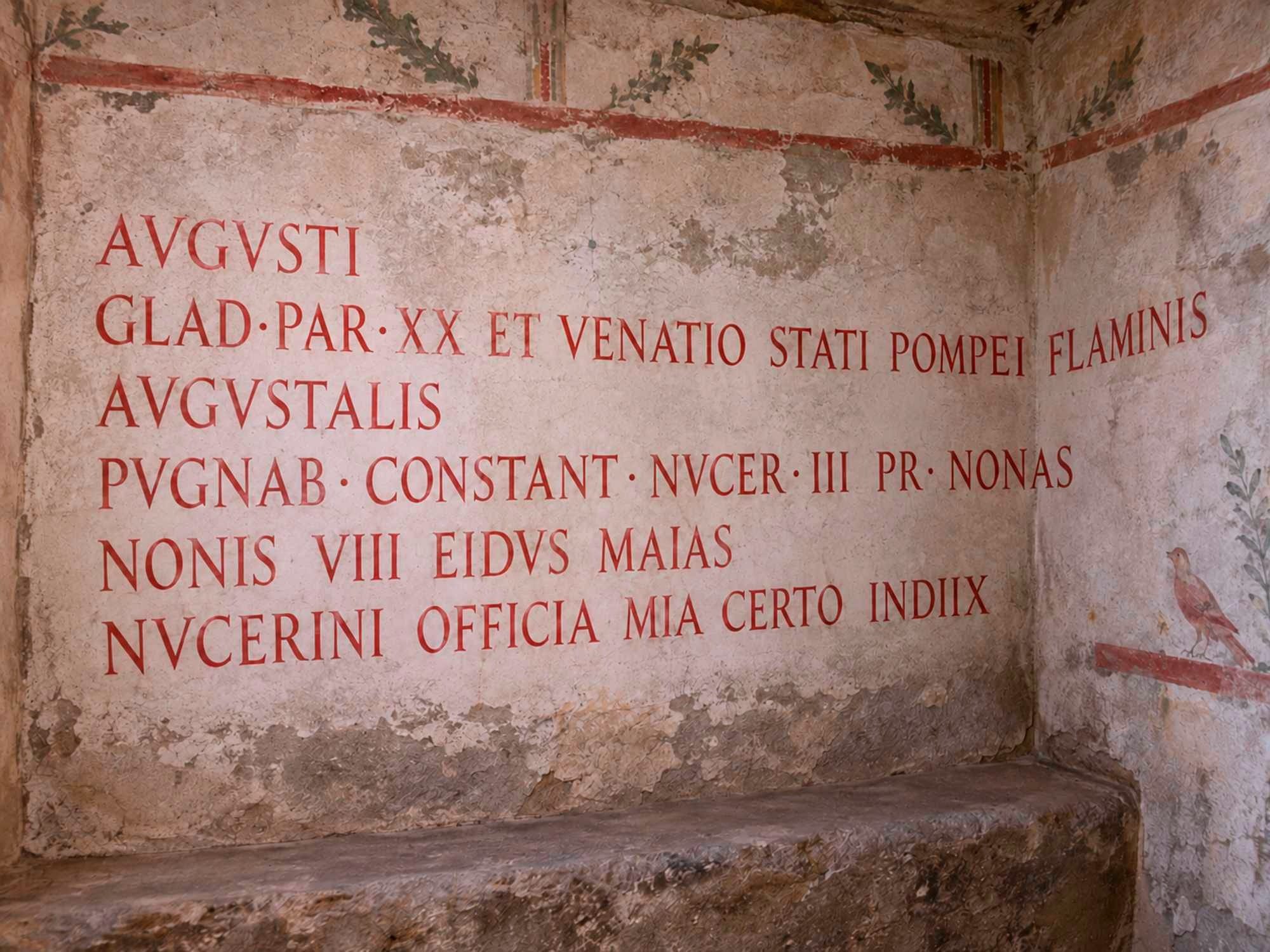
CIL IV 3882 is stranger still. It was painted inside a funerary monument rather than on the outer face. The notice advertised twenty pairs of gladiators and a hunt at Nuceria, provided by Statius Pompeius, and directly addressed the Nucerians.
Its position only makes sense if people entered the tomb space often enough for the inscription to have readers. The advertisement is a particularly useful example of how permeable the boundary between funerary monument and everyday movement could be.
Tomb façades also preserve successive generations of painted advertisements because they were less frequently replastered than domestic walls. CIL IV 9972, 9973 and 9974 occupied the same monument, with one inscription painted partly over an earlier notice.
That layering provides a glimpse of the practical life of the surface. A wall did not become permanently associated with the first advertiser who used it. New events arrived, the available plaster was reused and earlier announcements could remain partially visible beneath or beside the new message.
The evidence that we have does not show whether tomb owners were normally paid or whether some other permission was required. Nor is it possible to establish personal relationships between most tomb owners and the sponsors named on their walls. The physical evidence is much stronger than the evidence for the arrangements behind it.
The Painters, Whitewashers and Walls Behind the Message
The sponsors paid for the spectacles and supplied the information, but skilled workers turned that information into a public notice.
The scriptores responsible for the painted advertisements were specialist letterers. Several are known by name: Celer, Polybius, Ocella, Magus, Primus, Sextianus and Secundus among them. Some can be connected with more than one edictum, and their handling of difficult lettering, abbreviations, ligatures and large-scale layouts indicates professional work rather than casual graffiti.
Preparing the wall could itself require a separate worker. Dealbatores refreshed or covered the surface with whitewash, concealing earlier texts and providing a cleaner background. In more difficult cases, preparation might require levelling the wall or applying a new thin plaster layer.
CIL IV 1190 preserves an unusually detailed glimpse of this organisation. Secundus is identified as the man who wrote the inscription, Victor as the dealbator, and Vesbinus as standing by or assisting. The text breaks off while apparently identifying another person involved in the work. At least three workers were therefore connected with the production of a single advertisement.
The finished notice was carefully structured. The sponsor’s name could be made conspicuous in the heading. The number of gladiatorial pairs could receive enlarged lettering. A city name might dominate the composition when the location was especially important. Repetition, ligatures and changes in character height helped organise a message that needed to be read quickly.
CIL IV 3881 is an especially elaborate example. Its painter disrupted symmetry, used combined letters and varied the treatment of familiar abbreviations. The surviving composition shows that even advertisements with conventional contents were not written in a single rigid style.
Colour added another level. Black and red dominate the advertisements, usually on pale or whitewashed backgrounds. Red could be reserved for headings, sponsors’ names or the tallest letters rather than applied indiscriminately.
CIL IV 7993 demonstrates the effect particularly well. Red and black alternate around the central axis of the inscription, reinforcing the symmetrical arrangement and drawing attention to the patron and the advertised attractions.
Painters could also work their signatures into the design. Polybius inserted his name inside the O of dedicatione in CIL IV 1177. Other scriptores used similar enclaving, placing smaller letters inside the open space of a much larger character.
Their comments could be more personal. Aemilius Celer, associated with several advertisements, left an extraordinary note beside CIL IV 3884:
Scr(ipsit)
Aemilius
Celer sing(ulus)
ad luna(m)
The Latin identifies Celer as the writer and says that he did it alone by moonlight. The remark is best kept as an individual comment rather than turned into evidence that Pompeian advertising was generally painted at night. Its point may have been precisely that Celer wanted readers or fellow painters to notice something unusual about the circumstances of his work.
The architecture occasionally defeated even experienced painters. In CIL IV 3882, inside a tomb, the available wall appears to have been misjudged and part of the wording had to continue around an adjoining surface. The error preserves the improvisation involved in fitting a predetermined message into a real piece of architecture.
Old advertisements were not removed according to a regular timetable. Some remained visible after their events had taken place. Others were whitewashed when a new message required the same space. On one tomb, earlier inscriptions were partly covered as later announcements occupied more of the façade.
Occasionally the old advertisement itself was modified instead of replaced. CIL IV 9976 announced gladiatorial fights at Cumae on 18, 19 and 20 May. A red line was subsequently drawn through every letter of the 2.4-metre notice. It is the only known edictum in the corpus altered in this unmistakable manner, and the treatment has been interpreted as notification that the event had been cancelled or postponed.
The advertisement could therefore carry new information even after it had been painted. Rather than creating another notice explaining that the programme had changed, the existing message itself was visibly invalidated.
Games, Reputation and the Disruption of AD 59
The sponsor was not a minor detail in these notices. His name often occupied some of the largest letters, and the advertisement ensured that the provision of a spectacle remained publicly attached to the man paying for it.
Gnaeus Alleius Nigidius Maius appears repeatedly. His advertisements offered gladiators, hunts and other attractions, and CIL IV 7991 emphasised that the games were being provided without expense to the public treasury. An acclamatio, CIL IV 7990, later hailed him as princeps munerariorum, first among the providers of shows.
The same relationship between spectacle and reputation is particularly visible in the advertisements of the Lucretii. Four notices name Decimus Lucretius Satrius Valens together with his son, Decimus Lucretius Valens. The repeated father-and-son presentation is unusual because Pompeian sponsors normally appear alone.
CIL IV 3884 announced twenty pairs belonging to the father and ten belonging to the son, fighting over five days in April, with a venatio legitima and awnings. CIL IV 7992 and CIL IV 7995 repeat the division between twenty pairs from the elder Valens and ten from his son.
The date of these four advertisements remains disputed. Their traditional placement in AD 50–54 depends on the elder Valens’ title as flamen Neronis Caesaris Augusti filii perpetuus, referring to Nero as Claudius’ adopted son. A later study argued instead for AD 68.
That later case rests on several observations rather than on a direct date written in the inscriptions. The Via dell’Abbondanza façades on which two advertisements survived contain overwhelmingly painted material from Pompeii’s final decade, making untouched Claudian advertisements unusual.
The father-and-son formula in the edicta also resembles the younger Valens’ electoral publicity, where his relationship to his father was stressed. Palaeographical similarities connect two of the advertisements with one of the young Valens’ electoral programmata.
On that reconstruction, the father sponsored several gladiatorial spectacles in the spring of AD 68 while his son was preparing to enter municipal politics. The games displayed the family’s resources and munificence, while the painted notices associated the son repeatedly with the father’s established name. The interpretation is persuasive enough to be important, but it remains a reconstruction and should not replace the traditional dating as an uncontested fact.
Nero’s fall later that year adds another layer. His name was painted over in two of the four surviving Lucretian advertisements, but not in the other two. The two altered notices were situated in the area where the younger Valens’ electoral campaign was concentrated and near programmata promoting him.

Nero’s name survives without erasure in many other Pompeian inscriptions, so this was not a universal consequence of his condemnation. The selective alteration has therefore been connected with the Lucretian electoral campaign: when painters returned to put up political notices, Nero’s name may have become an inconvenient association beside the candidate’s publicity.
A different political disruption had occurred nine years earlier. In AD 59, a gladiatorial spectacle at Pompeii ended in serious violence between Pompeians and visitors from Nuceria. The dispute escalated from insults to stones and weapons, leaving casualties among the Nucerians. Roman authorities responded by prohibiting gatherings of this kind at Pompeii for ten years and dissolving associations involved in the disturbance.
The restriction affected the content of the surviving advertisements. In the period after AD 59, notices give greater prominence to spectacles that could be provided without ordinary gladiatorial combat. CIL IV 3883 advertises a procession, venatio, athletes, sprinklings and awnings. The familiar advertising form remained useful even when the programme had changed.
How long the prohibition remained fully in force is uncertain. Evidence from Pompeii has been used to argue that gladiatorial games resumed before the stated ten years had elapsed. One reconstruction connects praise of Nero’s decisions with a lifting of the ban sometime between AD 63 and 65, while other evidence shows an aedile providing games during Nero’s reign. The inscriptions do not give a simple official date on which the restriction ended, so the proposed mid-60s chronology remains an inference.
What can be seen more securely is that the advertising did not disappear after the riot. The notices adapted to the events that could still be staged, and later gladiatorial advertisements reappear.
Some spectacles were also advertised on several walls rather than through one notice alone. The Lucretii appear in closely related advertisements at different locations, and Maius’ events likewise recur across the city. Such repetition spread the same information through different routes and districts. It also repeated the sponsor’s name each time the advertisement was encountered.
No surviving evidence tells us how much it cost to commission multiple notices or whether desirable wall owners charged regular fees. What survives is the result: particular events were deliberately announced more than once.
Before, During and After the Fight
The edictum belonged to the period before the spectacle, but it was not the only written material associated with the games.
Ancient sources also refer to libelli, programmes containing information about gladiatorial fights. No papyrus programme from Pompeii survives, so their exact appearance cannot be reconstructed from the archaeological evidence. Literary references nevertheless indicate that lists of pairings circulated in substantial numbers.
In 51 BC Cicero complained that Marcus Caelius had sent him gladiatorum compositiones, the pairings of gladiators, among other pieces of Roman news that Cicero considered unimportant. His irritation is useful evidence in itself: Caelius evidently considered the information worth sending, even if Cicero did not.
In the Philippics, Cicero compared the proliferation of documents he attributed to Marcus Antonius with gladiatorial libelli and described such programmes as numerous. The same passage indicates that the programmes could be sold openly. How their production was financed and how much money their sale generated cannot be established from the sources, but the comparison assumes that the Roman audience was familiar with them.
The programmes were different from the great painted edicta. The advertisement announced that a spectacle was coming and gave its principal attractions. A libellus could supply more detailed information about individual fighters and pairings to someone preparing to attend or already following the programme.
Pompeii also preserves inscriptions that resemble such lists but record completed fights rather than forthcoming ones. These are conventionally described as pseudo-libelli.
CIL IV 1182, found on a tomb near the Porta Ercolano, lists gladiators from the Iulian school and records their previous fights and results. Bebryx had fifteen victories. Other entries mark fighters as victorious, dismissed or dead. The inscription looks back at what occurred at the games of Numerius Festius Ampliatus rather than announcing what was about to happen.
CIL IV 2508 is even richer. Gladiators are grouped according to fighting type, with results and career records beside their names. Pugnax of the Neronian school won after three fights, while Murranus, also of the Neronian school and with three fights recorded, died. Cycnus of the Iulian school won after nine fights; Atticus, with fourteen, was dismissed. Publius Ostorius had fought fifty-one times and was dismissed, while Scylax, credited with twenty-six previous fights, won.
The level of detail is very different from the large advance notices. An edictum might advertise twenty pairs. A result list preserved the names of the men who actually fought and what happened to them.
Graffiti continued that record in less formal forms. CIL IV 4299 states that Florus won at Nuceria on 28 July and at Herculaneum on 15 August. Its location in the gladiatorial barracks made it especially relevant to people interested in the careers of individual fighters.
The two victories occurred close together, although the evidence is too limited to establish whether such a schedule was normal. The inscription itself does not explain why someone considered Florus’ results worth recording.
Elsewhere, drawings depict fighting gladiators and add names, records or results. A particularly remarkable group survives on Tomb 14EN near the Porta Nocera. Four drawings, CIL IV 10236, 10237 and 10238a–b, may relate to different stages or days of games at Nola. One of them includes information about the location, duration and sponsor alongside figures interpreted as spectators and musicians.
The drawings preserve enough information to tempt a reconstruction of a lost programme, but the source material explicitly warns against going that far. They show how a spectator or other writer remembered and represented a spectacle; they do not establish that someone was copying an original edictum or papyrus libellus.
Acclamationes add another type of response. These were short painted expressions of praise or good wishes, often placed beside or beneath advertisements. CIL IV 7990 praises Gnaeus Alleius Nigidius Maius as princeps munerariorum. At the Grande Palestra, other acclamationes wish good fortune to Maius and to Tiberius Claudius Verus.
Some were probably reactions to spectacles that had already occurred, but that cannot be assumed in every case. Acclamationes could be incorporated into the visual field of an edictum, and the chronology between announcement and praise is not always recoverable. Unlike the edicta, surviving examples are found within the city rather than on the cemetery monuments.
There is also no reliable way to turn the number of acclamationes into a satisfaction rating for ancient audiences. A sponsor with several surviving messages of praise cannot simply be declared more popular than one without them. Preservation is uneven, and the identity of the people who commissioned or painted these responses is often unknown.
The same caution applies to the advertisements themselves. Their effectiveness cannot be measured in modern terms. Nothing tells us how many spectators attended specifically because they read CIL IV 7991, whether red letters attracted more people than black ones, or whether a notice on a tomb produced a larger audience than one outside a bath.
What the surviving walls do provide is the sequence of communication surrounding a spectacle. Beforehand, a large painted notice could announce the sponsor, gladiators, dates and attractions. More detailed programmes circulated around the fights. Afterwards, names, victories, defeats, deaths, drawings and expressions of praise could remain on the walls. Some advertisements were painted over, others survived beside newer messages, and at least one was crossed out when the event it promised apparently ceased to be valid.
Pompeii was buried while many of those temporary messages were still on its walls. That accident preserved not simply a list of gladiatorial events, but much of the practical machinery by which people learned that the games were coming.
Anna Miączewska, Edicta munerum: Advertising and Promotion of Gladiatorial Games in Ancient Pompeii. Brill Studies in Greek and Roman Epigraphy 22. Leiden/Boston, 2025.
Henrik Mouritsen and Ittai Gradel, “Nero in Pompeian Politics: Edicta Munerum and Imperial Flaminates in Late Pompeii,” Zeitschrift für Papyrologie und Epigraphik 87 (1991), 145–155.
Corpus Inscriptionum Latinarum IV, inscriptions reproduced and discussed in the works above.
Cicero, Epistulae ad Familiares 2.8.1; Philippics 2.97.
Seneca, Epistulae Morales 117.30.

About the Roman Empire Times
See all the latest news for the Roman Empire, ancient Roman historical facts, anecdotes from Roman Times and stories from the Empire at romanempiretimes.com. Contact our newsroom to report an update or send your story, photos and videos. Follow RET on Google News, Flipboard and subscribe here to our daily email.
Follow the Roman Empire Times on social media: