
When Rome Went Dark: Life After Sunset in the Ancient City
Ancient Rome after dark was noisy, dangerous, and unequal. Martial heard bakers and crowds from his bed, while watchmen, taverns, lamps, and night workers kept another city alive.

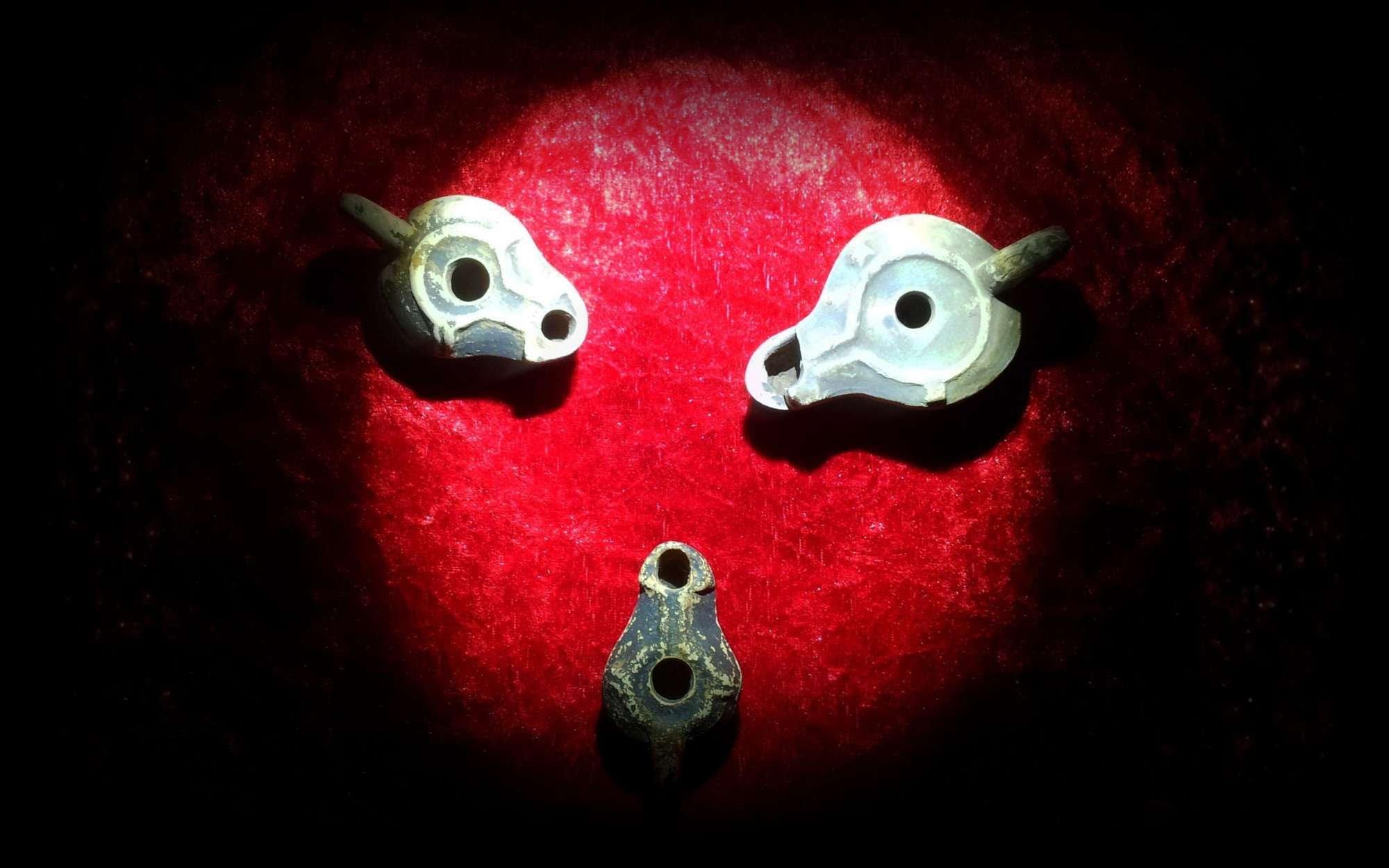
When night fell over ancient Rome, the city did not simply go to sleep. The light changed, the streets darkened, and the public business of the day withdrew, but another Rome began to appear.
Carts entered the streets. Bakers worked. Lamps burned in workshops, taverns, brothels, barracks, villas, and apartment rooms. The vigiles patrolled against fire and theft. Drinkers wandered home. Inns received guests. Elite men wrote by lamplight. Poor tenants tried to sleep through a city that often refused to rest.
Modern cities hide darkness under electricity. Rome could not. Its night was made of smaller lights: oil lamps, torches, hearths, moonlight, and the glow from open doors. Beyond those circles of flame, the city became harder to read. Sounds carried differently. Movement felt riskier. A wealthy Roman could command light, servants, escorts, and private space. A poor Roman might have only a crowded room, a dangerous staircase, and whatever sleep the street allowed.
The poet Martial gave Roman night one of its sharpest voices. Speaking to Sparsus, he complained that a poor man in Rome had no place for thought or rest. Teachers ruined the morning. Bakers ruined the night. Crowds passed by laughing. Metal vessels clattered during a lunar eclipse. The city came so close to the bed that Martial could say, in one bitter phrase, that all Rome was at his bedside. He was not only grumbling. He was describing a city that remained alive after sunset.
All Rome at the Bedside
Martial’s sleepless Rome is a good place to begin because it refuses to romanticize the ancient night. There is no calm moonlit city here, no empty Forum, no peaceful darkness settling over marble. His Rome is intrusive, comic, irritating, and class-conscious.
The poor man cannot rest. The morning belongs to teachers, whose voices carry into the street. The night belongs to bakers, whose work begins while others hope to sleep. Crowds pass by laughing. Noise enters the bedroom. Fatigue finally drives Martial away from Rome to his villa, where sleep becomes possible.
The poem matters because it gives Roman night its social texture. Night was not the same for the man with a villa and the man trapped in the city. Sleep could be bought, or at least protected. Silence was not equally available.
Rome’s night also belonged to the full Roman day. The Greeks had a word, nychthemeron, for the twenty-four-hour span of day and night together. The idea is useful because Roman life was not confined to daylight. The city’s routines, pressures, dangers, and pleasures continued across the whole cycle.
Night did not simply extend the day. It changed its conditions. Darkness altered movement. Artificial light was limited. Work took on different forms. Policing became more urgent. Ordinary spaces became more uncertain. A street, a tavern, a bedroom, or a staircase could mean something different after sunset.
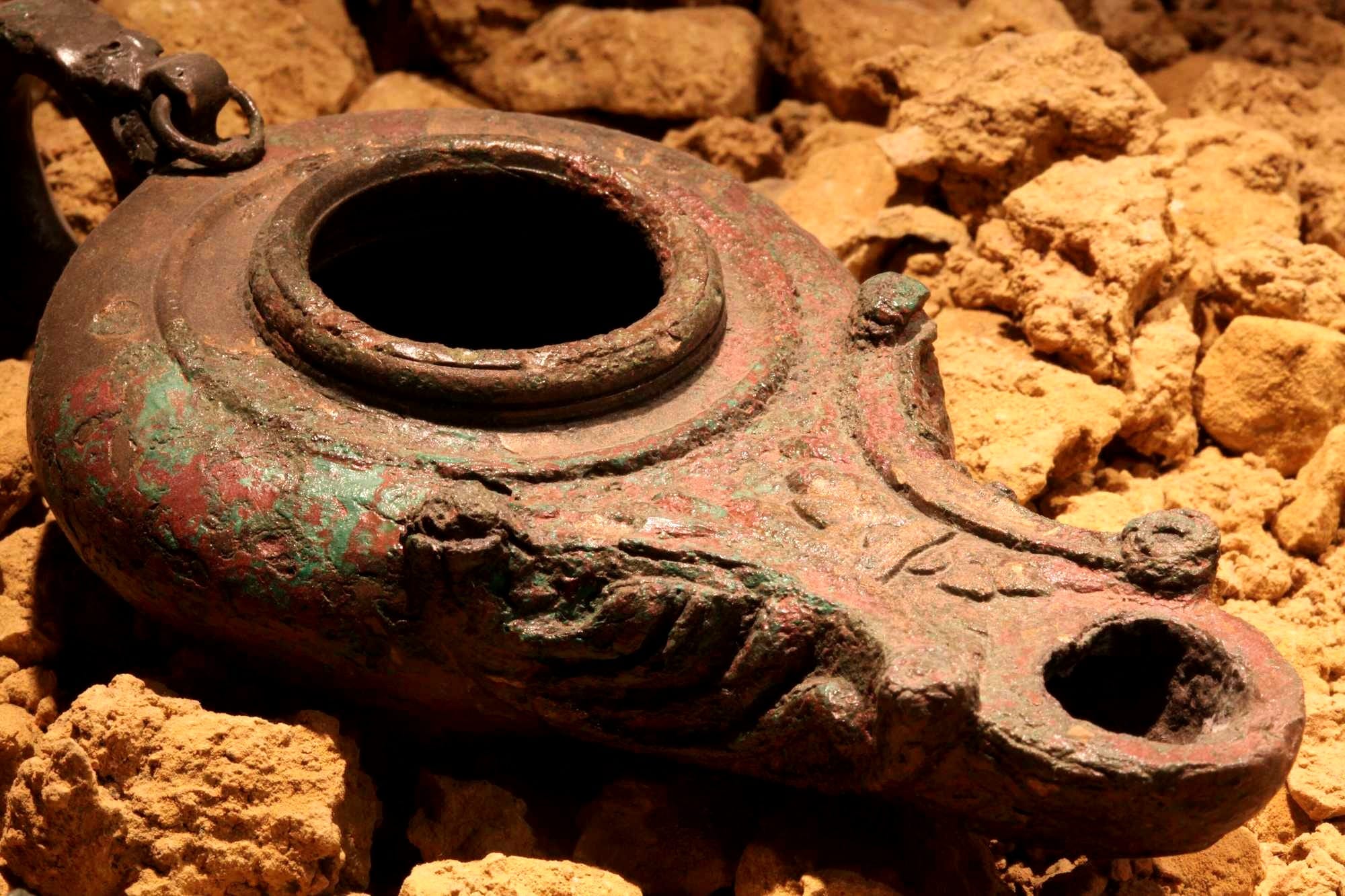
The ancient night also left material traces. Lamps, barricaded shops, barracks, bakeries, inns, brothels, sleeping rooms, and villas all help recover a part of Roman life that daylight histories often leave in shadow. Rome’s monuments show the city of public power. Its night reveals something more intimate: labour, fear, fatigue, pleasure, noise, and unequal rest.
When Martial said that all Rome was at his bedside, he was describing more than insomnia. He was describing the Roman city as a twenty-four-hour organism.
A City Lit by Small Fires
Darkness did not fall equally on everyone. The wealthy could manage night. They could buy lamps, slaves, attendants, transport, and space. They could dine late, return with company, read by lamplight, or withdraw to a quieter villa. They could build rooms away from noise and use architecture itself as a defence against disturbance.
The poor experienced the same darkness with fewer protections. They were more likely to live in crowded apartments, near workshops, streets, taverns, or other tenants. They had less control over noise, fire, access, and privacy. For them, night could be not a retreat but another form of exposure.
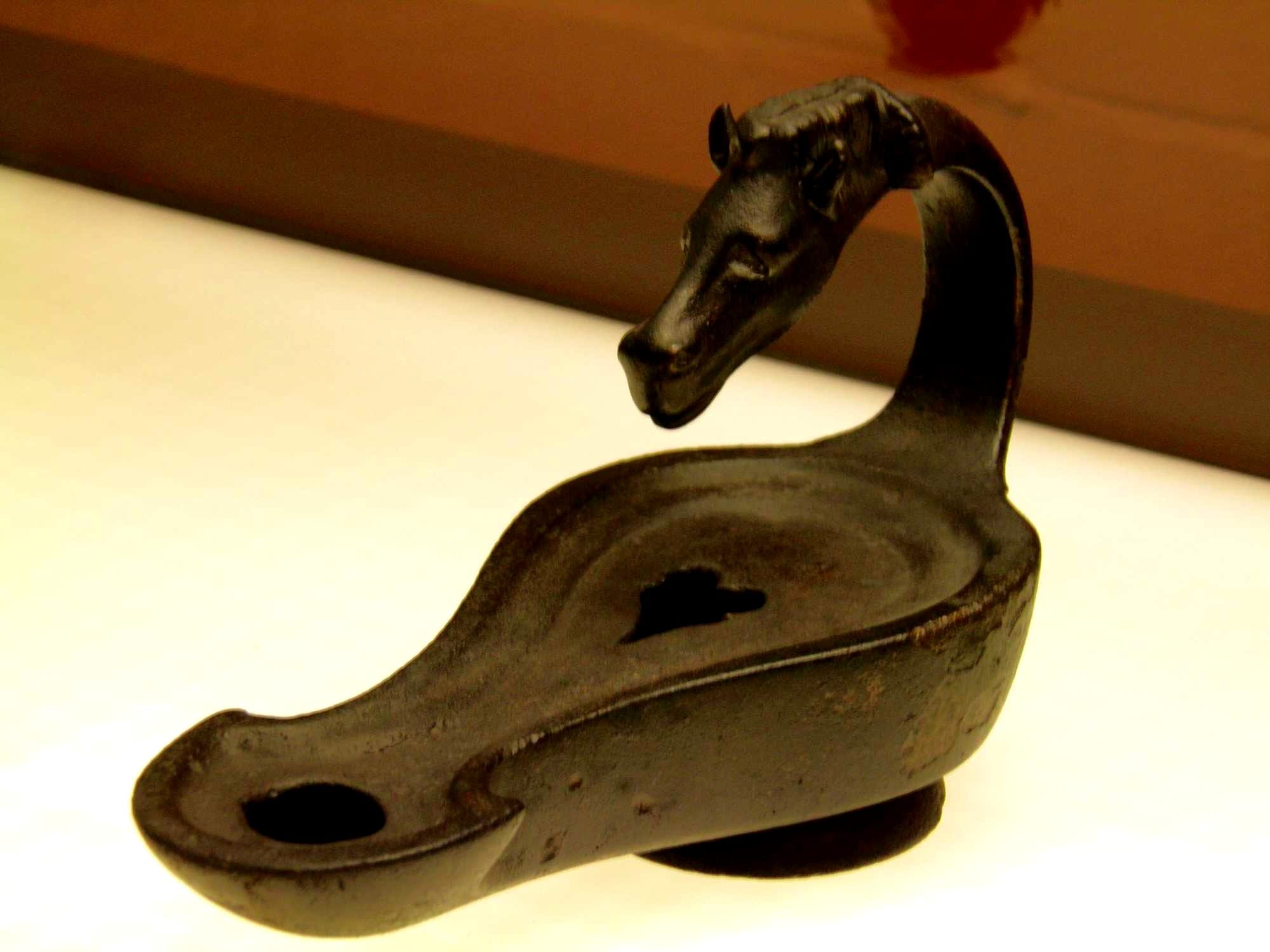
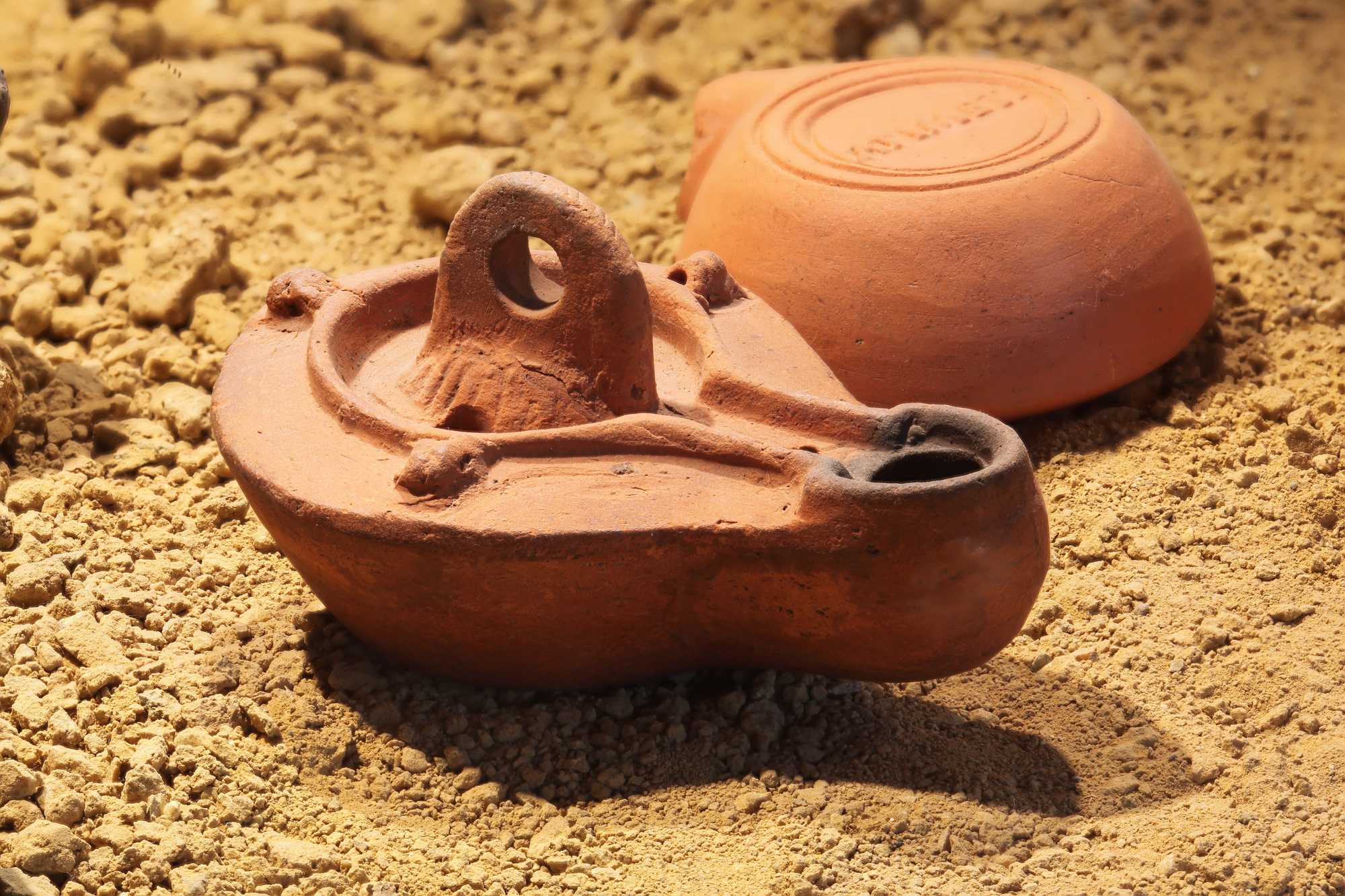
Artificial light mattered, but it did not conquer darkness. Oil lamps and torches created small islands of visibility. They made reading, cooking, guarding, drinking, sex, and work possible after sunset, but they also reminded people how much remained unlit. A lamp could illuminate a room, but not a city. It could guide a person through a hallway, but not remove danger from a street.
Fire itself was double-edged. It was the condition of night activity, but also one of the city’s great threats. Lamps, hearths, kitchens, workshops, and braziers all brought usefulness and risk. In a dense city of apartment blocks, wooden fittings, stored goods, and narrow streets, a small flame could become disaster.
Night also changed the senses. Vision weakened; hearing sharpened. A cart wheel, a shout, a drunken laugh, a door bolt, a footstep on stone, or a cry from the street could carry more power after dark. Ancient night was not silent. In cities, it could be startlingly loud.
That is why Roman night should not be imagined as a simple absence. It was not only the dark half of time. It was a different environment, with its own dangers, labours, rhythms, pleasures, and freedoms.
The Work That Woke the Sleeper
Some of Rome’s loudest night sounds came from work. Julius Caesar’s municipal law restricted wheeled traffic in Rome during much of the day, from sunrise until the tenth hour, with exceptions for public works and sacred construction. The result was practical but noisy. Goods that could not move freely by day entered or crossed the city after dark.
The same streets that daylight filled with pedestrians, clients, shoppers, and public business became corridors for wagons. Rome had to be supplied. Food, fuel, building materials, shop goods, and market commodities still had to move. The visible city of the day depended on labour that often belonged to the night.
Juvenal made this one of the great miseries of urban life. Sleep in the city, he says, belonged only to the wealthy. The heavy passage of vehicles through narrow turns, the curses of drivers trapped in traffic, and the noise rising from the street made rest nearly impossible for ordinary people.
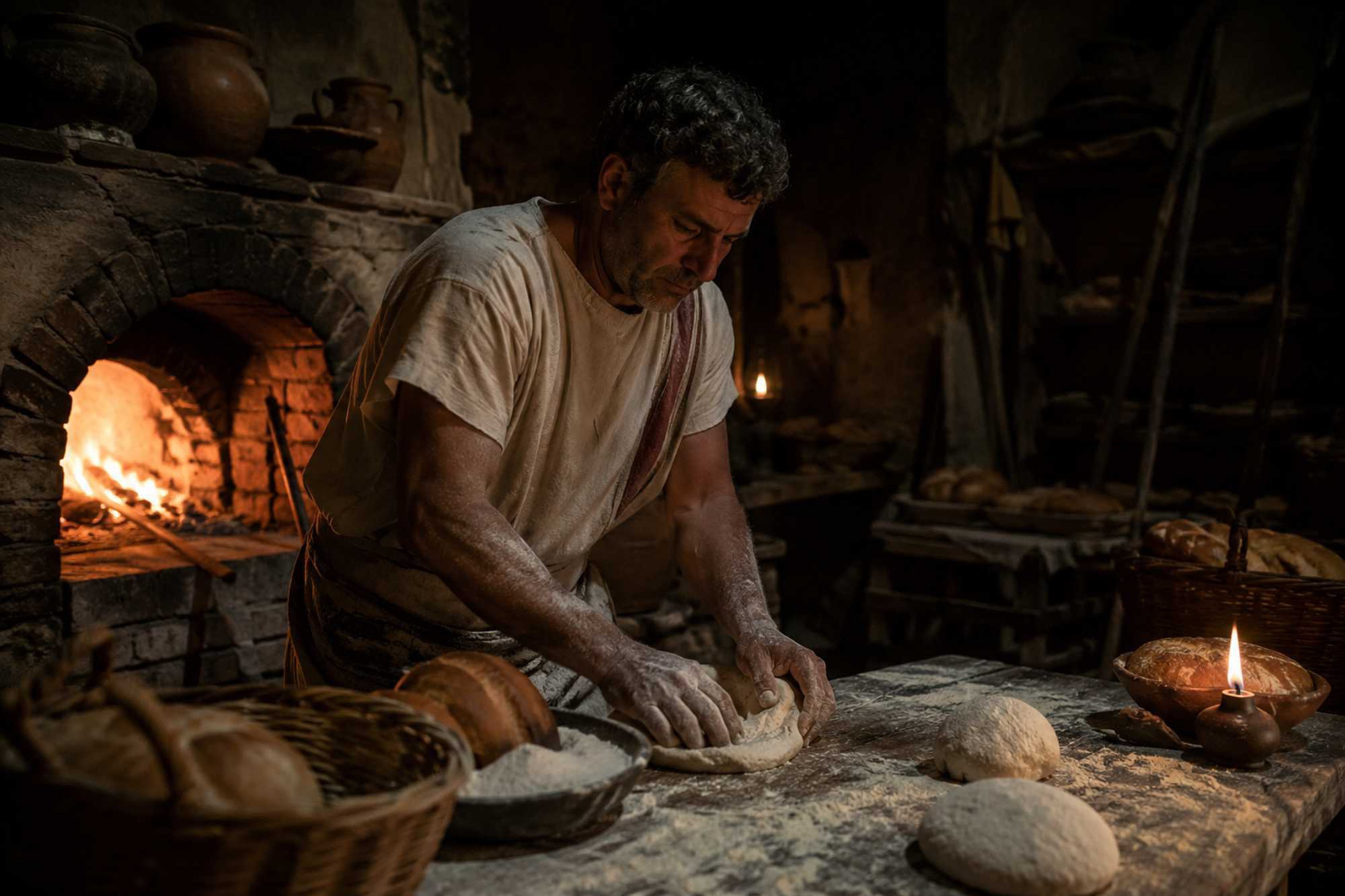
Martial blamed the bakers. In his poem, schoolteachers attack sleep in the morning, but bakers take over at night. The complaint is comic, but the work was serious. Bread was central to Rome’s stability. Bakers produced the daily food on which the city depended. Their profession could be demanding, profitable, and nocturnal.
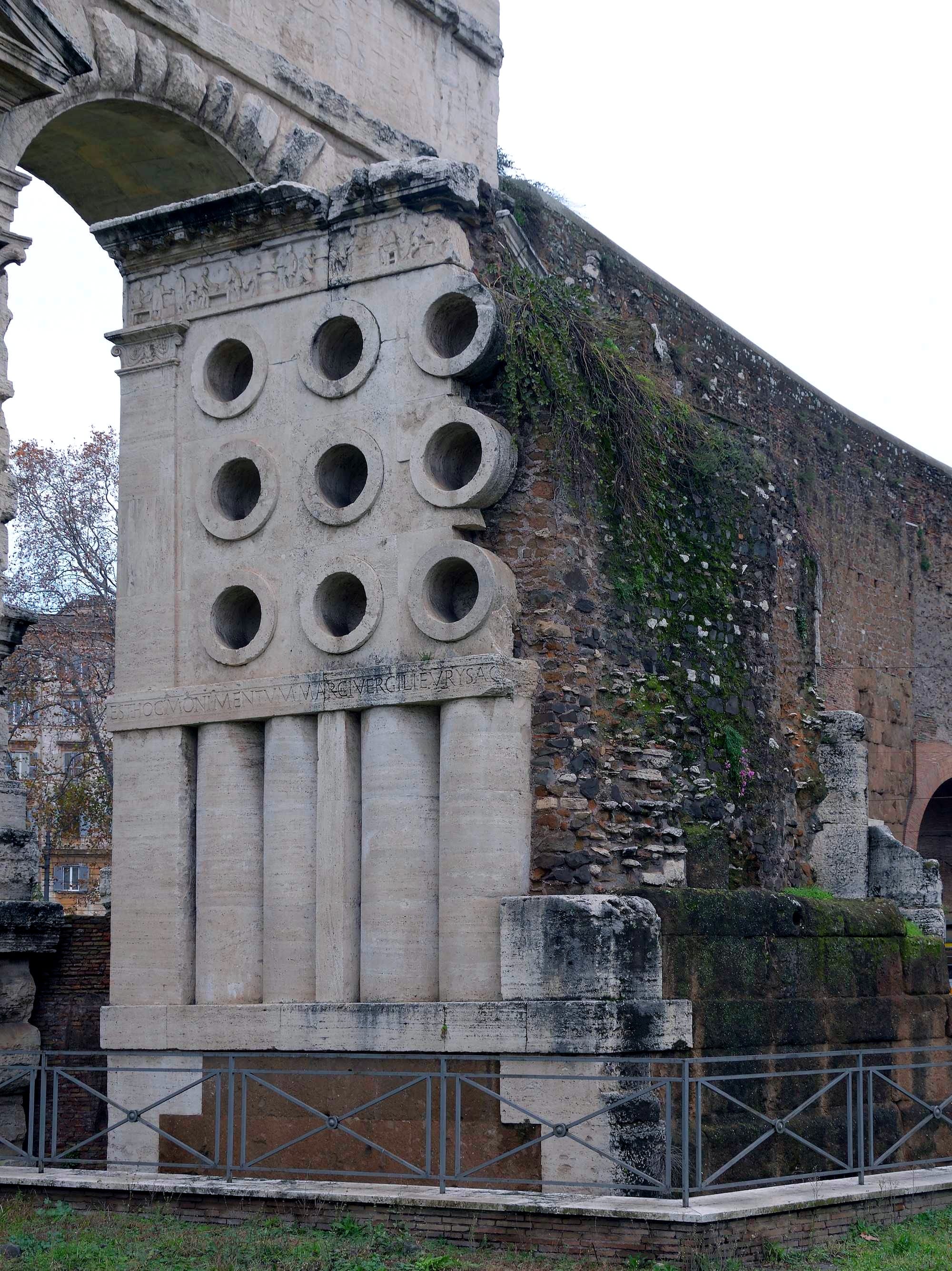
The tomb of Marcus Vergilius Eurysaches, the baker, makes this labour visible in stone. Built near the Porta Maggiore, it turned the tools and forms of baking into a monument. A man whose background may have been connected with servile origin could advertise the scale and importance of his trade through death itself.
The tomb does not show night directly, but it belongs to the same world Martial heard from bed: the world of ovens, kneading, production, and food made before others woke.
Rome was alive at night because it had to be. The sleeping city was fed, supplied, guarded, cleaned, and served by people whose hours did not match the comforts of the elite. Someone’s labour was someone else’s noise.
Streets That Changed After Sunset
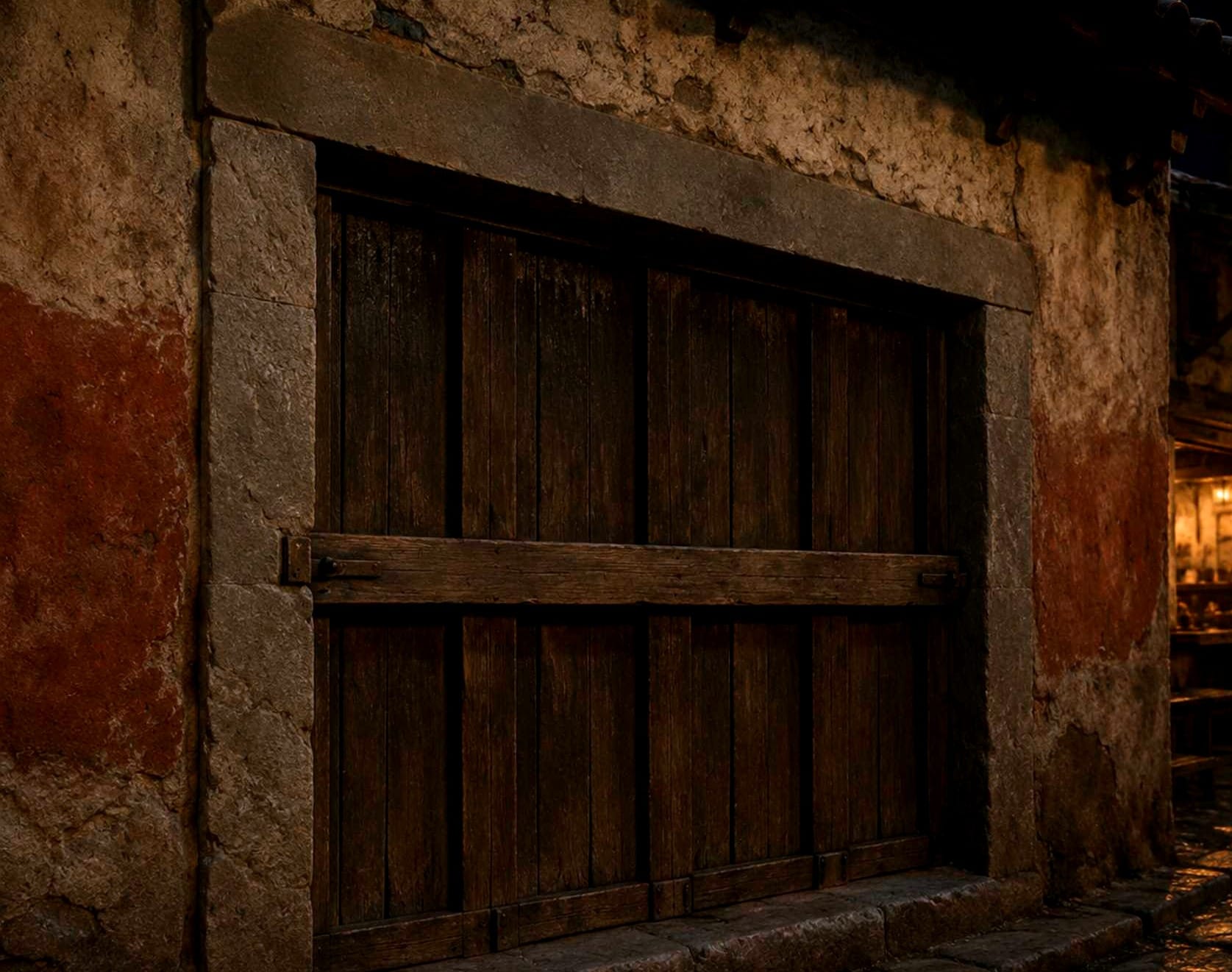
After dark, the Roman street became more uncertain. By day, the street was open, commercial, crowded, and public. After sunset, it did not empty, but it changed character. Shops had to be closed. Doorways became defensive lines. Movement required caution. The same urban density that made Rome energetic by day made it risky at night.
Archaeology preserves this change in small details. A groove for a shop barricade shows how an opening could be secured after business ended. A counter or doorway that welcomed customers under daylight could be shut against thieves, drunks, or disorder after sunset. The Roman city did not simply trust the night. It barred itself against it.
Petronius gives a vivid literary glimpse of the rougher side of night movement. In the Satyricon, a caterer accuses guests of planning to avoid payment by slipping “into the street in the dark.” The scene quickly turns comic and violent: cooks and agents of the landlord beat Eumolpus outside, while one man threatens him with a hissing spit and another brandishes a fork like a gladiator.
A spit and a fork become weapons. It is comic, chaotic, and low-life, but it reflects the kind of world that could exist around inns, apartments, kitchens, and dark streets.
Roman writers frequently associated night with assault and theft. Satire and fiction exaggerate, but they exaggerate recognizable fears. Darkness could hide attackers. Drunken groups could move through the streets. Bands of young men might beat or rob those who could not defend themselves. Most people were wiser to avoid going out at night unless they had companions, servants, or a strong reason.
The danger was not only human. The city itself could injure. Apartment buildings were high; streets were narrow; objects might fall; walls might be unsafe; fires could break out. To walk through Rome at night meant moving through a space where one could not always see what was above, below, or ahead.
The poor were especially exposed. A shopkeeper could barricade the entrance. A tenant on an upper floor had to trust stairs, walls, neighbours, and luck. At night, Rome did not become lawless. But it became harder to control.
Watchmen, Water, and the Fear of Fire
The vigiles were Rome’s answer to that danger. Created under Augustus, they were both fire brigade and night police. Organized into seven cohorts, each responsible for two of Rome’s fourteen regions, they watched for flames, thieves, and disorder. Their men were largely ex-slaves, commanded by an equestrian prefect. They belonged to the official structure of the city, but their work came most fully alive after sunset.
The duties of the Prefect of the Vigiles show how seriously Rome treated the night. The Digest says that he had to keep watch through the night. He was to patrol with men equipped for urban danger, carrying tools such as hooks and axes. He also had to warn residents to be careful with fire and to keep water available in their apartments.
The office did not end at dawn. After being up through the night, the prefect could hold morning court and judge offenders caught during the night watches. There was a hard practicality in this. Night crime and night danger demanded fast treatment. The men seized in darkness might face authority as daylight returned.
The vigiles were also present at Ostia, Rome’s port and warehouse city. Their barracks there are among the most striking material witnesses to Roman night work. The Barrack of the Vigiles at Ostia was a converted apartment block, probably two or three stories high, large enough for a detached force rotated from Rome. Its courtyard, tribunal, entrances, and imperial statue bases show a disciplined institution embedded in the life of a working port.
Ostia was important because Rome’s supplies mattered. Grain, food, and goods moved through the port. Warehouses and rental properties filled the urban landscape. A city of storage and transport needed night watchmen as much as streets and houses did.
Yet even the vigiles could be defeated by the city they served. When the Great Fire of 64 CE broke out near the Circus Maximus, the cohort responsible for that region was barracked across the Tiber in Trastevere. As people fled, they blocked the bridge, delaying the men who were supposed to fight the fire.
It is a perfect Roman night scene: fear, crowding, movement, fire, duty, and obstruction all meeting in the dark. Rome had a night police because Rome needed one. But the very scale and density of the capital made control fragile.
Inns, Lamps, and the Pleasures of Darkness
Night also belonged to appetite. The Roman city offered places for food, drink, lodging, sex, and sociability outside the elite house. A thermopolium at Ostia, lodging outside the Herculaneum Gate at Pompeii, and the main brothel of Pompeii give material shape to this world. These were not modern “nightlife” venues, but they were spaces where the needs and pleasures of the urban night could gather.
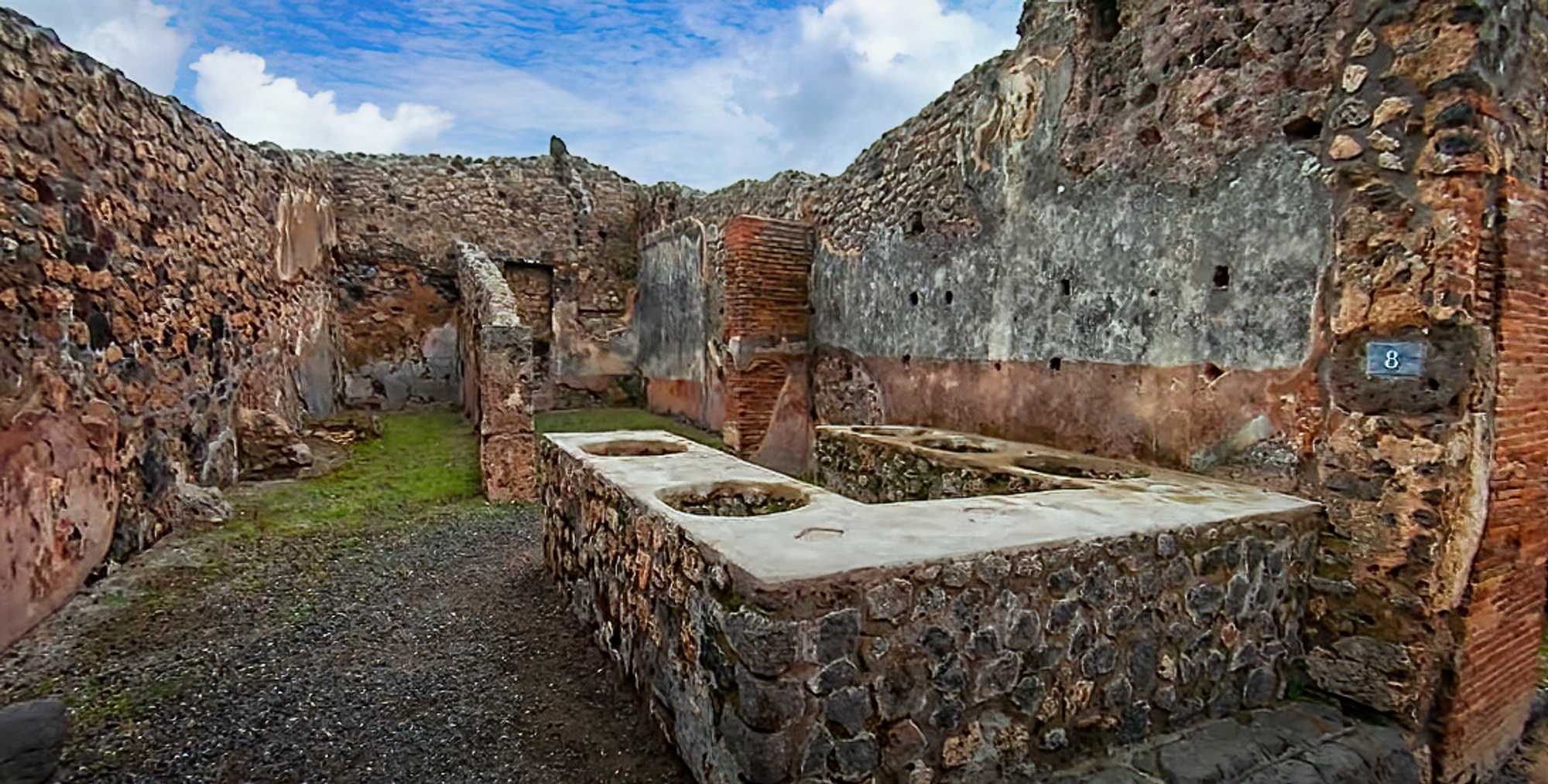
Taverns and inns served travellers, labourers, sailors, customers, and people without private dining rooms. They also belonged to the world of payment disputes, drunkenness, temporary beds, and social mixing. A Roman night outside the elite home could mean food, shelter, risk, laughter, argument, and sudden violence.
Sex should be handled carefully. Roman sexual imagery was not confined to the night or hidden only in brothels. Explicit scenes could appear in wealthy houses as well as sexual commercial spaces. Still, lamps, bedrooms, brothels, and night movement all made sex part of Rome’s nocturnal world.
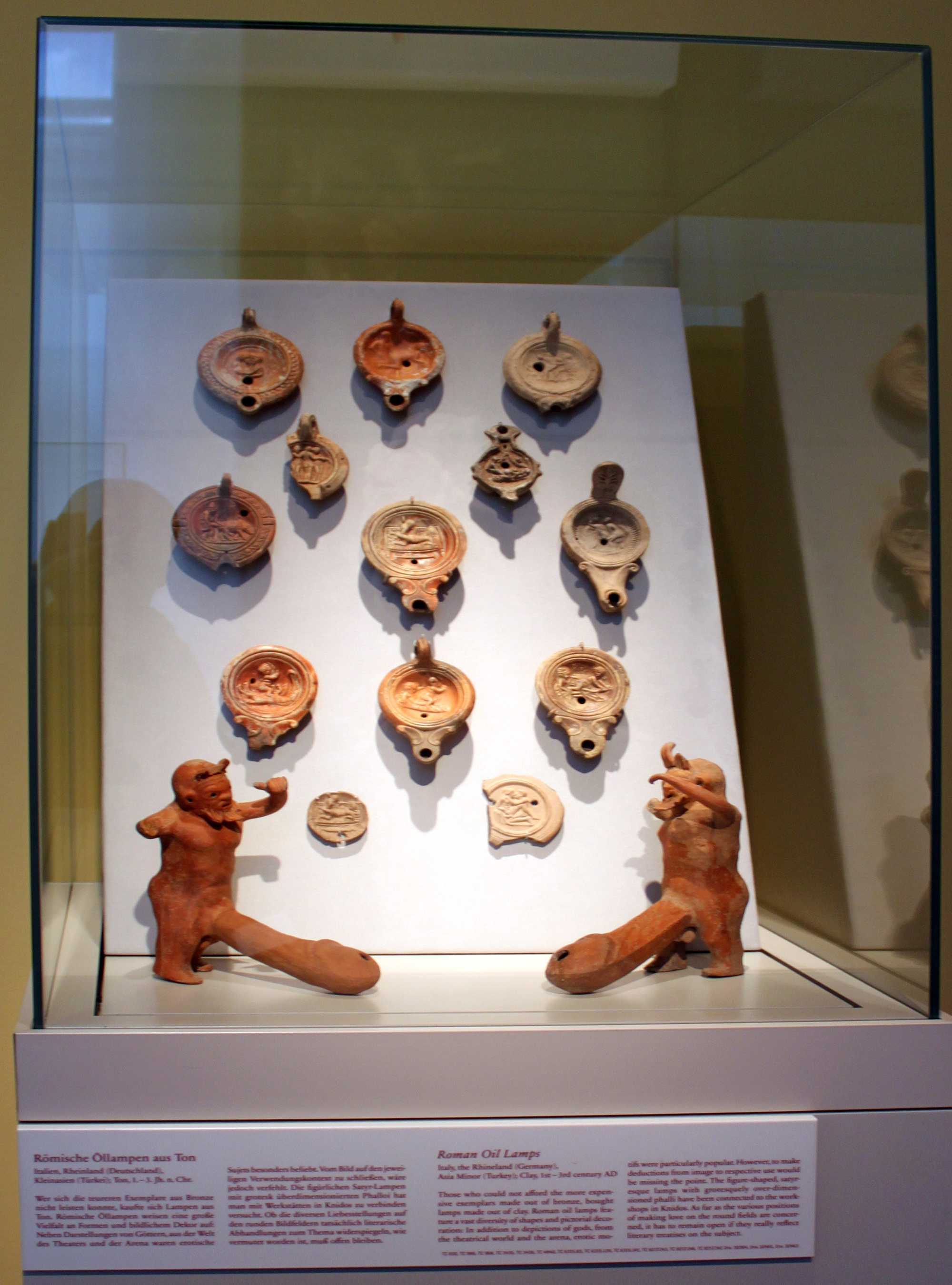
A Roman oil lamp decorated with an erotic scene raises the obvious question: did the lighting of the lamp help turn attention toward the act it depicted? The evidence cannot answer for every user, but the association is suggestive.
Night was also a setting for stories. Petronius places ghost tales inside the dinner of Trimalchio, where freedmen speak of werewolves, witches, stolen bodies, and terrifying transformations. One tale describes a werewolf among sheep.
Another tells of witches who steal the body of a dead boy and leave straw in its place. Some characters believe; others remain sceptical. That mixture is important. Roman night did not belong only to fear. It belonged to performance, doubt, laughter, status, and storytelling.
The city after sunset was therefore not simply dangerous, nor simply festive. It was a place where practical needs and less respectable pleasures overlapped. Food, shelter, sex, drink, payment, argument, fear, laughter, and storytelling could all meet under lamplight.
Nero in the Night
Then there was Nero. Ancient accounts say that Nero disguised himself and went out after dark through taverns and neighbourhoods, not as a ruler inspecting the city, but as a violent nightwalker. Suetonius describes him entering low places, beating people returning from dinner, wounding those who resisted, throwing victims into sewers, breaking into shops, and later arranging to sell stolen goods.
No sooner was twilight over than he would catch up a cap or a wig and go to the taverns or range about the streets playing pranks, which however were very far from harmless; for he used to beat men as they came home from dinner, stabbing any who resisted him and throwing them into the sewers.
He would even break into shops and rob them, setting up a market in the Palace, where he divided the booty which he took, sold it at auction, and then squandered the proceeds.
In the strife which resulted he often ran the risk of losing his eyes or even his life, for he was beaten almost to death by a man of the senatorial order, whose wife he had maltreated.
Warned by this, he never afterwards ventured to appear in public at that hour without having tribunes follow him at a distance and unobserved.
Even in the daytime he would be carried privately to the theatre in a sedan, and from the upper part of the proscenium would watch the brawls of the pantomimic actors and egg them on; and when they came to blows and fought with stones and broken benches, he himself threw many missiles at the people and even broke a praetor's head.
Suetonius, The Lives of the Caesars. The Life of Nero
Tacitus adds that once people realized the emperor was prowling at night, others imitated him under his name, and the city’s night began to feel as though it had been captured.
These accounts are hostile and should be read as part of the ancient moral portrait of a bad emperor. But their power depends on a real Roman fear: night could invert the city. A ruler who should guarantee order could become a source of disorder. Elite disguise could become violence. Darkness could blur identity just enough for danger to spread.
Rome at night was not free from hierarchy. Nero’s story proves the opposite. Even in disguise, power followed him. But darkness allowed hierarchy to move in unexpected forms. A poor man could fear thieves. A senator might unknowingly strike the emperor. A city could wake to rumours of violence committed under Caesar’s shadow.
The Rich Man’s Silence
Not every Roman night belonged to the street. Some belonged to discipline, reading, writing, and retreat.
Pliny the Elder is the great example of elite sleepless industry. His nephew describes a life in which time was harvested almost aggressively. Pliny worked before dawn. The emperor Vespasian could summon him in darkness, before the formal morning greeting, because Pliny served as a kind of living archive for imperial business.
After official duties, reading, meals, exercise, and brief rest, he returned to writing. Unless dining out, he took a late supper and worked by lamplight until around one in the morning.
This was not the insomnia of the poor tenant. It was cultivated sleeplessness, supported by status, servants, and discipline.
Pliny the Younger’s villas show how elite architecture could turn night into privacy. At one country villa, he could wake when he pleased and keep the shutters closed, finding that stillness and darkness removed him from distractions. At his Laurentine Villa, he described a private retreat separated by passages and terraces from the rest of the household. During Saturnalia, when the house celebrated and noise continued into the dark, he could withdraw and keep writing.
The contrast with Martial could hardly be sharper. Martial’s Rome invades the bedroom. Pliny’s darkness protects the writer from disturbance. One man is awakened by the city. Another uses architecture and status to choose solitude.
First Sleep and the Hours Before Dawn
The Roman system of hours shaped the experience of night. Romans divided daylight into twelve hours and darkness into twelve hours throughout the year. The hours therefore changed length with the seasons. At the winter solstice, the daylight was short and the night long; at the summer solstice, the pattern reversed. A winter night in Rome could stretch for more than fifteen modern hours.
This mattered for work and festivity. In the dark months, artificial light became more important. People of business, administration, and learning had to use lamps if they wanted to work at the edges of the day. Household celebrations also extended into darkness.
Sleep itself may not have followed the modern expectation of one unbroken block. Roman sources use phrases for “first sleep,” including primus somnus and related expressions. References appear across centuries, from early Latin literature to late antique writers.
What is less clear is whether Romans had an equally fixed term for a second sleep or for the interval between the two. Still, the evidence suggests that Romans recognized the beginning portion of the night’s sleep as a meaningful stage.
This makes Roman night more human. It was not simply waking or sleeping. It could include first sleep, waking, work, sex, conversation, fear, dreams, prayer, study, storytelling, and return to bed.
The Night of Lovers, Ghosts, and Death
Roman night was not only urban noise and public danger. It also carried poetic and imaginative force. Catullus, writing in a very different register from Martial, could turn night into one of the most memorable images in Latin love poetry.
In poem 5, he urges Lesbia to live and love while the brief light of life remains: soles occidere et redire possunt – suns can set and rise again – but once our own brief light has fallen, nox est perpetua una dormienda, “there is one everlasting night to be slept.”
The poem is not about city streets, bakers, or the vigiles. It belongs to the intimate world of love, kisses, old men’s gossip, and mortality. Yet it reveals how naturally Roman poetry could use night as a boundary: between day and darkness, life and death, renewal and final sleep.
Catullus also gives another nocturnal image in poem 7, where he imagines kisses as countless as the stars that, in the silence of night, look down on the hidden loves of mortals. Here night is not the noisy city of Martial. It is the darkness that conceals lovers and makes counting impossible.
These poetic and fictional nights do not replace the material night of Rome. They deepen it. The same darkness could hold urban insomnia, erotic secrecy, ghost stories, labour, danger, and rest.
A poor man heard bakers. A lover imagined stars. A magistrate watched fires. A scholar wrote by lamplight. A poet thought of death as the night from which no one wakes.
The Other Rome
The public Rome of daylight is easy to imagine: the Forum, the courts, the baths, the shops, the clients, the crowds, the ceremonies, the monuments. The Rome of night is harder to see, but it may bring us closer to ordinary life.
It was the Rome of blocked carts and cursing drivers. The Rome of ovens and bread. The Rome of lamps and fire risk. The Rome of shop barricades and apartment stairs. The Rome of thieves, patrols, and morning judgment. The Rome of taverns, inns, brothels, and late dinners. The Rome of ghost stories told after wine. The Rome of Nero slipping into disgraceful disguise. The Rome of Pliny writing by lamplight while someone else served, read, carried, cooked, or kept watch. Night did not erase Roman order. It revealed its underside.
The same city that displayed law, empire, and architecture by day became after sunset a place of smaller flames and sharper inequalities. Those with wealth could command privacy, silence, servants, light, and escape. Those without it slept beside labour, traffic, fear, and other people’s noise.
When Catullus imagined death as one long night to be slept forever, he drew on the darkness of night as something final and fearful. But ordinary Roman night was not final. It ended. Dawn came. Bakers finished. Carts withdrew. Patrolmen brought offenders to court. Clients prepared their greetings. The public city returned.
Yet the night had done its work. It had fed Rome, disturbed Rome, frightened Rome, guarded Rome, entertained Rome, and given Roman poets one of their richest images. When Rome went dark, Rome did not disappear. It became another version of itself – dimmer, louder, more vulnerable, and in some ways more revealing than the city seen by day.
Glenn Reed Storey, “All Rome Is at My Bedside: Nightlife in the Roman Empire,” in Nancy Gonlin and April Nowell, editors, "Archaeology of the Night: Life After Dark in the Ancient World."
Nancy Gonlin and April Nowell, “Introduction to the Archaeology of the Night,” in "Archaeology of the Night: Life After Dark in the Ancient World".
A. Roger Ekirch, "At Day’s Close: Night in Times Past".
Lionel Casson, "Everyday Life in Ancient Rome".
About the Roman Empire Times
See all the latest news for the Roman Empire, ancient Roman historical facts, anecdotes from Roman Times and stories from the Empire at romanempiretimes.com. Contact our newsroom to report an update or send your story, photos and videos. Follow RET on Google News, Flipboard and subscribe here to our daily email.
Follow the Roman Empire Times on social media: