
Catullus: The Roman Poet of All Life has to Give
Catullus wrote of love, betrayal, friendship, obscenity, politics, myth, and grief. His poems reveal a learned and fiercely personal voice shaped by the final years of the Roman Republic.

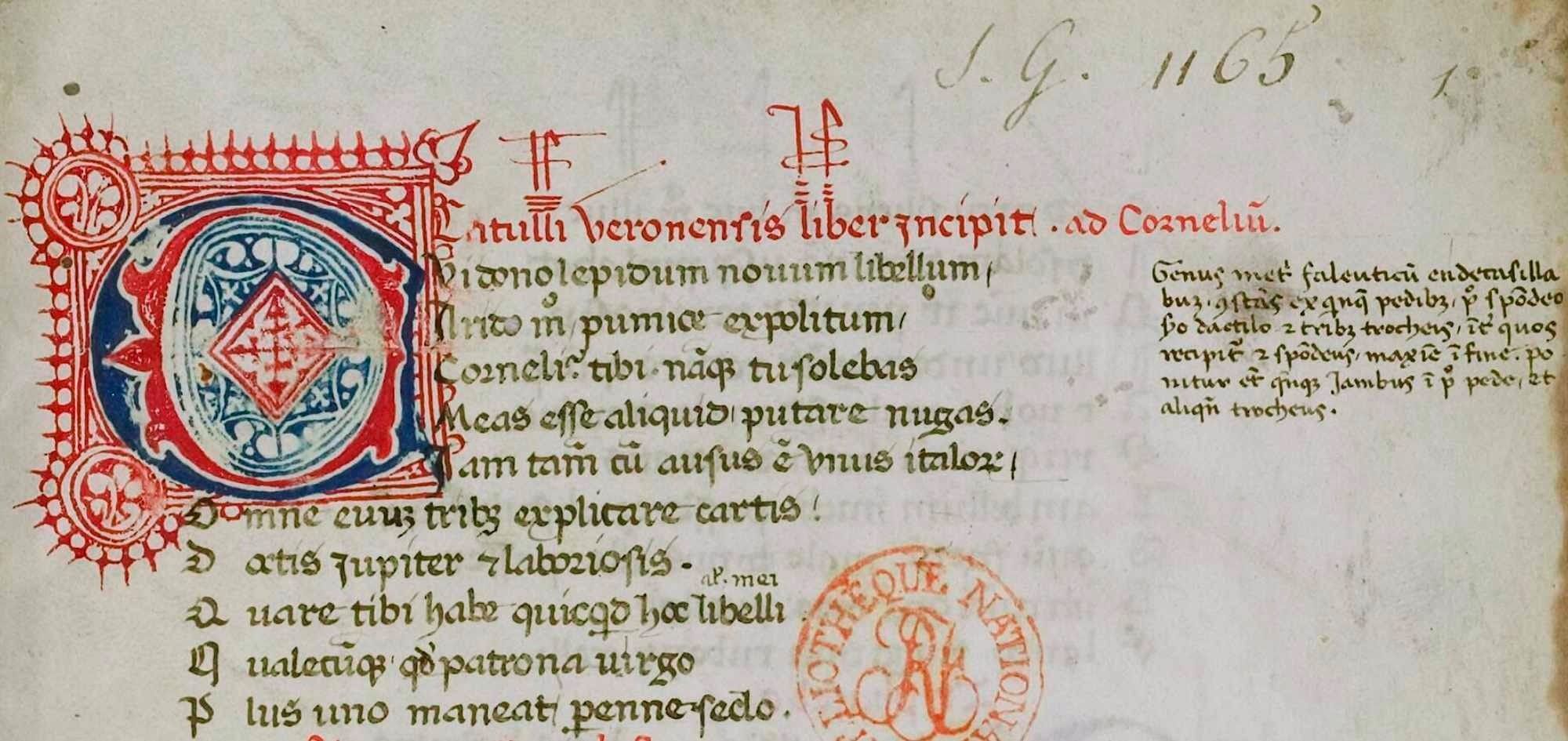
Few ancient poets seem to speak as directly as Catullus. He names friends and enemies, quarrels with lovers, mocks politicians, celebrates homecomings, describes sleepless desire, and mourns his brother beside a distant grave. His poems can sound like immediate records of a life lived without restraint.
Yet that apparent directness is one of the achievements of the poetry. The surviving collection does not provide a secure biography, and the speaker who calls himself Catullus cannot always be treated as the unfiltered historical poet. Names, social situations, literary conventions, metres, and inherited poetic forms all help to construct the voice.
What sounds spontaneous is often carefully made.
A declaration of love becomes a reflection on mortality and hostile observation. An invitation to dinner becomes an exchange of material and poetic gifts. An obscene threat becomes a defence of the freedom of verse. A mythological wedding opens into abandonment, war, and family destruction. A funeral rite becomes one of the most restrained expressions of grief in Latin poetry.
Catullus wrote about desire, friendship, insult, politics, travel, marriage, religion, myth, family, and death. These subjects do not remain separate. Words such as fides, good faith or loyalty, pass between friendship and erotic attachment.
Journeys lead to provincial disappointment, joyful homecoming, mythological exile, and a brother’s grave. The language of family enters the poems about Lesbia, while Greek myth provides forms through which love and bereavement can be expressed together.
The collection preserves not one fixed Catullan voice, but many – learned and conversational, tender and aggressive, comic and grieving, sexually explicit and formally controlled.
A Life That Cannot Be Fully Recovered
The basic chronology of Catullus’ life remains uncertain. Jerome records that he was born at Verona in 87 BCE and died at Rome in his thirtieth year, but the stated date of death cannot be reconciled with poems referring to events in the middle of the 50s BCE.
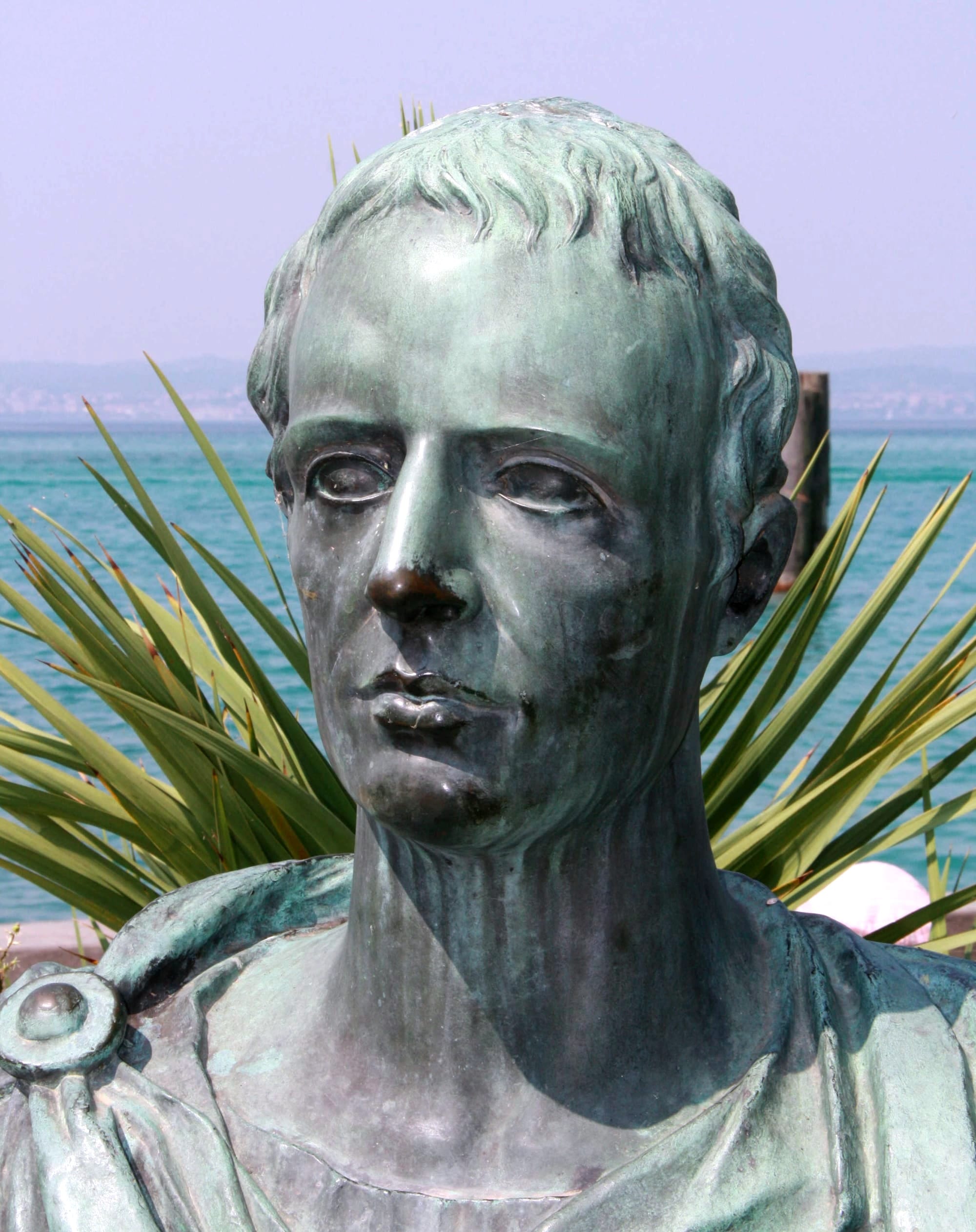
Many scholars have consequently placed his birth around 84 BCE and his death around 54 BCE. Others have allowed for the possibility that Jerome’s error concerned Catullus’ age and that the poet lived longer.
The surviving poems contain no unambiguous reference to an event after the mid-first century BCE, but silence in a poetic collection cannot establish a date of death. Catullus may have died young, as ancient testimony suggests, yet the precise limits of his life cannot be recovered.
Verona and the Transpadane region beyond the River Po remain central to his poetic identity. Catullus also associated home with Sirmio, the peninsula extending into Lake Garda. Returning there after service abroad, he addresses it directly in Poem 31:
Sirmio, jewel of peninsulas and islands,
whatever Neptune bears in either lake
or the wide sea – how willingly, how happily
I see you again.
I can scarcely believe that I have left
Thynia and the Bithynian fields
and look upon you safely.
The relief of homecoming continues:
This is what alone repays so many hardships.
Greetings, lovely Sirmio – rejoice in your master,
and you, waters of the Lydian lake, rejoice.
Laugh out every laugh that the house contains.
The poem presents the return to Sirmio through the traveller’s relief at leaving Bithynia, seeing his home again, setting aside the burden of travel, and reaching his own bed. Yet Rome was also central to Catullus’ life. In Poem 68, he explains that he lacks books while staying in Verona because Rome is where he normally lives and where his collection of books remains.
His poetry consequently moves between northern Italy, Rome, Roman provinces, the Greek East, and mythological landscapes. It reflects the position of a man from a distinguished municipal family participating in the literary and social life of the capital while continuing to define himself through his northern origins.
His family appears to have held substantial local status. Suetonius reports that Catullus’ father received Julius Caesar as a guest when Caesar governed Cisalpine Gaul. Catullus himself later attacked Caesar and Caesar’s officer Mamurra in verse. Caesar regarded the poems as damaging, but accepted the poet’s apology, invited him to dinner that same day, and continued to accept the father’s hospitality.
The incident places Catullus inside elite social relations, not outside them. The poems could insult powerful men, but personal reconciliation remained possible through hospitality and direct contact.
His journey to Bithynia is more securely reflected in the collection. Catullus served on the staff of the governor Gaius Memmius around 57–56 BCE. Poems 10 and 28 present the appointment as financially disappointing. The expected provincial profits did not materialize, and Memmius is treated with hostility.
The journey also brought Catullus into the Greek East and allowed him to visit the grave of his brother in the Troad. The brother’s death is the clearest personal event running through several poems. Lesbia dominates the modern image of Catullus, but the dead brother occupies an equally serious place in his language of memory, distance, loyalty, and loss.
The Polished Little Book
The transmitted collection begins with Catullus offering a small book to Cornelius Nepos:
To whom shall I give this charming new little book,
freshly polished with dry pumice?
To you, Cornelius, for you were accustomed
to think my trifles worth something.
The language is modest, but it also announces a literary position. The book is novus, new, and lepidus, elegant, charming, or witty. Its physical surface has been polished. Catullus calls the poems nugae, trifles, while presenting them as the product of deliberate finish.
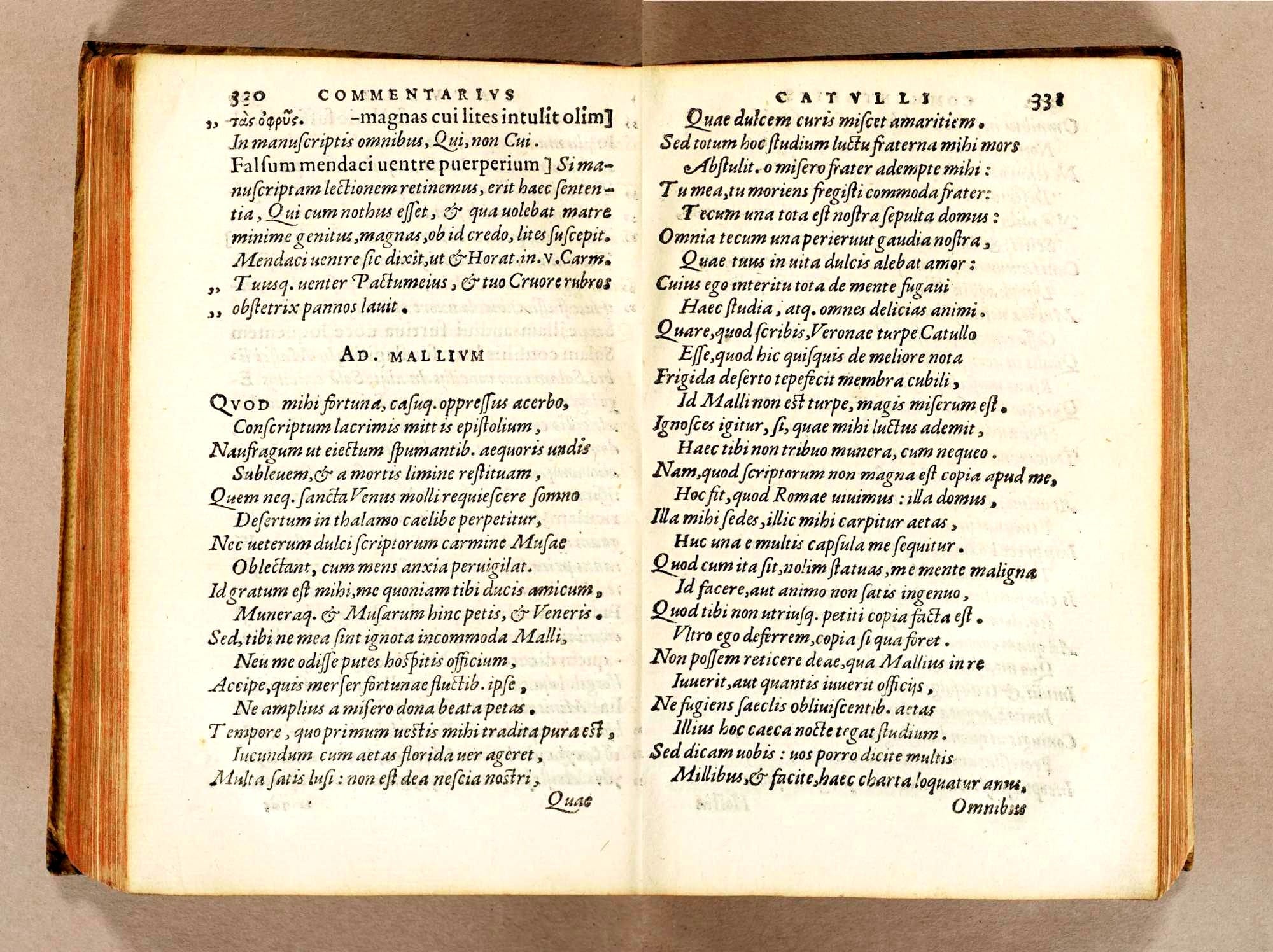
Catullus belonged to the literary environment later associated with the poetae novi, the “new poets,” or Neoterics. Most of their work has disappeared, making the exact shape of the group difficult to reconstruct. The surviving evidence nevertheless points to poets who cultivated refinement, verbal precision, Greek learning, metrical experiment, and forms other than large-scale Roman historical epic.
Catullus was not exclusively a writer of short poems. His surviving work includes wedding hymns, long mythological narratives, translations, elegies, epigrams, and the galliambic Poem 63. His poetic innovation lay not simply in brevity, but in the variety of forms and voices he made available to Latin poetry.
Sappho stands directly behind Poem 51. Catullus adapts her celebrated description of the physical effects of desire. The speaker watches a man sitting opposite the beloved:
He seems to me equal to a god,
he seems, if it is right to say so,
to surpass the gods, because sitting opposite you
he repeatedly watches and hears you
sweetly laughing.
The sight overwhelms the speaker:
The moment I see you, Lesbia,
no voice remains in my mouth.
My tongue grows numb, a fine flame
runs beneath my limbs,
my ears ring with their own sound,
and night covers both my eyes.
The final stanza turns toward otium, leisure or freedom from public occupation:
Leisure, Catullus, is troublesome to you.
In leisure you grow restless and excessive.
Leisure has already destroyed
kings and prosperous cities.
Catullus does not merely reproduce Sappho. He places the experience within a Roman language of conduct, excess, and self-control. The poem combines translation, adaptation, Sapphic metre, erotic disturbance, and moral self-address.
Callimachus is another major presence. Poem 66 translates the story of Berenice’s lock of hair from the Aetia. The queen dedicates the lock for her husband’s safe return from war, and it is transformed into a constellation.
Catullus introduces this learned translation through personal grief in Poem 65:
Although sorrow constantly consumes me, Hortalus,
and grief calls me away from the learned maidens,
for my mind, shaken by such evils,
cannot bring forth the sweet offspring of the Muses...
He explains that his brother’s death has removed him from poetry, yet he still sends the promised translation so that his friend will not think his words entrusted to the winds.
The grieving brother is also the translator of Callimachus. The emotional and learned Catullus cannot be divided into separate poets. Greek poetry, literary obligation, friendship, and bereavement occupy the same work.
One Collection or Several Books?
The transmitted corpus contains 116 numbered poems. Modern editions usually divide them into short polymetric poems, longer poems, and elegiac epigrams. This arrangement reflects important formal differences, but recent scholarship has questioned whether Catullus himself organized the surviving sequence as one complete book.
Some poems probably circulated individually or in smaller collections before the surviving corpus was assembled. Poems 65 and 66 form a particularly close pair, since the verse letter to Hortalus introduces the translation of Callimachus that follows.
The two wedding songs, Poems 61 and 62, are now placed together, as are the two long mythological narratives, Poems 63 and 64. Formal correspondences may explain these juxtapositions, but they do not establish that Catullus himself arranged the poems in their surviving order. The present sequence may instead reflect the decisions of a later compiler.
The Lesbia poems do not form a documentary chronology. Poems of happiness, separation, renewed desire, contempt, and remembered intimacy are scattered across the collection. The sequence does not narrate an affair from beginning to end.
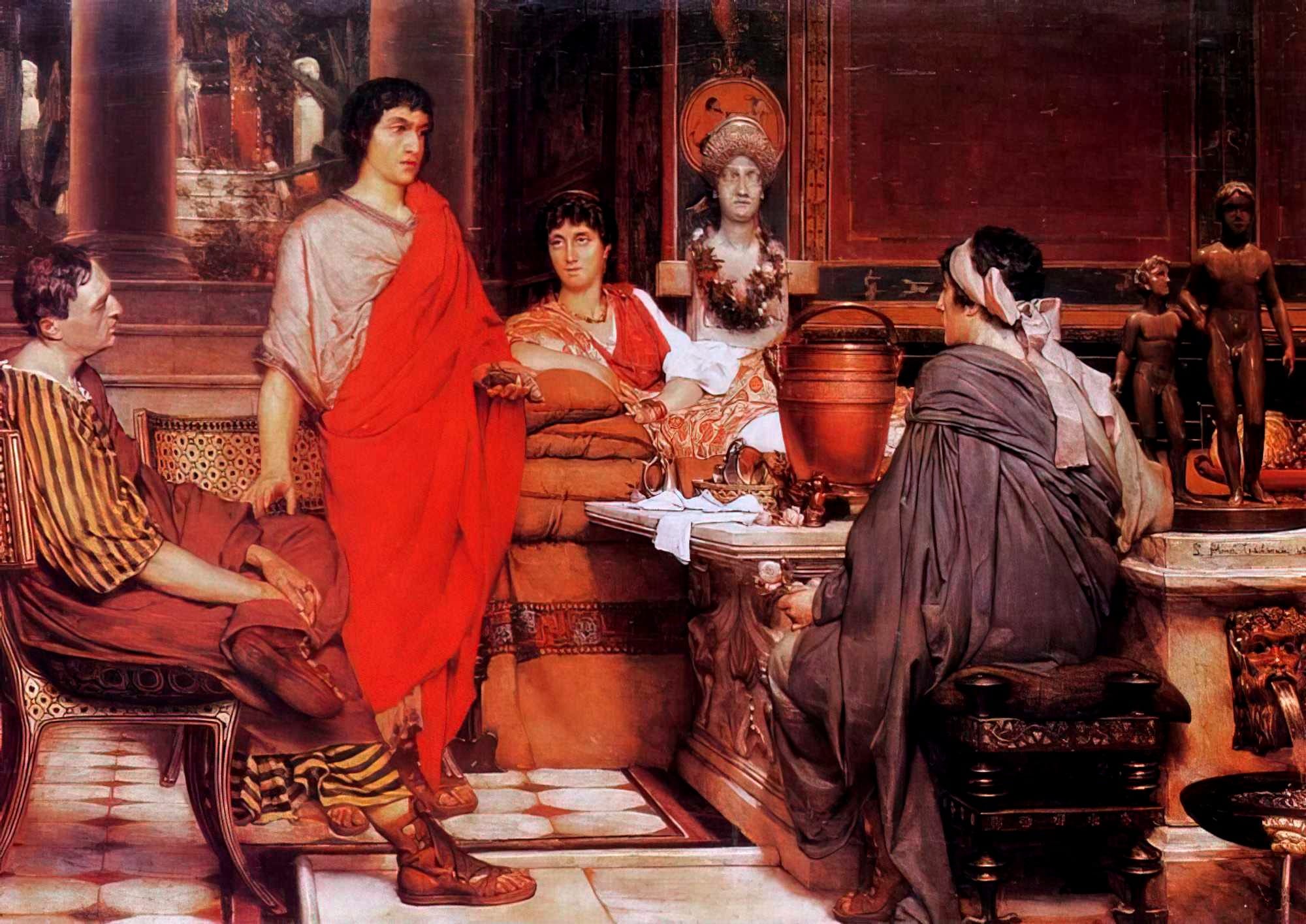
The opening group nevertheless creates powerful contrasts. Poems 5 and 7 celebrate kisses and limitless desire. Poem 8 stages an effort to accept rejection. Poem 11 sends a hostile farewell. The elegiac poems 70, 72, 75, 76, and 85 return to promises, broken trust, moral injury, continuing desire, and the wish for release.
These poems can be read together as an exploration of emotional change. They cannot securely be used as dated entries from Catullus’ private life.
“Let Us Live and Love”
Poem 5 begins in defiance:
Let us live, my Lesbia, and let us love,
and let us value all the mutterings
of severe old men at a single penny.
The lovers’ answer to social criticism is shaped by mortality:
Suns can set and return.
For us, when our brief light has once set,
one everlasting night must be slept.
The poem moves from the limited span of life to the unlimited counting of kisses:
Give me a thousand kisses, then a hundred,
then another thousand, then a second hundred,
then continuously another thousand, then a hundred.
Once the kisses reach many thousands, the lovers will confuse the number so that neither they nor a malicious observer can know the total. The threat is not only disapproval but envy and the hostile gaze. Private desire is imagined before an audience.
Poem 7 answers Lesbia’s question about how many kisses would satisfy him:
As many as the great number of Libyan sands
that lie at silphium-bearing Cyrene,
between the oracle of burning Jupiter
and the sacred tomb of ancient Battus;
or as many as the stars that, when night is silent,
watch the secret loves of human beings.
The answer combines intimate desire with learned geography and astronomy. The number must be beyond counting, so that curious people cannot calculate it and an evil tongue cannot cast a spell over it.
The name “Lesbia” contributes to the literary setting. It evokes Lesbos and Sappho. Apuleius later identified Catullus’ Lesbia as a woman named Clodia, and Poem 79 appears to connect Lesbia with Publius Clodius Pulcher through the word pulcher, “beautiful.”
The traditional identification with Clodia Metelli remains plausible, but it is not beyond dispute. Several aristocratic women bore the name Clodia, and more recent proposals have suggested other members of the family.
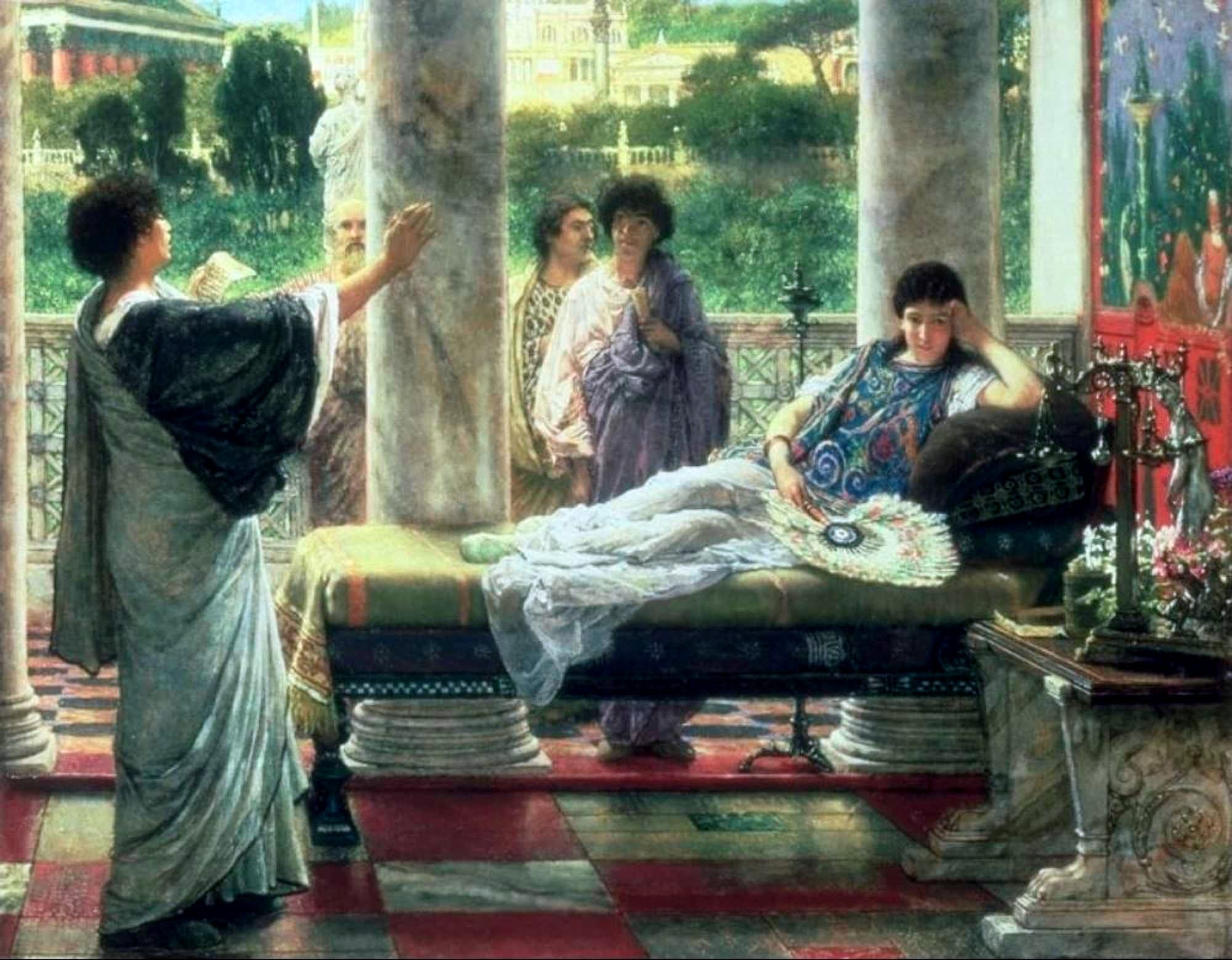
Even secure identification would not turn the poems into a neutral portrait. The unfaithful mistress was already a figure of ancient erotic poetry, while allegations of promiscuity were common in Roman forensic and political abuse. Lesbia is shaped through literary convention, historical possibility, social reputation, and the changing voice of the speaker.
The Work of Letting Go
Poem 8 begins as an order Catullus gives himself:
Wretched Catullus, stop being foolish,
and what you see has perished, consider perished.
Once bright suns shone for you,
when you followed wherever the girl led.
The poem recalls a time of mutual desire:
There many playful things happened,
which you wanted, and the girl did not refuse.
Truly bright suns shone for you.
The repetition marks the distance between past and present. The speaker now commands himself not to pursue someone who no longer wants him:
Now she no longer wants you. You too, powerless man,
do not want her. Do not follow one who flees.
Do not live miserably, but endure with a firm mind.
Be hard.
The commands do not end the attachment. The poem turns back toward Lesbia:
Farewell, girl. Catullus is now firm.
He will not seek you or ask unwillingly.
But you will grieve when no one asks you.
Wicked woman, what life remains for you?
Questions follow. Who will now approach her? Who will think her beautiful? Whom will she love? Whose lips will she bite? The poem closes with another command to remain firm, but the questions have revealed the instability beneath that resolution.
Poem 11 presents another farewell. Furius and Aurelius are imagined accompanying Catullus to India, Arabia, Parthia, Egypt, Gaul, and Britain. After this catalogue of distant territories, their actual task is brief:
Carry a few words, not good ones,
to my girl. Let her live and prosper
with her adulterers...
The attack imagines her repeatedly embracing many men without truly loving any. Then the poem turns away from sexual abuse:
Let her not look back, as before, upon my love,
which through her fault has fallen
like a flower at the edge of a meadow
after it has been touched by the passing plough.
The effect depends on contrast. Imperial geography, hostile accusation, and aggressive masculinity give way to a fragile flower cut down at the field’s edge. The speaker claims final separation while preserving the delicacy of the love that has been destroyed.
Promises Written on Wind and Water
Poem 70 reduces the beloved’s promise to four lines:
My woman says that she prefers to marry no one
except me, not even if Jupiter himself should ask her.
She says this – but what a woman says to an eager lover
should be written on wind and running water.
The force of the promise is set against the instability of the medium on which it should be recorded.
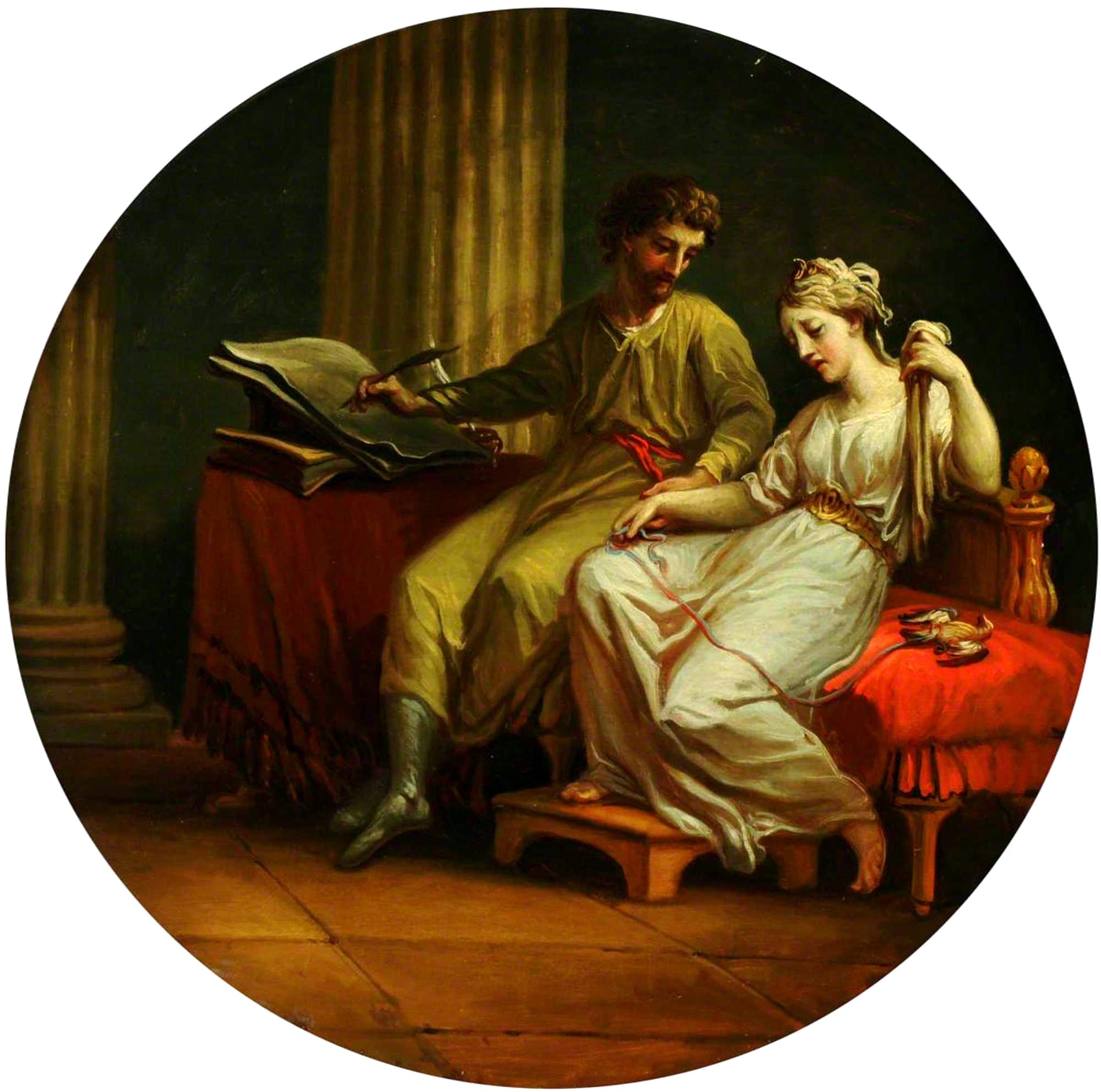
Poem 72 returns to the same declaration:
Once you said that you knew Catullus alone, Lesbia,
and would not prefer Jupiter himself to me.
Then I loved you not merely as the common crowd
loves a mistress, but as a father loves his sons
and his sons-in-law.
The comparison brings the language of household affection, continuity, and respect into erotic attachment. The poem then turns:
Now I know you. Therefore, although I burn more fiercely,
you are far cheaper and lighter to me.
When the imagined Lesbia asks how this can be, the answer distinguishes desire from goodwill:
Because such an injury compels a lover
to love more, but to wish her well less.
Poem 75 continues the division:
My mind has been brought to this point by your fault, Lesbia,
and has destroyed itself by its own devotion,
so that it can neither wish you well,
even if you become the best of women,
nor cease to love you, whatever you do.
Neither possible form of release remains. Better conduct would not restore respect, while further injury would not extinguish desire.
Poem 76 expands the conflict into prayer. It begins with pietas and remembered good conduct:
If there is any pleasure for a person in remembering
former good deeds, when he thinks himself dutiful,
neither violating sacred faith
nor abusing the power of the gods in any agreement
in order to deceive another...
The speaker tells himself that the relationship is lost and must be abandoned. Yet self-command is insufficient, and he turns to the gods:
O gods, if mercy belongs to you,
or if ever you brought final help to anyone,
look upon me in my misery and, if I have lived purely,
tear this destruction and disease from me.
The final request no longer concerns Lesbia’s return:
I no longer ask that she love me in return,
or that she should wish to be chaste.
I wish only to be well
and to put aside this foul disease.
The language of illness gives form to a passion the speaker experiences as both morally undeserved and physically destructive.
Poem 85 compresses the same condition into two lines:
I hate and I love. Why I do this, perhaps you ask.
I do not know, but I feel it happening, and I am tortured.
There is no story, name, or attempted resolution. The verbs carry the poem: hate, love, know, feel, suffer.
Friends, Gifts, and Literary Intimacy
The collection is crowded with friends, rivals, poets, patrons, and social dependants.
Poem 9 welcomes Veranius home:
Veranius, preferred by me
to all my friends by many thousands,
have you returned home to your household gods,
your united brothers, and your old mother?
Catullus imagines listening to his friend describe the places and peoples he encountered and kissing his face and eyes. The poem ends by asking whether anyone is happier than Catullus. Friendship receives the same heightened language found in erotic poetry.
Poem 13 invites Fabullus to dine:
You will dine well with me, Fabullus,
in a few days, if the gods favour you,
provided you bring with you a good and abundant dinner,
and not without a charming girl, wine, wit, and laughter.
Catullus supplies none of the material elements because his purse is full of cobwebs. His contribution is affection and a perfume given to his girl by the Venuses and Cupids:
When you smell it, you will ask the gods, Fabullus,
to make you entirely nose.
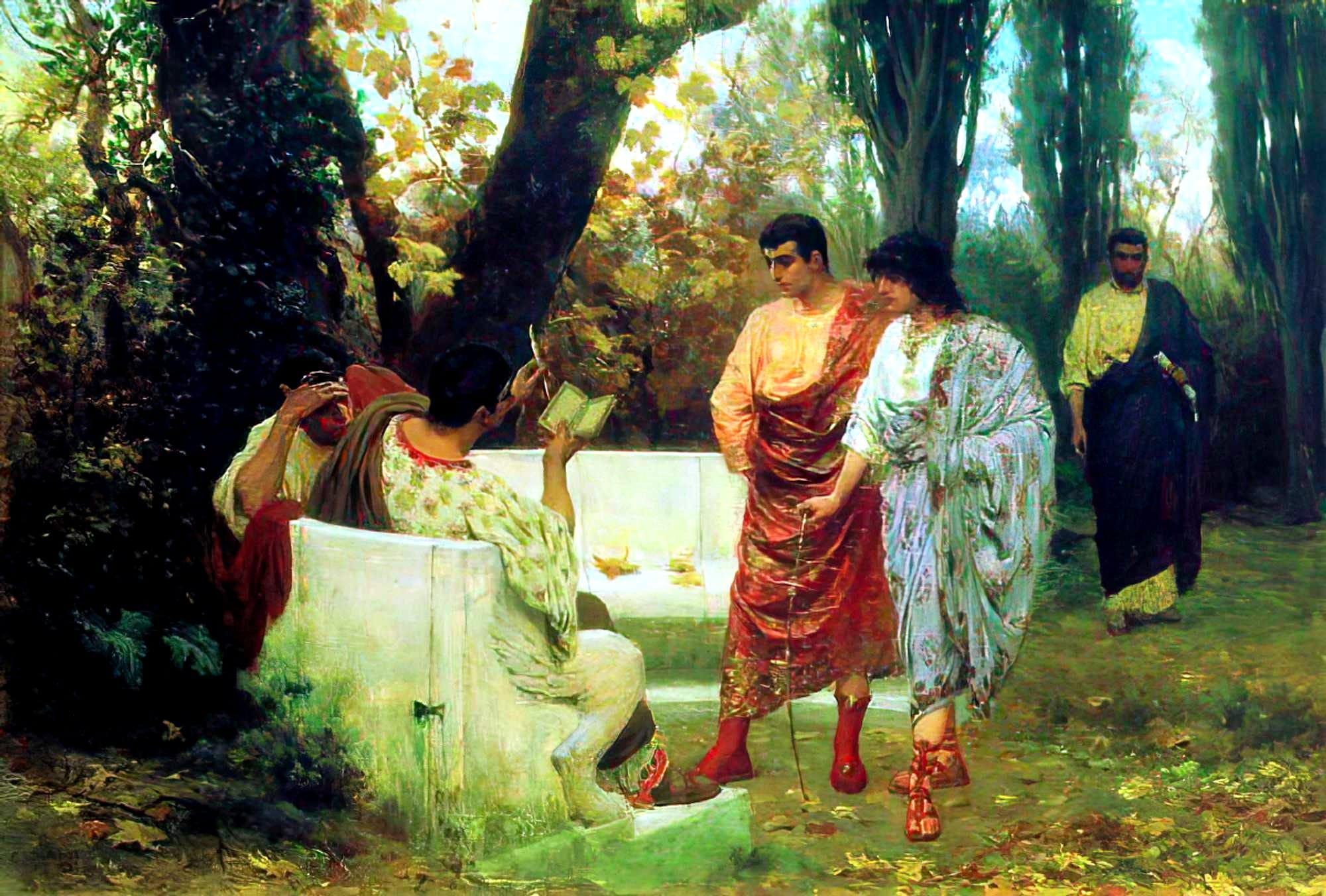
The poem reverses hospitality without cancelling it. Fabullus provides food and wine; Catullus offers intimacy, poetry, humour, and an immaterial gift that overwhelms the senses.
Poem 50 describes an evening of poetic improvisation with Licinius Calvus:
Yesterday, Licinius, at leisure,
we played much on my writing tablets,
as suited two refined men.
Each of us, playing, wrote little verses,
now in one metre, now in another,
exchanging lines through jokes and wine.
Afterward Catullus cannot eat or sleep:
But I lay half-dead upon the couch,
tossing in uncontrolled frenzy,
longing to see daylight
so that I might speak with you and be with you.
The language resembles erotic longing, but the cause is literary exchange. Friendship between poets produces bodily excitement and insomnia.
Other relationships are marked by betrayal. Poem 30 accuses Alfenus:
Alfenus, forgetful and false to your faithful companions,
do you now have no pity, hard man, for your beloved friend?
Do you not hesitate to betray me and deceive me, faithless one?
Catullus claims that Alfenus persuaded him to surrender his whole spirit as though everything were safe. Now the promises have disappeared:
You leave all your words and all your deeds
to be carried away by the winds and empty clouds.
The gods may appear indifferent, but Fides, Good Faith, will remember. The vocabulary resembles that used against Lesbia and Theseus. Friendship and erotic attachment are both judged through promise, memory, obligation, and betrayal.
Obscenity and Roman Masculinity
Catullus’ invective cannot be separated from the rest of his poetic achievement. Obscenity, social aggression, wit, and verbal control belong to the same collection as the love poems and elegies.
Poem 16 responds to Furius and Aurelius, who have apparently interpreted the softness of Catullus’ kissing poems as evidence that the poet himself lacks masculine respectability. Catullus answers with an explicit sexual threat and then explains:
For the dutiful poet ought to be respectable himself,
but his little verses need not be.
They possess wit and charm
if they are soft and somewhat shameless.
This is not a modern declaration that art and artist are wholly separate. The argument operates within Roman sexual hierarchies. Catullus answers an attack on his masculinity by threatening to impose sexual submission on his critics.
Sexual role structured many Roman insults. Allegations of passivity, effeminacy, adultery, prostitution, uncontrolled appetite, or incest could be used to damage an opponent’s standing. Such accusations did not need to be factual in order to function as public attack.
The poem nevertheless makes clear that a literary voice is constructed. Tenderness, kisses, and erotic softness in verse cannot automatically be treated as proof of the author’s social or sexual identity.
The invectives also warn against rescuing an imagined gentle or liberal “real Catullus” from the aggressive speaker. His poetry belongs to a competitive Roman culture in which honour, dominance, reputation, and masculine self-presentation mattered. The same collection that gives voice to emotional vulnerability also participates in the humiliation of bodies, origins, sexuality, and status.
Caesar, Mamurra, and the Profits of Empire
Catullus names political figures, but his surviving poetry does not present a continuous political programme.
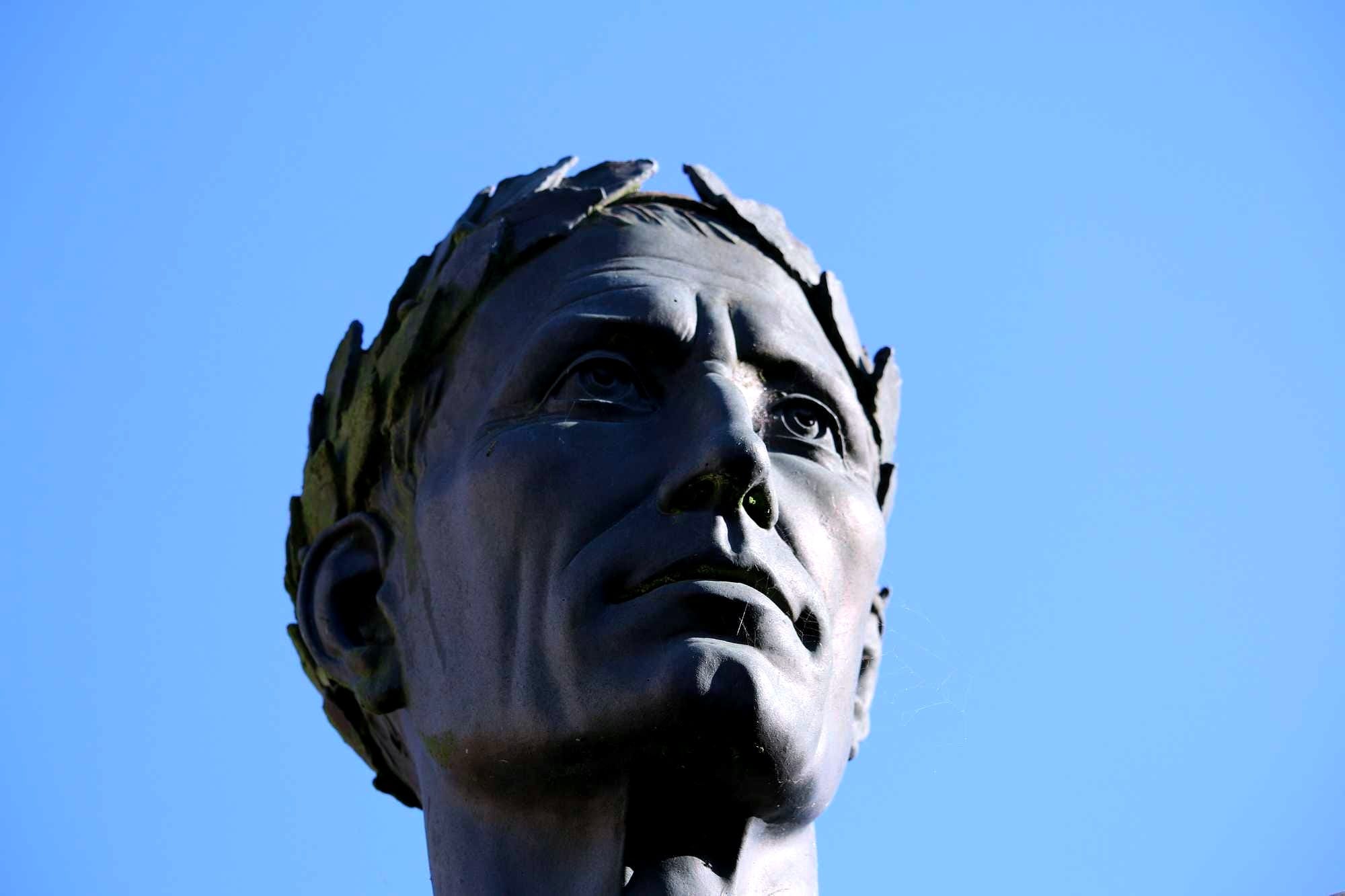
Mamurra, a Roman equestrian from Formiae and officer under Caesar, is the central target of Poems 29 and 57. His wealth, luxury, and appetite become symbols of excess made possible through military service and provincial conquest.
In Poem 29, Catullus asks whether Mamurra will possess the wealth of conquered territories:
Will that ruined man Mamurra possess
what long-haired Gaul and farthest Britain once possessed?
Perverse Romulus, will you see this and tolerate it?
Caesar and Pompey are made responsible for allowing such enrichment. Gaul and Britain are not celebrated as imperial acquisitions. They appear as resources transferred into private consumption.
Poem 57 pairs Caesar and Mamurra through sexual insult and portrays them as equal in stain and appetite. Political criticism, moral attack, and sexual humiliation cannot be cleanly separated.
Poem 93 is much shorter:
I have no strong desire to please you, Caesar,
nor to know whether you are a white man or a black.
The claim of indifference is itself addressed to the most powerful Roman of the period. Yet the reconciliation recorded by Suetonius prevents the poem from proving permanent political opposition. Catullus apologized, Caesar invited him to dinner, and social relations continued.
These poems can attack enrichment through empire and mock powerful men. Their language remains personal, social, and sexual rather than constitutional or programmatic.
Attis and the Violence of Transformation
Poem 63 tells of Attis, who crosses the sea to Phrygia, enters the service of Cybele, and castrates himself in religious frenzy. Catullus writes in galliambics, a rapid and unusual metre associated with the cult of the goddess. The rhythm suits drums, running feet, ecstasy, and loss of control.
Attis urges the companions into the mountains:
Come, go together to the high forests of Cybele,
go together, wandering flock of the mistress of Dindymus,
you who, seeking foreign places like exiles,
followed my leadership...
The frenzy changes after sleep. Attis wakes and understands what has happened:
When with clear mind Attis considered what had been done,
and saw without what and where he was,
with a surging heart he returned to the shore.
Looking across the sea, Attis laments the homeland:
Country that created me, country that gave me birth,
whom I abandoned miserably, as runaway slaves
abandon their masters...
Home, family, civic identity, the gymnasium, and former companions are now inaccessible. The movement away from home that began under the force of religious frenzy is reconsidered after Attis wakes and understands what has happened.
The poem ends with Catullus addressing Cybele:
Great goddess, goddess Cybele, mistress of Dindymus,
may all your frenzy be far from my house.
Drive others into madness; drive others into frenzy.
The ending does not reverse Attis’ transformation. The poem moves across distinctions involving sex and gender, homeland and foreign landscape, human intention and divine power, frenzy and regret. The galliambic metre remains closely connected with Cybele’s cult and gives the narrative its unusual speed and intensity.
Ariadne, Theseus, and the Broken Promise
Poem 64 begins with the voyage of the Argonauts and the marriage of Peleus and Thetis. Their union appears to join mortal and divine worlds. Yet the marriage bed bears a woven image of Ariadne abandoned by Theseus, and this embedded story occupies more than half the poem.
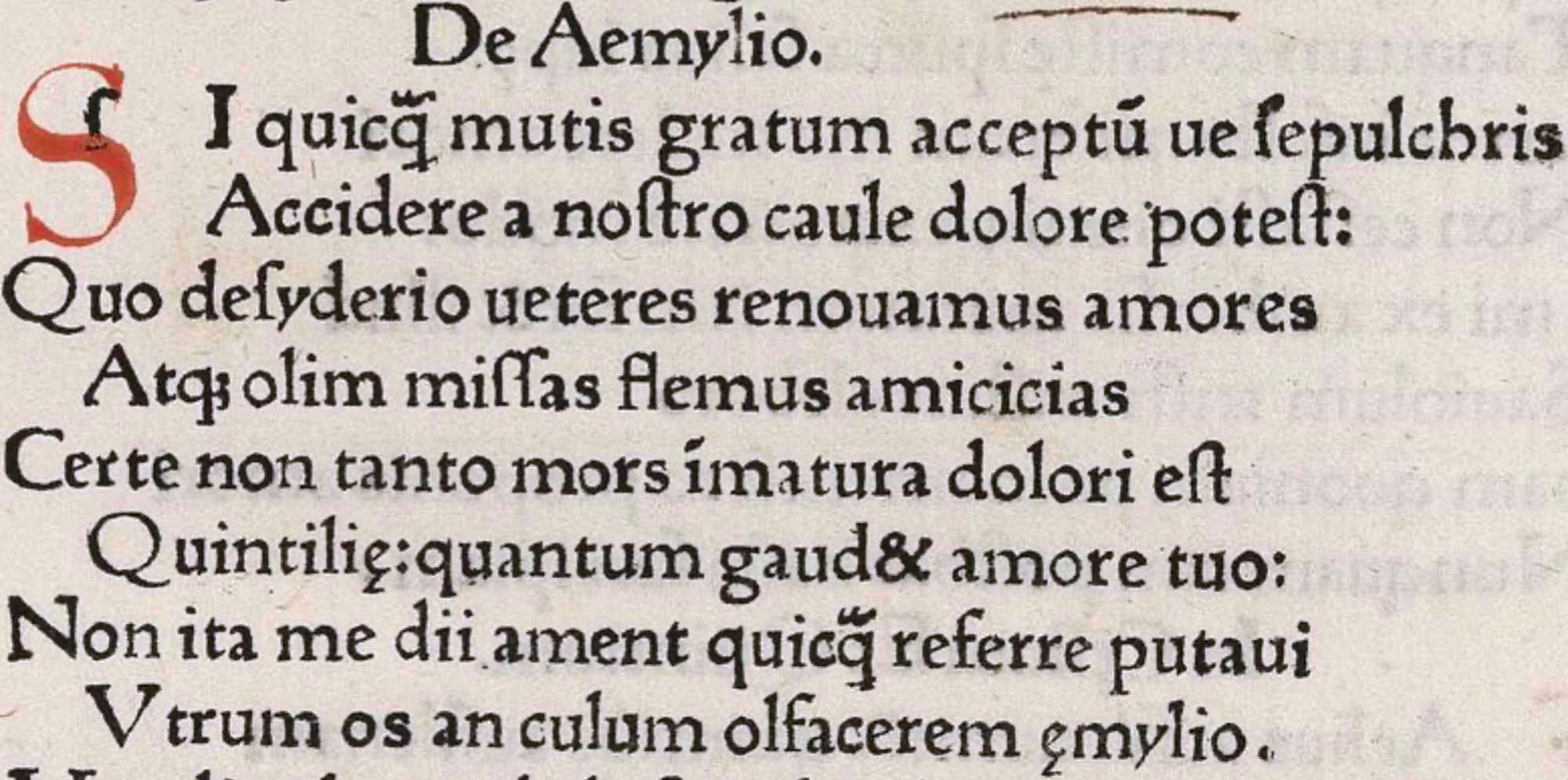
Ariadne wakes on the shore and sees the ship departing:
From the wave-sounding shore of Dia, Ariadne,
carrying untamed passions in her heart,
watches Theseus leaving with his swift fleet,
scarcely believing that she sees what she sees.
Her clothing has fallen from her body, but she does not notice. Her whole attention is fixed on the departing man. The poem then returns to Crete, where she helped Theseus defeat the Minotaur and abandoned her family for him.
When Ariadne speaks, the first accusation is perfide, faithless:
Is this how you carried me away from my father’s altars,
faithless one, and left me on a deserted shore, Theseus?
Is this how, departing, you neglect the power of the gods
and carry home your cursed perjury, forgetful man?
Theseus is immemor, unmindful or forgetful. His promises served immediate desire rather than lasting commitment.
Ariadne generalizes from her experience:
Now let no woman trust a man when he swears;
let none hope that a man’s words are faithful.
While his eager mind desires to obtain something,
he fears to swear nothing and spares no promise.
But once the desire of his greedy mind is satisfied,
he fears no words and cares nothing for perjury.
The linguistic connections with the shorter poems have encouraged autobiographical readings. Putnam interpreted Ariadne as a figure through whom Catullus expressed his own experience of betrayal and connected Theseus with Lesbia. In that reading, the extended mythological narrative develops tensions stated more briefly in poems such as 72: desire against diminished respect, past expectation against present knowledge, and ideal attachment against experienced injury.
More recent scholarship treats direct identification with greater caution. Ariadne’s lament unquestionably shares language and themes with Catullus’ other poems of betrayal, but this does not establish that Ariadne is simply Catullus in disguise or that Theseus represents Lesbia. The relationship can be described more securely as poetic and thematic: Poem 64 enlarges concerns found elsewhere in the collection through mythological narrative.
The wedding frame is also unstable. After the Ariadne episode, the Fates sing about Achilles, the future son of Peleus and Thetis. Their wedding song celebrates him, but its images are those of Trojan slaughter, bereaved mothers, and blood.
The poem concludes by contrasting an age in which gods visited human households with a present polluted by greed, family crime, and contempt for justice. Yet the mythical past has already contained abandonment and has produced the warrior whose fame depends upon death. The ending does not create an entirely simple opposition between an innocent past and a corrupt present.
Poem 64 is not an ornamental exercise detached from Catullus’ supposedly more authentic work. Its learned structure, Greek allusion, embedded narrative, and epic scale allow loyalty, desire, family, abandonment, memory, and violence to unfold across several myths.
Poem 68: Love Beside a Grave
Poem 68 brings together bereavement, friendship, literary obligation, erotic attachment, and the myth of Laodamia and Protesilaus.
Its transmitted form is exceptionally difficult. Scholars disagree over whether the text contains one poem, two poems, or two originally distinct pieces intended to be read together. The identity of the addressee or addressees is also disputed, as are several details of the situation described. The woman associated with the house in the later portion is often identified as Lesbia, but the text does not establish that identification beyond doubt.
In the opening portion, Catullus responds to a request involving consolation and poetry by explaining that grief has made such work difficult. His brother lies far from home:
For since the wave of Lethe washed
the pale foot of my brother,
and Trojan earth weighs upon him
beneath the Rhoetean shore,
I shall never hear you speak
or recount your deeds again.
The brother’s death has removed a family member and a voice. Troy, already filled with literary memory, becomes a personal place of burial.

The later section recalls a house provided by a friend where Catullus and his beloved could meet. The beloved woman arrives at the threshold and is compared with Laodamia entering the home of Protesilaus.
The comparison is shadowed by loss. Protesilaus was the first Greek to die at Troy, and Laodamia’s marriage almost immediately became bereavement. The place where Catullus’ brother lies buried is also the place that destroyed the mythical husband.
Poem 68 moves from the Trojan War to the brother’s death and back into myth:
Troy, the common grave of Asia and Europe,
Troy, bitter ash of men and every virtue,
which also brought miserable death to my brother.
Alas, brother taken from wretched me,
alas, sweet light taken from your wretched brother.
With you our whole house lies buried,
with you all our joys have perished.
Love and death occupy the same poetic structure. The beloved woman’s arrival is remembered through Laodamia, whose marriage is inseparable from the loss of Protesilaus. Catullus’ brother is buried near the setting of that myth.
The speaker does not present the beloved woman as exclusively faithful. He describes an effort to tolerate other relationships rather than dwell upon them. Gratitude for the happiness she brought coexists with awareness of instability.
Poem 68 makes it impossible to divide Catullus neatly into a personal lyric poet and an impersonal scholar. Private grief is expressed through Troy, Laodamia, Protesilaus, literary obligation, and inherited myth. The learning provides a form in which erotic attachment and fraternal loss can be placed together.
“Hail and Farewell”
Poem 101 brings Catullus to his brother’s grave:
Carried through many peoples and across many seas,
I come, brother, to these miserable funeral rites,
so that I might give you the final gift owed to death
and speak in vain to silent ashes.
The journey has reached its destination, but communication remains impossible:
Since fortune has taken you, yourself, away from me –
alas, poor brother, unjustly taken from me –
now nevertheless accept these gifts
handed down by the ancient custom of our ancestors,
drenched with the tears of a brother.
The final line is restrained:
And forever, brother, hail and farewell.
The words belong to the language of funeral ritual, yet the conventional form does not diminish the personal grief. Catullus performs what ancestral custom requires even though the ashes cannot respond.
The poem does not describe the brother’s life or explain his death. Its force comes from distance, ritual obligation, silence, and irreversible absence.
The brother poems prevent the collection from becoming simply the story of Lesbia. In Poems 65, 68, and 101, grief enters translation, myth, friendship, travel, and family duty. The deepest language of enduring attachment in Catullus is not confined to erotic desire.
The Range of Catullus’ Voice
Catullus uses Latin across a remarkable range of registers. His vocabulary can resemble conversation, graffiti, elite social language, hymn, wedding song, epigram, Greek lyric, learned Hellenistic poetry, or epic.
Metre is central to these changes. Hendecasyllables carry invitations, erotic poems, attacks, literary exchanges, and social anecdotes. Elegiac couplets accommodate promise, betrayal, moral reflection, epigrammatic compression, and mourning.
Sapphic stanzas recreate Greek lyric intensity. Galliambics drive Attis into frenzy and regret. Hexameters allow Poem 64 to enter and transform the territory of epic and Hellenistic narrative.
The language also crosses thematic boundaries. Fides belongs to friendship, erotic attachment, oath, and public conduct. Pietas appears in the self-defence of Poem 76 and the funeral obligation of Poem 101. Forgetfulness marks Alfenus, unreliable erotic promises, and Theseus’ abandonment of Ariadne. Travel can mean provincial service, homecoming, exile, or mourning.
Later Roman poets responded to this range rather than to one Catullan identity. Virgil adapted Catullan language in pastoral, didactic, and epic poetry. Horace’s relation to him was selective and competitive. Propertius and Ovid developed forms of erotic voice already present in Catullus.
Martial treated him as a major predecessor in epigram, obscenity, personal address, and social observation. Statius reused his wedding poetry and language of bereavement.
The survival of the poems was precarious. The modern text descends from a manuscript that resurfaced at Verona around the beginning of the fourteenth century. Its descendants preserve corruptions and unresolved readings, and the history of modern editions has been an attempt to recover what Catullus originally wrote.
What survived was neither a national epic nor a continuous historical narrative. It was a varied body of poems about books, friends, enemies, kisses, journeys, insults, weddings, myths, promises, betrayal, and death.
The collection does not offer a complete biography or a single emotional story. It preserves a poet repeatedly transforming social and literary experience through metre, genre, inherited language, and a first-person voice capable of seeming immediate even when it is most carefully constructed.
Catullus can sound like a lover speaking in private, a friend writing after a night of poetic play, an enemy delivering public abuse, a learned poet remaking Greek literature, or a brother addressing ashes that cannot answer.
None of these voices cancels the others. Together they form the surviving poetry of a writer who made intimacy, aggression, learning, and grief equally available to Latin verse.
"A Companion to Catullus" edited by Marilyn B. Skinner
"The Poems of Catullus: A Bilingual Edition" translated and commented by Peter Green.
"Catullus and the Traditions of Ancient Poetry" by Arthur Leslie Wheeler
“The Art of Catullus 64.” by Michael C. J. Putnam
"A Commentary on Catullus" by Robinson Ellis

About the Roman Empire Times
See all the latest news for the Roman Empire, ancient Roman historical facts, anecdotes from Roman Times and stories from the Empire at romanempiretimes.com. Contact our newsroom to report an update or send your story, photos and videos. Follow RET on Google News, Flipboard and subscribe here to our daily email.
Follow the Roman Empire Times on social media: