
What Made the Ancient Romans Laugh?
Roman laughter could mock emperors, expose fools, ward off evil, reverse social roles, and turn myth into spectacle. What made Romans laugh was rarely simple – and not always harmless.

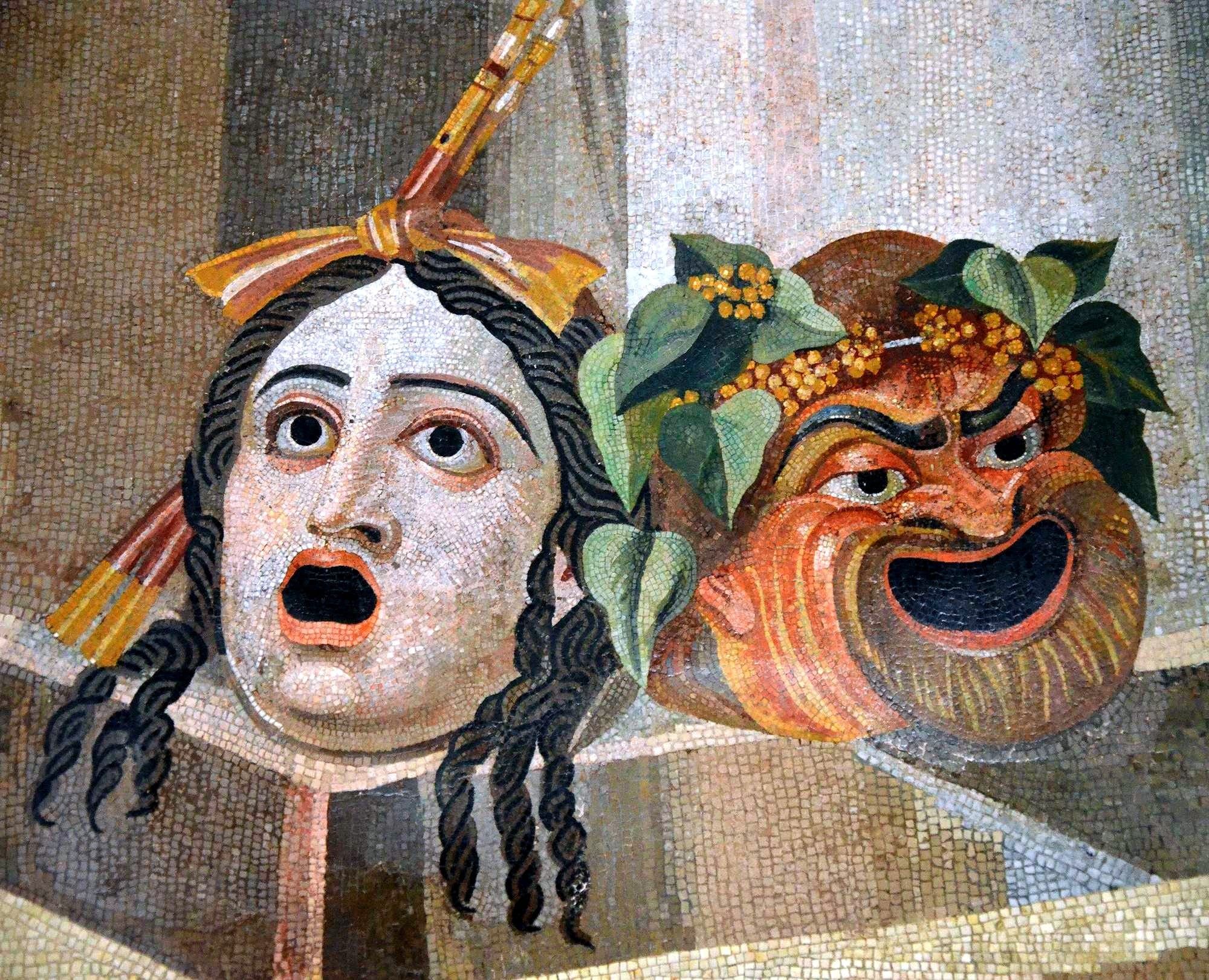
A Roman could laugh at an emperor, a general, a philosopher, a god, a sexual mishap, a grotesque body, or even a public execution. But Roman laughter did not always mean amusement, and it did not always feel harmless. It could flatter, humiliate, protect, threaten, reverse social roles, or expose the person who laughed. What survives is not one simple Roman sense of humor, but a series of scenes in which laughter was shaped by power, status, ritual, performance, and the expectations of the audience.
Roman Laughter: Easy to Recognize, Difficult to Explain.
A senator trying to hide his laughter in front of a threatening emperor. A comic parasite laughing at a soldier’s joke. Soldiers mocking their commander during a triumph. Tavern paintings turning philosophers into advisers on bodily functions. Phallic images placed at thresholds to ward off danger. Mythological punishments staged in the arena as grotesque spectacle. Images of gods, bodies, sex, status, and deformity presented in ways that could make ancient viewers laugh, even when the joke no longer feels clear.
The difficulty is not that Romans lacked humor. The difficulty is that laughter belonged to its own social world. It depended on setting, status, language, gesture, body, audience, power, and expectation. A joke that worked in a Roman court, tavern, bath, dinner party, theater, street procession, or amphitheater might not survive translation into modern taste.
Even when the scene can be reconstructed, the laughter may remain unstable. It could involve mockery, fear, pleasure, flattery, social bonding, ritual protection, habit, performance, or more than one of these at once. The surviving evidence is also uneven. Most written evidence for Roman laughter comes through elite male authors. The laughter of women, slaves, the poor, and rural communities is much harder to recover except through descriptions written by others.
Visual culture widens the evidence, but it also brings its own problems. An image could be comic in one setting, protective in another, obscene in a third, or legible only to viewers trained in Roman habits of seeing. To ask what made Romans laugh is therefore not only to collect ancient jokes. It is to look at the settings where laughter appeared and the roles it could play there – in politics, ritual, theater, art, sex, spectacle, and everyday social life.
Laughter Under the Emperor’s Eye
One of the sharpest surviving images of Roman laughter comes from the Colosseum in 192 CE. The emperor Commodus was presiding over spectacles in Rome. He had been appearing in the arena as hunter, gladiator, and godlike performer. Senators sat in the front rows, close enough to see the emperor’s displays clearly and close enough to be exposed to danger.
At one point, Commodus killed an ostrich, cut off its head, and approached the senators with the head in one hand and a bloody sword in the other. Without speaking, he grinned and shook his own head, making clear what he could do to them.
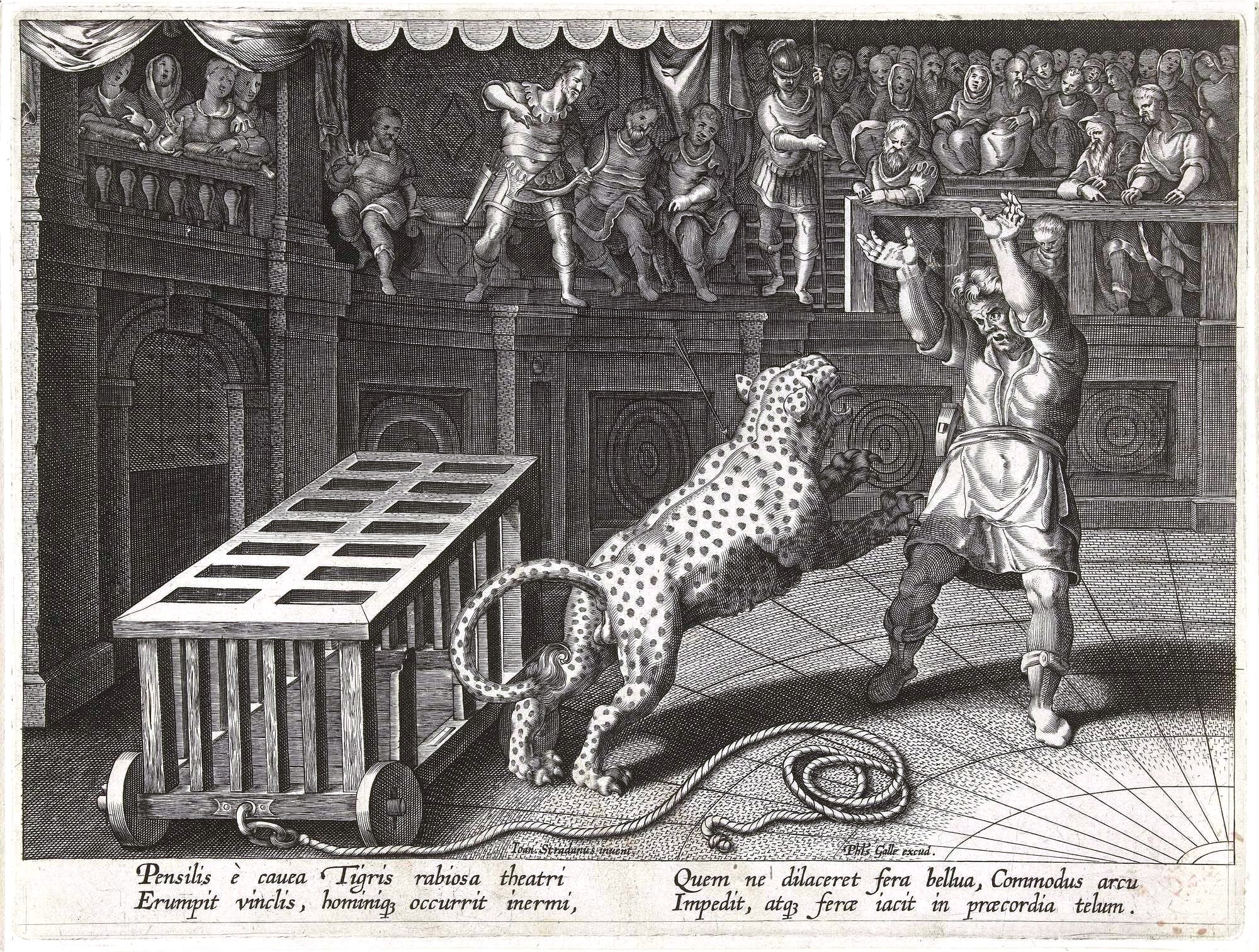
Cassius Dio, who was present, later described how laughter seized the senators. It was not a safe laugh. He claimed that many would have been killed if he had not taken laurel leaves from his garland and chewed them, encouraging others nearby to do the same, so the movement of their mouths would hide the fact that they were laughing.
The scene resists a simple reading. It could look like a moment of senatorial contempt, a laugh at the absurdity of an emperor posturing with an ostrich head. It could also have been laughter produced by terror, by the pressure of watching something ridiculous and deadly at the same time. The emperor’s own facial performance complicates the scene further. His grin was not friendly. It was part of the threat.
Another story connects laughter with political danger in a different setting. Roman envoys arrived at Tarentum in southern Italy in formal dress. The Tarentines laughed at them, and one man fouled the clothing of the chief envoy. The Roman answer turned laughter into warning: laugh while you can, because soon those clothes will be washed clean with blood. What began as mockery became a sign of the punishment to come.
Roman laughter could move in more than one direction. It could meet power with ridicule, but power could also command laughter. Caligula was said to have forced a man to dine with him and laugh after the man had watched the execution of his own son. In that setting, laughter was not release. It was obedience performed under threat.
Around emperors, laughter could be a weapon, a disguise, a test, or a danger. It could expose weakness or conceal it. It could make power look ridiculous, but it could also show how much power could demand.
The Problem of Getting the Joke
Roman laughter often reaches us through texts, but texts rarely preserve everything needed to understand a joke. The words matter, but so do gesture, voice, timing, social setting, audience, and status. A joke told in a courtroom, theater, dinner party, or triumphal procession did not function as a line of text on a page. It belonged to a performance. The body and position of the speaker helped create the laugh.
Roman comedy gives a useful example. In Terence’s “Eunuch”, a parasite named Gnatho laughs twice with the scripted sound “hahahae”. The laughter is explicit, but its meaning is not simple. He laughs in the presence of Thraso, a boastful soldier, whose joke about a young Rhodian depends on a play between the hare as delicacy and the erotic setting of a dinner party. The joke is difficult to translate because its force depends on associations that do not move easily into modern language.
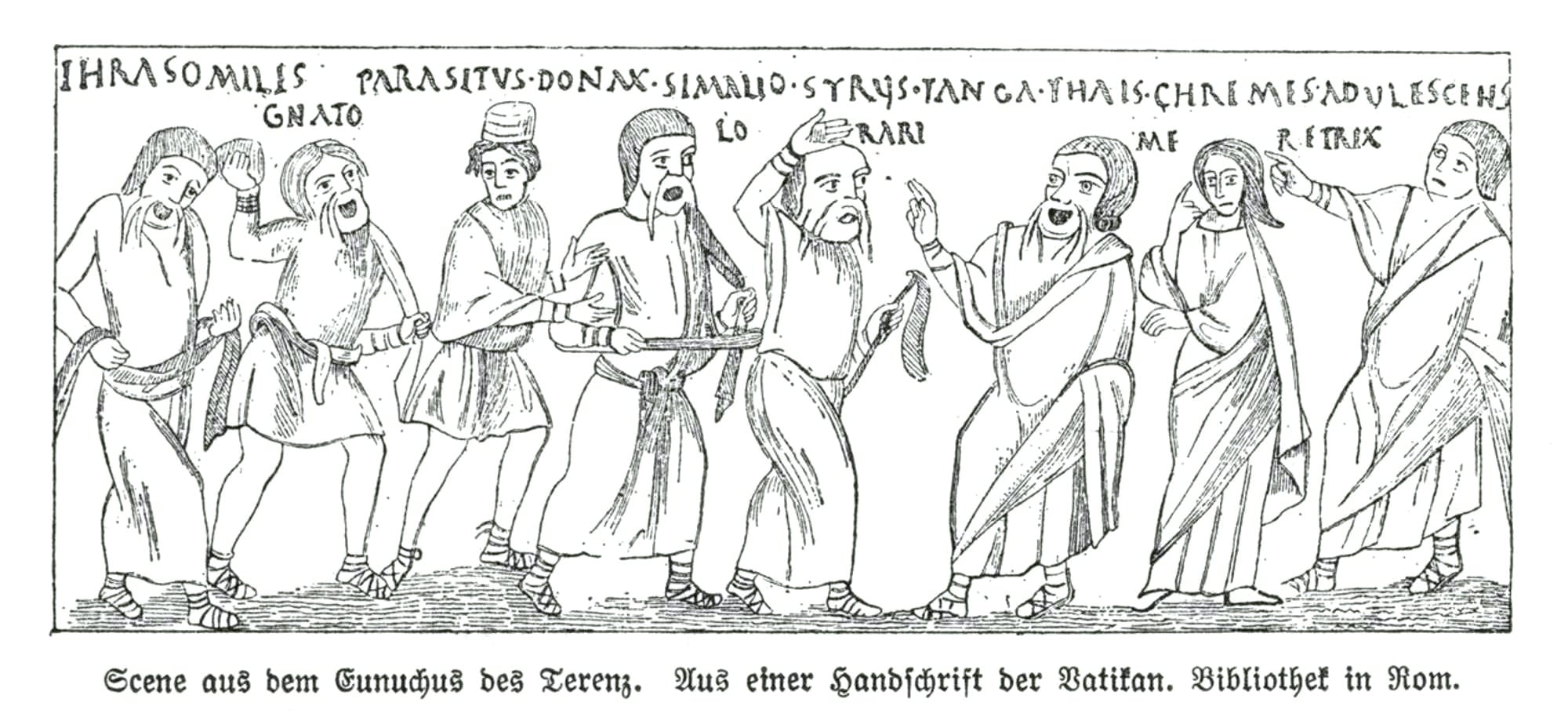
Yet the humor may not lie only in the joke. Gnatho is a parasite, dependent on the soldier’s favour and food. His laughter may be flattery, a practiced response designed to please a patron. When Thraso asks why he is laughing, the question exposes the problem. Is the laugh spontaneous? Is it forced? Is it sincere? Is it mocking? Is it laughter at the joke, at the teller, or at the whole situation?
The second “hahahae” deepens the ambiguity. Gnatho claims he is laughing at Thraso’s latest remark and also at the earlier Rhodian joke, but another character has just made a sharper quip at Thraso’s expense. The audience must work out what Gnatho is really laughing at and why.
The scene shows how Roman laughter could become a subject of comedy in itself. The audience was not only invited to laugh at jokes. It was invited to watch laughter being used, faked, redirected, and interpreted. The laughter, and the uncertainty around it, became part of the joke.
A laugh could be misread. It could flatter or insult. It could include or exclude. It could be real, performed, or both. In Roman comedy, laughter did not always reveal a simple emotion. It could become part of the social action of the scene.
Laughter as Public Attack
In Roman public life, laughter could be a tool of attack. The courtroom, Senate, and public assembly all provided settings where elite speakers used wit against opponents. Cicero’s reputation in antiquity was strongly tied to his ability to make audiences laugh. His jokes could be admired, repeated, criticized, and collected. They were part of his public persona.
Roman rhetorical teaching treated laughter as useful but risky. A well-timed joke could discredit an opponent, relax the audience, strengthen the speaker’s position, and make a charge memorable. But the wrong joke could damage the speaker. It could seem cruel, excessive, undignified, or badly aimed.
Much of this public laughter was aggressive. It could target physical appearance, bodily peculiarities, sexual reputation, social origin, names, voice, dress, gait, illness, or perceived moral failure.
Cicero’s attack on Vatinius, for example, mocked his physical appearance in ways that connected bodily difference with moral and political criticism. The audience’s laughter helped mark the target as ridiculous or disreputable.
This kind of humor worked within a culture that could treat the body as a sign of character. A body made laughable in public speech was not simply a neutral physical form. It could be turned into evidence within a moral or political attack.
But public laughter was not risk-free for the person making the joke. A speaker could misjudge the audience. A sharp line could cross a boundary. The person who made others laugh could become vulnerable to laughter in return. Roman discussions of joking repeatedly return to the relation between the joker, the target, and the audience.
A joke needed someone to make it, someone or something to be laughed at, and someone to laugh. In Roman public culture, the balance among those three could determine whether laughter strengthened authority or undermined it.
When Soldiers Mocked Their General
Some forms of Roman laughter were built into public ritual. The triumph, Rome’s great procession for a victorious general, turned the city into a stage. Spoils, captives, soldiers, images, and the general himself moved through Rome. The triumphator appeared in a charged, elevated role, associated with Jupiter for the day. Yet at the same time, soldiers could sing obscene and mocking songs about him.
These songs could lower the triumphator at the moment of his greatest public elevation. In Julius Caesar’s triumph, soldiers mocked his baldness, his sexual reputation, and his alleged relationship with King Nicomedes. The crowd could join in the joking, turning the triumph into a temporary arena of public exchange. The powerful man was mocked in front of the people, and his response to the mockery formed part of the performance.
The Saturnalia worked through a related but broader reversal. During the festival, normal rules were loosened. Slaves could speak more freely. Masters might serve slaves or tolerate insolence. Informal clothing replaced the toga. A mock king could preside over merriment. The social order was not permanently overturned, but it could be temporarily inverted through laughter, license, and performance.
The Floralia also played with reversal. Its spectacles included comic and erotic elements that set it apart from more solemn games. Animals performed tricks rather than being killed in serious hunts. Beans and chickpeas could be thrown instead of costly gifts. Prostitutes appeared on stage and danced, turning marginal figures into the center of a religiously framed spectacle.
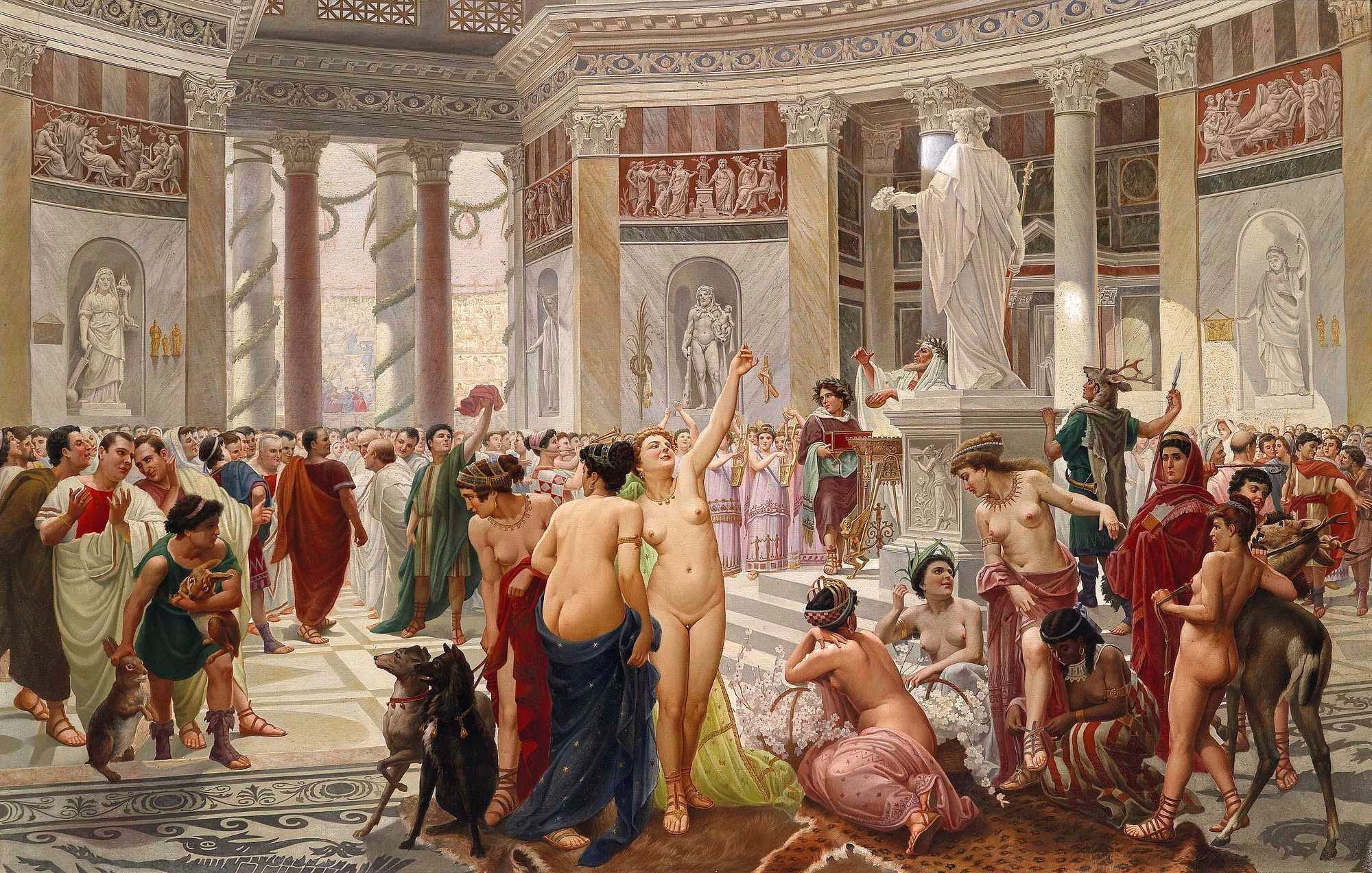
In these settings, laughter did not necessarily erase hierarchy. It could temporarily loosen it, display it, and allow it to return. The joke depended on the rules remaining visible even while they were being crossed.
Laughing With the Eye
Roman humor was not only spoken or written. It was also visual. Wall paintings, mosaics, ceramics, lamps, sculpture, graffiti, theatrical imagery, tavern scenes, and domestic decoration could all produce comic effects.
Some images relied on recognition: the viewer had to know a myth, theatrical mask, social type, obscene convention, or everyday practice. Others worked through surprise, exaggeration, bodily distortion, parody, or double-take illusion.
Roman visual humor is often difficult for modern viewers because the “joke” depended on ancient habits of seeing. The image did not stand alone. Its meaning changed according to where it was placed, who paid for it, who saw it, and what social world the viewer brought to the scene.
A humorous image in a tavern did not address the same audience as a mythological parody in an elite house. A phallic figure at a threshold did not work in the same way as a sexual painting in a bath or a lamp with a comic erotic scene. The built environment mattered. The status of the viewer mattered. The moment of viewing mattered.
This visual evidence widens the picture beyond elite texts. Literary sources were written mainly by and for elite men. Visual material can reveal other settings of laughter: taverns, baths, streets, houses, workshops, and objects of ordinary use. It can show what patrons wanted displayed and what viewers might have been expected to recognize.
Roman visual humor could range from sophisticated parody to crude obscenity. It could mock gods, heroes, philosophers, social pretension, bodily functions, sexual behaviour, foreignness, or deformity. It could be playful, protective, socially aggressive, or erotically charged.
Laughter Against Evil
Some Roman laughter was protective. Images now described as apotropaic were meant to ward off evil forces, especially the Evil Eye. These images often used bodies and gestures that Roman viewers could regard as laughable, obscene, misshapen, excessive, or improper. Laughter was not only entertainment. In some visual settings, it could be part of the response to danger.
Phallic imagery is central here. The exaggerated phallus could appear in mosaics, paintings, bells, amulets, and threshold images. Priapus, Hermaphroditus, dwarfs, hunchbacks, figures represented in ancient visual conventions as Aethiopes or pygmies, and other bodies marked as visually unbecoming could appear in places understood as dangerous or liminal, such as entrances and baths.
The logic was not based on gentleness. Roman viewers could be encouraged to laugh at bodies, gestures, and sexual forms that modern viewers may approach very differently. In Roman visual practice, such figures could be considered effective because they produced laughter or visual shock that helped turn danger away.
The House of the Evil Eye at Antioch and bath mosaics discussed in connection with apotropaic imagery show this protective logic. Comic bodies and obscene gestures were not accidental decorations. They belonged to a visual system in which laughter, surprise, obscenity, and bodily distortion could help confront threatening forces.
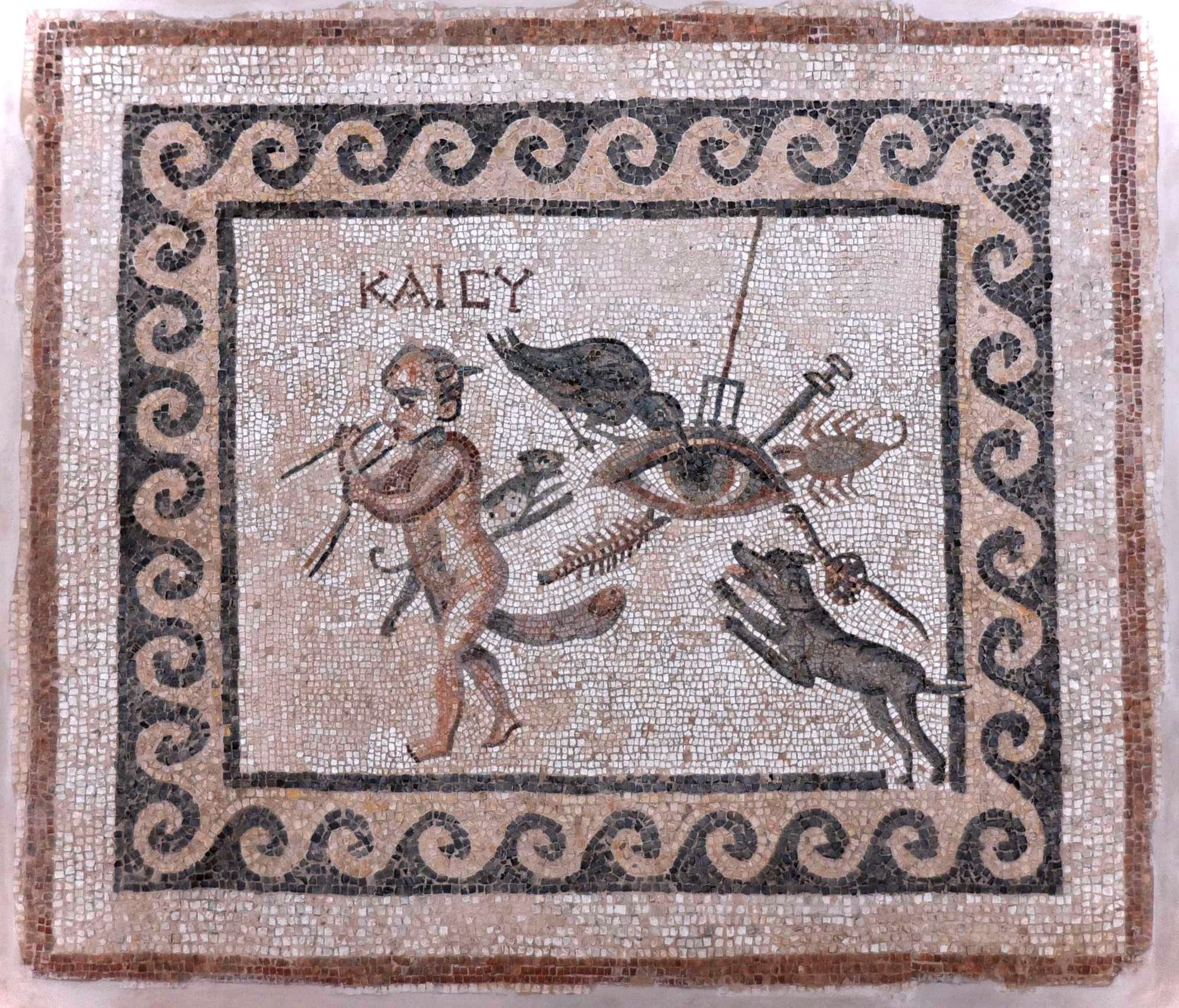
This kind of humor explains why Roman laughter can feel difficult to translate. What functioned as protective or beneficial laughter in one culture can look very different in another. Ancient and modern viewers may not laugh for the same reasons, because the laughter belonged to a Roman network of fears, bodies, beliefs, and visual signs.
Taverns, Philosophers, and Bathroom Jokes
Roman visual humor could also operate in ordinary social spaces. Tavern paintings from Pompeii and Ostia show how comic imagery could address non-elite or mixed audiences. Such scenes could depict drinking, gaming, quarrels, service, flirtation, and everyday misbehaviour. They sometimes combined speech captions with images, allowing the joke to depend on both words and bodies.
One of the most striking examples comes from the Tavern of the Seven Sages at Ostia. The paintings present famous wise men in a setting connected with defecation, offering sayings about bodily function rather than lofty philosophy. The humor depends on reversal: revered sages are brought down into the world of stomachs, farts, constipation, and latrine advice.
The effect is not simply anti-intellectual. It depends on recognizing the dignity normally attached to the Seven Sages and seeing that dignity transferred into a low bodily setting. The joke turns wisdom toward digestion. Philosophy is not denied; it is made comic through bodily descent.
Such images show how elite culture, philosophical authority, and literary prestige could be reworked for viewers in taverns and public or semi-public places. The body, especially the lower body, became a means of comic reversal.
High subjects could be brought low. Wise men could speak about bowels. Gods could become sexual fools. Heroes could be parodied. Generals could be mocked. Emperors could become ridiculous. In many Roman comic settings, humor could move between status and body, dignity and exposure.
Gods, Heroes, and Parody
Roman viewers could also laugh at gods and heroes. Mythological painting was not always solemn. Some images turned famous divine or heroic stories into parody. The viewer’s knowledge of the expected myth helped create the comic effect when the image distorted, lowered, or sexualized it.
Gods could be shown in adulterous, foolish, exposed, or ridiculous situations. Heroes and foundation myths could be transformed by visual jokes. Priapus and Hermaphroditus could be both funny and protective. Sexual myth could become comic when divine bodies, desire, surprise, or revelation crossed expected boundaries.
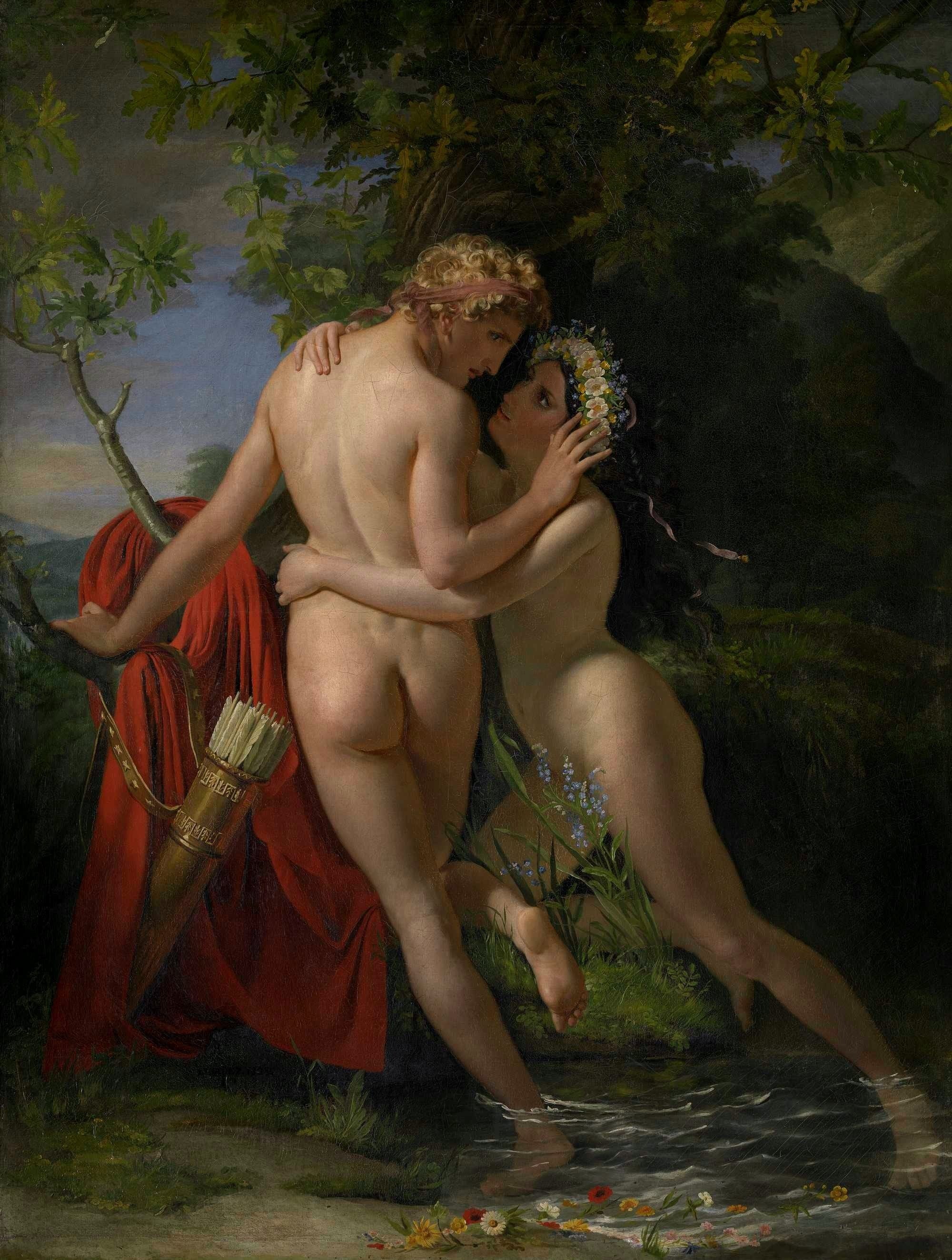
This kind of parody appeared not only in low or popular settings. Elite houses at Pompeii could contain learned visual jokes that depended on sophisticated recognition. The viewer had to know the myth, the artistic convention, and the prestige of the original theme in order to appreciate the comic transformation.
Parody did not necessarily destroy the value of mythological culture. It could display familiarity with it. A patron who commissioned such imagery was not rejecting elite visual culture, but playing with it. Humor could become a way of showing cultural competence.
The same world that admired heroic and divine images could also laugh at them. Roman visual culture did not keep reverence and mockery in separate compartments. The gods, heroes, and foundational stories of myth could be solemn in one context and comic in another.
Laughter, Sex, and the Rules of the Body
Sexual humor in Roman art depended on rules. Modern popular images of Rome often exaggerate Roman sexual freedom. The visual material shows a more complicated pattern. Many erotic images are not comic at all.
They present idealized couples and positive sexual enjoyment, often in domestic or refined settings. Humor appears when the image breaks rules, crosses boundaries, or stages acts marked as improper, excessive, ridiculous, or taboo.
Roman sexual rules were strongly shaped by status, gender, and active or passive roles. Elite male respectability depended on distinctions that do not match modern categories. Comic sexual images could show acts that proper Roman ideology condemned, even while patrons and buyers still enjoyed seeing them represented.
This produced a market for sexual humor. Paintings, lamps, and ceramics could display sexual inventions that broke social expectations. Some images may also have served protective functions, especially when placed in settings where laughter against the Evil Eye mattered. Others seem to have been enjoyed simply as comic, outrageous, or transgressive.
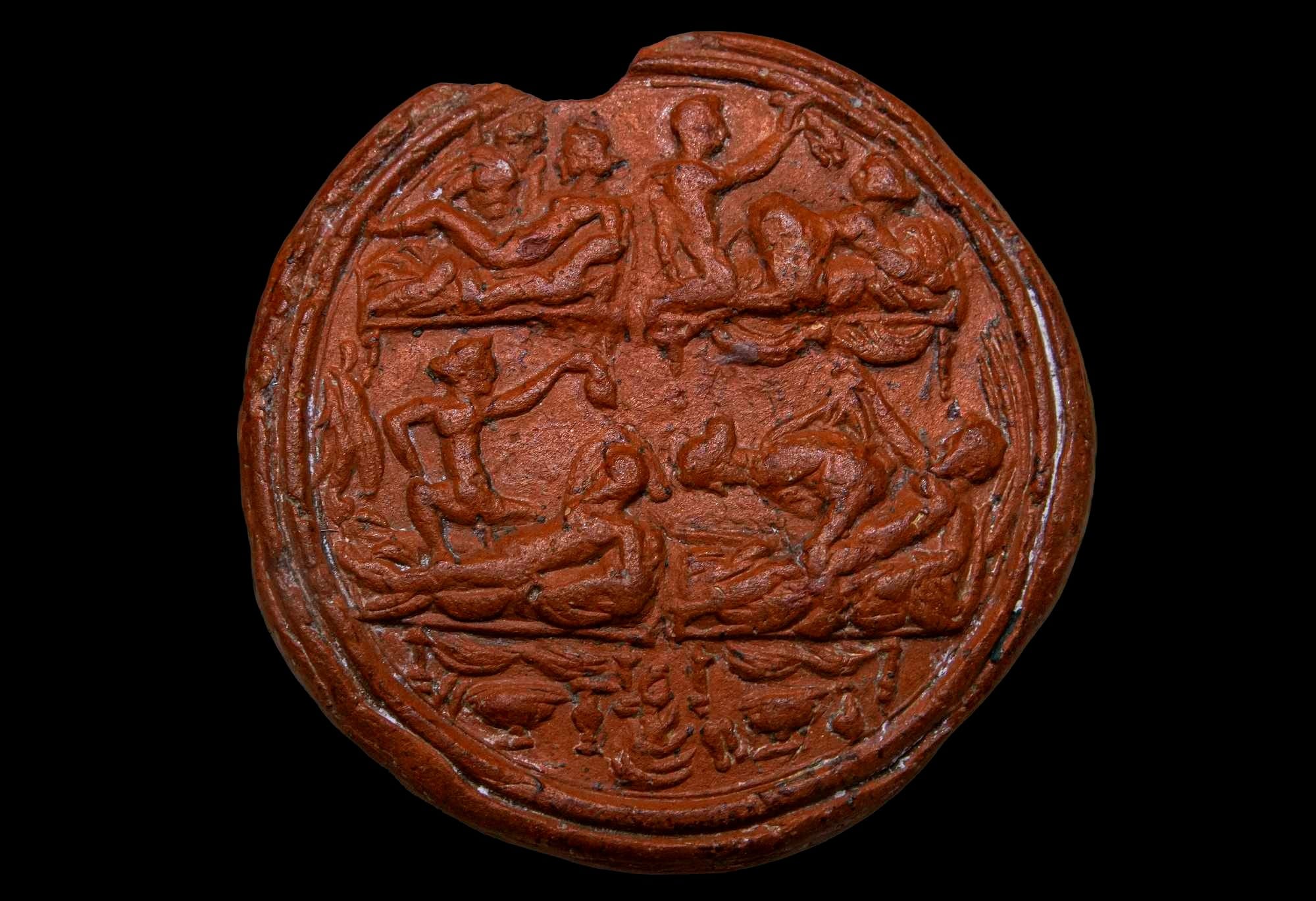
Gods were frequent figures in sexual humor. Priapus and Hermaphroditus were especially suited to comic and apotropaic representation because their bodies themselves could provoke laughter or surprise. Human sexual folly also appeared in portable objects, including lamps and ceramics that circulated widely beyond Pompeii.
The humor does not translate neatly. Some scenes that amused Roman viewers may appear crude, disturbing, or opaque now. But the pattern in the visual material is clear enough: sexual laughter often came from the violation of Roman expectations about body, role, status, and propriety.
Macabre Laughter in the Arena
Some Roman laughter belonged to public violence. Staged punishments could turn myth into deadly spectacle. Condemned criminals might be forced to play mythological roles in the arena. A man could be dressed as Daedalus and dropped with artificial wings.
A woman could be made to play Pasiphae in a sexualized reenactment involving a bull. A criminal cast as Orpheus could appear to charm animals until the scene turned and he was killed by a bear. A Hercules figure could be burned alive in a failed parody of apotheosis.
Such spectacles made myth literal, but also grotesquely wrong. The audience knew the story and watched it fail in a fatal way. The condemned person was not a revered performer but a criminal marked for punishment. Humiliation was part of the performance. The comic element came from reversal, exposure, and the transformation of myth into staged death.
This material shows how far some Roman laughter can stand from modern expectations of amusement. What could be experienced as entertainment within the arena was also punishment, spectacle, and state violence. The status of the condemned mattered. A person already marked as criminal and infamous could be made into the object of a joke performed with the body itself.
The arena did not require laughter and cruelty to remain separate. In some spectacles, the comic effect depended on the mismatch between mythic role and condemned body.
Animals, Mimicry, and the Edge of the Human
Roman laughter also gathered around the boundary between human and animal. Monkeys and apes were often treated as laughable because they seemed close to humans and yet wrong in crucial ways. Ancient medical and philosophical writers used them to think about imitation and bodily resemblance.
One explanation of why apes made people laugh focused on caricature: they preserve a likeness to humans in many parts but fail in important ones. Their resemblance is close enough to be recognizable and different enough to be comic.
This kind of laughter depends on the unstable border between likeness and difference. The monkey imitates the human. The mime imitates another person. The jester imitates a social type. A body can become funny when it seems to copy something familiar while failing, distorting, or lowering it.
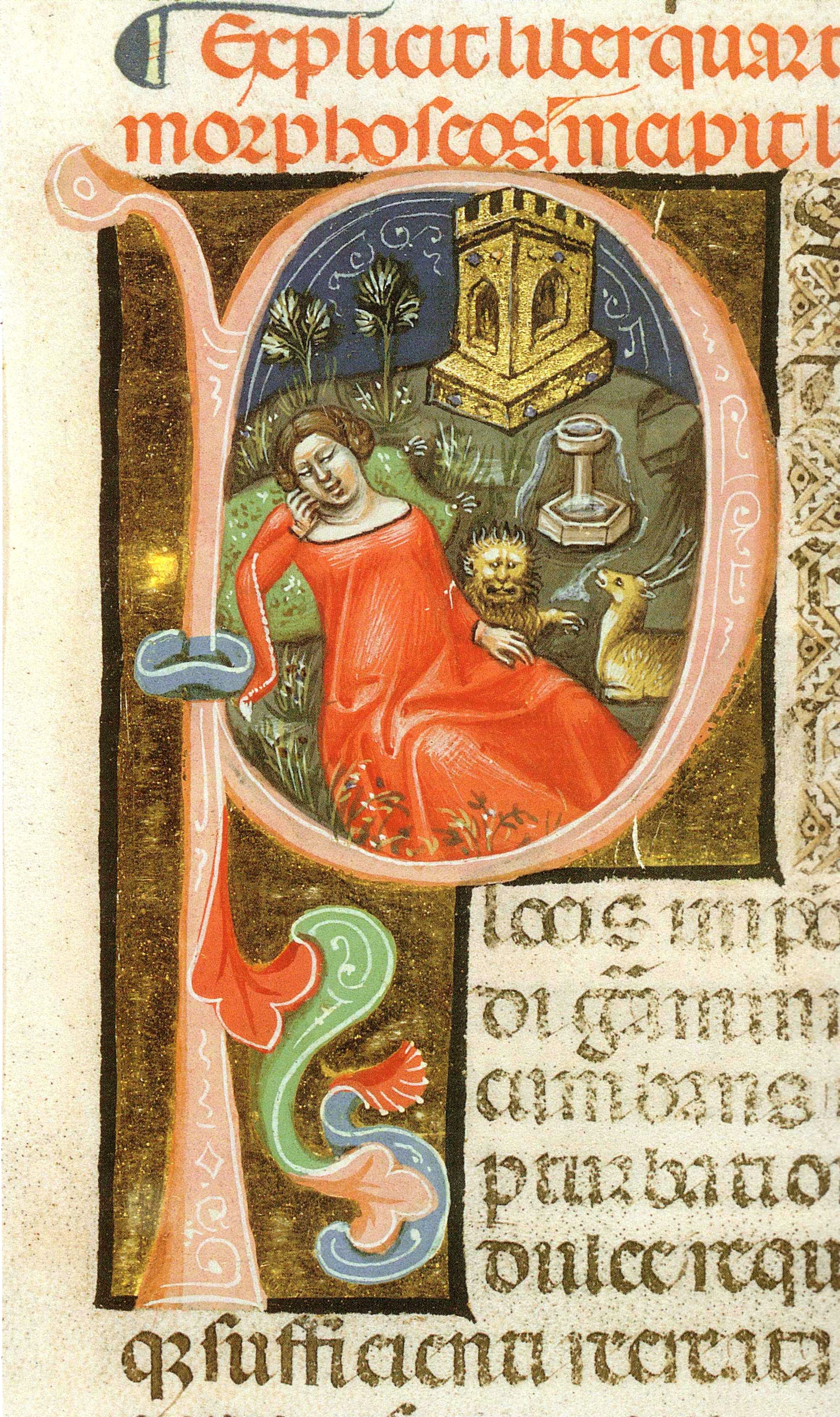
Roman literature also played with the human-animal boundary in more elaborate ways. Apuleius’ Metamorphoses, or The Golden Ass, turns a man into a donkey and eventually brings him back to human form through Isis. The novel includes a festival of Laughter, making the comic and the uncanny part of the same narrative world.
Laughter at animals, mimics, and transformed bodies therefore opened questions about what counted as human, what counted as imitation, and when resemblance became ridiculous.
The Roman Joke Book
The Philogelos, or Laughter Lover, is the only surviving ancient joke book. It is late, probably compiled in the Roman imperial period, and it preserves jokes that often feel strange, repetitive, or surprisingly familiar.
Some are about stock figures: the scholastikos, often translated as the egghead or pedant; the miser; the coward; the incompetent doctor; the barber; and men from places that functioned as comic stereotypes. Some jokes have descendants in later joke traditions. Others survive as reminders that a joke can travel while its social force changes.
The joke book is important not because it gives direct access to what every Roman found funny, but because it shows how laughter could be organized around types. The stupid intellectual, the tricked professional, the literal-minded fool, the incompetent specialist, and the socially misplaced speaker all become repeatable comic figures.
It also shows the difficulty of translating ancient humor. A joke may depend on a pun, social stereotype, local reputation, professional expectation, or stock comic role. When those conditions disappear, the joke becomes flat unless reconstructed. Even then, understanding why it was funny is not the same as laughing at it.
The Philogelos keeps Roman laughter close and distant at the same time. Some jokes still work. Some can be explained. Some remain opaque. All of them show that ancient laughter was shaped by habits of speech, type, setting, and expectation.
Traces of Roman Laughter
Roman laughter did not belong to one place or one medium. It appeared in elite oratory and street entertainment, in theater and taverns, in domestic painting and public spectacle, in triumphal songs and dinner parties, in jokes about bodies and in images placed to ward off evil.
It could be verbal, visual, ritual, social, sexual, political, or violent. It could flatter a patron, shame an enemy, protect a threshold, mock a general, entertain a tavern, decorate a bath, or turn a myth into parody.
It could also be difficult to control. A senator might have to hide his laughter in front of Commodus. A parasite might laugh on command for food. An orator might risk losing authority by joking badly.
An emperor might force laughter from someone who had no choice. A viewer might laugh at an image because that was part of the image’s protective power. A crowd might laugh at a condemned person because the spectacle had turned death into performance.
The surviving evidence does not make Roman laughter simple. It shows laughter operating in jokes, images, rituals, performances, public spectacles, elite display, ordinary spaces, and bodily humor. Some of it is still recognizable. Some of it can be reconstructed only with care. Some of it remains distant because the assumptions that produced the laugh no longer belong to the viewer’s world.
Roman humor was not always funny to modern eyes. But the surviving evidence shows how much Roman laughter could do: mark status, cross boundaries, stage reversals, handle fear, mock bodies, play with myth, and use images as well as words to make laughter happen.
"Looking at Laughter: Humor, Power, and Transgression in Roman Visual Culture, 100 B.C.–A.D. 250" by John R. Clarke
About the Roman Empire Times
See all the latest news for the Roman Empire, ancient Roman historical facts, anecdotes from Roman Times and stories from the Empire at romanempiretimes.com. Contact our newsroom to report an update or send your story, photos and videos. Follow RET on Google News, Flipboard and subscribe here to our daily email.
Follow the Roman Empire Times on social media: