
Forget Concrete: The Bricks That Built Ancient Rome
Behind Rome’s famous brick walls stood a vast industry of clay extraction, moulding, drying, firing, stamping and transport. Here is how the bricks that built ancient Rome were actually made and moved.

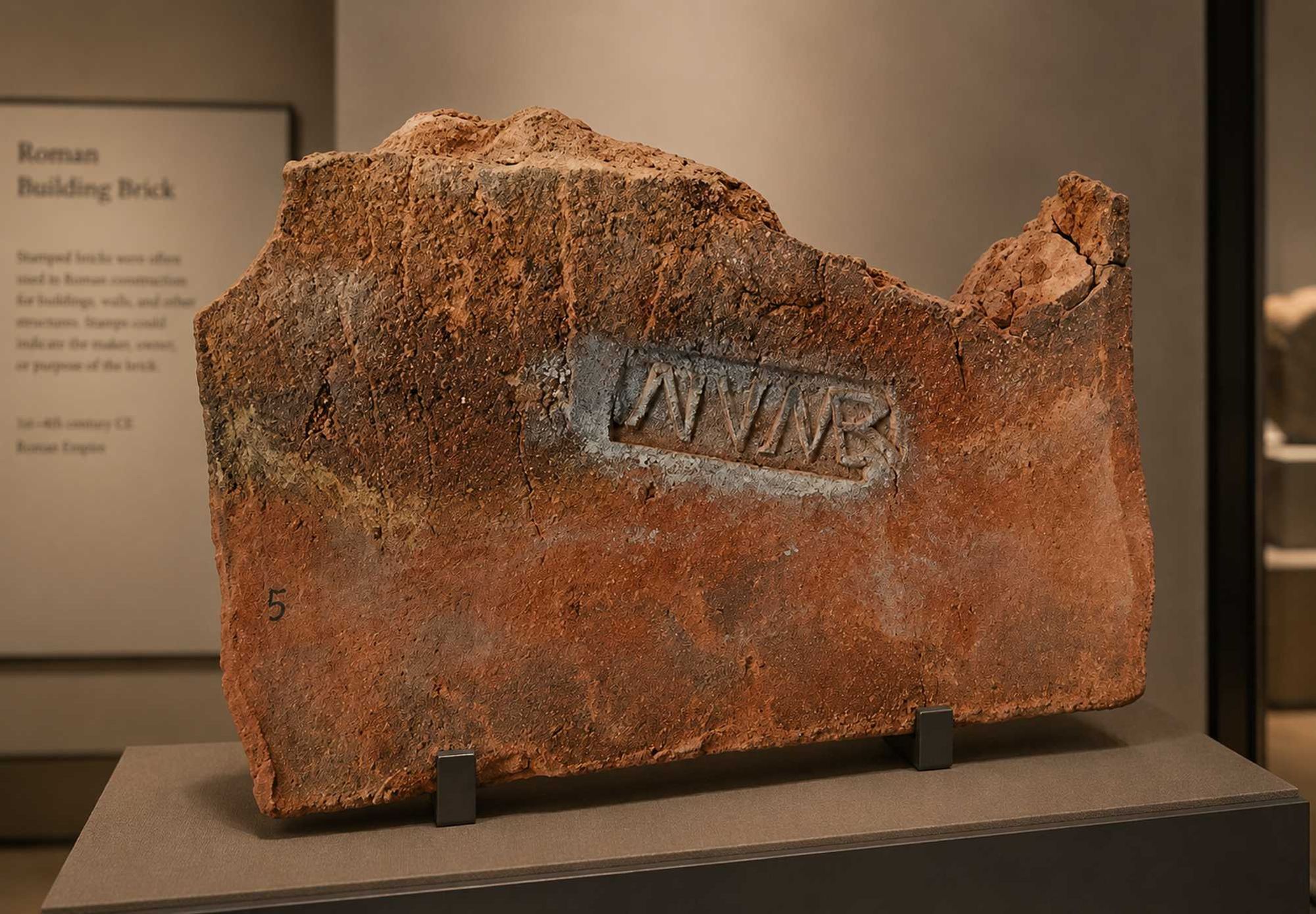
The brick walls that survive across Rome are the visible end of a much larger industry. Before a brick reached a bath complex, warehouse, apartment building or imperial project, clay had to be found and worked, bricks had to be shaped and dried, kilns had to be loaded and fired, production had to be organized, and immense quantities of heavy material had to be transported from the countryside into the city.
By the height of the Roman Empire, brick and tile production around Rome involved landowners, contractors, workers, specialized production sites and transport networks extending through the Tiber Valley.
Yet even the word “brick” requires some caution. Roman writers knew both unfired bricks made from earth and fired ceramic building material, and the two should not be confused. The instructions Vitruvius gives for brickmaking concern primarily sun-dried brick rather than the fired ceramic products that became so characteristic of imperial Roman construction. The terminology reflects that distinction: later and related terms generally refer to the unfired tradition, while testa and testaceus are associated with fired ceramic material.
Before the Fired Brick Industry
Vitruvius gives detailed advice about selecting earth for bricks. He rejects sandy, pebbly and gravelly material and prefers earth that will hold together properly. He also stresses that drying had to be controlled carefully.
“Bricks should be made in Spring or Autumn, so that they may dry uniformly. Those made in Summer are defective, because the fierce heat of the sun bakes their surface and makes the brick seem dry while inside it is not dry.”
Vitruvius continues by explaining that moisture trapped inside could cause shrinking and cracking after the exterior had already dried. Pliny the Elder preserves closely related advice and discusses several brick sizes, including the so-called Lydian brick used by Romans, a foot and a half long and one foot wide.
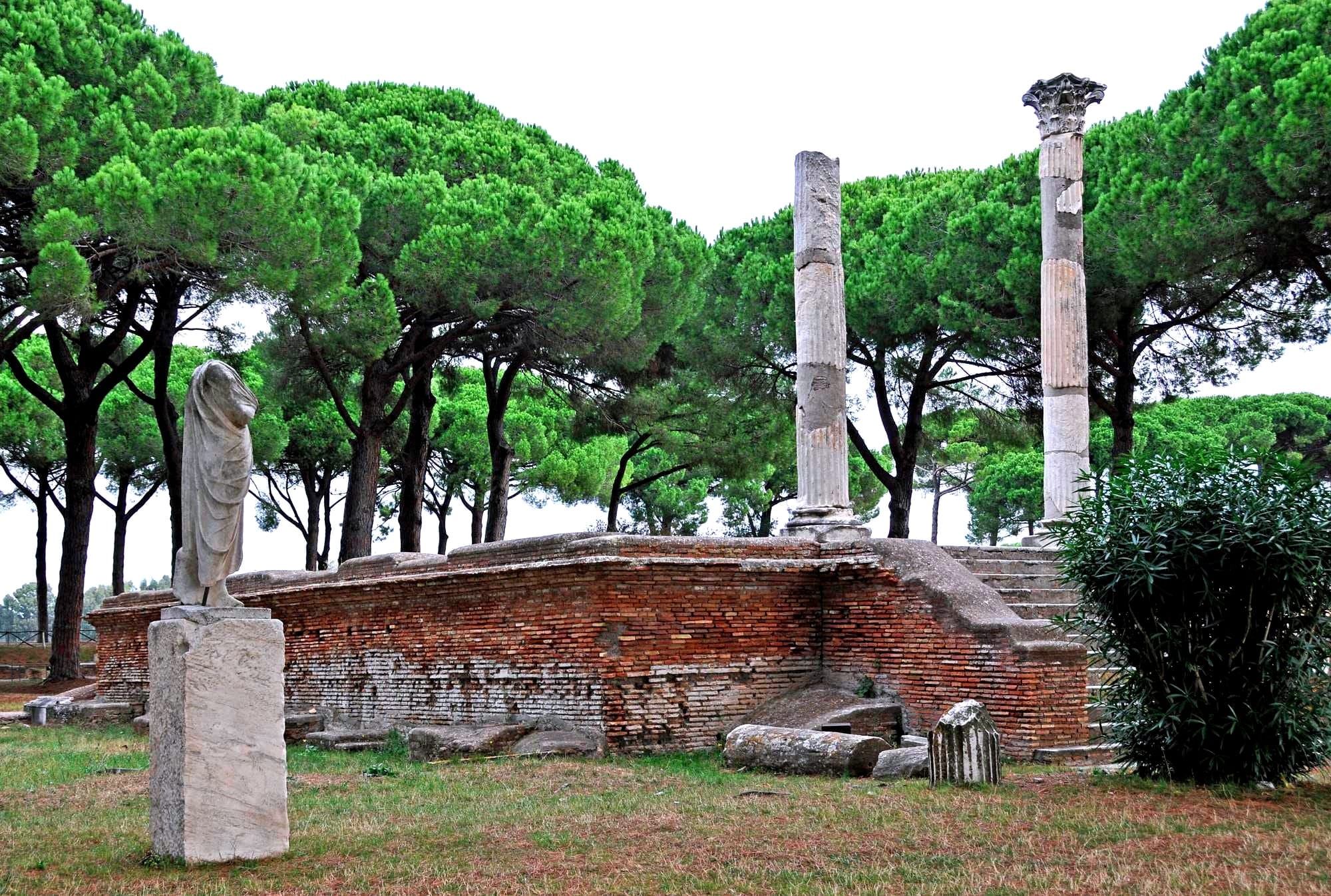
Both writers, however, are principally describing the tradition of unfired earthen brick, and their recommendations about lengthy drying should not simply be transferred to the fired-brick industry of imperial Rome.
The development of fired ceramic construction was different. By the first and especially the second century AD, fired brick and tile had become extremely important in Rome and Ostia. Ceramic material could be used with concrete in wall construction and was also employed for floors, pavements and structural elements.
At the same time, dated brick stamps and building sequences at Ostia indicate that fired material did not necessarily have to remain stockpiled for years before being used. Some bricks certainly could be stored, but prolonged ageing was not a universal requirement.
Where Rome Found Its Clay
Much of the material supplying Rome came from its hinterland, particularly the Tiber Valley. Archaeometric comparison of ancient bricks and clay sources has connected production with several areas north of Rome. The resulting picture is not of one enormous industrial suburb making the capital’s bricks, but of numerous clay sources and production areas distributed across a broad landscape.
This evidence has also complicated the meaning of the Latin term figlina. It is tempting to translate it simply as “brickyard” and imagine one identifiable factory with its own clay pit, workshops and kiln. The physical evidence is less tidy. Bricks carrying the name of the same figlina can come from different clay sources, while one clay source could apparently be exploited by more than one figlina. The name therefore did not always correspond to one compact production site.
The evidence instead allows for production connected with estates or groups of landholdings that might be geographically dispersed. One production organization could use more than one source of clay, and individual producers could operate from more than one kiln site.
Analysis of the Tiber Valley material identifies several possible arrangements: bricks from one source moving through a common distribution route, one producer operating at several kiln sites, and different producers exploiting the same or closely related clay resources.
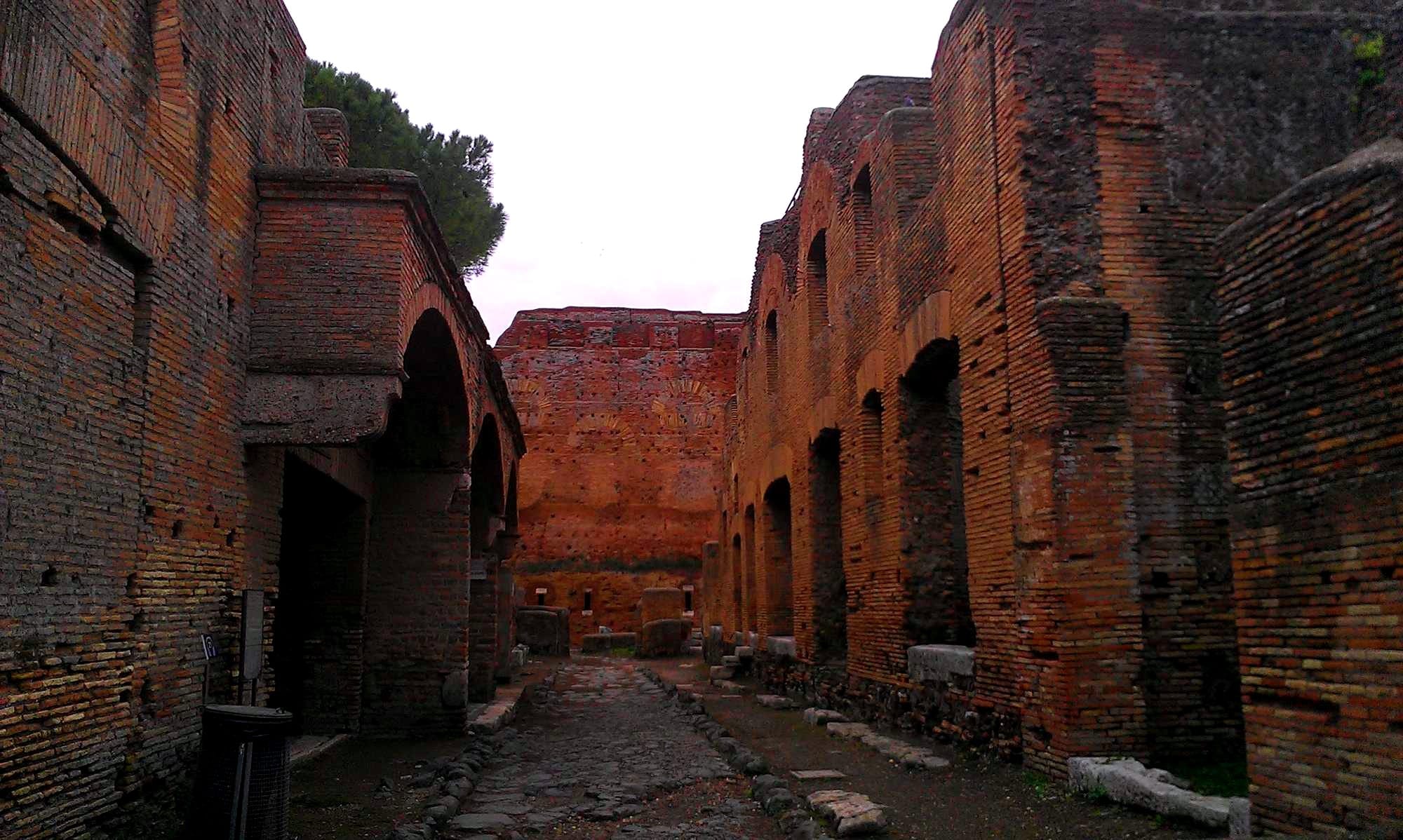
This made access to suitable land particularly important. Clay extraction required space, while the production process itself needed working areas, places for bricks to dry, kilns and access routes for moving the finished material. The brick industry therefore remained strongly connected to the rural landscape even though its largest market lay in the city.
Shaping and Drying the Bricks
Clay was only the beginning. Experimental work based on Roman brick and tile production shows how much preparation could take place before anything resembling a finished brick existed. Raw material had to be cleared of unwanted matter and worked with water until it reached a usable consistency. Sand or other material could also be introduced according to the nature of the clay and the product being made.
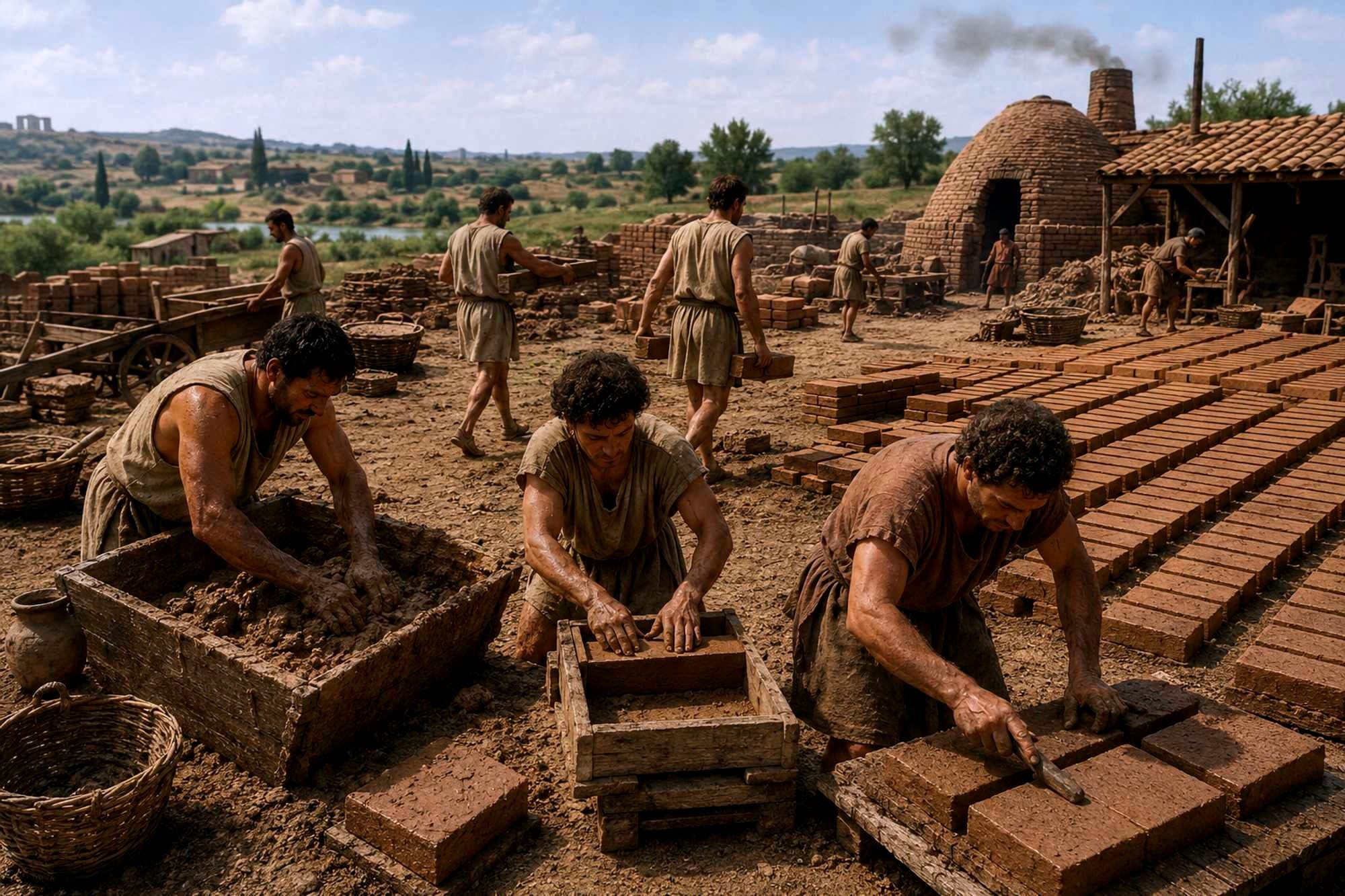
The experimental work is particularly useful because it showed that preparing the raw material could require considerably more labor than forming a simple flat brick. Once the clay was ready, shaping itself could be relatively straightforward. In the reconstruction, prepared clay was pressed firmly into a wooden frame resting on a sanded surface. The corners were filled, excess material was removed from the top, and the frame could then be lifted away.
Ancient production vocabulary provides a useful parallel. The verb radere, meaning to shave or smooth, occurs in evidence associated with ceramic production and fits the operation of trimming excess material from a moulded brick. The point is not that every Roman workshop necessarily used precisely the same tools or gestures, but that moulding could involve a recognizable sequence of filling, levelling and finishing.
Drying was equally important. A freshly moulded brick still contained too much moisture to be fired safely. Production records and graffiti indicate that large quantities of bricks and tiles could be arranged while drying, and one record refers to hundreds of tiles left to dry in structures interpreted as sheds or covered storage areas. Another records thousands of large bricks in what appears to have been an organized production sequence.
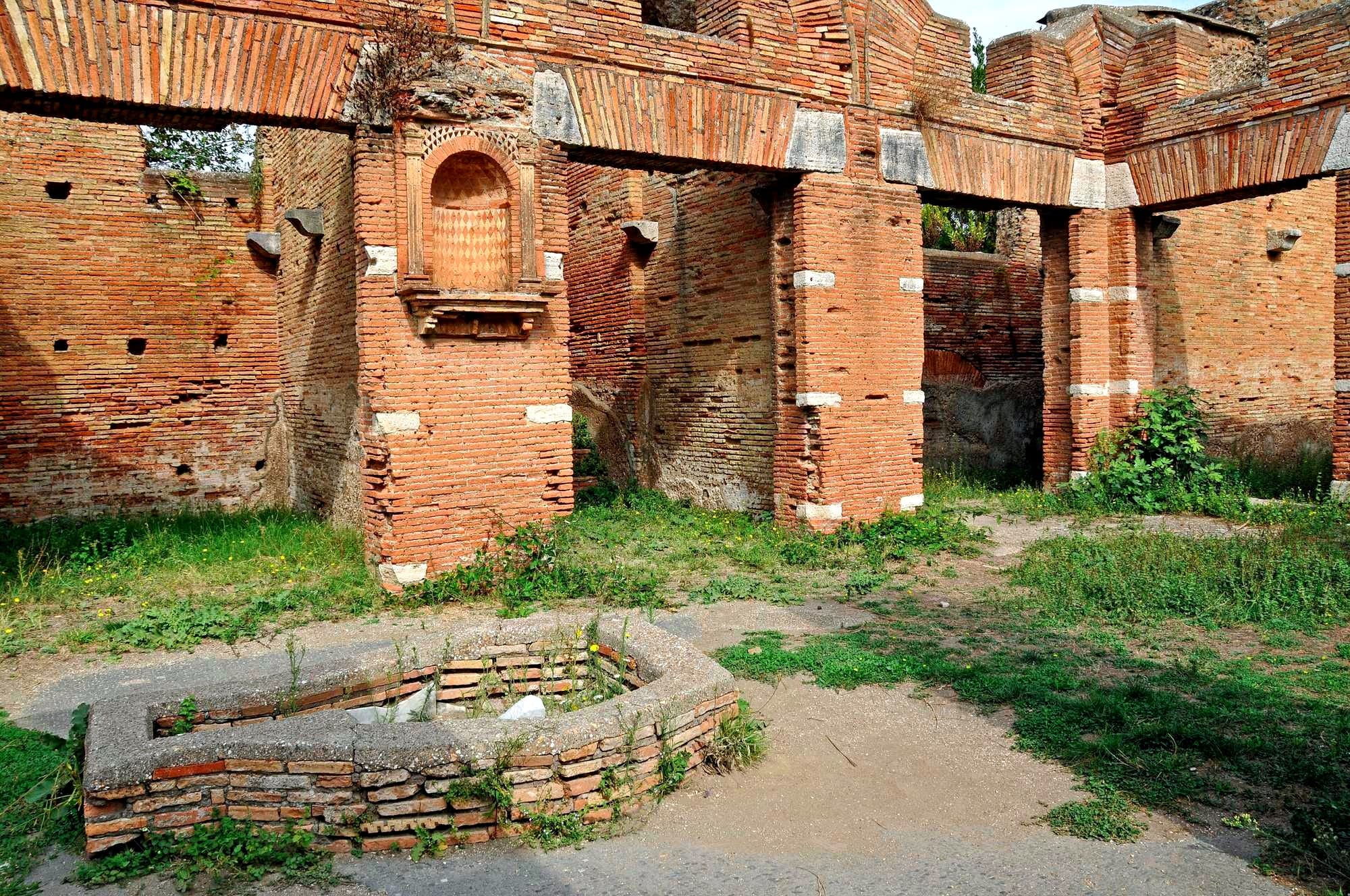
Experimental archaeology helps illustrate the practical scale of this problem. At Saalburg, a Roman fort in modern Germany, researchers reconstructed a Roman-style brick kiln based on remains excavated there and produced Roman-type bricks and tiles as part of a full-scale experiment. The products were left drying on shelves under cover for several weeks before firing.
This does not establish a standard Roman drying period, and it is not evidence for the precise routine followed by the workshops supplying Rome. It does, however, show why drying required substantial space, protection and time when large quantities were being produced.
Archaeometric evidence from the Roman city of Romula, in the Lower Danube region, provides another useful comparison. Excavations there found both unfired and fired bricks as well as evidence for a substantial ceramic-production area. Local clay deposits close to the industrial quarter were investigated as possible sources for the excavated material, supporting the possibility that nearby soils were used for production. The example is geographically distant from Rome, but it illustrates how closely Roman ceramic industries could be tied to accessible local raw materials.
Into the Kiln
Once sufficiently dry, the bricks could be fired. This stage transformed the clay into durable ceramic material, but it also introduced the possibility of cracking, uneven firing and complete failure.
The experimental kiln reconstructed at Saalburg helps show what the process could involve. In this type of kiln, the fire burned beneath the ceramic load, while hot gases rose through openings in a raised floor. Bricks and tiles had to be arranged so that they did not obstruct the flow of heat through the kiln. Loading was therefore part of the firing process rather than simply a matter of filling whatever space was available.
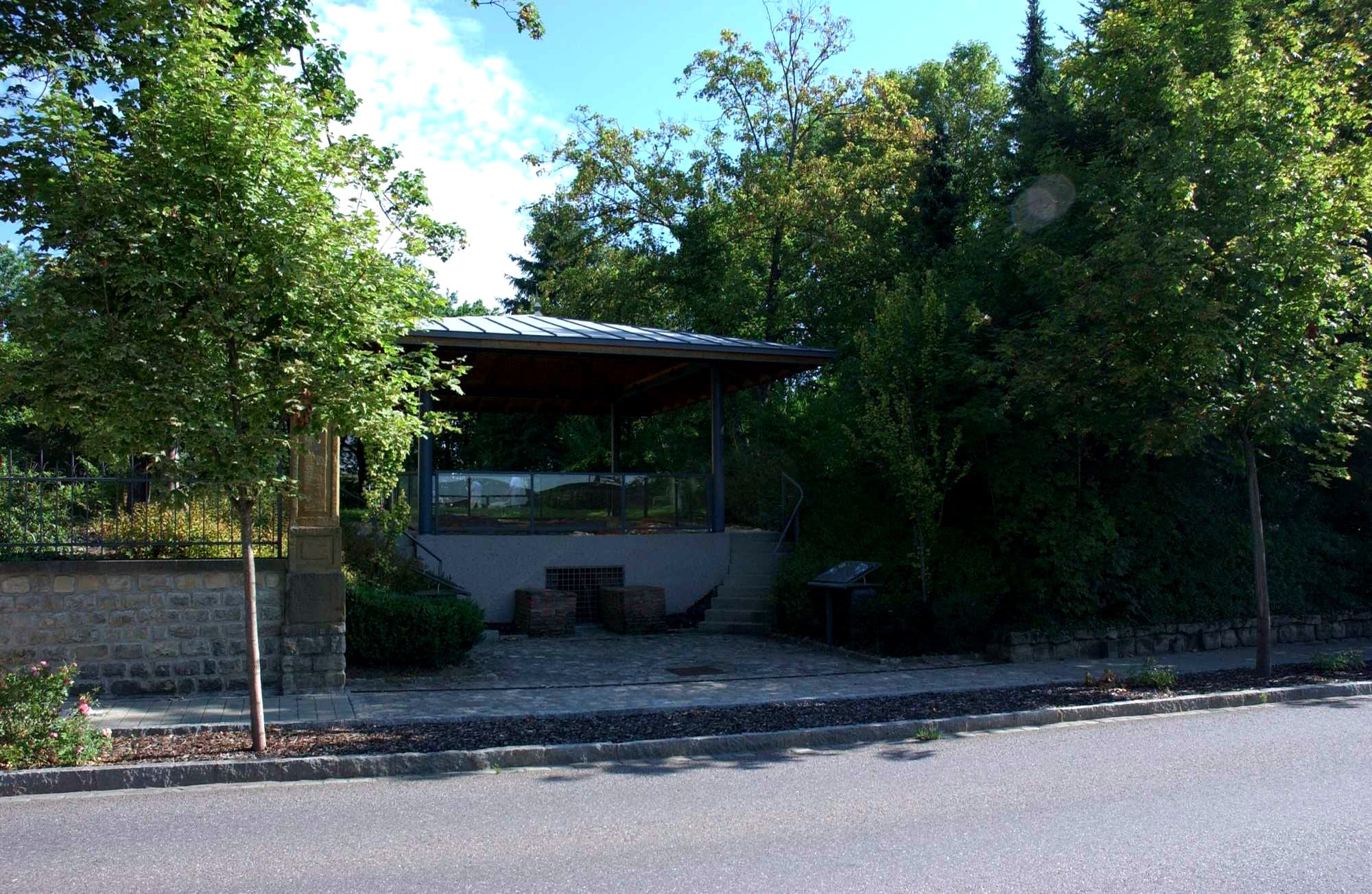
The experimental load included several forms of ceramic building material, among them hundreds of flat bricks and hollow ceramic heating tiles known as tubuli. Firing continued for more than 30 hours. The experimenters had to manage the fuel, airflow and temperature throughout the process. Ash accumulated, some areas of the kiln remained cooler than others, and part of the firing floor eventually failed. Even so, most of the products survived intact.
Problems of this kind are also archaeologically useful. Concentrations of warped, cracked, overfired or otherwise defective ceramic material can help identify ancient production sites because such waste was unlikely to have travelled far from the place where it was fired.
Scientific analysis of a fired Roman brick from Romula gives an indication of the temperatures that could be involved. The mineralogical changes in that particular brick suggest firing at approximately 800–850°C, while evidence associated with firing above about 900°C was absent.
In the experimental kiln at Saalburg, much of the firing chamber reached a broadly comparable range. These examples do not establish one standard temperature used throughout the Roman world, but they illustrate the sustained high heat that successful brick firing could require.
Who Made Rome’s Bricks?
The people behind the industry are harder to reconstruct than the bricks themselves. Brick stamps preserve names and relationships, but interpreting exactly what those names meant has generated considerable debate.
Two terms are especially important: dominus and officinator. In the stamp evidence, the dominus is associated with ownership of the land or property from which production derived, while the officinator stands closer to the actual organization of brickmaking. This does not mean that every dominus was simply a factory owner or that every officinator was an enslaved foreman working directly beneath him.
A detailed study of the stamp evidence found that nearly 80% of the identified officinatores were legally independent of the dominus with whom they were associated. The surviving evidence therefore allows for independent producers, tenants and contractors alongside workers who were legally dependent on others. The precise economic relationships between these groups remain more difficult to reconstruct.
One possible model is that some officinatores leased access to clay-bearing land or production facilities from landowners. Terms connected with leasing or contracting occur in some stamps, and the word conductor can appear in connection with production. The interpretation that such arrangements formed a broader tenancy system is plausible within the evidence but should not be treated as though surviving Roman contracts describe the system explicitly.
Enslaved people certainly participated in the industry. In one large analysis of the stamp evidence, somewhat less than 19% of the people appearing on brick stamps were identified as slaves.
In cases where an enslaved officinator appears alongside a dominus, that individual could belong either to the named dominus or to somebody else entirely. The evidence therefore does not support reducing the Roman brick industry to a simple model in which wealthy estate owners controlled gangs of enslaved brickmakers.
There were other forms of production as well. Military units produced brick and tile in several parts of the Empire, and inscriptions preserve supervisors and organized groups of soldiers connected with figlinae. Production graffiti also associate personal names with quantities, indicating that output could be counted and assigned within individual operations.
Evidence from southern Tuscany adds another complication. A study of stamped bricks from the territory around ancient Rusellae, near modern Grosseto, compared the names impressed on bricks with the physical composition of the clay. It found that bricks connected with the same owners or contractors could belong to different ceramic groups, while contractors could apparently operate with more than one production source.
The authors therefore allow for producers and contractors moving between different kilns or working within a flexible network of production locations rather than remaining permanently attached to a single workshop.
When a Brick Became a Record
Some Roman bricks preserve far more than traces of their manufacture. Before firing, stamps could be impressed into the wet clay. Depending on their period and form, they might identify a figlina, a dominus, an officinator, a consular date, or include additional symbols and abbreviated information.
These stamps are one reason so much can be reconstructed about Roman brick production. They connect otherwise ordinary building material with named people, estates and periods of manufacture. Yet stamped bricks were only part of total production. Attempts to determine what proportion of bricks received stamps have produced widely differing estimates, and there is no secure universal percentage.
Nor does the name appearing on a stamp necessarily identify the person who physically moulded the brick. Evidence from one major production group shows numerous different stamp matrices carrying essentially the same information during individual years. In 114, five such matrices are known; in 115 there are twelve, in 116 ten, and in 117 five. The pattern is consistent with simultaneous production involving several people using different dies.
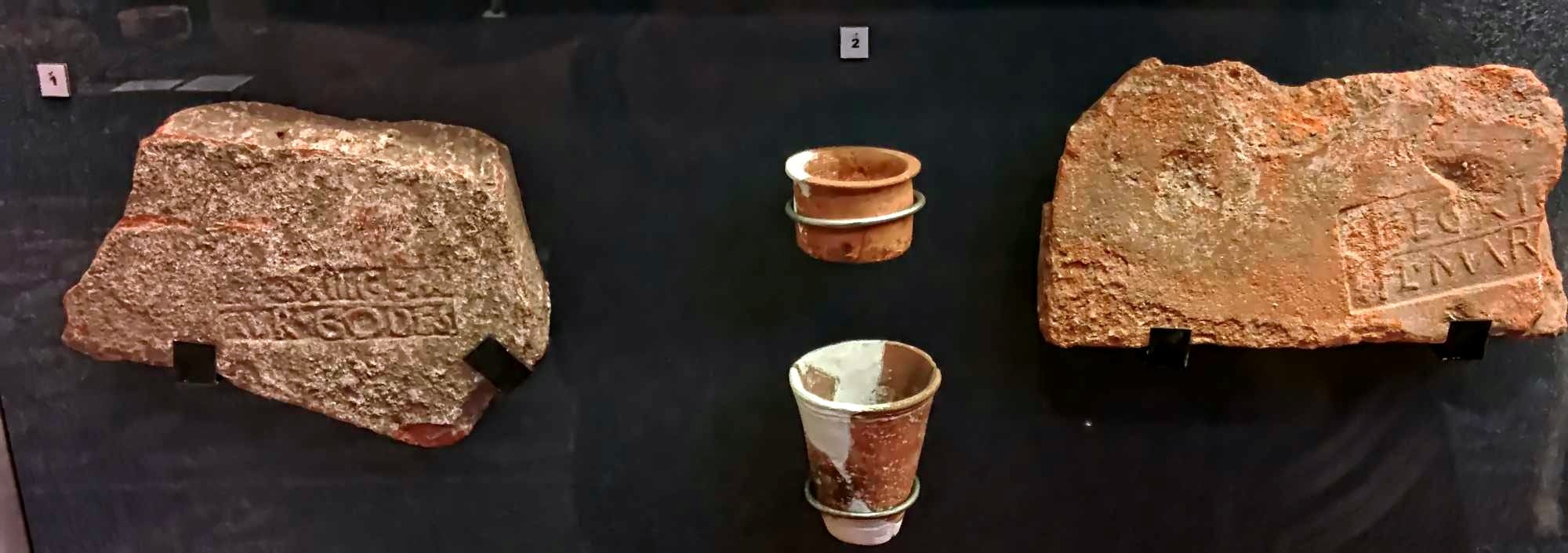
A stamp is also not automatically the exact date on which a wall was built. Individual dies could continue in use for several seasons, while finished bricks could sometimes remain in storage before being incorporated into a building. Stamp chronology is enormously valuable, but it has to be combined with the archaeological context in which a brick was found.
The place named or implied by a stamp does not necessarily reveal the exact kiln either. The study from southern Tuscany shows why archaeologists increasingly combine inscriptions with examination of the brick fabric itself. Bricks connected through names and stamps could nevertheless have different physical compositions, indicating different sources of clay or production locations.
Conversely, apparently different producers could sometimes exploit the same source. The stamp records the organization surrounding production, but the clay can tell a different and complementary part of the story.
From the Tiber Valley to the Building Site
After firing came another fundamental problem: bricks are heavy. Whatever their value, moving large quantities required access to suitable transport.
The Tiber was therefore central to the brick industry supplying Rome. As long as producers could reach the river system, material from different parts of the valley could be moved toward the capital without relying entirely on expensive overland hauling. Producers without convenient access to the river faced greater transport costs.
The evidence points to several overlapping systems rather than one centrally controlled chain of supply. Individual producers could operate from multiple kiln sites; several producers could exploit related clay deposits; and consumers could sometimes choose between different suppliers. The industry depended not only on access to clay but also on the ability to move the finished material into larger distribution networks.
Bricks and tiles could travel much farther than Rome itself. Finds from the Italian coast, islands and other parts of the Mediterranean show that material associated with the Tiber Valley did move over substantial distances. Shipwreck evidence also challenges the assumption that bricks found overseas must simply have been carried as ballast.
Cargoes consisting substantially or entirely of bricks and tiles are known, including one wreck carrying roughly 5,000 tiles. In the shipwreck sample discussed in the research, proper brick and tile cargoes were substantially better represented than cases in which ceramic building material could plausibly be identified merely as ballast.
The surviving brick walls of Rome consequently preserve only the final stage of a much larger process. Behind them lay clay deposits scattered through the countryside, landowners and independent operators, enslaved and free workers, moulding and drying areas, kilns that had to be managed for many hours, stamps recording parts of the organization, and river routes carrying the finished products toward the capital.
The bricks themselves may appear ordinary. Producing and moving them on the scale required by imperial Rome was anything but simple.
Shawn Graham, Ex Figlinis: The Network Dynamics of the Tiber Valley Brick Industry in the Hinterland of Rome
Tapio Helen, Organization of Roman Brick Production in the First and Second Centuries A.D.: An Interpretation of Roman Brick Stamps
Eva Margareta Steinby, I Bolli Doliari Romani dell’Italia Centro-Occidentale
Veronica Testolini, Alessandro Sebastiani and Elena Chirico, “Roman Bricks off the Wall: New Data for Understanding Production Centres and the Distribution of Building Materials in the Ager Rusellanus (Tuscany, Italy)”
P. Badica et al., “Mud and Burnt Roman Bricks from Romula”
Tim Clerbaut, Thomas Hauck, Anna Langgartner and Rüdiger Schwarz, “Mind the Gap(s): Theoretical and Hands-on Approaches to the Production of Roman Brick and Tile”
Vitruvius, De Architectura, Book II
Pliny the Elder, Natural History, Book XXX


About the Roman Empire Times
See all the latest news for the Roman Empire, ancient Roman historical facts, anecdotes from Roman Times and stories from the Empire at romanempiretimes.com. Contact our newsroom to report an update or send your story, photos and videos. Follow RET on Google News, Flipboard and subscribe here to our daily email.
Follow the Roman Empire Times on social media: