
Rome’s Client Kings: How the Empire Ruled Without Annexing
Rome often governed through allied kings rather than annexing their territories. The reigns of Massinissa, Deiotarus, and Herod show how this system operated.

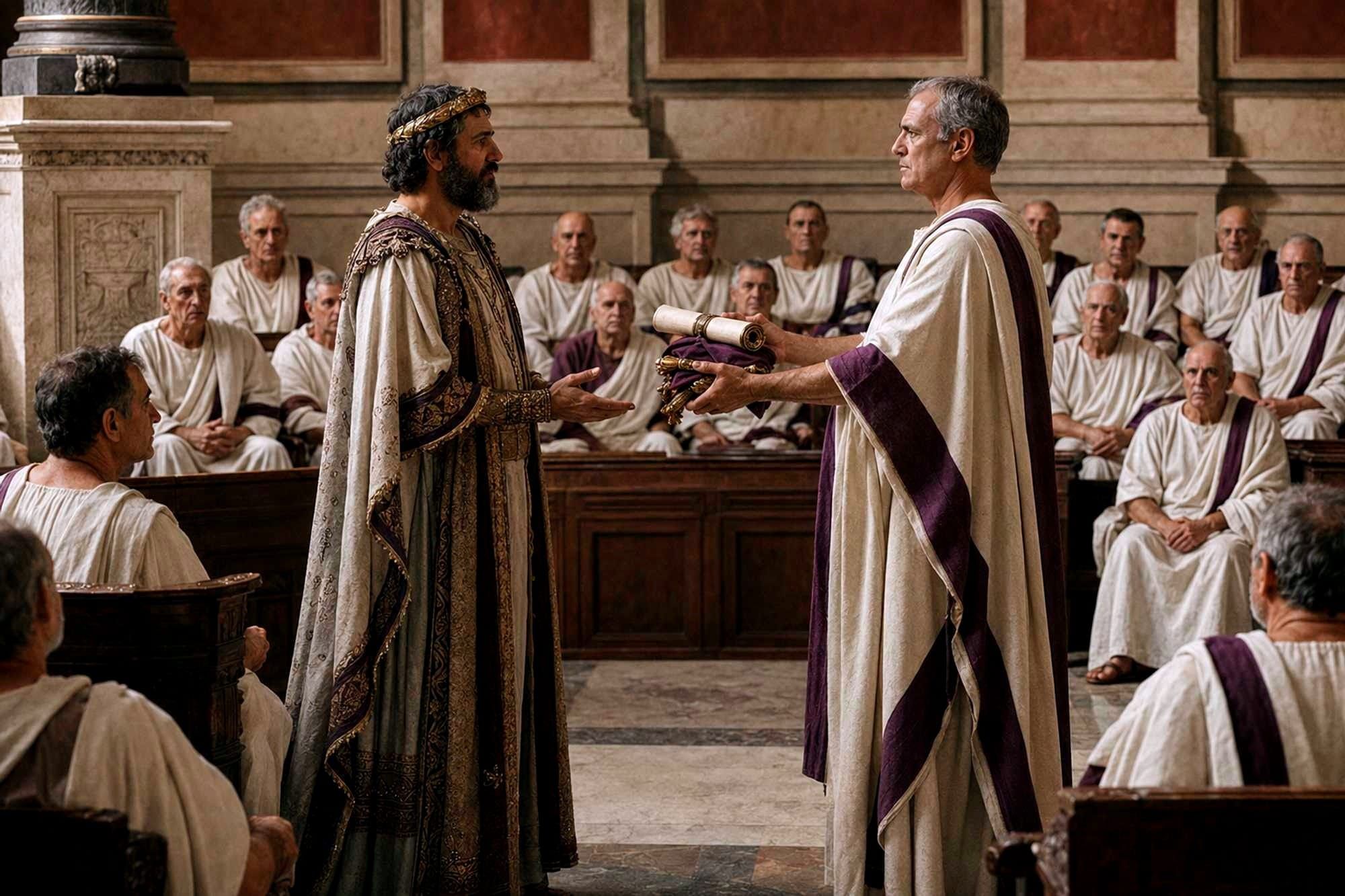
Rome did not govern every dependent territory as a province. Across the Mediterranean, Roman expansion incorporated communities through treaties, alliances, grants of territory, and the recognition of local rulers. Modern historians commonly describe some of these rulers as client kings, although this was not an official Roman title.
Roman documents and literary sources instead refer to a king as an ally and friend of the Roman people, expressed in the formula rex sociusque et amicus. In his defense of Deiotarus, Cicero appealed to the standing of such rulers:
“Ever has the name of king been hallowed in our society; most hallowed that of kings who are our allies and friends.”
The relationship preserved a kingdom’s separate institutions while placing its ruler within an unequal alliance dominated by Rome.
During the Republic, recognition of a king normally belonged to the Senate, though Roman commanders could make decisions in the field that were later submitted for ratification. Under the Principate, the emperor became the principal authority who confirmed kings, altered their territories, settled disputed successions, or replaced royal government with provincial administration.
Recognition was therefore not a permanent guarantee to a dynasty. It depended upon Roman approval and could be reconsidered when a king died, when his heirs competed, or when conditions in the kingdom changed.
This arrangement allowed Rome to exercise influence without immediately assuming the full work of provincial government. Allied kings collected revenue, administered justice, maintained courts, commanded troops, and dealt with local elites according to the practices of their kingdoms.
They could supply Roman armies with cavalry, infantry, grain, money, transport, and knowledge of regional conditions. In frontier regions, they could also defend territory against neighboring peoples and respond to threats before Rome committed a provincial army.
The kings received substantial advantages in return. Roman recognition could provide a disputed ruler with legitimacy, preserve him against domestic rivals, enlarge his territory, and protect his kingdom from external enemies. Rome frequently allowed considerable freedom in internal administration, but the king’s position was secure only while Roman authorities continued to support it. A ruler could govern his subjects as a king while remaining dependent upon decisions made by the Senate, a Roman commander, or an emperor.
The term “client king” is used here as shorthand rather than as a description found in the ancient sources. These rulers pursued territorial, dynastic, and financial interests of their own, negotiated with competing Roman leaders, and sometimes used Roman power against local rivals.
Their actions nevertheless remained limited by Roman authority. Massinissa of Numidia, Deiotarus of Galatia, and Herod of Judaea belonged to different periods and political settings. In all three cases Rome preserved a kingdom, used its resources, and retained authority over the ruler’s position.
Massinissa and the Numidian Alliance
Massinissa began the Second Punic War as a cavalry commander fighting for Carthage in Spain. After the death of his father and a succession struggle in Numidia, he entered into relations with Rome and joined Scipio after the Roman landing in Africa in 204 BCE. His knowledge of the country and his Numidian cavalry contributed to the attacks on the camps of Syphax and Hasdrubal, the capture of Syphax, and the Roman victory at Zama in 202 BCE.
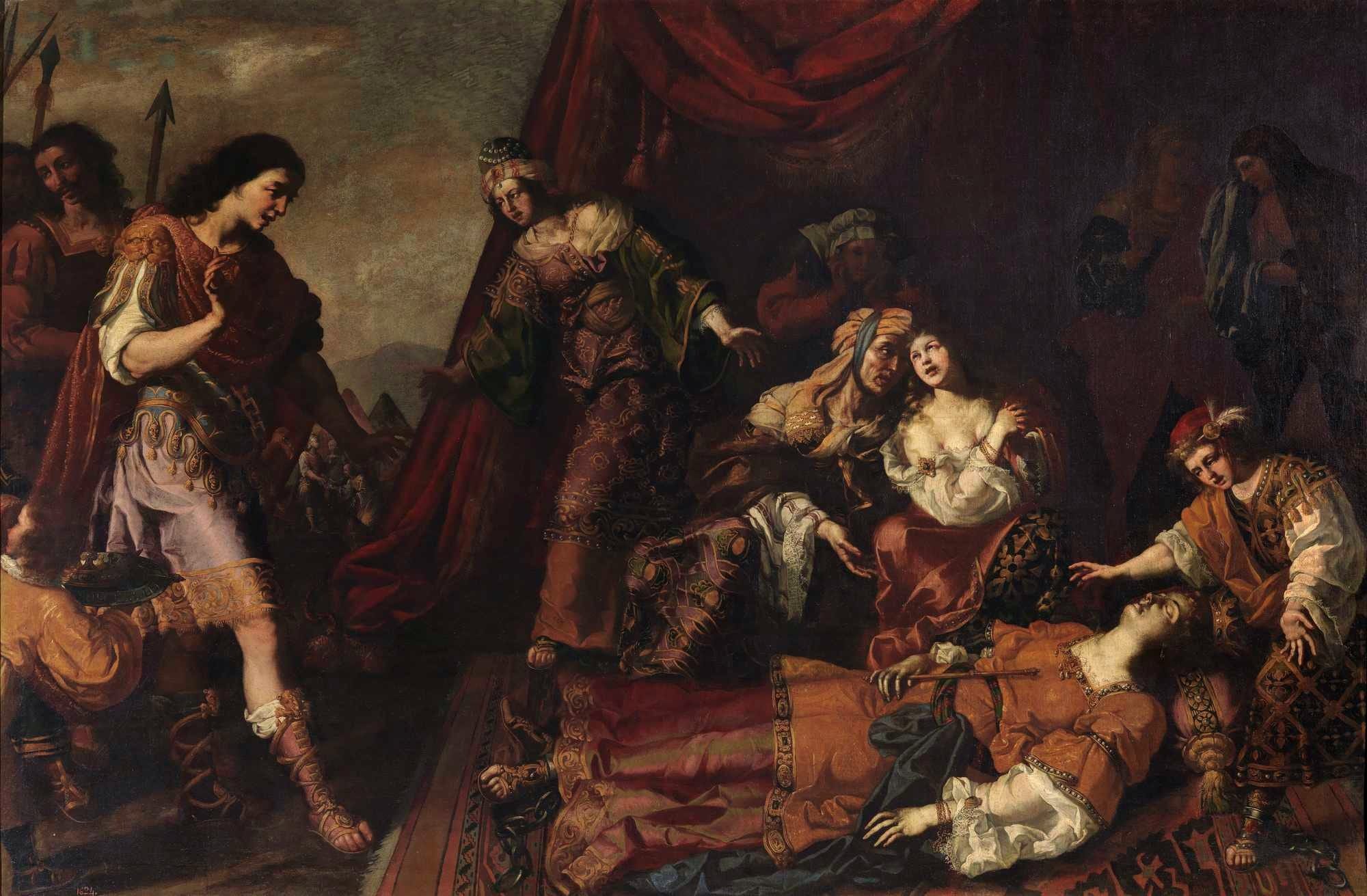
His alliance with Rome transformed his political position. After Syphax had been defeated, Scipio recognized Massinissa as king and granted him royal insignia. Livy records:
“Addressing Masinissa as king and eulogising him in the highest possible terms, he presented him with a golden crown, curule chair, an ivory sceptre and also with a purple-bordered toga and a tunic embroidered with palms.”
The Senate subsequently ratified the settlement. Massinissa recovered his ancestral kingdom, received Cirta, and acquired part of the territory formerly ruled by Syphax.
Massinissa owed the enlargement and recognition of his kingdom to Roman victory, while his military assistance had contributed to Rome’s victory in Africa. The connection was strengthened by personal relations with the Scipionic family as well as by formal decisions of the Roman state. Massinissa had changed alliances during a struggle for survival and used Roman support to recover authority that he had lost.
During the following decades, Numidia repeatedly supported Roman warfare outside Africa. Ancient accounts record deliveries of grain and the dispatch of cavalry, infantry, and elephants. Between 200 and 198 BCE Massinissa presented the Romans with 400,000 measures of wheat and 200,000 of barley.
In 191 BCE he promised 800,000 measures of wheat and 550,000 of barley. In 170 BCE his envoys offered one million measures of wheat, 1,200 cavalry, twelve elephants, and anything else the Romans required for the war against Perseus of Macedon.
The kingdom’s agricultural capacity made this assistance possible. Ancient authors credited Massinissa with settling nomadic peoples and encouraging cultivation, but agriculture and urban life in the region predated his reign. The evidence supports an expansion of cultivated land rather than the creation of agriculture in Numidia.
Massinissa’s government accumulated large cereal surpluses, and some of these were sent to Rome or to Roman armies. The alliance allowed Rome to draw on North African production without turning Numidia into a province or administering its estates and communities directly.
Massinissa also used the relationship to pursue claims against Carthage. The peace settlement after the Second Punic War prohibited Carthage from waging war outside Africa and from waging war within Africa without Roman permission. Disputes between Carthage and Numidia were repeatedly referred to Roman commissions.
Massinissa occupied contested land, while Carthaginian embassies complained in Rome that he had taken towns and territory. Roman decisions did not always satisfy him, but Roman policy became increasingly favorable to his claims in the decades before the Third Punic War.
The most valuable contested areas were not empty stretches of land. They included fertile districts, ports, towns, and the Emporia region, which produced revenue and agricultural surpluses. Massinissa’s policy strengthened his kingdom materially. Rome’s position as arbiter restricted Carthage’s ability to resist him and gave the Numidian king opportunities to retain territorial gains. At the same time, Rome preserved the final decision for itself.
The limits of the alliance became evident when Rome decided to destroy Carthage. Massinissa had benefited from Carthage’s weakness and sought further gains, but the Roman government did not allow him to determine the city’s future. He was not informed in advance of every element of the Roman plan, and Carthage was not incorporated into his kingdom.
When the Roman expedition arrived in Africa in 149 BCE, Massinissa offered assistance, but he died in 148 before the war ended. Scipio Aemilianus then arranged responsibilities among his sons. Numidia remained a kingdom, but Rome continued to intervene in its succession and foreign relations.
Deiotarus Between Roman Commanders
Deiotarus ruled among the Tolistobogii, one of the three Galatian peoples of central Anatolia. Galatian political organization had traditionally included tetrarchs, but Roman intervention changed the distribution of authority. Pompey’s reorganization of the East in 65/64 BCE established Deiotarus as ruler of the Tolistobogii and rewarded him with additional territory.
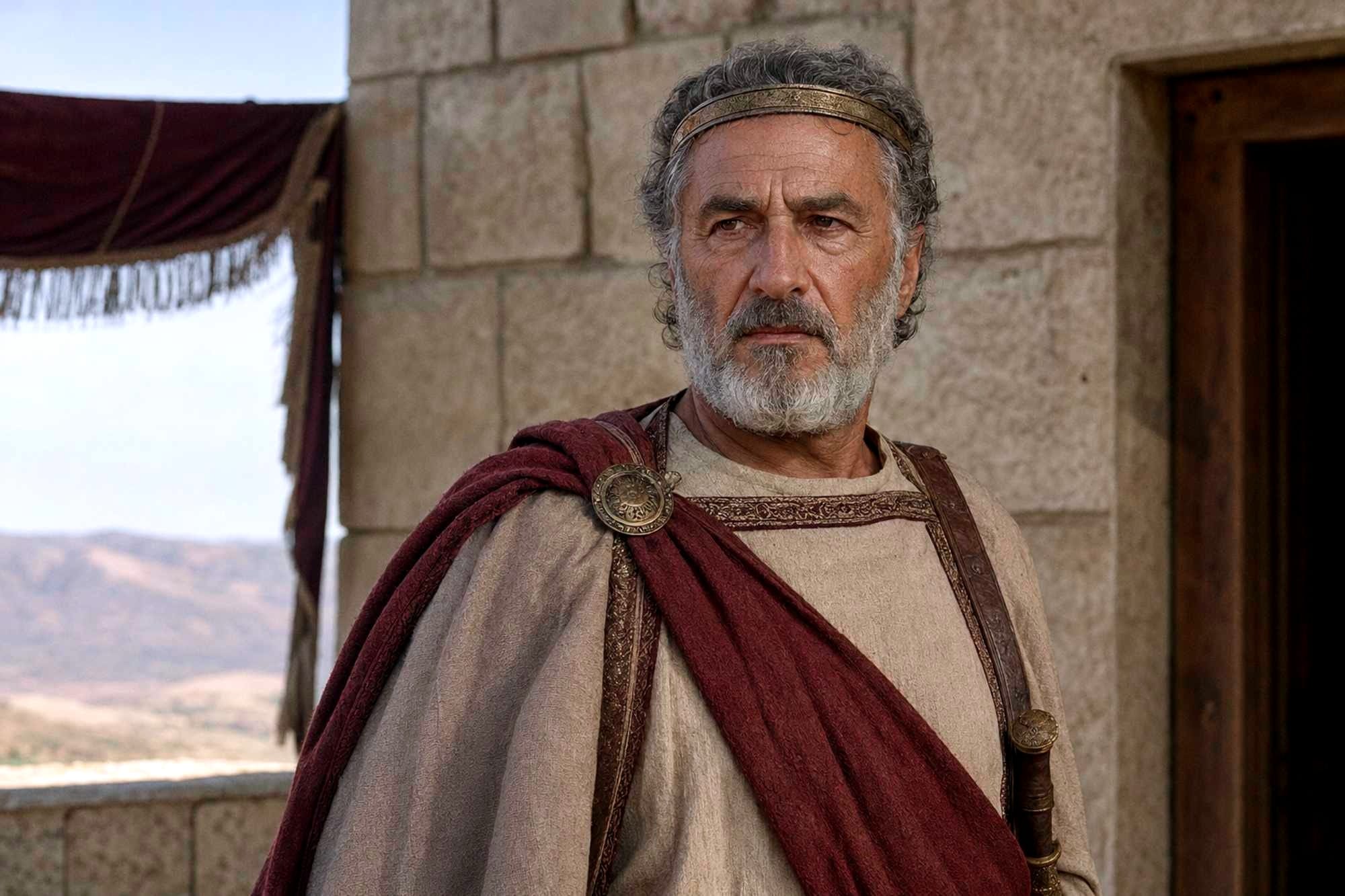
In inscriptions he could be described as both king and tetrarch, combining a Galatian political title with a kingship granted to him individually by Roman authority.
Deiotarus built his position through long cooperation with Roman commanders. His forces assisted Rome in the East, where Galatia lay near regions affected by the wars against Mithridates of Pontus and by the threat of Parthian expansion. Cicero’s speech in his defense describes the purpose of his army:
“King Deiotarus never had forces sufficient to make an attack upon the Roman people, but only to protect his territories against raids and brigandage and to send assistance to our generals.”
Cicero thus presented the army as a force for the defense of Deiotarus’s territory and for service with Roman commanders.
The Roman civil war placed Deiotarus in a dangerous position because friendly kingship was also built through personal connections. He supported Pompey, who had confirmed and enlarged his authority, and joined him during the war against Caesar.
Cicero defended this decision by claiming that Deiotarus responded to Pompey as a friend and ally and obeyed what he understood to be the authority of the Senate. After Pompey’s defeat at Pharsalus in 48 BCE, Deiotarus returned to his kingdom and sought accommodation with Caesar.
After Pompey’s defeat, Deiotarus had to establish a relationship with Caesar. While Caesar was engaged in the Alexandrian War, Deiotarus housed and supplied the army of Gnaeus Domitius Calvinus, sent money to Ephesus, and raised further funds by selling property. He then fought beside Caesar against Pharnaces II.
Cicero summarized these services in a complete sequence:
“He it was who aided with shelter and supplies the army of the brave Gnaeus Domitius; he sent funds to Ephesus; he it was who, after holding two, nay three, auctions, contributed to your war funds; he it was who exposed his person to peril, fought at your side in the field against Pharnaces, and deemed your enemy his own.”
Caesar nevertheless reduced Deiotarus’s territory after the Pontic campaign. The Trocmi tetrarchy was removed from his control in 47 BCE, although he retained the royal title. Rome could recognize a man as king while changing the size and composition of the lands he ruled. His status did not give him an independent right to every territory that earlier Roman decisions had assigned to him.
In 45 BCE Deiotarus faced an accusation that he had plotted to murder Caesar when Caesar had stayed in his residence. Cicero’s surviving speech was composed to secure his acquittal and does not provide a neutral account of the king. In presenting the defense, Cicero invoked Deiotarus’s services, the Senate’s earlier recognition, his hospitality toward Roman commanders, and the aid that he and his son had supplied. The proceedings placed the foreign monarch before Caesar as judge, while his representatives appealed for the preservation of his life and title.
Deiotarus survived Caesar and recovered territory after Caesar’s assassination, but the history of Galatian kingship did not end with him. Rome continued to recognize regional rulers until Amyntas was killed during a war in Pisidia.
Augustus annexed his territories and created the province of Galatia in 25/24 BCE. The interval between Pompey’s settlement and annexation was not treated in the sources as a fixed preparatory stage. A sequence of kings continued to rule before Augustus introduced provincial government.
Herod and a Kingdom Created at Rome
Herod’s father, Antipater, had supported Julius Caesar during the Alexandrian War and received Roman citizenship. Herod’s own rise proceeded through relations with Roman leaders. He held authority in Galilee, collected revenue for Cassius after Caesar’s assassination, and was appointed tetrarch with his brother Phasael through the support of Mark Antony.
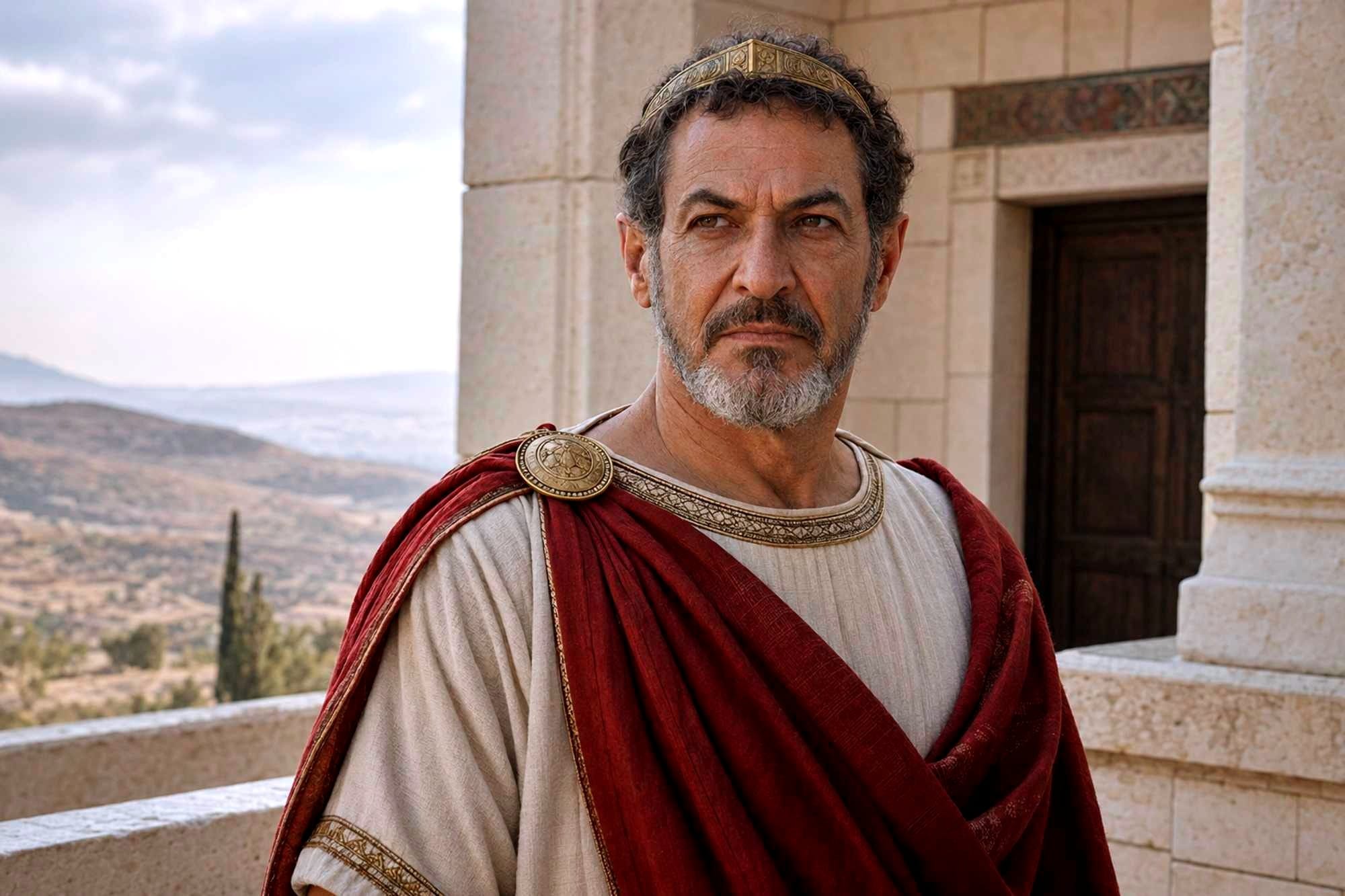
The Parthian invasion of 40 BCE displaced Herod and installed Antigonus in Judaea. Herod escaped and traveled to Rome. He did not possess the Hasmonaean dynastic claim that normally might have supported a Jewish kingship, but Antony proposed him to the Senate and Octavian supported the appointment.
Josephus gives Antony’s political justification:
“Antony came forward and informed them that it was also an advantage in their war with the Parthians that Herod should be king. And as this proposal was acceptable to all, they voted accordingly.”
The vote did not give Herod immediate possession of Judaea. Josephus describes Antony and Octavian leaving the Senate with Herod between them, followed by the consuls and magistrates, to sacrifice and deposit the decree on the Capitol. Herod then returned east and fought for approximately three years before Jerusalem was captured in 37 BCE with the assistance of Roman forces under Sosius. His reign was counted in two ways: from the Senate’s appointment in 40 BCE or from his acquisition of the kingdom in 37 BCE.
Herod’s territory depended throughout his reign on Roman decisions. Antony’s grants established his authority, while territory assigned to Cleopatra reduced his control over valuable resources, including the balsam plantations near Jericho.
After Octavian defeated Antony and Cleopatra at Actium in 31 BCE, Herod had to seek confirmation from the victorious leader. He met Octavian at Rhodes in 30 BCE, acknowledged his loyalty to Antony, and asked to be judged by the quality of that loyalty rather than by the identity of its recipient.
Octavian confirmed him as king. Herod then supplied Octavian’s army as it moved toward Egypt and received him with extensive provisions and financial support. After the deaths of Antony and Cleopatra, territories previously removed from Herod were restored, and further grants enlarged his kingdom. Its boundaries were neither inherited nor fixed solely by local conquest. Roman rulers could expand or contract them according to their own settlements in the East.
Within those boundaries, Herod exercised broad royal authority. He maintained an army, appointed officials, raised revenue, controlled royal estates, founded cities, and supervised large building programs. His kingdom contained communities with different legal, religious, and civic traditions, and his administration had to govern Judaea, Samaria, Galilee, Idumaea, and territories across the Jordan.
Rome did not replace these arrangements with a provincial governor and staff. It relied upon Herod to maintain order, supply resources, and govern a politically varied region adjoining the province of Syria.
Herod expressed his Roman alignment through personal relations and public foundations. He named Caesarea for Augustus and Sebaste from the Greek form of the emperor’s title. Temples dedicated to Augustus and Roma were constructed in parts of the kingdom where their establishment did not confront the same religious restrictions as Jerusalem.
Herod also assisted cities beyond his realm and maintained close relations with Marcus Agrippa. These activities linked his kingship to the wider political order created by Augustus while leaving him responsible for local government.
The royal family itself remained connected to Rome. Herod sent sons to be educated there, and Augustus became involved in disputes over the succession. Herod revised his will several times as conflict within the dynasty led to accusations and executions.
His final arrangements could not take effect solely by royal command. After his death in 4 BCE, competing representatives traveled to Rome, and Augustus decided how the kingdom would be divided.
Archelaus received Judaea, Samaria, and Idumaea as ethnarch rather than king; Antipas and Philip received tetrarchies. Augustus accepted parts of Herod’s plan but withheld the undivided royal title and altered the form of the succession.
Archelaus was removed in 6 CE, and his territories were placed under direct Roman administration. Other members of the Herodian dynasty continued to rule elsewhere. The end of Herod’s reign produced neither automatic dynastic continuity nor immediate annexation of every territory.
The Uses and Limits of Indirect Rule
These three kings belonged to different forms of Roman indirect government. Massinissa became king after providing decisive assistance in a major war. Deiotarus accumulated titles and territory through cooperation with successive commanders in Anatolia. Herod received a royal title by vote of the Senate before he had conquered the kingdom assigned to him.
In every case, Roman recognition strengthened a ruler whose services could advance Roman military and political interests.
The resources supplied by the kingdoms also differed. Numidia provided cavalry, elephants, and large quantities of grain. Deiotarus defended territory, maintained troops, housed Roman forces, and supplied commanders with money.
Herod governed a varied frontier kingdom, provisioned Roman armies, and tied his territory to Augustus through cities, dynastic arrangements, and personal loyalty. Indirect government reduced the need for Rome to administer these regions directly while preserving access to their military and financial resources.
The arrangement remained unequal. Rome could ratify a kingship, alter borders, hear accusations against a king, determine a succession, or impose provincial government. Inequality did not eliminate royal agency.
Massinissa pursued fertile Carthaginian territory, Deiotarus changed his position after Pharsalus and rebuilt relations with Caesar, and Herod transferred his allegiance after Actium while preserving his crown. Their success depended partly upon their ability to use Roman support for the security and expansion of their kingdoms.
Annexation was one possible conclusion, not the automatic purpose of every allied kingship. Some kingdoms lasted for generations; others were divided, restored, or annexed after a succession crisis or a change in frontier policy. Rome ruled without annexing when a recognized king could maintain order and provide useful services. It intervened directly when Roman authorities decided that the existing ruler, dynasty, or political arrangement no longer met those purposes.
Livy, History of Rome, Books 30, 31, 32, 33, 35, 36, 38, 42, 43, and 45, translated by Rev. Canon Roberts.
Cicero, For King Deiotarus, translated by N. H. Watts.
Josephus, Jewish Antiquities, Books 14–17, translated by H. St. J. Thackeray, Ralph Marcus, Allen Wikgren, and Louis H. Feldman; and The Jewish War, Books 1–2, translated by Martin Hammond.
David Braund, Rome and the Friendly King: The Character of Client Kingship.
P. G. Walsh, “Massinissa,” Journal of Roman Studies 55 (1965), pp. 149–160.
Karl Strobel, “The Galatians in the Roman Empire: Historical Tradition and Ethnic Identity in Hellenistic and Roman Asia Minor.”
Martin Goodman, Herod the Great: Jewish King in a Roman World.



About the Roman Empire Times
See all the latest news for the Roman Empire, ancient Roman historical facts, anecdotes from Roman Times and stories from the Empire at romanempiretimes.com. Contact our newsroom to report an update or send your story, photos and videos. Follow RET on Google News, Flipboard and subscribe here to our daily email.
Follow the Roman Empire Times on social media: