
Rome Came to Scotland with All the Gear
Hot baths, masked helmets and a sun god with possible special effects: Scotland’s Roman finds reveal an army with expensive tastes and an awkward habit of leaving.

The Roman army did not travel light. In the territory we now call Scotland, it built heated bathhouses, wore elaborate cavalry helmets and installed altars with rather more presence than a shelf of household gods. Its possessions could be exquisite. Its departures could be equally thorough: at Inchtuthil, an enormous stock of iron nails ended up underground when the fortress was dismantled.
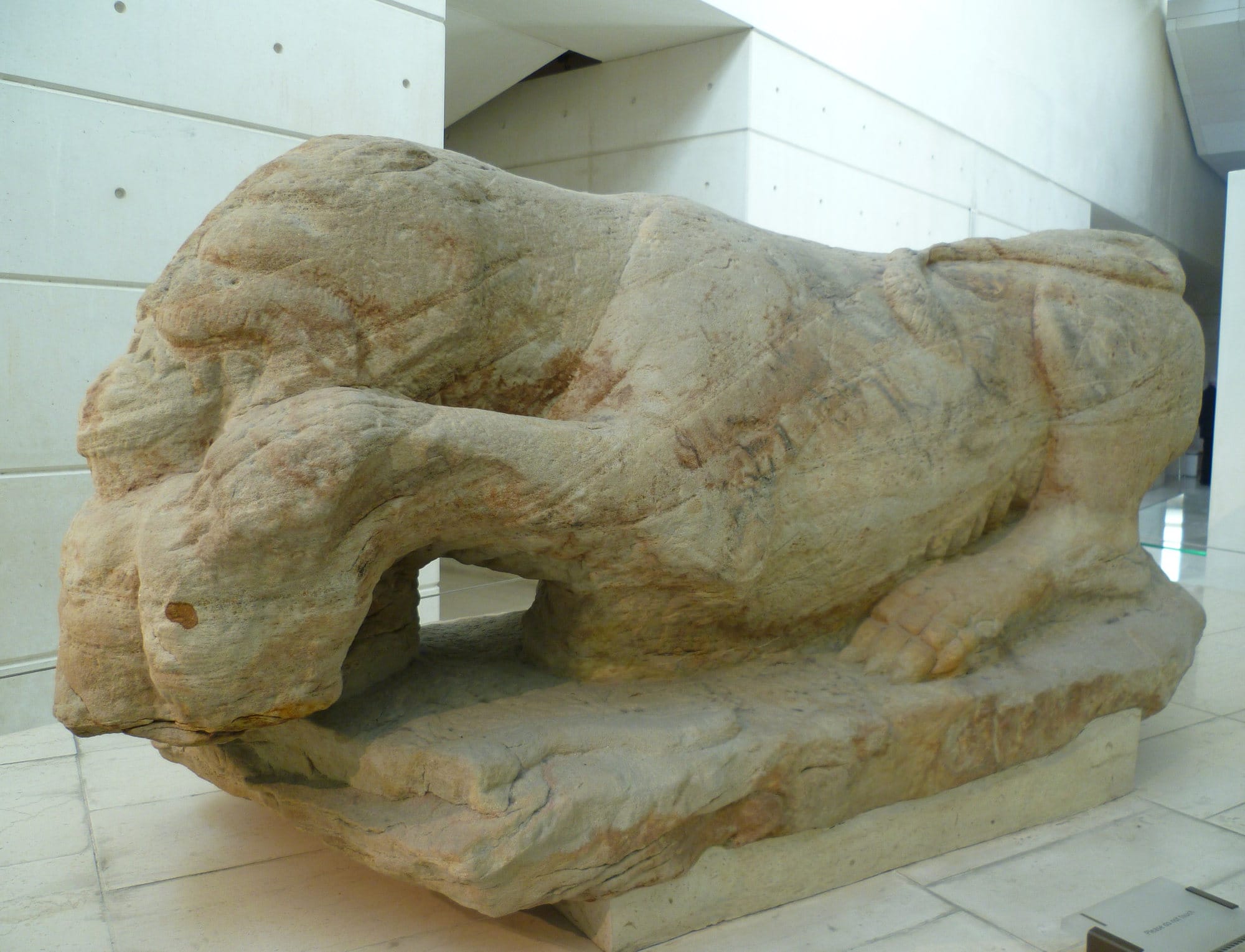
Then there is the Cramond Lioness, a stone predator with a bound captive pinned beneath her paws. Found in the River Almond near Edinburgh in 1997, she probably belonged to a Roman funerary monument. Even the memorial sculpture had teeth. Between that lioness and the beautiful objects recovered from military settlements, Roman Scotland looks considerably less austere than a line of muddy marching boots.
Some of these encounters are returning to attention as Roman Scotland: Life on the Edge of Empire opens at the National Museum of Scotland on 14 November 2026. The more intriguing story, though, lies in the objects themselves: how an occupying army transported its comforts, tastes and religious expectations north, while the communities around it negotiated the consequences.
The frontier kept moving
Hadrian’s Wall makes an impressively solid mental boundary. Roman activity was much less tidy. Armies campaigned deep into northern Britain during the later first century AD, establishing forts and the legionary fortress at Inchtuthil in Perthshire. Withdrawal followed before that century ended. The frontier at Hadrian’s Wall, in what is now northern England, belongs to a later stage of this changing military geography.
Under Antoninus Pius, the army advanced again in the AD 140s. The Antonine Wall crossed central Scotland between the Forth and Clyde, with forts, roads and communities along and beyond it. This was an organised occupation with substantial buildings and supply networks. During the AD 160s, that northern frontier was abandoned, although the precise sequence of withdrawal remains debated.
Septimius Severus brought another major campaigning army north in AD 208–211. Each intervention left different traces; the finds are not the contents of one enormous Roman suitcase. Their dates span changing military ambitions and relationships with local people. Roman goods also travelled beyond occupied territory, through exchange, diplomacy and other contacts. Ownership of a Roman object did not require an address inside a Roman fort.
Hot baths, with a less glamorous afterlife
At Bearsden, now a suburb of Glasgow, the Antonine garrison had a bathhouse with changing facilities, a cold bath, warm rooms and hotter bathing spaces. Beneath the floors, pillars created channels for furnace heat; flues also carried warmth through the walls. Our account of how Roman hypocaust heating worked explains the system. A posting to the northern frontier evidently need not mean surrendering a properly heated wash.
The adjacent latrine supplied an unusually frank record of dinner. Plant remains preserved in sewage included cereals, linseed, beans, figs, dill and coriander, alongside locally available fruits and nuts. Containers from the fort also attest olive oil, wine and fish products. These were meals assembled through both local resources and long-distance supply, rather more varied than the image of a soldier permanently chewing something grey.
The same deposits contained roundworm and whipworm eggs. Bearsden offers the full archaeological package: sophisticated bathing, an informative menu and intestinal passengers. Analysis points to a largely plant-based diet among the people represented by its sewage. Figs, spices and parasites put this particular military community into unusually intimate focus, right down to what passed through its digestive systems.
Dress code: aggressively impressive
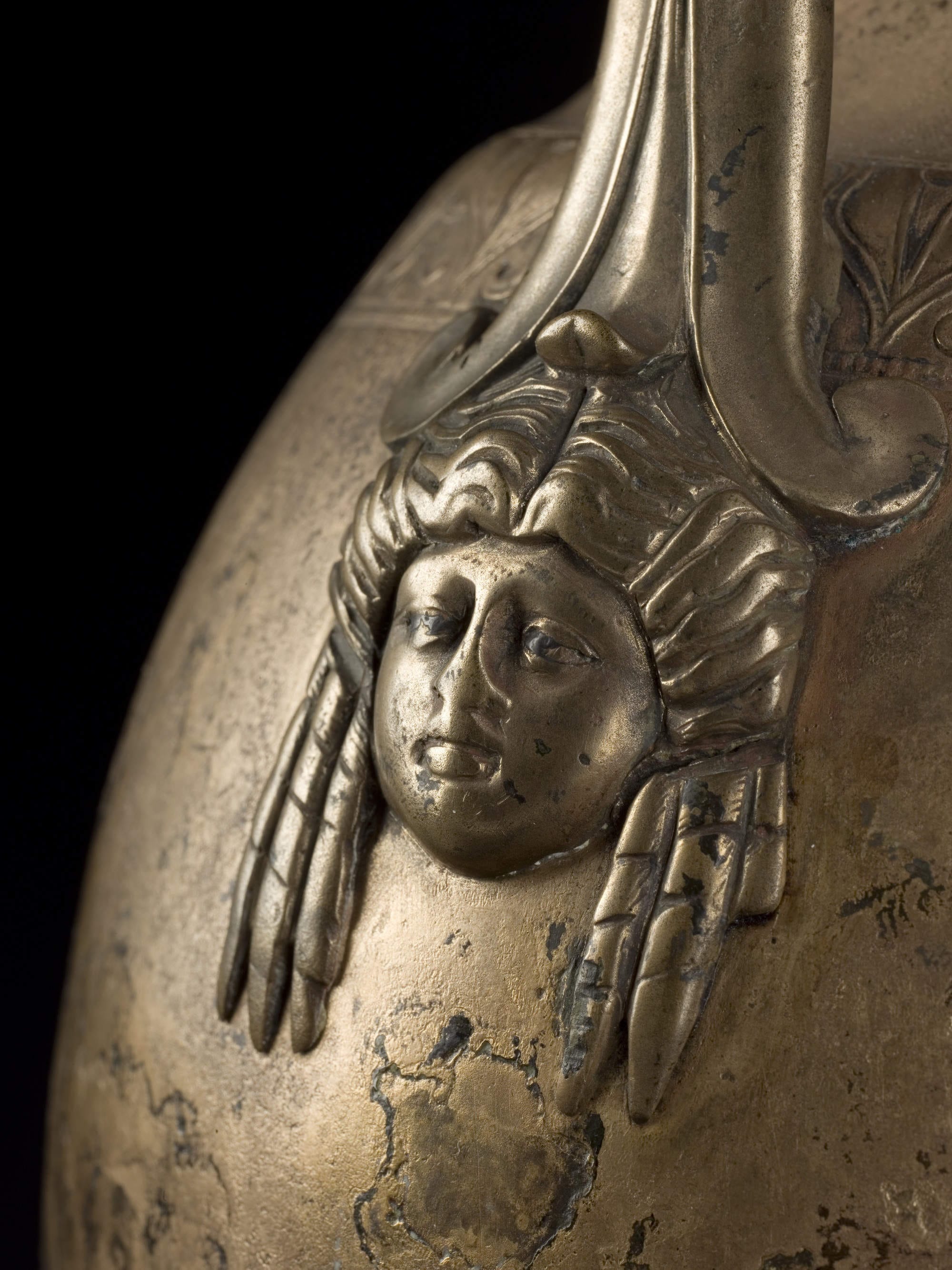
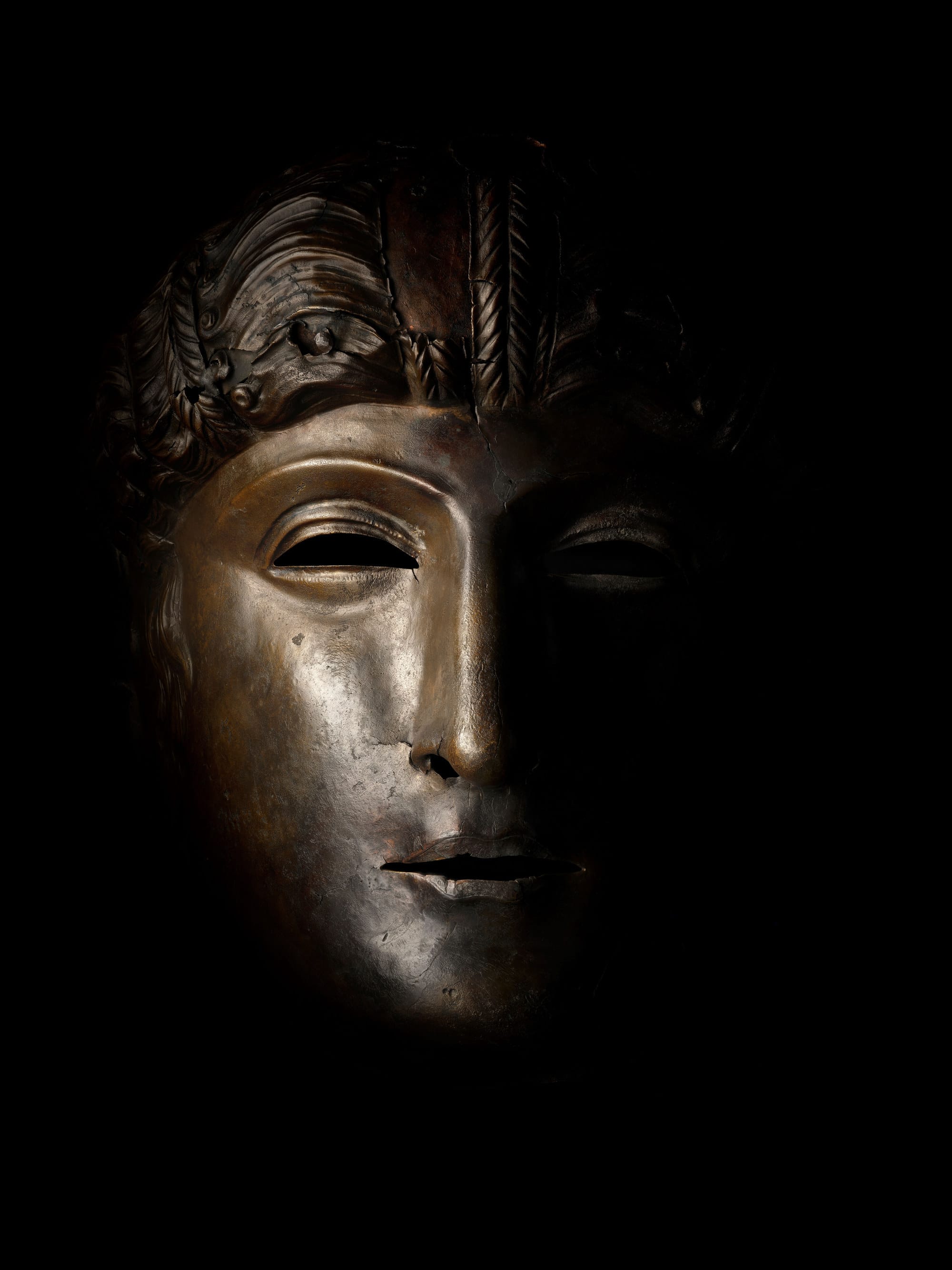
At Newstead, near Melrose in the Scottish Borders, the Roman fort of Trimontium produced cavalry equipment that makes practicality look positively underdressed. Its celebrated face helmets covered the wearer with an idealised metal face. Elaborate examples belonged to the display culture of cavalry exercises and parades, turning a mounted soldier into something far more polished and unsettling than an ordinary man on a horse.
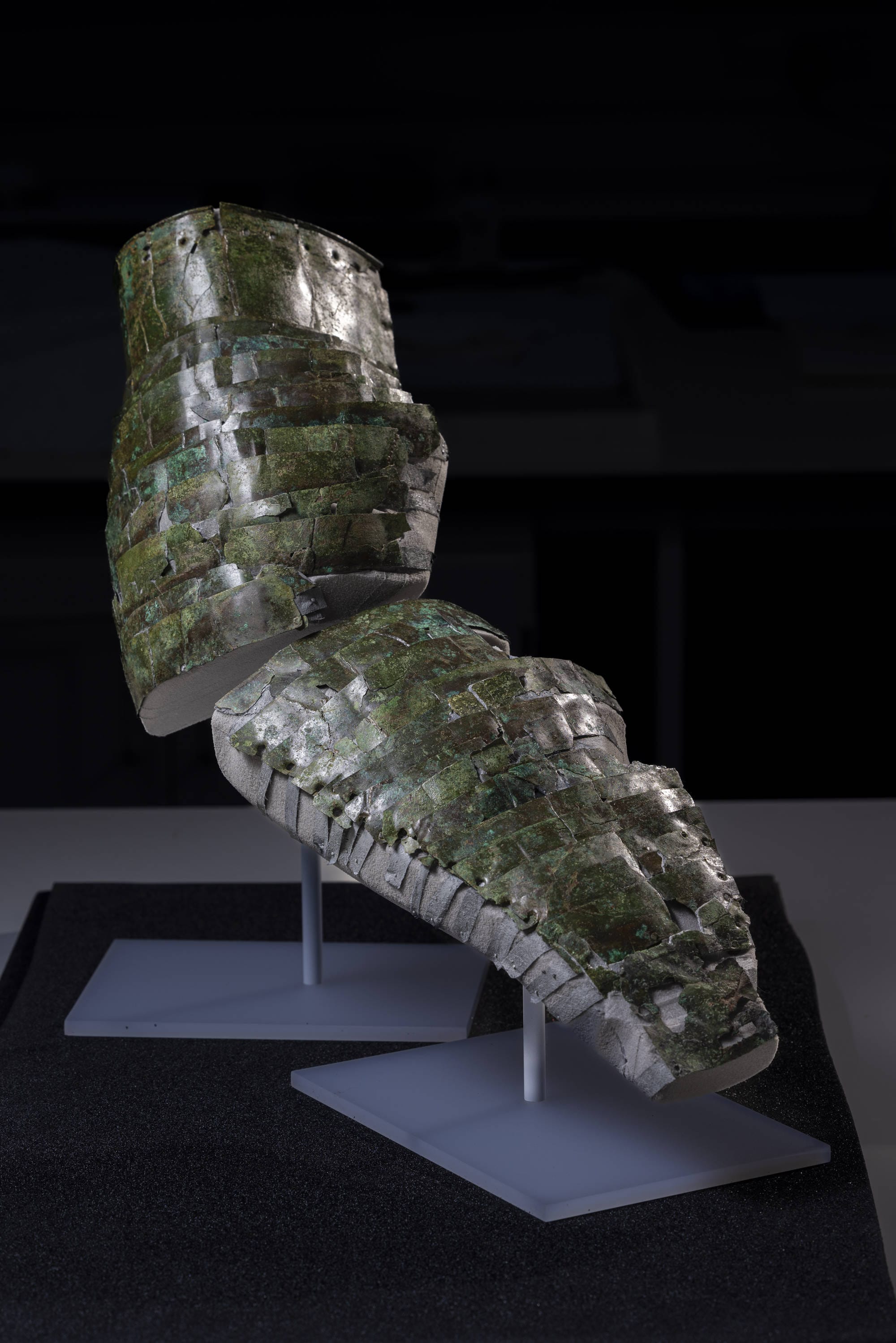
Other finds reveal the labour behind that spectacle. Small overlapping metal scales could be assembled into flexible armour; a surviving brass armguard from Newstead protected its wearer with articulated plates. These objects required skilled manufacture and careful fitting. Even at a distant military settlement, equipment could protect its wearer while advertising skill and status.
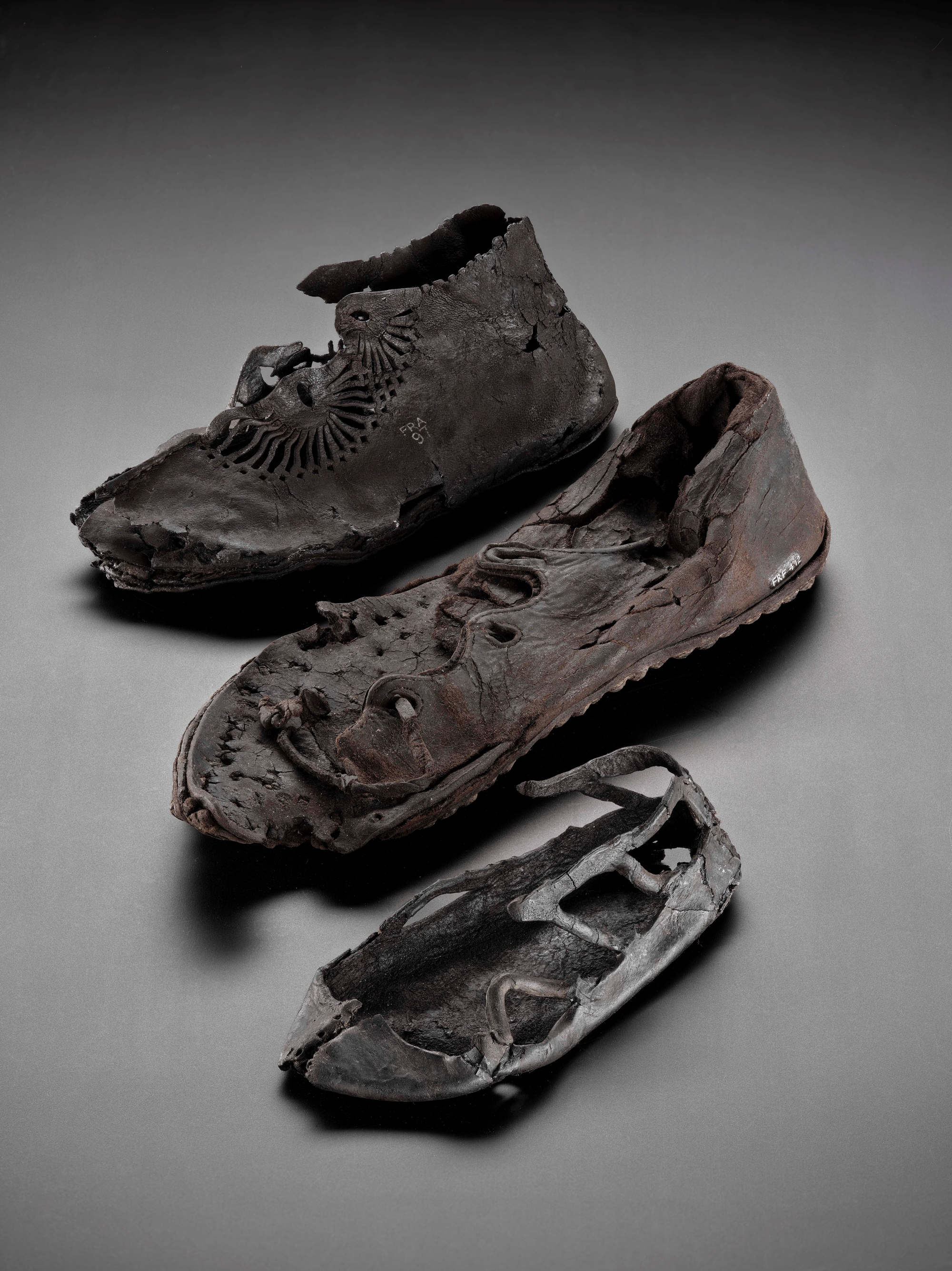
Leather shoes bring the scale back down to the individual foot, while showing the skill of the makers behind Roman fashion. Surviving footwear from Scottish forts includes carefully cut, decorative designs, with shoes for women and children as well as men. These settlements contained more than troops standing to attention. Their possessions preserve the practical and personal choices of wider military communities: protection for a limb, a striking face for a parade, or simply a good-looking shoe.
A sun god with possible special effects
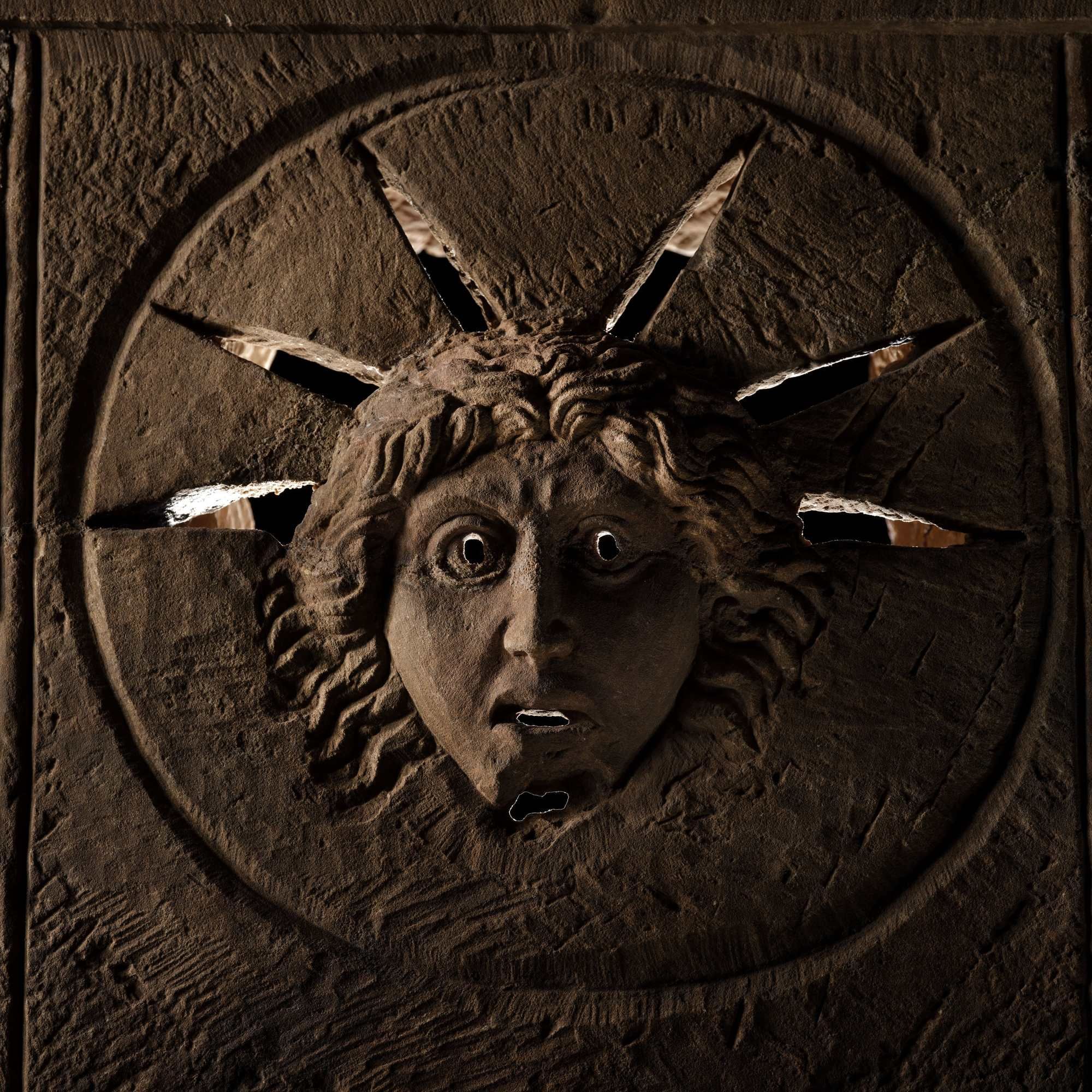
Inveresk, near Edinburgh, supplied a particularly ambitious religious installation. Two sandstone altars discovered during work at a cricket pavilion in 2010 were dedicated to Mithras and Sol, the sun god. Their dedications identify the same Roman centurion as their donor. Carved imagery and traces of paint show the care lavished on these objects for the worship of Mithras.
On Sol’s altar, the god’s face has pierced eyes, mouth and rays. A cavity behind it could accommodate a lamp, allowing light to emerge through the stone. An iron fitting prompted the further suggestion that a suspended object might have produced sound. The possibility gives this sandstone face a wonderfully theatrical edge.
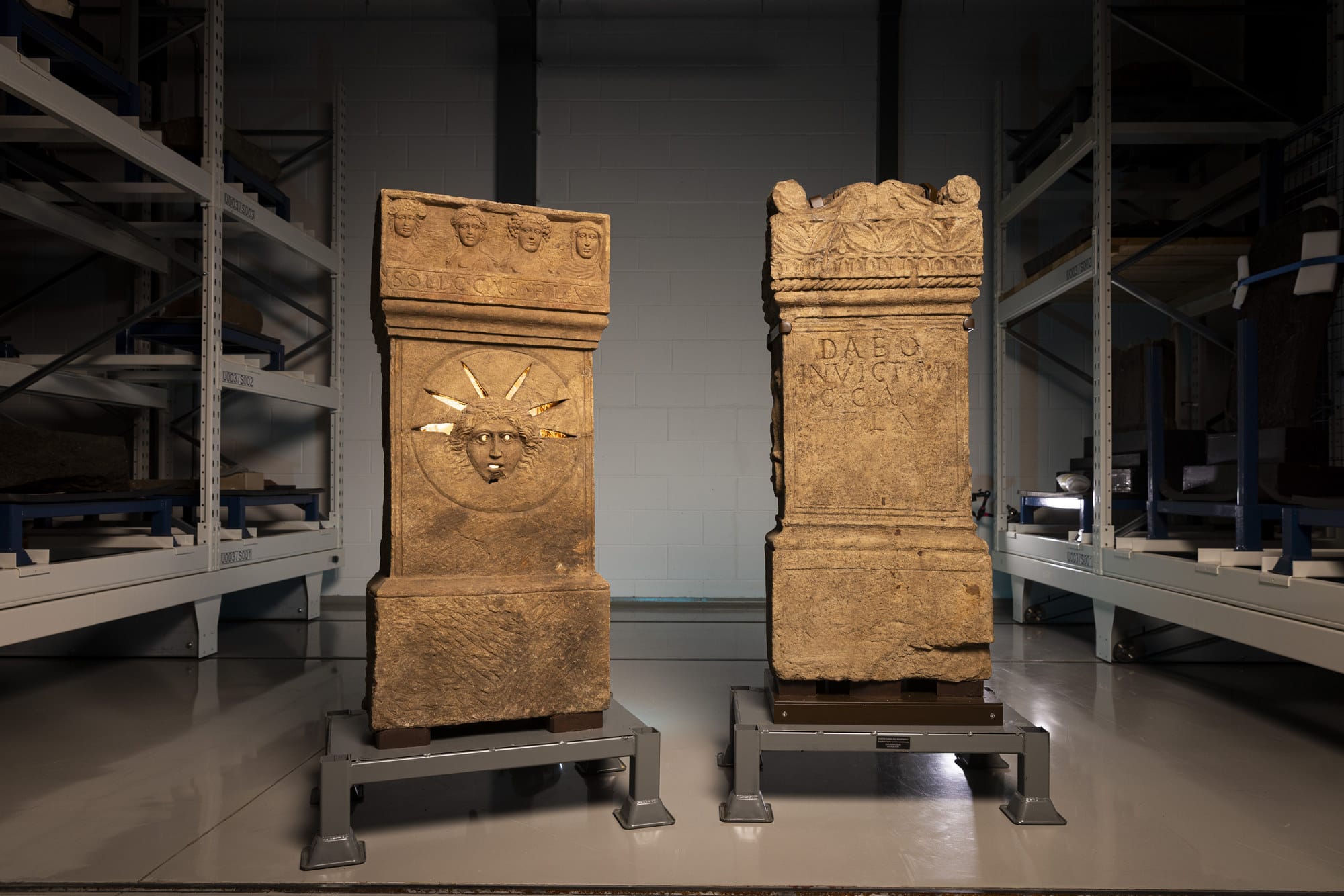
Around it, female figures personify the seasons, bringing the annual cycle into the sanctuary’s imagery. The two altars had been carefully buried, apparently during the Roman abandonment of the site. The altars belong to the second-century occupation. A cult associated with the wider empire had acquired a very tangible address in East Lothian, complete with an unusually expressive sun.
The empire preferred its victories carved
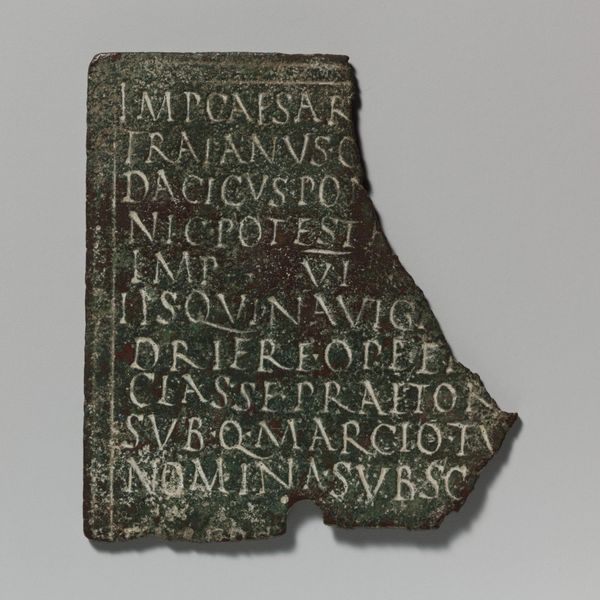
The Antonine Wall’s distance slabs are Roman self-advertisement in stone. Military units recorded stretches of construction beneath dedications to the emperor. Some added images of victory, sacrifice and conquered opponents. The builders were marking their work and announcing who commanded the landscape. An imperial construction plaque could accommodate considerably more menace than a discreet foundation stone.
The Bridgeness slab, found near Bo’ness, is especially emphatic. Its inscription credits the Second Legion with a measured length of work. On one side, a mounted Roman rides against defeated figures; on the other, a ceremonial scene presents the army’s religious observance. Labour, military violence and divine approval share a single carefully organised surface. The message is scarcely shy.
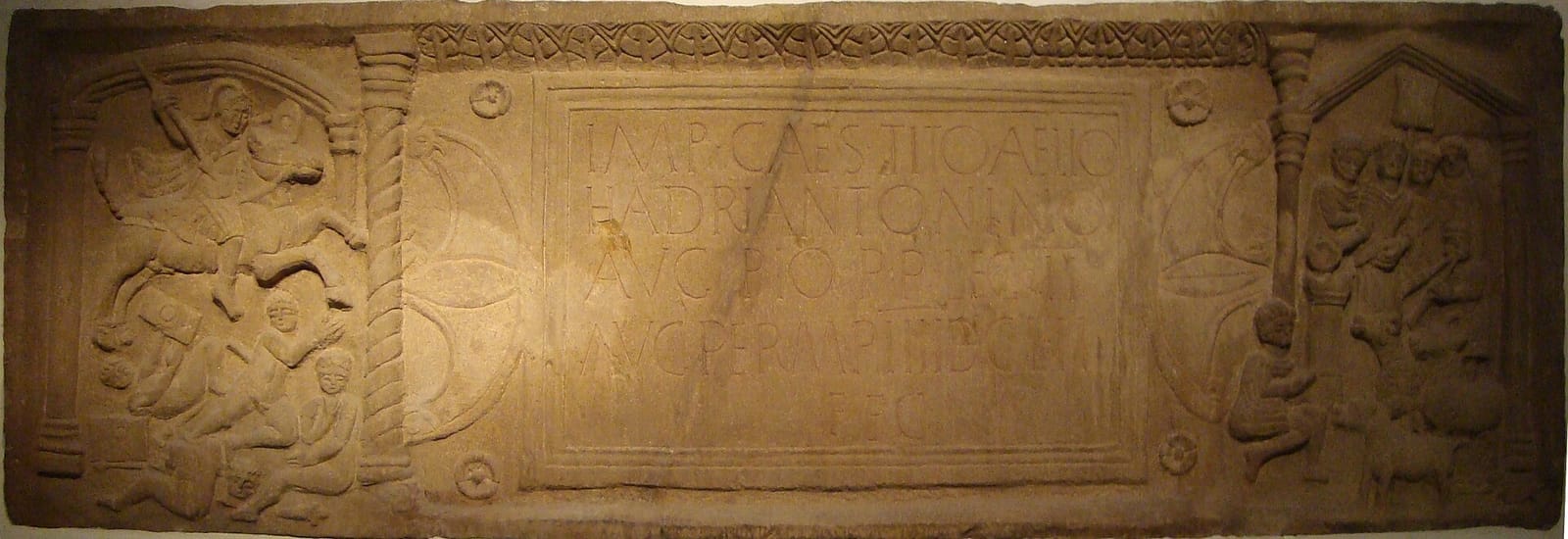
These carvings give the comforts their proper setting. Baths, fine equipment and imported goods travelled with an army imposing imperial control, and the commemorative images celebrated domination. Local communities encountered that power in different ways, from conflict to negotiated relationships and exchange. The beautiful possessions belong within that history, alongside the people represented as losers on Rome’s own monuments.
When leaving, remember the nails
At Inchtuthil, the departure left a spectacularly unglamorous object lesson. Excavators in 1960 recovered at least 875,428 iron nails from a buried hoard associated with the fortress’s dismantling. Rounded to about a million, the quantity is difficult to picture until individual spikes become a mass. Building a legionary base required an immense amount of ordinary hardware, each piece made and supplied.
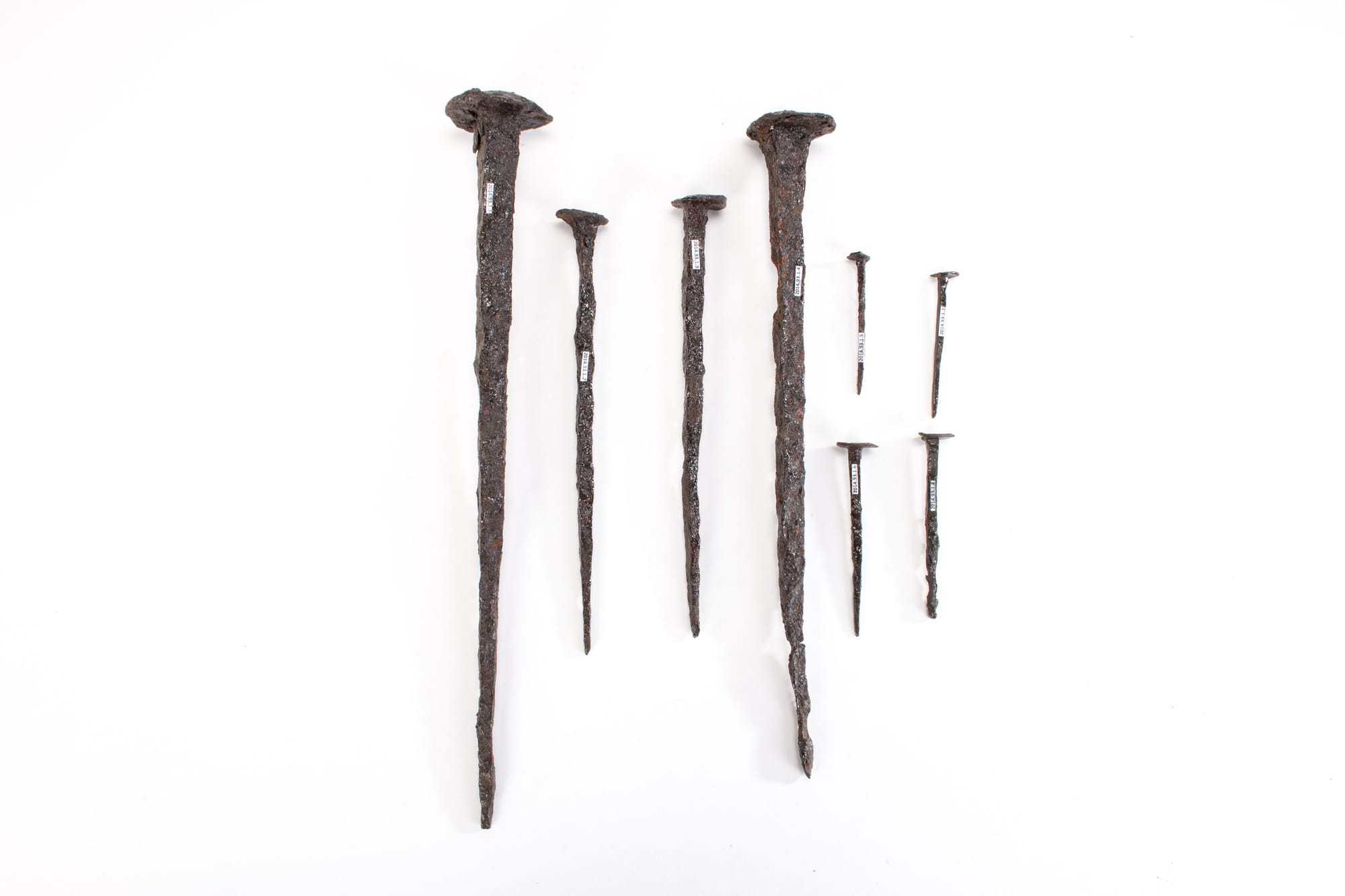
The hoard is often explained as valuable iron concealed to prevent others recovering it. Recent research also revisits whether its contents included nails salvaged from demolished buildings, rather than simply unused stock. Experiments show that extracted nails can remain straight, complicating the familiar neat division between pristine supplies and bent demolition debris. The burial is secure; its complete practical logic is still being investigated.
That is an appropriately awkward final possession for Rome’s Scottish inventory. The army could commission an impressive helmet, heat a bathhouse and furnish a sanctuary, then dismantle a fortress and bury its metal. What remains is a remarkably personal trail through a shifting frontier: the things people wore, ate, worshipped before and finally left behind. Even imperial ambition had to deal with the packing.


About the Roman Empire Times
See all the latest news for the Roman Empire, ancient Roman historical facts, anecdotes from Roman Times and stories from the Empire at romanempiretimes.com. Contact our newsroom to report an update or send your story, photos and videos. Follow RET on Google News, Flipboard and subscribe here to our daily email.
Follow the Roman Empire Times on social media: