
The Emperor Who Ruled Rome for 77 Days
Petronius Maximus ruled the western Roman empire for only 77 days. His brief reign followed the murder of Valentinian III and ended just before Genseric’s Vandals entered Rome.

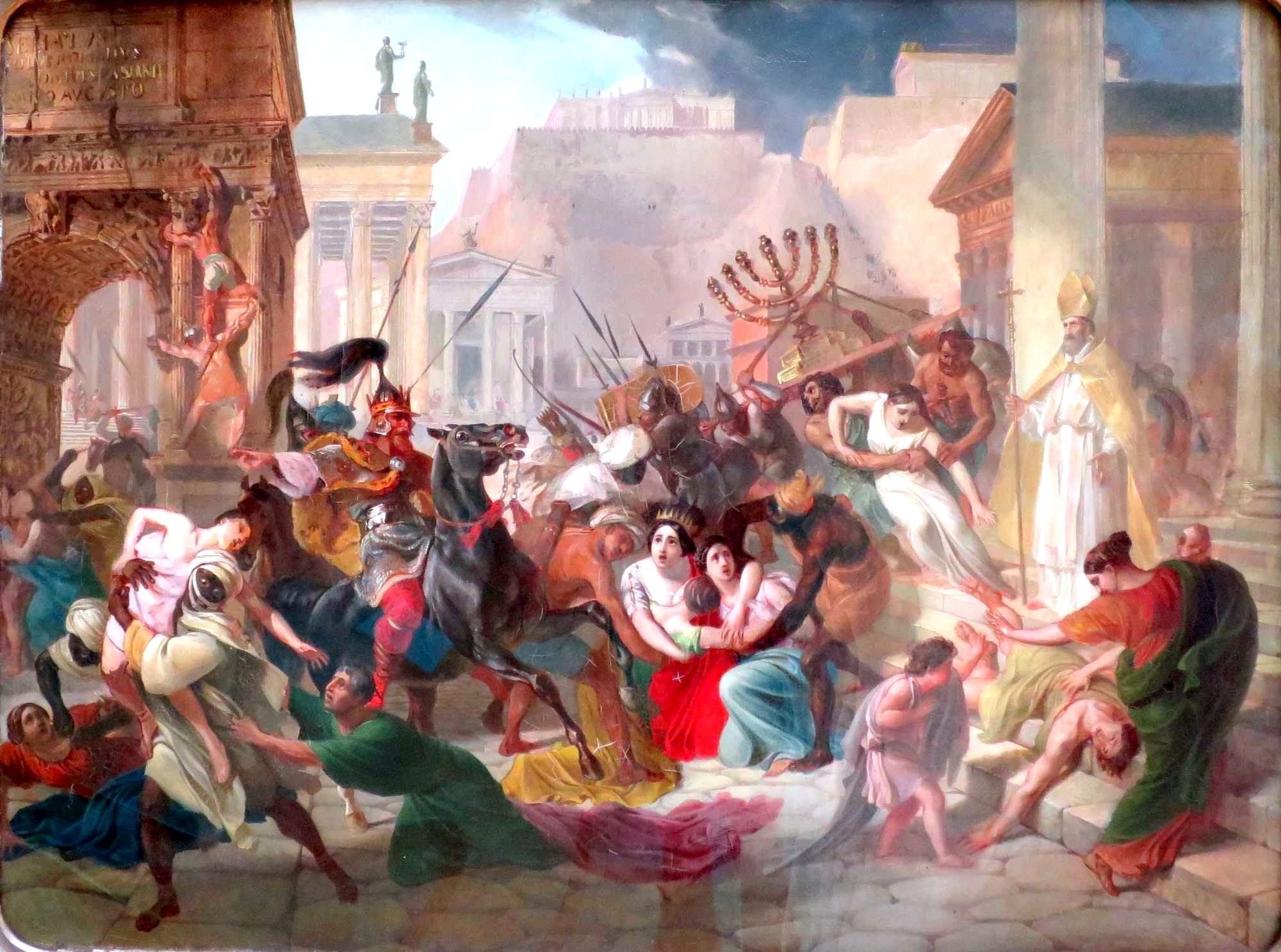
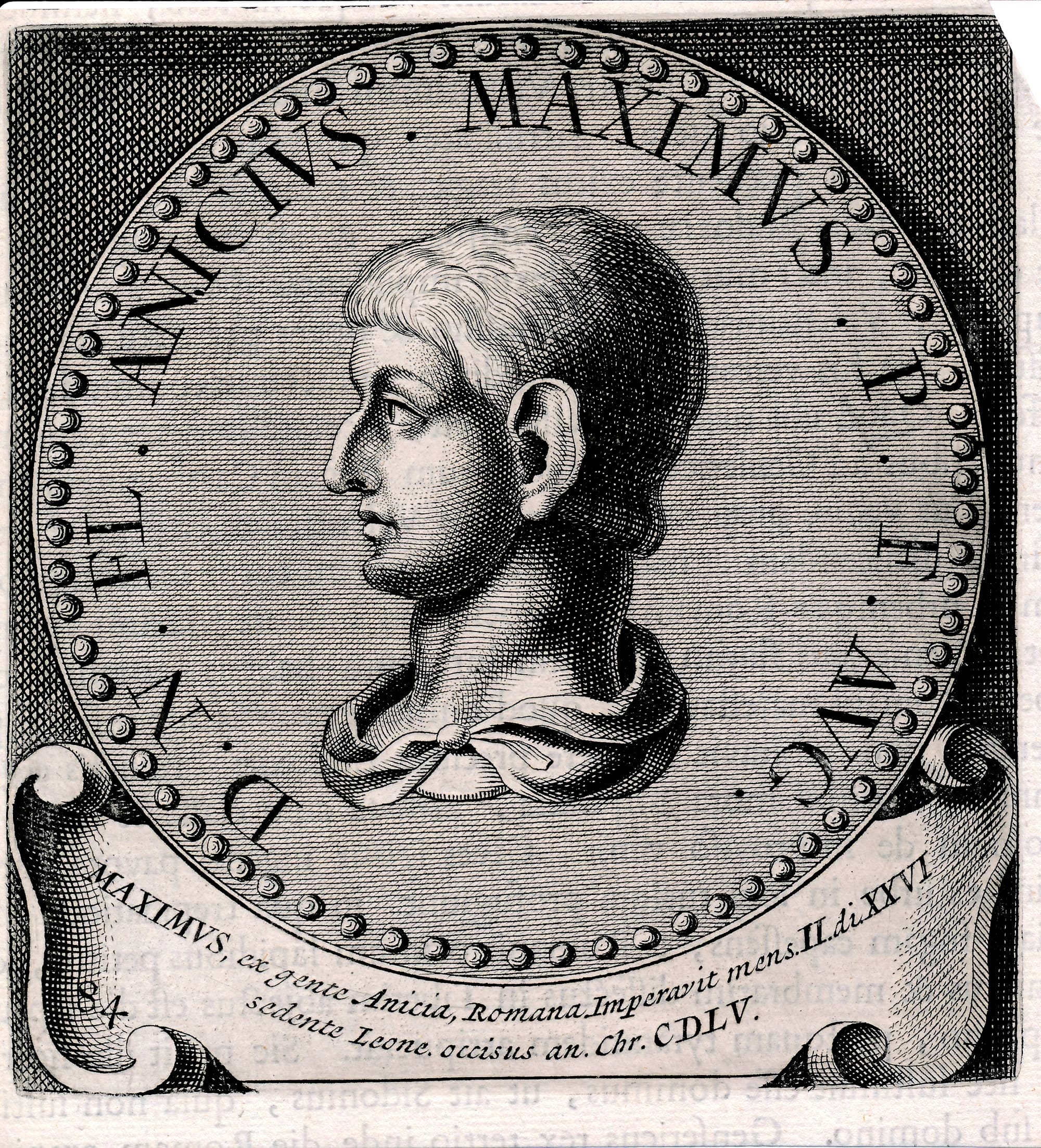
Petronius Maximus became western emperor in 455, after the murder of Valentinian III. His reign lasted 77 days. The sources preserve little about his government, but they record how he came to power, how he tried to connect himself to Valentinian’s family, and how his rule ended when Genseric’s Vandals approached Rome.
The Murders Before the Throne
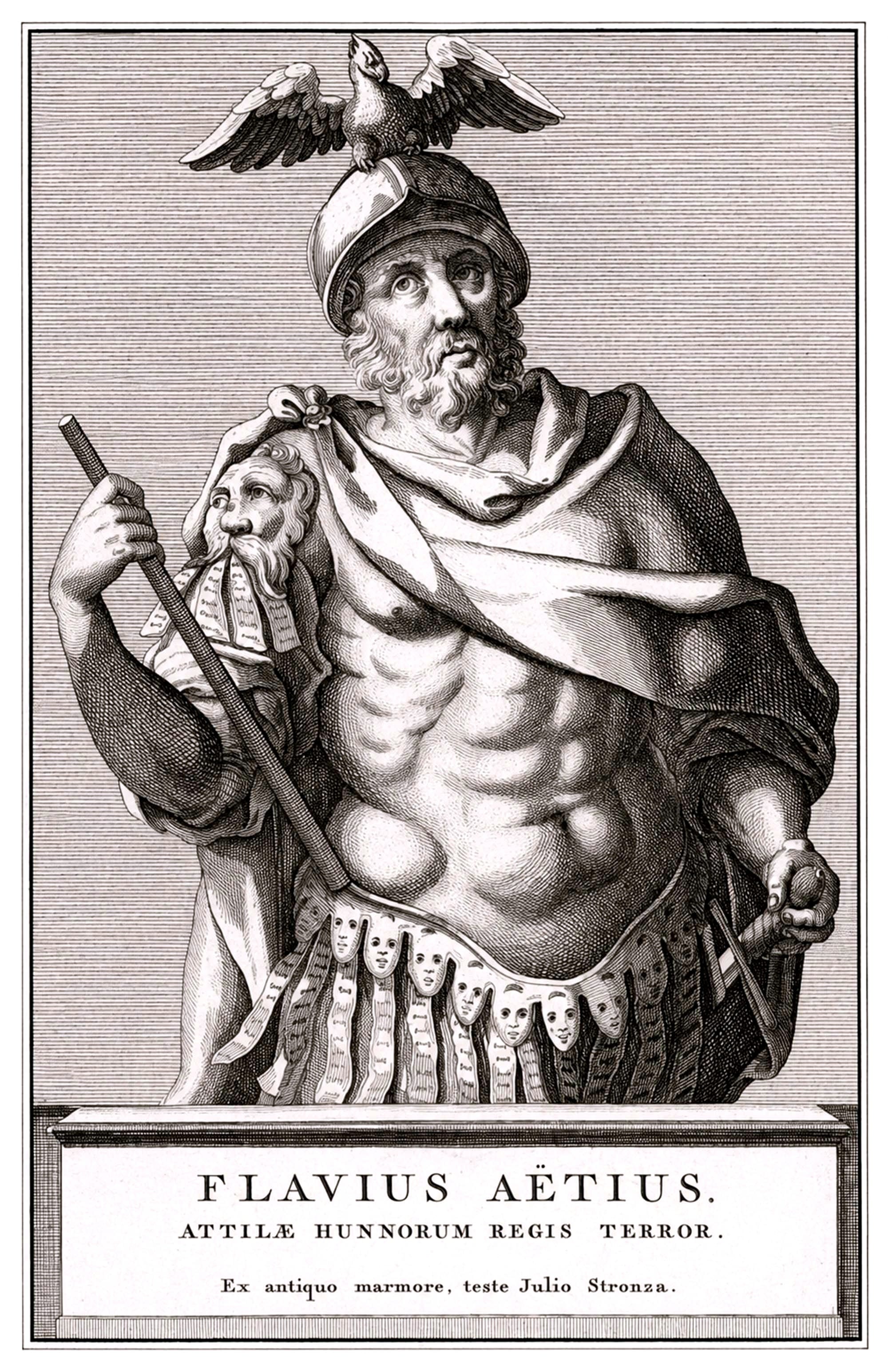
The first death in the sequence was not Valentinian’s, but that of Flavius Aëtius. Aëtius had been one of the most important military figures in the western empire, and one chronicle gives two explanations for the events that led to his death.
In one version, Valentinian was persuaded that Aëtius had dangerous plans and that the emperor would be safer if he acted first. In another version, Aëtius was pressing too strongly for agreements involving his son, and this helped turn Valentinian against him.
In both versions, Aëtius was brought into the inner part of the palace and killed there by Valentinian and those around him. Boethius, the praetorian prefect, was killed at the same time, and the chronicle places him beside Aëtius because of their close friendship.
A later narrative gives Maximus a more direct role in Aëtius’ fall. In this account, Maximus wanted to act against Valentinian, but Aëtius was too powerful to ignore. His military reputation and influence made him an obstacle to any move against the emperor.
Maximus therefore worked first against Aëtius. He used people close to Valentinian to persuade the emperor that Aëtius was preparing a revolt. Valentinian believed this and killed Aëtius.
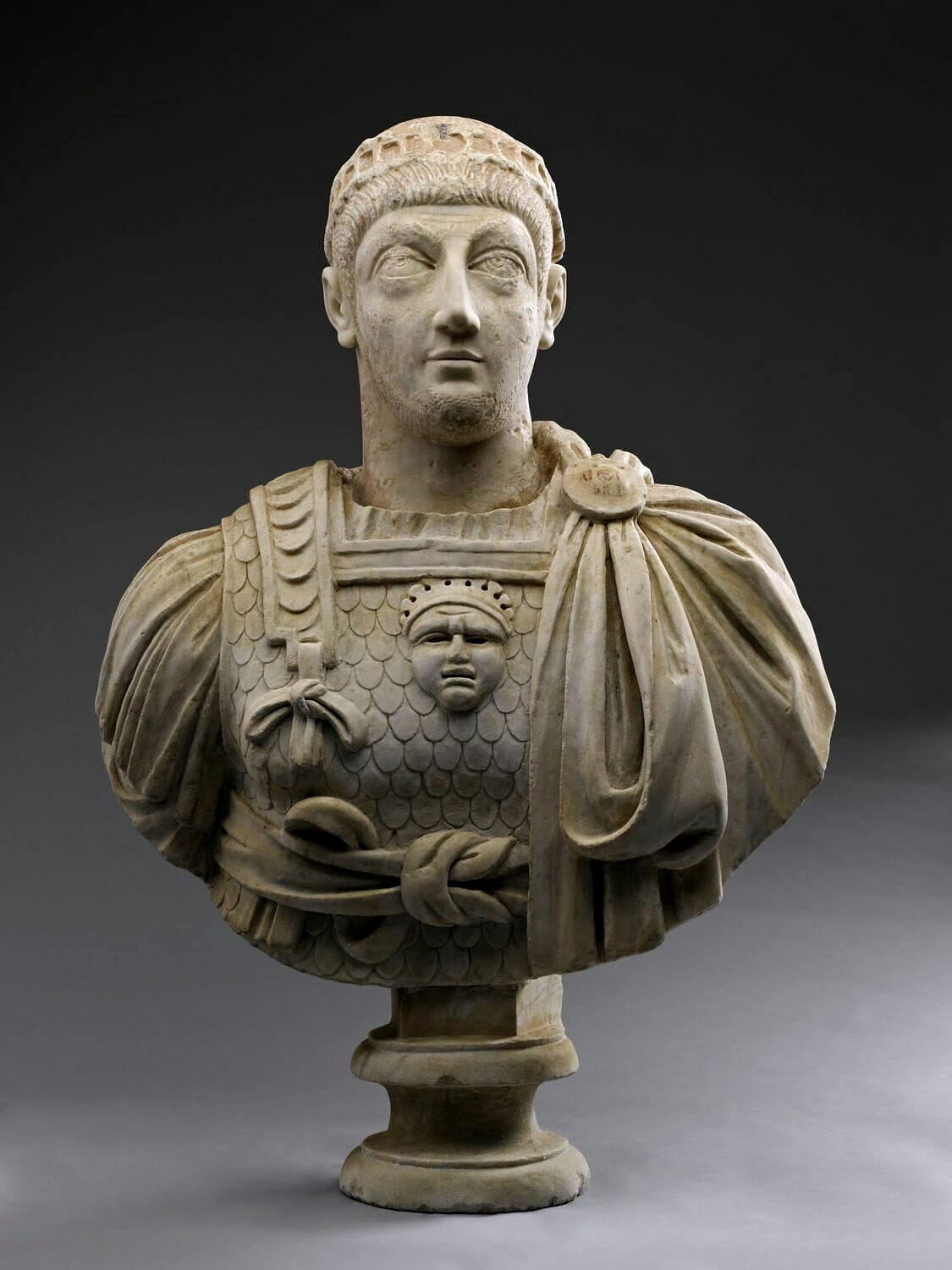
Valentinian was killed not long afterward. One chronicle says he was killed at Rome by two barbarian intimates of Aëtius while he was among his army. It gives his age as thirty-six and places the murder in the thirty-first year of his reign.
Another account gives a fuller setting. Valentinian had gone outside the city and was waiting for a military display. The men who attacked him followed him secretly, chose their moment, and stabbed him unexpectedly. Heraclius was killed beside him, and the same account adds that no one from the emperor’s party acted to avenge him.
Maximus Takes Power
After Valentinian’s murder, Petronius Maximus took imperial power at Rome. He was not an unknown figure. The sources present him as a man from the highest Roman ranks: he had held the consulship, and one chronicle says he had been consul twice. He also had the dignity of patrician.
Another account describes him as a senator and links his family to the earlier Maximus who had once tried to take imperial power and was defeated by Theodosius I. Because of this rank, some initially expected him to be useful to the state.
That expectation quickly changed. The same chronicle says Maximus did not punish the men who had killed Valentinian. Instead, he received them as friends. This is one of the first details preserved about his reign: the sources do not describe a ruler restoring order after an emperor’s murder, but a ruler accepting the men involved in that murder.
The Widow and the Caesar
Maximus then married Licinia Eudoxia, the widow of Valentinian III. The marriage is presented as forced. One chronicle says Maximus did not allow Eudoxia to mourn her husband and compelled her to marry him only a few days after Valentinian’s death.
Another chronicle also records that Maximus married Valentinian’s widow when he became emperor. The marriage had political meaning, because Eudoxia was not only Valentinian’s widow. She was also the daughter of Theodosius II, and through her Maximus could connect himself to the Theodosian family, whose western line had continued down to Valentinian.
Maximus also arranged a second marriage. Valentinian’s daughter was given to Palladius, Maximus’ son from an earlier marriage. Palladius had been made Caesar. This joined Maximus and his son to Valentinian’s family, but the sources do not present these marriages as a successful settlement.
They place the marriages among the events that came between Valentinian’s murder and Maximus’ death. The same chronicle that records the marriage to Palladius also says Maximus was troubled by serious disturbances and fear.
The Story of the Ring
One account gives a longer explanation for the hostility between Maximus and Valentinian. In this version, Valentinian desired the wife of Maximus. Since he could not approach her openly, he used a trick. He played a game with Maximus and won his ring as a pledge.
The ring was then sent to Maximus’ wife with a message telling her to come quickly to the palace to greet Eudoxia. Because the ring seemed to prove that the message came from her husband, she obeyed and went to the palace.
Procopius gives the next part directly:
“And she was received by those who had been assigned this service by the emperor, and led into a certain room far removed from the women's apartments, where Valentinian met her and forced her, much against her will. And she, after the outrage, went to her husband's house weeping and feeling the deepest possible grief because of her misfortune, and she cast many curses upon Maximus as having provided the cause for what had been done.”
In this account, Maximus then began to plot against Valentinian. The same account does not move directly from the assault to Valentinian’s death. It first explains why Aëtius had to be removed.
Maximus believed Aëtius was strong enough to prevent a plot against the emperor. He therefore helped turn Valentinian against him. Once Aëtius was dead, Valentinian was more exposed, and the account then places Valentinian’s murder after the removal of Aëtius.
The chronicle accounts are shorter. They do not give the ring story in this form. They give the public sequence: Aëtius killed, Valentinian killed, Maximus made emperor, Eudoxia forced into marriage.
Eudoxia and the Vandal Rumour
After Maximus married Eudoxia, the longer account says he spoke to her privately. He told her that what had happened had been done because of love for her. In that account, Eudoxia already hated Maximus and wanted vengeance for Valentinian.
His words made her anger stronger, because she understood from them that Valentinian had been killed because of her. The same account then says she sent a message to Genseric, king of the Vandals, in Carthage.
In this version, Eudoxia asked Genseric to avenge Valentinian and free her from Maximus. She appealed to him as someone connected by friendship and alliance to the imperial house. The account also says she did not expect help from the East, because Theodosius II was dead and Marcian held power there.
Another chronicle treats the matter more cautiously. It records the idea that Genseric came at the invitation of Valentinian’s widow, but presents it as a rumour that had spread. The sources allow us to say that ancient accounts connected Eudoxia with Genseric’s intervention; they do not allow us to state without caution that she certainly summoned the Vandals.
The same narrative also gives Genseric a practical reason to sail. Eudoxia’s appeal is part of the story, but the Vandal king is not presented as acting only for her. Procopius writes:
“Gizeric, for no other reason than that he suspected that much money would come to him, set sail for Italy with a great fleet.”
Even in this version, the expedition is tied to expected plunder as well as to Eudoxia’s message.
When Genseric Approached
When news of Genseric’s approach reached Rome, people began to leave. One chronicle says many fled, including nobles and commoners. Maximus also wanted to leave. The same chronicle says he gave everyone permission to go wherever they wished and then tried to get away quickly himself.
Another chronicle says he was trying to abandon both imperial power and Rome. The accounts agree on the general setting of his final moments: Genseric was approaching, Rome was afraid, people were leaving the city, and Maximus tried to flee.
He was killed before Genseric entered Rome. One chronicle says Maximus died on the seventy-seventh day after taking power. It says his body was torn apart, thrown into the Tiber, and denied burial.
Another chronicle says he was killed in Rome during an uprising of the people and a mutiny of the troops, while he was trying to leave both the rule and the city. Procopius gives a more brutal version of the same moment:
“Now while Maximus was trying to flee, the Romans threw stones at him and killed him, and they cut off his head and each of his other members and divided them among themselves.”
The details differ, but the sequence is the same. Maximus tried to escape when Genseric was approaching, and he died before the Vandal king entered the city.
Rome After Maximus
After Maximus’ death, Genseric entered Rome. One chronicle says the city had no defence. It also says Bishop Leo met Genseric outside the gates. In that account, Leo’s appeal restrained Genseric from burning the city, killing the population, or using torture.
Rome was still plundered. The city was searched openly for fourteen days and stripped of its wealth. Many thousands of captives were taken.
Genseric entered without opposition and took possession of the palace. He took Eudoxia captive, together with Eudocia and Placidia, her daughters by Valentinian. Another chronicle also says Genseric returned to Carthage with Valentinian’s widow and two daughters, and adds that Gaudentius, the son of Aëtius, was taken as well.
Genseric loaded a very large amount of gold and other imperial treasure onto his ships. He did not spare the palace, and he temple of Jupiter Capitolinus was plundered, including part of its gilded bronze roof.
Genseric then returned to Carthage. Eudocia, one of Eudoxia’s daughters, was married to Honoric, Genseric’s elder son. Placidia, who was the wife of Olybrius, was later sent to Byzantium together with her mother Eudoxia, at the request of the emperor.
After these events, Avitus was proclaimed emperor in Gaul. One chronicle says he was hailed first at Toulouse and then at Arles by the army of Gaul and by distinguished citizens. It then says he went to Rome and was accepted there. Another entry says Avitus sent envoys to Marcian to seek agreement over imperial power.
The same chronicle marks Valentinian as the end of the Theodosian line in the West.
Petronius Maximus ruled for 77 days. The sources preserve little about his government. They preserve the events around his accession and death: the killing of Aëtius, the murder of Valentinian, the marriage to Eudoxia, the marriage arranged for Palladius, the story connecting Eudoxia with Genseric, the panic in Rome, Maximus’ death, and the sack that followed.
His reign stands in the sources between the death of Valentinian and the arrival of Genseric. Maximus took power after one emperor was killed, tried to attach himself to that emperor’s family, and died before Rome was plundered.
Procopius, "History of the Wars, Book III, The Vandalic War" translation by H. B. Dewing
Prosper of Aquitaine, "Epitoma Chronicon", in Alexander Callander Murray, "From Roman to Merovingian Gaul: A Reader"
Hydatius, Chronicle, in Alexander Callander Murray, "From Roman to Merovingian Gaul: A Reader"


About the Roman Empire Times
See all the latest news for the Roman Empire, ancient Roman historical facts, anecdotes from Roman Times and stories from the Empire at romanempiretimes.com. Contact our newsroom to report an update or send your story, photos and videos. Follow RET on Google News, Flipboard and subscribe here to our daily email.
Follow the Roman Empire Times on social media: