
How did Romans Flood the Colosseum for Naval Battles in the Arena?
Were naumachiae actually held in the Colosseum? How did the Romans flood the arena to stage a naval battle?

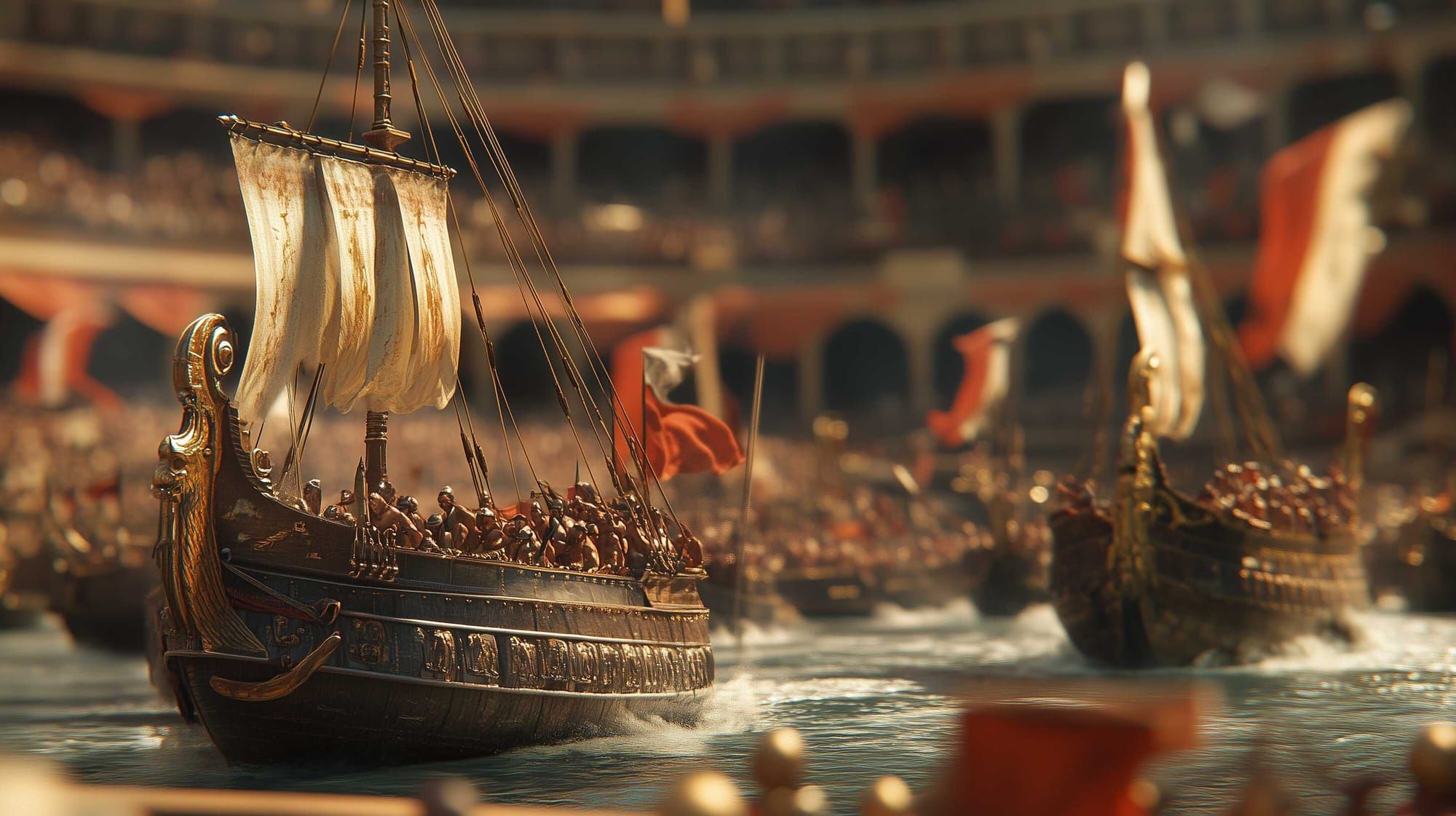
It’s believed that the Emperor Titus hosted the first Colosseum naval battle (naumachia, from the Greek ‘ναυμαχία’) in 80 AD to celebrate the amphitheater’s grand opening. These events were similar to gladiatorial fights in that they were fought to the death, but participants were typically prisoners of war or condemned criminals reenacting famous historical sea battles.
Water Spectacles of Early Imperial Rome
Dio dedicates nearly a full chapter to describing the water-based displays included in Titus' hundred-day celebration for the inauguration of the Flavian Amphitheatre in A.D. 80 (referred to as θέατρον [κυνηγετικόν], and later widely known as the Colosseum).
Despite certain limitations as a historian, Dio’s detailed account, especially when presenting challenging specifics, is not to be dismissed lightly. His description of Titus' aquatic spectacles notably differentiates between the Flavian Amphitheatre and the Stagnum Augusti, presenting an intricate set of details that highlight the logistical and symbolic complexities of these displays:
“Large numbers of individuals fought in single combat, whereas others competed against each other in groups in infantry and naval battles.
For Titus had suddenly filled this same theatre with water, and he had brought in horses and bulls and other domesticated animals that had been taught to do in water everything that they could do on land.
He also brought in people on ships; they engaged in a naval battle there representing the Corcyreans versus the Corinthians. Others gave a similar display outside the city in the grove of Gaius and Lucius, which Augustus had once excavated for this purpose.
There, too, on the first day - once the lake in front of the images had been covered with a platform of planks and wooden stands had been erected around it - there was a gladiatorial display and a slaughter of wild beasts; on the second day there was a horse-race, and on the third day a naval battle involving three thousand men, followed by an infantry battle: the 'Athenians' conquered the 'Syracusans' (these being the designations the men fought under), landed on the island, and stormed and captured a wall that had been built around the monument.”
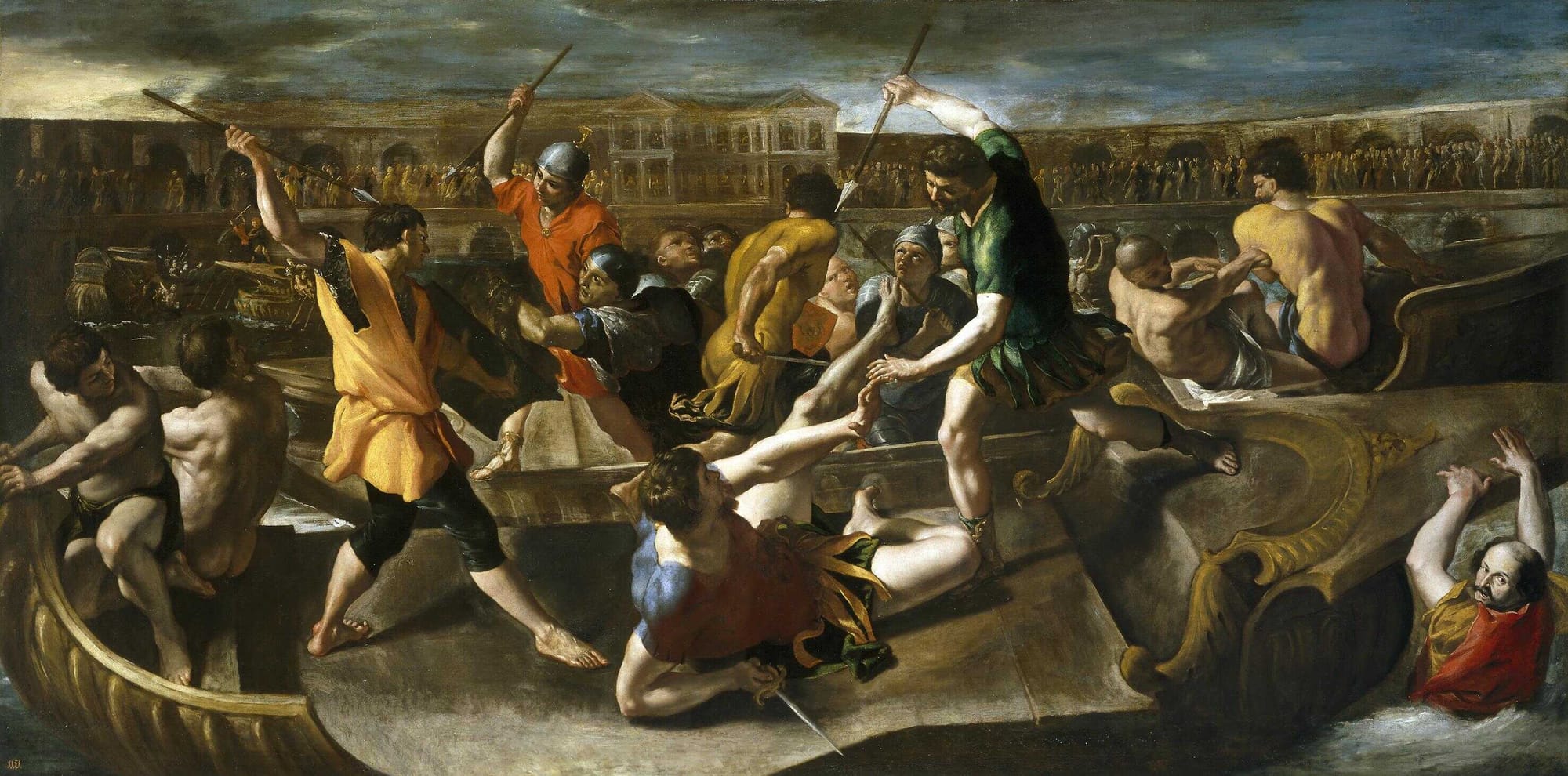
The questions that arise from such a description vary in nature, from a purely logical and feasibility perspective, as well as understanding the era’s logistics and limitations.
- Is it plausible to believe that aquatic spectacles were truly staged within the Flavian Amphitheatre?
- Could the arena be effectively flooded?
- How did animals play a role, and was there enough space for naval battles?
- What motivated the recreation of historical battles, especially when the venue seemed inadequate for such displays?
- Furthermore, if the Flavian Amphitheatre could accommodate aquatic events, why replicate them at the Stagnum Augusti or install a platform there to host spectacles more suited to the amphitheatre or circus?
- And why reenact a historical event, like the Athenian failed attack on Syracuse in 414 B.C., only to stage an outcome at odds with real history?


About the Roman Empire Times
See all the latest news for the Roman Empire, ancient Roman historical facts, anecdotes from Roman Times and stories from the Empire at romanempiretimes.com. Contact our newsroom to report an update or send your story, photos and videos. Follow RET on Google News, Flipboard and subscribe here to our daily email.
Follow the Roman Empire Times on social media: