
What Romans Thought Made a Man Weak
To the Romans, weakness in a man was never just physical. It could be seen in softness, luxury, dress, gesture, desire, and the failure to master oneself.

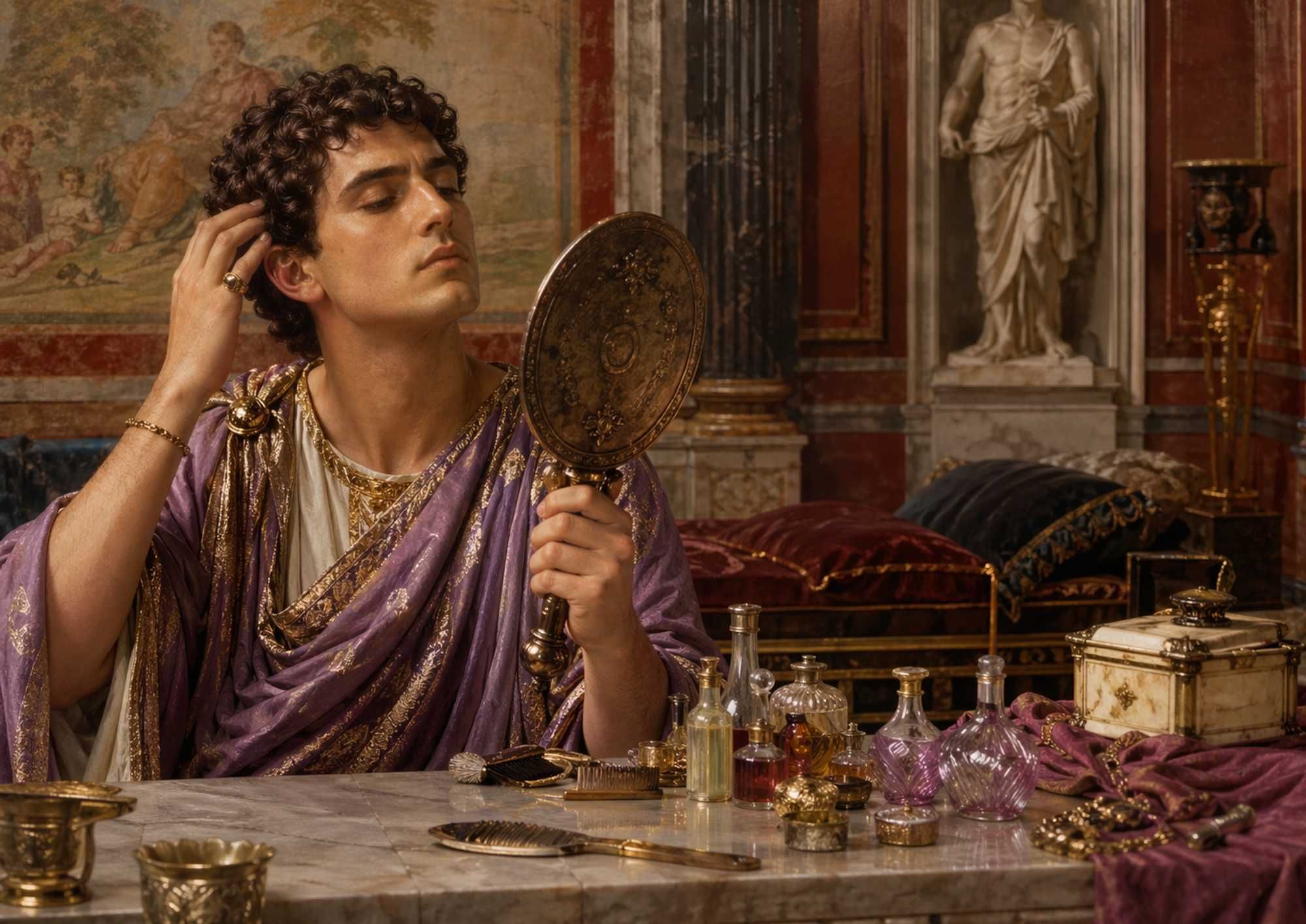
To the Romans, weakness in a man was never just a matter of the body. A man could be strong in build and still be judged weak in character, habits, voice, desires, or conduct. Again and again, Roman writers returned to the same fear: that comfort, softness, excess, and lack of self-command could quietly undo the kind of discipline on which both manhood and power were supposed to rest. In their eyes, weakness was not simply a condition. It was a warning sign; one that touched the body, the household, and the state alike.
Softness and the Roman Idea of Weakness
For Roman writers, weakness in a man was often expressed through the language of softness. The adjective mollis and its related forms did not point to one single flaw, but to a whole range of qualities that could make a man seem unmanly. At its most basic level, the word could refer to literal softness – a body that was tender rather than firm.
But when applied to men, the term quickly moved beyond the physical. It became a moral and gendered judgment. A soft man was not simply gentle. He was imagined as lacking firmness, discipline, and the hard edges that Roman culture associated with true masculinity.
This is one reason the word carried such force. Roman usage linked softness closely with femininity. When men were described through this language, they were being assigned traits considered woman-like: delicacy, timidity, self-indulgence, and insufficient self-control.
Softness was therefore not a neutral description. It suggested that something in the man’s bearing, appetites, or way of living had slipped away from the masculine ideal and toward a feminized condition.
The moral weight of the term is visible in the way Roman authors set it against harder masculine ideals. Cicero, for example, could write that there should be nothing
“effeminatum aut molle” – “effeminate or soft”
– in a man’s behavior. The pairing is revealing. Softness is not treated as a mild personal trait, but as something dangerously close to effeminacy itself. To be mollis was already to be drifting away from the masculine firmness Rome admired.
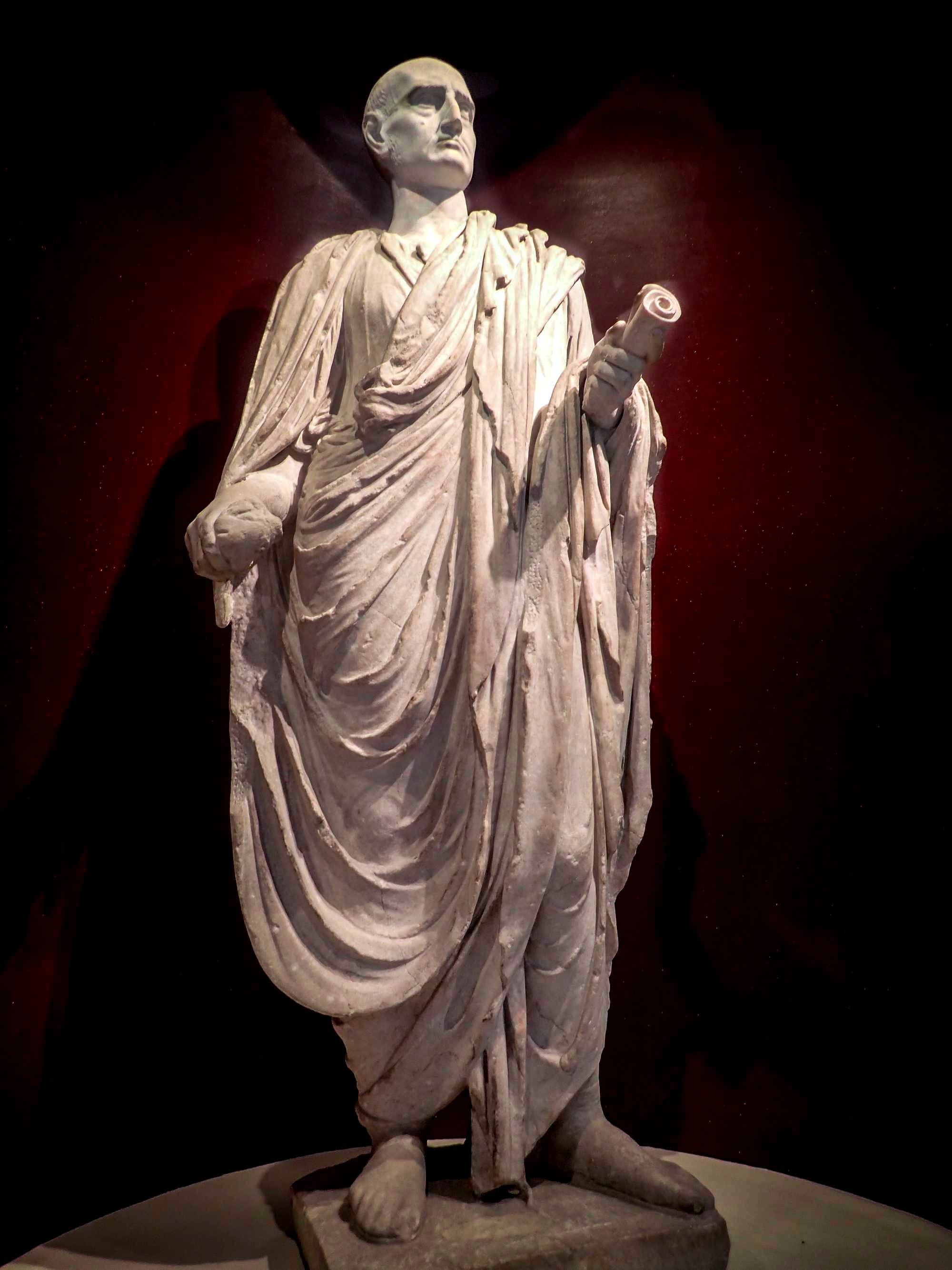
The term could also be used in a more behavioral and moral sense. A soft man might be lazy, inactive, indulgent, or too devoted to pleasure. Mollitia could signify inactivity, sensuality, or luxurious living, and it regularly stood in opposition to harder Roman values. In ancient texts, softness is associated with luxuria, delicate living, and the weakening effects of pleasure. Roman weakness was not just bodily frailty, but the condition of a man who had surrendered himself to comfort and appetite.
Roman “softness” was not confined to one sexual pattern. It could describe a man who cultivated a feminized style in order to attract women as well as a man who took pleasure in being penetrated. One of the sharpest examples comes from rhetorical writing that describes a man
“incedentem ut feminis placeat femina mollius” – walking more softly, almost like a woman,
in order to please women.
That image is especially revealing because it shows that softness could itself become an erotic performance. A man might seek female desire not by looking stronger or harder, but by seeming more feminine.
Yet the same vocabulary could turn in a different direction. In Phaedrus appears the striking phrase
“tribadas et molles mares” – “tribades and soft males.”
Here softness belongs to a more explicitly sexual register and marks men whose masculinity is compromised by the role they are imagined to enjoy. The point is important: Roman moral language was not sorting men simply into modern categories like heterosexual or homosexual. What disturbed Roman writers was the perception that a man’s body, manners, or desires had taken on a feminine cast.
Softness could therefore attach itself to different kinds of erotic behavior so long as the man appeared insufficiently masculine.
This wider semantic field is especially revealing. Physical softness leads into the broader notion of being “womanish,” and from there into associated meanings such as laziness, self-indulgence, inability to penetrate, and enjoyment of being penetrated. That visual summary is useful because it shows that these were not separate insults floating in isolation.
They formed a connected structure. In Roman terms, softness was a gateway concept through which bodily weakness, moral weakness, erotic weakness, and feminization all touched one another.
Mollis was opposed not only to durus, hard, but also to fortis, strong or brave. That opposition tells us a great deal. A soft man was not merely the opposite of a physically tough one. He stood against one of Rome’s central masculine virtues: firmness joined to courage.
Roman texts were setting softness against hardness and strength in ways that make the moral charge unmistakable. To call a man soft was to suggest that he lacked the endurance, severity, and inner steadiness expected of him.
This evidence helps explain why “weakness” in Rome could gather together so many different fears. A man might be called weak because he was too luxurious, too emotional, too languid, too eager to please, too sensual, or too sexually compromised. Roman moral language did not keep these failings neatly apart.
The discourse of softness allowed them to reinforce one another. Luxury suggested weakened self-command. Feminine manner suggested weakened character. Sexual passivity suggested weakened manhood. All of them could be folded into the same vocabulary of mollitia.
So when Romans asked what made a man weak, one of their most revealing answers was this language of softness. It named not just comfort or delicacy, but a whole condition of compromised masculinity. A soft man was one whose body, habits, desires, or conduct no longer seemed properly his own to command. In Roman eyes, that was not a minor defect of style. It was a sign that the firmness on which manhood itself was supposed to rest had begun to give way. ("The Meanings of Softness:Some Remarks on the Semantics of mollitia" by Graig Williams)
Dress, Appearance, and the Performance of Manhood
In Rome, masculinity was not carried silently inside the body and revealed only in action. It was made visible. Clothing, grooming, jewelry, posture, and the disciplined presentation of the self all helped announce what sort of man one was supposed to be.
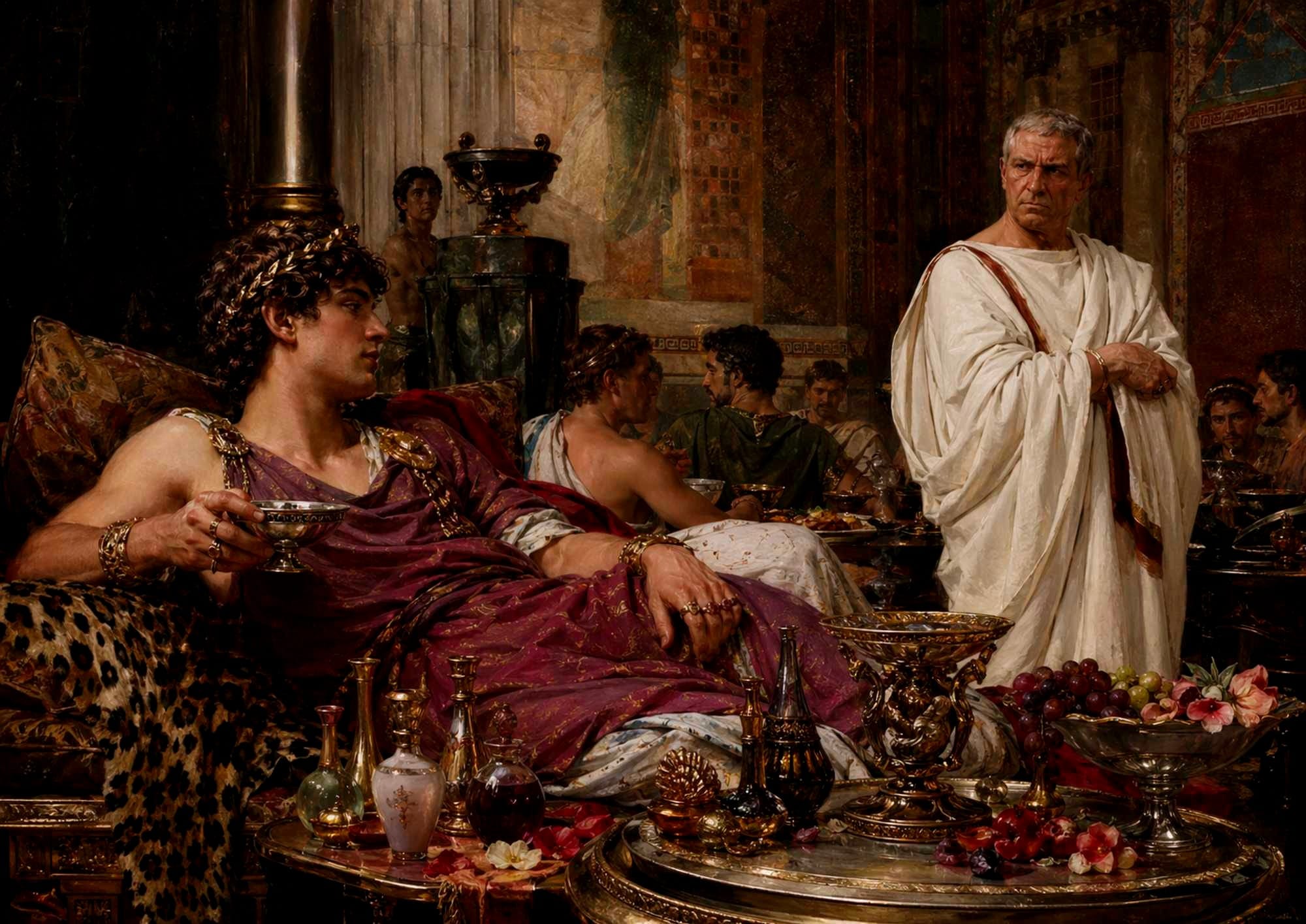
Dress formed part of a larger social language through which male influence, rank, sexuality, and masculine credibility were recognized and judged. A man’s exterior was not trivial decoration. It was one of the places where Roman society located his worth.
That did not mean there was only one masculinity available to Roman men. The Roman ideal could present itself as singular, stable, and natural, but actual male life was more varied. Masculinity could be measured, claimed, displayed, doubted, and lost.
It was precarious, socially evaluated, and deeply bound to power. Roman men did not all inhabit the same masculine role in the same way. Rank, status, age, wealth, and social position all shaped what counted as masculine, and male clothing and ornament helped produce those differences. In that sense, there were many ways of being a man in Roman antiquity, and appearance played a large part in assembling those identities.
This is one reason dress mattered so much. Roman clothing did not simply cover the body. It sorted bodies. The form, fabric, and color of a garment could announce condition, quality, and estate. Romans even conceptualized legal standing through dress: the broad stripe on the tunic, the gold ring, the unbordered toga of adulthood, the shoeboots of the senator.
Clothing made hierarchy legible. Rank could be seen. Status could be seen. The visual world of Rome trained people to read these signs quickly, and Roman culture gave visual literacy extraordinary importance. Often, what a man wore was inseparable from what he was understood to be.
Yet dress could also blur the very distinctions it was meant to display. Clothing did not merely reveal status; it could manipulate it. Wealthy men could appropriate prestigious signs. Slaves might be dressed expensively to reflect the magnificence of their owners.
Imported garments, luxury fabrics, and refined ornament could complicate the boundaries between respectability, ambition, indulgence, and effeminacy. This made clothing socially volatile. It could clarify hierarchy, but it could also confuse it, exaggerate it, or expose how unstable it really was.
That instability helps explain why the normative Roman male ideal in dress was so restrained. Sober appearance carried cultural weight. It marked distance from luxury, vulgar display, and suspicious softness. A strong interest in personal appearance could attract criticism, yet complete neglect of grooming could be condemned as rustic and uncivilized.
Roman men were expected to occupy a narrow middle ground: properly maintained, but not over-refined; respectable, but not showy; clean and composed, but not ornamented in ways that invited doubts about their masculinity. In practice, this meant that male self-presentation was always exposed to ideological judgment.
Here the line between masculinity and effeminacy became especially tense. Certain forms of male elegance could be interpreted as signs of cultivation, wealth, and urbanity. The same details could also be read as softness. The confusion was not accidental.
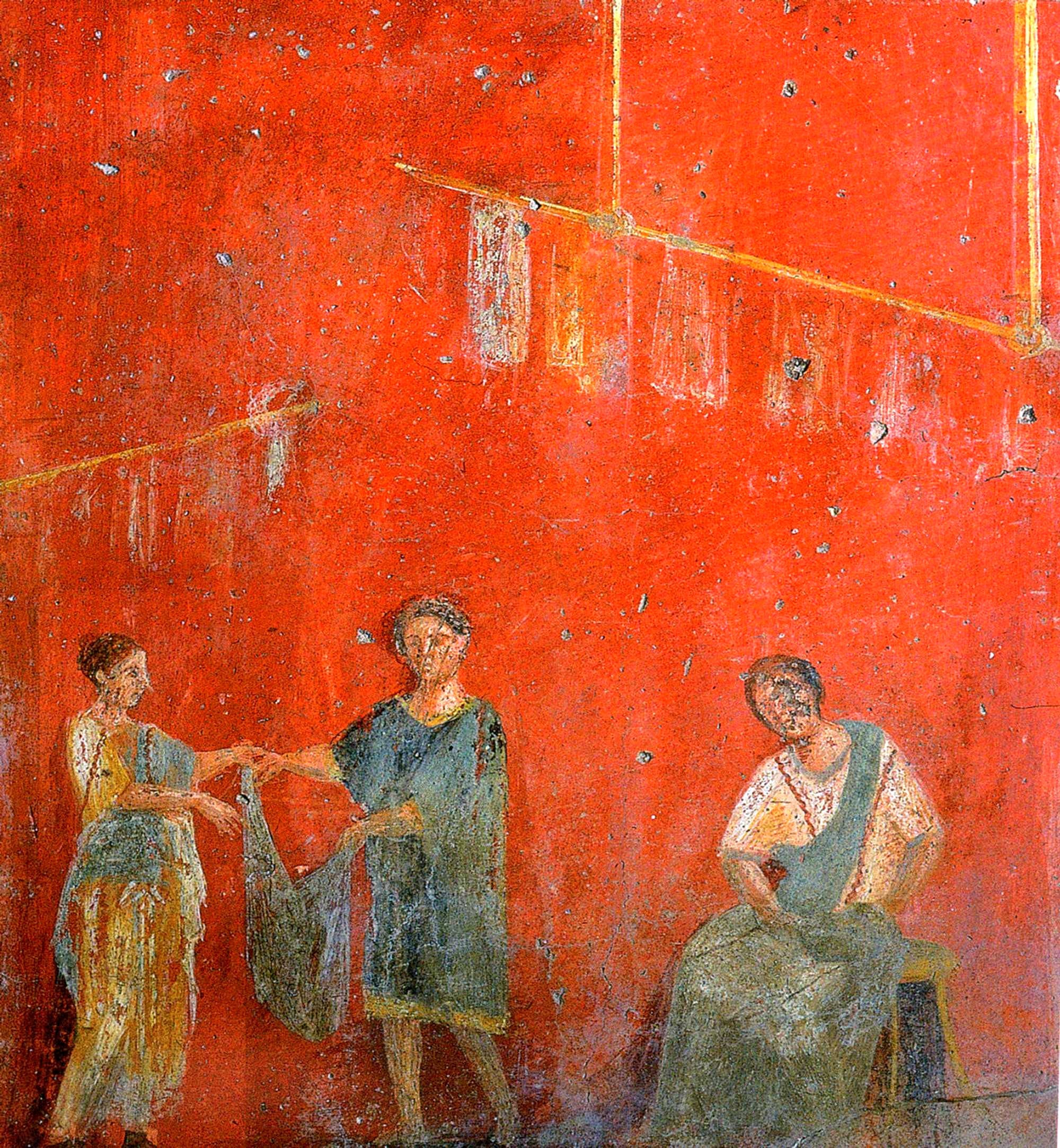
Signs of masculinity – wealth, power, privilege, social distinction – could overlap with signs of effeminacy. Clothing and dress performance could therefore negotiate, resist, or unsettle well-established norms rather than merely obey them. Roman appearance was not a simple code with fixed answers. It was a contested field in which masculinity had to be repeatedly made visible and defended.
The result was a culture in which manhood had to be worn as much as possessed. Roman society could speak as though masculinity were an essence, but in lived experience it required performance. Clothing, adornment, and bodily presentation did not sit outside male identity. They were among the principal means by which it was recognized, rewarded, or called into question.
A Roman man was judged not only by his birth or office, but by whether his appearance made the right claim on the eyes of others.
This is why dress belongs so naturally in any discussion of what Romans thought made a man weak. Weakness could be read in clothing that seemed too luxurious, too carefully contrived, too sexually suggestive, too soft, or too eager to borrow the signs of rank and refinement without the restraint expected of a Roman male. Strength, by contrast, depended not only on what a man did, but on whether his exterior successfully projected the authority, measure, and control that Roman masculinity demanded. ("Masculinity and Dress in Roman Antiquity" by Kelly Olson)
Reading Weakness on the Body
To the Romans, weakness in a man was not hidden somewhere deep inside him. It could be seen. The body was treated as something legible, a surface on which character, self-control, and masculine worth might reveal themselves in small but telling signs. A gesture, a posture, the way a tunic hung on the body, the movement of a hand, the arrangement of the hair, the tone of the voice — all these could be judged morally.
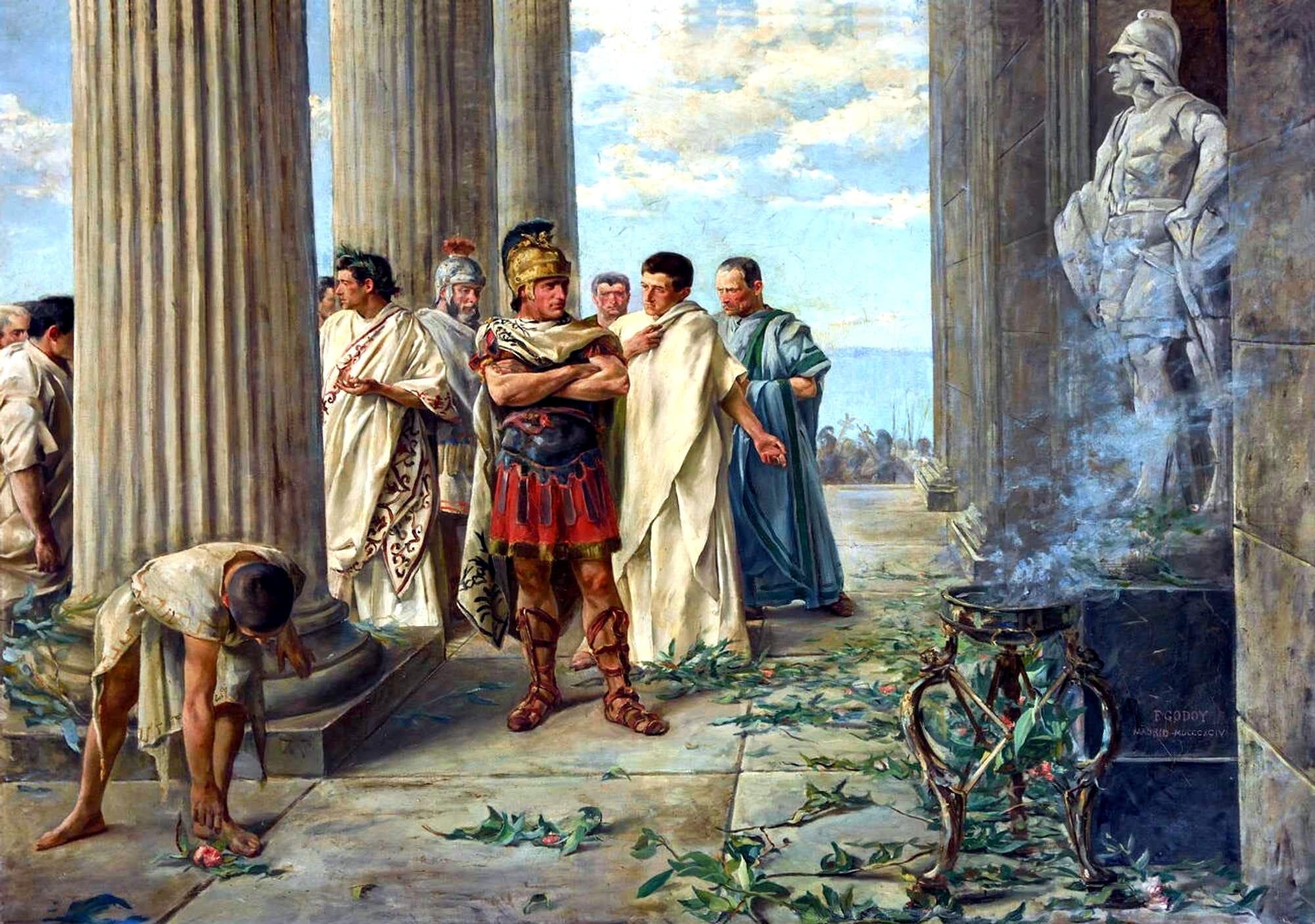
That is why what now seems a minor detail could carry real force in Roman thinking. Cicero was said to have looked at Julius Caesar’s carefully arranged hair and his habit of scratching his head with one finger and concluded that such a man did not look capable of overthrowing the Roman constitution.
Sulla’s reported warning about Caesar,
“male praecinctam puerum” — “that ill-girt boy”
– belongs to the same world of suspicion. A loose belt, an over-careful toilette, an affected bodily style: these could all be read as signs of softness.
This is what makes mollitia so important for any article on Roman manhood. It did not point to one narrowly defined fault. In a man, it could suggest sexual passivity, but it could also suggest weakness of will, bodily delicacy, self-indulgence, and failure to embody the hard discipline expected of elite Roman males.
A man marked by mollitia had not merely picked up a bad habit. He had drifted toward the feminine side of a moral divide that Romans treated with extraordinary seriousness.
That helps explain why accusations of effeminacy could seem contradictory and yet remain perfectly coherent within Roman culture. The same man might be mocked as sexually passive and at the same time as sexually voracious. He might be ridiculed as soft yet feared as a seducer.
The logic was not confusion. It was that “being like a woman” functioned as a wholly negative category when applied to men. Very different flaws could all be swept into the same feminized register: softness, luxuriousness, passivity, idleness, sensuality, and uncontrolled appetite.
This is especially clear in Roman discussions of self-command. Softness did not simply describe a look. It implied an inward failure of mastery. Effeminacy belonged to the wider world of incontinentia, lack of self-control. Roman moral language could therefore move easily from soft gestures and careful grooming to singing, dancing, depilation, luxurious living, sexual excess, and moral slackness.
The body became a moral text. To look soft was already to invite the suspicion that one’s desires had become ungoverned.
That suspicion extended into speech and public behavior. Softness could be heard as well as seen. Roman writers did not attack only soft bodies but also soft eloquence and soft movement.
Quintilian insists that there should be nothing in a man’s gesture that is
“molle quid aut speciale et quasi proprium feminis” — nothing “soft, affected, and, as it were, peculiar to women.”
The phrase is revealing. What mattered was not simply beauty or elegance, but whether bodily expression had crossed into a style that looked marked off as feminine. Once softness entered the walk, the voice, or the posture of a man in public, it threatened the authority that Roman masculinity was supposed to project.
This same moral pressure shaped Roman ideals of speech. A man was expected not only to speak effectively, but to speak as a man of proper character. That old definition associated with Cato –
“vir bonus dicendi peritus”, “a good man skilled in speaking”
– captures the point neatly. Public performance was inseparable from moral worth. Speech, gesture, and body all had to align. A man who looked or sounded too soft risked appearing not merely ridiculous, but unfit for the masculine role Roman public life demanded.
The example of Caesar shows how politically charged these judgments could become. His loose belt and evident care for appearance were treated as morally meaningful details. Yet the same signs could be read in opposite ways. What seemed to one observer a mark of dangerous disorder could seem to another a sign of reassuring weakness.
Roman readings of the male body were never neutral. They formed part of political struggle. The body could be interpreted as warning, accusation, or weapon.
The moral reading of the body also helps explain why Greekness so often enters the picture. Roman writers repeatedly contrasted Roman virtus with Greek refinement. Greeks might lead in literature, philosophy, and cultivated style, but Romans claimed superiority in morals and warfare. In that context, Greek culture could be gendered as soft and feminine.
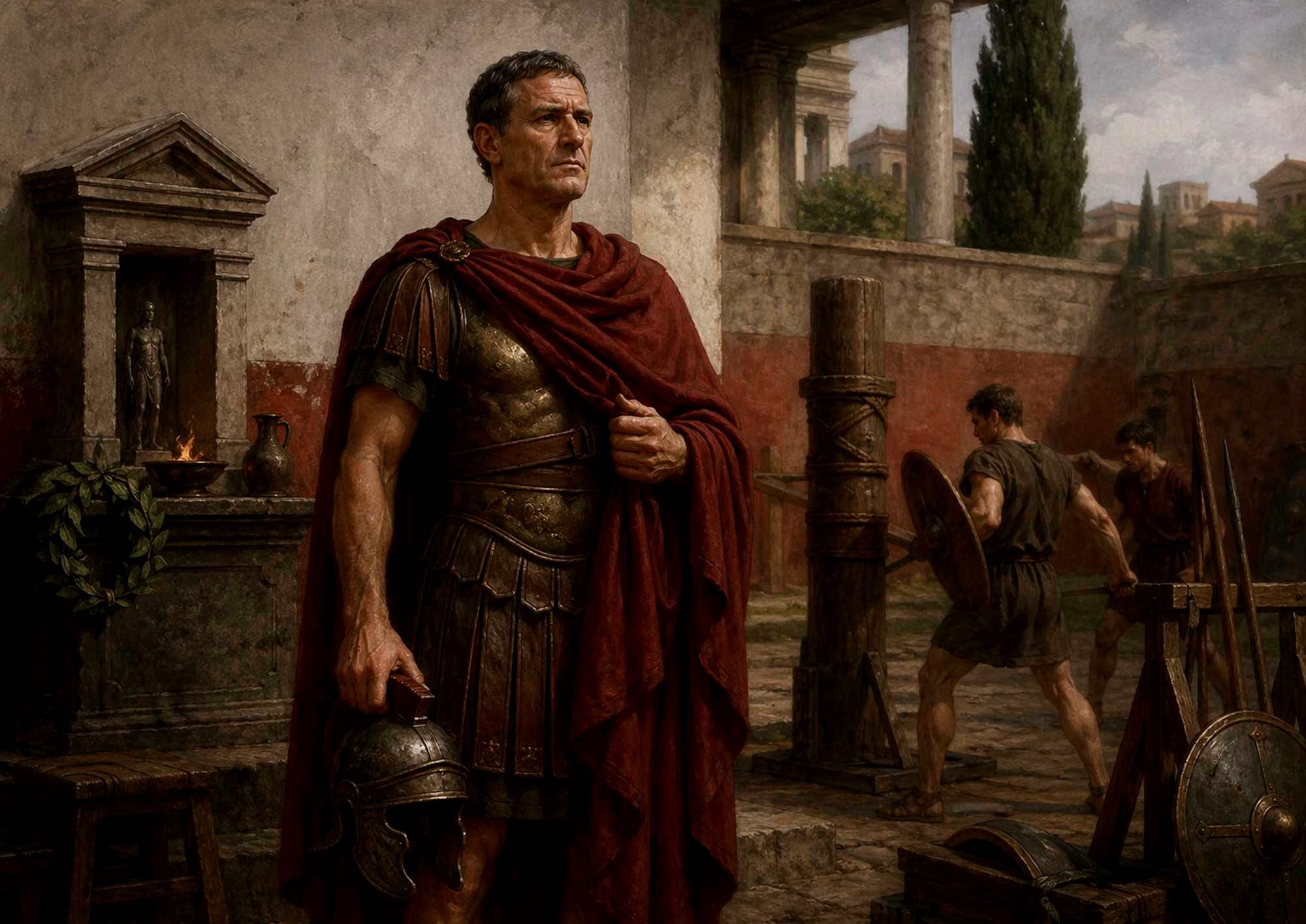
This was not simply cultural prejudice. It was one way of protecting Roman masculine identity against a sophistication that many elite Romans admired and consumed. Greek culture carried prestige, but it also threatened to unsettle the belief that Roman manhood rested on hardness, discipline, and moral superiority.
This also connects mollitia with conquest and submission. The Roman insistence that a man must never submit sexually to another man belonged to the same larger ethic that prized domination in war. Sexual passivity and military defeat could be imagined through the same logic.
To be penetrated was not treated as a merely private act. It could symbolize loss of mastery, loss of freedom, even enslavement. The proper man ruled, acted, penetrated, and remained unconquered.
Yet Roman writing also shows how unstable these categories could be. Men who looked like catamites could be accused of adultery with women. Effeminate appearance did not cancel heterosexual danger; it could sharpen it. This is one reason mollitia is so revealing.
Roman anxieties were less about fixed sexual identities than about failed masculinity, blurred boundaries, and uncontrolled desire. The soft man could be passive, predatory, adulterous, over-sexed, or all of these at once. What mattered was that he no longer fit the hard outline of Roman manhood.
So when Romans thought about what made a man weak, they looked not only at courage or achievement, but at the body itself: how it moved, how it dressed, how it spoke, how it desired, and what it seemed to reveal. Weakness could be read in the smallest signs because the male body was understood as a moral surface. A soft gesture, a loose belt, an over-careful toilette, a languid voice, a suspect elegance; none of these was ever just aesthetic. Each could be taken as evidence that a man’s self-command was slipping, and with it the firmness on which Roman masculinity was supposed to rest. ("Mollitia: Reading the body" by Catharine Edwards. In The Politics of Immorality in ancient Rome)
To the Romans, weakness in a man was never a single failing. It could appear in the body, in the voice, in clothing, in appetite, in gesture, in pleasure, and in the surrender of self-command. That is what makes their idea of male weakness so revealing. It was not simply about strength versus frailty, but about the constant fear that manhood could be softened, unmade, or exposed from within. In that anxiety, Roman masculinity shows itself for what it was: not a settled fact, but a demanding ideal that had to be performed, defended, and judged again and again.

About the Roman Empire Times
See all the latest news for the Roman Empire, ancient Roman historical facts, anecdotes from Roman Times and stories from the Empire at romanempiretimes.com. Contact our newsroom to report an update or send your story, photos and videos. Follow RET on Google News, Flipboard and subscribe here to our daily email.
Follow the Roman Empire Times on social media: