
Did Ovid Change the Greek Medusa Myth Forever?
Ovid did not invent Medusa, but he gave her myth a powerful new shape: beauty, violation, punishment, snakes, and the making of a monster.

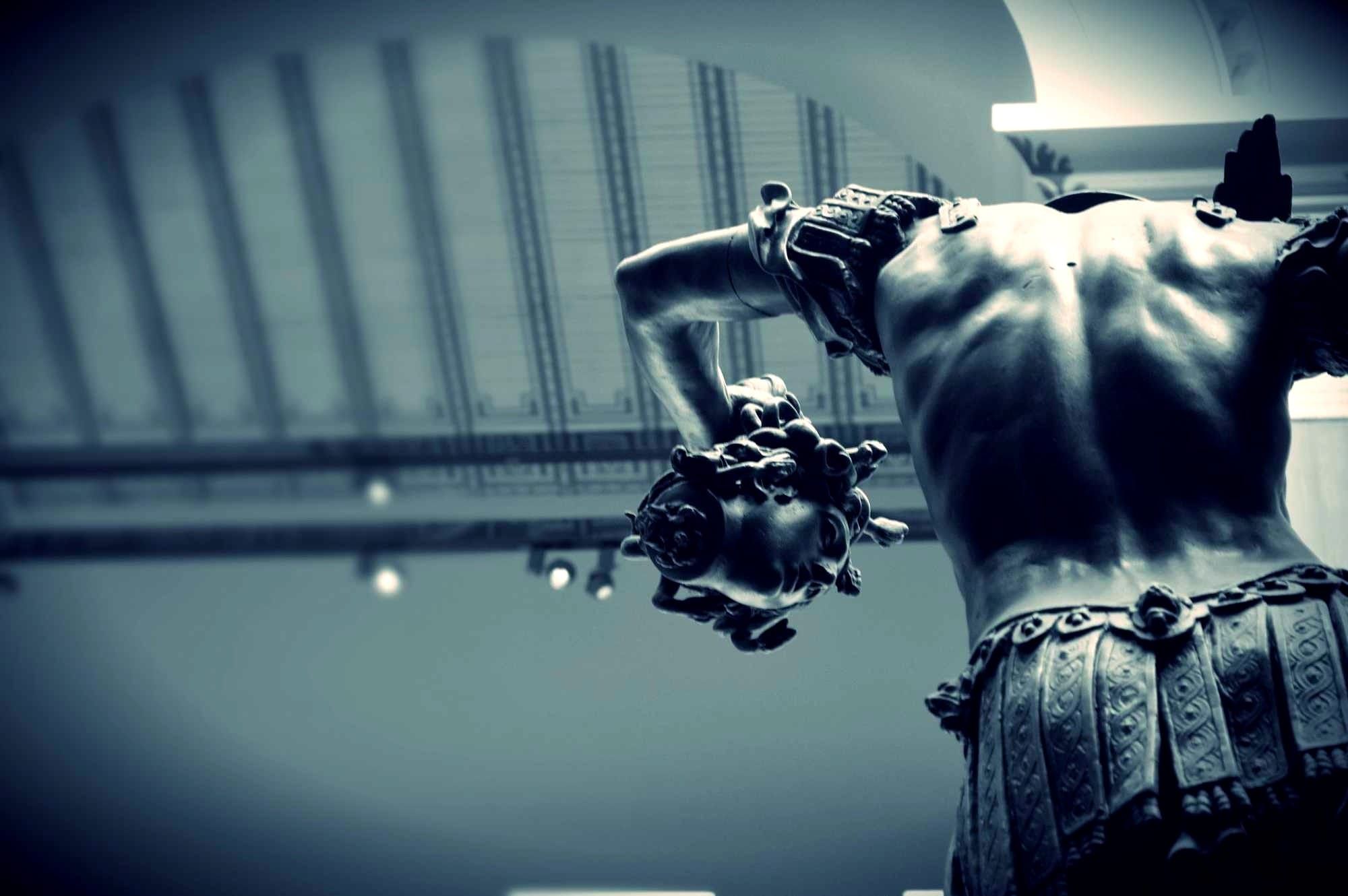
Medusa is one of the most recognizable figures in ancient mythology: snake-haired, deadly-eyed, and so terrifying that one glance could turn the living into stone. Yet the Medusa most modern readers remember is not only a monster. She is also a woman wronged by gods.
That second Medusa – the violated woman transformed into a monster – owes much to Ovid.
He did not invent her. Medusa was already an old figure in Greek myth, poetry, and art long before the Metamorphoses. But Ovid gave her story one of its most influential surviving turns. In earlier Greek poetry, Medusa appears as a Gorgon, born into a family of strange and terrifying beings. In Ovid, she is given a before and after: beauty, violation, punishment, transformation, beheading, and finally use as a weapon.
The result is not the replacement of one fixed myth by another. Ancient myth did not work like a single official text. But when the older surviving tradition is placed beside Ovid’s version, the difference is striking. One Medusa is a mortal Gorgon. The other is a woman made monstrous after divine violence.
Medusa Before Ovid: The Mortal Gorgon
In Hesiod’s Theogony, Medusa appears inside a vast genealogy of gods, sea-beings, and monsters. The poem is not interested in her inner life, her beauty, or her personal tragedy. She belongs to the family line of Phorcys and Ceto, among beings who live at the edges of the human world.
Hesiod first names the Graiae, then the Gorgons:
“And again, Ceto bore to Phorcys the fair-cheeked Graiae, grey from their birth… and the Gorgons who dwell beyond glorious Ocean in the frontier land towards Night.”
The Gorgons are then named:
“Sthenno, and Euryale, and Medusa who suffered a woeful fate.”
Medusa is different from her sisters because she alone is mortal:
“She was mortal, but the two were undying and grew not old.”
Poseidon is already part of Medusa’s story in this early account, but the episode is brief and carries none of the later Ovidian framing. Hesiod writes:
“With her lay the Dark-haired One in a soft meadow amid spring flowers.”
The “Dark-haired One” is Poseidon. There is no temple of Athena. There is no punishment by the goddess. There is no account of Medusa as a beautiful maiden transformed into a monster because of what happened to her.
The story moves quickly to Perseus:
“And when Perseus cut off her head, there sprang forth great Chrysaor and the horse Pegasus.”
In this older surviving account, Medusa is already a Gorgon. Her death produces new life: Pegasus and Chrysaor emerge from the violence of her beheading. The emphasis is genealogical and mythic. Medusa’s body belongs to the world of monsters, gods, and strange births.
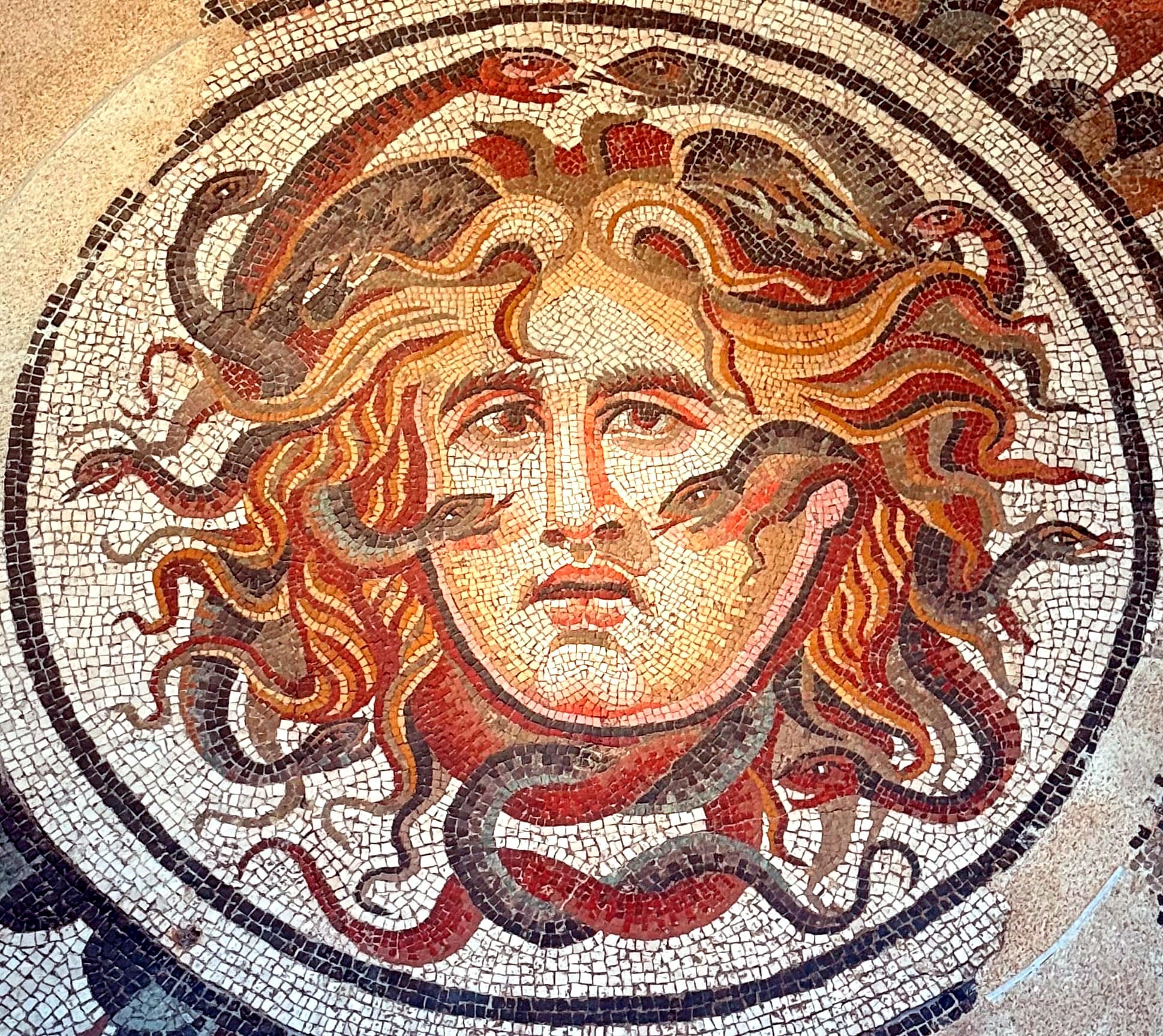
This does not mean that Hesiod gives the “only” original Medusa. Greek myth was fluid, and different versions could coexist. But it does show that one of the earliest surviving literary accounts does not present Medusa as a beautiful woman punished after rape in a sacred space.
She is a mortal member of a monstrous sisterhood, and her “woeful fate” is not transformation into a Gorgon but death at the hands of Perseus.( Hesiod, Theogony.)
Ovid’s Medusa: Beauty Before Horror
Ovid’s Metamorphoses changes the emotional shape of the myth.
The story is told after Perseus has already killed Medusa. He is asked why only one of the Gorgon sisters had snakes mingled with her hair. His answer becomes Medusa’s backstory.
Before the snakes, there was beauty.
Ovid says that Medusa had once been famous for her appearance, and especially for her hair. In one translation of the passage, she is remembered as “most famous for her beauty,” the desired hope of many suitors, with no feature more admired than her hair.
Then comes the sentence that changes the myth’s moral center:
“The lord of the sea violated her in Minerva’s temple.”
The god who commits the violence is Neptune, the Roman Poseidon. The goddess whose sanctuary is violated is Minerva, the Roman Athena. But Minerva’s response does not fall on Neptune. It falls on Medusa.
Ovid describes the goddess turning away and covering her chaste eyes with the aegis. Then, so that the outrage would not go unpunished, Minerva changes Medusa’s hair into snakes.
The punishment is exact and cruel. The feature that had made Medusa most admired becomes the sign of her horror. Her beauty is not simply removed. It is inverted. Hair becomes serpents. Desire becomes terror. The woman once pursued by suitors becomes a figure no one can safely face.
Ovid then adds the final irony. Minerva later wears the snakes she created on her own breastplate, so that they may terrify her enemies. Medusa’s punishment becomes Minerva’s weapon.
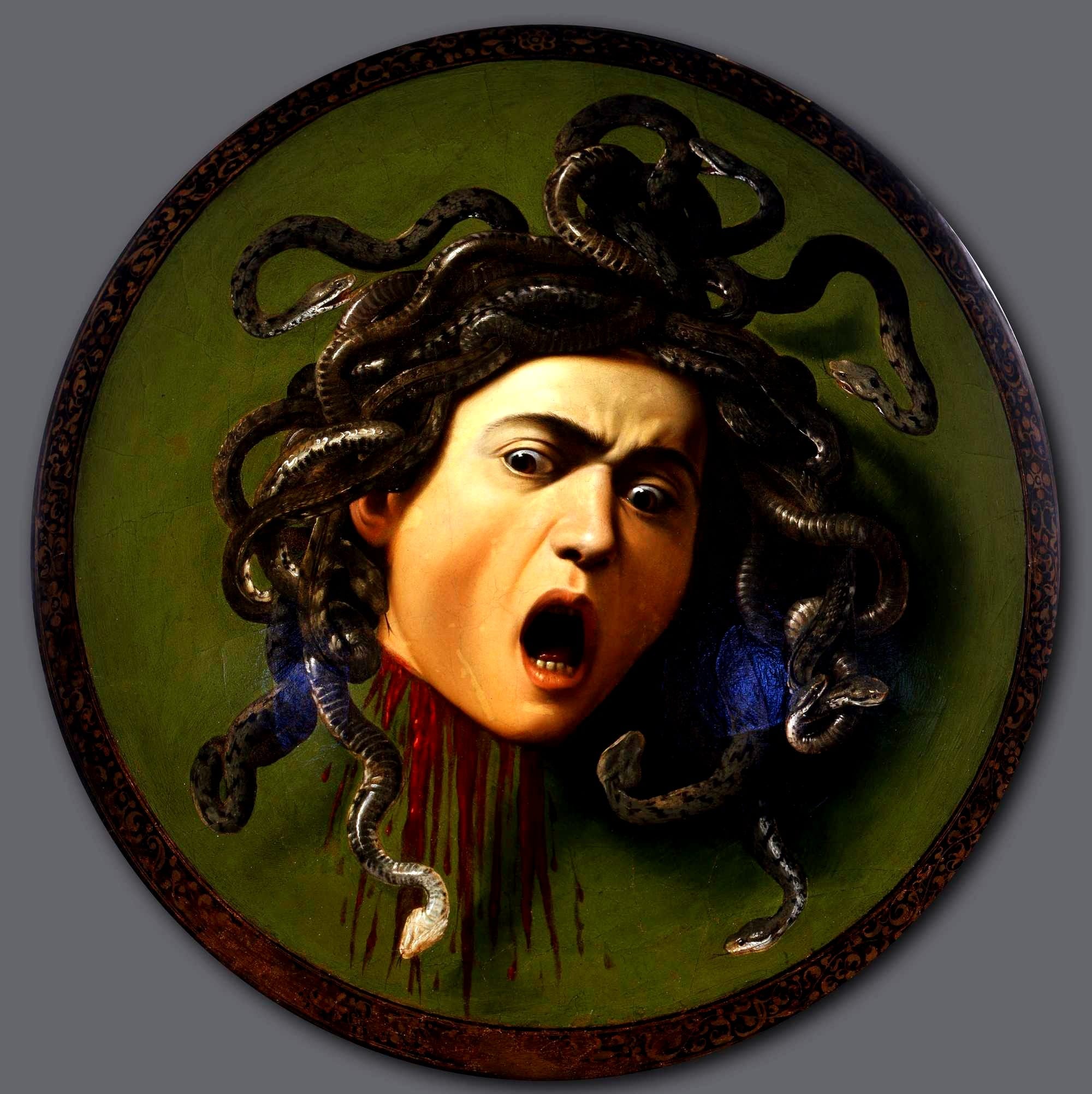
This is why Ovid’s version is so powerful. It does not only explain why Medusa had snakes for hair. It changes the moral weight of the story. The Gorgon is no longer only a monster born among monsters. She becomes someone whose monstrosity has a cause.
In Hesiod, Perseus kills a mortal Gorgon. In Ovid, the same heroic act is reframed by the memory of a woman whose horror followed divine violence and divine punishment.
The Heroic Story Changes After the Backstory
The order of Ovid’s narrative matters.
Medusa is first presented through Perseus’ success. He reaches the Gorgons by passing through remote and difficult places. He sees the bodies of men and beasts turned into stone. He avoids the fatal gaze by looking not at Medusa directly, but at her reflection in his shield. Then he cuts off her head while she sleeps.
The heroic frame comes first: Perseus defeated the monster. Only afterward does the backstory appear.
That delayed explanation changes what has already been told. The monster Perseus killed had once been a beautiful woman. Her danger came after Neptune’s assault and Minerva’s punishment. The heroic deed remains in the poem, but it no longer feels simple.
Ovid’s own description of Perseus’ approach emphasizes distance, danger, and indirect sight. The Gorgon’s territory is remote. Her victims are already statues. Her face cannot be met directly. Perseus survives because he uses reflection:
“He had seen Medusa’s looks reflected in his bronze shield.”
Medusa’s face is dangerous, but it is also withheld. She appears through reflection, through Perseus’ narration, and later through her severed head. Even her story is not told by her. It is told by the hero who killed her.
This gives the myth a strange imbalance. Medusa is the center of the episode, but she does not speak. She is desired, violated, punished, hunted, killed, and used. Others look, act, explain, and possess. Medusa herself remains almost entirely silent.
Her power also survives her death, but no longer belongs to her. Perseus carries the head and uses it against enemies. Minerva later fixes it to her shield. The gaze that once made Medusa terrifying becomes a controlled instrument in the hands of others.
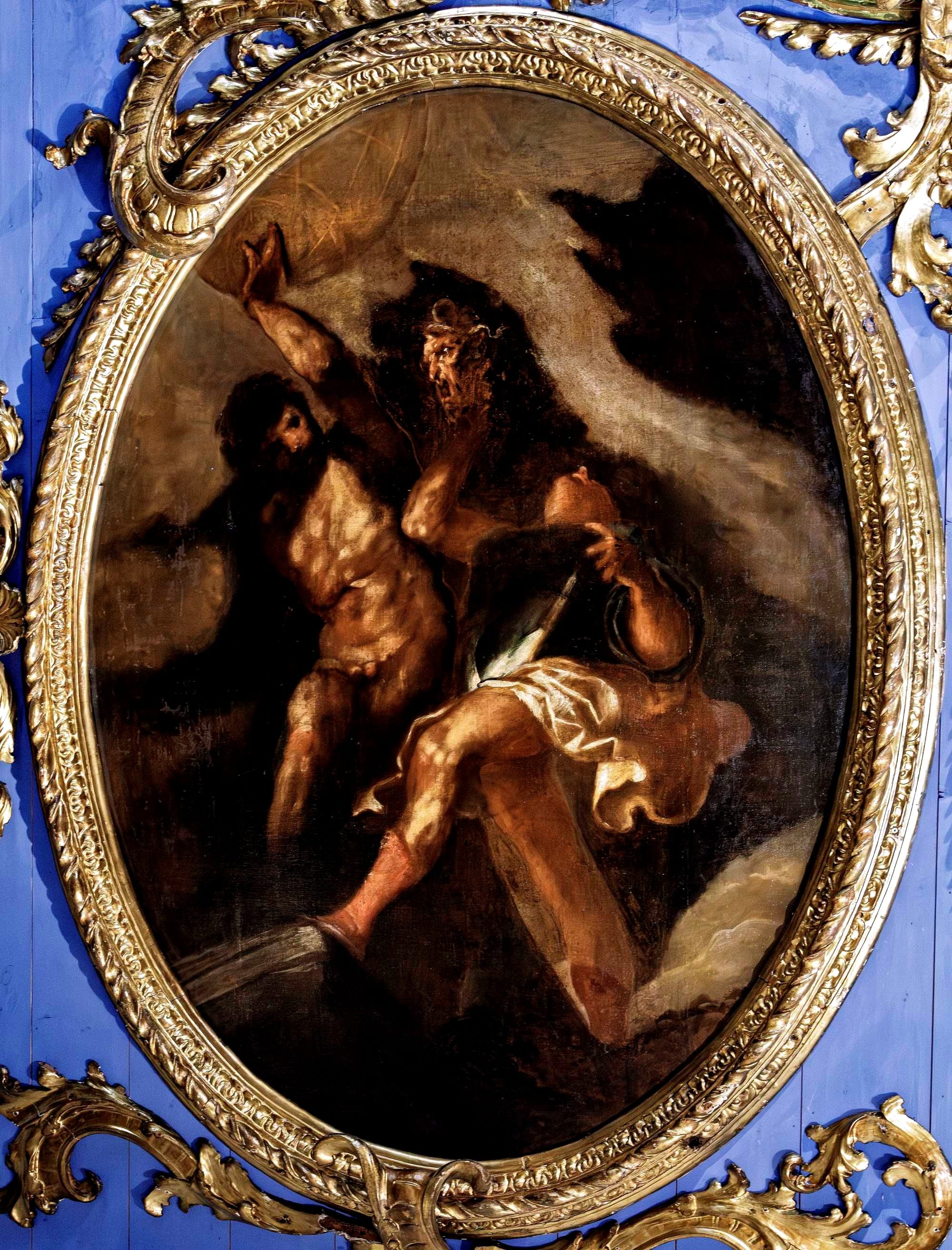
This is one of the deepest changes in Ovid’s version. Medusa is not only transformed from woman into monster. She is transformed again from monster into object: trophy, weapon, emblem, and divine armor. (“Medusa in Ovid’s Metamorphoses: Refracted Rapes.” by Simona Martorana)
Beauty, Fear, and the Female Gaze
Ovid’s version also turns Medusa’s beauty into a problem.
In the older surviving tradition, her monstrous identity is already present. In the Metamorphoses, beauty comes first. Her hair is admired. Her desirability draws attention. Neptune’s violence occurs inside Minerva’s temple. Then the punishment falls on the very feature that had made her desirable.
The myth therefore joins beauty, sexuality, punishment, shame, and fear in one body. Medusa becomes terrifying, but the story also asks why she became terrifying.
Her gaze is especially important. A woman once looked at with desire becomes a figure whose own look destroys. Men and animals who meet her eyes are turned into stone. The power of looking no longer belongs only to the observer. Medusa looks back.
That reversal is unsettling within the story. Perseus survives by refusing the direct encounter. He looks at an image instead of the woman. The shield makes Medusa visible while preventing her from returning the gaze. Her face is turned into something that can be managed, reflected, and used.
After her death, the danger remains but the autonomy disappears. The severed head still petrifies, but Perseus controls when it is shown. Later, Minerva carries the same terror on her own shield. Medusa’s gaze, once feared, is absorbed into heroic and divine power.
The story can therefore be read as a myth about the control of female danger, but also as a myth that exposes the violence of that control. Medusa is treated as a threat, yet Ovid has already told us that her monstrosity followed an injury done to her. (“How Does Ovid’s Version of the Medusa Myth Reflect Roman Anxieties About Female Sexuality?” by Francesca Kübler)
Medusa and Minerva: Opposites or Doubles?
Ovid’s version also complicates the relationship between Medusa and Minerva.
On the surface, they are opposites. Minerva is the virgin goddess, guardian of her own sacred space. Medusa is the violated woman whose body becomes the site of punishment. Minerva is divine order. Medusa becomes monstrous danger.
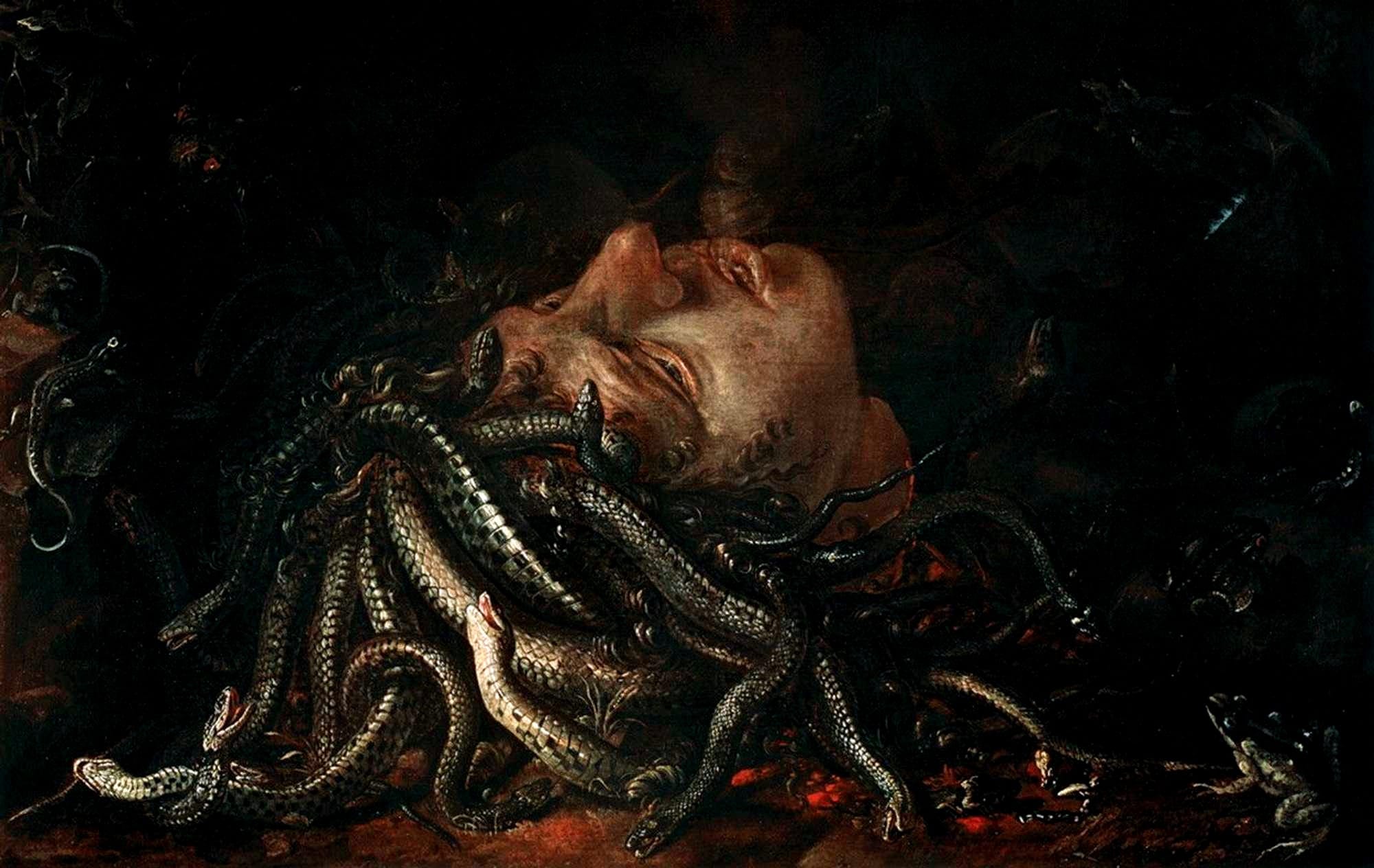
Yet the boundary between them is not clean.
Snakes could be associated with Athena-Minerva. The goddess’ own gaze could be imagined as powerful and frightening. When she places Medusa’s head on her breastplate, she takes into herself the very terror she created. The punished monster becomes part of the goddess’ identity.
The shield and mirror motif deepens this connection. Perseus does not defeat Medusa by strength alone. He defeats her through reflection, and the means of reflection belongs to Athena’s world of strategy, craft, and controlled sight. Medusa cannot be met face to face. She can only be mediated: through a shield, a severed head, an emblem, or an image.
This is one reason the myth became so important in later literature and art. Medusa is “representable,” but not easily “presentable.” She can be shown as mask, reflection, trophy, or symbol, but the living woman at the center of the story remains absent. The beautiful Medusa before the punishment is already gone by the time her story is told.
Beneath the Gorgon mask lies the trace of a human face. Ovid’s Medusa is not only the head that Perseus carries. She is also the woman whose story appears only after the monster has already been killed. ("Companion to Literary Myths, Heroes and Archetypes" edited by Pierre Brunel)
A Chain of Violence
Ovid’s Medusa does not suffer one transformation only. Her story moves through several acts of violence.
Neptune violates her. Minerva punishes her. Perseus kills her. Her head is then carried, displayed, and used. Each stage changes her again.
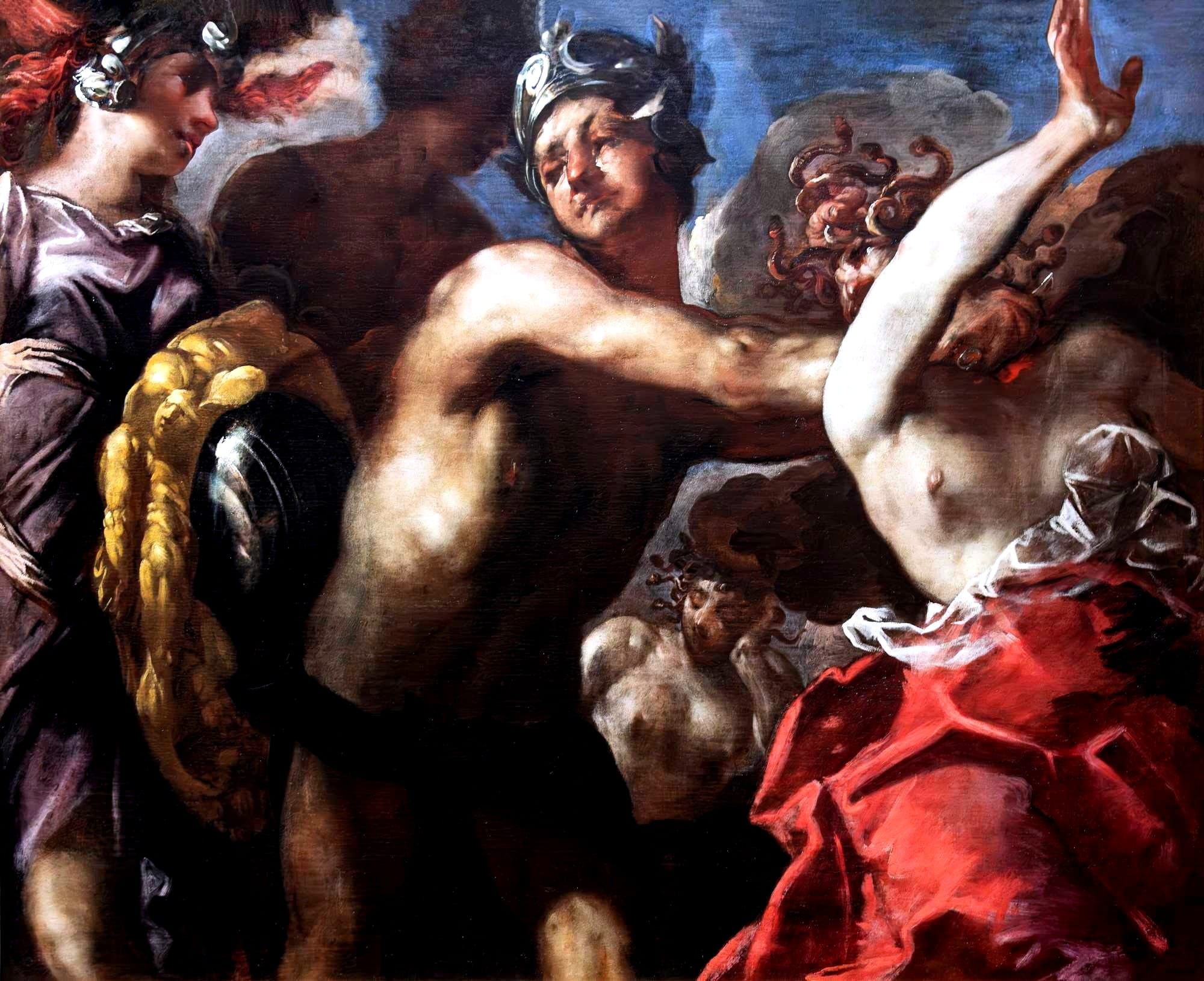
The rape in Minerva’s temple produces the transformation. The transformation produces the monster. The monster becomes the target of Perseus’ heroic mission. The beheading produces a trophy and a weapon. The weapon becomes an emblem of divine protection.
This chain is important because it shows how Medusa loses more than beauty. She loses identity. The woman is turned into a monster. The monster is turned into a head. The head is turned into an object of power for others.
The Metamorphoses does not pause to offer a simple moral judgment. Perseus remains the hero of the episode. Medusa remains dangerous. The stone victims show that her gaze is lethal. Yet the backstory makes it impossible to see the killing as only the defeat of evil.
The deepest cruelty lies in the sequence. Medusa is first made vulnerable by desire, then blamed through punishment, then hunted as a danger, then appropriated after death. The woman disappears beneath the monster; the monster disappears beneath the weapon.
That is why Ovid’s version continues to disturb. It does not merely make Medusa sympathetic. It shows how quickly a victim can be turned into a sign of danger, and how easily that danger can then be taken over by those who punish, kill, or display her. (“Medusa in Ovid’s Metamorphoses: Refracted Rapes.” by Simona Martorana)
The Face That Is Never Seen
Ovid’s Medusa is famous for her face, but the living face itself is almost never available.
Before the transformation, the face belongs to a woman remembered through report. During the killing, Perseus sees her only in reflection. After the killing, the face survives as a severed head. The most famous image of Medusa is therefore not a living person but a controlled object: held by Perseus, displayed to enemies, fixed to Minerva’s shield.
This absence is part of the myth’s force. Medusa’s face is everywhere, yet the woman is almost nowhere. Her beauty is reported. Her rape is reported. Her punishment is reported. Her silence is complete.
The reflection in the shield becomes more than a trick of survival. It is a way of turning Medusa into an image before she becomes a trophy. Perseus does not encounter her as a speaking subject. He encounters her as a reflected danger. After he kills her, he controls when and where that danger appears.
The severed head then becomes an instrument of petrification. Perseus uses it against enemies. Minerva uses it as an emblem. Medusa’s gaze continues to act, but under another will.
In this sense, Ovid’s Medusa is one of the most extreme transformations in the Metamorphoses. Daphne becomes a tree, but her transformed body is still her own form of escape. Actaeon becomes a stag, but the reader still follows his terror. Medusa becomes something others can carry.
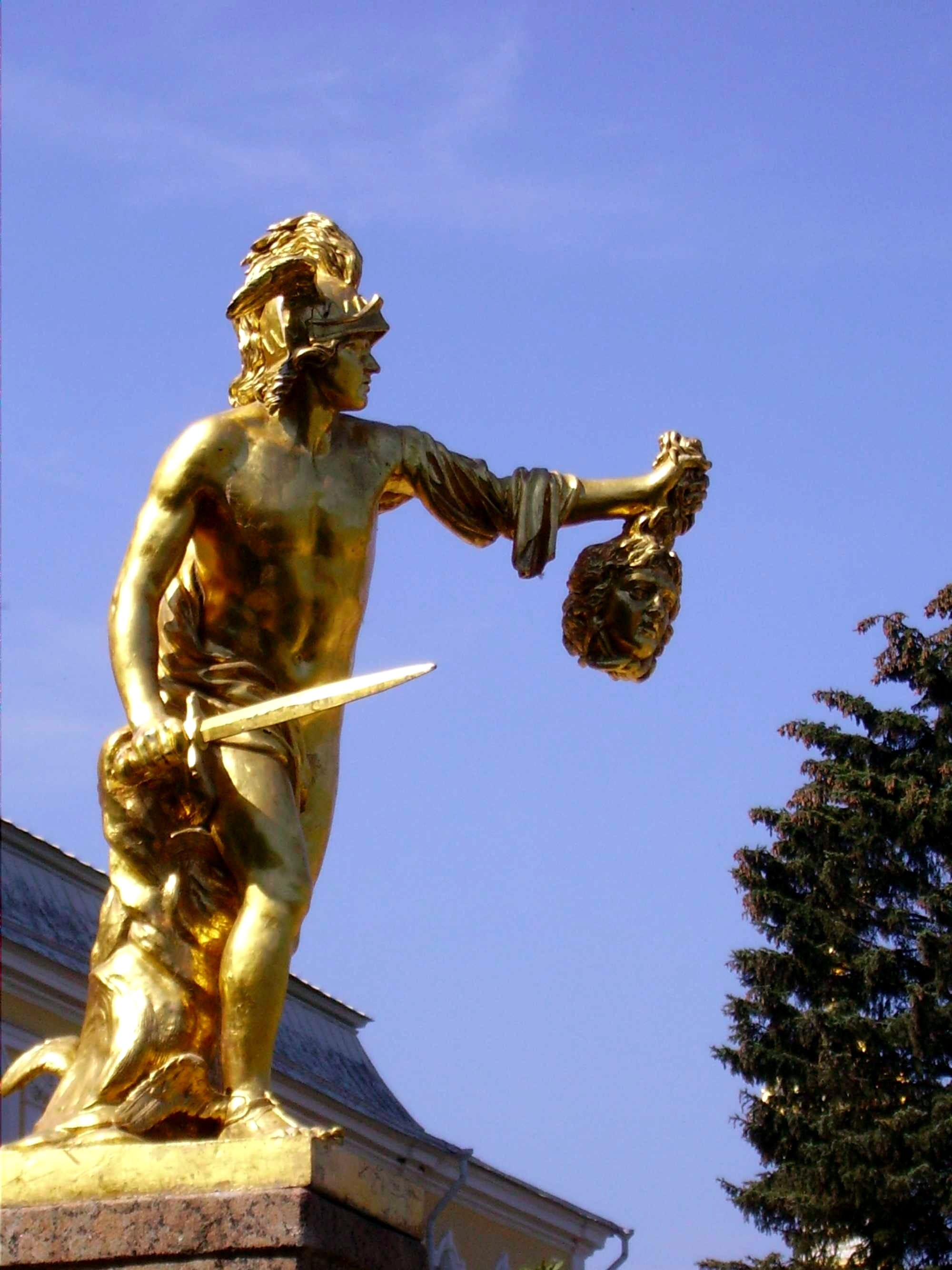
Her transformation does not end with snakes. It continues through the shield, the sword, the severed head, and the armor of Minerva. ("Proust’s Medusa: Ovid, Evolution, and Modernist Metamorphosis." by Gregory John Mercurio)
Why Ovid’s Medusa Lasted
Ovid’s Medusa lasted because she is unstable. She is monster and victim, beauty and horror, woman and weapon, face and mask, danger and defense. She belongs to ancient myth, but she also became one of the great figures through which later literature and art thought about looking, desire, fear, punishment, and transformation.
That later power depends on Ovid’s change. A born monster can terrify. A punished woman can haunt.
Ovid’s version gives Medusa a tragic history but does not give her a voice. It makes her more human, but only after she has already been killed. It explains her horror, but the explanation comes too late to save her. It gives her power, but that power is taken over by Perseus and Minerva.
This is the strange brilliance of the episode. The story still belongs to Perseus’ heroic cycle, but Medusa begins to pull the meaning away from the hero. The reader is invited to admire the slaying of the Gorgon, then forced to learn that the Gorgon had once been someone else.
The myth no longer asks only how Perseus killed Medusa. It asks how Medusa became Medusa. So, Was Medusa Always a Monster?
In the oldest surviving literary version considered here, Medusa is already a Gorgon. She is mortal, unlike her sisters, but she belongs to the monstrous genealogy of Phorcys and Ceto. Poseidon lies with her in a meadow, Perseus cuts off her head, and Pegasus and Chrysaor spring from her body.
Ovid does something different. He gives Medusa a past. She had once been beautiful. Her hair had once been admired. Neptune violated her in Minerva’s temple. Minerva punished her by turning that hair into snakes. Perseus killed her. Minerva later wore the result.
Ovid did not create Medusa from nothing, and he did not erase every other ancient version of her myth. But he gave later readers one of the most influential Medusas of all: not simply the monster Perseus killed, but the woman who became a monster because the gods made her one.
That is why Ovid’s Medusa feels so different from the older Gorgon. Her story is not only about a hero facing a monster. It is about how a woman was made into one.

About the Roman Empire Times
See all the latest news for the Roman Empire, ancient Roman historical facts, anecdotes from Roman Times and stories from the Empire at romanempiretimes.com. Contact our newsroom to report an update or send your story, photos and videos. Follow RET on Google News, Flipboard and subscribe here to our daily email.
Follow the Roman Empire Times on social media: