
The Battle of Lake Trasimene: Hannibal’s Devastating Ambush
In 217 BC, Hannibal trapped and destroyed a Roman consular army between the hills and Lake Trasimene. Ancient accounts describe the ambush, the death of Gaius Flaminius and Rome’s response to the defeat.

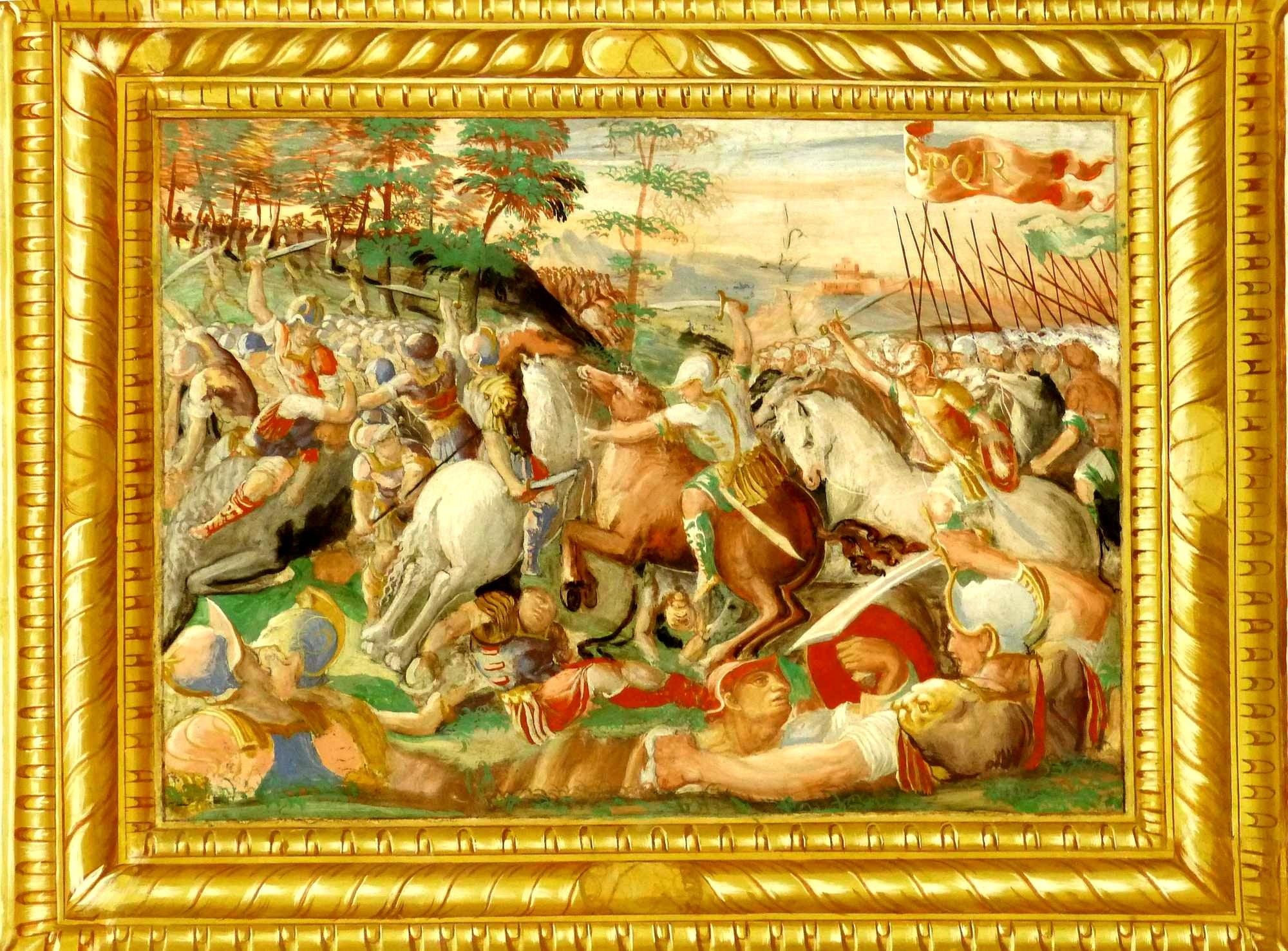
In 217 BC, during the second year of the Second Punic War, Hannibal destroyed a Roman consular army beside Lake Trasimene in Etruria. The Romans entered a narrow area between the lake and the surrounding hills, where Carthaginian troops had taken concealed positions during the night. When Hannibal ordered a simultaneous attack, the Romans were struck from several directions before they could form a battle line.
The precise date of the battle is uncertain. It is generally placed in June 217 BC, while a date close to the summer solstice has also been proposed from a passage in Ovid’s Fasti. The ancient narratives of the battle itself do not provide a date that can be converted securely into the modern calendar.
Hannibal Enters Etruria
After defeating the Romans at the River Trebia, Hannibal crossed the Apennines and entered Etruria. The march took his army through the flooded marshes of the Arno. Polybius says that the soldiers marched through water for three continuous days and nights. Many pack animals died in the mud, while the men used their bodies and baggage to raise themselves above the water long enough to sleep.
Livy gives a similar account but describes the march as lasting four days and three nights. He places the Spaniards and Africans at the front of the column, followed by the Gauls, with the cavalry and Numidian horsemen at the rear. The Numidians were instructed to prevent the Gauls from abandoning the march when exhaustion overcame them.
Hannibal suffered from an inflammation of the eyes during the crossing. Polybius says that he rode the only surviving elephant and eventually lost the sight of one eye because the army could not stop for treatment. After completing the crossing, he rested his troops near the edge of the marshes and gathered information about the country and the Roman commander.
The Roman consuls for the year were Gaius Flaminius and Gnaeus Servilius Geminus. Flaminius was stationed at Arretium, while Servilius commanded farther east near Ariminum. The two consular armies were therefore separated when Hannibal entered Etruria.
Rather than attack Flaminius immediately, Hannibal passed the Roman position and began ravaging the surrounding country. Fires and destruction were visible from the Roman camp. Both Polybius and Livy say that this was intended to provoke Flaminius into following before he could unite with Servilius.
The Reputation of Gaius Flaminius
The surviving accounts present different aspects of Flaminius’s character and conduct. Polybius describes him as
“a thorough mob-courtier and demagogue, with no talent for the practical conduct of war and exceedingly self-confident withal.”
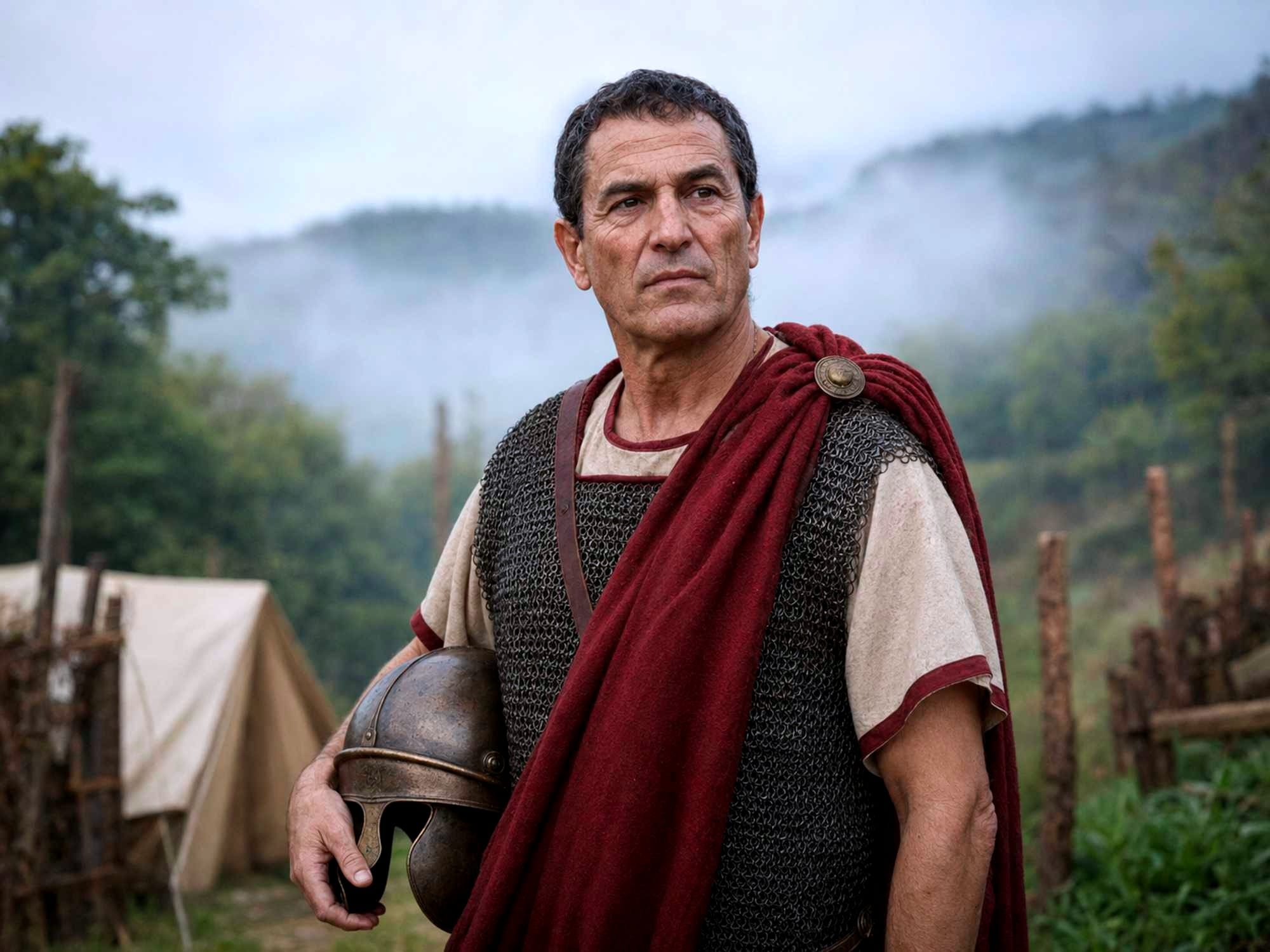
In his account, Hannibal learned about Flaminius’s character and planned his movements accordingly.
Livy places greater emphasis on Flaminius’s earlier conflicts with the Senate and on his alleged disregard for religious signs. Before describing the march toward Lake Trasimene, he includes reports of prodigies, Flaminius’s departure from Rome without completing the customary rites, and the consul’s refusal to be delayed by unfavorable omens.
The descriptions of Flaminius are not identical. Polybius concentrates on his political popularity, confidence and military decisions. Livy gives greater attention to his disputes with the Senate and his alleged disregard for religious warnings. Plutarch describes him as fiery and ambitious, but also records his earlier victory over the Gauls despite opposition from the Senate and his fellow consul.
Livy’s account changes emphasis once the battle begins. Before the fighting, Flaminius is presented as unwilling to heed advice or unfavorable signs. During the battle, however, Livy describes him restoring the broken ranks, encouraging his soldiers and moving toward the parts of the Roman army under the greatest pressure.
Why Flaminius Followed Hannibal
Polybius says that Flaminius’s officers advised him not to engage Hannibal immediately. They urged him to remain cautious, pay attention to the strength of the Carthaginian cavalry and wait for Servilius to arrive with the second consular army. Flaminius rejected their advice while Hannibal continued to devastate the countryside.
Livy gives Flaminius a speech in which the consul explains why he would not remain at Arretium:
“We are to sit, I suppose, before the walls of Arretium, because our country and our household gods are here. Now that Hannibal has slipped through our hands, he is to ravage Italy, destroy and burn everything in his way till he reaches Rome, while we are not to stir from here until the senate summons C. Flaminius from Arretium as they once summoned Camillus from Veii.”
The speech survives in Livy’s account. It presents Flaminius as fearing that Hannibal would be allowed to advance across Italy toward Rome while the Roman army remained behind him.
Polybius similarly says that Flaminius asked what would be said in Rome if the countryside were devastated while the army remained encamped in Etruria. He then broke camp and followed Hannibal. According to Polybius, civilians accompanied the army in the expectation of victory and booty, carrying chains and fetters intended for prisoners.
Servilius was attempting to join Flaminius, but the ancient sources do not preserve Flaminius’s complete operational plan. Polybius says that Servilius found it impossible to move quickly with his entire army and sent a force of 4,000 cavalry under Gaius Centenius ahead of him.
Hannibal continued southward between Cortona and Lake Trasimene, burning and plundering as he advanced. When he reached ground suitable for an ambush and saw that Flaminius was approaching, he began preparing his positions.
The Trap Beside the Lake
The ancient accounts describe a narrow entrance between the lake and the hills, followed by a broader area of level ground enclosed by rising terrain. Hannibal passed through the defile and placed his army around the route the Romans were expected to follow.
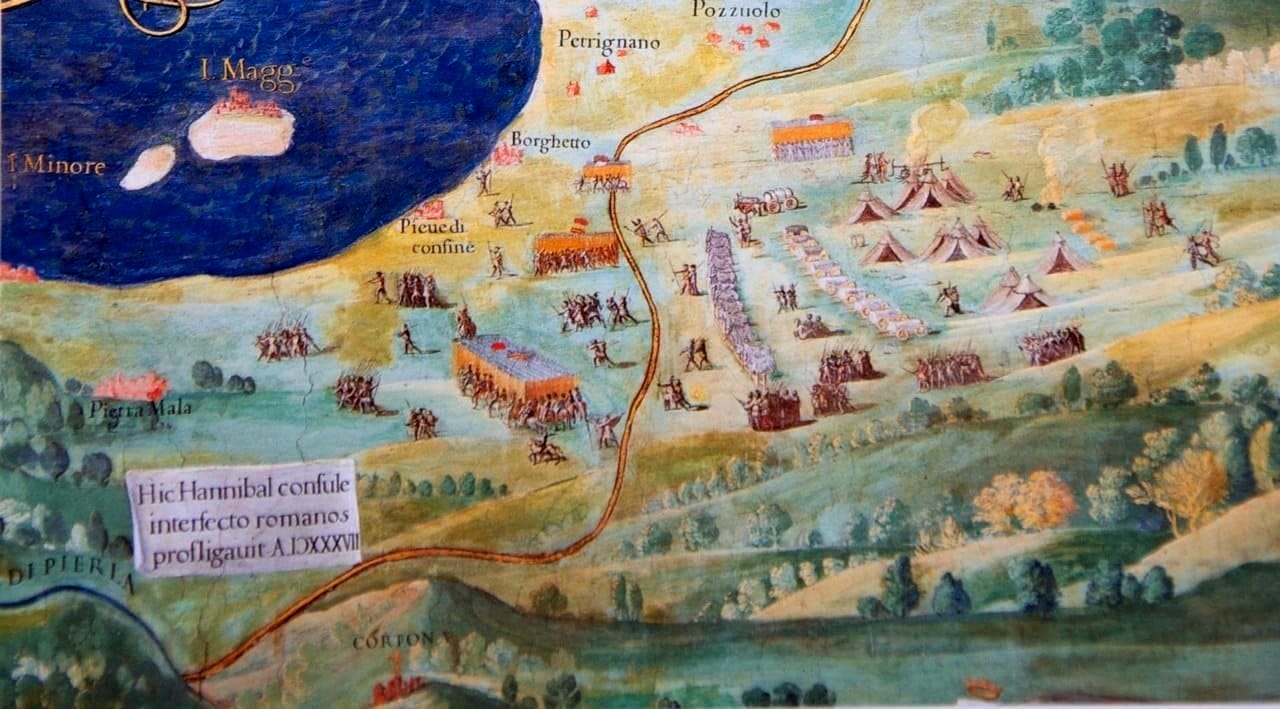
Polybius says that Hannibal occupied the hill facing the Roman advance with his Spaniards and Africans. He placed his slingers and pikemen beneath the hills on one side of the defile, while the cavalry and Celts formed a continuous line beneath the hills on the other side. The end of this line reached the entrance between the hillside and the lake, allowing the Romans to be attacked from behind once they had entered.
Livy gives a somewhat different arrangement. Hannibal camped with his Africans and Spaniards on the ground visible ahead of the Romans, while the Balearic slingers and other light infantry were concealed behind the hills. The cavalry occupied the entrance to the defile.
Livy explains the purpose of this deployment in a complete description:
“The Balearics and the rest of the light infantry he sent behind the hills; the cavalry, conveniently screened by some low hills, he stationed at the mouth of the defile, so that when the Romans had entered it they would be completely shut in by the cavalry, the lake, and the hills.”
The two arrangements are not identical. In both accounts, however, Hannibal’s visible troops drew the Roman column forward while other parts of his army occupied concealed positions along the surrounding heights and near the entrance.
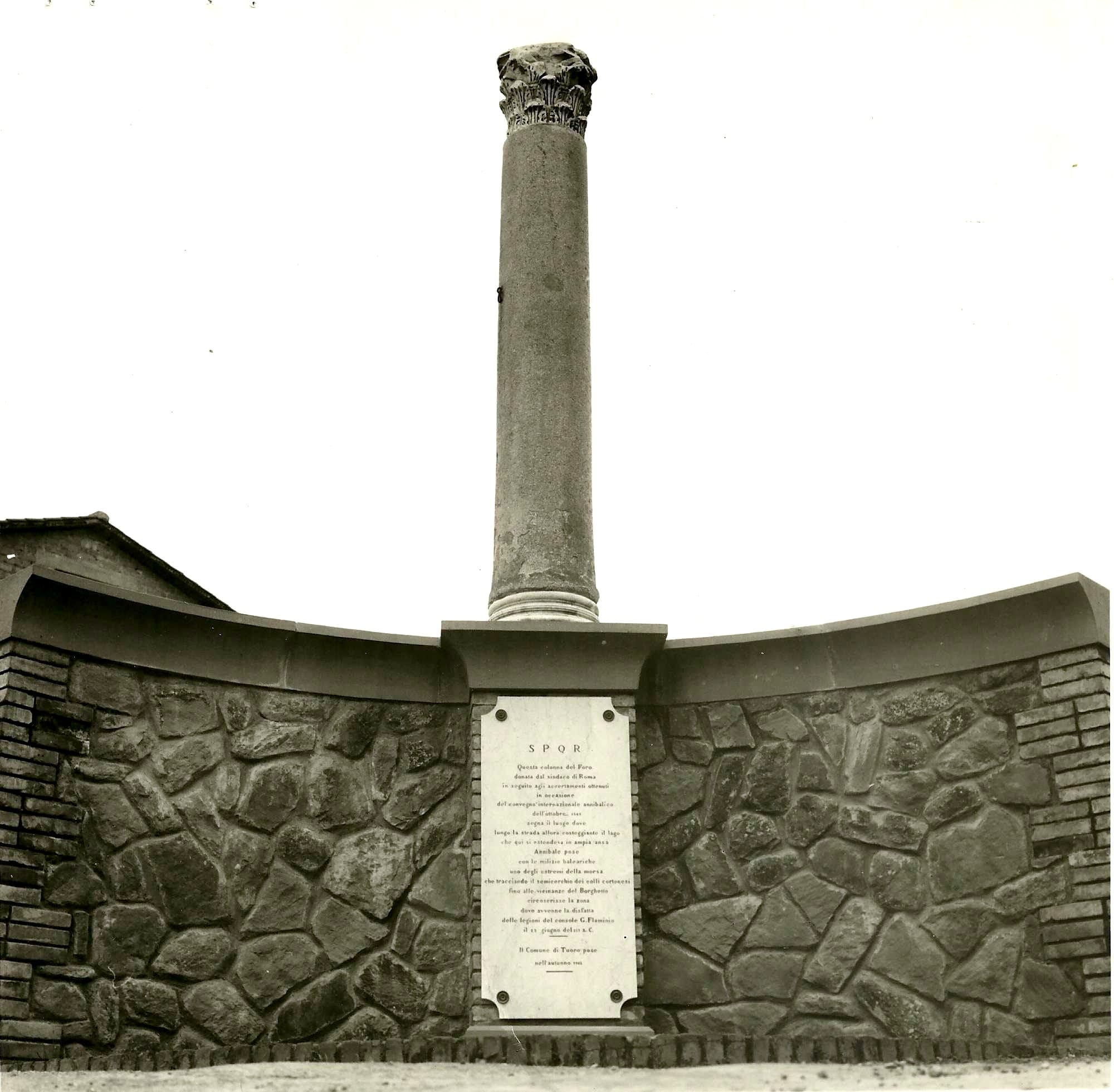
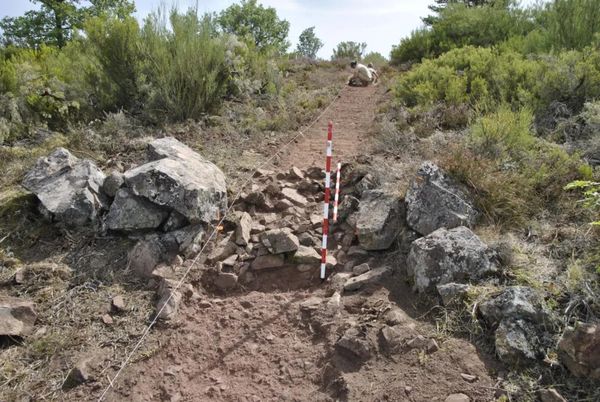
The exact shape of the ancient shoreline remains uncertain because the level and boundaries of Lake Trasimene have changed. A modern reconstruction places the principal action in the basin between Malpasso, Sanguineto and Tuoro. Under this reconstruction, the Romans entered through the narrow passage at Malpasso and continued along the lakeshore while Hannibal’s troops occupied the enclosing heights. This identification remains a reconstruction of the ancient terrain rather than a detail supplied by the literary accounts.
Flaminius reached the lake near sunset and camped there for the night. During the same night, Hannibal completed the deployment of the troops assigned to the ambush.
The Ambush Begins in the Fog
At dawn, the Roman army entered the passage beside the lake. Livy explicitly says that Flaminius did so without sending scouts ahead. Polybius does not mention the absence of scouts, stating instead that Flaminius led his vanguard along the lake because he wanted to make contact with the enemy.
Mist rising from the lake covered the lower ground. The Carthaginian troops stationed above the Romans could see one another, while visibility on the plain remained poor. Polybius describes the opening of the attack:
“It was an unusually misty morning, and Hannibal, as soon as the greater part of the enemy’s column had entered the defile and when the head was already in contact with him, giving the signal for battle and sending notice to those in the ambuscades, attacked the Romans from all sides at the same time.”
The head of the Roman column had already reached the troops positioned in front when Hannibal gave the signal. The concealed forces descended from the hills, while the troops near the entrance blocked retreat. Roman officers could not see the overall situation or organize the column into its normal battle formation.
Livy reports that the Romans heard the attack before they understood where it was coming from:
“The shout of battle rose round the Romans before they could see clearly from whence it came, or became aware that they were surrounded. Fighting began in front and flank before they could form line or get their weapons ready or draw their swords.”
The army had entered in marching order rather than in a prepared battle line. Attacks from the front, flanks and rear separated different parts of the column. The lake prevented movement in one direction, while Carthaginian troops descending from the hills restricted movement in the others.
The fog also made it difficult for Roman soldiers to identify their standards, units and officers. Livy says that men moved toward the sounds of fighting without knowing whether they were advancing toward their comrades, the enemy or other groups attempting to escape.
The Destruction of Flaminius' Army
Although Livy strongly criticizes Flaminius before the battle, he describes his behavior during the fighting differently:
“In the universal panic, the consul displayed all the coolness that could be expected under the circumstances. The ranks were broken by each man turning towards the discordant shouts; he re-formed them as well as time and place allowed, and wherever he could be seen or heard, he encouraged his men and bade them stand and fight.”
Flaminius attempted to restore order and moved toward places where his men were under the greatest pressure. Livy says that the fighting around him was especially severe and that he was accompanied by the strongest part of his army. Plutarch writes:
“Flaminius himself, then, while displaying many deeds of daring and prowess, fell, and round about him the flower of his army.”
Polybius gives a shorter account of his death, saying that he was attacked and killed by certain Celts. Livy identifies the killer as Ducarius, an Insubrian horseman who recognized Flaminius and called upon his countrymen:
“Here is the man who slew our legions and laid waste our city and our lands! I will offer him in sacrifice to the shades of my foully murdered countrymen.”
Ducarius then charged, killed an armor-bearer who attempted to stop him and drove his lance into the consul. The named warrior and his speech appear only in Livy’s account.
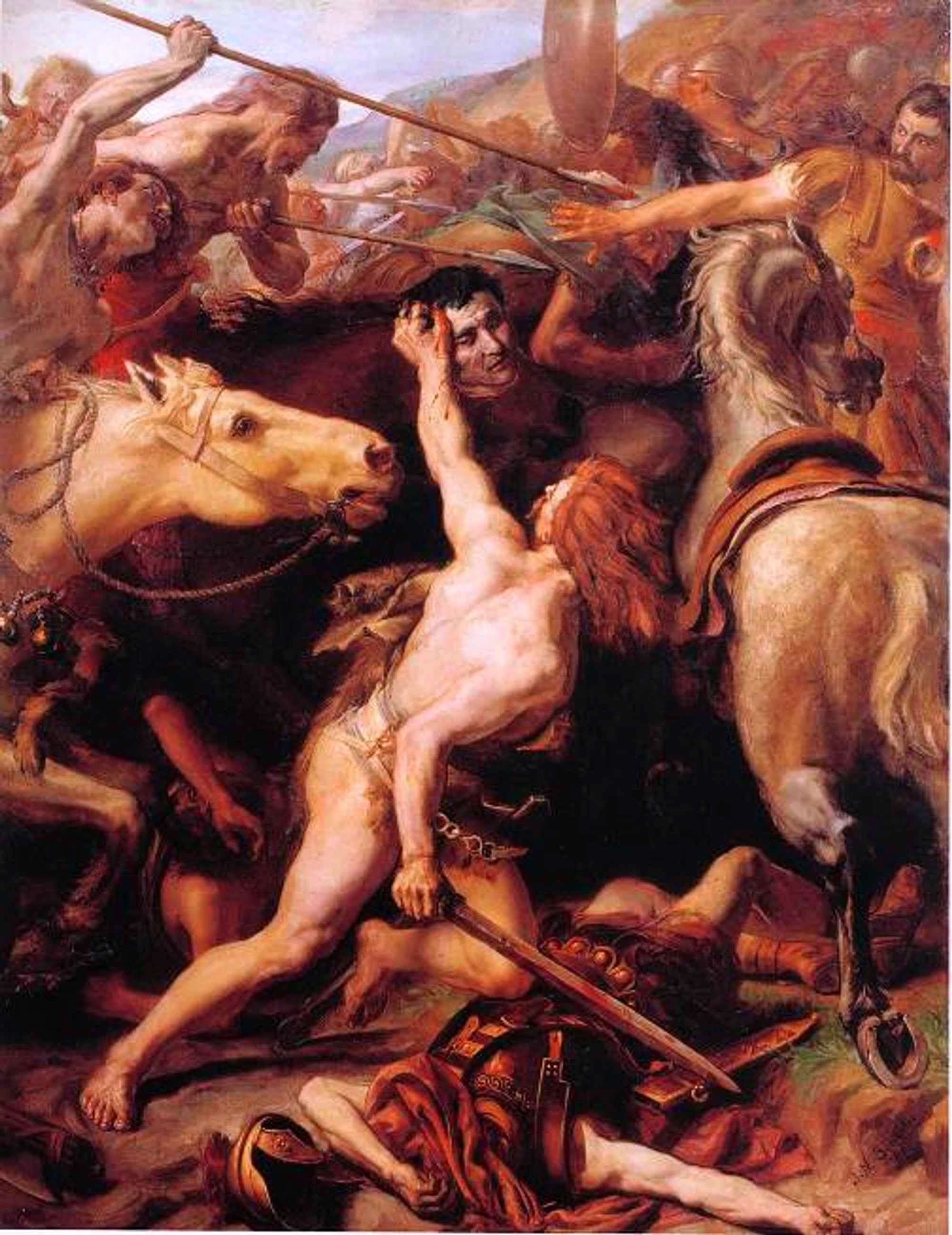
The fighting continued for about three hours according to Livy. He also reports that an earthquake occurred during the battle and affected several parts of Italy, but that the combatants did not notice it. Plutarch includes the same event, while Polybius does not mention an earthquake.
Many Roman soldiers were driven toward the lake. Some attempted to swim while still wearing their armor and drowned. Others remained in the shallows with only their heads above water until Carthaginian cavalry entered the lake and killed them. Some asked their own comrades to kill them rather than leave them to the approaching horsemen.
Approximately 6,000 Romans at the head of the column broke through the troops in front of them. Because of the fog, they did not initially understand what had happened to the rest of the army. They reached higher ground, where the clearing mist allowed them to see the destruction below.
The survivors then moved toward an Etruscan village. Maharbal pursued and surrounded them with Carthaginian troops. They surrendered after receiving a promise that their lives would be spared. Polybius says that Hannibal later declared Maharbal had lacked the authority to grant those terms. Livy says that the men were thrown into chains.
Casualties and the News at Rome
Polybius gives a Roman death toll of approximately 15,000 and says that more than 15,000 prisoners were assembled after the battle. He places Hannibal’s losses at about 1,500, most of them Celts.
Livy also reports that 15,000 Romans were killed. He says that about 1,000 fugitives reached Rome by different routes and gives Carthaginian losses as 2,500 killed during the battle, with additional men later dying from their wounds. These are the separate figures given by the two accounts.
Hannibal divided the prisoners according to their status. Roman citizens were kept under guard, while prisoners from Rome’s Italian allies were released without ransom. Polybius says Hannibal told them that he had come to fight the Romans for the freedom of Italy. This continued his attempt to separate Rome from the allied communities that supplied much of its military strength.
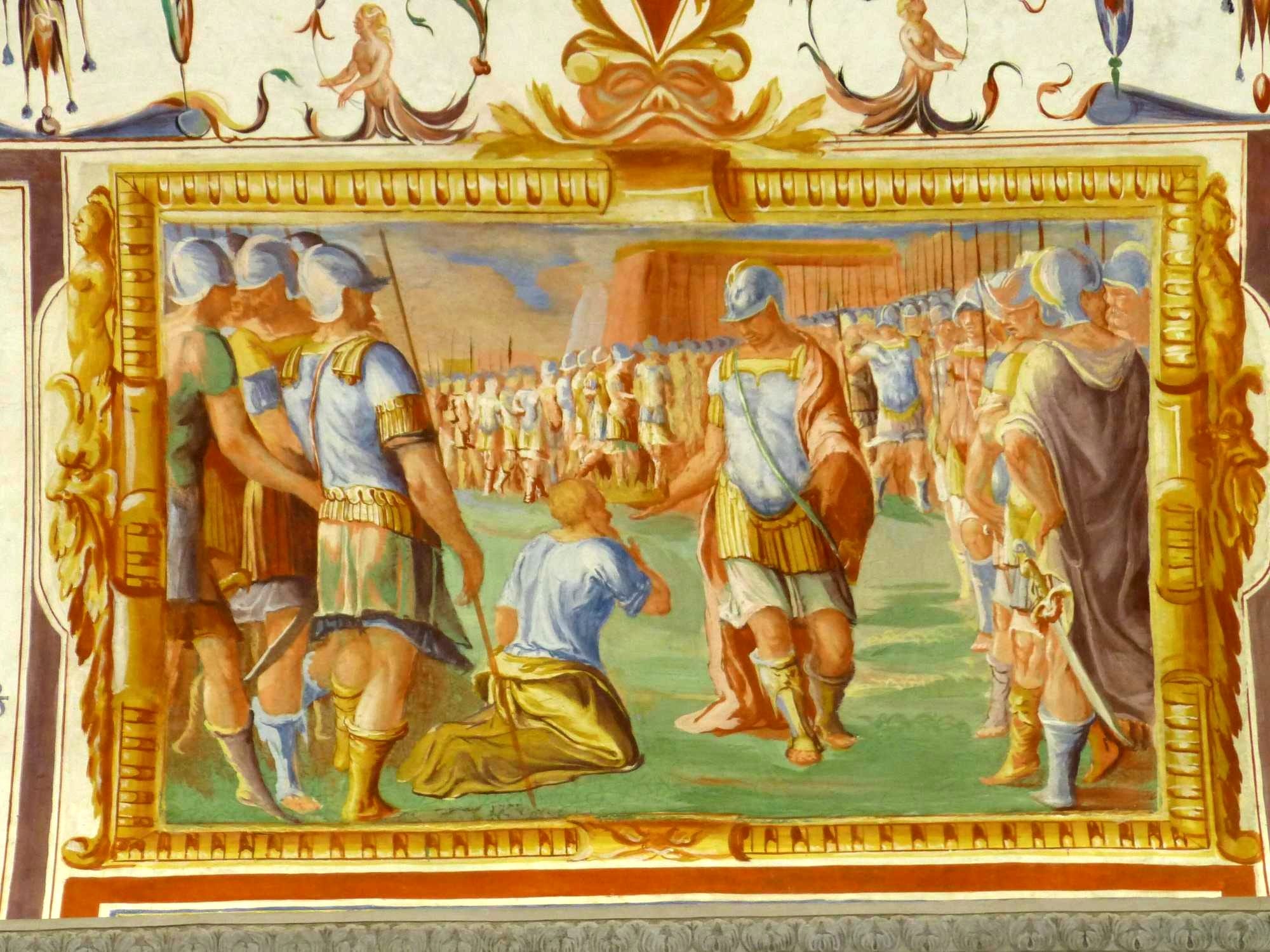
Livy and Plutarch say that Hannibal ordered a search for Flaminius’s body because he wished to give it an honorable burial. The body was not found. Polybius does not include this detail.
When news reached Rome, the population gathered in the Forum. Livy says that people demanded information from the magistrates while women moved through the streets seeking news about relatives in the army. The praetor Marcus Pomponius eventually addressed the crowd with the announcement:
“We have been defeated in a great battle.”
Polybius records the same announcement. Plutarch provides a longer version, adding that the army had been destroyed and Flaminius was dead. For several days, people waited at the city gates for survivors and reports concerning those who had fought.
A further defeat followed shortly afterward. The 4,000 cavalrymen sent ahead by Servilius encountered Carthaginian forces commanded by Maharbal. Polybius says that approximately half were killed in the first attack and the remainder were captured the next day. Livy reports that the force was surrounded and captured in Umbria.
The defeat at Lake Trasimene and the destruction of the cavalry reinforcements left Rome facing Hannibal without an intact consular army in central Italy. The Romans responded by granting extraordinary authority to Quintus Fabius Maximus. His appointment marked the beginning of the strategy later associated with his name: avoiding a direct battle with Hannibal while following his army, restricting its movements and attempting to exhaust its resources.
Polybius, Histories, Book 3, translated by W. R. Paton.
Livy, History of Rome, Book 22, translated by Rev. Canon Roberts.
Plutarch, Life of Fabius Maximus, translated by Bernadotte Perrin.
Nic Fields, Lake Trasimene 217 BC: Ambush and Annihilation of a Roman Army. Osprey Publishing, 2017.
Rachel Feig Vishnia, “A Case of ‘Bad Press’? Gaius Flaminius in Ancient Historiography,” Zeitschrift für Papyrologie und Epigraphik 181 (2012), pp. 27–45.

About the Roman Empire Times
See all the latest news for the Roman Empire, ancient Roman historical facts, anecdotes from Roman Times and stories from the Empire at romanempiretimes.com. Contact our newsroom to report an update or send your story, photos and videos. Follow RET on Google News, Flipboard and subscribe here to our daily email.
Follow the Roman Empire Times on social media: