
Before the CIA: How Ancient Rome Built Its World of Spies and Informers
Rome had no modern intelligence agency, but its spies, scouts, informers, couriers, and imperial agents helped the state watch enemies, cities, provinces, and its own people.

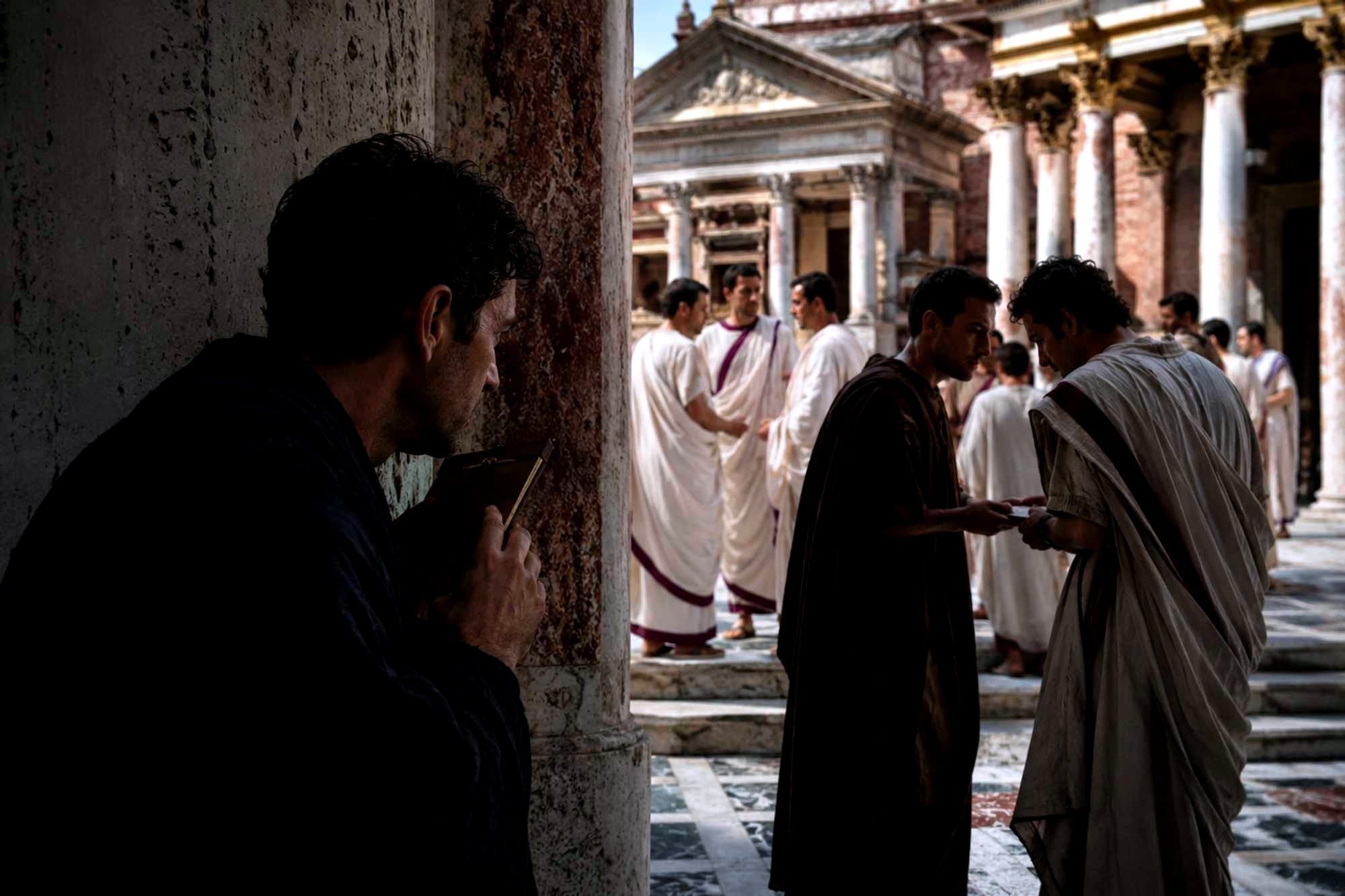
Rome did not have a modern intelligence agency. It did not separate foreign intelligence, domestic security, policing, military communications, surveillance, taxation, and administration into the neat categories familiar today. Yet the Roman state depended constantly on information. Armies needed scouts. Governors needed reports. Emperors needed messengers. Provincial authorities needed warnings. The centre needed to know what was happening at the edges.
The Roman system grew slowly. It began with old forms of foreknowledge, military reconnaissance, prisoners, deserters, envoys, traders, and personal networks. Under the Empire, communications became more structured, soldiers increasingly carried intelligence, and imperial security turned inward as well as outward. By the third and fourth centuries, Rome had developed agents whose work could include messages, inspection, surveillance, arrest, denunciation, and internal security.
The result was not a Roman CIA. It was a Roman world of intelligence: practical, military, administrative, and often intrusive.
Rome and the Problem of Knowing
The first caution is methodological. Rome should not be treated as if it possessed a modern intelligence bureaucracy. The strongest warning is simple: “Do not look to Rome for an ancient equivalent of the FBI or the CIA. There was none.”
That does not mean intelligence was absent. It means Roman intelligence activities were spread across many people and institutions. Private citizens, magistrates, soldiers, commanders, governors, envoys, traders, informers, scouts, couriers, and imperial officials could all gather or transmit information.
Intelligence could include reconnaissance, counterintelligence, covert action, clandestine operations, codes, ciphers, military messages, political surveillance, and other practices that modern states would classify under intelligence work.
The early Romans sought foreknowledge in more than one way. They used scouts, prisoners, deserters, allies, and local informants, but they also sought signs of divine will. Augury, prodigies, sacred chickens, haruspicy, and oracles belonged to the decision-making culture of early Rome.
These practices did not provide the kind of practical knowledge a commander needed about roads, passes, terrain, supplies, numbers, or enemy intentions, but they formed part of the same effort to act with confidence before danger.
Rome gradually learned the limits of such methods. The early Republic had no central intelligence organization. Military intelligence was often tactical, immediate, and dependent on the commander. Scouts and reconnaissance patrols could warn an army, but they did not create an enduring system.
Prisoners and deserters could provide useful information, but their reliability had to be judged. Envoys, merchants, and local allies might know foreign conditions, but information depended on chance, contact, and initiative.
As Rome expanded, the need for intelligence grew. A small city defending itself in central Italy required one level of information; a state campaigning across Italy, Spain, North Africa, Greece, Asia Minor, Gaul, Britain, and Parthia required another. Rome needed strategic intelligence, not only battlefield reports. It had to learn the geography, politics, alliances, resources, roads, ports, and military habits of peoples far beyond Latium.
The Republic remained slow to create permanent mechanisms. Its institutions were built around magistracies, aristocratic competition, senatorial debate, and short commands. Information often stayed attached to the person who gathered it. One commander might be careful, another negligent. One campaign might be guided by good reconnaissance, another ruined by ignorance. Rome’s intelligence activity was real, but it did not yet belong to a centralized service.
The civil wars changed the environment. Men competing for supreme power used trusted soldiers, private agents, messengers, spies, and political informers. The state’s needs and the ambitions of individuals began to converge. Intelligence was no longer only a military necessity abroad; it became a tool of internal power.
Augustus brought a major transformation. His new regime required better communication across the Empire and better security at home. The creation of the cursus publicus, the imperial transport and communication system, was central. It replaced the loose Republican dependence on private messengers with a more regular official system for carrying state business.
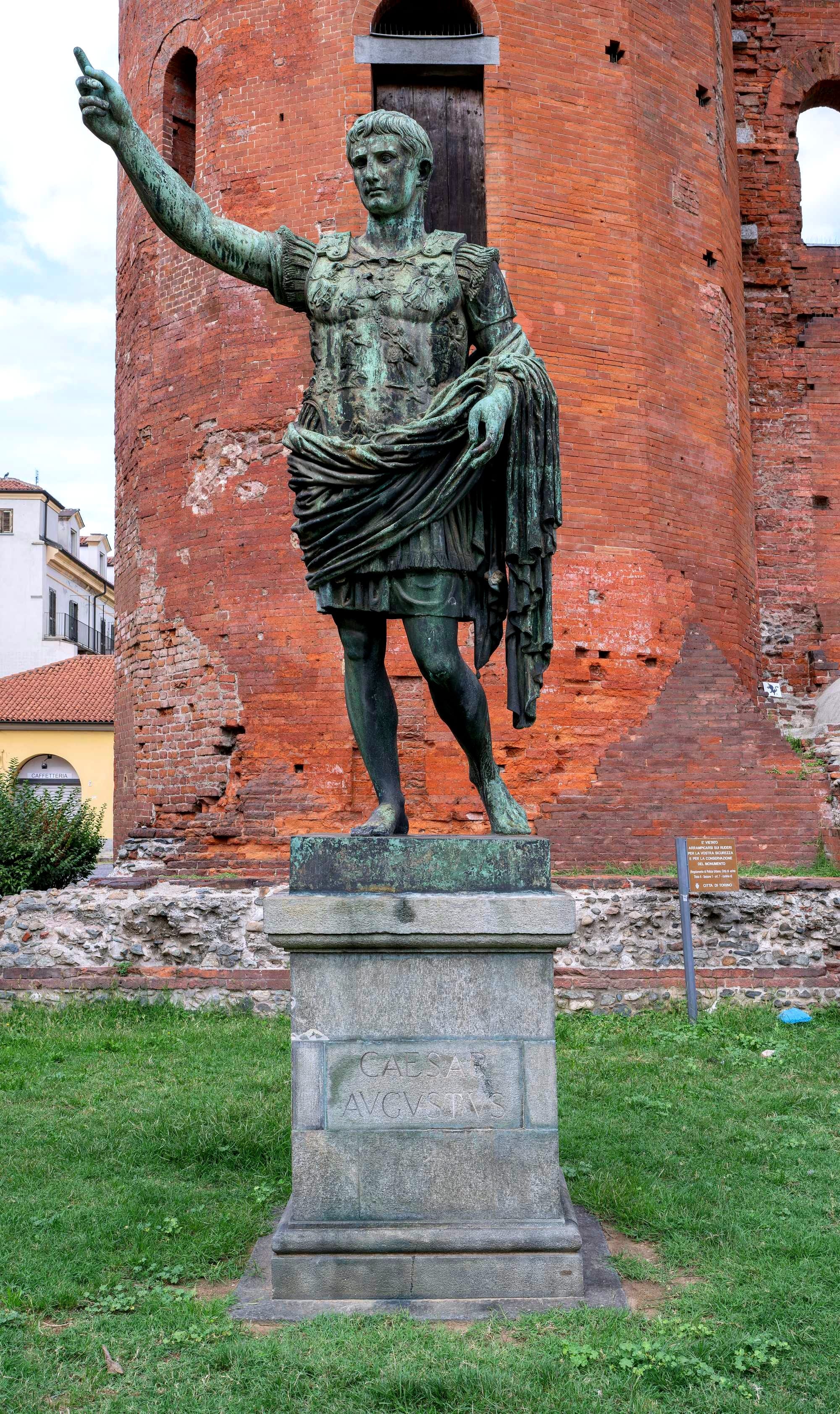
At first Augustus used a relay of messengers, but he then adjusted the system so that a messenger could travel the whole route and be questioned about the origin of the message. Reliability mattered as much as speed.
The cursus publicus was not a public postal service. It existed for government business. Diplomas or warrants regulated access to it, and its privileges were valuable enough to be abused. Relay stations, animals, carriages, lodging, and staff made imperial communication more dependable. The system helped the emperor receive military and political information, send instructions, and keep the provinces within reach.
This communication network eventually became tied to internal security. Soldiers and officials used the road stations; later, frumentarii and other enforcement personnel operated through the same system. By the late Empire, individual road stations could serve both the postal system and the officials who used it for surveillance or enforcement.
Augustan intelligence was not only about messages. The age also saw geographical intelligence. Conquest, administration, and diplomacy required knowledge of lands beyond the old Roman world. Surveys, maps, itineraries, military routes, embassies, traders, hostages, and reports from campaigns all contributed.
Generals operating near frontiers were expected to gather information, and the expansion of Roman power helped produce a wider geographical vision of the world Rome claimed to govern.
Internal security also became more important. Augustus had lived through civil war and knew the danger of conspiracy. During the wars, he had used agents and trusted personnel for dangerous tasks. As ruler, he did not rely on one single secret agency, but he did create conditions in which surveillance and political control could grow. Informers, soldiers, court agents, and officials could all serve the regime.
Private informers, the delatores, became especially important in imperial politics. Under Augustus and his successors, denunciation could become a weapon. Charges of treason, conspiracy, or disloyal speech could protect the ruler, but they could also destroy opponents. In this environment, the boundary between security and political accusation was often unstable.
Military personnel also acquired intelligence and security roles. Speculatores served as scouts, messengers, collectors of military intelligence, couriers, bodyguards, and sometimes executioners or agents of arrest. Augustus formalized their role in the legions, and imperial use of them continued across the first century.
They could serve the emperor, commanders, governors, and the Praetorian structure. Their functions overlapped with policing, intelligence, communication, and political security.
By the third century, some functions once associated with speculatores were increasingly taken over by the frumentarii. These men, originally connected with supply, became central to imperial communication and internal security. They carried messages, moved through the provinces, observed conditions, and were later associated with surveillance, arrest, and political policing. Their development marks one of the clearest points at which Roman administration became intelligence work.

The later Empire added other agents and offices. Diocletian replaced the hated frumentarii with the agentes in rebus. Yet even this later corps was not a pure intelligence agency in the modern sense. It was primarily concerned with internal security and also had other administrative functions. The same applies to notarii, imperial secretaries whose roles could overlap with security, communication, and court politics.
The larger point is that Rome’s intelligence history moved from scattered, personal, and military practices toward more regular imperial communications and internal security. It never became a neat modern agency. It remained distributed across the army, court, postal system, provincial administration, informers, and trusted agents. But by the Empire, information gathering had become inseparable from rule. ("Intelligence Activities in Ancient Rome: Trust in the Gods, but Verify" by Rose Mary Sheldon)
The Police of the Capital
A separate question is policing. Before discussing Rome’s “secret service,” it is necessary to distinguish ordinary public order from intelligence work. The two could overlap, but they were not the same.
In early Rome, law and order rested heavily on citizens and magistrates. The office of policeman was not regarded as honourable in the ancient world, and Rome, like many Greek states, had only limited arrangements in its earlier period.
Certain authorities, especially the aediles, had responsibilities connected with the safety of the city. A small night-time force also existed, but it was inadequate and had to serve as fire brigade as well as watch.
The late Republic exposed the weakness of this system. Political violence, organized gangs, street fighting, intimidation of voters, and attacks on opponents’ houses became recurring features of public life. The state lacked a standing urban force capable of restoring order. Political leaders used hired gangs, and the official authorities often lacked either the means or the will to act effectively.
Julius Caesar introduced some measures for urban regulation, including traffic rules, but his assassination prevented a full restructuring. Augustus later reorganized the capital’s security as part of his wider imperial settlement. The system that developed was military in tone, reflecting the military foundation of imperial authority.
The chief police official was the City Prefect, the praefectus urbi. He commanded police forces and also acted as a major judicial authority. Under him stood the Urban Cohorts, organized on a military basis. They were closely connected to the Praetorian Guard, and their duties were especially visible at public functions, festivals, gladiatorial shows, and circus races, where crowd control mattered.
The Urban Cohorts were not a modern detective force. The ordinary handling of theft, larceny, housebreaking, and similar offences developed through other arrangements. One of the most important was the Vigiles. Originally raised primarily as a fire brigade, the Vigiles also served as the night watch. Since the prevention of fire required inspection and presence in the streets after dark, their work naturally expanded into policing.
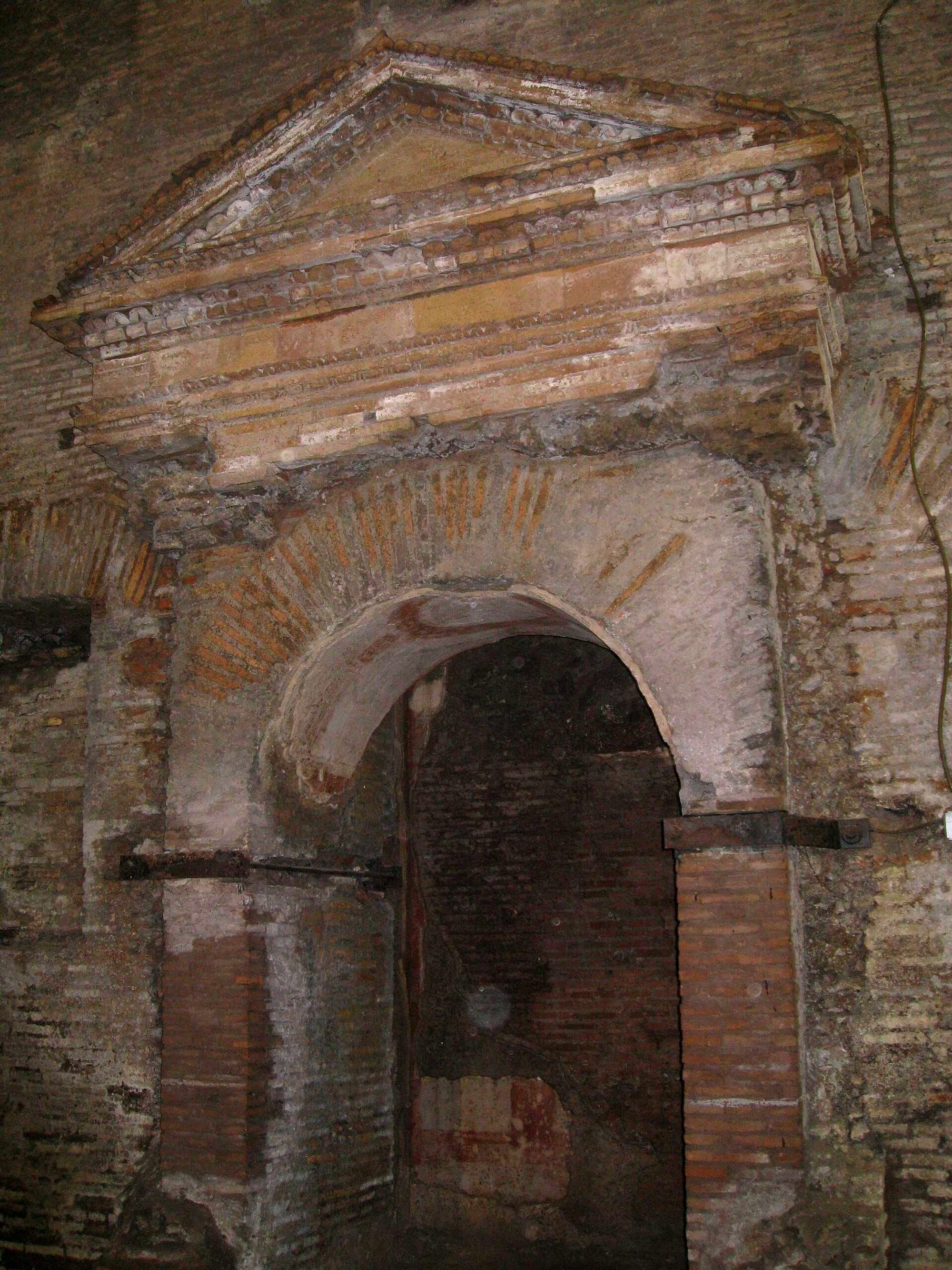
The Prefect of the Vigiles became a judicial authority in his own right. Crimes committed at night, burglary, robbery, theft, unsafe fires, and runaway slaves could come under his jurisdiction. The force that began as a fire service became part of Rome’s policing system.
The castra peregrinorum provides the bridge between urban policing and imperial intelligence. This barracks housed soldiers from the frontier armies who came to Rome with orders, reports, prisoners, escorts, and related business. The officers connected with it were not simply city police, but their movement between Rome and the provinces placed them in a position to carry information.
Speculatores and frumentarii operated within this mobile military-administrative world. Speculatores were picked messengers attached to legions and used for communication with headquarters. Frumentarii were connected with supply and travelled to arrange provisions and report to Rome. Their constant movement made them useful collectors of information about provincial conditions. Over time, such functions could turn toward espionage.
Hadrian was said to have “known all secrets through the frumentarii.” They were associated with Christian arrests, political removals, and the kind of “dirty work” expected of a secret police under an increasingly autocratic regime. Diocletian’s later abolition of them did not end the need for such work, and the agentes in rebus took over many functions under a new name.
The policing of Rome itself remained broader than secret service. The capital had Urban Cohorts, Vigiles, holding cells, police magistrates, and armed forces of order. Its population, fires, crowds, slaves, games, grain supply, and dark streets made policing necessary. The secret-police element grew within a larger environment of public order, military movement, and imperial control. (“The Police in Ancient Rome.” by P. K. Baillie Reynolds)
Police Functions Without a Modern Police Force
A modern correction is needed. It is misleading to say simply that Rome had “no police.” It is also misleading to imagine Rome had police departments in the modern sense. The better approach is to speak of police functions.
Roman enforcement was carried out by many types of people and institutions. Magistrates, public slaves, attendants, soldiers, guards, local officials, governors, market authorities, prison staff, military detachments, and imperial representatives could all be involved in maintaining order or enforcing state authority. These arrangements were not always coordinated, professional, or centralized, but they were real.
Roman law enforcement depended heavily on social status, private initiative, local power, and military involvement. In many cases, victims, households, patrons, local communities, or municipal authorities had to act. The state did not provide the kind of public prosecution and routine policing expected from a modern system. Yet the state could intervene forcefully when order, revenue, imperial authority, or public security required it.
Military policing was especially important. Soldiers were not used only for battle. They guarded roads, escorted prisoners, hunted bandits, pursued fugitives, assisted governors, suppressed riots, controlled crowds, protected officials, and enforced imperial interests. Their use in public order grew from late Republican crisis and became more systematic under Augustus and later emperors.
Rome’s policing arrangements were layered. Civilian, local, gubernatorial, imperial, and military authorities could all appear in different circumstances. A governor’s staff might investigate, punish, or deploy soldiers. A military detachment might act as a police force. An imperial order might pass through administrative channels that also served intelligence needs. The same machinery could be used for communication, coercion, and surveillance.
This framework helps avoid exaggeration. Rome did not possess a modern police state in the institutional sense. It did possess a wide range of state-organized coercive tools. These tools could compel obedience, control movement, punish disorder, support tax collection, and protect the ruler’s interests.
The relevance to intelligence is clear. Roman intelligence grew inside this broader environment of enforcement. Soldiers, messengers, road stations, governors’ staffs, and imperial officials all moved through the same administrative world. A man could be a courier in one context, an escort in another, an arresting officer in another, and a source of information in another. The division of labour was not rigid.
Rome therefore had no neat boundary between police work, military administration, and intelligence. That looseness was characteristic of the system. It made Roman enforcement flexible, but it also made it easy for administration to become surveillance and for surveillance to become coercion.( “Police Functions and Public Order,” by Christopher J. Fuhrmann, in The Oxford Handbook of Roman Law and Society.)
The Roman “Secret Service”
The phrase “Roman secret service” needs careful handling. It can suggest a modern internal security agency, but the expression should be treated only as a “convenient, if not perfectly descriptive, label.” The Roman institution had no exact modern parallel.
A permanent secret service developed late. The idea of a centralized agency was foreign to the political habits of classical city-states and Republican Rome. Early Rome relied on citizen informers, prosecutors, magistrates, and ad hoc enforcement rather than a permanent detective service. Such a body also implied centralized authority and bureaucracy, both of which sat uneasily with senatorial oligarchy.
The first prototypes appeared in the civil wars of the late Republic. Rival leaders used trusted soldiers from their personal military circles, including Praetorian-style guards, to gather information, arrest enemies, and carry out executions.
Augustus knew such methods before becoming sole ruler, but the first century of the Empire still did not rely on a single agency to detect subversion. Emperors used delatores, Praetorians, freedmen, procurators, provincial officials, and other trusted channels.
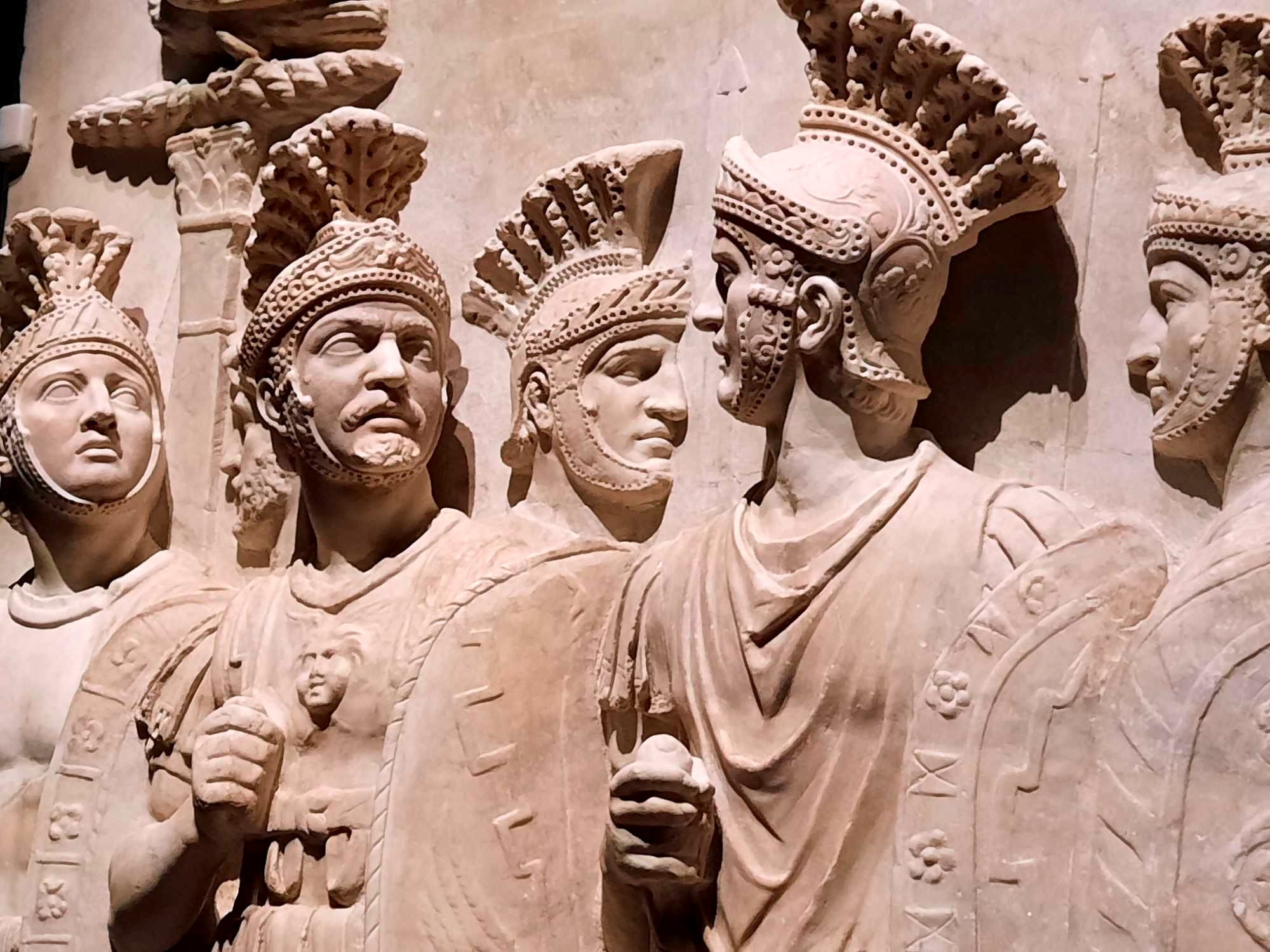
The corps that eventually came closest to a Roman secret service was the frumentarii. Their origin was military and administrative. Their name came from frumentum, grain, because their original functions concerned the purchase and distribution of grain for the troops. They were supply personnel before they became intelligence agents.
Their usefulness came from movement. Supply required travel, contact with soldiers, officials, local communities, roads, ports, and provincial populations. Men performing such duties were well placed to observe conditions and report information of interest to the central government.
The frumentarii probably emerged from reforms in the supply section of the imperial general staff. They were detached from provincial legions for temporary duty in Rome, while still formally belonging to their original units. Their base was the castra peregrinorum on the Caelian Hill, and their commander, the princeps peregrinorum, was responsible to the emperor or the Praetorian Prefecture.
They were not an ethnically or geographically exclusive elite corps. The idea that they came only from the western provinces is rejected. All legions sent frumentarii to Rome, and they reflected the wider non-commissioned officer cadre of the imperial army. Their career prospects were also not automatically superior. Some rose, especially in the Severan period, but secret-service work was not normally a direct path to the highest offices.
Their number is uncertain. No table of organization survives. It is estimated that in the second century each legion may have supplied about five or ten frumentarii, giving a total of perhaps around two hundred in the provinces and at the capital. The number may have increased in the third century as communication, supply, taxation, and internal security became more pressing.
Their three basic duties were as couriers, tax collectors, and policemen. As couriers, they were among the important users of the state highways and could requisition animals, vehicles, lodging, and supplies. As supply personnel, they remained connected with grain for military use and later with collections in kind. They also had permanent posts at Portus and along the Appian Way toward Puteoli, connected with Rome’s grain system.
Their role as internal security agents became clearer over time. It cannot be stated categorically that they served as a secret-service agency from the moment of their foundation. By the first quarter of the second century, however, they were spies in the service of the central government. Hadrian is the first emperor clearly known to have used them as detectives, including surveillance within the imperial court.
By the late second and early third centuries, evidence for their espionage is extensive. No class was beyond their reach. Generals, senators, Christians, and ordinary people could become objects of attention. They worked in Rome near the urban police, investigated and arrested suspects, and could be commissioned to carry out political assassinations. They were also associated with plain-clothes work and agents provocateurs, though their exact methods are often obscure.
Their work was not always hidden. In some official capacities, especially as bureaucrats and couriers, their presence was visible through uniform or symbols of authority. This is important. The Roman secret service did not operate only in darkness. Sometimes its power came from being seen as the representative of central authority.
They also performed many miscellaneous duties: supervision of mines and quarries, prisons, public works, and other tasks assigned by the central government. Individually, some of these duties resembled those of other military bureaucrats. Taken together, however, the functions of the frumentarii made them distinctive.
Their reputation suffered because their duties touched areas that made them hated: revenue, subversion, arrest, inspection, and the enforcement of imperial power. Inscriptions may show them as loyal friends and family men, but their office did not endear them to the population.
By the third century, they were under pressure to guarantee revenue in kind and protect an increasingly strained state. Provincial complaints associated them with arbitrary arrests and exactions. They were eventually regarded as a plague, and their snooping became unbearable.
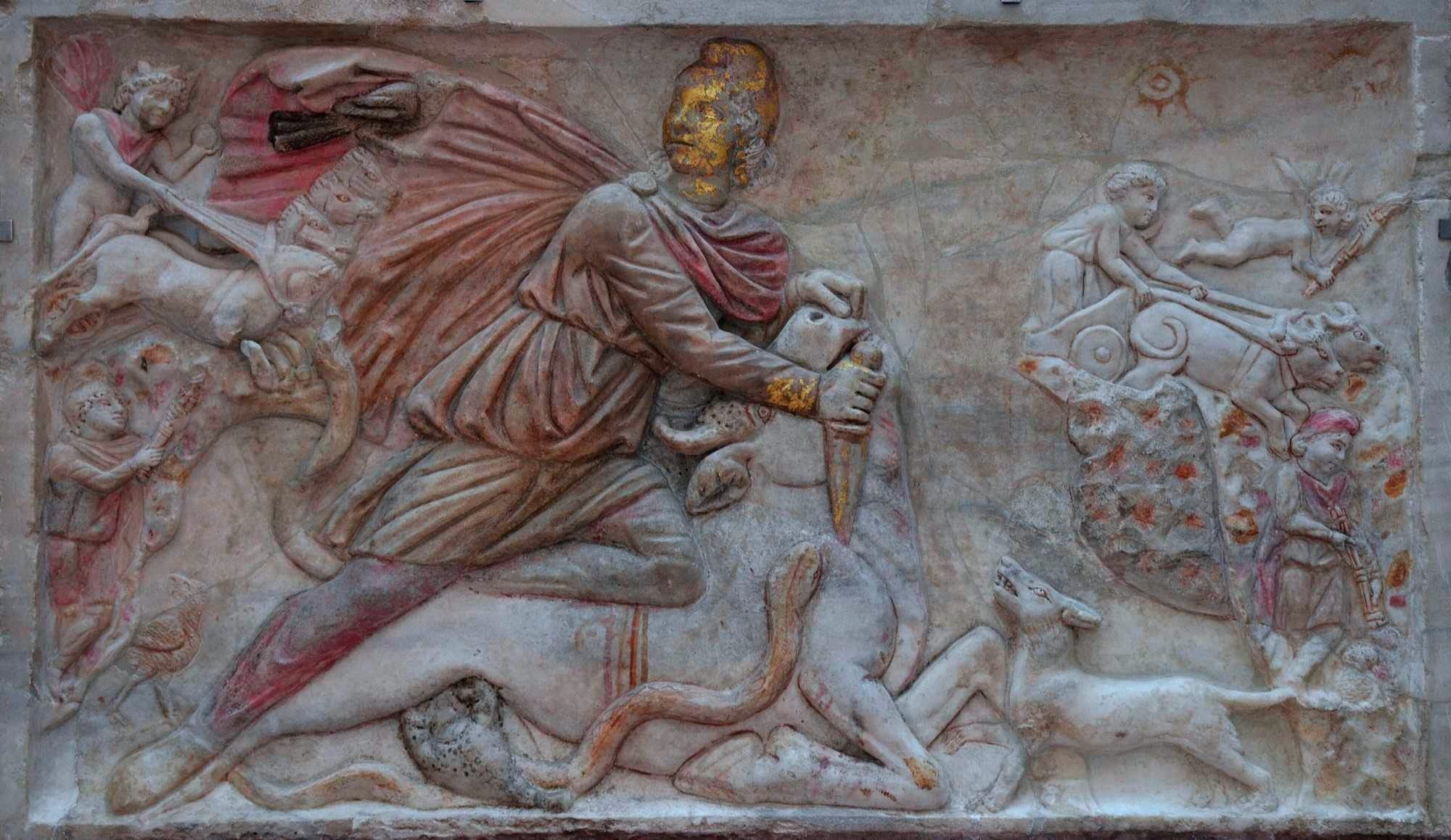
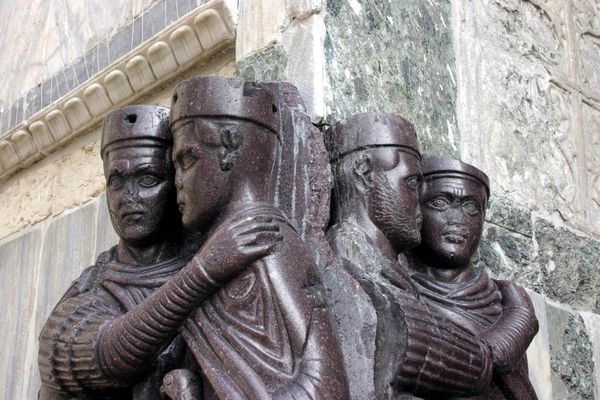
Diocletian is usually credited with disbanding them. Diocletian appears to have reorganized them under a new name, the agentes in rebus. The new corps performed a wide range of functions similar to those of the frumentarii, but differed in structure. Its recruitment was civilian rather than military, even though its ranks and privileges were quasi-military. It was placed under the Master of Offices rather than the Praetorian Prefecture.
The agentes in rebus became much more numerous. Their work was tied to communication, inspection, internal security, and the monitoring of administration. They could be placed in important offices in order to watch superiors and subordinates alike, though they sometimes cooperated with their superiors rather than simply spying on them.
The internal security agencies of the Roman Empire deserve the title “secret service” even though many of their activities were neither secret nor directly related to political safety. They were centralizers of administration, rooted first in the military establishment and later in imperial bureaucracy. They represented imperial power in ways that could affect the lives of subjects and eventually made them hated.(“The Roman Secret Service.” by William G. Sinnigen)
What Rome Actually Built
Rome’s intelligence system was not created in a single reform. It developed through practical needs: military reconnaissance, diplomatic reporting, communication with provinces, control of the capital, protection of the emperor, revenue collection, policing, and internal security.
In the Republic, intelligence activity was widespread but not centralized. Under Augustus, communication and internal security became more regular. The cursus publicus created a stronger infrastructure for official messages and later security work. Military personnel such as speculatores and frumentarii carried information, watched, escorted, arrested, and reported. Urban forces such as the Urban Cohorts and Vigiles maintained order in the capital. Provincial and military authorities enforced Roman power beyond the city. Later, the agentes in rebus and related officials carried the system into a more bureaucratic form.
The result was neither absence nor modernity. Rome had no modern intelligence service, but it did possess a complex world of intelligence activities and internal security. Its agents were not always secret. Its police were not always police. Its soldiers were not always only soldiers. Its couriers did not always merely carry messages.
The same men and institutions that moved grain, guarded roads, delivered letters, watched fires, escorted prisoners, served governors, and protected emperors could also gather information. In Rome, intelligence grew out of administration, war, communication, and the need to preserve authority across distance.
Rome did not build a CIA. It built a Roman system: uneven, overlapping, military, administrative, and often feared.

About the Roman Empire Times
See all the latest news for the Roman Empire, ancient Roman historical facts, anecdotes from Roman Times and stories from the Empire at romanempiretimes.com. Contact our newsroom to report an update or send your story, photos and videos. Follow RET on Google News, Flipboard and subscribe here to our daily email.
Follow the Roman Empire Times on social media: