
Exile in Ancient Rome: What Happened When Rome Sent You Away
Exile in ancient Rome could mean escape, punishment, isolation or political survival. From Cicero to Ovid, Seneca and imperial prisoners, Roman exile took many forms.

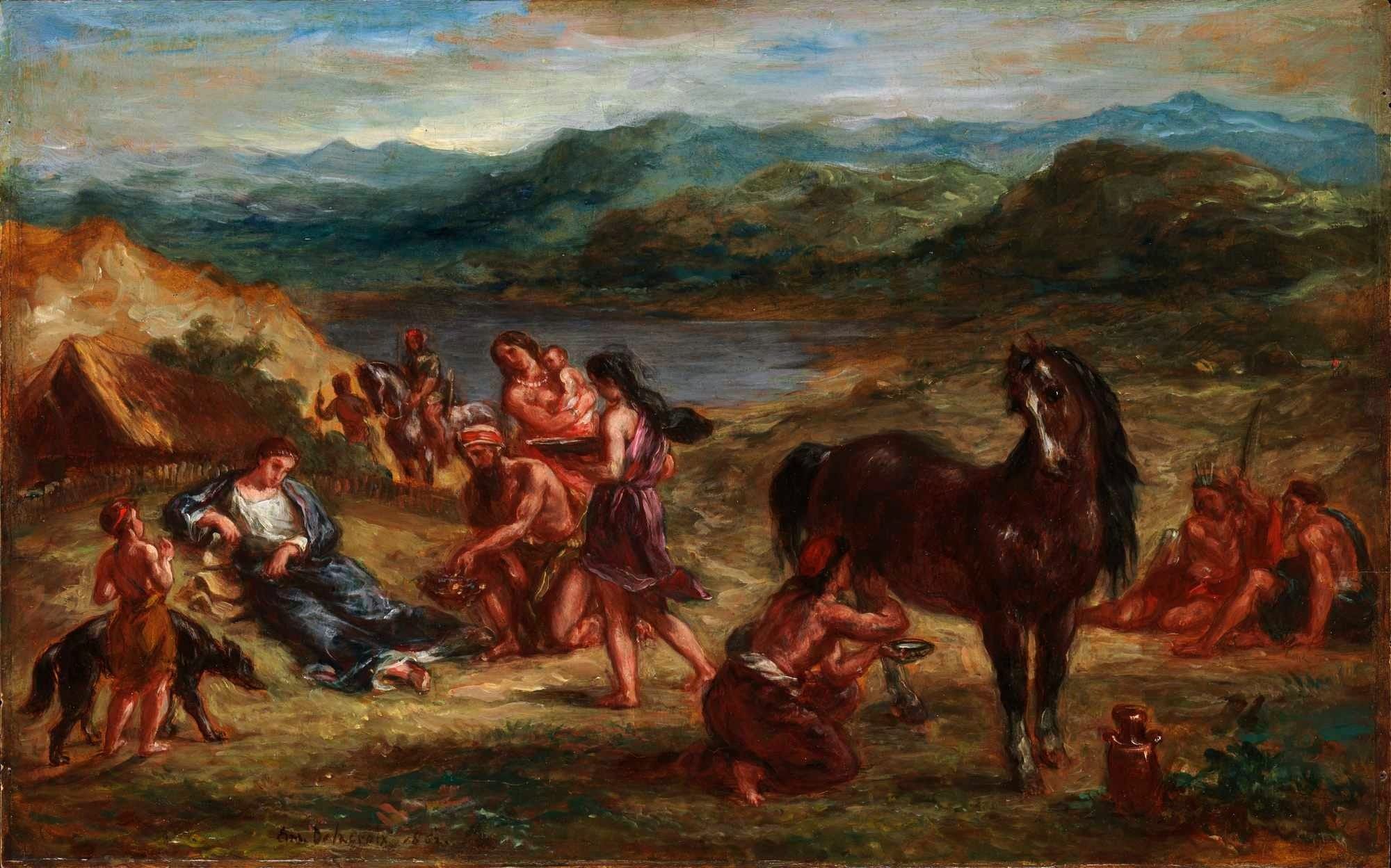
For a Roman, exile could mean very different things. A man might leave Roman territory to escape the consequences of a prosecution, be forbidden to approach Rome, or be ordered to live in a place chosen for him by the authorities. He might retain his citizenship and property, or lose both.
He could have money, servants and friends working on his behalf while living hundreds of miles away, or find himself under military guard on an island from which departure was forbidden. Some exiles returned when political circumstances changed. Others remained away for decades, died where they had been sent, or discovered that distance from Rome did not protect them from an emperor who still considered them dangerous.
These differences developed over centuries. The exile experienced by Cicero in 58 BCE still belonged largely to the political and legal practices of the Roman Republic. Half a century later, Augustus could order Ovid to live at Tomis on the Black Sea while allowing him to retain his citizenship and property.
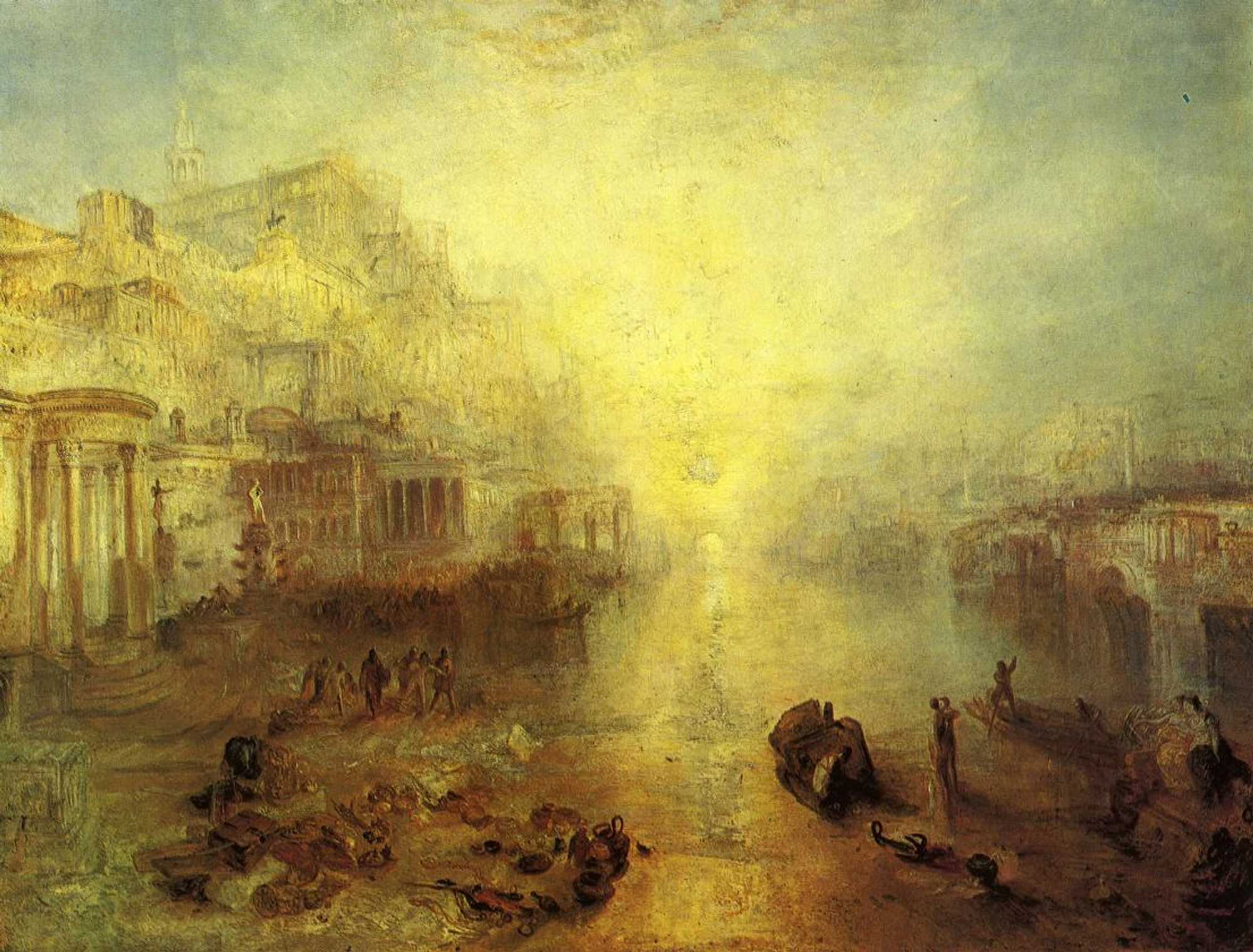
Under subsequent emperors, other forms of banishment carried far heavier consequences, affecting civic status, possessions and freedom of movement. The convenient English word “exile” therefore conceals several Roman practices whose legal consequences and everyday realities could be profoundly different.
When Exile Was an Escape From Punishment
During much of the Republic, exilium was not itself a criminal sentence imposed by a Roman court. A citizen facing a capital prosecution could leave rather than remain to suffer the consequences of conviction. The departure was voluntary only in a limited sense: the accused chose flight because staying could mean imprisonment, execution or another severe penalty.
A subsequent aquae et ignis interdictio — the interdiction of fire and water — could then formally prevent the individual from returning to the territory covered by the measure.
Cicero explained this Republican conception while defending Aulus Caecina in 69 BCE. His distinction between exile and punishment was explicit:
“Exile is not a punishment: it is a harbour of refuge from punishment. Because people want to escape from some punishment or catastrophe…”
He continued that those seeking to avoid imprisonment, death or disgrace left their native soil and took refuge elsewhere. In the legal argument Cicero was making, exile was therefore the means by which a person escaped a punishment rather than the punishment itself. He also argued that Roman citizenship was not simply taken from the exile: it was lost when the fugitive became a member of another civic community.
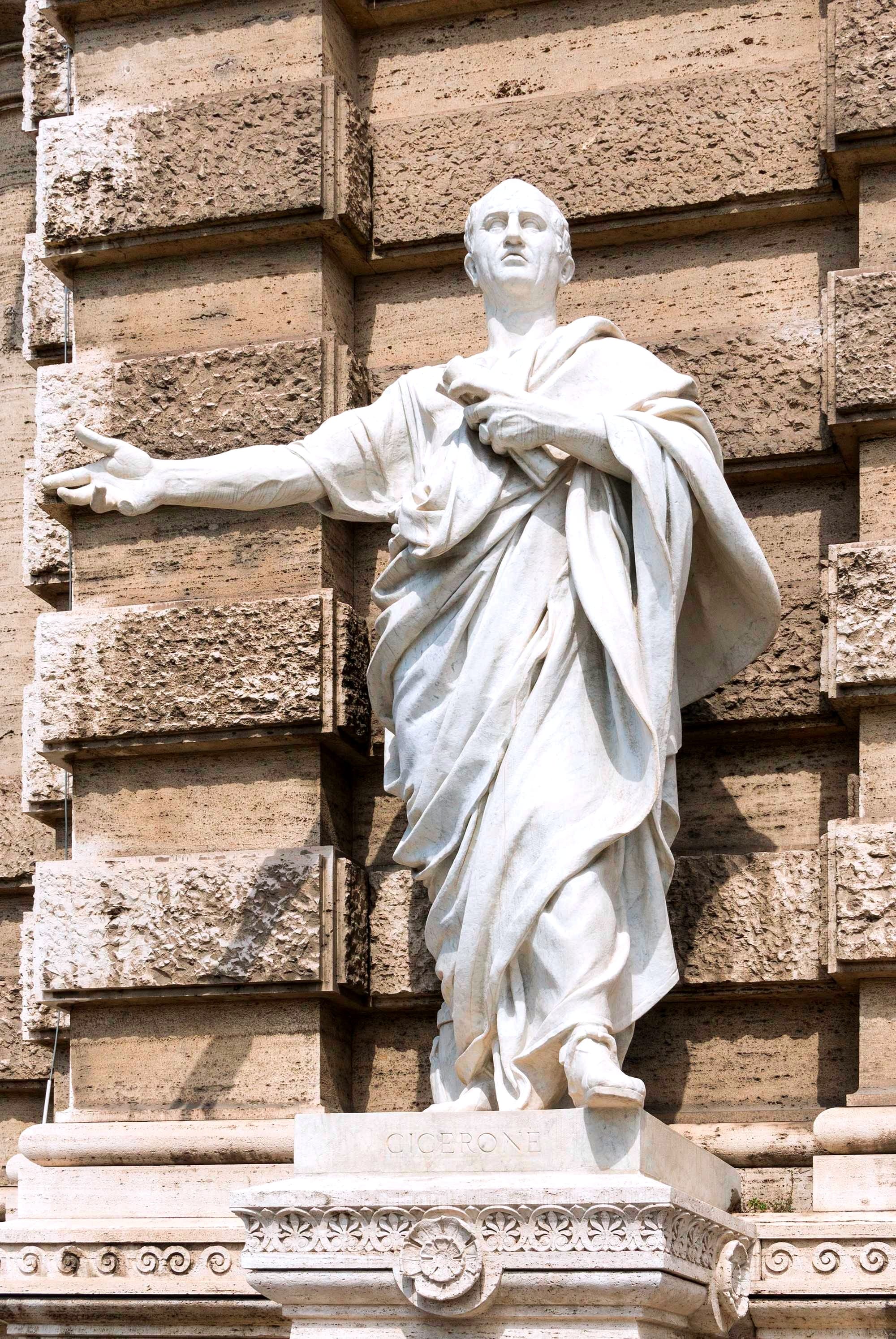
The position was already changing during Cicero’s lifetime. His own lex Tullia de ambitu of 63 BCE made exile a statutory penalty for electoral corruption. The measure represented an important stage in the development of exile into a punishment in its own right, although the evidence for its precise duration is not uniform: Cassius Dio is the ancient source that specifies a term of ten years.
The transformation therefore began before Augustus and should not be reduced to a simple distinction in which Republican exile was always voluntary and imperial exile always imposed.
Cicero himself encountered the realities of exile only eleven years after delivering Pro Caecina. In 58 BCE, the tribune Publius Clodius Pulcher moved against him over the execution of Roman citizens following the Catilinarian conspiracy. Cicero departed before the measures against him had fully run their course, but subsequent legislation attacked him by name, affected his property and restricted where he could remain. He considered several destinations, repeatedly changed his plans and eventually spent much of the period first at Thessalonica and later at Dyrrachium.
His correspondence with Atticus shows how those restrictions affected everyday decisions. In April 58 BCE, after receiving a copy of the amended legislation, Cicero wrote:
“I received a copy of the bill for my ruin, and found that the amendment … took the form of banishment beyond four hundred miles.”
He explained that he could not go where he had wished, hurried toward Brundisium, feared involving a host in his own downfall and worried about whether anyone would continue to receive him. Elsewhere in the same sequence of letters, he repeatedly asks Atticus to join him so that they can decide where he should go and what he should do.
The correspondence shows exile not only through despair but through journeys, accommodation, money, political news, potential hosts and dependence on friends who could still act on his behalf.
Materially, Cicero was not reduced to poverty. Friends helped provide funds, and at Thessalonica he stayed in the official residence of Gnaeus Plancius, the quaestor of Macedonia. Yet his correspondence repeatedly returns to losses that money could not repair: separation from his wife and children, removal from public life, damage to his political standing and uncertainty over whether he would ever return.
His restoration in 57 BCE required a sustained campaign by allies in Rome, establishing a pattern that remained important under the emperors. Physical absence did not necessarily end an exile’s political life when family and friends remained behind to work for his return.
Augustus and the Growing Control of Exile
Under Augustus, imperial power increasingly determined not merely that somebody should leave Rome but where that person would live. The change appears particularly clearly within the imperial family. Augustus’ daughter Julia was sent to Pandateria in 2 BCE after accusations of adultery and sexual misconduct.
Her conditions were closely regulated: access to visitors was controlled and luxuries were restricted. Five years later Augustus allowed her to move from the island to Rhegium on the Italian mainland, but he never permitted her to resume her former life in Rome.
Agrippa Postumus, Augustus’ grandson, was first removed to Surrentum and later sent to Planasia, where he lived under military guard. Julia the Younger was exiled to Trimerus in 8 CE and remained away for roughly two decades. These dynastic cases should not be treated as normal examples of what every Roman exile experienced.
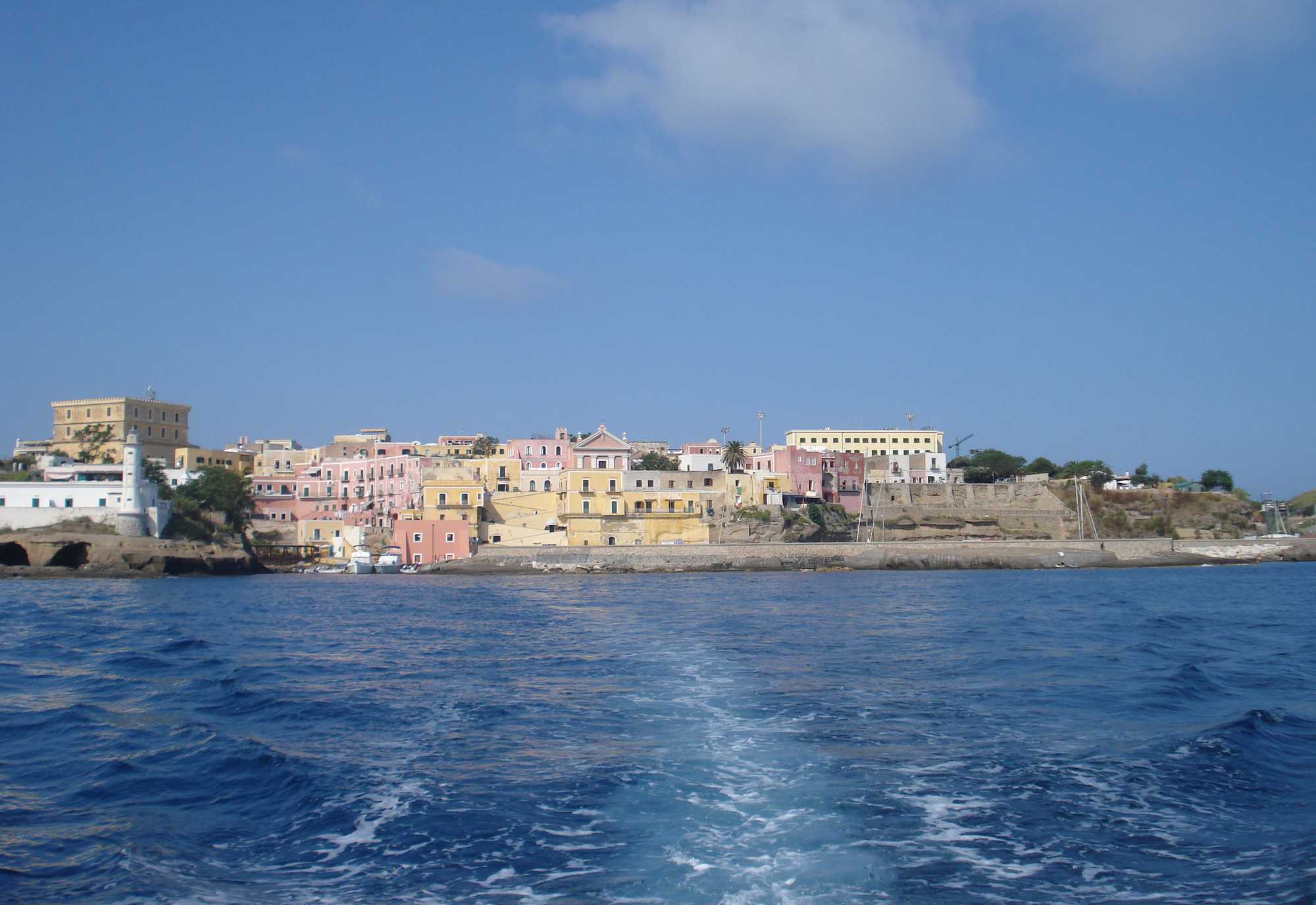
Members of the imperial family could remain politically significant after their removal, and their banishment could therefore resemble closely supervised internment rather than ordinary territorial exclusion.
The same year that Julia the Younger was sent away, Ovid was ordered to Tomis, a Greek city on the western shore of the Black Sea. His case illustrates one of the most important distinctions in Roman exile. Ovid was a relegatus. He had to leave Rome and reside at an assigned destination, but he retained his citizenship and property.
Although his poems repeatedly use the emotionally stronger vocabulary of exile, his legal position differed significantly from the harsher condition associated with deportatio.
Ovid’s Tristia preserves one of antiquity’s most detailed literary representations of the departure itself. In the third poem of the first book, he describes touching the threshold repeatedly, delaying his departure, giving further instructions and turning back again toward those he loved:
“At last I said, ‘Why hasten? ’Tis Scythia whither I am going, ’tis Rome that I must leave. Both are good reasons for delay.’”
He continues by describing his wife, home and friends as still living and present, yet now denied to him. Eventually he embraces what is dearest to him and leaves, describing the separation as though he were being torn apart and leaving part of his body behind. His wife, meanwhile, begs to accompany him into exile.
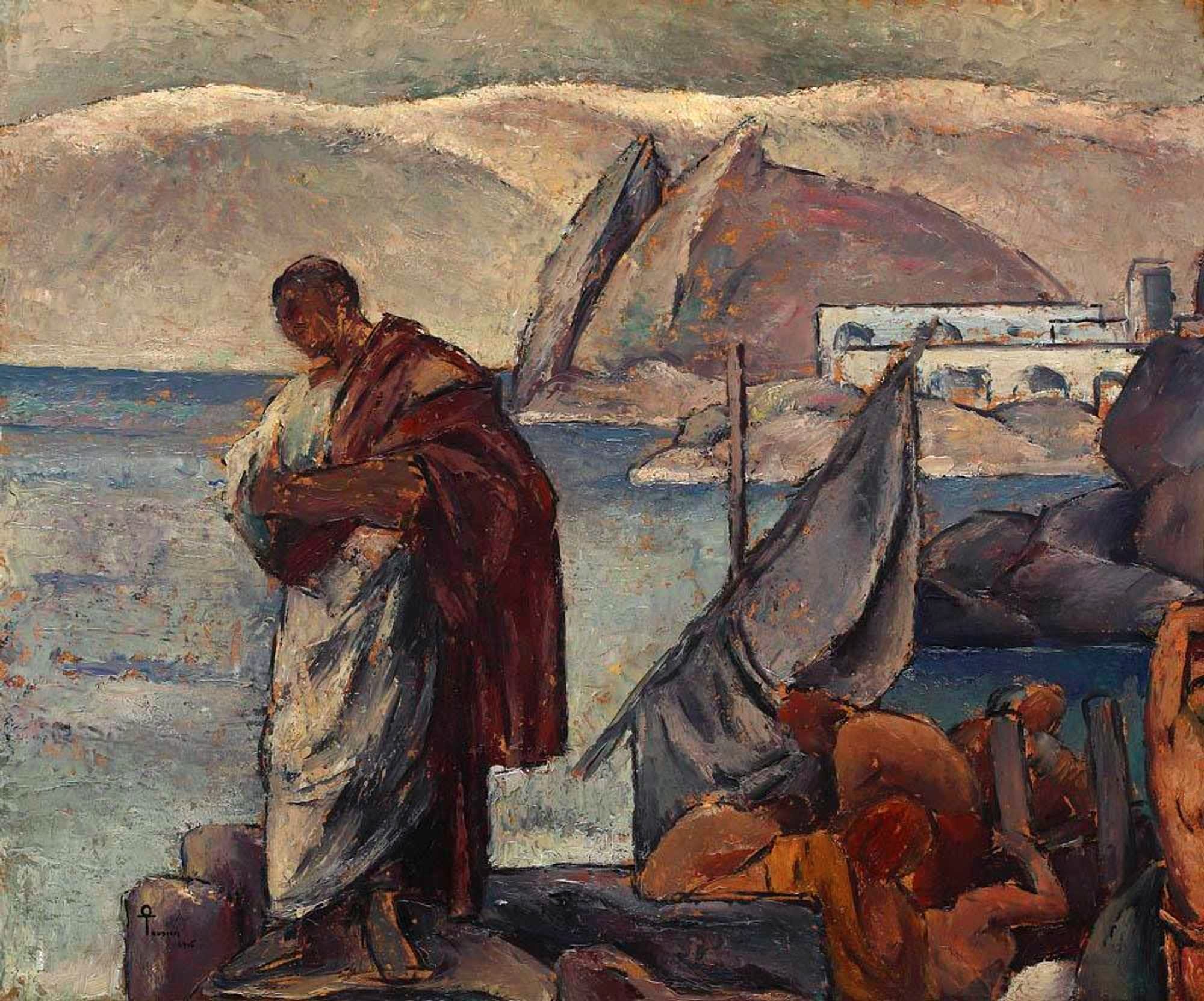
The scene is deliberately literary and cannot be treated as a stenographic record of Ovid’s last night in Rome. The same caution applies to his later descriptions of Tomis. Across the Tristia and Epistulae ex Ponto, he repeatedly depicts the region as bitterly cold, remote, militarized and culturally alien, but the poems also formed part of his long campaign for relief.
At different times he hoped not only for full recall but for transfer to somewhere less distant, and his later poetry acknowledges kindness shown to him by the inhabitants of Tomis. His works therefore preserve the emotional experience and rhetoric of relegation without requiring every description of his surroundings to be accepted as neutral geographical reporting.
Relegation, Deportation and What an Exile Could Lose
Roman banishment eventually included several overlapping forms, while ancient writers themselves did not always use the terminology with technical precision. A person subjected to relegatio might be excluded from Rome, from Italy or from a particular province, or ordered to remain at a designated location. Relegation could be imposed for a fixed period or for life. Even lifelong relegation, however, did not necessarily destroy the person’s Roman citizenship or confiscate all property.
Deportatio carried substantially heavier consequences. Roman jurists distinguished it from relegation because deportation affected civic status as well as residence. A deportee remained a free person rather than becoming enslaved, but lost Roman citizenship and suffered serious disabilities concerning property and Roman civil rights.
The difference therefore cannot be explained simply by saying that relegation was temporary while deportation was permanent. A Roman could be relegated for life while retaining citizenship; deportation changed the individual’s legal position much more fundamentally.
The distinction becomes increasingly visible during the reign of Tiberius, when deportation to an assigned place appears clearly in the surviving evidence as an especially severe form of banishment. Its precise legal development cannot confidently be assigned to a single year, however, and the language used by early imperial historians is not always as systematic as that preserved by later jurists.
The early Principate is better understood as a period in which compulsory banishment became increasingly structured and increasingly subject to imperial control.
The case of Vibius Serenus in 23 CE also demonstrates that destination mattered. When Gyaros or Donusa were proposed for him, Tacitus records Tiberius objecting because the islands lacked adequate water. If Serenus was being allowed to live, the emperor argued, he should also be provided with the necessities required to sustain life. Serenus was instead returned to Amorgos. The episode makes clear that different islands could themselves represent different degrees of punishment.

Violating the conditions attached to exile could lead to a heavier sentence. Roman legal texts preserve an escalating system in which temporary relegation could become permanent, while somebody who escaped from island relegation could be deported and a deportee who defied the sentence could face still more serious punishment.
These provisions allowed Roman authorities to impose considerable restrictions without placing every exile inside a prison building. Geographic limits, designated residences, military escorts, guards and the possibility of an increased penalty could create several levels of confinement.
The legal label nevertheless did not determine every part of an exile’s existence. Two people sentenced to forms of banishment might experience very different degrees of freedom, wealth and surveillance. Much depended on the destination, the offence, social rank, available resources and, particularly in politically sensitive cases, whether the emperor continued to regard the person as dangerous.
Why Islands Became Places of Exile
Imperial exile became strongly associated with islands including Pandateria, Planasia, Pontia, Gyaros, Seriphos, Amorgos, Andros, Sardinia and Corsica. They were not a uniform network of barren prison colonies. Some were inhabited and productive, while wealthy exiles could sometimes maintain reasonably comfortable households.
What an island offered Roman authority was a clearly bounded place from which a politically or legally undesirable person could be separated from the capital and, where necessary, more easily watched.
One of the most detailed surviving descriptions of the process concerns Avillius Flaccus, the former prefect of Egypt. After his fall under Caligula, Flaccus lost his property and was condemned to banishment. Philo describes him as initially destined for Gyaros before the intervention of Lepidus allowed Andros to be substituted.
He then records Flaccus’ journey under guard and the spectacle created as the disgraced former governor passed through places that had once seen him in prosperity. Philo was profoundly hostile to Flaccus because of his actions against the Jews of Alexandria, and his presentation of the former governor’s suffering is openly moralizing.
When Andros finally appeared, Philo has Flaccus lament the reversal of his fortunes:
“What shall I say of this little islet? Shall I call it my place of banishment, or my new country, or harbour and refuge of misery?”
He goes on to call the island a tomb and compares his existence there to attending his own funeral. The speech belongs to Philo’s literary presentation of Flaccus, but the account of what followed is particularly concrete. Once the vessel reached Andros, the inhabitants were assembled and Flaccus was exhibited before them so that they could witness the arrival of the exile. Only after the escort had completed this duty did the men who had brought him there depart.
Members of the imperial family could experience much tighter control. Pandateria acquired particularly strong associations with dynastic punishment because Julia, Agrippina the Elder and later Octavia were all sent there. Under Tiberius, Suetonius describes Agrippina being physically mistreated and force-fed after she attempted to starve herself.
Such circumstances bear little resemblance to those of a wealthy exile allowed to live comparatively freely elsewhere and should not be generalized to island exile as a whole.
The same variation appears under Nero. His wife Octavia was first removed from the imperial household and sent to Campania under military supervision. Her removal provoked demonstrations in Rome in which crowds expressed support for her and hostility toward Poppaea.
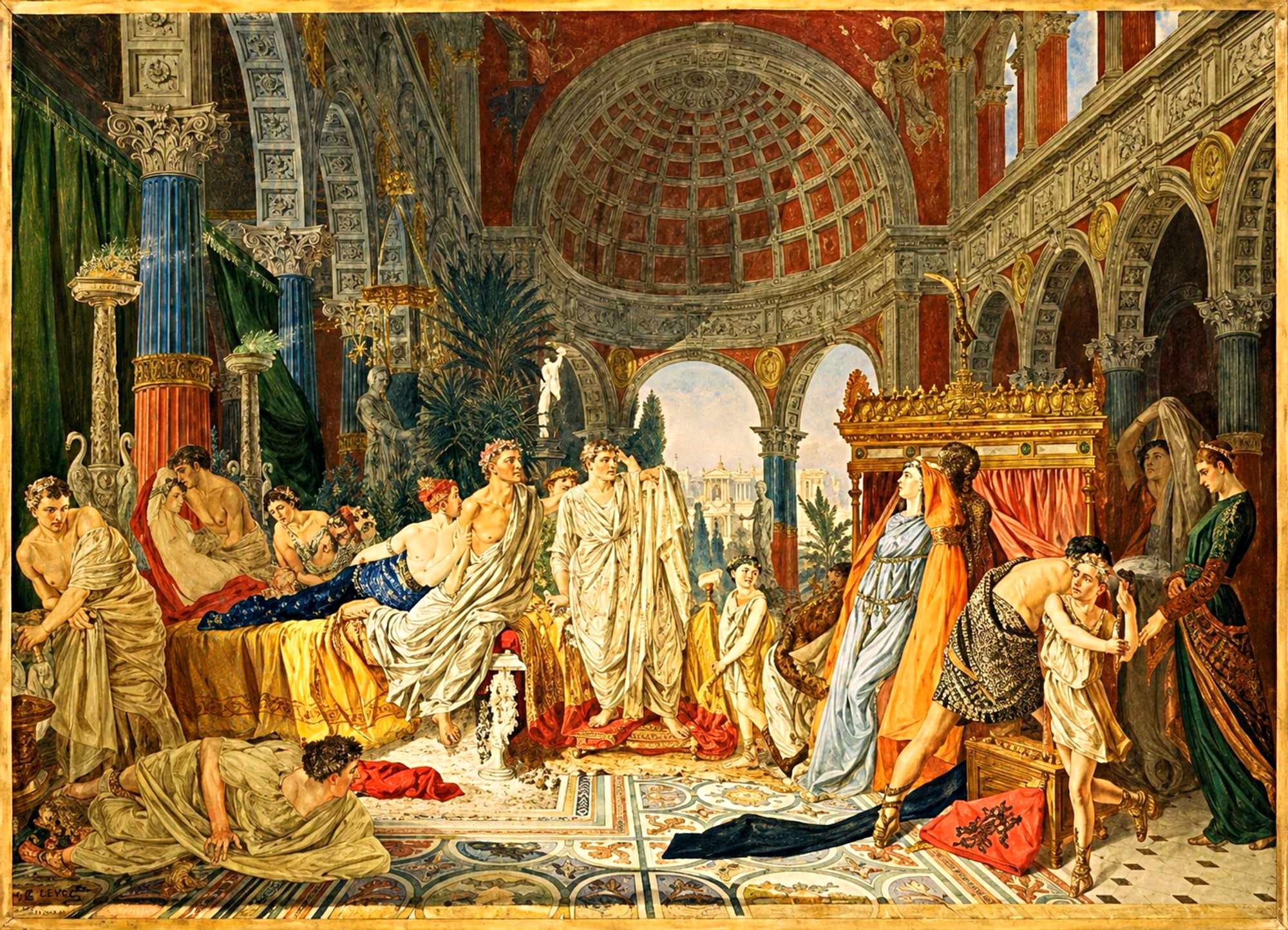
After a new accusation of adultery was constructed with the assistance of the freedman Anicetus, Octavia was sent to Pandateria and killed. Anicetus himself was also sent away, but his fate was remarkably different: Tacitus says that he lived comfortably in Sardinia and eventually died naturally.
The two cases occurred within the same political episode, yet island exile meant something entirely different for each person. For Anicetus it meant removal accompanied by material comfort. For Octavia it became part of a progression from separation and military supervision to confinement and death. Islands gave the authorities geography that could be used for control, but geography alone did not determine how harsh the punishment became.
Money, Family and the Life of an Exile
The surviving record is heavily weighted toward members of the elite because senators, imperial relatives, writers and officials were the exiles most likely to be named by ancient authors. Their circumstances cannot simply be extended to poorer inhabitants of the Roman world.
Among those elite cases, however, banishment clearly did not always mean destitution. Cicero possessed money and influential friends, Ovid retained his property, and Seneca belonged to a prosperous family and spent years on Corsica without evidence that he was reduced to poverty.
Seneca confronted the subject directly in the Consolation to Helvia, composed during his own exile. Rather than denying the things normally associated with banishment, he named them before attempting to argue against their power:
“Let us consider what is meant by exile: clearly a changing from one place to another. … this changing of place is accompanied by poverty, disgrace, and contempt.”
He then says that he will confront those burdens separately while first considering what is unpleasant about changing one’s place of residence. He points to Rome itself, whose enormous population included people who had left their original homes for ambition, public office, education, friendship and other reasons.
His purpose was philosophical rather than documentary: he did not deny that banishment involved loss, but tried to demonstrate that those losses need not destroy the person enduring them.
Material comfort therefore did not make exile meaningless for an elite Roman. Political and social status depended heavily on proximity: family, friendship, patronage, reputation, public participation and access to powerful people were concentrated in Rome. A man might continue to own property and employ servants while losing the social environment in which his rank had meaning. Cicero’s correspondence, Ovid’s appeals and Seneca’s exile writings all reveal continuing attempts to maintain connections with the capital rather than accepting complete separation from Roman life.
Families consequently faced difficult choices. Some spouses followed their partners into banishment. Fannia accompanied Helvidius Priscus during his exiles and later suffered exile herself, while other wives followed husbands expelled during imperial prosecutions.
Yet remaining in Rome could sometimes be more useful. A relative who stayed behind could safeguard family interests, communicate with influential friends and work for restoration in a way that somebody sharing a distant exile could not.

Ovid’s wife remained important to him partly because she was still in Rome, while Cicero depended heavily on Atticus and other allies who could operate within the political world from which he had been removed. The separation of families was therefore not only an emotional consequence of exile. In some cases, maintaining someone in Rome was part of the only strategy available for bringing the exile home.
When Exile Did Not Make Someone Safe
Banishment could remove a prominent person from Roman politics without eliminating an emperor’s fear of him. Several first-century cases show that men already living far from Rome could continue to be treated as potential rivals or threats, and some were eventually killed despite having obeyed the original order to leave.
Rubellius Plautus had already been compelled to live away from Rome when Nero’s suspicions of him intensified. Tacitus records that armed men were eventually sent to kill him. The cases of Cassius Longinus and Lucius Junius Silanus provide an even clearer comparison because both were condemned to exile under the same emperor but met very different fates.
Cassius was deported to Sardinia and survived long enough eventually to return. Silanus was nominally destined for Naxos, was detained at Barium in southern Italy and was ultimately killed by a centurion.
Octavia’s fate followed a similar progression from removal to increasingly restrictive control. Her banishment to Campania involved military supervision, and her later transfer to Pandateria was followed by execution. Agrippa Postumus had likewise lived under guard on Planasia before being killed shortly after Augustus died.
In politically sensitive cases such as these, exile could become something approaching custodial confinement without every form of Roman banishment being equivalent to imprisonment.
This was not the normal conclusion of every imperial exile. Ancient narratives, particularly those concerning Caligula, preserve reports of extensive killings whose scale is difficult to establish, and rumours of imperial responsibility surrounded other deaths.
Individual murders are securely attested, but many exiles lived for years away from Rome or died natural deaths abroad. During periods in which prominent Romans were being killed in the capital, an aristocrat in exile could sometimes be safer than somebody of similar rank who remained in Rome.
That safety remained conditional. Flaccus eventually discovered this on Andros. Philo records that men arrived carrying orders for his death and encountered him while he was travelling from his farm toward the city.
Realizing what was happening, Flaccus fled across the island. The same geography that had made Andros useful as a place of banishment also limited his options: beyond the land lay the surrounding sea. He was overtaken and killed.
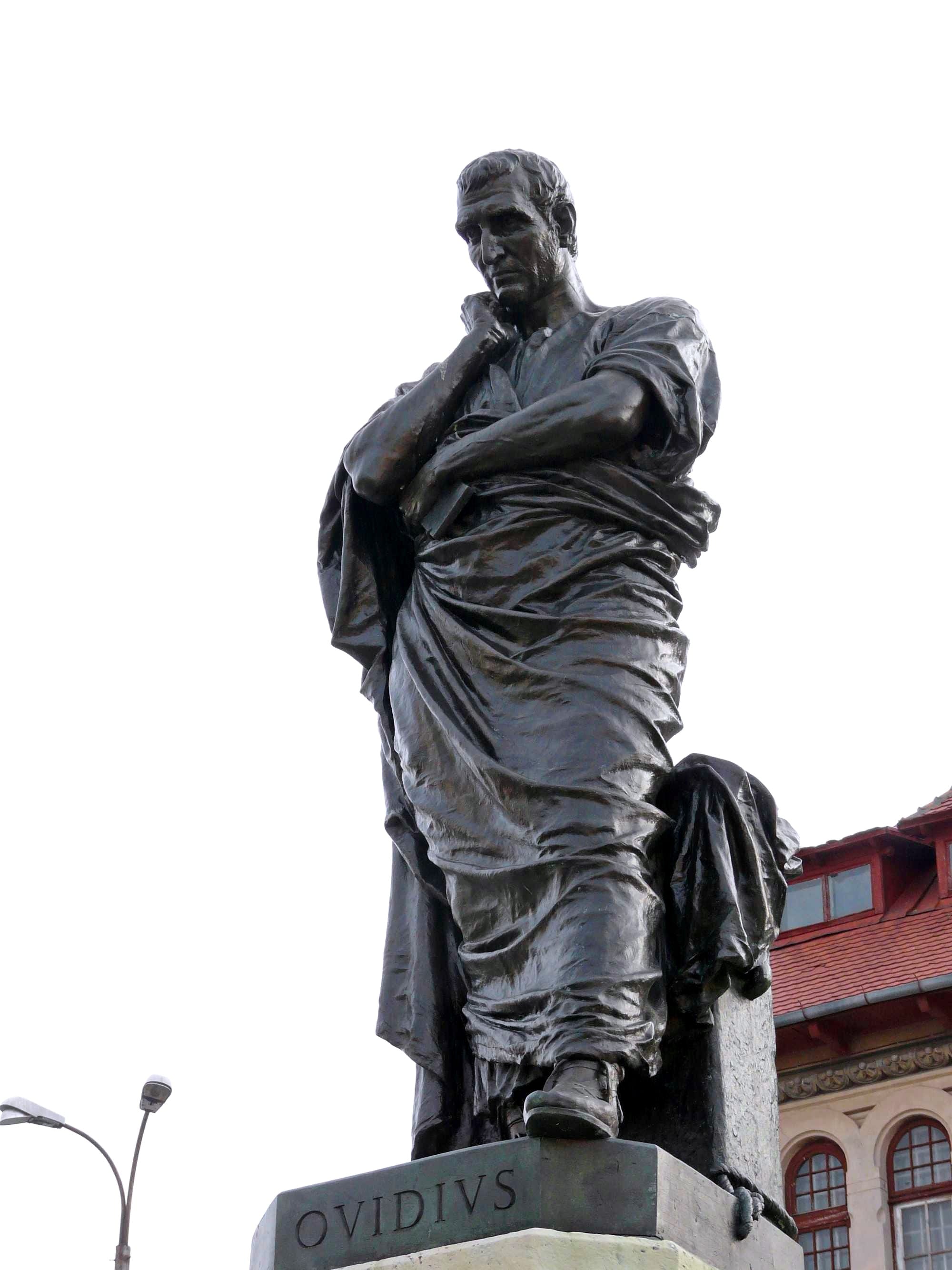
An exile could therefore be outside Rome without being outside Roman power. Distance might initially spare someone from a harsher sentence or remove him from immediate political conflict, but it did not necessarily prevent the emperor from acting again if circumstances changed.
Recall, Return and the Politics of a New Reign
Exile did not always end with death abroad. Recall remained possible, and changes of ruler repeatedly transformed the prospects of people who had been sent away. Caligula recalled people banished under Tiberius. Claudius restored several who had suffered under Caligula, including members of his own family.
Seneca returned from Corsica in 49 CE through the influence of Agrippina the Younger and was soon entrusted with the education of the future emperor Nero.
The pattern continued after Nero. The upheavals of 68–69 CE and the establishment of the Flavian regime allowed further exiles to return, while Domitian’s death was followed by restorations under Nerva and Trajan.
A new ruler could recall people punished by his predecessor and thereby mark a break with earlier policies. The surviving record consequently contains repeated episodes of restoration accompanying changes of regime.
The death of an emperor did not automatically erase every sentence. Some people attempted to return without formal authorization during political transitions and were ordered back. Recall remained an official act rather than a right acquired simply because the ruler responsible for the original punishment had died.
This uncertainty helps explain the importance of communication. Cicero followed negotiations over his restoration closely and depended on friends working in Rome. Ovid continued sending appeals and seeking either recall or a more tolerable destination until the end of his life. Seneca maintained connections with the imperial environment during his years on Corsica. Removal from Rome could weaken a person’s influence without completely severing the networks upon which eventual restoration depended.
By the early Empire, Roman rulers possessed means of controlling banishment very different from the Republican refuge Cicero had described in Pro Caecina. They could decide not only that somebody must leave but where that person would live, how closely the individual would be watched, which rights and possessions survived the sentence and whether return would ever be allowed. Yet the older and newer forms continued to overlap, and no single experience can represent Roman exile as a whole.
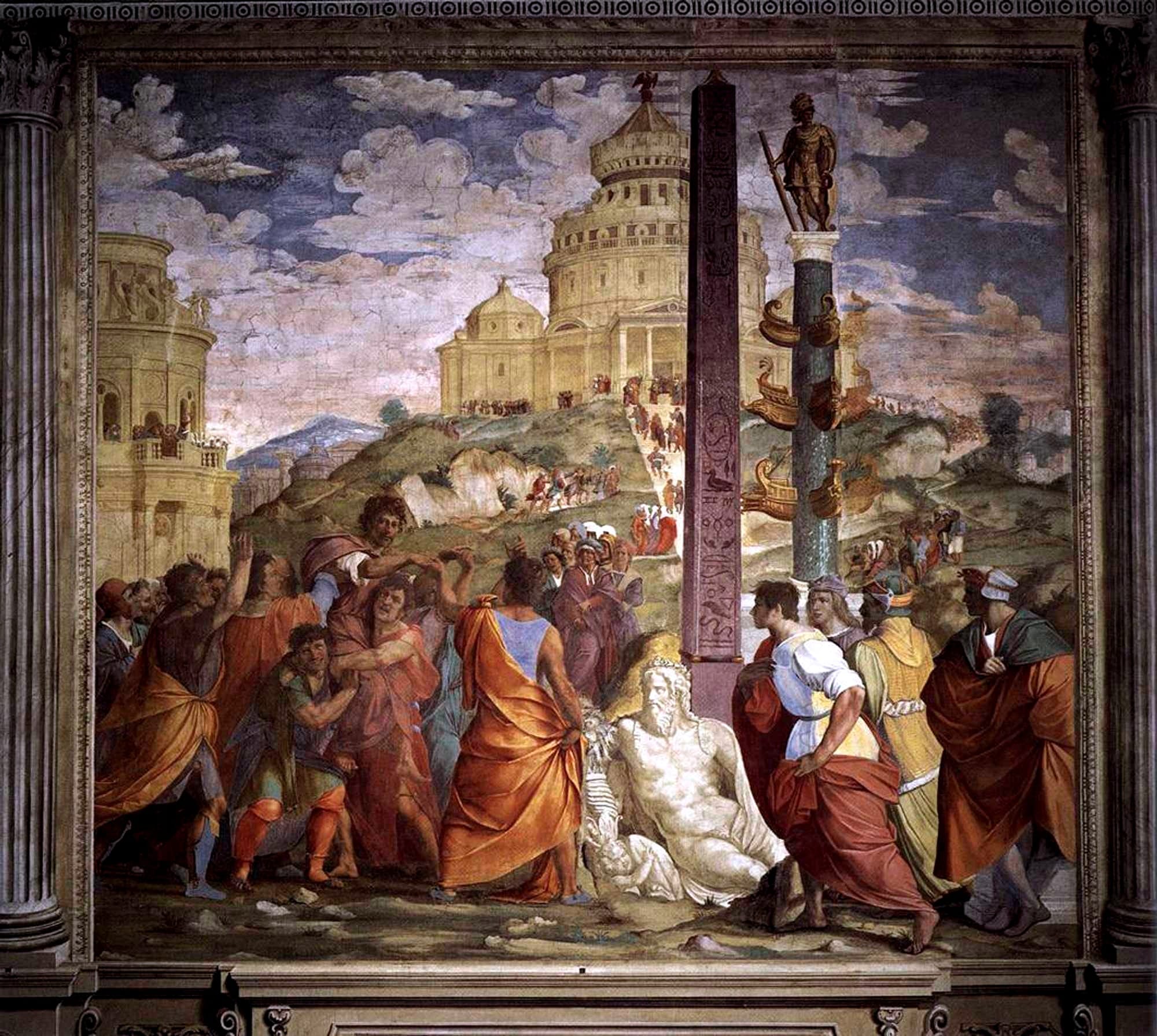
Ovid retained his citizenship at Tomis, while a deportee could lose citizenship altogether. A member of the imperial family might live under armed supervision, while another exile could enjoy substantial wealth and freedom within the limits imposed upon him. Some people returned when political power changed hands; others spent decades waiting for permission that never came. A few were killed after years of banishment because the political danger attributed to them had survived their physical removal.
What united these very different experiences was separation from the place where Roman citizenship, family connections, reputation and political influence were most powerfully exercised. For some, that separation lasted until allies or a new emperor secured their return. For others it became permanent. And for those whose rulers continued to fear them, even an island far from Rome did not necessarily place them beyond the reach of Roman power.
Gordon P. Kelly, A History of Exile in the Roman Republic. Cambridge University Press, 2006.
Neil Raj Singh-Masuda, Exilium Romanum: Exile, Politics and Personal Experience from 58 BC to AD 68. PhD thesis, University of Warwick, 1996.
Mary V. Braginton, “Exile under the Roman Emperors,” The Classical Journal 39, no. 7 (1944), 391–407.
Fergus J. King, “Exiles, Not Enemies: Petrine Self-Determination in the Face of Empire,” Religions 15 (2024), 1370.
Cicero, Pro Caecina, trans. H. G. Hodge; Letters to Atticus, Book III, trans. E. O. Winstedt.
Ovid, Tristia and Epistulae ex Ponto, trans. A. L. Wheeler.
Seneca, Consolation to Helvia, trans. Aubrey Stewart; Consolation to Polybius.
Tacitus, Annals and Histories.
Suetonius, Lives of the Caesars.
Cassius Dio, Roman History.
Philo of Alexandria, Against Flaccus, trans. C. D. Yonge.
Digest 48.19 and 48.22.


About the Roman Empire Times
See all the latest news for the Roman Empire, ancient Roman historical facts, anecdotes from Roman Times and stories from the Empire at romanempiretimes.com. Contact our newsroom to report an update or send your story, photos and videos. Follow RET on Google News, Flipboard and subscribe here to our daily email.
Follow the Roman Empire Times on social media: