
Diodorus Siculus: The Historian Who Tried to Write the History of the World
Diodorus Siculus attempted to gather the history of the inhabited world into one vast work, preserving material from many sources that later disappeared.


During the first century BCE, Diodorus Siculus undertook one of the largest historical projects attempted in antiquity. His Bibliotheca Historica, or Library of History, sought to bring the past of the inhabited world into one continuous work, beginning with traditions about gods, heroes and the origins of civilisation and continuing through kingdoms, wars and political changes close to his own lifetime.
The Bibliotheca originally consisted of 40 books. Books I–V and XI–XX survive substantially complete. Books VI–X and XXI–XL survive through fragments, excerpts, summaries and references preserved by later writers. Although much of the original work has disappeared, the surviving material preserves evidence that is unavailable, or survives only in much shorter form, in the other extant literary narratives.
Diodorus relied heavily on earlier histories. Some of his principal authorities are known by name, while others can only be inferred from comparison, subject matter or similarities with surviving fragments. Many of those earlier works have since disappeared, leaving the Bibliotheca as the surviving route through which parts of their material can still be studied.
For generations, Diodorus’ dependence on earlier writers encouraged the view that he was little more than a compiler who shortened the work of more original historians. The surviving evidence presents a more complicated method. He selected material, condensed long narratives, preserved conflicting traditions, reorganised information within a universal chronology and used cross-references to connect subjects treated in different books.
The result was not always consistent. The Bibliotheca contains chronological difficulties, inherited errors, doubtful traditions and exaggerated figures. The fragmentary books create further problems because later excerptors and summarists selected, shortened and rearranged what they preserved. Yet the work remains indispensable for several periods, particularly in the history of Sicily, the wars among Alexander the Great’s successors, the Sicilian slave revolts and the political and military conflicts of the late Roman Republic.
A Sicilian Historian in Egypt and Rome
Almost everything known about Diodorus’ life comes from the Bibliotheca itself. Apart from a brief notice in Jerome’s Chronicle, antiquity preserves no independent biography. Diodorus identifies Agyrium, a city in the interior of Sicily, as his birthplace. Nothing secure is known about his family, education or early career.
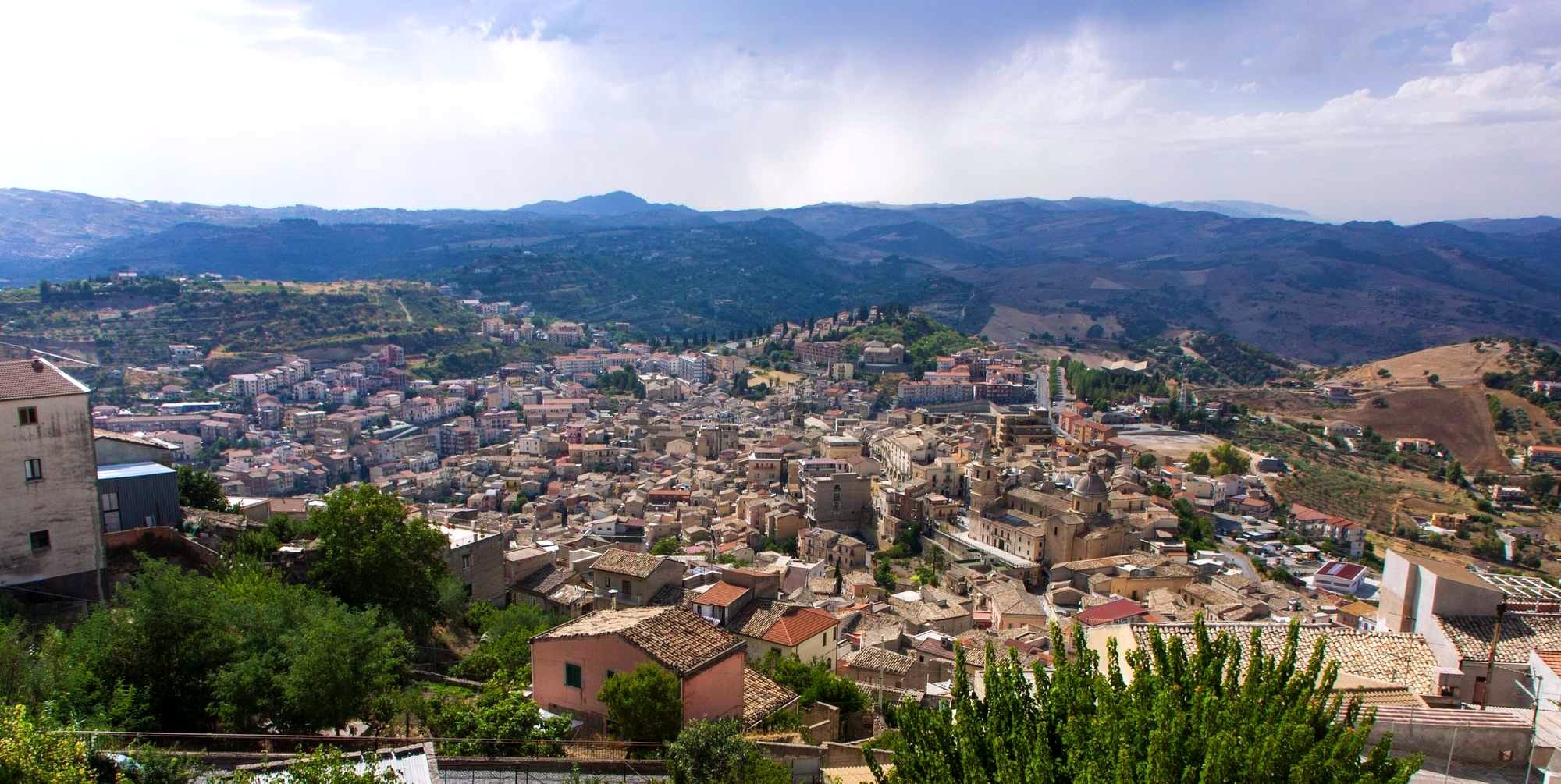
Sicily receives sustained attention throughout the work. Its cities, rulers, wars and internal conflicts appear repeatedly, while Agyrium is given more space than its importance within a history of the entire inhabited world might otherwise suggest. His Sicilian background may have contributed to this interest, but the surviving evidence does not establish how much of the island’s history he investigated independently.
Diodorus says that he travelled widely during the preparation of the Bibliotheca. His visit to Egypt can be placed around 60–59 BCE, during the reign of Ptolemy XII. The Egyptian section combines earlier written accounts, traditions attributed to priests, descriptions of monuments and customs and statements presented as personal observation.
The sources do not establish the extent to which Diodorus personally consulted Egyptian written records. Information may have reached him through priests, local intermediaries, Greek accounts or a combination of these channels. Claims involving sacred books and priestly records therefore cannot automatically be treated as evidence that he read such documents directly.
Diodorus also says that he spent considerable time in Rome. He presents the city as a place where information from many regions had become accessible under Roman rule. He further claims that his contact with Romans in Sicily had given him wide acquaintance with their language. The length of his residence and the extent of his linguistic knowledge cannot be independently measured.
In the preface, Diodorus presented the Bibliotheca as the result of prolonged work, travel and investigation:
“And so we, appreciating that an undertaking of this nature, while most useful, would yet require much labour and time, have been engaged upon it for thirty years, and with much hardship and many dangers we have visited a large portion of both Asia and Europe that we might see with our own eyes all the most important regions and as many others as possible; for many errors have been committed through ignorance of the sites, not only by the common run of historians, but even by some of the highest reputation.”
He connected this work with the resources available in Rome:
“For the supremacy of this city, a supremacy so powerful that it extends to the bounds of the inhabited world, has provided us in the course of our long residence there with copious resources in the most accessible form.”
These statements contribute to the image Diodorus presents of himself as a travelled and serious historian. They place him within a historiographical tradition in which travel, observation and access to records strengthened an author’s authority. Whether every part of this self-presentation reflects his actual working practice cannot be established, but the persona remains consistent with the organisation and declared purpose of the work.
The chronology of composition is uncertain. Several cross-references promise a fuller treatment of Caesar’s campaigns in Gaul, but the corresponding narrative does not survive and may never have been included. These unfulfilled references may indicate that Diodorus changed the planned endpoint of the work during composition, although the process of revision cannot be reconstructed securely.
Bringing the Past Into One Library
Universal history existed before Diodorus, but the scale of his project was exceptional. Earlier historians had usually concentrated on a particular people, city, ruler or conflict. Even broader histories often excluded early mythology, neglected non-Greek peoples or ended with Philip, Alexander or the rulers who divided Alexander’s conquests.
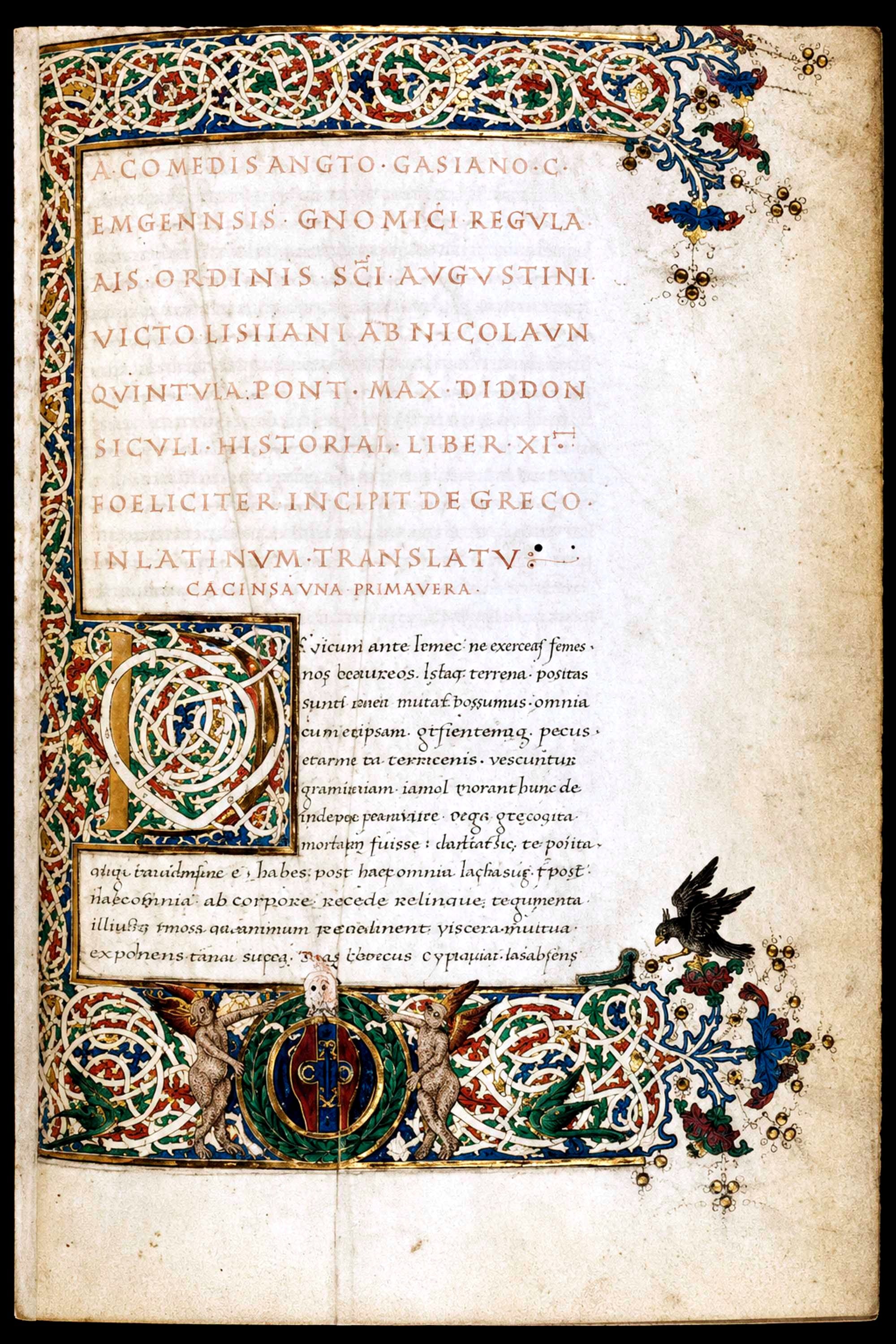
Diodorus treated the separation of historical knowledge across numerous works as a practical problem. Events involving different peoples had been recorded by different authors, arranged according to different chronological systems and preserved in books that readers might struggle to obtain.
His solution was to place the history of the inhabited world within one connected narrative. In the preface, he compared the world to a single community:
“For if a man should begin with the most ancient times and record to the best of his ability the affairs of the entire world down to his own day, so far as they have been handed down to memory, as though they were the affairs of some single city, he would obviously have to undertake an immense labour, yet he would have composed a treatise of the utmost value to those who are studiously inclined.”
The comparison expressed the principle behind universal history. Egyptians, Assyrians, Greeks, Sicilians, Macedonians, Romans and other peoples could be placed within the same historical framework instead of appearing in separate and disconnected traditions.
Diodorus also emphasised the usefulness of such a work:
“For from such a treatise every man will be able readily to take what is of use for his special purpose, drawing as it were from a great fountain.”
The title Library of History suited a work intended to gather material scattered across numerous accounts. The Bibliotheca was not designed to reproduce every source in full. Its purpose was to select, organise and connect historical material so that readers could consult it without searching through many separate histories.
The first six books dealt with events and traditions before the Trojan War. Since Diodorus did not consider a reliable chronology available for this earliest period, he arranged the material mainly by peoples and regions. The first three books concentrated largely on non-Greek communities, while the next three dealt mainly with Greek traditions.
Books VII–XVII covered the period from the Trojan War to the death of Alexander. Books XVIII–XL continued through the struggles among Alexander’s successors and into the age of Roman expansion.
Diodorus described this structure directly:
“Our first six Books embrace the events and legends previous to the Trojan War, the first three setting forth the antiquities of the barbarians, and the next three almost exclusively those of the Greeks; in the following eleven we have written a universal history of events from the Trojan War to the death of Alexander; and in the succeeding twenty-three Books we have given an orderly account of all subsequent events down to the beginning of the war between the Romans and the Celts, in the course of which the commander, Gaius Julius Caesar, who has been deified because of his deeds, subdued the most numerous and most warlike tribes of the Celts, and advanced the Roman Empire as far as the British Isles.”
A project of this size required extensive compression. Diodorus could not give equal space to every ruler, battle, law and local tradition. Long dynastic sequences were sometimes reduced to short summaries, while events judged memorable or useful received greater attention.
The arrangement of the books also shows an effort to guide readers through the material. Prefaces reviewed what had already been covered and announced the subject of the next section. Transitional passages moved the narrative between regions and periods. Internal references directed readers backward to earlier discussions or forward to subjects promised later.
A systematic classification identified 95 cross-references in the surviving work. Seventy were judged definitely fulfilled, 15 probably fulfilled and ten probably not fulfilled. Comparisons with the limited parallel material that survives from earlier historians also show that Diodorus did not reproduce every cross-reference found in his sources. Some were omitted, while others appear to have been introduced for the structure of the Bibliotheca itself.
The evidence does not show perfect planning. Some references remained unfulfilled, chronological difficulties persisted and parts of the work may have been revised without every earlier passage being corrected. It does, however, show that the Bibliotheca was organised across many books rather than formed from a succession of unrelated extracts.
Beginning History Before Recorded Time
Diodorus began his history before the Trojan War, in a period for which he believed no dependable common chronology existed. He therefore organised the earliest material mainly by peoples and regions rather than by years.
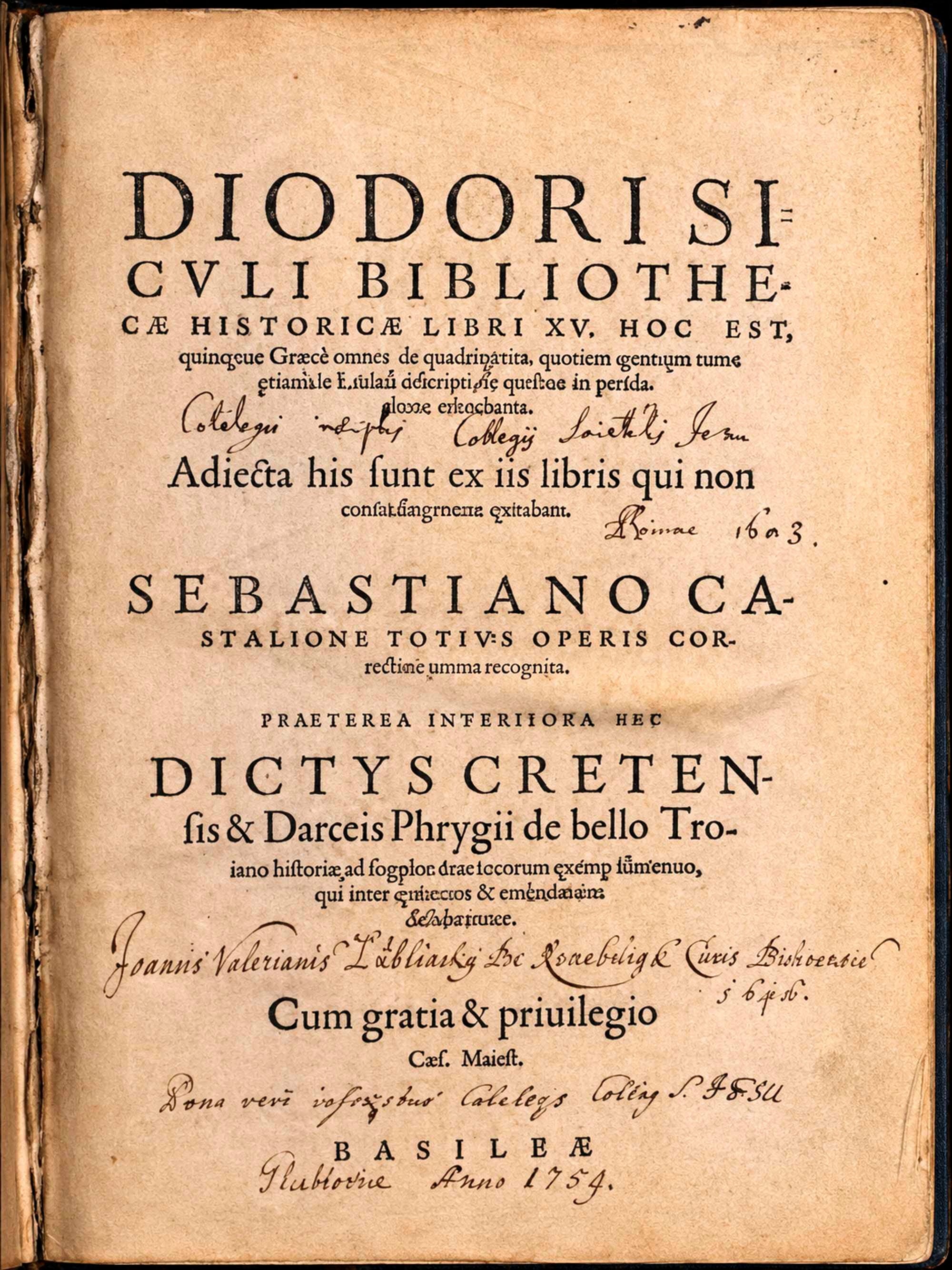
These books included traditions about gods, heroes, founders and the origins of institutions. Diodorus treated such accounts differently from later political history. Much of the material is introduced through phrases equivalent to “they say” or “they report,” marking it as received tradition rather than as directly verified history.
The inclusion of mythology allowed him to begin with ancient explanations for the origins of agriculture, law, cities, religious practices and political organisation. It also enabled him to connect the earliest traditions of different peoples with the later chronological history of kingdoms and states.
Diodorus did not always attempt to reconcile conflicting versions. In several places he preserved alternative traditions or attributed them to particular peoples and authorities. The result was not a single consistent mythology, but an account of what different communities believed about their earliest past.
The Historian’s Changing Voice
The narrative voice of the Bibliotheca changes according to the type of material being presented. These differences do not require the presence of several unrelated narrators. They form different registers within one historical project.
The Egyptian mythological narrative is largely presented as secondhand information. Repeated references to what others say distance the narrator from both the stories and some of their interpretations. Diodorus takes responsibility for selecting and organising the material without claiming direct authority over every tradition.
Geographical and ethnographic sections often employ a more confident register. Earlier writers may be criticised, travel and local inquiry are given authority and the narrator explains why one report appears more credible than another.
Chronological political and military history can appear less intrusive. Events are arranged by years, rulers and magistracies, while direct intervention is often limited to transitions, summaries and brief explanations.
This apparent neutrality does not remove evaluation from the narrative. Descriptive words guide the reader’s response to people and actions. Conduct can be identified as cruel, unlawful, courageous or unjust without a separate moral essay.
At other points, Diodorus addresses the moral purpose of history directly. In the preface, he writes that
“history alone, since in it word and fact are in perfect agreement, embraces in its narration all the other qualities as well that are useful; for it is ever to be seen urging men to justice, denouncing those who are evil, lauding the good, laying up, in a word, for its readers a mighty store of experience.”
History therefore served both as a record of events and as a form of instruction. Good and bad conduct could be judged through their consequences, while the memory of earlier events provided readers with examples applicable to political and private life.
This moral purpose does not appear in the same form in every book. Some passages contain extended reflections, while others communicate judgment through selection, vocabulary or the arrangement of events.
Diodorus also supplies motives such as fear, anger, hope, ambition and confidence. These motives are usually historical reconstructions rather than recorded private statements, but they connect actions and consequences within the narrative.
The different registers correspond broadly to the demands of the material. Received mythology is treated cautiously, geographical inquiry more assertively, chronological narrative more quietly and moral interpretation more openly. The variation supports the presence of an organising narrator who remains visible even when earlier sources provide much of the information.
How the Library Survived in Pieces
The Bibliotheca did not survive through one continuous manuscript tradition. Books I–V and XI–XX remain substantially complete, while the other books reached modern readers in fragmentary forms.
Some passages were preserved in Byzantine collections organised according to subjects such as virtues, vices, embassies and notable sayings. Others survive through epitomes, summaries or references made by later authors.
These different forms of preservation do not carry the same evidential value. A thematic excerpt removes a passage from its original chronological setting. An epitomator may shorten several events, omit explanations or alter the balance of the narrative. A later writer may cite Diodorus as an authority while combining his material with information taken from other works.
A fragment should therefore not automatically be treated as an exact piece of the lost original. Some passages may preserve wording closely. Others transmit only the substance of an account. The name of Diodorus may be used to support a later writer’s argument without proving that every detail came from him.
The story of the bull of Phalaris demonstrates the problem. A later Byzantine account names Diodorus among its authorities, but comparison with more securely transmitted material shows that the passage cannot safely be treated as an independent fragment preserving his exact wording or interpretation.
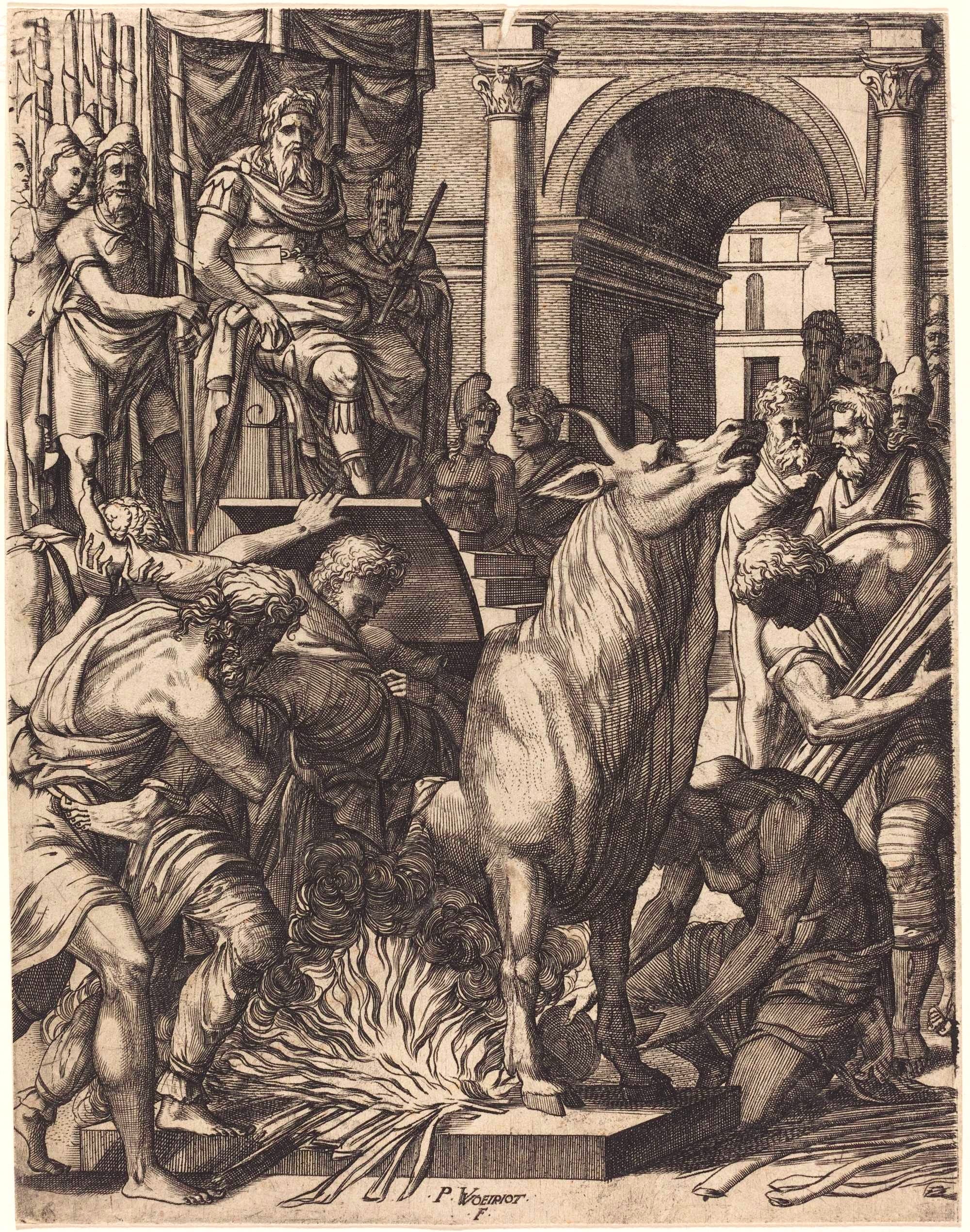
Once uncertain material was included in collections of Diodoran fragments, it could be used to reconstruct his vocabulary, style and historical opinions. The attribution could then become accepted even when the path of transmission remained doubtful.
Contradictions in the fragmentary books may also have several possible origins. They could have existed in Diodorus’ composition, come from conflicting earlier sources or been introduced by later abbreviation and rearrangement.
The surviving evidence often cannot determine which stage produced the inconsistency. The fragmentary books must therefore be studied through both their historical content and the methods by which later writers preserved them.
Where Other Histories Disappear
Diodorus’ importance varies according to the survival of other sources. Where substantial contemporary narratives exist, the Bibliotheca can supplement, compare or reorganise their evidence. Where those narratives have disappeared, Diodorus may become the principal surviving literary account.
Sicilian history is one of the clearest examples. The Bibliotheca preserves material on the island’s cities, rulers, conflicts with Carthage, political changes and later revolts. Diodorus’ Sicilian origin does not make these accounts automatically reliable or firsthand. Their value lies in the preservation of earlier historical traditions that no longer survive independently.
The period following the death of Alexander provides another major example. Book XVII covers Alexander’s reign, while Books XVIII–XX form the chief surviving connected literary narrative for the conflicts among his successors from 323 to 302 BCE.
Other evidence survives through inscriptions, papyri, coins and Near Eastern records. These sources add information and sometimes correct or complicate the literary narrative, but they do not replace the continuous sequence preserved in the Bibliotheca.
The distribution of provinces after Alexander’s death, the regency, the campaigns of Eumenes and the competition involving Antigonus, Ptolemy, Seleucus and other rulers can be followed through Diodorus because he incorporated material from an earlier historical tradition that has otherwise disappeared.
The fragmentary later books are also important for the two Sicilian slave revolts of the second century BCE. They preserve one of the principal literary traditions for these uprisings, although the material reached modern readers through later excerptors rather than as a continuous Diodoran text.
The wording, sequence and original context of these passages must therefore be treated cautiously. Their value lies in preserving an extensive ancient account where no comparable continuous narrative survives.
The later books also contained material on the political and social conflicts of the late Roman Republic.
A major portion of Book XXXVII dealt with the Social War of 91–88 BCE between Rome and many of its Italian allies. The surviving ancient sources commonly connect the outbreak with demands involving citizenship and liberty, but the underlying causes and the objectives of the insurgents remain debated.
Several works written by participants or near-contemporaries have disappeared. Sisenna’s history survives only in small fragments. Lucullus wrote a history of the conflict in Greek, but it has been lost. Sulla’s autobiography is known only indirectly. Livy devoted six books to the war, but they survive mainly through short summaries.
Diodorus’ account has also been lost as a continuous text. Fragments of Book XXXVII survive in four collections compiled under Constantine VII Porphyrogenitus, while a longer summary attributed to Diodorus survives through Photius.
The sequence of the fragments is often conjectural, and the Constantinian excerpts do not always agree with the Photian summary. It is also uncertain how much of the original account reflected earlier writers and how much resulted from Diodorus’ own selection and organisation.
Despite these difficulties, the remains of Book XXXVII constitute one of the most detailed literary sources for the Social War. They preserve material concerning the Italian allies, political conflict, military operations and Roman responses that would otherwise be much harder to reconstruct.
The value of the later books does not depend on treating Diodorus as an eyewitness or assuming that every detail is correct. Their importance comes from the survival of material drawn from historical traditions whose original works have disappeared.
Diodorus did not preserve the ancient past intact. The Bibliotheca contains uncertain traditions, inherited mistakes, chronological problems and material of unequal quality. Much of the work was then reduced further through manuscript loss, excerpting and summary.
Yet the project fulfilled much of the purpose stated in its preface. It gathered events that had been dispersed among many writers and placed the histories of different peoples within one connected structure.
As the earlier works used by Diodorus disappeared, the Bibliotheca became increasingly important. Entire periods remain visible because material from those historical traditions survived within one Sicilian historian’s attempt to write the history of the world.
Diodorus Siculus, Library of History, Volume I, Books I–II.34, translated by C. H. Oldfather.
Catherine Rubincam, “Did Diodorus Siculus Take Over Cross-References from His Sources?”
Catherine Rubincam, “New and Old Approaches to Diodorus.”
Lisa Irene Hau, “Narrator and Narratorial Persona in Diodorus Siculus.”
Liv Mariah Yarrow, “How to Read a Diodoros Fragment.”
Iris Sulimani, Diodorus’ Mythistory and the Pagan Mission: Historiography and Culture-Heroes in the First Pentad of the Bibliotheke.
Christopher J. Dart, The Social War, 91 to 88 BCE: A History of the Italian Insurgency Against the Roman Republic.

About the Roman Empire Times
See all the latest news for the Roman Empire, ancient Roman historical facts, anecdotes from Roman Times and stories from the Empire at romanempiretimes.com. Contact our newsroom to report an update or send your story, photos and videos. Follow RET on Google News, Flipboard and subscribe here to our daily email.
Follow the Roman Empire Times on social media: