Roman Empire Historical Facts
Seneca the Elder: Before Seneca the Philosopher
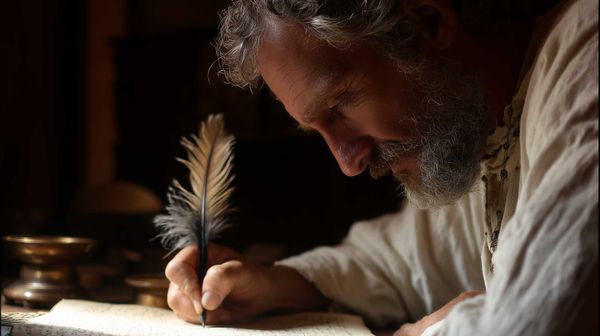
Before Seneca the philosopher, there was Seneca the Elder: the Roman writer who preserved the speeches, exercises, and remembered voices of declamatory culture.
Roman Empire Historical Facts
Before Seneca the philosopher, there was Seneca the Elder: the Roman writer who preserved the speeches, exercises, and remembered voices of declamatory culture.
Roman Empire Historical Facts
Rome’s deepest advance into Germania was led not by a veteran general, but by a man in his twenties. Nero Claudius Drusus carried Roman power farther north than any commander before him, before his sudden death froze an unfinished conquest into legend.
Roman Empire Historical Facts
Not every account of the past aims to preserve memory alone. Some are crafted to impose order, meaning, and authority on events that resist easy explanation.
Roman Empire Historical Facts
Which empire really “ruled the map”? The answer depends on what we count and when we take the snapshot. Let's set the rules first—then follow three peaks (Rome under Trajan, Alexander’s lightning-built realm, and the Mongol high plateau) to see what the numbers can prove—and what they can’t.
Roman Empire Historical Facts
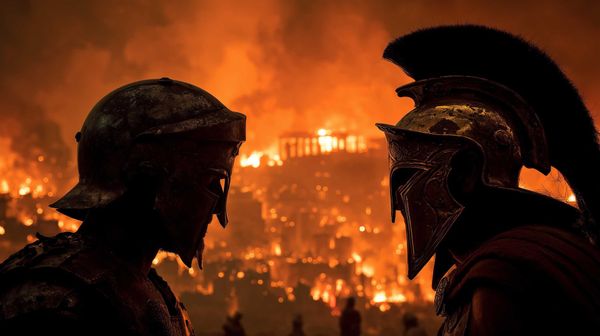
From Illyria to Corinth, Rome conquered Greece not in a day but through decades of alliances, wars, and diplomacy. Yet while the legions won the land, Greek culture won Rome — transforming its conqueror into its greatest disciple.
Roman Empire Anecdotes
From Braga to Jerusalem, Orosius carried letters, relics, and arguments—but his legacy rests on the Historiae, a sweeping Christian vision of world history that shaped medieval thought.
Roman Empire Historical Facts
The Amazons, at once feared and admired, stood at the edges of Rome’s imagination. In poetry, art, and history, they became shifting symbols of conquest, gender, and empire—figures through whom Romans defined themselves against the “other.”
Roman Empire Anecdotes
Strabo’s Geography stitched together mountains, rivers, and peoples into a vision of Rome’s dominion. His work, both silent and selective, mapped not just lands but identities, placing cities, cultures, and empire within concentric circles of belonging.
Roman Empire Historical Facts
Valerian’s capture by Shapur I in 260 CE was Rome’s most humiliating defeat—its emperor turned into a Persian trophy. His fate, ambiguous and unforgettable, inspired centuries of reinterpretation, from Christian polemic to Byzantine invective and Persian pride.
Roman Empire Historical Facts
Behind Rome’s triumphal arches and marble forums lay a society built on domination. From infanticide and slavery to crucifixion and medical exploitation, cruelty was not an aberration—it was structure. This is the side of the empire history rarely glorifies.
Roman Empire Historical Facts
Plutarch, the Greek historian, biographer, and philosopher, wrote in an era when Rome dominated the Mediterranean world, yet his works found an eager audience among the very people who had conquered his homeland.
Roman Empire Anecdotes
The Gallic Wars, a series of military campaigns waged by Gaius Julius Caesar between 58 and 50 BCE, stand as a critical chapter in both Roman and European history.
Roman Empire Historical Facts
Known as the richest man in Rome, Crassus amassed an almost mythical fortune through a combination of shrewd investments, calculated risks, and, some would argue, ruthless opportunism.
Roman Empire Anecdotes
In the vast tapestry of Roman history, where emperors often rose to fame through conquests or fell from grace amidst scandal, Antoninus Pius stands out as a unique figure.
Roman Empire Historical Facts
As the Severan dynasty rose to prominence, the two brothers were groomed to jointly inherit their father’s empire. Despite their shared upbringing, their differences—both personal and political—were stark and irreconcilable.
Roman Empire Anecdotes
The story of how Scipio Africanus came to be a protagonist in numerous pieces of art, is the perfect how-to, in building a persona that lasts through the ages.