
Ulpian: The Roman Lawyer Who Helped Define Justice
Ulpian rose from Tyre to the heart of Roman power, giving Roman law a language of justice, freedom, and dignity before dying in the violence of imperial politics.


Rome was not held together by armies alone. Behind the legions, governors, courts, contracts, inheritances, punishments, petitions, appeals, freedmen, slaves, and imperial commands stood another force: law.
It was less visible than a triumph and less dramatic than a civil war, but it shaped daily life across the Roman world. It decided who could inherit, who could be freed, who could appeal, who could be punished, and how power itself could be translated into procedure.
Few men embodied that legal world more fully than Domitius Ulpianus, better known simply as Ulpian.
He was not an emperor, a general, or a conqueror. He was a jurist from Tyre, an imperial official, a legal writer of astonishing productivity, and eventually one of the most powerful men in Rome. His life belonged to the Severan age, a period of cosmopolitan ambition, military pressure, dynastic violence, and administrative expansion. His death belonged to that same world: he was murdered by the Praetorian Guard after rising to the office of praetorian prefect.
Yet his afterlife was far greater than his career. When Justinian’s compilers assembled the Digest in the 6th century CE, they drew on Ulpian more than on any other Roman jurist. His words became part of the legal inheritance of later Europe. Through him, Roman law continued to speak long after the world that produced him had vanished.
A Lawyer from Tyre
Ulpian came from Tyre, the famous Phoenician city on the eastern Mediterranean coast. By his time, Tyre belonged firmly within the Roman Empire, but its older civic identity had not disappeared. It was a city of deep antiquity, Greek culture, Phoenician memory, and Roman status.

One of the most revealing details about Ulpian is that he himself referred to Tyre as his place of origin. In his work on taxation, he described it as a splendid colony in Phoenician Syria, ancient in the long sequence of its history, strong in arms, and faithful to its treaty with Rome.
The Latin phrase unde mihi origo est – “from where my origin is” – gives the passage its personal force. This is one of the rare moments when the legal writer seems to step forward as a man with a city, a background, and a local pride.
The exact details of his birth, family, and early education are not known. There is no ancient biography of him, no surviving memoir, and no collection of letters. The private Ulpian is mostly hidden. His life has to be reconstructed from legal texts, inscriptions, imperial rescripts, and later historical notices.
There is also one fascinating, uncertain glimpse that may belong to his world. A water-pipe found near Santa Marinella, northwest of Rome, has been connected by some scholars with a Gnaeus Domitius Annius Ulpianus. If the reconstruction is correct, it may point to a large country house owned by a wealthy man of that name.
In the same area, a statue of Meleager was found – a poet and Cynic philosopher associated with the eastern Greek world and with Tyre. The identification is not certain, and the owner may have been another member of a cultivated family from the same region. Still, it gives a vivid sense of the world in which Ulpian may have moved: eastern, Greek, Roman, elite, literary, and legally powerful.
Ulpian’s career unfolded under the Severan dynasty. Septimius Severus came from Lepcis Magna in North Africa; his wife Julia Domna came from Emesa in Syria. This was not the old Italian aristocracy simply reproducing itself. It was an imperial court with African and Syrian dimensions, military foundations, and a strong interest in law and administration.
The Severan age was harsh, but also cosmopolitan. The army mattered enormously. The emperor judged cases and answered petitions. Lawyers became central to government. The imperial rescript system – by which the emperor replied to legal petitions – gave jurists an important role in shaping decisions that affected people and communities across the empire.
Ulpian seems to have worked in this legal-administrative environment before he became famous as an author. From about 202 or 203 to 209 CE, he appears to have been connected with the drafting of imperial rescripts under Septimius Severus and Caracalla.
This is important, because his legal imagination was formed close to power. He did not write law only as an academic exercise. He knew how law moved through petitions, replies, offices, governors, litigants, and imperial authority.
Then came the crucial transformation of Caracalla’s reign. Septimius Severus died in 211 CE at York, leaving Caracalla and Geta as joint emperors. The arrangement collapsed quickly when Caracalla had Geta murdered. Soon afterward, in 212 CE, Caracalla issued the Antonine Constitution, extending Roman citizenship to almost all free inhabitants of the empire.
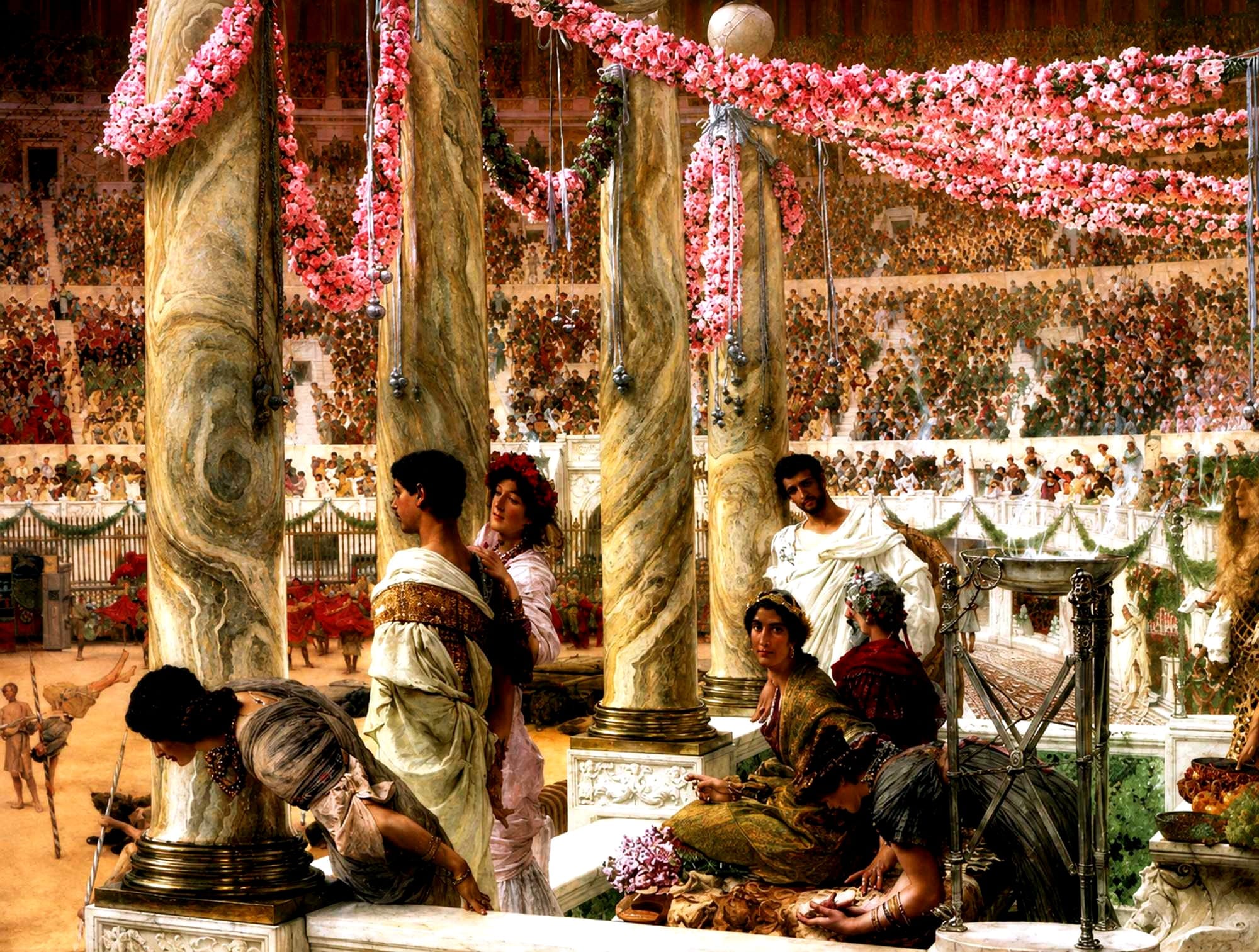
That decision changed the scale of Roman law. Citizenship, once a prized and limited status, now reached almost the whole free population of the empire. Roman law had to speak to a much wider world. Ulpian’s greatest writings appear to belong to the years after this expansion, when the law of Rome was being restated for a new imperial community.
The Huge Task of Organizing Roman Law
Ulpian’s output was astonishing. His mature genuine or probably genuine works may have amounted to 216 or 217 books, using “book” in the ancient sense of a liber, roughly comparable to a substantial chapter or scroll. His largest works included an 81-book commentary On the Edict, a 51-book work On Sabinus, 20 books on the Julian and Papian law, 10 books of Disputations, 10 books on the office of the proconsul, and many shorter works on appeals, adultery, trusts, taxation, guardianship, public offices, and imperial administration.
This was not one neat treatise about justice. It was a vast attempt to organize a legal civilization. Ulpian wrote about the everyday machinery of empire: magistrates, governors, judges, heirs, mothers, slaves, freedmen, soldiers, merchants, officials, petitioners, and defendants. His law was practical, but it was not shallow.
One of the most interesting features of his work is the possibility that much of it was dictated. His legal prose often has the movement of speech: examples, clarifications, objections, analogies, qualifications, and careful shifts of thought. It can feel like a disciplined legal mind thinking aloud.
This helps explain why his writing often has more life than one expects from Roman legal fragments. He does not merely list rules. He tests them.
The speed of his production is equally striking. Much of his great legal survey may have been composed between 213 and 217 CE, after Caracalla’s citizenship grant. If that reconstruction is right, Ulpian was working at extraordinary speed, perhaps almost to a plan. The result was a massive exposition of law and public administration for the rulers and citizens of a newly enlarged Roman world.
His method was empirical and example-based. He liked to reason from cases. He repeatedly used phrases equivalent to “for instance,” “but what if,” and “unless perhaps,” moving through the consequences of a rule before settling on an answer. This gives his writing a practical human texture.
One example concerns a mother who had gained a right of succession to her children. She had to make sure guardians were appointed for them. What if the legal wording mentioned guardians, but the relevant official in a particular case was actually a curator?

Ulpian extended the rule to the curator, because the point was the protection of the children. What if the appointed guardians died? Again, the mother had to act, because the purpose of the rule was not merely formal; it was protective.
Yet Ulpian was not sentimental. In another case, a wife who divorced was forbidden to free slaves shortly before the divorce, because a slave might be freed to prevent torture and conceal adultery. The rule could apply even to field slaves or slaves in another province.
Ulpian thought this harsh, since such slaves could hardly know what was happening in the household, but he still deferred to the wording of the law.
This balance is part of what makes him interesting. He cared about purpose, equity, and utility, but he did not simply ignore legal language when the result felt hard.
Other examples show the same quality. If one person gave money intending it as a gift, while the receiver understood it as a loan, there was no true agreement. Strictly, recovery might seem possible. But if the money had already been spent as the giver intended, recovery would be unfair, and Ulpian allowed a defence.
In another case, where strict law blocked a mother from reopening proceedings about inheritance, he allowed a remedy because the earlier judgment had dealt with the revocation of an instrument, not whether it had existed in the first place.
Freedom was especially important. Ulpian allowed appeals in criminal cases not only by the condemned person but also by others, even when the condemned person did not want to appeal. He also recognized proceedings for the production of a free person thought to be wrongfully detained – something that, in broad terms, recalls the later idea of habeas corpus.
These details are where Ulpian becomes more than a name. His greatness is not only in famous definitions, but in thousands of small legal adjustments by which Roman law tried to become workable, rational, and fair within an unequal society.
Freedom, Dignity, and the Human Person
Ulpian’s Rome was not a modern world of human rights. It was a slave-owning empire, ruled by emperors, structured by status, and full of inequalities that modern readers cannot ignore. But within that world, his legal thought preserved ideas that later readers could recognize as morally expansive.
In his Institutes, he distinguished between ius naturale, ius gentium, and ius civile. Natural law referred to what nature itself taught. The law of nations concerned rules common among human peoples. Civil law was the particular law of a community.
This distinction mattered sharply in the discussion of slavery. By natural law, all human beings were born free. Slavery entered through the ius gentium, the law of nations. Once slavery existed, manumission followed as the legal act by which a slave was released from another’s power.
This was not abolitionism. Ulpian did not call for the end of slavery, and Roman law continued to regulate slavery as an accepted institution. But the wording created a tension inside Roman legal thought. If all are naturally born free, then slavery is not the deepest truth about the human person. It is a legal condition created by human arrangements. Freedom stands closer to nature.
Dignity also mattered. In discussing the legal action for wrongs, Ulpian cited the older jurist Labeo for the view that injuries could be against the body, or could relate to dignity or reputation. To be beaten or defamed was not only material harm. It could be an offence against a person’s standing and personality.

This did not mean equal dignity in the modern sense. Roman law still recognized degrees of rank and status. Men could be treated as having more dignity than women; married women more than concubines; slaves often less than free people.
But the language still matters. It shows law trying to recognize that a person could be harmed not only physically or financially, but also in honour, reputation, and standing.
The famous definitions at the beginning of Justinian’s Digest should be handled carefully. The definition of justice as the constant and perpetual will to give each person his due, and the precepts
“to live honourably, not to harm another, and to give each his own,”
are traditionally associated with Ulpian. But some works attributed to him are disputed. These lines belong safely to the Ulpianic legal tradition, but they should not be presented too confidently as his secure personal voice.
The more secure passage from his Institutes is powerful enough. There, law is connected to Celsus’ phrase
ius est ars boni et aequi – law is “the art of the good and the equitable.”
Then comes the striking image of jurists as almost priestly figures:
cuius merito quis nos sacerdotes appellet – “for this reason someone may rightly call us priests.”
The jurist cultivates justice, professes knowledge of the good and the fair, separates the equitable from the inequitable, and distinguishes the lawful from the unlawful.
That is elevated language, but in Ulpian it remained tied to practical life. His law dealt with mothers, children, slaves, shipmasters, debtors, heirs, governors, criminal appeals, public officials, and imperial petitions. His achievement was to give practical law a higher vocabulary: reason, utility, equity, freedom, and dignity.
His later influence was immense. Texts from Ulpian take up roughly two-fifths of Justinian’s Digest, and for many topics Justinian’s compilers chose his treatment as the core text. Through the Digest, Roman law entered later legal education and the Western legal tradition. Ulpian’s political life ended violently, but his legal mind survived because later ages found his work indispensable. ("Ulpian: Pioneer of Human Rights." by Tony Honoré)
Ulpian as an Intellectual in Politics
Ulpian can also be approached through the relationship between legal scholarship and power. He was not simply a private thinker. He belonged to a world in which juristic writing and imperial law-making constantly interacted.
The Roman emperor did not govern only by issuing grand commands. He judged cases, replied to petitions, issued rescripts, gave decisions, sent instructions, and shaped legal practice through many small acts.
Jurists worked inside and around this system. Their writings could reflect imperial decisions, but imperial decisions could also absorb juristic reasoning.
This makes Ulpian a particularly important example of an intellectual in politics. His legal style may first be visible in the period when he was connected with the drafting of private rescripts between 203 and 209 CE. His enormous scholarly output then followed in the second decade of the 3rd century.
The relationship between imperial legal rulings and private juristic works was therefore not distant. It was part of the same legal culture.
His background also complicates any simple description. Ulpian came from the Greek East, but “Greek” alone is too simple. Tyre retained a Phoenician memory and identity, even while functioning within the Roman imperial order.
His first language may have been Greek, but his legal education required immense reading in earlier Latin juristic literature. He was a provincial at Rome, but not an outsider to Roman intellectual authority.
His public status can be seen in imperial language. In 222 CE, Severus Alexander referred to a reply of Domitius Ulpianus, prefect of the annona, jurist, and “my friend” – iuris consultus, amicus meus. By December of the same year, when Ulpian had become praetorian prefect, the emperor referred to him as parens meus, meaning something like “my parent” or “my guardian.” These are not casual labels. They suggest a man whose authority was personal, political, and legal at once.
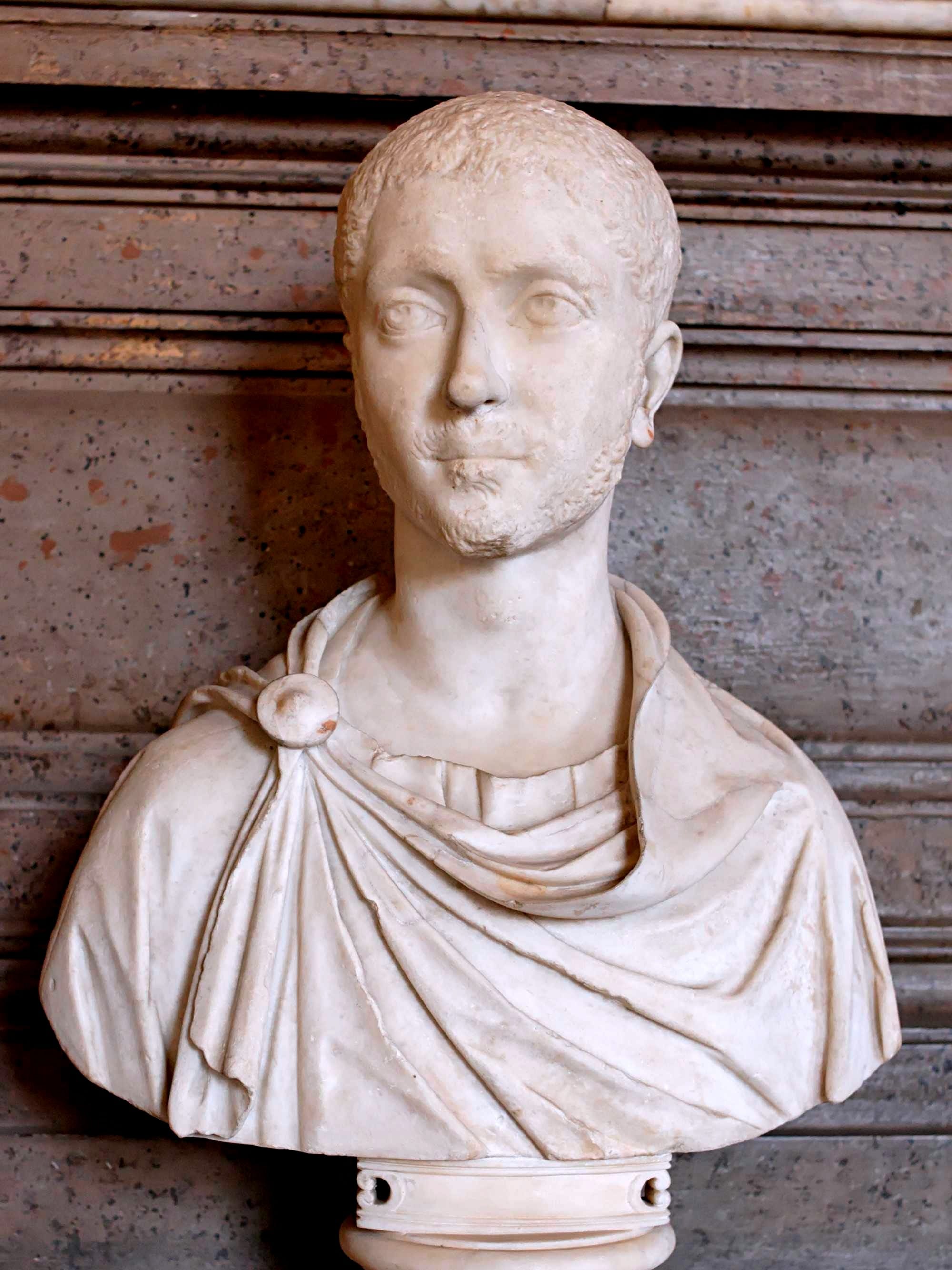
His reputation outlived him. Diocletian later referred to a principle established by the highly prudent Domitius Ulpianus in his Publicae Disputationes. Lactantius knew material from Ulpian’s De Officio Proconsulis. A partially preserved Greek inscription from Ephesus also appears to refer to legal provisions found in that same work on the duties of the proconsul.
The works on public offices are especially revealing. Ulpian wrote on the duties of the proconsul, the consul, the urban prefect, the quaestor, and others. These were not merely private-law exercises. They connected law with administration. They tried to define what office-holders could and should do inside the imperial state.
There was also a historical and antiquarian side to his legal thinking. In the work on the quaestor, he reached back to early Roman tradition, citing Gracchanus Iunius for the claim that Romulus and Numa each had two quaestors appointed by popular election. This reminds us that Roman legal scholarship could be technical, but also historical and constitutional.
The question remains whether Ulpian should be called a philosopher. His Institutes made a serious claim for the status of jurisprudence. Legal study could be presented as true philosophy, not a false imitation. But much of his writing does not resemble philosophical analysis in the style of Plato, Aristotle, or the Stoics. It is legal reasoning: classificatory, procedural, practical, and professional.
That does not diminish him. It may be the very reason he matters. His “philosophy” was not usually expressed as abstract speculation. It appeared in legal categories, public offices, procedures, remedies, distinctions between forms of law, and the attempt to connect imperial power with ordered reasoning.
Ulpian therefore belongs among the Roman intellectuals whose thought mattered because it entered public life. He was not simply a philosopher-statesman, but neither was he merely a bureaucrat. He was a legal intellectual whose work moved inside the machinery of government. (“Government and Law: Ulpian, a Philosopher in Politics?” by Fergus Millar, in Philosophy and Power in the Graeco-Roman World, edited by Gillian Clark and Tessa Rajak)
The Lawyer Who Entered the Danger Zone
A third portrait of Ulpian is darker. It places him not first among legal humanists, but among lawyers in government – men whose expertise brought them close to imperial power and therefore close to danger.
In earlier Roman history, knowledge of the law had belonged largely to the governing class. Senators and men of rank could be leading authorities in legal science. Over time, however, the great jurists of the imperial age increasingly became non-senatorial specialists attached to government. Under the emperors, law became more closely tied to centralized rule.
The Severan age produced three famous legal names: Papinian, Ulpian, and Paul. Papinian and Ulpian both reached the height of administration. Papinian became praetorian prefect under Septimius Severus and was killed by Caracalla. Ulpian became praetorian prefect under Severus Alexander and also died violently. Paul’s supposed prefecture is much less secure.
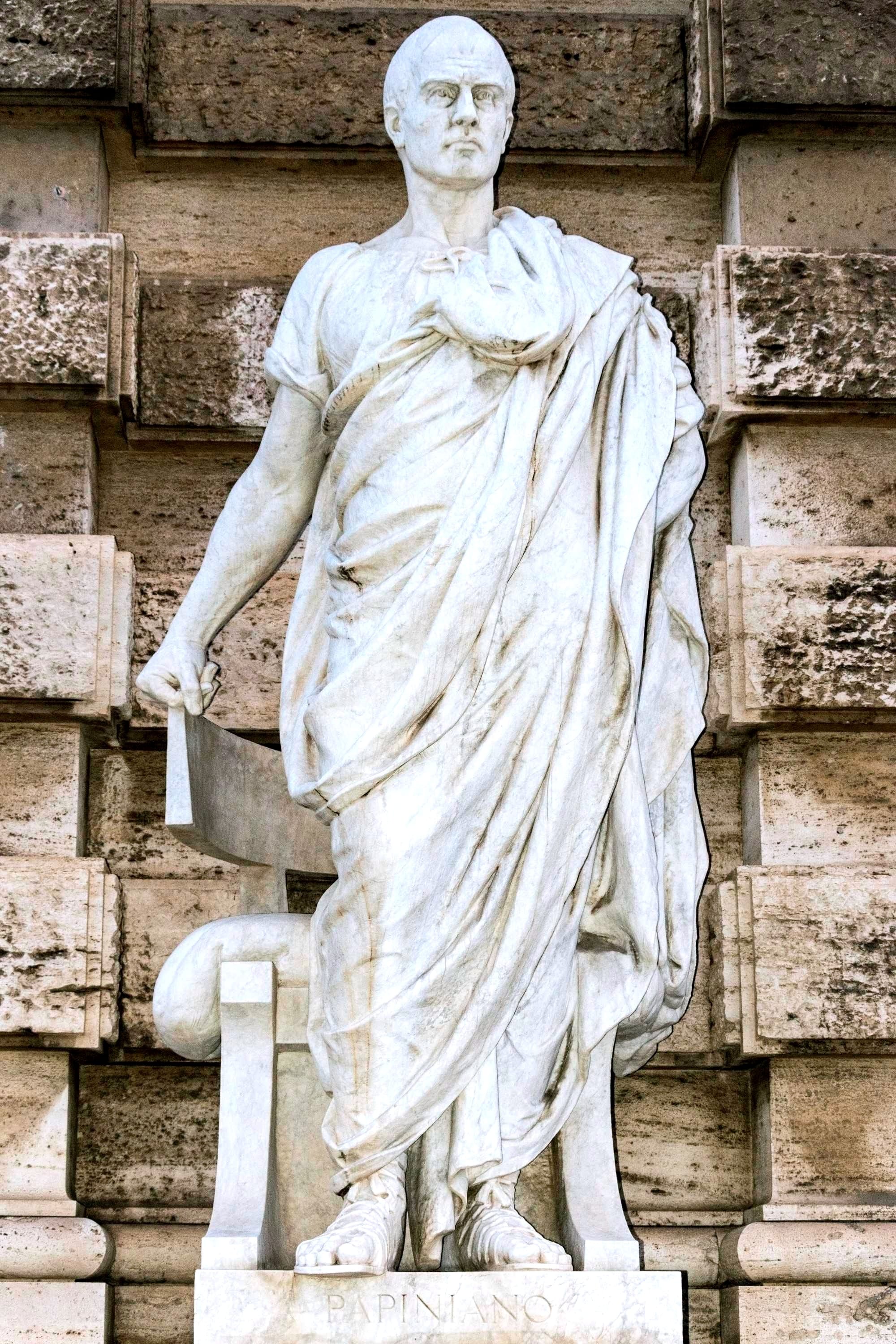
The appointment of a jurist to command the Praetorian Guard raises an obvious question. What did a lawyer have to do with a powerful city garrison? The prefects had acquired jurisdiction and courts of their own, so legal expertise had some value. But that explanation does not fully solve the problem. A military prefect could consult legal experts without being one. Personal confidence, court politics, loyalty, ambition, and imperial favour mattered too.
Under Severus Alexander, who came to power in 222 CE as a boy, real authority depended on imperial women, ministers, advisers, and soldiers. Julia Maesa and Julia Mamaea initially held great influence, but the question soon becomes who actually directed government.
The attractive image of Ulpian as the wise counsellor of a model young prince owes much to the Historia Augusta, especially the biography of Severus Alexander. But that source is deeply problematic. Its flattering portrait of Alexander and his advisers cannot simply be accepted as sober history.
The firmer evidence shows a rapid rise. Ulpian may have been secretary a libellis under Severus Alexander, either while Alexander was still Caesar under Elagabalus or briefly after his accession. By the last day of March 222 CE, Ulpian was praefectus annonae, responsible for Rome’s food supply. By the first day of December, he was praetorian prefect.
That was an extraordinary ascent. The food supply of Rome was already politically sensitive. The praetorian prefecture placed him at the center of imperial power, but also at the center of danger.
The first praetorian prefects of Alexander’s reign were Julius Flavianus and Geminius Chrestus. Through the influence of Mamaea, Ulpian was placed above them. Friction followed. A plot was suspected, and both men were put to death. Ulpian became sole commander of the Praetorians.
The soldiers resisted him. At one stage, fighting broke out in the streets of Rome and lasted for three days. Eventually, Ulpian himself was murdered by the Praetorians. The most dramatic account has him killed before the eyes of the helpless young emperor.
The date of his death is significant. Older tradition placed Ulpian’s death in 228 CE, allowing him several years as the guiding figure of Alexander’s government. But a papyrus from Oxyrhynchus changed the picture.
Epagathus, connected with responsibility for Ulpian’s murder, was already prefect of Egypt in May or June 224. Ulpian’s period at the top therefore has to be cut short. He may have held supreme influence for little more than a year.
This darker portrait does not erase his legal importance, but it complicates the man. Ulpian described jurists in elevated terms, almost as priests of justice. Yet his final career moved through court favour, faction, office, rivalry, military resistance, and violence. He may have answered the call of duty; he may also have been driven by ambition. The evidence does not allow a simple moral verdict.
What is clear is that his death reveals the limits of legal authority. A jurist could organize law, define justice, and rise to high office. But when the Praetorian Guard turned violent, words and offices could fail. (“Lawyers in Government: The Case of Ulpian.” by Ronald Syme)
Why Ulpian Still Matters
Ulpian is difficult to reduce to a single image, and that is what makes him worth reading.
He was a legal mind of extraordinary reach, but also a man of government. He wrote about justice, equity, freedom, dignity, and public office, but he lived in a world of emperors, soldiers, court politics, and lethal ambition. His work preserves the noblest language of Roman legal culture; his death preserves the harsher reality in which that law had to operate.
That tension is the story. Ulpian stands at the meeting point of law and power. He shows how Rome tried to make rule intelligible through legal reasoning. He also shows how fragile that effort could be when confronted by imperial violence.
His body fell in the Severan palace world. His words did not. Through later Roman legal tradition, they became one of the longest-lived voices of Roman justice. That is why Ulpian deserves his place among the great figures of Roman civilization: not because he made Rome gentle, and not because he imagined a modern world, but because he helped give the ancient world a language for thinking about law, fairness, freedom, dignity, and the human person.




About the Roman Empire Times
See all the latest news for the Roman Empire, ancient Roman historical facts, anecdotes from Roman Times and stories from the Empire at romanempiretimes.com. Contact our newsroom to report an update or send your story, photos and videos. Follow RET on Google News, Flipboard and subscribe here to our daily email.
Follow the Roman Empire Times on social media: