
The Six Men Who Said No to Roman Emperors
From Thrasea Paetus and Helvidius Priscus to Basil, Ambrose and Martin of Tours, six men were remembered for refusing imperial demands. Their stories reveal very different forms of resistance; and very different levels of historical certainty.

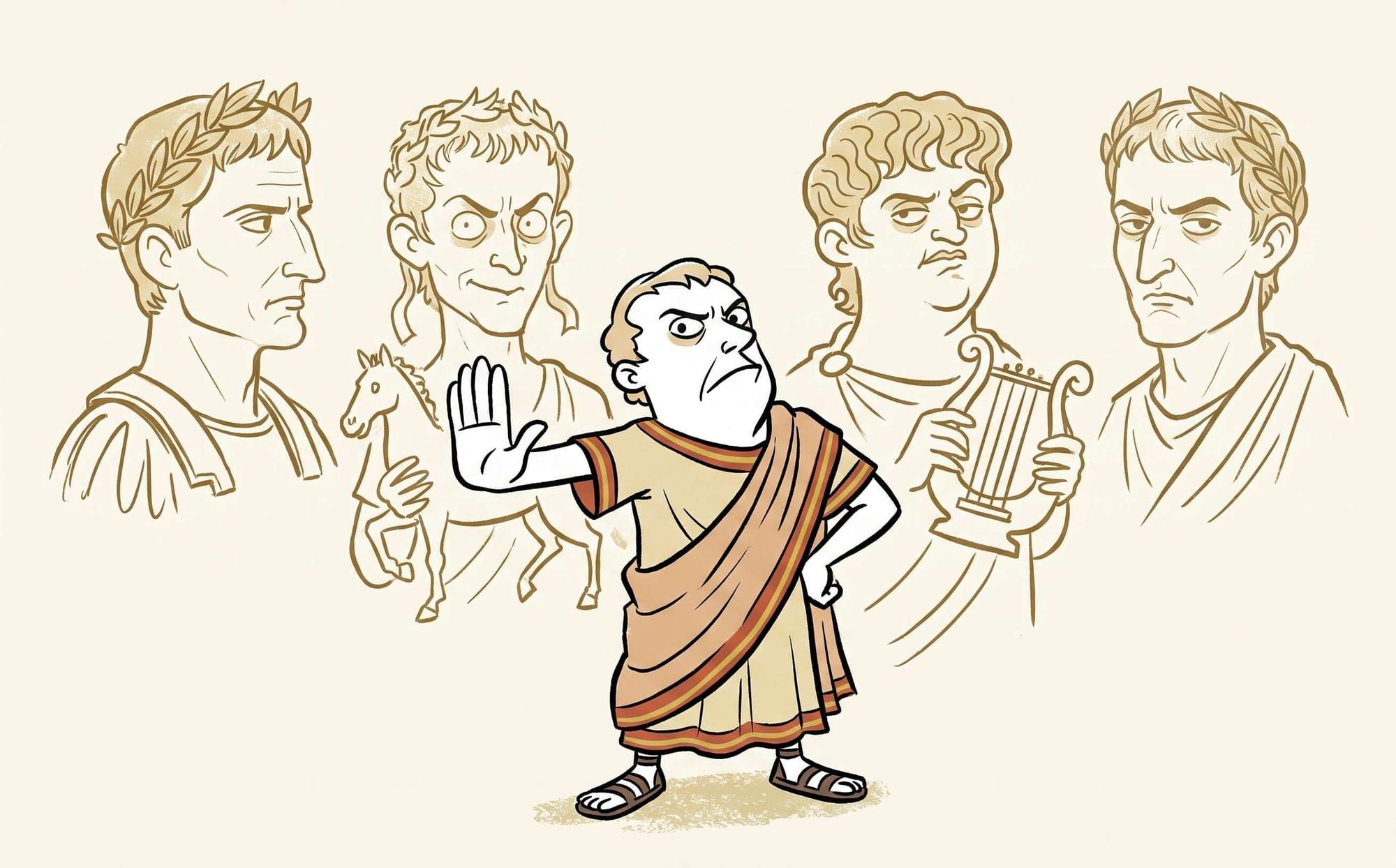
Open resistance to a Roman emperor did not always mean rebellion, conspiracy, or an attempt to replace imperial government. In the cases of Thrasea Paetus and Helvidius Priscus, the surviving evidence places resistance within senatorial office itself: participation in debate, freedom of judgment, attendance at the Senate, and the refusal to reduce public service to obedience. Their conflicts concerned what a senator could properly do when imperial pressure came into conflict with the responsibilities he associated with his office.
The later cases considered here belong to different institutions and circumstances, and their evidence is not equally secure. A jurist was remembered as refusing to defend an emperor’s fratricide. Bishops resisted demands they regarded as incompatible with their religious office. Some of these confrontations are recorded relatively close to the events; others reached posterity through philosophical anecdote, funeral oratory, hagiography, or later ecclesiastical histories. What can be established about the refusals therefore has to be distinguished from the forms in which later authors chose to preserve them.
Thrasea Paetus: When Absence Became an Accusation
Thrasea Paetus’s opposition to Nero was expressed repeatedly through his conduct as a senator. The surviving evidence does not present him primarily as a man attempting to abolish the principate. His actions concerned the Senate and the way in which he believed a senator ought to behave. Modern examination of his career has accordingly treated him first as an active Roman senator who also held Stoic convictions, rather than as a philosopher whose political conduct simply followed from a philosophical programme.
Tacitus records several occasions on which Thrasea placed himself apart from the course preferred by Nero or the emperor’s supporters. When the praetor Antistius was facing death for verses directed against Nero, Thrasea proposed a milder sentence and carried the Senate with him. He was deliberately absent when divine honours were voted to Poppaea. Earlier, after the Senate received the report concerning Agrippina’s death, Thrasea had walked out. For roughly three years before his prosecution, he also largely withdrew from the Senate.
That withdrawal became part of the case eventually brought against him. His prosecutor listed the public and religious occasions Thrasea had avoided and contrasted them with his earlier diligence in senatorial business. His absence was presented not as private retirement but as evidence that his attitude toward the government had changed. Modern discussion of the episode likewise treats the withdrawal as a considered policy of protest and dissociation rather than simple political inactivity.
Tacitus puts the force of the accusation into the prosecutor’s complaint:
“We shall more readily endure his censure of details than we can now bear the silence by which he condemns everything.”
The prosecution also extended the political meaning attributed to Thrasea’s conduct. His abstention was connected with more radical ambitions, and his association with republican exemplars was used against him. The surviving evidence, however, does not require the conclusion that Thrasea was pursuing a programme to restore the Republic. His recorded actions remained closely connected with senatorial conduct and with his refusal to participate normally under political conditions he no longer accepted.
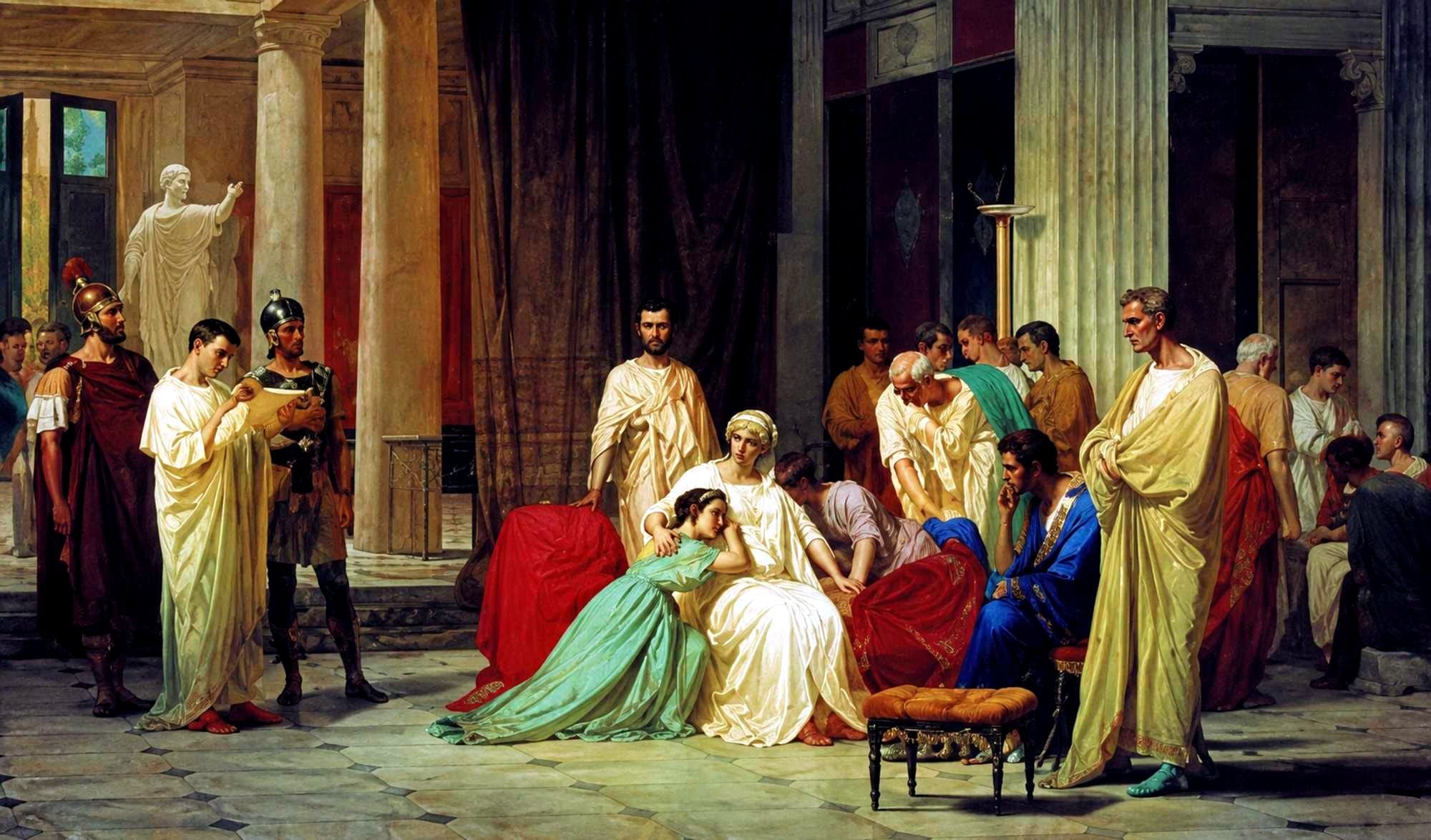
Tacitus also makes clear that the proceedings against him were not taking place in ordinary circumstances. In 66, troops surrounded the Senate before the case was heard. Thrasea considered whether he should attend and defend himself or remain at home. He ultimately remained away. The Senate condemned him and allowed him the choice of death.
When the decision reached him, Thrasea opened the arteries of his arms. Tacitus’s surviving account breaks off during the description of his death, leaving the final scene incomplete. What survives nevertheless shows the culmination of a conflict that had developed gradually through his conduct inside the Senate, his refusal to participate in particular proceedings, and finally his prolonged absence from public business.
Thrasea’s opposition was therefore not preserved as a single dramatic refusal delivered directly to Nero. It consisted of votes, absences and sustained withdrawal. The prosecution itself shows that his absence had acquired political significance in the eyes of those seeking his destruction.
Helvidius Priscus: A Senator Who Would Not Be Silent
Helvidius Priscus was Thrasea’s son-in-law and himself suffered exile under Nero after Thrasea’s prosecution. Under Vespasian he again came into conflict with imperial authority. Tacitus presents him as a man shaped both by philosophical study and by public service, emphasizing the libertas associated with Thrasea and the obligations Helvidius attached to the different roles he occupied.
The precise causes and development of Helvidius’s quarrel with Vespasian are less straightforward than the famous anecdote later told about the two men. Latin sources associate him with unusually uncompromising senatorial conduct. Suetonius says that he failed to give Vespasian the honours expected of the emperor and continued to provoke him. Cassius Dio provides a considerably more radical portrait, associating Helvidius with attacks on monarchy and praise of democracy.
That portrait has to be treated cautiously. Modern examination of what evidence has survived, has noted the difficulty of turning Helvidius into an advocate of revolutionary political change on the strength of Dio’s presentation. The evidence from other sources fits more readily with a senator insisting upon independence of judgment and upon the obligations he believed belonged to his office.
The best-known confrontation survives in Epictetus. There Vespasian orders Helvidius not to attend the Senate. Helvidius replies that the emperor can remove him from the Senate, but that while he remains a senator he must attend. Vespasian then tells him that he may attend, provided he remains silent. The exchange continues:
“Do not ask my opinion, and I will be silent. But I must ask your opinion. And I must say what I think right.”
Epictetus uses Helvidius while discussing the roles people occupy and the actions appropriate to those roles. Helvidius’s answer depends upon his status as senator. Attendance and participation are not presented merely as demonstrations of personal courage. They are treated as things that belong to being a senator. The emperor can remove him from the position; as long as he remains in it, Helvidius insists upon acting according to what he understands its duties to require.
The anecdote cannot be treated as a transcript of an actual conversation between Vespasian and Helvidius. It belongs to a philosophical work and to a wider literary tradition in which exemplary figures demonstrate constancy and freedom of speech before rulers. Its usefulness is therefore different from that of a verbatim record of proceedings in the Senate.
At the same time, the form in which Epictetus preserves the episode is itself significant for Helvidius’s later reputation. He had become an example of a man who would not accept the benefits or title of an office while abandoning what he considered the conduct demanded by that office.
Vespasian eventually banished Helvidius, and he was later killed. Suetonius reports that the emperor regretted the order and attempted too late to prevent the execution. That version has often been regarded cautiously because it also has the effect of separating Vespasian from responsibility for the final outcome.
Helvidius therefore resembles Thrasea without simply repeating him. Thrasea eventually withdrew from the Senate. Epictetus’s Helvidius is remembered as refusing withdrawal when it is imposed upon him: if he remains a senator, he insists that he must attend, and if his opinion is requested, he must give it.
Papinian: The Refusal That May Have Become a Legend
The jurist Papinian presents a different problem because the central refusal associated with his death cannot be established with the same confidence.
Papinian rose under Septimius Severus through senior legal and administrative positions and eventually became praetorian prefect. After Severus’s death, Caracalla and Geta became joint emperors. Their relationship deteriorated rapidly, and Caracalla eventually had Geta killed. Papinian himself was killed soon afterward during the purge associated with Geta’s fall.
Those parts of the sequence are substantially firmer than the famous explanation later given for Papinian’s death.
Ancient traditions already disagreed about the cause. One associated Papinian with attempts to preserve concord between the imperial brothers. Another regarded him as a supporter of Geta who was destroyed with other members of Geta’s party. A further version transformed his death into a direct clash between legal principle and an imperial command.
The Historia Augusta openly preserves competing explanations. According to the most famous version, Caracalla ordered Papinian to prepare a defence of Geta’s murder before the Senate and the Roman people. Papinian allegedly refused, answering that:
“it was not so easy to defend fratricide as to commit it.”
The same ancient biography preserves another variant in which Papinian was asked to compose an attack upon the dead Geta and refused because accusing an innocent murdered man would amount to another murder.
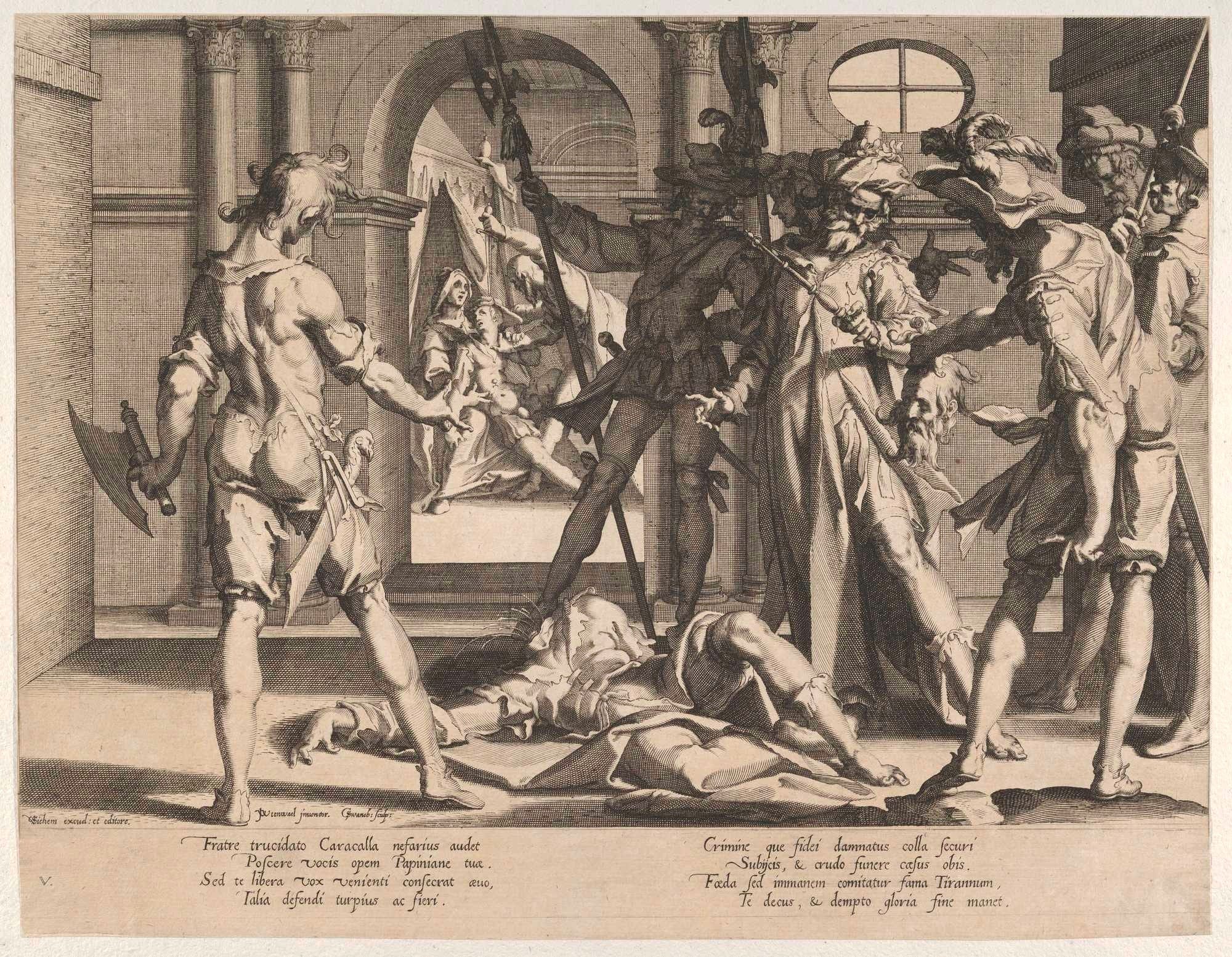
Crucially, however, the author then questions these stories. The biography states that they do not accord with the facts and instead connects Papinian’s death with his support for Geta. The source that transmits the memorable refusal therefore also preserves the warning against treating it as secure history.
That distinction is significant because the story later acquired a much larger reputation. Papinian increasingly became a model of the jurist who would rather die than use his legal authority to justify an emperor’s crime. The moral power of the story helped make the refusal inseparable from the way his death was remembered, even though its immediate historical basis remained uncertain.
Modern discussion has therefore had to separate the secure execution of Papinian after Geta’s murder from the much less secure explanation that he was killed specifically because he refused to defend the fratricide.
Caracalla had Papinian killed after Geta’s death. Whether Papinian actually gave the famous answer, and whether such a refusal caused his execution, cannot be demonstrated from the surviving evidence.
Basil of Caesarea: Refusing Imperial Pressure Without Breaking With the Empire
The confrontation between Basil of Caesarea and the emperor Valens is preserved most dramatically in Gregory of Nazianzus’s funeral oration for Basil. According to Gregory, the praetorian prefect Modestus attempted to pressure Basil into submission during the ecclesiastical dispute that divided them. Threats of confiscation, exile and violence failed to change Basil’s position.
Gregory gives Basil’s response in deliberately forceful language:
“The Emperor himself may hear this—that neither by violence nor persuasion will you bring us to make common cause with impiety, not even though your threats become still more terrible.”
Gregory continues the exchange by presenting Modestus as astonished by Basil’s boldness. The prefect remarks that no one has ever spoken to him in this way. Basil answers, in Gregory’s telling, that perhaps Modestus has never met a bishop under such circumstances.
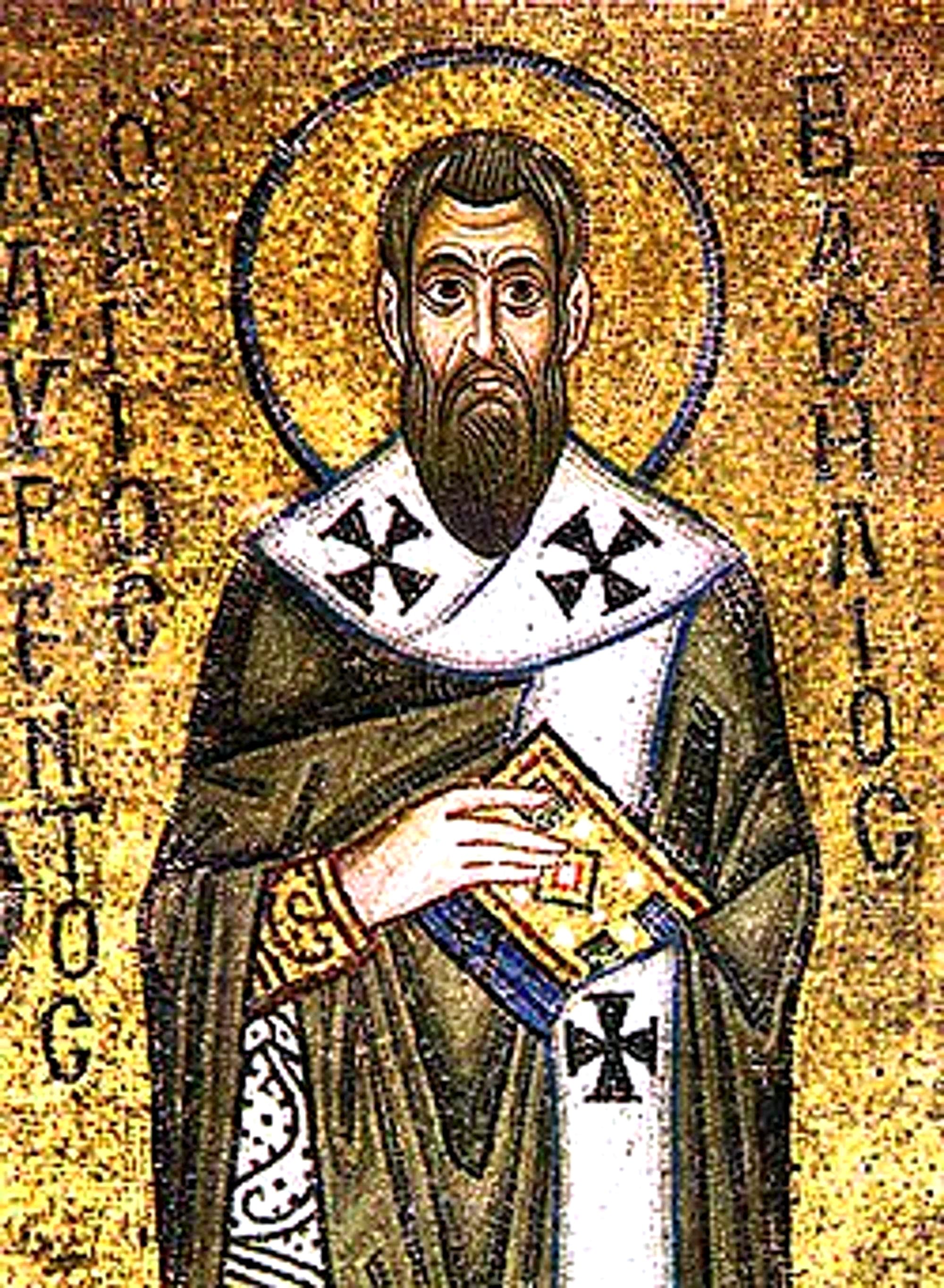
Modestus then reports his failure to Valens. Gregory’s narrative goes on to describe the emperor himself encountering Basil at Caesarea, with particular emphasis on Basil’s composure during the liturgy and on the impression this made upon Valens.
The surviving traditions, however, do not provide one completely secure chronological sequence for these confrontations. Gregory of Nyssa places encounters involving Modestus differently, while later ecclesiastical historians preserve still other arrangements. The confrontations may have extended across more than one imperial visit and more than one stage of the dispute, probably between around 370 and the better-attested Epiphany visit of 372.
The literary character of Gregory’s account also has to remain visible. He was delivering an oration in praise of the dead Basil. The confrontation with imperial authority is one of the episodes through which Basil’s character is displayed. The reported speeches therefore cannot simply be treated as a stenographic record of negotiations between a bishop, a prefect and an emperor.
Comparison with the other ancient traditions shows agreement on important elements but also confusion over chronology, the number of encounters and the officials involved. The basic tradition of Basil resisting pressure from Valens’s government is strong, while the precise staging and dialogue remain shaped by the purposes of the writers who preserved them.
The aftermath also prevents the episode from becoming a simple story of bishop against emperor. Basil’s resistance did not end his dealings with the imperial administration. He continued to correspond with officials, intervene in matters involving secular authorities, and participate in ecclesiastical affairs that overlapped with imperial policy.
One important example concerns Armenia. Basil became involved in ecclesiastical arrangements there at a sensitive moment in Roman relations with the region. His surviving correspondence reports this activity and shows him working within circumstances in which imperial interests were also involved.
The evidence has also been used to associate Valens with support for Basil’s charitable establishment, the large complex outside Caesarea often connected with Basil’s programme of care for the poor, sick and travellers. Whatever the exact administrative arrangements, Basil’s relationship with imperial government after the confrontation was not one of permanent exclusion.
The evidence therefore shows resistance to a particular religious demand followed by continued interaction with the state. Basil could refuse what he regarded as theological compromise while still dealing with imperial officials and undertaking work in which the government had an interest.
Ambrose of Milan: “I Dare Not Offer the Sacrifice”
Ambrose’s confrontation with Theodosius after the killings at Thessalonica became one of the most heavily dramatized examples of episcopal resistance to a Roman emperor. The earliest and strongest evidence, however, does not describe the famous scene of Ambrose standing physically at the door of a church and barring Theodosius from entry. It comes from Ambrose himself.
In Letter 51, Ambrose explains why he had avoided meeting Theodosius on the emperor’s return. He discusses the killings at Thessalonica, the reaction among bishops, the need for repentance and his own position toward celebrating the Eucharist while the matter remained unresolved.
His decisive refusal is explicit:
“I dare not offer the sacrifice if you intend to be present.”
The surrounding letter is important for understanding what Ambrose was doing. He reminds Theodosius of their existing relationship and of the emperor’s previous clemency. He repeatedly presents his intervention as counsel, warning and entreaty. His object is repentance and reconciliation, not the political humiliation or overthrow of the emperor.
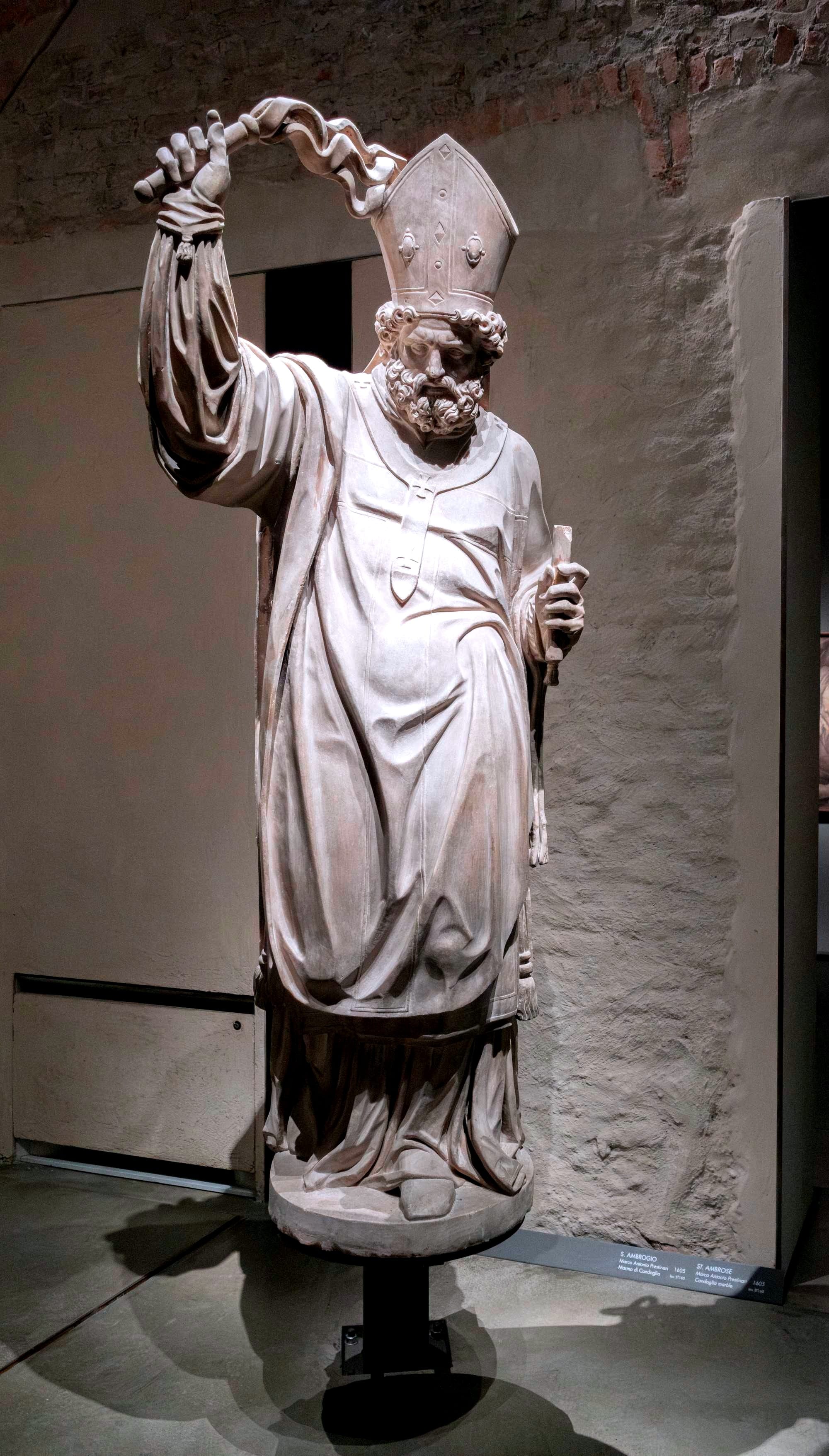
Ambrose also wrote privately. His letter does not announce that the Church as an institution has imposed a general excommunication upon Theodosius. It states what Ambrose himself will not do under the existing circumstances: he will not offer the sacrifice if the emperor intends to be present.
Modern reconstruction of the episode therefore distinguishes Ambrose’s contemporary evidence from later versions in which the confrontation becomes a formal and highly public struggle between ecclesiastical and imperial authority. Ambrose’s episcopal colleagues had not established an equivalent collective sanction, and the letter itself is more personal and pastoral in form than the later story suggests.
What happened between the delivery of the letter and the emperor’s eventual penance is much less clear. Rufinus later records Theodosius acknowledging responsibility and undertaking public penance before the church. The negotiations and preparations that led from Ambrose’s refusal to reconciliation are not preserved in enough detail to reconstruct them confidently.
The celebrated image of Ambrose physically confronting Theodosius at a church entrance belongs to the subsequent development of the story.
Paulinus, writing Ambrose’s Life, presents a more dramatic exchange between bishop and emperor. Elements of that dialogue can be understood as an elaboration of themes already present in Ambrose’s own letter.
Sozomen later provides a church-door episode, but modern examination has suggested that parts of his version may incorporate or combine material from another ecclesiastical confrontation. Theodoret develops the scene further still and introduces a much more elaborate chronology, including an extended period before Theodosius’s reconciliation.
That later chronology has not generally been regarded as secure. The increasingly dramatic versions illustrate how a contemporary refusal expressed in a private episcopal letter could become, over time, a much more theatrical encounter between bishop and emperor.
Ambrose’s genuine refusal does not depend upon the later scene. His own words establish that he would not perform the sacrifice with Theodosius present under the existing circumstances. At the same time, the rest of the letter makes clear that he was seeking repentance followed by reconciliation.
Martin of Tours: Refusing the Emperor’s Table
Sulpicius Severus places Martin of Tours repeatedly at the imperial court, including in dealings with Magnus Maximus. His presentation of the emperor is not uniformly hostile. Maximus is shown receiving Martin, discussing ecclesiastical affairs with him and responding to his interventions. Other surviving material considered in modern scholarship likewise presents Maximus as a ruler deeply involved in church affairs and willing to receive advice and admonition from bishops.
Against that background, Sulpicius records an unusually explicit refusal.
Bishops had gathered around Maximus, and Sulpicius complains about what he regarded as their excessive deference toward the emperor. Martin is presented differently. Although he had business that required access to the ruler, Sulpicius says that:
“although often invited, he kept away from his entertainments”
Sulpicius gives Martin’s reason. He would not dine with a man who had displaced one emperor and had been responsible for the death of another. The reference was to Maximus’s seizure of power and the defeat and death of Gratian.
Maximus responded by defending the circumstances of his accession. According to Sulpicius, he argued that he had not sought imperial power voluntarily but had been forced into it by the army. He also appealed to the outcome of the civil war as evidence of divine favour and maintained that his opponents had died in open battle rather than through private murder.
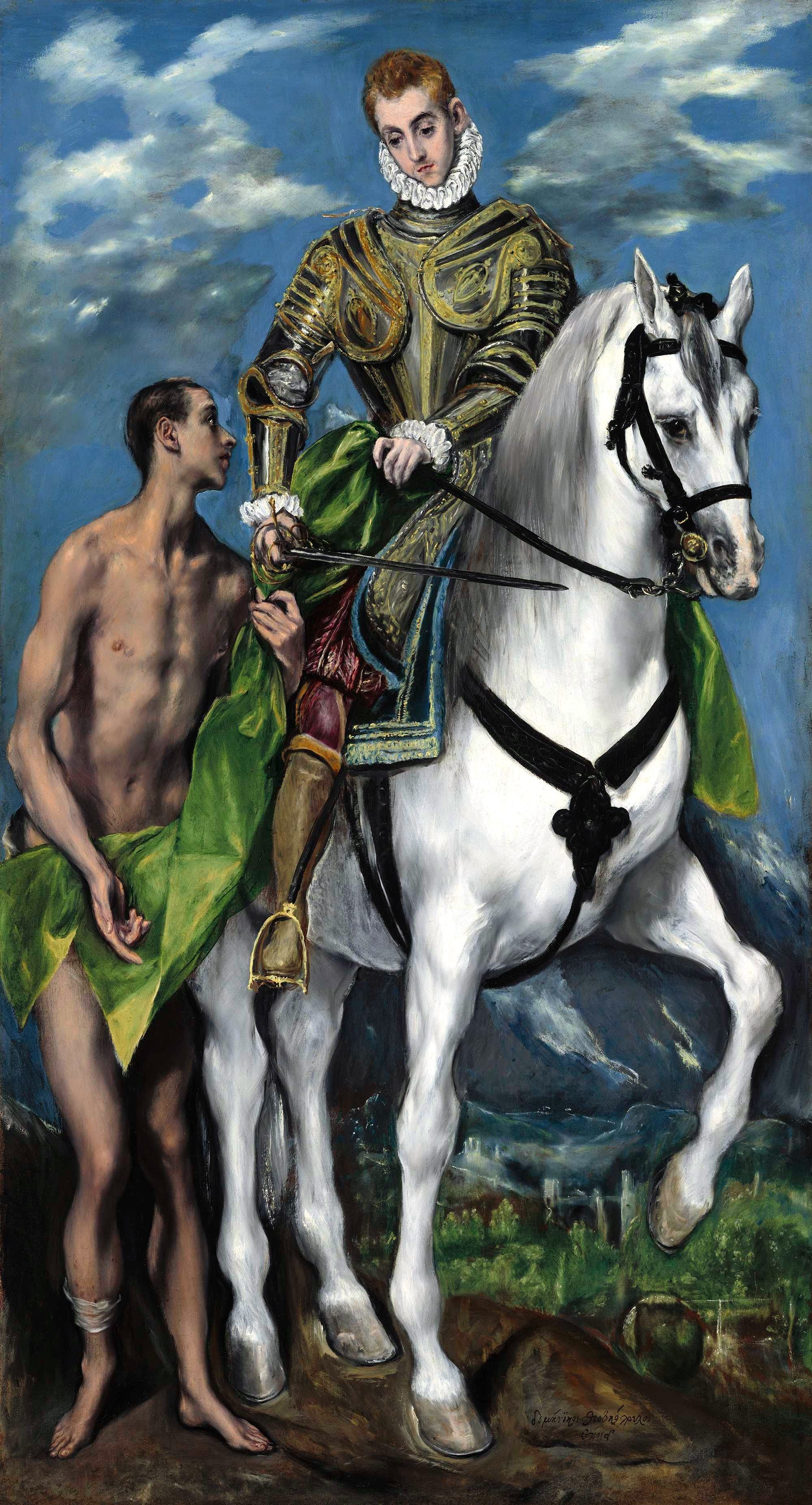
The outcome is significant because Sulpicius does not pretend that Martin maintained the refusal indefinitely. Martin eventually accepted an invitation to dine with Maximus. The episode therefore does not present him as refusing all contact with the emperor or denying the practical need to negotiate with him.
The banquet itself is also used by Sulpicius to contrast Martin with other bishops at court. The author’s interest lies partly in questions of ecclesiastical dignity and deference: how a bishop should behave in the presence of an emperor and whether imperial favour should alter the conduct expected of his office.
Martin’s later involvement in the Priscillian affair provides another example of resistance at court. Priscillian and his supporters had become involved in a complex ecclesiastical and political struggle that eventually reached Maximus’s court at Trier. Martin intervened against the use of secular capital punishment in the dispute and argued that accusations of heresy should be dealt with ecclesiastically.
His intervention did not ultimately prevent the executions. Priscillian and several followers were put to death, creating a lasting controversy over the use of imperial judicial power in an ecclesiastical dispute.
Sulpicius’s presentation of these episodes must nevertheless be treated as hagiographical rather than as neutral court reporting. Throughout his writings he constructs Martin as a bishop who preserves the dignity and independence of his office where other churchmen succumb to imperial favour.
The banquet episode belongs within that larger portrait. Its dialogue and characterization cannot simply be treated as a verbatim record of what was said at Maximus’s court.
At the same time, Sulpicius’s own narrative places limits on how the refusal can be described. Martin continued to petition the emperor, negotiate with him and eventually enter his company. His refusal of the imperial table therefore occurred within an ongoing relationship with the court rather than outside it.
What Their Refusals Actually Show
The six cases belong to different periods, institutions and kinds of evidence. Tacitus records Thrasea’s increasingly conspicuous withdrawal from senatorial life under Nero and shows that his absence itself became part of the case against him. Epictetus preserves Helvidius as an example of a man who believed that the obligations attached to senatorial office could not simply be suspended at an emperor’s command.
Papinian’s supposed refusal presents a different evidentiary problem. His execution after Geta’s murder is secure, but the Historia Augusta both preserves the celebrated story of his refusal to defend fratricide and warns against accepting it as the actual explanation for his death.
The episcopal cases present other difficulties. Gregory of Nazianzus preserves Basil’s defiance of imperial pressure inside a funeral oration written to praise the dead bishop, while other surviving accounts complicate the chronology. Basil’s subsequent dealings with imperial officials also show that refusal of a theological demand did not mean the end of cooperation with the Roman state.
Ambrose’s own letter provides unusually direct evidence for his refusal to celebrate the Eucharist with Theodosius present after Thessalonica. Later writers transformed that intervention into a more theatrical confrontation and eventually produced the famous image of the bishop physically barring the emperor from the church.
Sulpicius Severus likewise preserves Martin’s refusal of Magnus Maximus’s table within a hagiographical portrait designed partly to demonstrate Martin’s independence before secular power. Yet even that account admits that Martin continued to negotiate with Maximus and eventually accepted his invitation.
The nature of the refusals was therefore different in each case. Thrasea would not continue participating normally in senatorial business under conditions he regarded as unacceptable. Epictetus’s Helvidius would not remain silent while continuing to hold senatorial office. Papinian was remembered as refusing to justify the murder of an emperor’s brother, although the source itself disputes that explanation for his death.
Basil rejected a theological demand backed by imperial pressure. Ambrose refused to celebrate the Eucharist while Theodosius intended to attend before repentance had taken place. Martin repeatedly declined the emperor’s table before eventually accepting the invitation while continuing his dealings with the court.
The evidence therefore does not preserve a single Roman doctrine of resistance to emperors. It preserves particular confrontations in which senatorial office, legal reputation, episcopal responsibility or religious conviction brought an individual into conflict with something an emperor or his representatives wanted him to do.
Tacitus, Annals, especially Books XIV and XVI, Church and Brodribb translation.
Tacitus, Histories, Book IV.
Epictetus, Discourses 1.2, George Long translation.
Suetonius, Vespasian.
Historia Augusta, Caracalla and Geta.
Gregory of Nazianzus, Oration 43, NPNF translation.
Gregory of Nyssa, material relating to Basil and Valens.
Basil of Caesarea, correspondence relating to imperial officials and the Armenian mission.
Ambrose of Milan, Letter 51, NPNF translation.
Rufinus, Ecclesiastical History.
Paulinus, Life of Ambrose.
Sozomen, Ecclesiastical History.
Theodoret, Ecclesiastical History.
Sulpicius Severus, Life of Martin and Dialogues.
Chaim Wirszubski, Libertas as a Political Idea at Rome During the Late Republic and Early Principate.
Wolfgang-Rainer Mann, “You’re Playing You Now: Helvidius Priscus as a Stoic Hero.”
Béla P. Szabó, “Papinianus on the Stage: A Martyr of Law or a Modern Model?”
Philip Rousseau, Basil of Caesarea.
Neil B. McLynn, Ambrose of Milan: Church and Court in a Christian Capital.
John Matthews, Western Aristocracies and Imperial Court, A.D. 364–425.

About the Roman Empire Times
See all the latest news for the Roman Empire, ancient Roman historical facts, anecdotes from Roman Times and stories from the Empire at romanempiretimes.com. Contact our newsroom to report an update or send your story, photos and videos. Follow RET on Google News, Flipboard and subscribe here to our daily email.
Follow the Roman Empire Times on social media: