
20 Weird Roman Laws That Reached Into Everyday Life
A nearly naked theft search, forbidden dormice and a funeral exception for gold-bound teeth: twenty rules reveal the reach of Roman law.

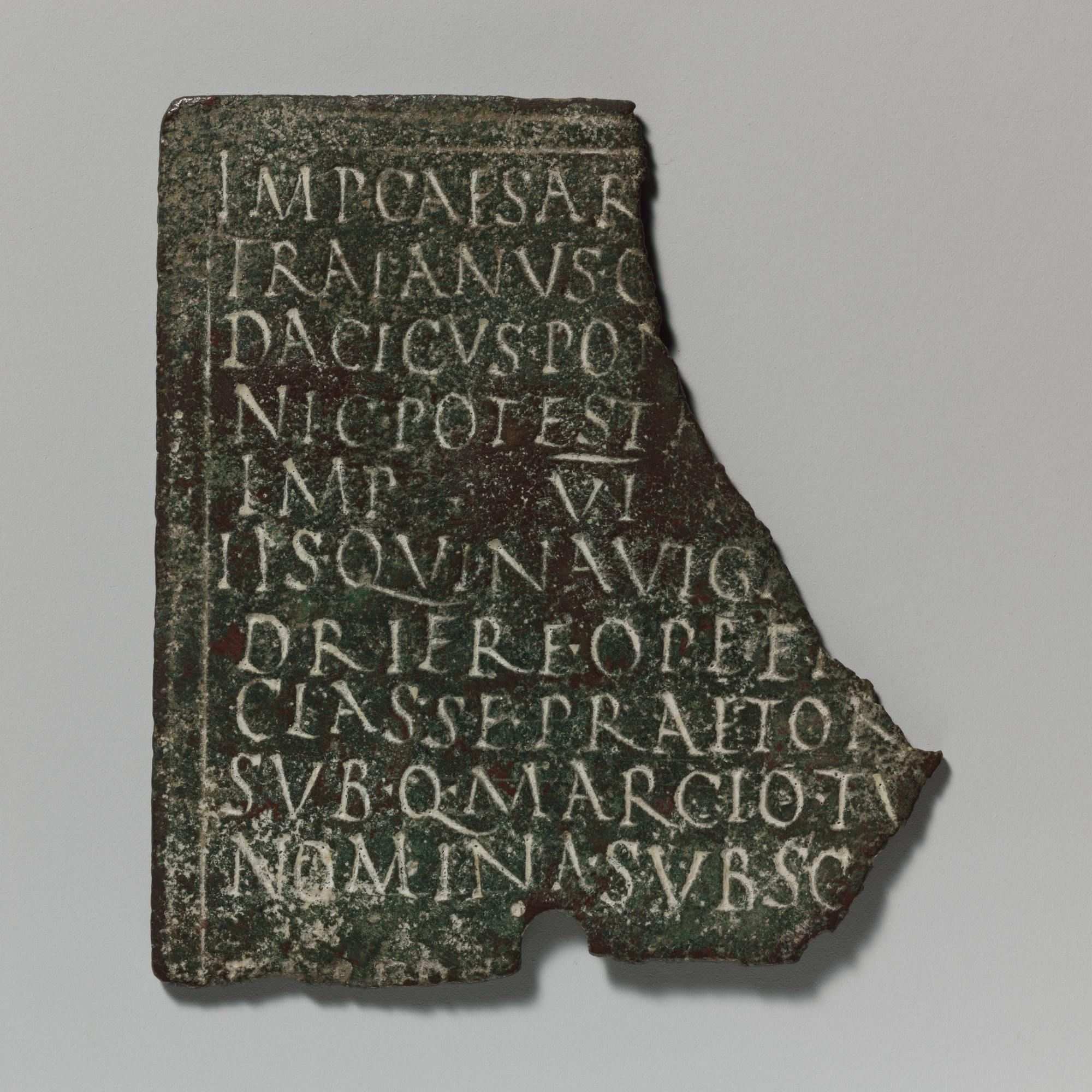
Roman law reached into a dinner invitation, a wife's place in the household and the gold attached to a dead person's teeth. Its rules could prescribe an almost naked search for stolen property or distinguish between an acceptable hen and one that had been fattened for the table.
These twenty provisions come from different centuries, from the early Republic to the later Empire. Some were already obsolete when Roman jurists described them. Others were repeatedly revised, with new penalties, exceptions or procedures replacing older arrangements. They were never a single code operating unchanged throughout Roman history.
Several belong to the surviving fragments of Rome's Twelve Tables, traditionally dated to 451–450 BC. Later legal writing preserves their terse provisions and explains how they were interpreted. Laws about private meals, marriage and inheritance added further restrictions as Rome's institutions and society changed.
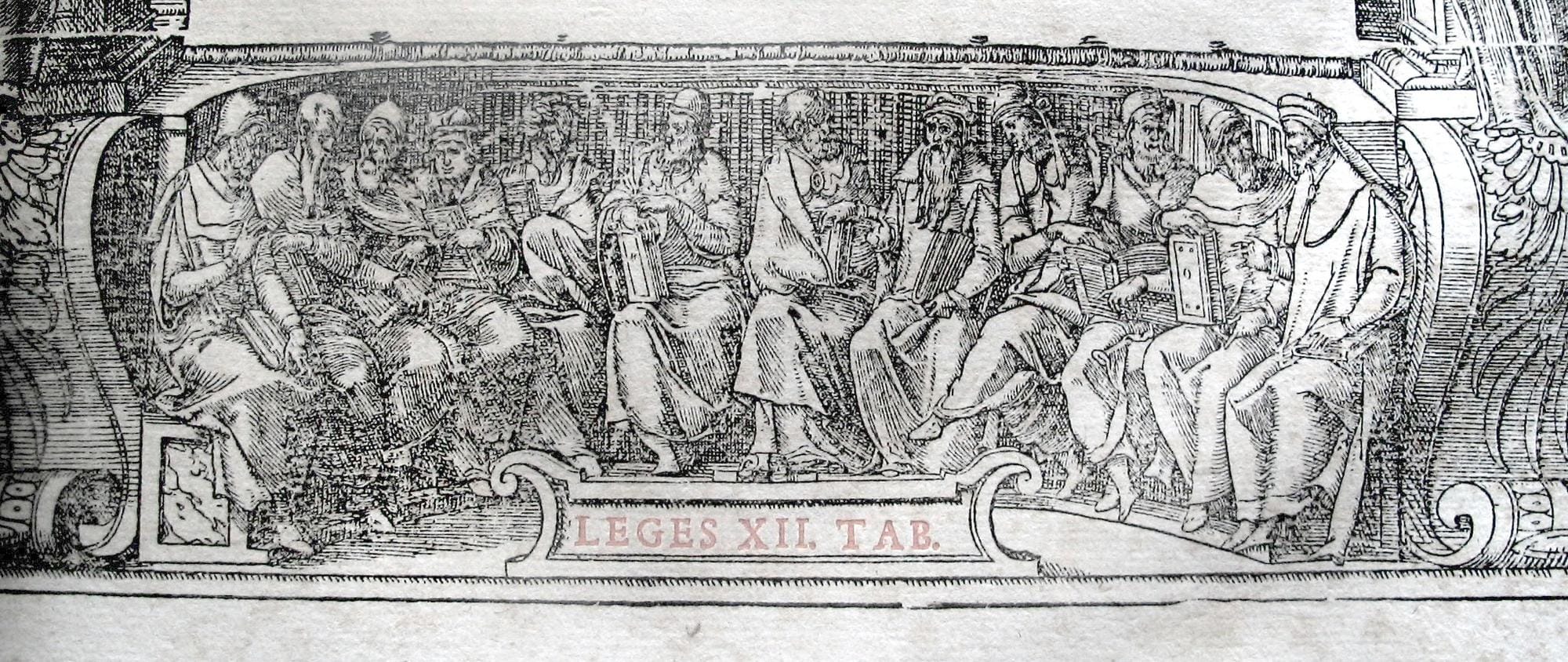
A platter, a misplaced word and a damaged limb
1. Search almost naked, carrying a platter. Under an old Twelve Tables procedure, someone searching a house for stolen goods wore a small covering and carried a dish. Gaius wrote that “the person wishing to search must be naked, only wearing a girdle, and carrying a platter in his hands” (Institutes 3.192). He also questioned the procedure's logic.
2. Call the damaged vines 'trees'. Gaius recalled a claimant losing an action over cut vines because he used the word 'vines'. The old legal formula required 'trees', the broader term used in the Twelve Tables. Such exact wording belonged to the earlier procedure that later Roman law largely abandoned.
3. Settle over a damaged limb, or face retaliation. The Twelve Tables allowed bodily retaliation for a mutilated limb unless the parties reached an agreement. Broken bones attracted fixed monetary penalties instead, differentiated by the victim's legal status. Gaius contrasted these early provisions with the later assessment of damages for the particular injury.
Three nights away could change a wife's legal position
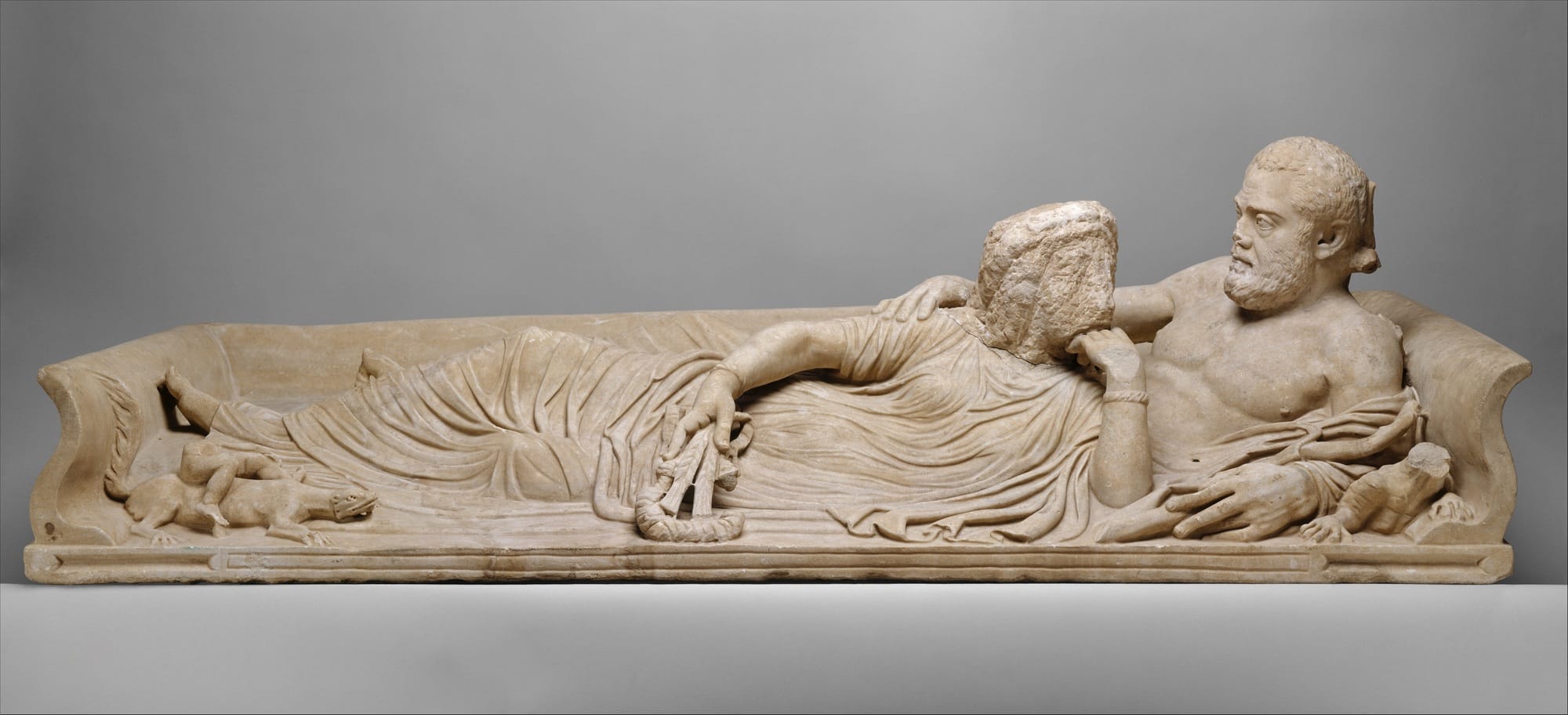
4. Three nights interrupted marital control. A wife could prevent a continuous year's cohabitation from bringing her into manus, a form of marital authority, by staying away for three successive nights each year. This affected her position within the family rather than ending the marriage. Gaius described the arrangement as already partly abolished and partly obsolete.
5. A father's third sale ended his power. The Twelve Tables provided that a son sold three times would be released from his father's authority. Jurists later turned the provision into a formal emancipation procedure, using successive transfers and releases. The same legal machinery also appears in Roman adoption and paternal authority.
6. Children could release a woman from guardianship. Under the Augustan scheme, three children qualified a freeborn woman for exemption from the guardian's approval required in certain transactions. A freedwoman under her patron's guardianship needed four. Gaius distinguished that arrangement from other forms of guardianship, for which three children could suffice.

Marriage penalties and a stolen building beam
7. Remaining unmarried could cost a bequest. The Augustan marriage laws restricted the ability of unmarried citizens within their scope to receive testamentary gifts outside close family. The restriction applied to eligibility under a will, with close-family gifts treated separately. The legislation used inheritance to encourage marriage.
8. Marriage without children could still lose half. A married but childless beneficiary could receive only half of a bequest affected by the Augustan rules. The lex Papia Poppaea of AD 9 formed part of this scheme. The system included close-family exemptions, while Gaius also identified special treatment for gifts made through soldiers' wills.
9. A stolen beam had to stay in the building. An owner could not simply recover timber incorporated into someone else's standing house. Justinian's Institutes explain the rule as preventing demolition: ownership survived, while the law supplied a claim for double value. Recovery after demolition remained possible if the owner had not already pursued double value.
One hen, no dormice and a penalty for the guests
10. The banquet hen must not be fattened. The lex Fannia of 161 BC restricted the bird course to a single hen that had not been specially fattened. Dinner legislation could regulate ingredients as well as spending. Such provisions formed part of Rome's repeated attempts to restrain luxury at the table.
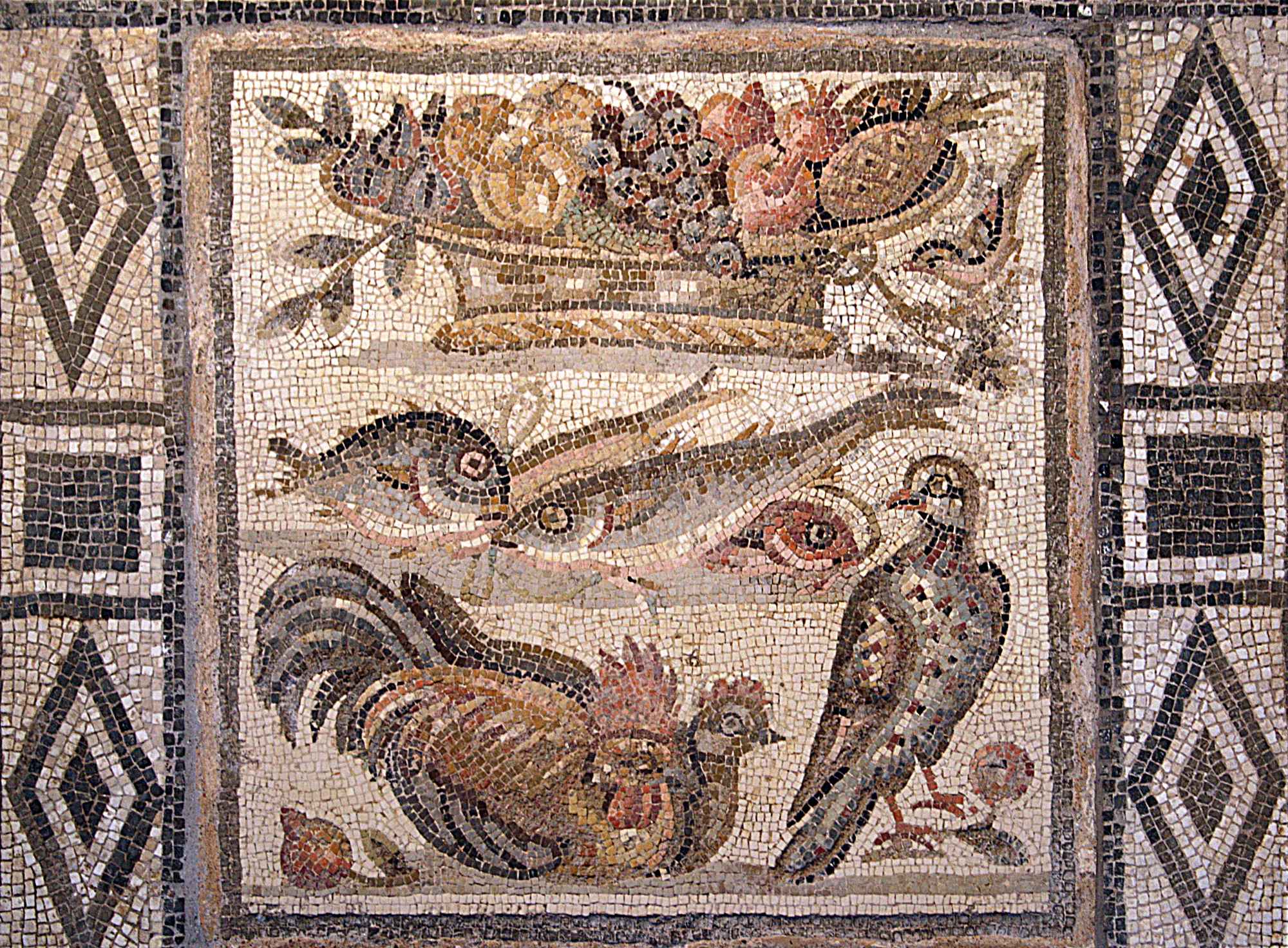
11. Dormice were forbidden delicacies. Pliny records their exclusion from banquets alongside shellfish and imported birds, associating the restriction with Marcus Aemilius Scaurus's consulship in 115 BC. Dormice nevertheless remained part of Roman food culture. Petronius later pictured dormice with honey and poppy seed at Trimalchio's fictional banquet.

12. The guests could be liable too. The lex Didia of 143 BC extended penalties for an unlawfully extravagant dinner to those attending it, as well as the person providing it. Accepting an invitation could therefore carry a legal consequence. It followed the Fannian restrictions of 161 BC, extending the reach of banquet regulation to the company at the table.
Officials' invitations and emperors' tavern menus
13. A magistrate could not dine with just anyone. The late Republican lex Antia limited the people with whom serving or incoming magistrates could accept dinner invitations. Aulus Gellius describes a specified circle of permissible hosts. The provision targeted official hospitality, adding restrictions on a guest's position to the existing regulation of meals.
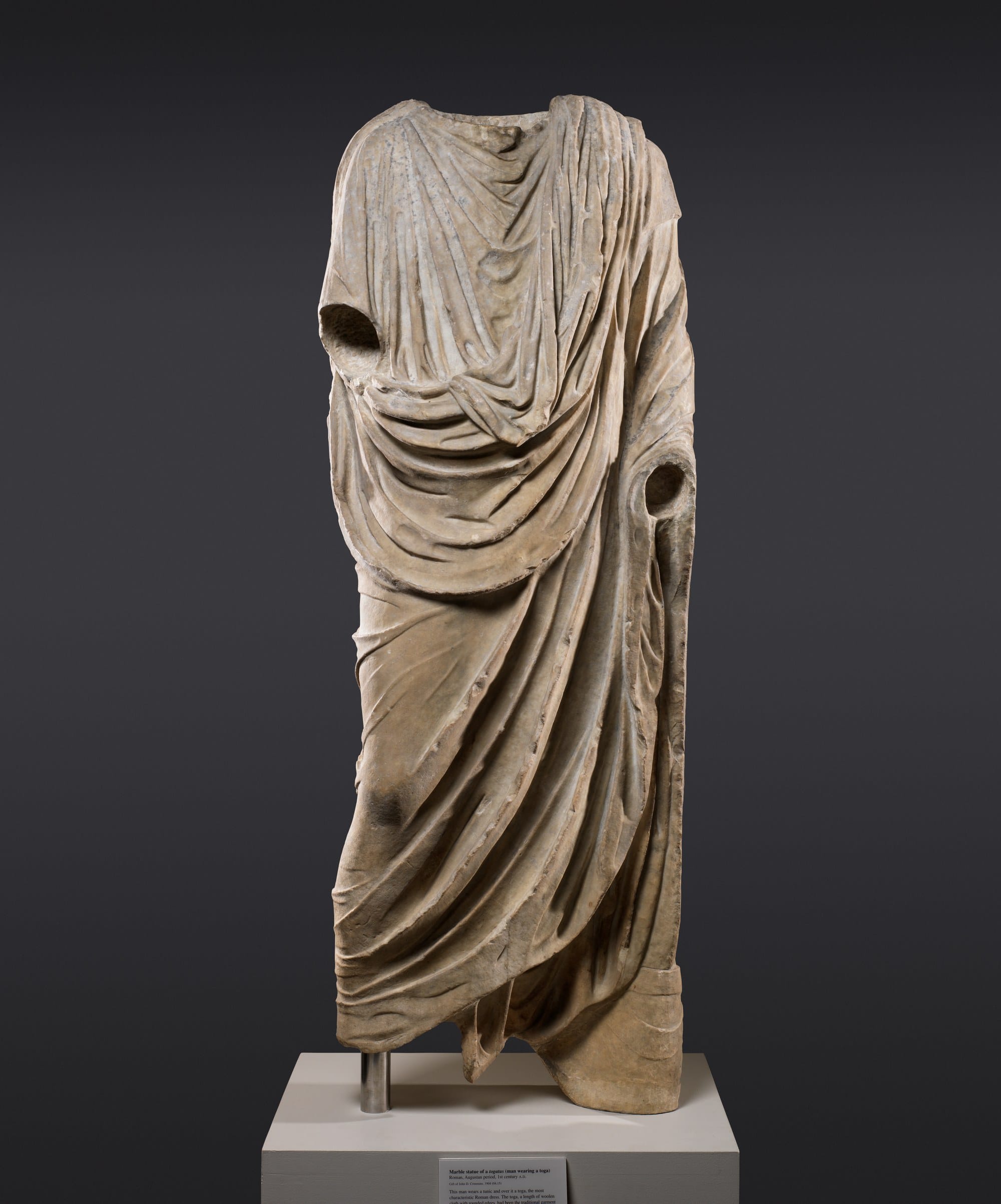
14. Claudius stopped hot-water sales in Rome. In AD 41, the emperor prohibited the sale of cooked meat and hot water in the city. Hot water was used in mixing wine, so its sale belonged to drinking as well as food service. The restriction appears alongside measures against gatherings and drinking establishments.
15. Nero narrowed the cooked tavern menu. Suetonius records a prohibition on selling cooked dishes in taverns, with vegetables and pulses excepted. The measure concerned the menu available from commercial food sellers under Nero. Successive emperors imposed different limits on what these establishments could sell.
Gold-bound teeth could go to the grave
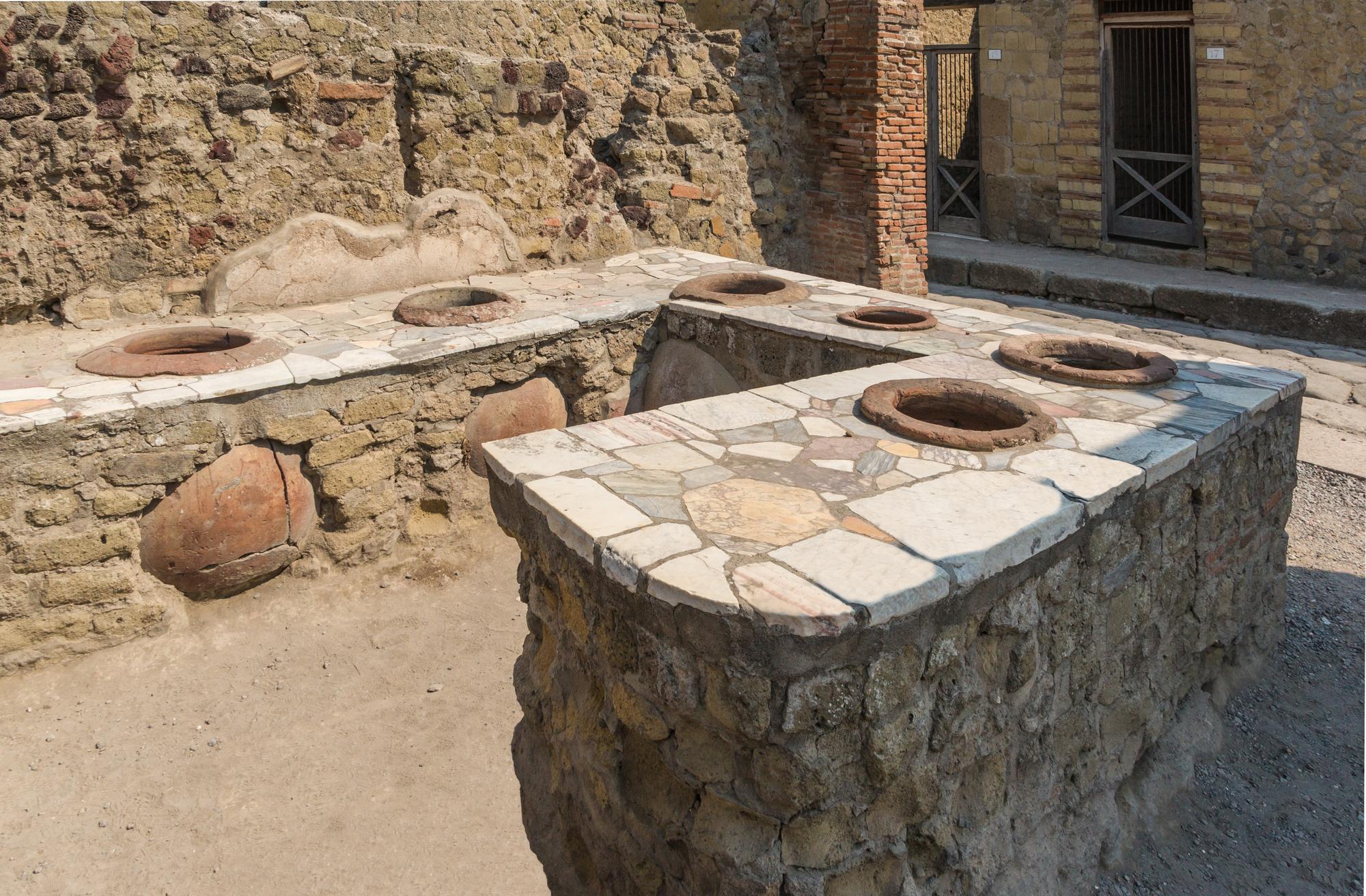
16. Funeral gold had a dental exception. The Twelve Tables prohibited adding gold at a funeral but expressly allowed gold fastening the dead person's teeth to remain during burial or cremation. This was a precise exception within the regulation of Roman funeral rites and rituals.
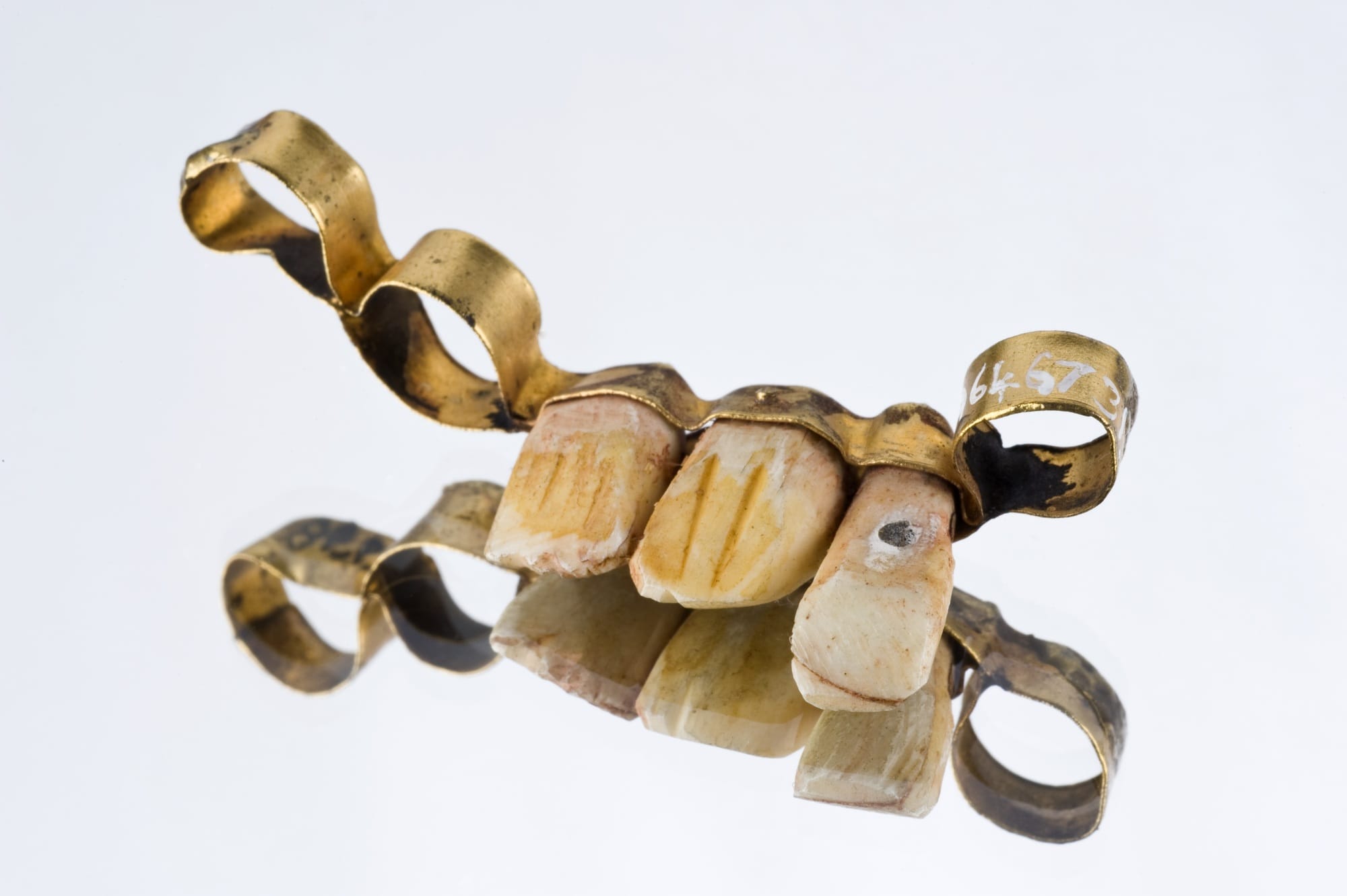
17. Ten flute players were enough. The early funeral restrictions fixed the permitted number of flute players at ten. Musicians were therefore part of the display that legislation attempted to contain. Cicero preserved the provision together with other limits on expenditure and mourning in his discussion of funerary law in On the Laws.
18. Women were forbidden to tear their cheeks. Another Twelve Tables provision prohibited this physical act of mourning at funerals. It also regulated ritual lamentation, whose terminology later Roman writers debated. Cicero discussed these mourning rules alongside limits on the costly clothing and musicians used in funeral display.
Hand over the animal, or play for the supper
19. An owner could surrender the animal that caused damage. Justinian describes an old remedy allowing compensation through handing over the animal rather than paying damages. His examples include a kicking horse and a goring bull. This particular action concerned conduct treated as contrary to the animal's natural disposition, with different rules for wild creatures.

20. Household diners could gamble for the food. Roman gambling restrictions included a narrow exception for members of the household playing for food set out for the meal. The rule, preserved from the jurist Paul in the Digest, tied the permitted stakes to what was already on the table. It made supper itself the object of the game.

Roman jurists preserved old rules while explaining their replacement or their exceptions. Gaius discussed procedures that had fallen out of use; Justinian's compilers set earlier remedies within a later legal system. The changing dinner restrictions likewise show successive governments returning to the same settings: households, private hospitality and the city's eating houses.
🏛️ Sources used:
Justinian, Institutes, translated by J. B. Moyle, fifth edition (Oxford, 1913).
George Mousourakis, Roman Law and the Origins of the Civil Law Tradition (Springer, 2015).
Kit Morrell, Tutela mulierum and the Augustan marriage laws (Eugesta 10, 2020).
Aulus Gellius, Attic Nights, translated by John C. Rolfe (Loeb Classical Library, 1927).
Pliny the Elder, Natural History, translated by John Bostock and H. T. Riley (1855), Book 8.
Justinian, Digest, Book 11, title 5, translated by S. P. Scott (The Civil Law, 1932).




About the Roman Empire Times
See all the latest news for the Roman Empire, ancient Roman historical facts, anecdotes from Roman Times and stories from the Empire at romanempiretimes.com. Contact our newsroom to report an update or send your story, photos and videos. Follow RET on Google News, Flipboard and subscribe here to our daily email.
Follow the Roman Empire Times on social media: