
Seneca the Elder: Before Seneca the Philosopher
Before Seneca the philosopher, there was Seneca the Elder: the Roman writer who preserved the speeches, exercises, and remembered voices of declamatory culture.

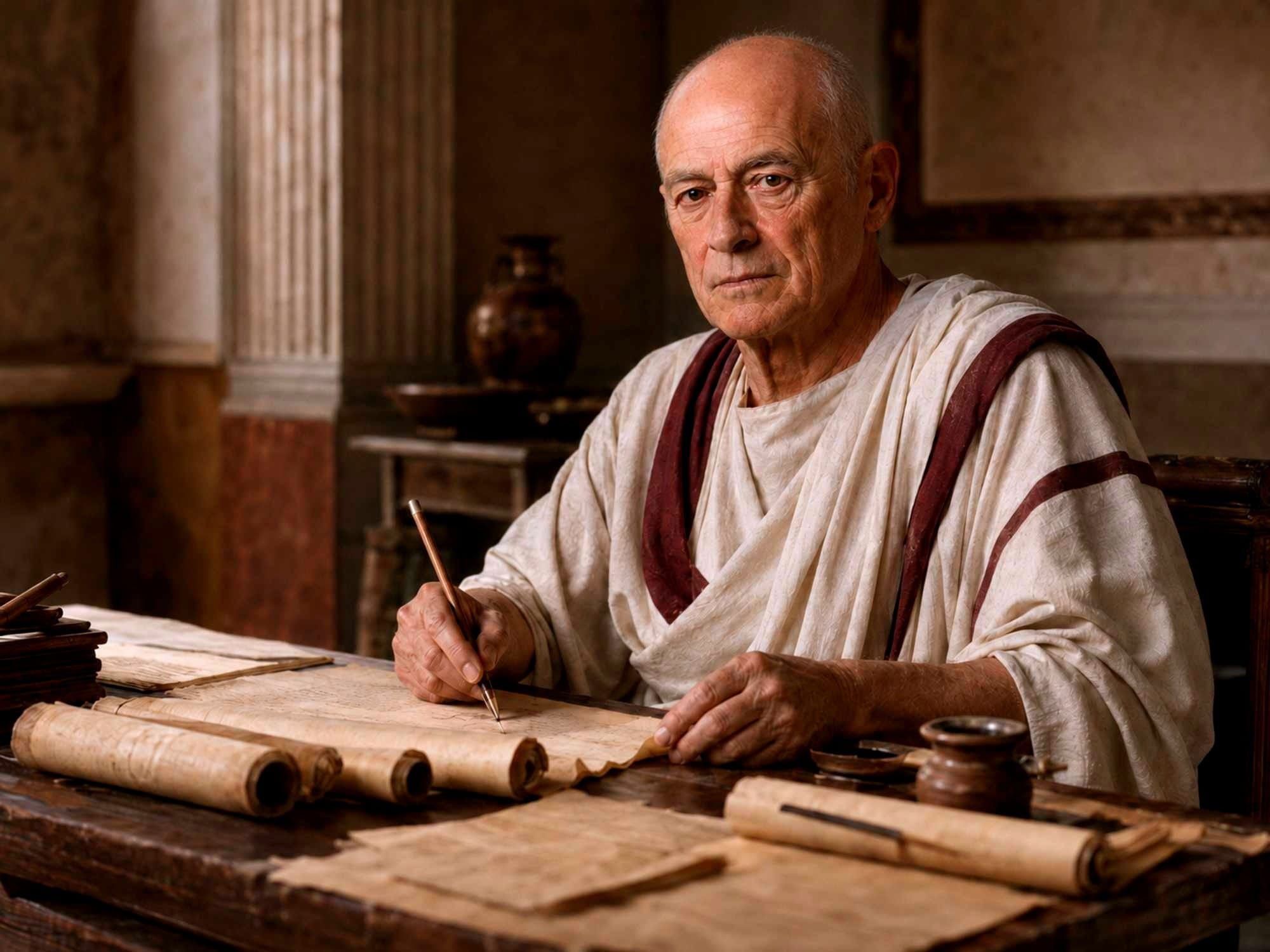
Most readers who know the name Seneca usually think of Seneca the Younger. But before the philosopher, there was his father: Seneca the Elder, also known as Seneca the Rhetor.
Seneca the Elder did not leave behind philosophical essays or tragedies. His surviving works are collections of rhetorical material: declamatory themes, arguments, divisions, remembered sayings, anecdotes, and judgments about speakers. They preserve a world in which educated Romans trained themselves to speak by arguing fictional cases and advising famous figures from myth and history.
His works are important because they show Roman declamation from the inside. They do not give us complete transcripts of every performance. They give us selected material: what Seneca remembered, what he thought useful, what he admired, what he criticized, and what he wanted his sons to know about earlier speakers.
The Seneca Most Readers Do Not Mean
Seneca the Elder was born in Corduba, modern Córdoba in Spain, probably around 50 BC. He lived through the late Republic, the civil wars, the rise of Augustus, the reign of Tiberius, and into the reign of Caligula. He died during Caligula’s reign, not later than the exile of his son Seneca the Younger in AD 41.
His family belonged to Roman Spain, but it later became one of the notable literary families of the early Empire. Martial speaks of Corduba as the city of the two Senecas and Lucan. The phrase points to the literary fame later attached to the Annaean family: Seneca the Elder, Seneca the Younger, and Lucan, the poet of the Bellum Civile.
Seneca the Elder should not be treated only as the father of Seneca the Younger or the grandfather of Lucan. His surviving works have their own subject and value. They preserve the culture of Roman declamation: the teachers, students, performers, arguments, examples, jokes, reputations, and critical judgments that belonged to rhetorical education and performance.
Near the end of his life, Seneca gathered material from declaimers he had heard or knew through the remembered tradition. His works are usually associated with the Controversiae and the Suasoriae. A controversia was a practice court case. A suasoria was a practice speech of advice to a famous figure facing a difficult decision. These were the advanced exercises of Roman rhetorical training.
A Life Between Republic and Empire
Seneca’s lifetime crossed the change from Republic to Empire. He was not one of Cicero’s contemporaries in public life, but he lived close enough to the Republican world for its figures and conflicts to remain present in education and memory. Cicero, Cato, Caesar, Pompey, Antony, Augustus, tyrants, generals, fathers, sons, exiles, and defeated public men appear in the rhetorical imagination preserved by his works.
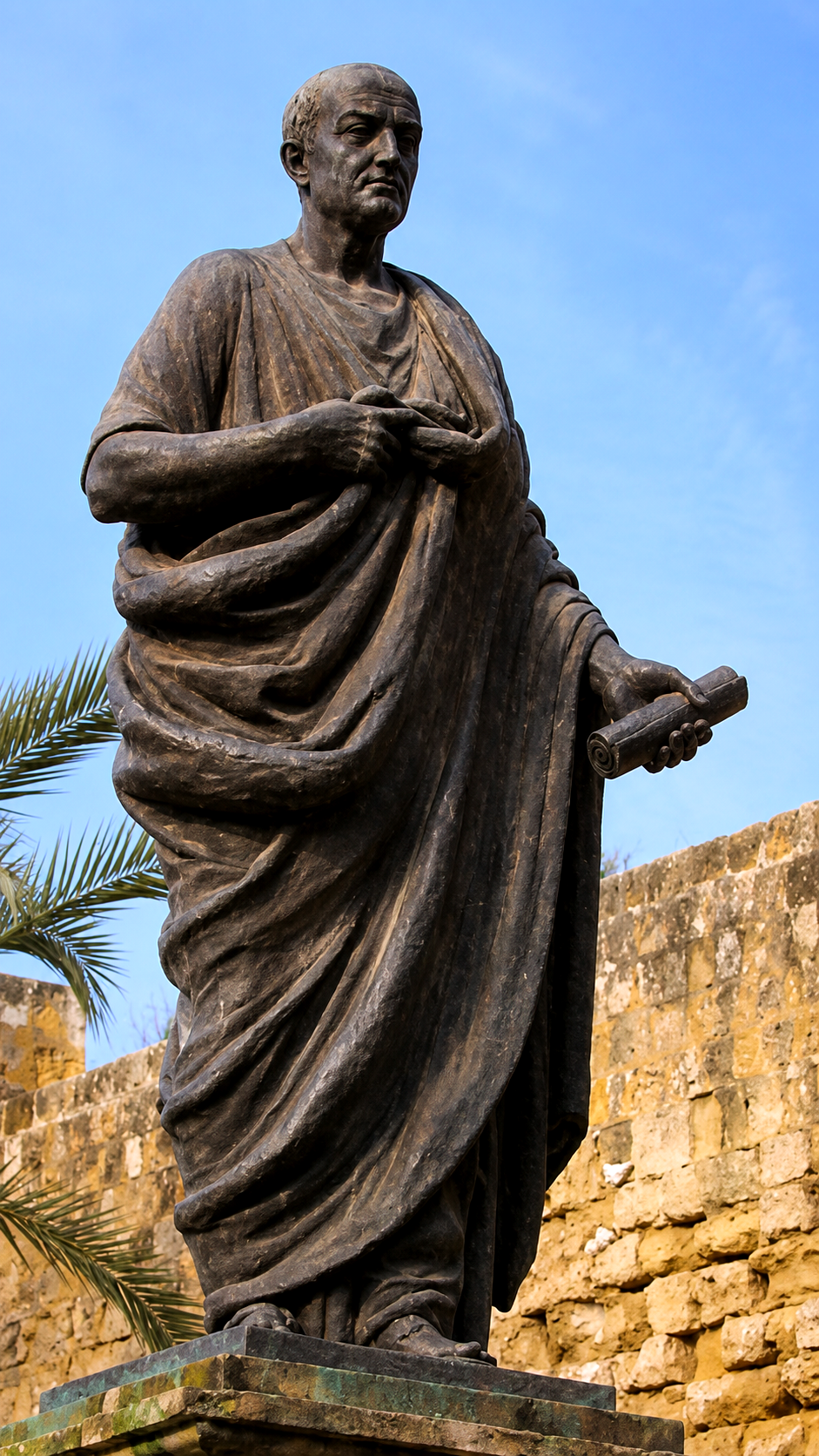
Roman rhetorical education used the past as material for speech. Students did not only learn techniques in the abstract. They practised arguments through famous choices, fictional trials, family conflicts, and public crises. A student could be asked what a famous man should do, how an accused person should defend himself, how a father or son should argue, or how a speaker could make a difficult position persuasive.
The Republic had disappeared as a political system by the time the Empire was established, but Republican figures remained available as examples in declamation. Cicero could be imagined facing Antony. Cato could be used as an example of refusal. Alexander, Agamemnon, the Spartans at Thermopylae, and the Athenians after the Persian Wars could become subjects for advisory speeches.
The imperial setting did not make public speaking disappear. The sources on Roman declamation warn against the simple view that imperial Rome replaced real oratory with empty classroom display. Law courts still existed, careers could still be made through speaking, and upper-class education still trained boys in argument. Declamation belonged to that world, even when its cases were fictional and its settings artificial.
Declamation as School Training and Performance
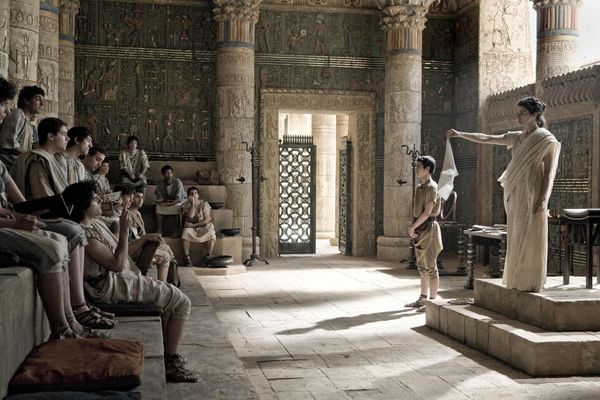
Declamation was both school training and performance. Seneca’s works show declamation as both school training and performance. Students used it to learn how to argue, while experienced speakers could turn the same exercises into public displays of skill.
The two main exercises were the suasoria and the controversia. Students advanced from the suasoria, a mock speech of private advice to a great man, to the controversia, a mock legal speech in which the student spoke as an advocate. The controversia became especially associated with professional rhetoricians and with the display of legal-style argument.
Declamation was not training in law in the strict sense. Witnesses and testimony were not summoned. Real contracts and documents were not examined as they would be in an actual court case. The facts of the theme were usually given to the speaker. The student had to use those facts to build an argument.
The exercise trained the student to speak as an advocate. It taught him to use motive, character, intention, capacity, probability, and status. If the fictional case left uncertainty, the speaker could argue from the details supplied by the theme, not from new evidence.
In one example used in the discussion of declamation, a blind son is found in the bedroom of his murdered father. The speaker’s task is to argue from character, capacity, and intention: whether the son could have done the deed, whether he would have wanted to do it, and what the situation allows the audience to infer.
The Seven Questions of the Suasoriae
The surviving Suasoriae of Seneca preserve seven themes. They show how declamation used famous figures and famous crises as material for argument.
Students advised Alexander the Great whether to sail into the Ocean. They advised the Spartan Three Hundred whether to abandon Thermopylae. They advised Agamemnon whether to sacrifice Iphigenia. They advised Alexander whether to enter Babylon despite a prophecy of death. They advised the Athenians whether to remove their Persian victory trophies to avoid another invasion. The final two themes involved Cicero: whether he should beg Antony for his life, and whether he should burn his writings to win Antony’s mercy.
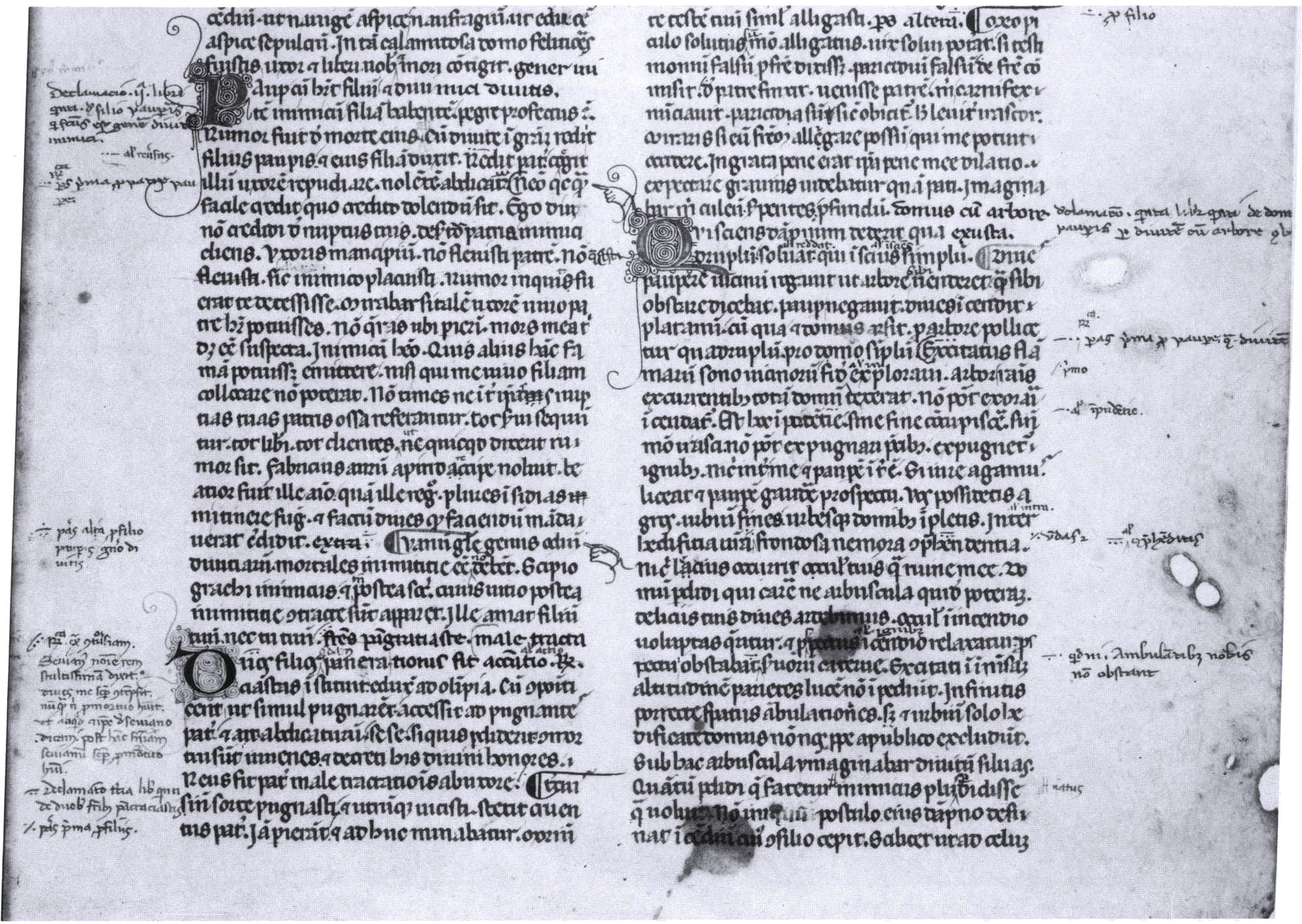
These themes were not historical essays. They were speeches of advice. The student had to enter a famous situation and argue what should be done. The exercise demanded invention, arrangement, characterization, and judgment. It also allowed speakers to work with questions of honour, fear, duty, glory, survival, reputation, and public memory.
The Cicero themes show how close declamation could come to Roman historical memory. Cicero’s death was a real event, but the school exercise transformed it into a question: should he ask Antony for mercy, or should he refuse humiliation? Another theme asked whether he should burn his writings if Antony promised to spare him. Seneca himself treats the second theme as an obvious fiction, but he still preserves it as part of declamatory practice.
Pirates, Tyrants, Fathers, and Sons
The controversiae often used extreme fictional situations. Pirates, tyrants, harsh fathers, sons, slaves, freedmen, kidnapped or threatened family members, inheritance disputes, suspicion, violence, and family conflict appear as recurring material. These themes can seem strange because they were designed to create argument.
One example discussed in the material on declamation involves a son who marries the daughter of his father’s enemy to obtain the dowry needed to ransom his father from pirates. After the father is rescued, he demands that the son divorce her. The case is a fictional exercise, but it creates a conflict between obedience to a father, gratitude, marriage, family hostility, and duty.
Other cases worked through suspicion and character. If the theme did not allow the speaker to introduce outside evidence, the speaker had to argue from what the theme itself supplied. Character, capacity, intention, and likelihood became the materials of argument.
The cases were not meant to reproduce ordinary Roman life. They were artificial situations for rhetorical training. Their use lay in the conflicts they created: father against son, duty against gratitude, reputation against survival, status against sympathy, and public judgment against private feeling.
Seneca’s collections preserve these exercises alongside the ways different speakers handled them. They show how declaimers divided an argument, found a colour or line of defence, and turned a difficult theme into a persuasive speech.
Public Display and the Limits of Declamation
Declamation could become public performance. Students declaimed, but professionals and educated adults also took part. A single theme could be handled by several speakers, each trying to produce the strongest argument, the sharpest division, or the most memorable expression.
The sources also preserve criticism of declamation. Some speakers and critics thought the schools encouraged artificial habits. The difference between declamation and real court practice could be exposed when a successful school performer entered an actual legal setting.
The discussion of Latro, one of Seneca’s admired fellow Spaniards and a leading declaimer, includes the story that his nerve failed when he had to plead a real case. The point is not that declamation had no connection with public speaking, but that school performance and actual advocacy were not the same thing.
Other anecdotes make the same distinction. Albucius is used as an example of a declaimer whose school technique became foolish in court. Votienus Montanus is reported as criticizing declamation sharply, arguing that practical experience was the real preparation for the courts. Seneca’s surviving prefaces preserve these debates about the value and limits of declamatory training.
Declamation belonged to Roman speech training, but it was not the same as pleading a real case in court. Seneca’s material shows both sides: the exercises trained argument and performance, while some speakers also recognized that school brilliance could fail outside the classroom.
An Old Man Writing From Memory
Seneca’s works are framed by memory. In the account preserved by the declamation chapter, his preface presents an old man pressed by his sons to give them a book. He remembers the declaimers and preserves a record of oral performances. His memory is central to the way the collection presents itself.
Seneca’s Controversiae and Suasoriae are not mechanical reproductions of past speeches. They are collections of remembered declamatory material: extracts, sayings, arguments, anecdotes, and judgments. By preserving both the speeches and details about the speakers behind them, Seneca turned family memory into a record of Roman public speaking culture.
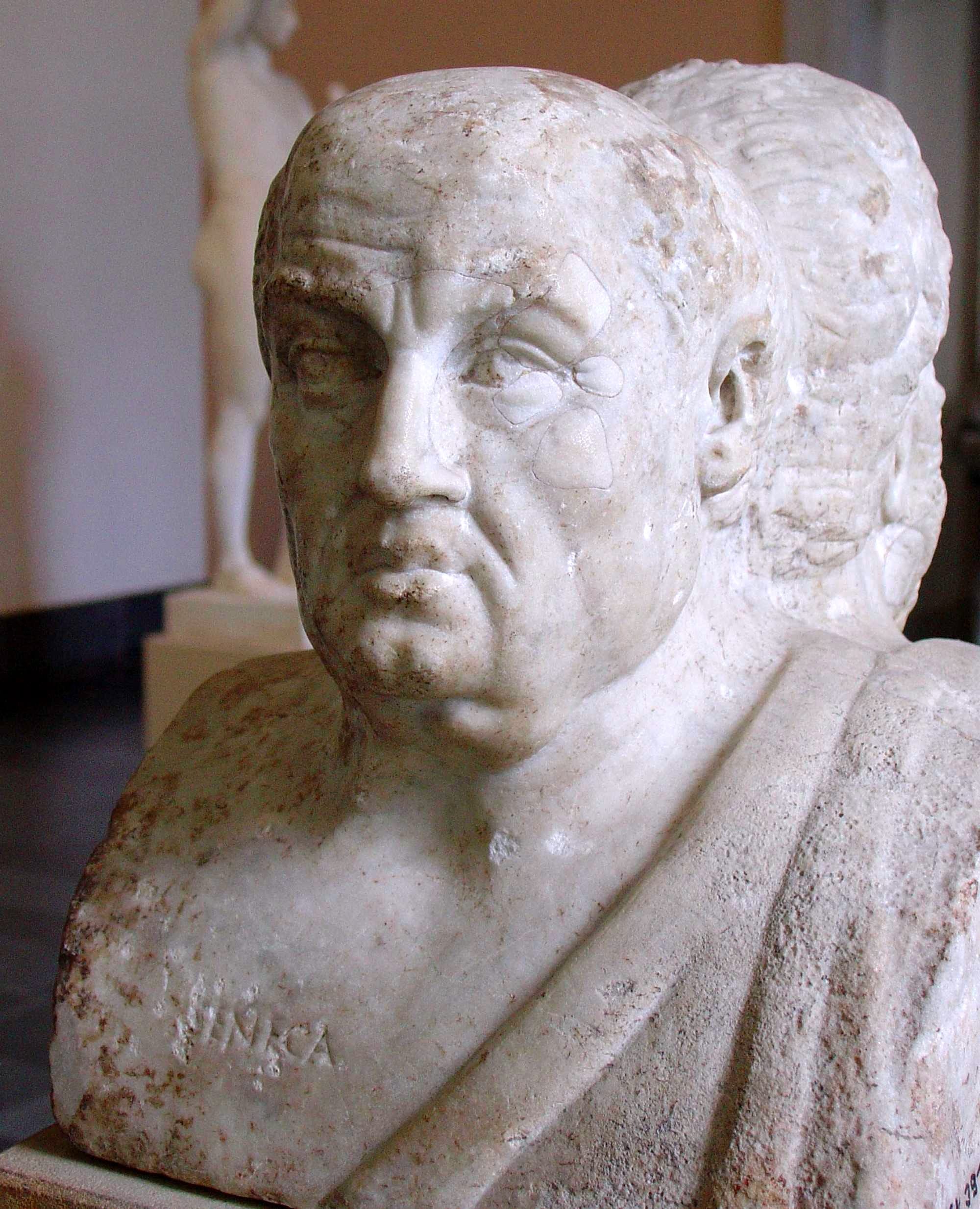
Seneca did not give his sons complete speeches from beginning to end. He preserved extracts, divisions, sayings, arguments, anecdotes, and judgments. His work is therefore selective. It shows what was remembered, what was considered worth preserving, and how earlier speakers were judged.
The same point explains why his work is not just a storehouse of rhetorical exercises. It is also a record of evaluation. Seneca names speakers, compares them, praises them, criticizes them, and presents their styles. The collection gives readers access to declamation as remembered performance and as criticism.
Cicero in the Classroom
Cicero appears strongly in the Suasoriae. The sixth Suasoria asks whether Cicero should beg Antony for pardon. The exercise allowed declaimers to explore the relationship between conduct in life and reputation after death. Most of the responses preserved by Seneca argue that Cicero should not debase himself before Antony. In these speeches, Cicero’s reputation after death is treated as more important than survival bought through humiliation.
The question was fictional in form, but it was built around a real Roman memory. Cicero’s death could be turned into a rhetorical exercise because it raised questions suitable for declamation: whether a public man should choose survival at the cost of humiliation, whether reputation after death could outweigh life, and how an orator should be remembered.
Seneca’s treatment of Cicero is not limited to school declaimers. He also brings in literary and historical material around Cicero’s final days. In Suasoria 6, the material from historians and writers can outweigh the specimens from declaimers in prestige and quality. The following Suasoria, on whether Cicero should burn his writings to gain Antony’s mercy, is treated by Seneca as a crude fiction, but it remained a theme used by the schoolmen.
Cicero therefore appears in Seneca’s work in more than one way: as a declamatory subject, as a historical figure, and as a test case for reputation, writing, survival, and honour.
Seneca as Critic of Speakers
Seneca did not only preserve what declaimers said. He also preserved judgments about speakers and styles. His work includes criticism of declaimers, anecdotes about their habits, and comparisons between different kinds of speaking.
Seneca uses his prefaces to discuss major declaimers and orators. He presents figures such as Latro, Fuscus, Albucius, Gallio, Asinius Pollio, Haterius, and others. The prefaces do not only introduce material; they also preserve assessments of talent, taste, excess, and failure.
Seneca’s criticism often turns on the relationship between declamation and real oratory. He preserves admiration for brilliant declaimers, but also records cases where school habits did not work well in court. He also notes differences between speakers, including force, style, judgment, invention, and performance.
The result is that his surviving works preserve not only declamatory themes but also Roman criticism of declamation. They show what was admired, what was distrusted, and how the culture of rhetorical performance judged itself.
The Lost History of Seneca the Elder
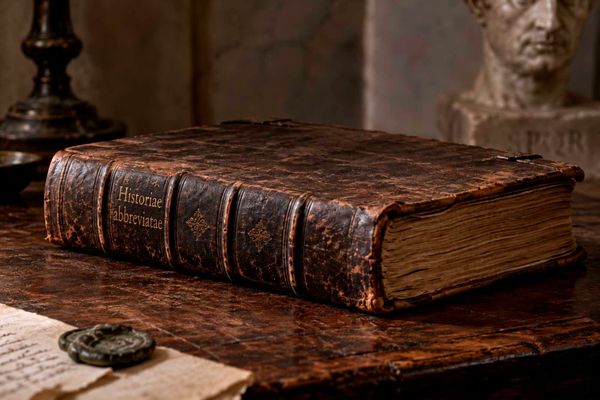
Seneca the Elder also wrote a historical work. It is usually known by the title Historiae ab initio bellorum civilium, meaning Histories from the Beginning of the Civil Wars. The work itself is mostly lost.
Later testimony connected with Seneca the Younger’s account of his father says that the Historiae ran from the beginning of the civil wars almost to the end of Seneca the Elder’s life. The starting point has been debated. One interpretation places the beginning with the civil war between Caesar and Pompey. Another interpretation argues for an earlier beginning around the Gracchi. The evidence does not settle the question for every scholar.
The testimony also includes the phrase that truth first retreated from the beginning of the civil wars. Modern discussion has treated this as important for understanding the work’s view of history. One interpretation connects it with the problem of truth in writing about civil wars and monarchy. Another emphasizes moral decline and the collapse of older Republican standards.
The existence of the Historiae shows that Seneca the Elder was not only the collector of rhetorical exercises preserved in the Controversiae and Suasoriae. He also wrote about Roman history from the civil-war period to near his own lifetime.
The Herculaneum Papyrus
A major development in the study of Seneca the Elder is the identification of P.Herc. 1067, short for Papyrus Herculanensis 1067, meaning Herculaneum Papyrus 1067, a charred papyrus from Herculaneum, as a direct witness to the lost Historiae. The Herculaneum papyri were buried and carbonized by the eruption of Vesuvius in AD 79, and they are difficult to read, fragmentary, and often technically demanding.

The authorship is known through the subscriptio preserved by the roll, which gives the name Lucius Annaeus. The text’s historical narrative and the evidence of the subscriptio support its identification with Seneca the Elder’s Historiae ab initio bellorum civilium.
The roll is fragmentary, and it does not give back the full work. It gives a direct manuscript witness to a historical work otherwise known from limited testimony and later discussion.
The surviving fragments appear to concern historical characters of the imperial family and narrative material around Tiberius or the final period of Augustus. Because the text is fragmentary, it cannot be treated as a recovered complete history. Its importance is that it confirms the direct transmission of Seneca the Elder’s historiographical work and places him more firmly in the study of early imperial Roman historiography.
The papyrus also corrects the narrowness of the label “Seneca the Rhetor.” That label reflects the surviving rhetorical collections, but the rediscovered papyrus confirms that his historical writing belongs in the picture too.
The Father of a More Famous Son
Seneca the Younger became far more famous than his father. His surviving works belong to philosophy, drama, moral reflection, and the politics of Nero’s reign. Because of that fame, “Seneca” usually means the son unless the Elder is clearly named.
The father and son should not be collapsed into one figure. Seneca the Elder’s surviving works belong to rhetoric, education, memory, performance, criticism, and historiography. Seneca the Younger’s works belong to a different literary and philosophical world. The shared name has often made the father harder to see.
The family link still helps explain the wider literary setting. Seneca the Elder, Seneca the Younger, and Lucan were remembered together in connection with Corduba. The elder Seneca preserved declamatory culture; the younger Seneca became a philosophical and literary author; Lucan wrote an epic on civil war. The family’s later fame belongs to several genres, not only philosophy.
Seneca the Elder’s place in that family is not only genealogical. His works preserve the educational and rhetorical culture in which elite Romans learned how to speak, argue, remember, and judge speech.
The Roman World He Preserved
Seneca the Elder’s surviving works are collections rather than continuous narratives. They preserve fragments of performance, not complete scenes. They require the reader to enter a Roman world where education, public speech, memory, social status, and literary criticism were closely connected.
His work preserves declaimers whose voices would otherwise be largely lost. It also preserves criticism: how speakers were judged, how declamation was praised, where it was distrusted, and how school performance differed from real advocacy. Through the Cicero themes, it preserves the way a Republican figure could remain present in early imperial rhetorical education.
The lost Historiae, now connected with Papyrus Herculanensis 1067, adds another part of the same writer’s profile. Seneca the Elder was the author of rhetorical collections and also of a historical work that ran from the beginning of the civil wars almost to his own lifetime.
His surviving and rediscovered traces preserve the exercises, speakers, judgments, remembered voices, and historical interests of a Roman writer who lived between Republic and Empire.
"The Elder Seneca" by Lewis A. Sussman
“Roman Declamation: The Elder Seneca and Quintilian” by W. Martin Bloomer
“Memories of Future Past: Seneca the Elder and Cultural Memory” by Martin T. Dinter
“Seneca the Elder and his Rediscovered Historiae ab initio bellorum civilium: New Perspectives on Early-Imperial Roman Historiography” edited by Maria Chiara Scappaticcio
About the Roman Empire Times
See all the latest news for the Roman Empire, ancient Roman historical facts, anecdotes from Roman Times and stories from the Empire at romanempiretimes.com. Contact our newsroom to report an update or send your story, photos and videos. Follow RET on Google News, Flipboard and subscribe here to our daily email.
Follow the Roman Empire Times on social media: