
Horace: The Roman Poet of Friendship, Wine and Knowing When Enough Was Enough
Horace rose from the son of a freedman to one of Rome’s most celebrated poets, writing about friendship, wine, ambition, ageing and the difficult art of knowing when enough was enough.

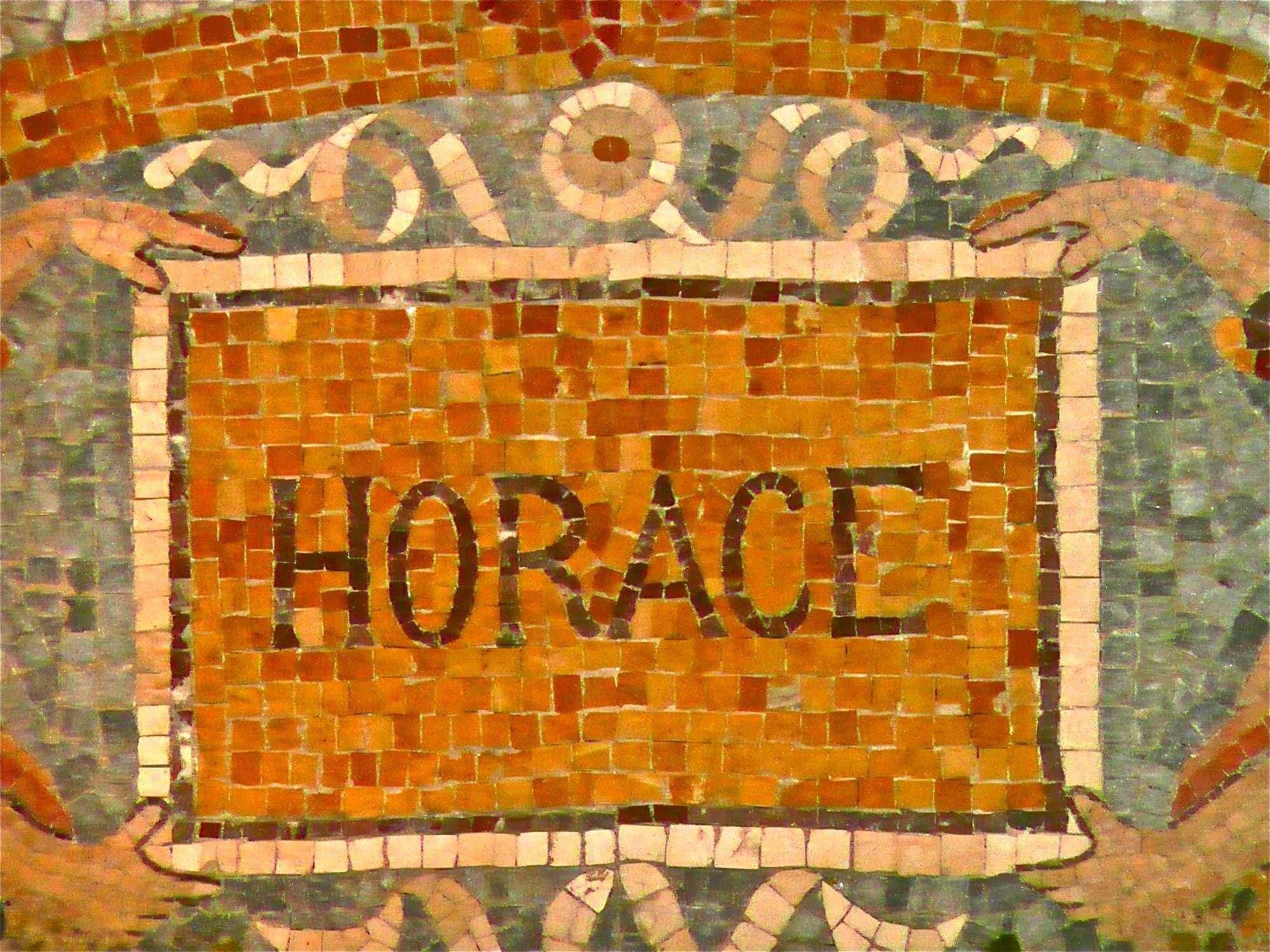
Horace spent much of his writing life telling readers where he came from. He was the freeborn son of a freedman from Venusia in southern Italy, educated far beyond what his family background might have suggested, sent to Athens to study philosophy, drawn into the army of Brutus, defeated at Philippi, and eventually returned to Rome without the family property he had once expected to inherit.
The life that followed placed him among some of the most influential people of the Augustan age. Virgil and Varius introduced him to Maecenas; Augustus later sought his help with private correspondence and commissioned public poetry from him.
Yet Horace continued to write about much smaller things as well: what his father had taught him, how irritating Rome could be, the pleasure of a modest dinner, the complications of friendship, the attraction of good wine, the relief he found in the countryside, and the increasing difficulty of pretending that age was not changing him.
Horace is unusually informative about himself, but his poetry is not a diary. He selected, arranged and sometimes played with autobiographical material according to the poem he was writing. The result is a detailed picture of a Roman life, but one that has to be read with the same caution Horace expected from his readers.
The father who gave him an elite education
Quintus Horatius Flaccus was born on 8 December 65 BC at Venusia, near the boundary between Apulia and Lucania. His father had been enslaved and subsequently freed, while Horace himself was born free. The suggestion that his father may have become enslaved during the upheavals of the Social War remains a possibility rather than an established fact.
Horace repeatedly referred to being the son of a freedman because the fact followed him through his career. In Satires 1.6, he recalls being criticized first because of the military position he had held and later because he had become a regular companion of Maecenas. His social origin was therefore something he could neither ignore nor expect his readers to forget.
His father was not, however, the impoverished figure sometimes imagined in later accounts. Horace identifies him as a coactor, connected with the financial side of Roman auctions. A coactor argentarius could pay the seller after an auction and then recover the money from the purchaser, receiving payment for handling the transaction; the related praeco dealt with the announcing and actual conduct of the sale.
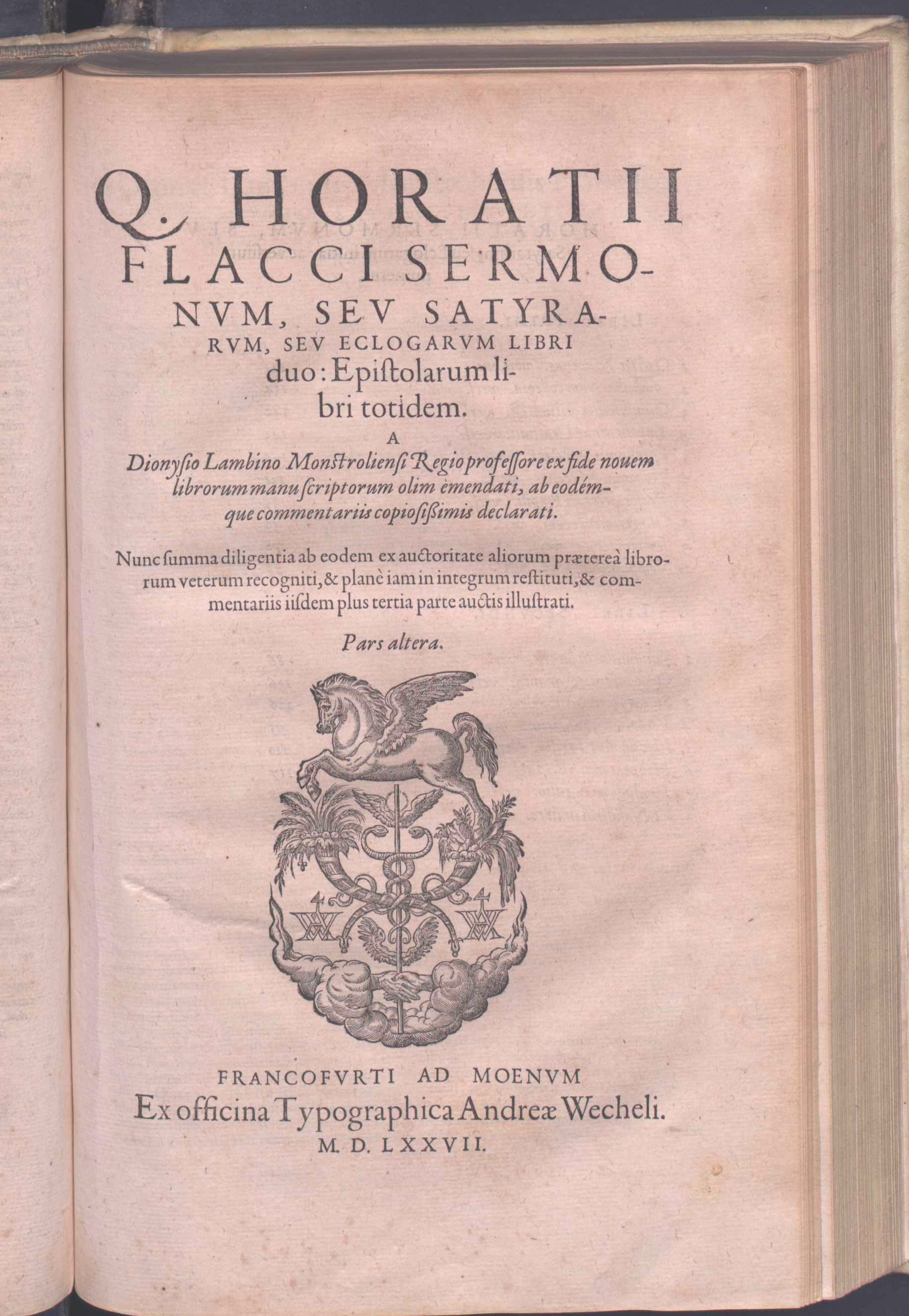
The work could be profitable, and Horace says his father possessed land. More importantly for his son's future, he had enough resources to reject the local educational path available at Venusia and take the boy to Rome instead. Horace presents this as a deliberate choice to give him the kind of education that Roman knights and senators provided for their own sons.
The father remained closely involved after they arrived. Horace remembered him accompanying the boy to his teachers and paying as much attention to his conduct as to his lessons. The education was therefore social and moral as well as literary.
In Satires 1.4, Horace gives a particularly revealing account of the method his father used. Rather than teaching morality through abstract principles, he pointed to identifiable men and asked his son to notice what their behaviour had produced. A man who had wasted his inheritance could become a warning against extravagance; another man's conduct could demonstrate a different vice to be avoided.
Contentment was one of those lessons. Horace says that his father encouraged him to live frugally and to be satisfied with what had been provided for him. He later describes continuing the same kind of examination by himself, thinking about whether an action was right, whether it would help him live better, and whether it would make him a better friend.
That makes the father important to more than the story of Horace's rise. Moderation, self-scrutiny and the question of how much is enough recur throughout Horace's later poetry, and Horace himself chose to connect those habits with the education he received as a boy.
His studies eventually took him to Athens, where he studied philosophy in the surroundings of the Academy. This too indicates that his father's resources had taken him into an educational world shared by the sons of much more prominent Roman families. The course of that education changed after Caesar's assassination in 44 BC, when Brutus came east and began recruiting for the Republican cause.
Philippi changed the direction of his life
Horace joined Brutus, although the surviving evidence does not allow a precise reconstruction of his motives. Political conviction and youthful enthusiasm may both have played a part, but the poems do not provide enough evidence to turn either explanation into certainty.
His advancement was nevertheless substantial. Horace became a military tribune, an unusually prominent appointment for the son of a freedman. He later recalled that this military rank itself had once made him a target of criticism.
In 42 BC the forces of Brutus and Cassius were defeated at Philippi by Antony and Octavian. Horace fought on the losing side, and years later he turned the experience into poetry. His famous reference to abandoning his shield should not be read as if it were an untouched battlefield recollection, since discarded shields already belonged to the Greek poetic tradition he was consciously adapting.
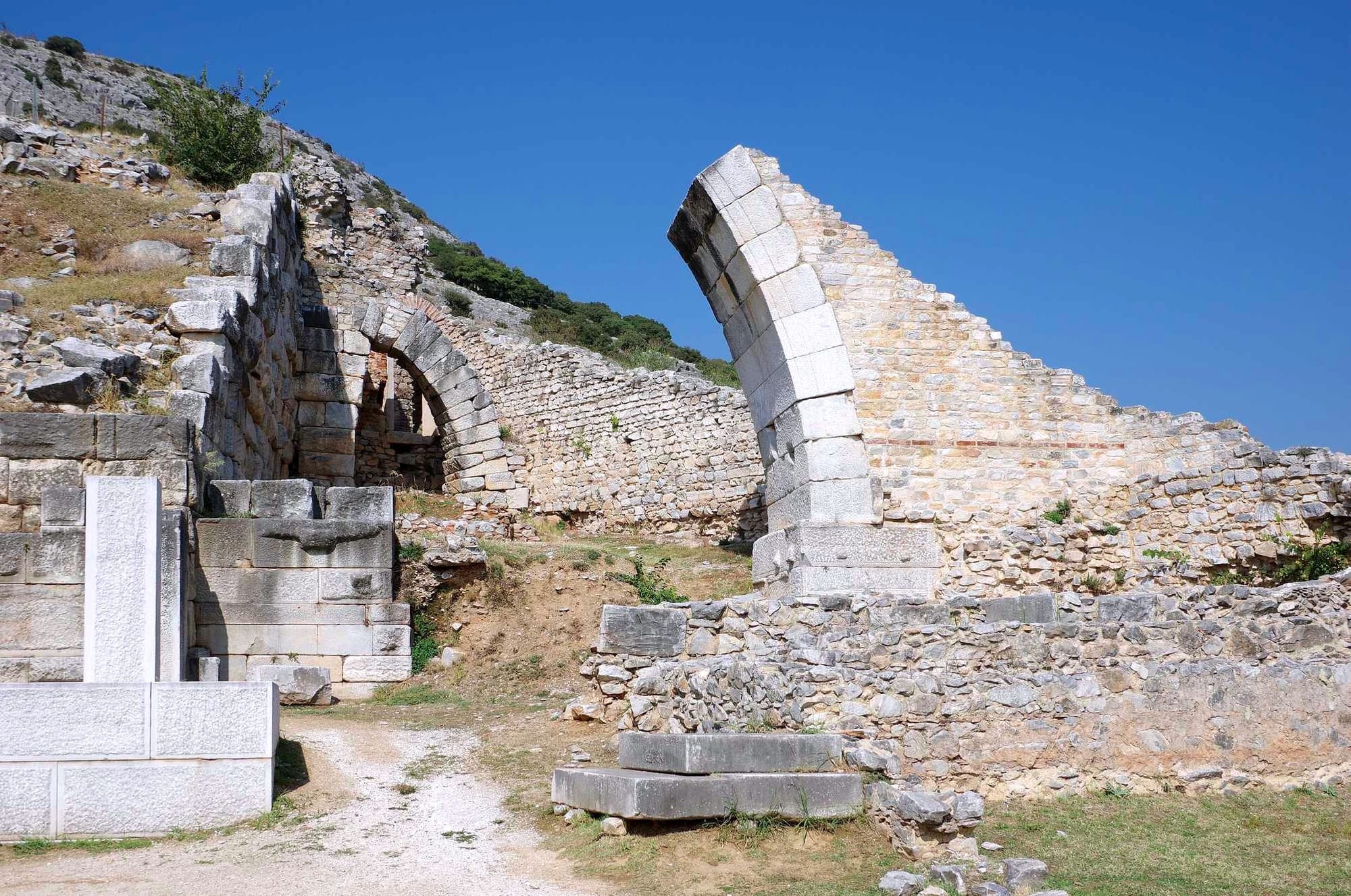
The consequences of the defeat were more concrete. Horace obtained a pardon, but his family property at Venusia was lost in the confiscations connected with the settlement of veterans. When he looked back on the episode in Epistles 2.2, he linked the loss directly with the beginning of his career as a writer:
“Whence, as soon as [the battle of] Philippi dismissed me in an abject condition, with my wings clipped, and destitute both of house and land, daring poverty urged me on to the composition of verses: but now, having more than is wanted, what medicines would be efficacious enough to cure my madness, if I did not think it better to rest than to write verses.”
The statement does not mean that Horace simply began earning a living from poetry. After his pardon he acquired a position as a scriba quaestorius, one of the professional scribes associated with the quaestors and the aerarium. The position involved public finances and official records and stood considerably higher than the modern phrase “treasury clerk” suggests.
These officials did not change annually with the magistrates they served and could accumulate practical experience and status. The post could be purchased and could be financially worthwhile, and Horace's later poetry still refers to his connection with the corporation of scribes.
By the time Maecenas entered his life, Horace therefore already possessed an income, a professional position and a developing literary reputation. Maecenas would transform his circumstances further, but he did not take a penniless man and create a livelihood for him from nothing.
Maecenas brought opportunity, status and new problems
Horace's route to Maecenas came through other poets. Virgil and Varius spoke for him and arranged the introduction, and Horace later described the meeting in Satires 1.6.
He portrays himself saying very little because embarrassment prevented him from speaking freely. Maecenas answered briefly, Horace left, and after a period of several months Maecenas recalled him and admitted him among his friends. The account may contain genuine memory, but it is also characteristic of Horace's tendency to understate his own ambition and ability.
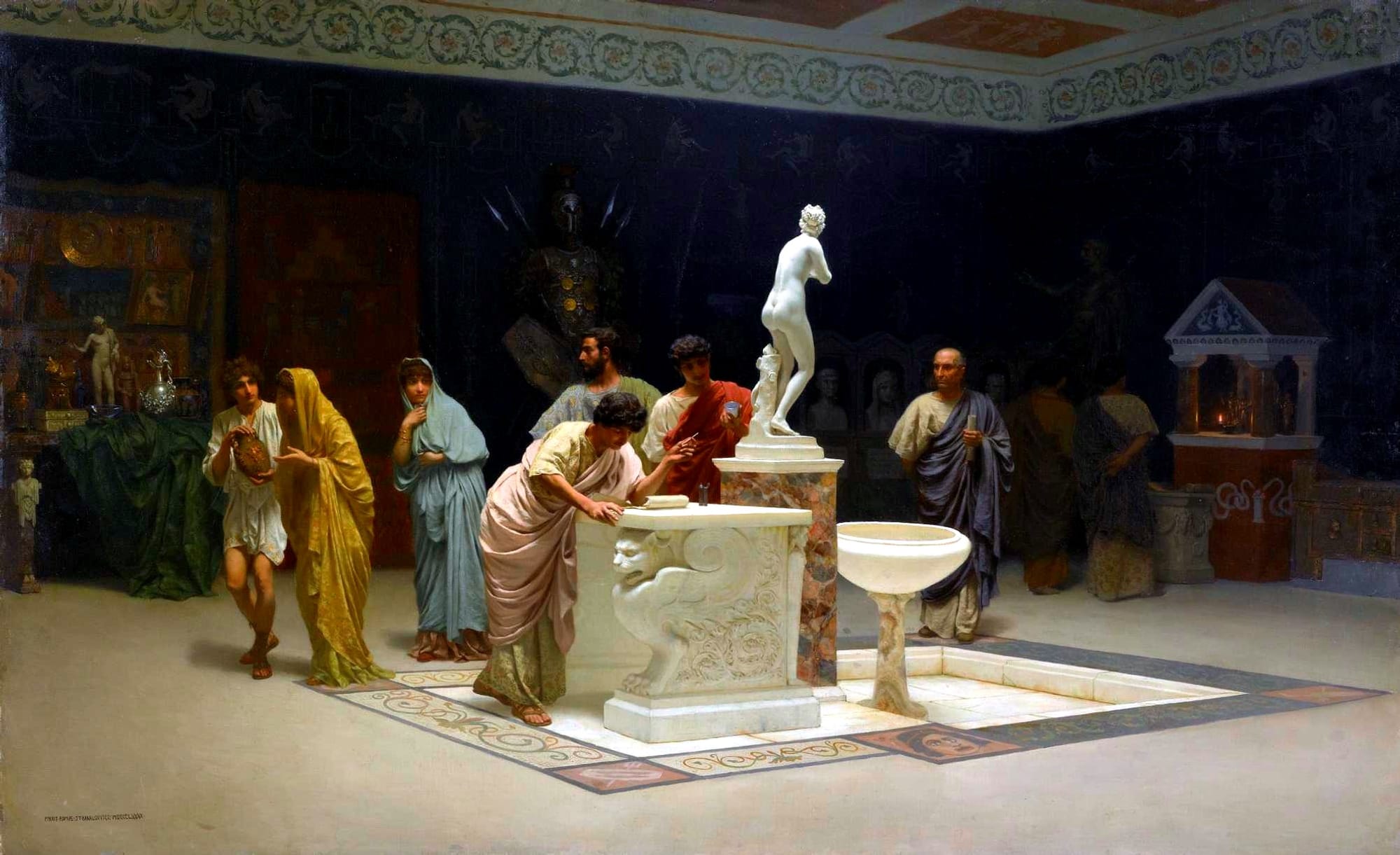
His admission to the circle created a problem that appears repeatedly in the Satires. A freedman's son who had moved into the company of one of Octavian's most important associates could be accused of having climbed socially by flattering powerful men. Horace was clearly aware of that possibility.
His response in Satires 1.6 is to insist that Maecenas judged people according to character rather than ancestry. Horace then credits his father for the qualities that allowed him to pass that test. Instead of presenting Maecenas as the man who created his worth, he presents him as the man capable of recognizing worth that already existed.
The poem finishes with a picture of Horace's supposedly uncomplicated daily life. He walks where he likes, spends time around the market and other public spaces, returns home to inexpensive food, reads or writes privately, exercises and bathes. The man newly admitted to an exceptionally powerful social circle chooses to emphasize how little his ordinary routine supposedly required.
His growing connection with Maecenas soon became visible to other Romans. In Satires 1.9, Horace is walking along the Sacred Way when an unwanted companion attaches himself to him, advertises his own abilities and eventually begins trying to obtain access to Maecenas.
Horace protests that Maecenas' circle does not operate as a competition in which one man advances by pushing another aside. The conversation is comic, but the situation reveals something important about Horace's changed position: other people now regarded him as somebody who might open doors for them.
The change becomes clearer in Satires 2.6. Horace describes being stopped by people who expect him to know what is happening politically or want him to intervene with Maecenas. One man wants Maecenas' seal placed on documents, while others assume that Horace's proximity to powerful men must give him privileged information.
Horace complains about these interruptions but also admits enjoying the recognition. His poetry never entirely resolves that contradiction, because he valued freedom from social demands while also taking some satisfaction in having achieved a position that made those demands possible.
The Sabine farm gave him space rather than isolation
At some point after the friendship with Maecenas had become established, Horace acquired an estate in the Sabine hills. The traditional view that Maecenas gave him the property is very likely, especially since Horace elsewhere acknowledges that Maecenas had made him wealthy, but the poems never state the transaction explicitly.
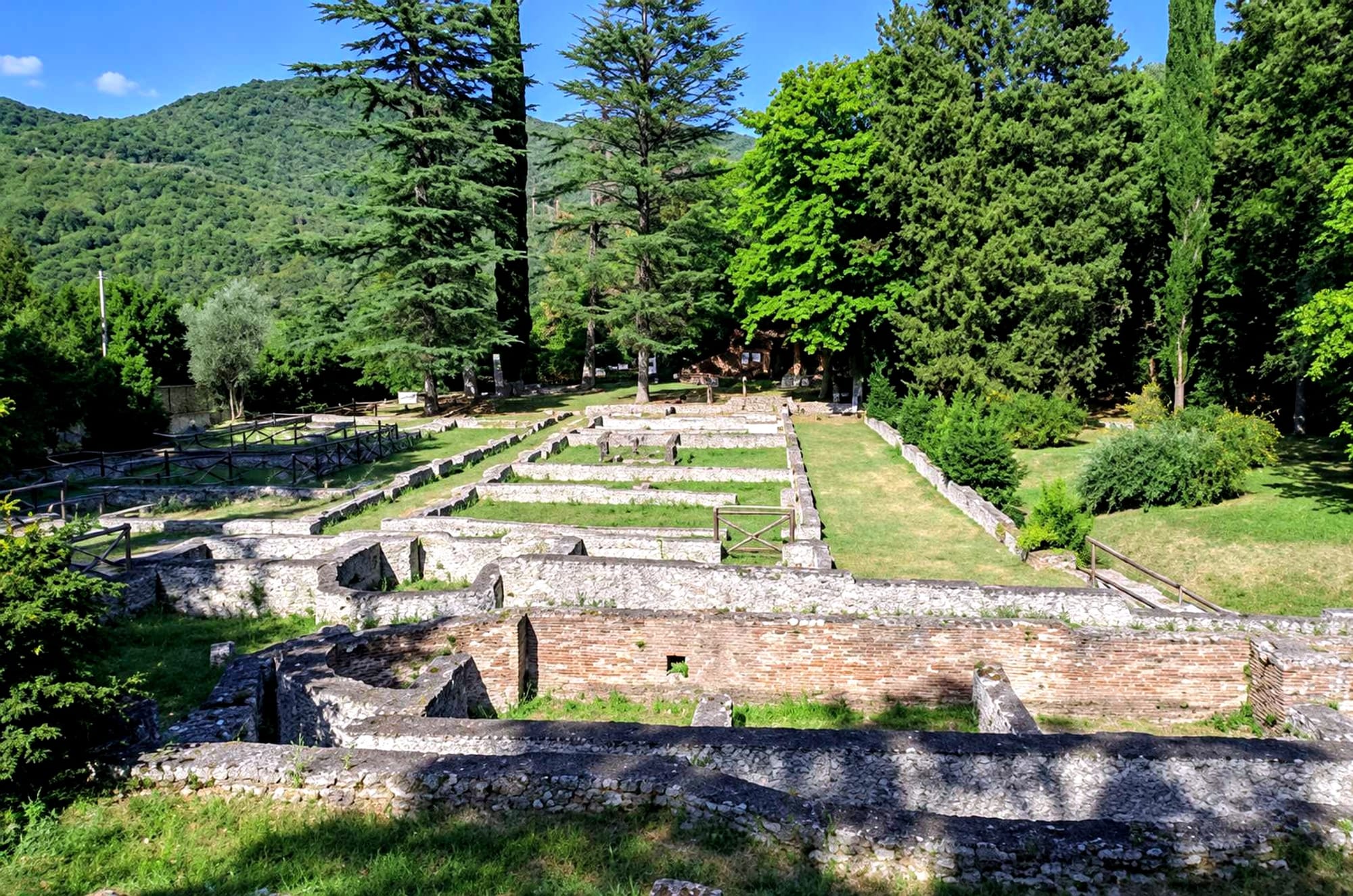
The estate was not simply a decorative country retreat. Horace refers to several tenants and writes to its manager, showing that the property had an economic life as well as a poetic one. It provided income in addition to a place away from Rome.
What Horace emphasizes most often, however, is the control over his time that country life could provide. Rome brought appointments, professional obligations, acquaintances seeking access to Maecenas and people who assumed that he possessed useful political information. The farm allowed him to place some distance between himself and those demands.
In Satires 2.6, the change in his position becomes visible at dinner. Horace is no longer simply somebody invited to the tables of greater men; he is the host in his own house, eating with his own companions before his own household gods. The conversation concerns questions such as whether wealth or virtue produces happiness and whether friendship is created by usefulness or by what is right.
The famous fable of the town mouse and the country mouse emerges from that conversation. The city offers richer food but also insecurity, while the country offers rougher fare with greater peace. It would be easy to turn the story into a simple declaration that Horace preferred rural life, but his other poems make the picture less tidy.
In the following satire, his slave Davus accuses Horace of inconsistency. Horace longs for the country while in Rome and praises Rome when he is away from it; if nobody invites him to dinner, he celebrates his simple vegetables, but an attractive invitation can rapidly change his enthusiasm for staying home.
His country life represents relief from obligations, but his poetry also preserves his enjoyment of urban dinners, friendships and social visibility. The countryside offered an alternative to Rome rather than a complete rejection of it.
Friendship, wine and the question of enough
Wine appears throughout Horace's work, particularly in the Odes, but drinking is rarely an isolated activity. Wine normally belongs to a social setting involving friends, conversation, song, celebration or erotic interest. Different vintages are very important and Horace was perfectly capable of appreciating expensive wine rather than merely praising austerity.
His criticism falls more often on excess, pretension and the inability to distinguish enjoyment from display. Satires 2.8 provides an elaborate example in the dinner given by Nasidienus, where food becomes a performance of status and expertise. The guests are told about unusual ingredients and preparation while the host's anxiety over the success of the meal becomes increasingly obvious.
The elaborate dinner eventually suffers a physical disaster when material hanging above the table falls into the food and covers it with dust. Nasidienus reacts with despair, recovers, brings in further dishes and still fails to restore the atmosphere; the guests finally leave without eating the replacement food.
The contrast with Horace's preferred convivial scenes is substantial. A successful dinner is not defined by the largest possible expenditure but by the quality of the company and the ability to enjoy what is present without turning the occasion into a competition.
This same concern helps explain carpe diem. In Odes 1.11, the phrase appears in a poem about the uncertainty of life and the foolishness of trying to know what cannot be known:
“Be wise; rack off your wines, and abridge your hopes [in proportion] to the shortness of your life. While we are conversing, envious age has been flying; seize the present day, not giving the least credit to the succeeding one.”
The advice is connected to mortality rather than unlimited indulgence. Horace repeatedly treats the present as something that can be lost by excessive concern with future wealth, future status or a future that nobody can control.
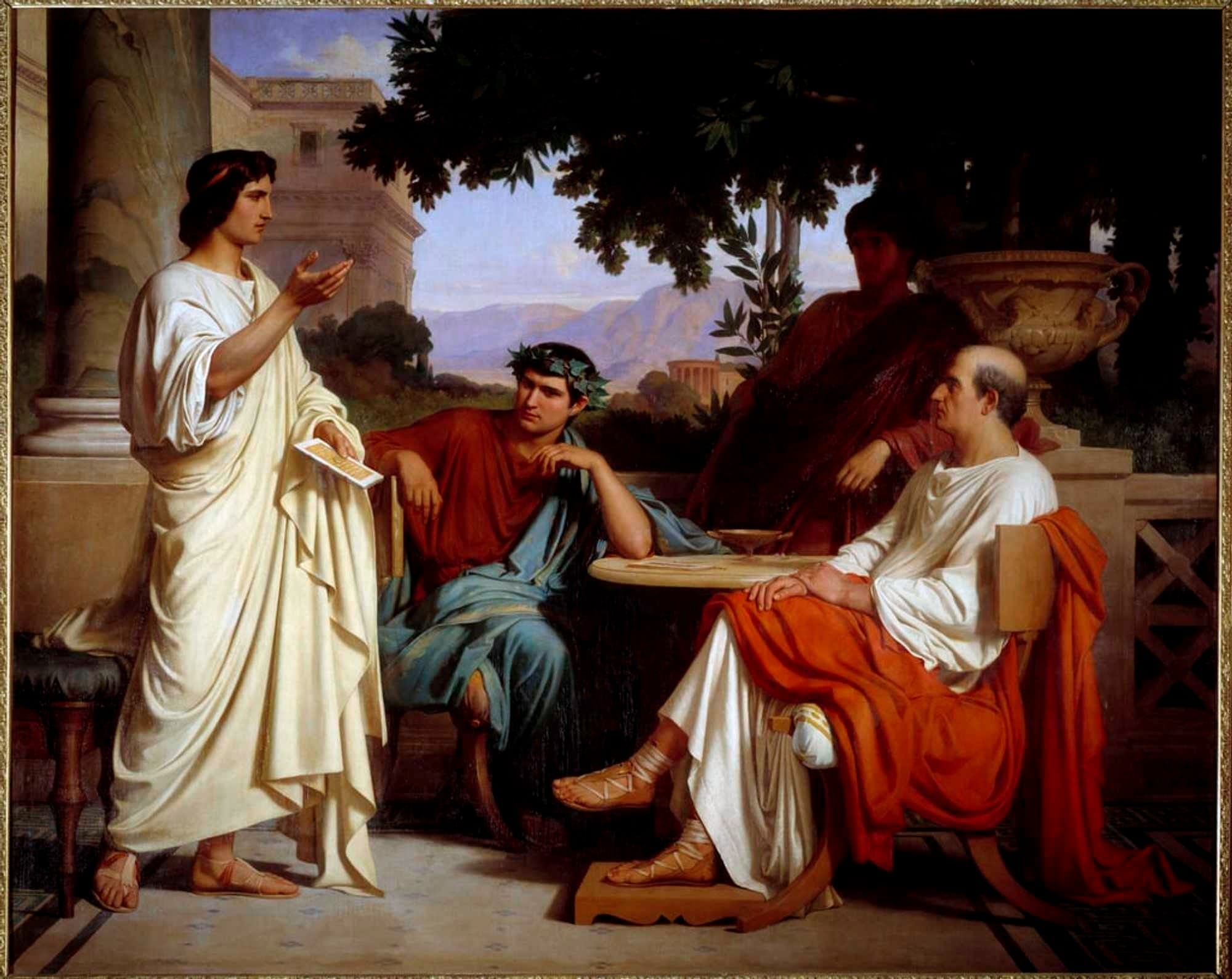
His discussions of money work in much the same way. Horace does not present poverty as an ideal condition, and his own life became materially comfortable. He acquired property, maintained a household, moved in wealthy circles and enjoyed pleasures that were unavailable to a genuinely poor Roman.
The recurring question is what happens after a person possesses enough. Additional land, wealth or status can satisfy one need while immediately producing another, leaving the owner no closer to contentment than before.
Epicurean ideas are especially prominent in Horace's treatment of modest pleasures, friendship, anxiety, mortality and withdrawal from unnecessary competition. Other philosophical traditions also appear, and Horace explicitly refuses in the Epistles to present himself as the obedient follower of one philosophical master.
That flexibility suits the way philosophy operates in his poetry. Horace is interested not only in principles but in how difficult they are to practise consistently. His characters understand sensible behaviour and fail to follow it, while Horace repeatedly includes himself in the same category.
The importance of friendship belongs to this practical ethics. Horace's social world included poets, senators, knights and politically powerful men, and his poems frequently grow out of invitations, journeys, homecomings, dinners and shared drinking. Material advantage existed within some of those relationships, but Horace repeatedly uses the language of amicitia rather than reducing them to commercial exchange.
Maecenas remained the most important example. Their difference in resources and influence was enormous, but Horace also expected room for refusal and personal independence within the relationship. In Epistles 1.7, his reluctance to return immediately to Rome becomes a negotiation over precisely how much obligation a friendship should impose.
The poem should not be treated as evidence for a late rupture between them. Maecenas continued to occupy an affectionate place in Horace's later poetry, and the tradition concerning Maecenas' will has him asking Augustus to remember Horace as he would Maecenas himself.
Augustus gradually became part of Horace's own world
Horace's relationship with Augustus began from an unusual position because Horace had once fought against him. During the earlier stages of Horace's literary career, contact with Octavian and then Augustus was largely mediated through Maecenas, while later evidence shows a much more direct relationship.
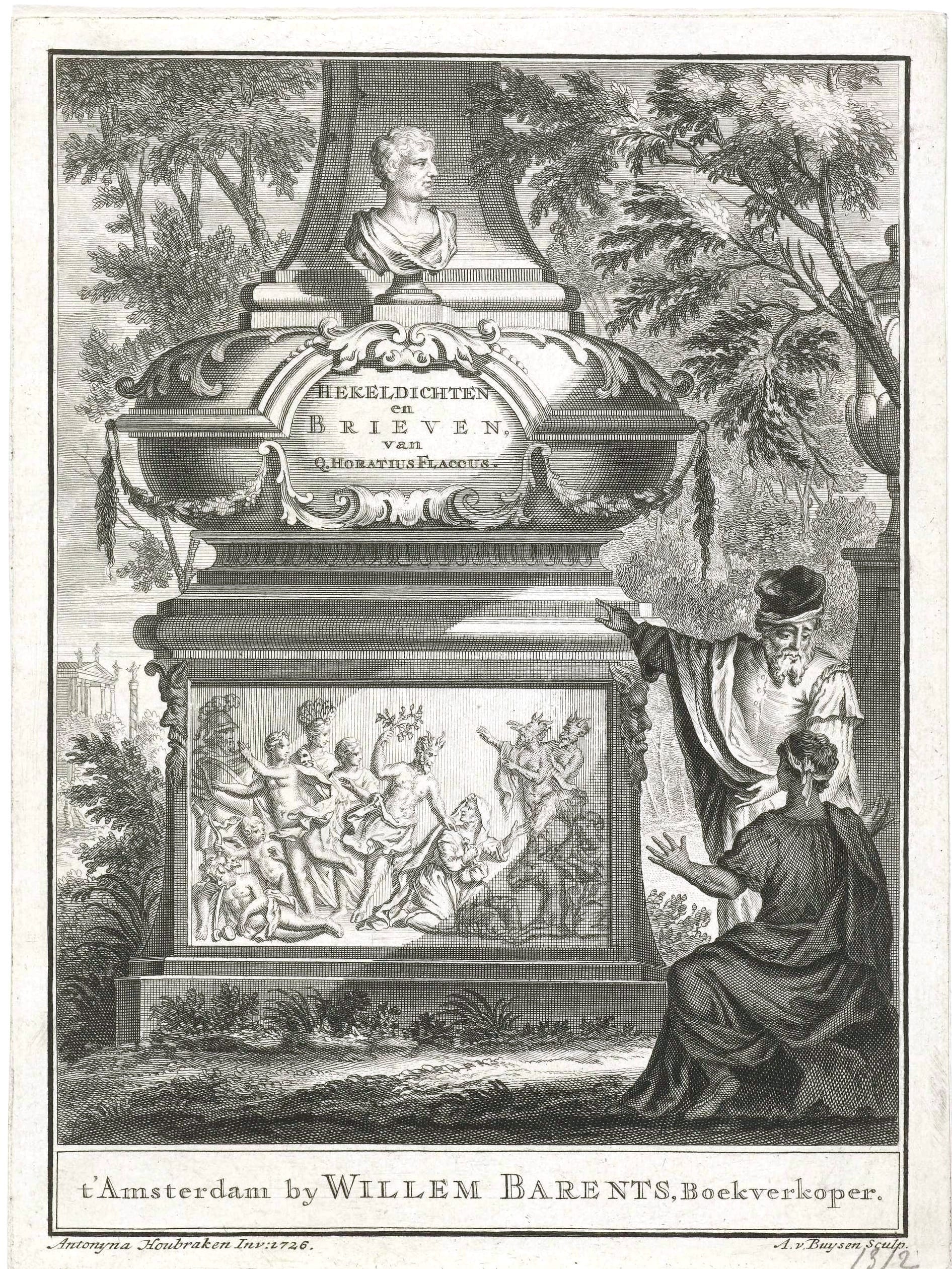
The surviving ancient biography preserves extracts from Augustus' correspondence with Horace. Augustus joked with him, expressed irritation that Horace did not address him more often in his writings, and at one point proposed that Horace assist him with his private correspondence.
Horace declined that position, apparently on grounds of health, without losing Augustus' friendship. The incident shows both Horace's standing and the degree of freedom he retained even when dealing with the most powerful man in Rome.
Their most important public collaboration came with the Secular Games of 17 BC. Horace was commissioned to compose the Carmen Saeculare, which was performed by a chorus of boys and girls during the official ceremonies. The surviving record of the Games names him directly as the composer, providing external evidence of the position he had reached.
His later poetry reflects the increasingly direct connection. Odes 4 contains poems concerning Augustus, Tiberius and Drusus, while the Epistle to Augustus discusses Roman literature and the social role of poets directly with the princeps.
This development should not be reduced to a choice between treating Horace as either an official propagandist or a hidden opponent of Augustus. The poems show a relationship that changed over several decades and remained unequal, while Horace continued to negotiate the position of a poet writing in proximity to political power.
One further uncertainty deserves care. Horace may have accompanied Maecenas during the Actium campaign, and some passages in the Epodes can be read as evidence that he did. The evidence is not conclusive enough to state his presence at Actium as a settled biographical fact, so the episode should remain separate from the firmly attested service under Brutus at Philippi.
Age made his old arguments more personal
By the time Horace wrote the Epistles, questions about moderation and limits increasingly included his own age. Youthful pleasures, social obligation and literary production were now being reconsidered by a man who could compare his present circumstances with several earlier versions of himself.
At the end of Epistles 1, he gives his book a short description of the author it will carry into the future:
“But when the abating warmth of the sun shall attract more ears, you shall tell them, that I was the son of a freedman, and extended my wings beyond my nest; so that, as much as you take away from my family, you may add to my merit: that I was in favor with the first men in the state, both in war and peace; of a short stature, gray before my time, calculated for sustaining heat, prone to passion, yet so as to be soon appeased.”
The details are unusually personal. Horace gives his social origin, the extent of his advancement, his appearance and his temperament, and then dates himself by saying that he had completed forty-four Decembers.
Age also becomes part of his negotiation with Maecenas. In Epistles 1.7, Horace effectively says that permanent attendance would require the restoration of his younger body, black hair, easy laughter and the nights when he drank and lamented the departure of Cinara. The point is not simply that he feels old but that the demands appropriate to one stage of life may no longer suit another.

The later poetry continues to test that idea rather than presenting retirement as complete. Horace still writes about attraction, invitations, wine and memories of love, while repeatedly observing the growing distance between his current body and the pleasures associated with youth.
His attitude toward writing changes in the same way. The man who says that poverty once pushed him into verse can now ask why he should continue producing poetry after acquiring more than he needs. Advancing age, in the same passage, has already taken away several pleasures and is beginning to take poetry with them.
The idea of enough has therefore moved beyond money. It concerns ambition, obligations, love, literary production and eventually life itself, although Horace never turns the idea into a perfectly consistent rule that he claims to have mastered.
He was equally capable of recognizing his own literary achievement. At the end of the first three books of the Odes, he presented his poetry as something more durable than his body:
“I have completed a monument more lasting than brass, and more sublime than the regal elevation of pyramids, which neither the wasting shower, the unavailing north wind, nor an innumerable succession of years, and the flight of seasons, shall be able to demolish. I shall not wholly die; but a great part of me shall escape Libitina.”
The poem then returns to the region of his birth and identifies his achievement with adapting Greek lyric forms to Latin poetry. The man who repeatedly reminded readers that his father had been a freedman was equally willing to describe himself as someone who had risen from a low position and accomplished something unprecedented in Roman verse.
Horace died suddenly at Rome on 27 November 8 BC, shortly after Maecenas. He was buried near Maecenas on the Esquiline, but the proximity of their deaths does not support the later sentimental idea that grief over his friend's death killed Horace.
His expectation that the poetry would continue was much better founded. Horace became a school author in antiquity and was read alongside Virgil, while later Roman poets treated his work as part of the established literary canon. His writings preserved not only the public poet associated with Augustus but the man who repeatedly returned to friendship, money, food, wine, ageing, social obligations and the difficulty of deciding when what one already possessed was enough.
Horace, The Works of Horace. Translated by C. Smart and revised by Theodore Alois Buckley.
Eduard Fraenkel, Horace. Oxford: Clarendon Press, 1957.
Ellen Oliensis, Horace and the Rhetoric of Authority. Cambridge: Cambridge University Press, 1998.
Stephen Harrison, ed., The Cambridge Companion to Horace. Cambridge: Cambridge University Press, 2007.
C. O. Brink, Horace on Poetry: The ‘Ars Poetica’. Cambridge: Cambridge University Press, 1971.
Maurice P. Cunningham, “Horace, by Eduard Fraenkel.” Classical Philology 54, no. 2 (1959): 127–128.

About the Roman Empire Times
See all the latest news for the Roman Empire, ancient Roman historical facts, anecdotes from Roman Times and stories from the Empire at romanempiretimes.com. Contact our newsroom to report an update or send your story, photos and videos. Follow RET on Google News, Flipboard and subscribe here to our daily email.
Follow the Roman Empire Times on social media: