
Rome Recycled More Than We Think
Romans gave old materials surprisingly long lives. Glass, metal, pottery, textiles, papyrus and even buildings could be repaired, reused, sold or remade.

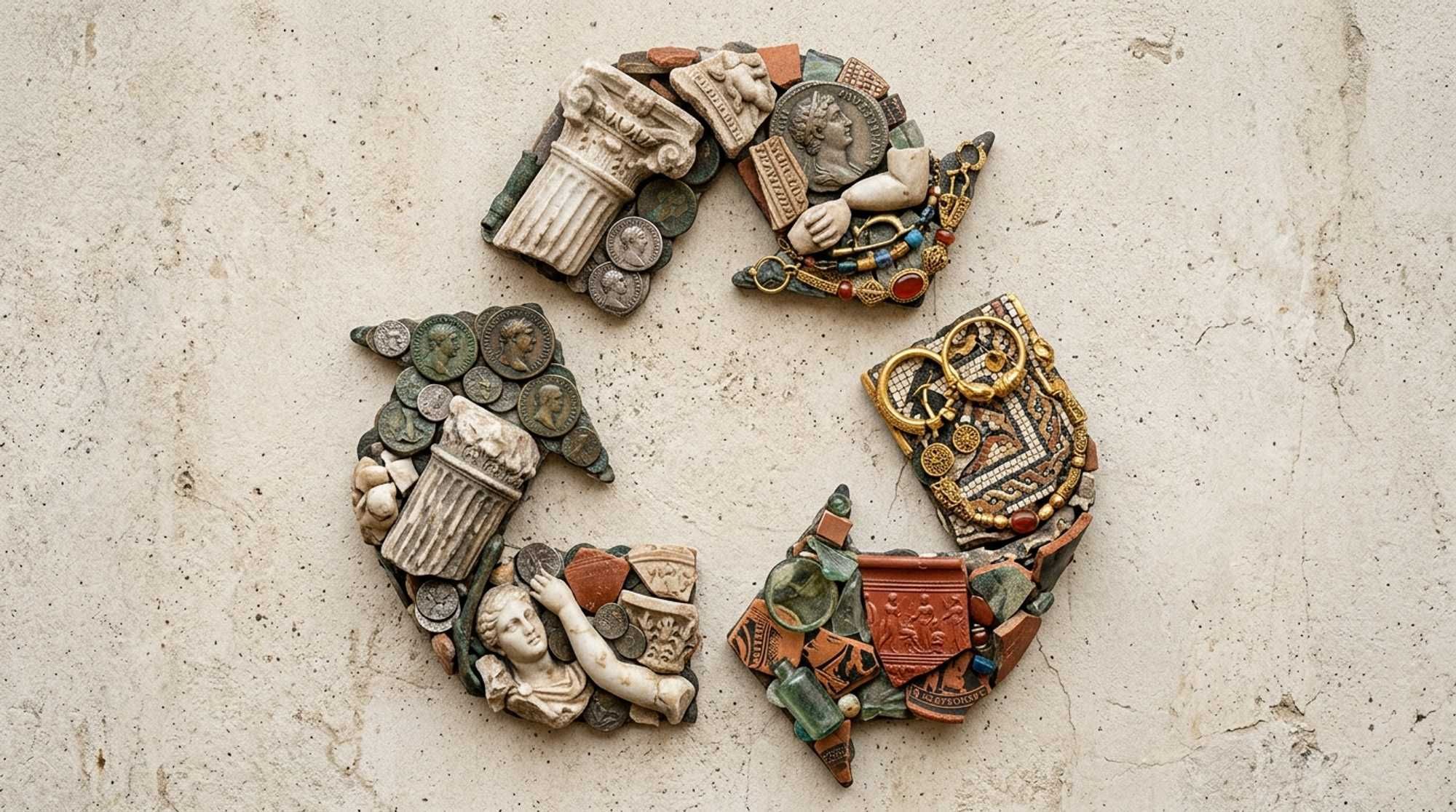
A Roman rubbish dump does not necessarily contain everything the Romans threw away. Some of the materials most worth recovering could disappear before they ever reached final disposal. Broken glass might be collected and returned to a furnace. Metal could be melted and cast into something completely different. Roof tiles might be removed from an old building and sold. Amphorae could be refilled, adapted for another purpose, or incorporated into construction. Worn clothing might be patched or cut up for another use, while broken pottery could be crushed in quantities large enough to become an ingredient in Roman building materials.
That complicates the familiar picture of an economy in which raw materials were extracted, turned into objects, used and eventually discarded. Roman objects could pass through several stages before reaching the end of their useful lives. Repair, reuse and recycling were not identical processes: repairing a garment extended the life of the same object, refilling an amphora reused the same container, while melting glass or metal destroyed one object so that its material could become another.
Practices also varied considerably according to material, place and period, and plenty of potentially reusable material still ended up as rubbish. Even with those qualifications, the evidence points to reuse and recycling as ordinary parts of the Roman material economy rather than activities confined to periods of shortage or decline.
Broken Glass Was Worth Picking Up
Glass provides some of the clearest evidence because an old object could be returned almost completely to material for new production. First-century Roman writers were already familiar with the collection of broken glass.
Martial refers to a hawker from Trastevere exchanging sulphur for broken glass, while Statius independently mentions people involved in the same kind of exchange. In both cases the activity appears as something recognizable enough to require no technical explanation. These references do not tell us that Rome possessed a formal citywide recycling service, or exactly how the glass moved from households to workshops, but they do show that broken glass could retain value after its first use.
Archaeology at Pompeii now gives a much clearer view of what might happen after collection. A 2024 investigation of glass working and recycling at the Sarno Baths examined 46 glass finds from the second phase of a nearby landfill. Among them was a moil, the small piece of glass left attached to the blowpipe after a blown vessel is removed.
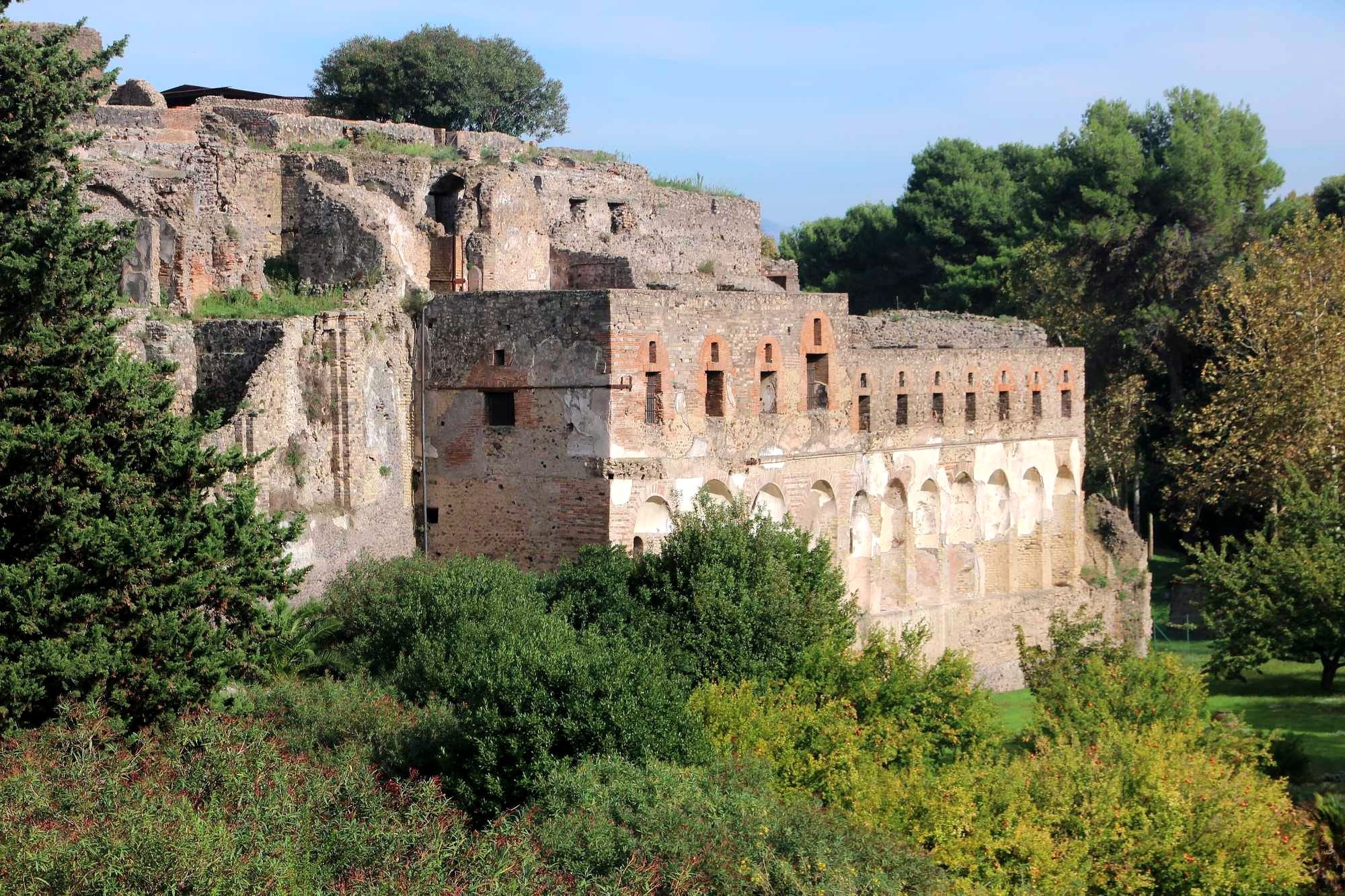
It was the first proper indicator of glassblowing identified at Pompeii and strongly supports the presence of glass-working activity in the city. Chemical analysis showed that the moil itself was made from recycled Roman-Mn glass. The same recycled composition was identified in 32 percent of the natron glass samples examined at the Sarno Baths.
The contents of the landfill make the result more interesting. Its second phase produced 2,027 finds, of which around 60 percent were ceramics, 27 percent building materials, 9 percent organic remains, 2 percent glass and 2 percent metal. Glass and metal were therefore comparatively rare in a deposit otherwise rich in ordinary refuse. The Sarno Baths research interprets this imbalance as evidence that these materials were frequently removed from the waste stream before final dumping because they could be remelted and used again.
This was not happening in a city cut off from fresh supplies. The Sarno Baths glass assemblage shows that Syria-Palestine remained the principal source of raw glass represented at Pompeii, with smaller quantities of Egyptian material also present. Recycling was therefore operating alongside continuing imports. Demand probably contributed to its intensity.
Glass had become increasingly common with the spread of glassblowing, while Pompeii's perfume industry required large numbers of containers. In contexts buried by the eruption of AD 79, perfume vessels account for approximately half of the recorded glass containers, much more than at some other contemporary sites.
The earthquake of AD 62 or 63 added further demand. Broken containers and windows had to be replaced, new mosaic decorations were installed, damaged mosaics were repaired, and rebuilding was still underway when Vesuvius erupted.
Yet glass recycling in Pompeii was not simply a response to that emergency. Broken monochrome and polychrome vessels had already been reused in wall mosaics before the middle of the first century, and the evidence from the Sarno Baths points to collection and recycling continuing through the post-earthquake reconstruction period. Fresh glass and recycled glass were circulating through the same urban economy.
The practice was not confined to Campania. At Histria and Tomis on the western Black Sea coast, compositional analysis of Roman glass found several samples consistent with recycling, while the archaeological evidence points to secondary glass-working workshops at Tomis. The chemical results are circumstantial rather than proof of a fully reconstructed recycling system, but they support the use of cullet in local glass production during the Roman period.
Old Buildings Could Become Sources of Material
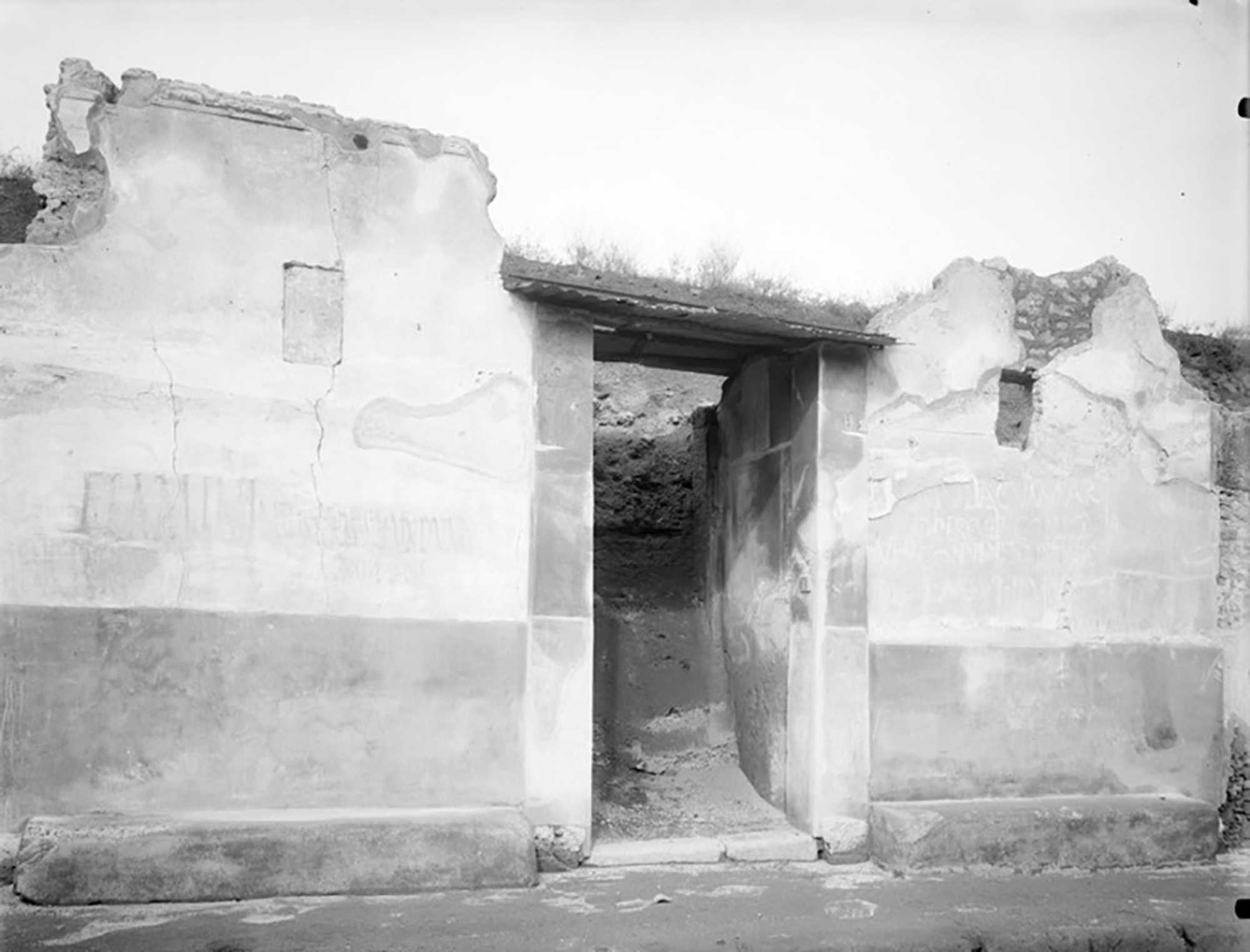
Construction materials offer unusually direct evidence because they often remained recognizable after reuse. At Pompeii, a painted notice on an exterior wall in Insula 3.7 advertised used roof tiles for sale. The notice is probably late Republican, making it clear that second-hand building materials were already circulating commercially before the height of the Empire.
Roman legislation points in the same direction. The senatus consultum Hosidianum of AD 47 and the senatus consultum Volusianum of AD 56 restricted the demolition of structures specifically for the purpose of selling their material remains. Buildings that were already ruinous were treated differently, and similar distinctions continued later. The legislation does not tell us how large the market for salvaged building material was, but it shows that demolition for resale was economically significant enough to attract regulation.
There is also evidence that dismantling could involve specialist labour. An inscription from Rome dating to AD 79–81 records the curator of a collegium subrutorum. The term is connected with subruere, to undermine or demolish, and has been interpreted as an organization of workers involved in taking buildings down, presumably including the recovery of reusable materials.
This should not be turned into an empire-wide system of demolition guilds: no equivalent collegium is known elsewhere, and Rome may have been exceptional because of the amount of demolition and rebuilding that followed the great fire of AD 64. Even so, it shows that recovering material from buildings could form part of specialized work rather than consisting only of casual scavenging.
By Late Antiquity, the movement of old architectural material becomes far more visible. Columns, marble revetment, statues, inscriptions, bricks, tiles and metal fittings could be detached, stored, transported and reused in new settings. Civic officials and elites appear repeatedly in connection with the removal and rededication of statues and architectural elements.
That later activity often occurred on a much larger scale, but the Republican and early Imperial evidence is important because it shows that the economic value of old buildings existed long before the great spolia projects of the fourth and fifth centuries.
Amphorae Did Not Always End Their Lives as Containers
Ceramics followed a different path because fired pottery could not simply be melted and turned back into workable clay. Empty amphorae could nevertheless remain useful. Some were refilled with the same product or a different one, although identifying this archaeologically is difficult.
Residue analysis can reveal substances that came into contact with a vessel, but it cannot always establish their sequence. Wine followed by wine may leave no obvious trace of reuse, while combinations of different residues can sometimes result from a mixed product rather than successive contents. This makes fixed empire-wide percentages of amphora reuse much less secure than the existence of reuse itself.
Other secondary uses are much easier to see. At Myos Hormos on Egypt's Red Sea coast, excavation of the silted harbour revealed hundreds of intact or nearly intact vessels, mostly amphorae, packed into the muddy area between land and sea. They had been filled with soil and covered by flooring in order to consolidate the ground and help construct a jetty.
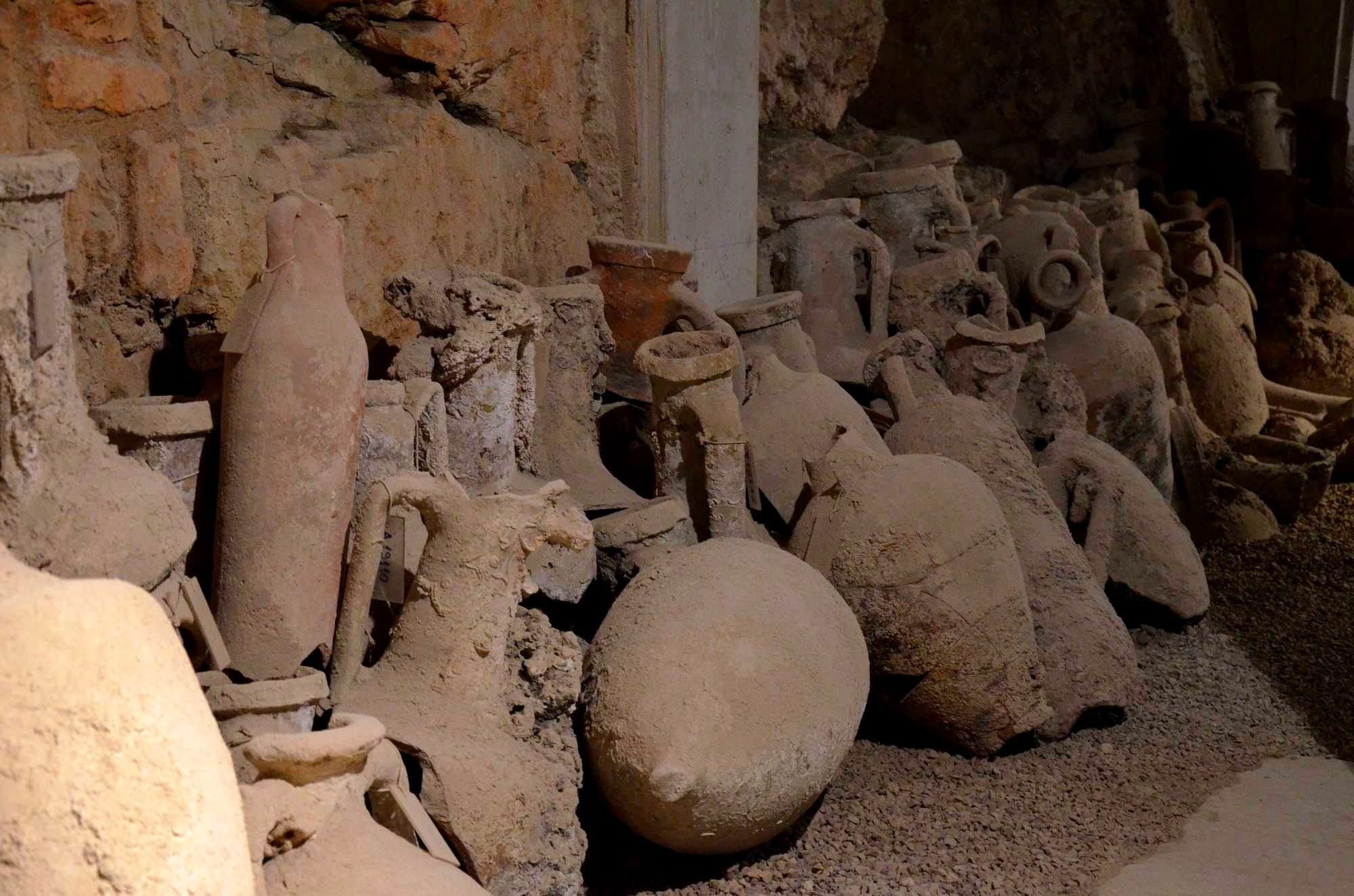
Associated material dates the installation from the late first century BC into the early first century AD. Comparable uses of amphorae for ground consolidation and harbour structures are known elsewhere in the Roman world, particularly in northern Italy and southern France.
Broken pottery could also be reduced much further. At Corinth, Roman bath mortars contained large quantities of orange ceramics crushed or ground into particles around one to three millimetres across. The quantity involved was substantial: about 750 kilograms of crushed ceramic for every cubic metre of cement.
The scale led to the suggestion that collecting and processing suitable ceramics formed part of the construction industry rather than representing occasional use of whatever sherds happened to be nearby. The aggregate included both pottery and brick, while the fabrics represented suggest that material may have been selected for its suitability.
These different uses also show why the vocabulary matters. An amphora refilled with another product is reuse. An intact vessel packed beneath a harbour floor has been repurposed as a construction element. Pottery ground into mortar comes much closer to recycling in the stricter sense because the original object has been destroyed and its material properties used in a new product. Roman ceramic evidence includes all three.
Metal Could Lose Its Previous Life Completely
Metal was especially suited to repeated transformation because an unwanted object could be melted, mixed with other metal and cast again. Martial provides a striking first-century example in an epigram written around AD 95–98, describing a gigantic statue being melted down so that its metal could be made into several kinds of vessels. The statue disappeared as an object, but the material itself remained in circulation.
Archaeology gives us larger examples through the maritime transport of scrap. The Ayia Galini wreck off northern Crete, dated to around AD 276–290, carried copper-alloy statue fragments, statuettes, vessel parts and assorted smaller objects. A wreck at Caesarea from around AD 310 carried copper-alloy and lead material intended for reprocessing, while the Favaritx wreck off Minorca, broadly dated to AD 450–600, included numerous copper statuettes and other small metal objects. Around 400 fragments of copper-alloy sculpture recovered from the sea near Brindisi have also been interpreted as a cargo of scrap, although that example is less securely dated and may belong to the post-Roman period.
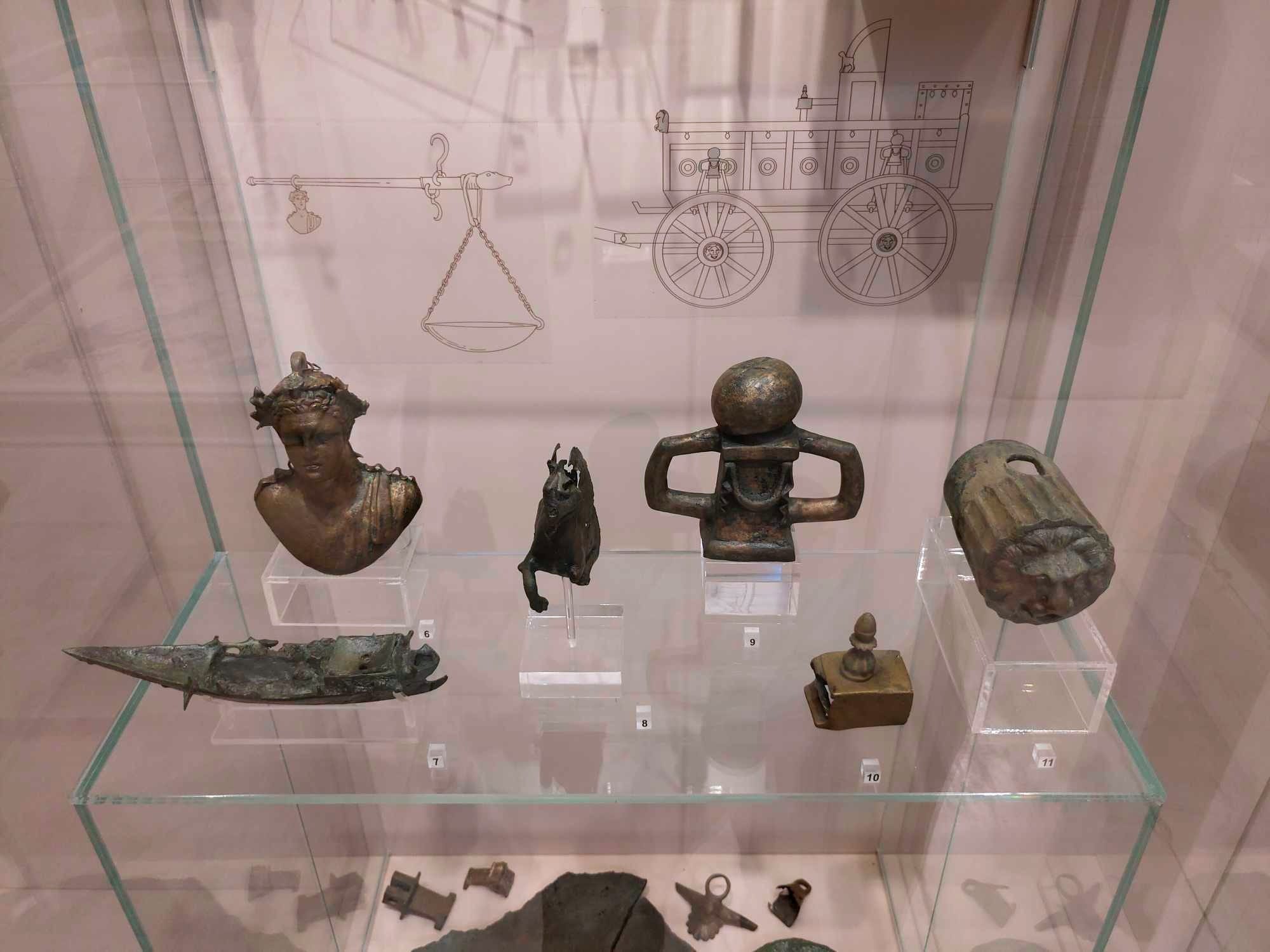
Roman monetary policy could also involve the recovery and remelting of old silver. Trajan's monetary reform provides one of the clearest examples because Cassius Dio reports that badly worn money was melted down. Chemical analysis of two restored denarii is also consistent with recycled metal, although the analytical sample is too small to support any broad numerical conclusion. In this case, the chemical evidence supplements the written evidence rather than creating the argument by itself.
Precious-metal objects could enter the monetary cycle too. Roman mints had access not only to newly extracted silver and gold but also to booty, stored bullion, older coin and metal objects held in treasuries. The form of an object was therefore less permanent than the material from which it had been made. A vessel could become coin; old coin could be withdrawn, melted and restruck; and metal could move repeatedly between forms over long periods.
This is also why metal recycling can be so difficult to reconstruct archaeologically. Repeated melting and mixing blur the chemical history of an alloy. It is usually safer to think in terms of overlapping processes of melting, mixing and manipulation rather than imagining that every object can be divided neatly into “new metal” and “recycled metal.”
Worn Clothes and Used Papyrus Could Keep Working
Not every second life required a furnace. Cato's De Agricultura gives a particularly clear example of textile reuse. When farmworkers received new tunics or cloaks, the old garments were to be taken back so that centones, patchwork made from worn cloth, could be produced. Cato also advised that sewing centones was suitable work for wet weather, when agricultural tasks outside were limited. The reuse of worn clothing therefore appears as something incorporated into estate management rather than merely an improvised response to damage.
Surviving textiles tell a similar story. A sleeve from Vindolanda was patched after damage, while sailcloth from Berenike in Egypt was repaired with much greater care. Thick masses of wool rags stitched together with goat-hair string have also been found at Berenike; padding is one possible interpretation, though their exact purpose is uncertain.
The evidence does not justify simply identifying Roman centonarii as professional rag collectors. Their precise occupational role remains disputed, and the name of their associations alone is not enough to establish exactly how they participated in the textile economy.
Papyrus reuse is documented on a much larger scale. The unused back of an older document could receive accounts, notes, letters, exercises, administrative texts or literature, while discarded sheets could also be incorporated into cartonnage and book bindings.
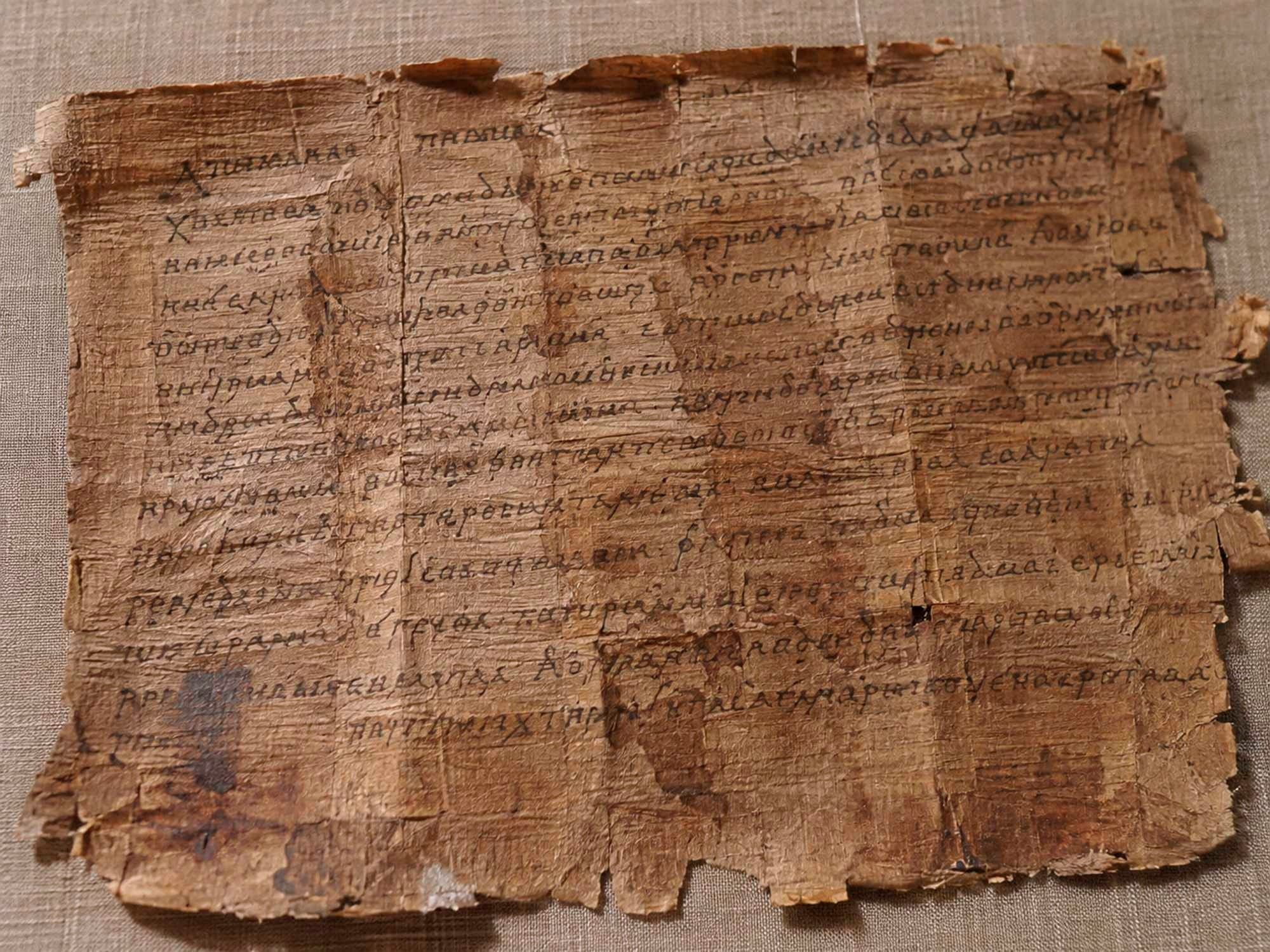
A calculation based on papyrological databases counted 27,608 records tagged for reuse between AD 30 and 395 in Trismegistos and compared them with 50,141 texts in the Papyrological Navigator from roughly the same period. On that comparison, the author offered a rough estimate that perhaps one in every two papyrus rolls or sheets had been reused during the first four centuries CE. The figure is not an empire-wide recycling rate, and the survival of papyrus is overwhelmingly shaped by conditions in Egypt, but the number of documented reused texts leaves little doubt that the practice was common.
Reuse does not necessarily mean that papyrus itself was extremely expensive. Accounts from the early fourth century show clean rolls being purchased for the same amount as a loaf of refined bread, while a professional copyist could be paid vastly more for producing a text. For literate elites, the cost of the writing material itself may therefore have been modest compared with the labour needed to fill it. Reusing papyrus could make practical economic sense without requiring a shortage of blank sheets.
Late Antiquity Changed the Scale More Than the Habit
The most visually dramatic examples of Roman reuse often belong to Late Antiquity. Statues were recarved or rededicated, inscriptions were turned around and reinscribed, old architectural pieces were incorporated into new walls and churches, while villas could be stripped of marble, glass, lead and other useful materials. It is therefore understandable that Roman recycling has often been associated with the later Empire and with periods when new production and supply were changing.
The earlier evidence makes a simple decline narrative difficult to sustain. Roof tiles were already being sold second-hand at Pompeii before the height of the Empire. Broken glass was being collected in first-century Rome and recycled at Pompeii while new raw glass continued to arrive from the eastern Mediterranean. Pottery was incorporated into construction, worn textiles were given new uses, and metal objects could be melted into new forms. Late Antiquity did not invent these practices, although it often made them more visible and, in some sectors, much larger in scale.
Roman villas illustrate the change particularly well. Comparative work identifies on-site recycling and reuse in three broad chronological groups: some examples appear in the mid-to-late second century after villas were remodelled; others belong to the third and early fourth centuries; and another concentration occurs in the late fifth and sixth centuries as Late Roman villas came to the end of their use.
The sample is small, and the surviving installations are unevenly documented. In Italy, on-site reprocessing has so far been recognized at approximately 5 percent of villa sites, but that figure is explicitly provisional because older excavations did not always identify or record such phases.
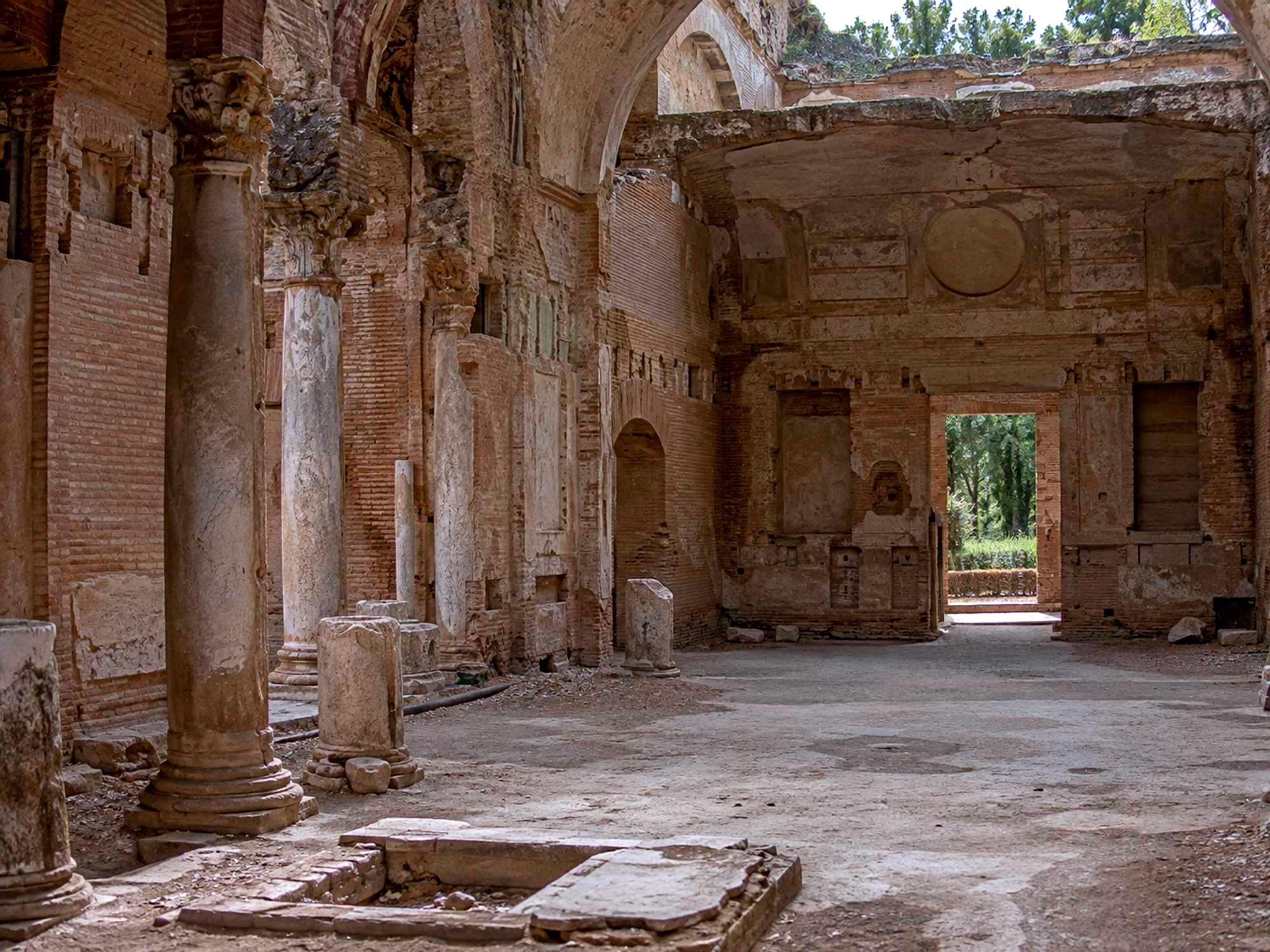
Where the evidence survives, the work could be carefully planned. Former residential rooms were converted into productive areas containing furnaces, metalworking installations or lime kilns. At Aiano-Torraccia di Chiusi, craftsmen even separated the clear and coloured glass enclosing gold leaf in mosaic tesserae so that the different materials could be recovered. Material salvage and initial reprocessing are documented at villas from the mid-second through the sixth century, while the production of some fine objects from recycled material appears particularly in the fifth and sixth centuries.
Late Antique urban reuse could also involve civic authorities, official permission, storage and redistribution. Older sculptures and architectural materials might be identified, moved, reworked and assigned to new settings. Economic circumstances had certainly changed from those of the first century, but these operations could still require ownership rights, labour, technical skill, transport and access to markets. Large-scale reuse was not necessarily a matter of people simply stripping abandoned ruins at random.
The Best Recycling Can Be the Hardest to Find
There is an archaeological paradox at the centre of all this. Successful recycling can remove the very evidence needed to prove that it happened. Glass that is collected and returned to a furnace does not reach the rubbish dump. A bronze object melted into another bronze object loses its earlier form.
An amphora that carries a second product complicates the connection between vessel type and original contents. Textiles and papyrus often decay completely, while glass recycled with material of similar composition may leave little chemical trace of the process.
Glass makes the problem especially clear. Carefully sorted cullet remelted with similar glass can be difficult to distinguish chemically from material that has not been recycled in the same way. Recycling can therefore become easiest to recognize when something interrupts normal practice: incompatible glasses are mixed, a workshop is abandoned suddenly, or cullet intended for future use is left behind instead of returning to the furnace. Efficient recovery can make recycling less visible rather than more visible.
That problem affects wider reconstructions of the Roman economy. Archaeologists often use surviving objects to estimate production, trade and consumption, but the same physical quantity of material may have supported several successive uses. An amphora could carry another product after its original cargo was unloaded. Metal could pass through several objects. Glass could be melted repeatedly. Stone and brick could move from one building to another. If only the final surviving object or final deposit is counted, part of the earlier economic life of the material disappears from the calculation.
None of this makes Rome an ancient equivalent of a modern recycling economy. There is no evidence for one standardized recycling system operating across the Empire, nor for a Roman environmental programme comparable with modern ideas of sustainability. Recovery was selective and incomplete, and Roman rubbish deposits still contain substantial quantities of material that could theoretically have been reused. What the evidence does show is that “used” and “useless” were not the same thing. Across very different parts of the Roman world, an object's first purpose did not necessarily determine where its material would end up.
Chloë N. Duckworth and Andrew Wilson, eds., Recycling and Reuse in the Roman Economy (Oxford University Press, 2020).
Mark L. Lawall and John Lund, eds., Pottery in the Archaeological Record: Greece and Beyond (2011).
Cristina Boschetti, Guido Furlan, Nadine Schibille, Rubina Raja and Jacopo Bonetto, “Glass Working and Recycling in Pompeii: New Evidence from the Landfill of the Sarno Baths (VIII 2, 17–23),” Archaeological and Anthropological Sciences 16 (2024).
L. Bugoi et al., “Shedding Light on Roman Glass Consumption on the Western Coast of the Black Sea,” Materials 15 (2022).
Cristina Boschetti et al., “Glass in Rome during the Transition from Late Antiquity to the Early Middle Ages,” Heritage Science 10 (2022).
Guido Furlan and Camilla Andreatta, “Waste Nothing: The Impact of Glass and Metal Recycling in Imperial Roman Towns,” European Journal of Archaeology 26 (2023).

About the Roman Empire Times
See all the latest news for the Roman Empire, ancient Roman historical facts, anecdotes from Roman Times and stories from the Empire at romanempiretimes.com. Contact our newsroom to report an update or send your story, photos and videos. Follow RET on Google News, Flipboard and subscribe here to our daily email.
Follow the Roman Empire Times on social media: