
Roman Murals and Mosaics Emerge at Mérida’s Huerta de Otero
Excavation beside the Medusa mosaic has revealed painted courtyard walls, birds, a hunting scene and further mosaic flooring at Huerta de Otero.

Roman wall paintings showing birds, a hunting scene and mythological figures have emerged at Huerta de Otero, an archaeological site in Mérida, western Spain. The 2026 excavation has also exposed mosaic paving associated with the courtyard of a substantial Roman house, adding to the decorated rooms already known there.
Mérida City Council announced the paintings on 17 November, as the fifth edition of its Barraeca archaeological training programme approached its final weeks. The work has concentrated on ground separating the room containing the site’s Medusa mosaic from a previously excavated part of the courtyard. Painted decoration survives on the courtyard’s inner and outer walls.
The field supervisor, José Vargas, described mosaic paving through the courtyard and a separate geometric mosaic elsewhere on the site in an interview with the local newspaper Hoy. The new work extends the investigation of a house whose Medusa floor, courtyards and bathing rooms have been documented over successive excavation campaigns.
A strip of ground reconnects the house
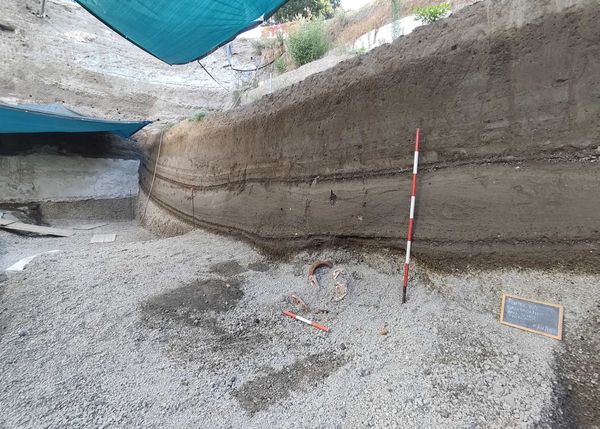
This year’s excavation targeted a strip of earth left untouched during work in 1976. According to Vargas, that surviving strip obstructed a clear view of the relationship between the Medusa room and the courtyard area already exposed. Removing it allowed the team to examine the architectural connection between those parts of the residence.
The newly recorded paintings decorate walls around the peristyle, the courtyard in this part of the house. The council identifies the building as a substantial Roman residence, or domus. The painted surfaces extend across both sides of the courtyard walls, giving the excavators several decorated faces to document. Our account of Rabat’s Domus Romana and its mosaics examines another decorated urban residence.
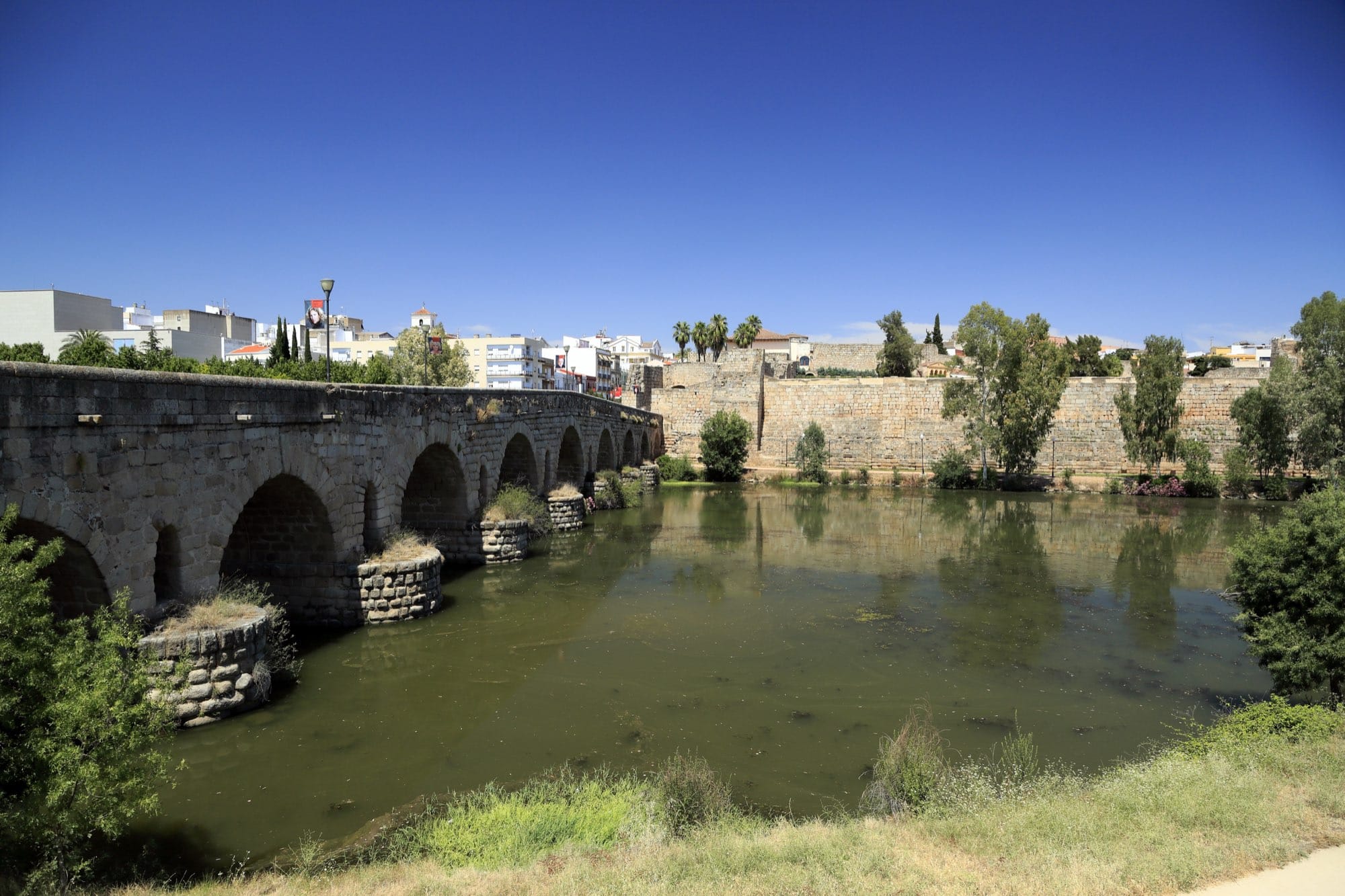
Huerta de Otero lies beside Mérida’s Alcazaba and the Roman embankment along the Guadiana. A published archaeological study places the Roman residence inside the city wall, within a larger plot extending across the fortification. Excavation of the house has recovered courtyard spaces, mosaic-floored rooms and a substantial bathing area.
Birds, a hunt and a mythological figure
The surviving bird imagery includes cranes, swans and peacocks, according to Vargas’s account in Hoy. Other birds retain colourful plumage. The council describes the paintings as well preserved, with a combination of natural subjects and varied bird life decorating the inner and outer walls of the courtyard.
A hunting scene shows a lion pursuing deer. The local report also records a satyr beside a woman among the mythological images. Hoy explains the satyr as a partly human and partly animal figure in its description of the newly exposed decoration at Huerta de Otero.
Hoy reports a date for the paintings from the middle of the first century to the middle of the second century CE. Vargas described their preservation as one of the campaign’s surprises, as the team excavated the strip separating the Medusa room from the previously exposed courtyard area.
New paving beside two courtyard levels
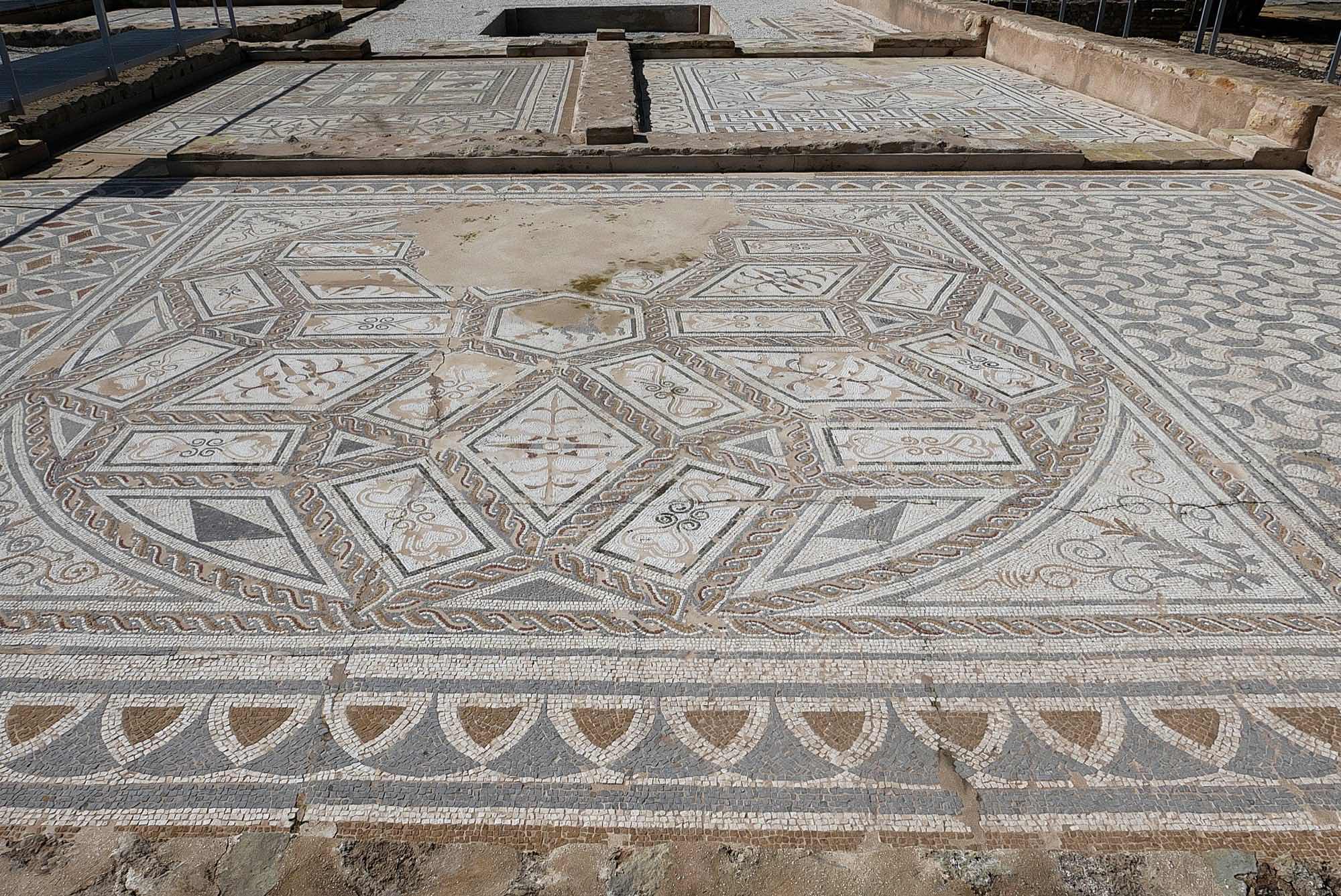
The excavation has revealed further mosaic flooring around the peristyle. Vargas described an internal route through the courtyard or garden area paved with mosaics.
A second mosaic mentioned by Vargas lies in another part of Huerta de Otero. He told Hoy that it uses geometric figures and is in excellent condition. At the time of the newspaper’s report, that pavement was awaiting public presentation.
The house also preserves two courtyard levels examined in the archaeological project that resumed in 2019. The lower and upper spaces were connected by a marble stair with four steps. That stair was blocked during a later alteration, closing the passage between the two levels described in the 2020 study.
Earlier work had exposed a mosaic corridor beside the lower courtyard, decorated with fish and other marine animals, including an eel and a dolphin. The upper corridor carried a geometric pavement. These were among the floors recorded during the twentieth-century excavations and re-examined as the site’s archaeological investigation resumed.
The Medusa room in the earlier excavations
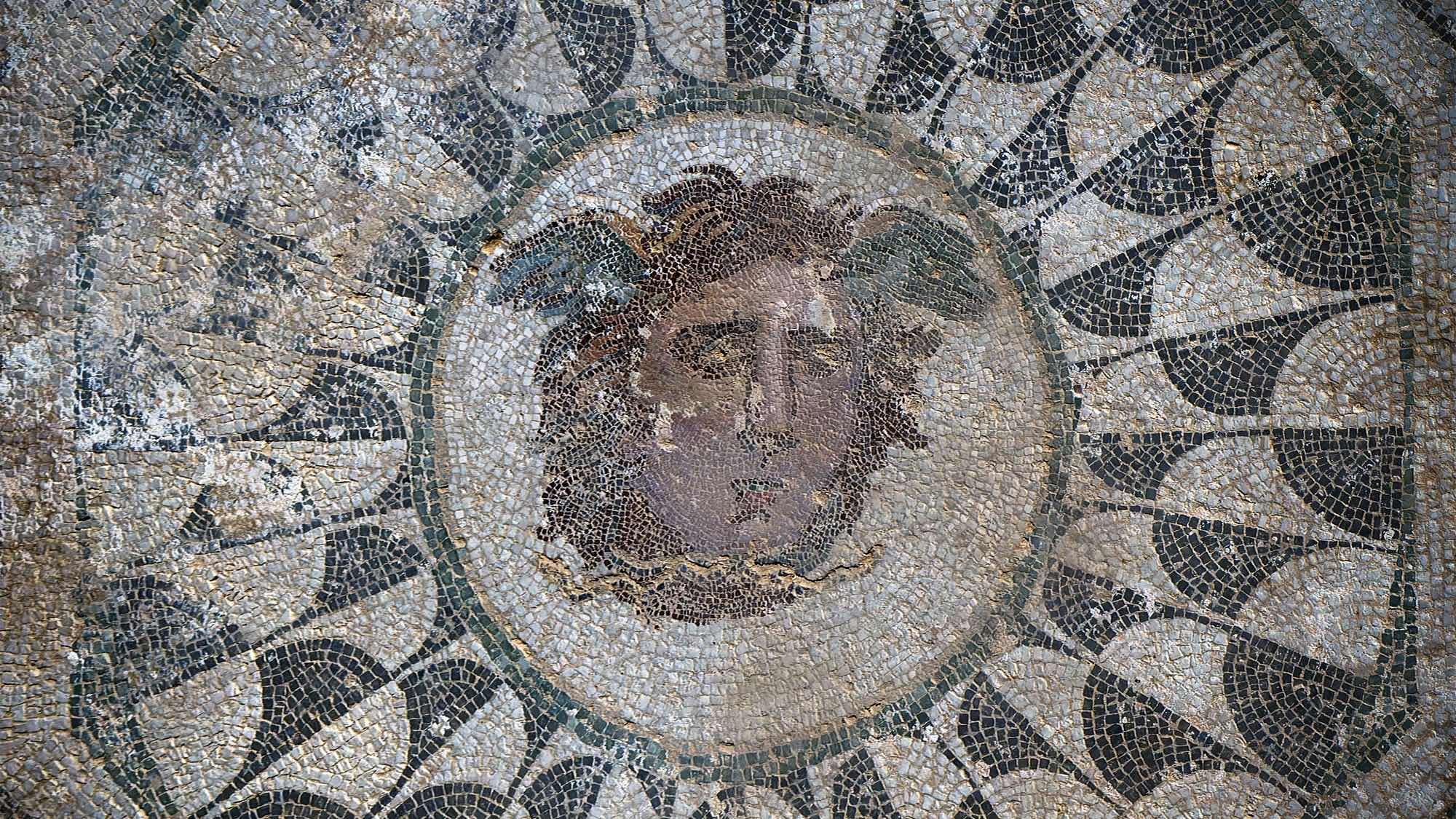
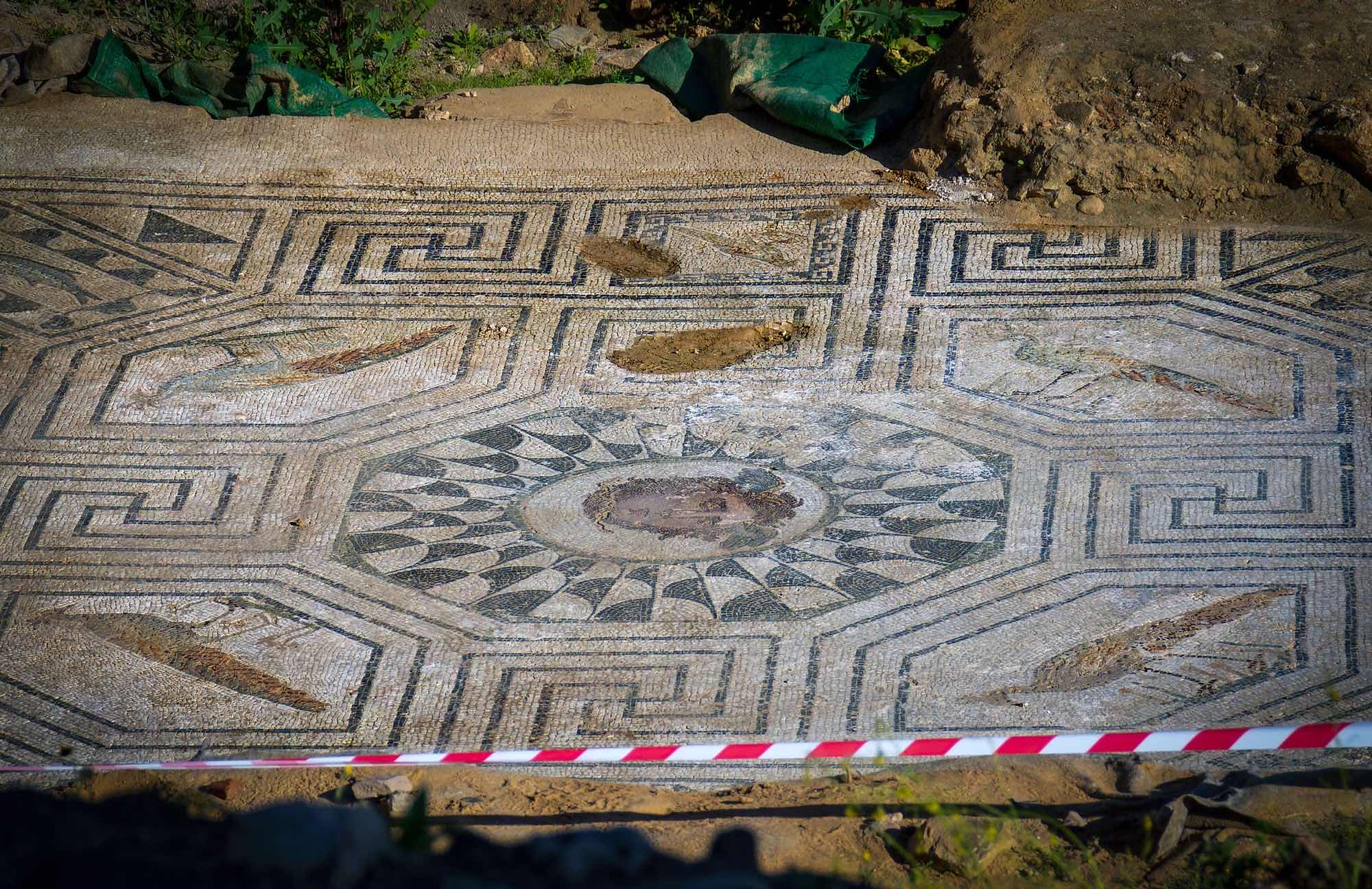
The Medusa pavement was already known from the 1976 excavations and was revisited during the research project begun in 2019. The 2020 study describes a polychrome floor in a room at the western limit of the residence. At that stage, part of the room’s southern half remained unexcavated.
Its central head of Medusa sits within an octagonal medallion. Around it, the pavement combines meanders with compartments containing birds, masks, fish, plants and peacocks. The smaller figurative panels sit within the geometric framework surrounding the central image.
The earlier mosaic catalogue, discussed in the 2020 study, assigned the Medusa pavement to the late second or early third century CE. The study also compares the use of Medusa and surrounding geometric decoration with pavements at Itálica.
Twelve trainees work alongside archaeologists
The excavation forms part of the city council’s Barraeca programme, which combines instruction with practical employment training. Hoy reports that the current group includes twelve trainees whose programme combines three months of instruction with approximately nine months of work on the site as archaeological labourers.
The Consorcio de la Ciudad Monumental has collaborated in and supervised the excavation, according to the council announcement. The local report adds that two labourers from the Consorcio helped the current school’s team this year.
Pilar Amor, the councillor responsible for employment training and archaeology, visited the excavation for the November announcement. Barraeca V is due to finish in December. A further edition is planned to begin in January with a period of instruction, followed by the return to excavation described by the council.
Much of Huerta de Otero remains buried
Vargas estimates that about fifteen percent of Huerta de Otero has been excavated. The plot covers more than 5,000 square metres (53,800 square feet), leaving a substantial area for future investigation. The current work continues the recovery of a residence and associated remains first explored through separate trenches in the twentieth century.
The council is pursuing a route that would make the remains accessible to visitors. Hoy reports this as a short- to medium-term objective alongside continued excavation and training. The council’s 17 November announcement also outlined a guided visit scheduled for 22 November, with a public draw planned to allocate places.
The house’s bathing area occupies the southern part of the excavated remains. The archaeological study records a heated room with an underfloor heating system and adjoining pools. Its position preserves another change in the residence’s layout: the baths were built over the route of a street running beside the Roman city wall.



About the Roman Empire Times
See all the latest news for the Roman Empire, ancient Roman historical facts, anecdotes from Roman Times and stories from the Empire at romanempiretimes.com. Contact our newsroom to report an update or send your story, photos and videos. Follow RET on Google News, Flipboard and subscribe here to our daily email.
Follow the Roman Empire Times on social media: