
Wine Is 8,000 Years Old. How Much Had the Romans Already Mastered?
Ancient vineyard practices, cellar instructions and judgements of quality complicate the idea that good wine is a modern achievement.

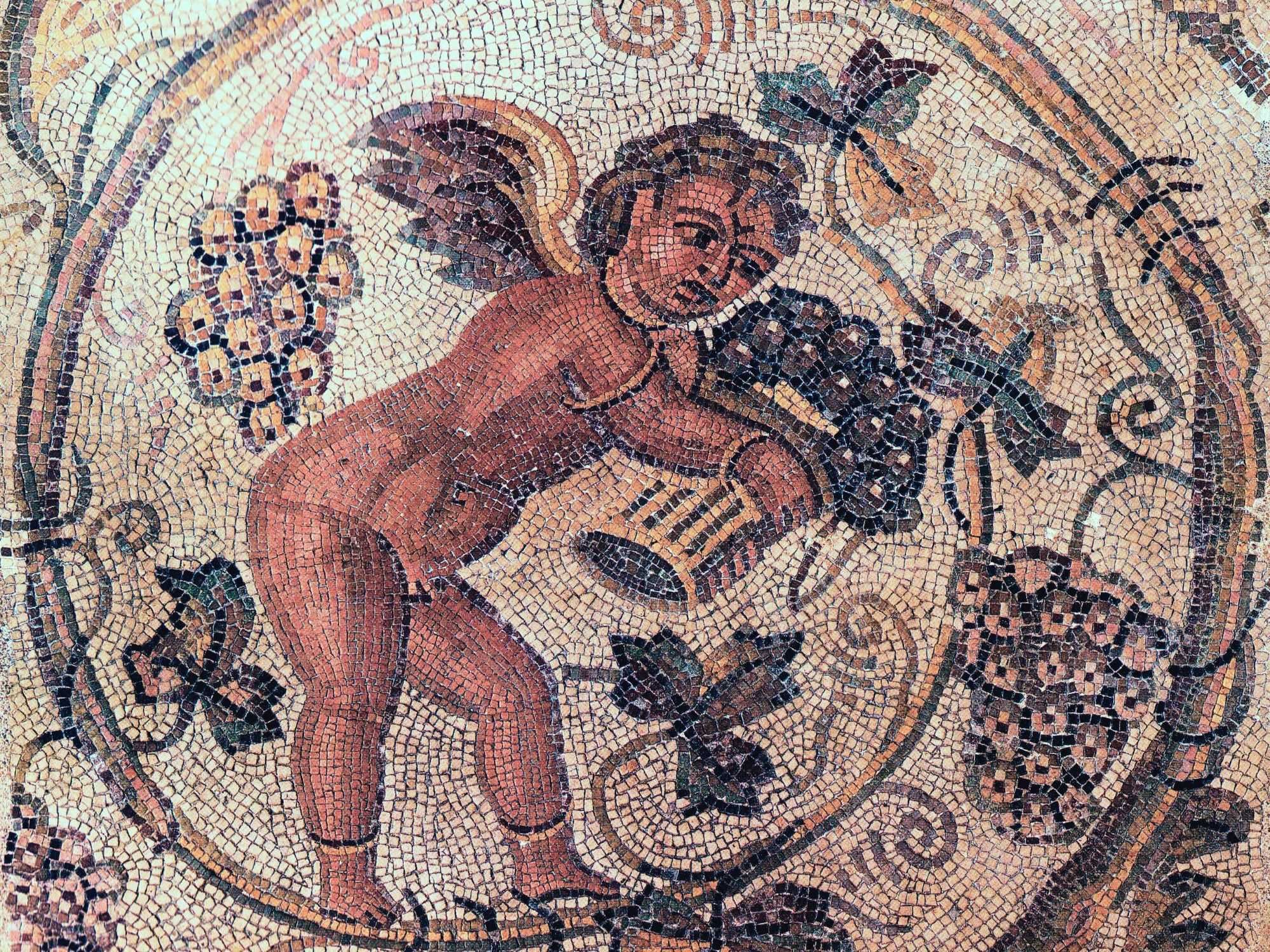
Roman winegrowers faced problems that would remain familiar for centuries: choosing when to harvest, keeping vessels clean, deciding how long to store a vintage and preventing an unpleasant smell from developing. Their agricultural writing records deliberate attempts to manage each of them. Some instructions concern ordinary supplies; others describe wines prepared to resemble valued regional products.
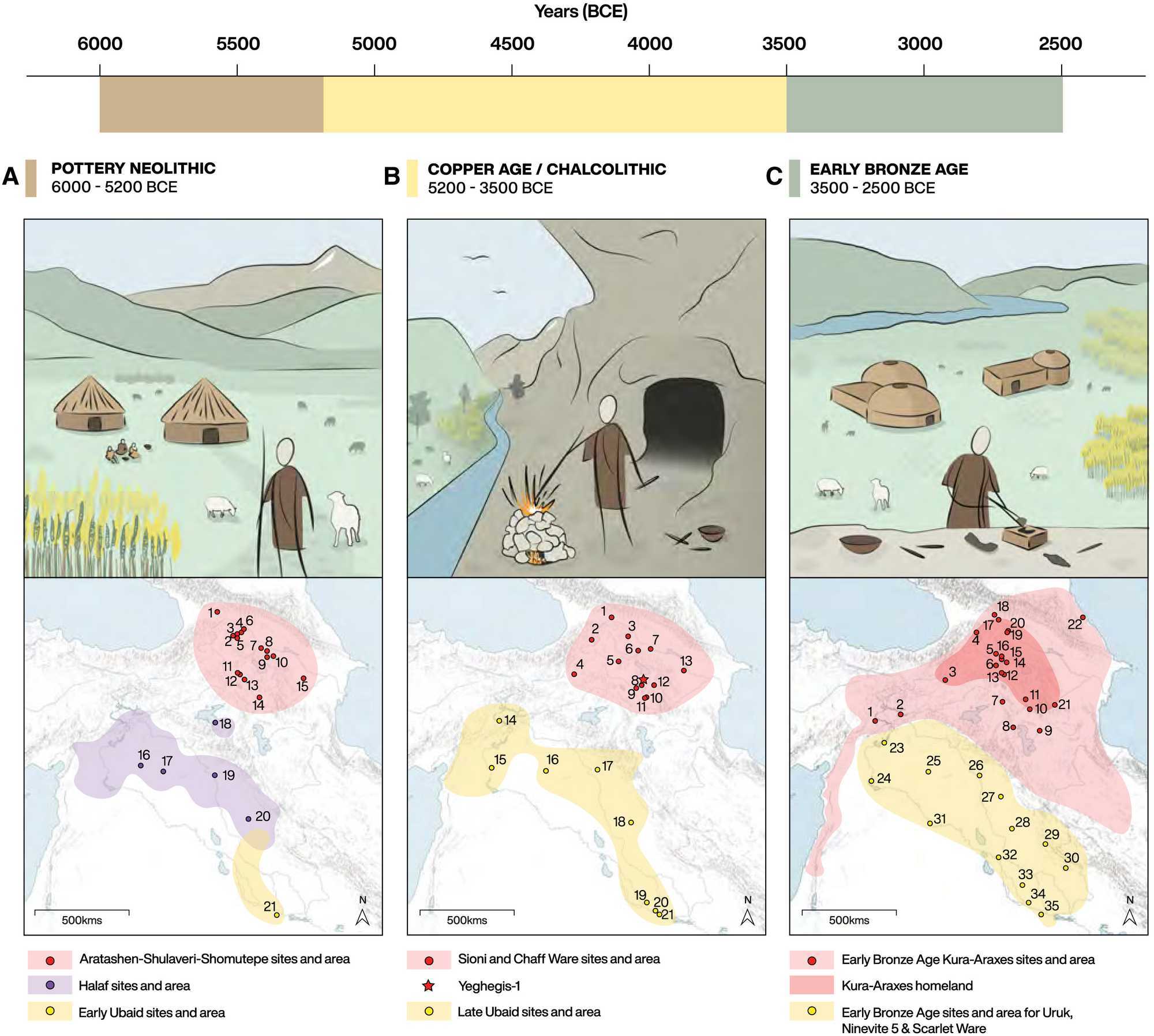
Wine itself was already ancient by then. Chemical evidence from pottery in the South Caucasus places grape winemaking at approximately 6000–5800 BC, roughly eight millennia ago. That long history invites a question: did people spend most of it making an inferior drink, only reaching something recognisably good in the last three hundred years?
Roman evidence makes that timetable difficult to sustain. Cato describes carefully sequenced preparations, while Pliny distinguishes celebrated wines, changing reputations and vintages kept for generations. Later developments in glassmaking and microbiology brought different kinds of improvement. They need to be considered separately from the much older ability to produce, recognise and preserve a desirable wine.
What the 8,000-Year Date Actually Records
The Georgian evidence comes from Shulaveris Gora and Gadachrili Gora. Pottery analysis identified organic acids associated with grapes and wine, with soil comparisons helping assess contamination. Archaeological context and radiocarbon dating of short-lived botanical remains supplied the chronology; the researchers did not recover intact Neolithic wine.
Plant evidence strengthened the interpretation. Grape pollen and other microscopic remains were consistent with grapes growing near the settlements, while the jars offered suitable containers for liquids. Together, the findings support winemaking in the early sixth millennium BC. They do not establish a precise first vintage or settle where grape cultivation and domestication originally began.
An archaeological date marks demonstrated activity within the surviving record. It cannot identify how many earlier experiments went unrecorded, nor provide a tasting assessment of the result. The study leaves the geographical priority of different regions unresolved. The date is evidence of early winemaking, rather than the starting point of a precisely measured journey towards modern wine.
Quality Began in the Roman Vineyard
Italy already possessed substantial winemaking knowledge before Roman expansion. Archaeological research traces local practices alongside Greek and Phoenician connections, rather than a single moment when one population taught everyone else. By the Roman period, vineyard management involved choices about planting, supports, spacing and the renewal of vines. Production depended on work in the field as well as treatment of the harvested juice.
Pompeii provides unusually direct evidence because the eruption of AD 79 preserved traces of cultivated ground. Casts of root cavities and excavated planting arrangements have allowed comparisons with agricultural texts. These show varying agreement over matters such as vine spacing, training and interplanting. The remains document organised cultivation; they cannot, by themselves, establish how a particular wine tasted.
Cato, writing in the Republic before the imperial period, gives a more specific example of harvest decisions in his recipe for Coan wine, coming from the Greek island of Kos. He prescribes full ripening, attention to rain and the removal of damaged fruit. These are instructions for a particular preparation, rather than a description of every Roman harvest. In On Agriculture 112, he writes:
Allow the grapes from which you intend to make the Coan wine to remain on the vine, let them ripen thoroughly, and pick them when they have dried after a rain. Place them in the sun for two days, or in the open for three days, unless it is raining, in which case put them under cover in baskets; clear out any berries which have rotted.
A Clay Jar Was Part of the Winemaking Process
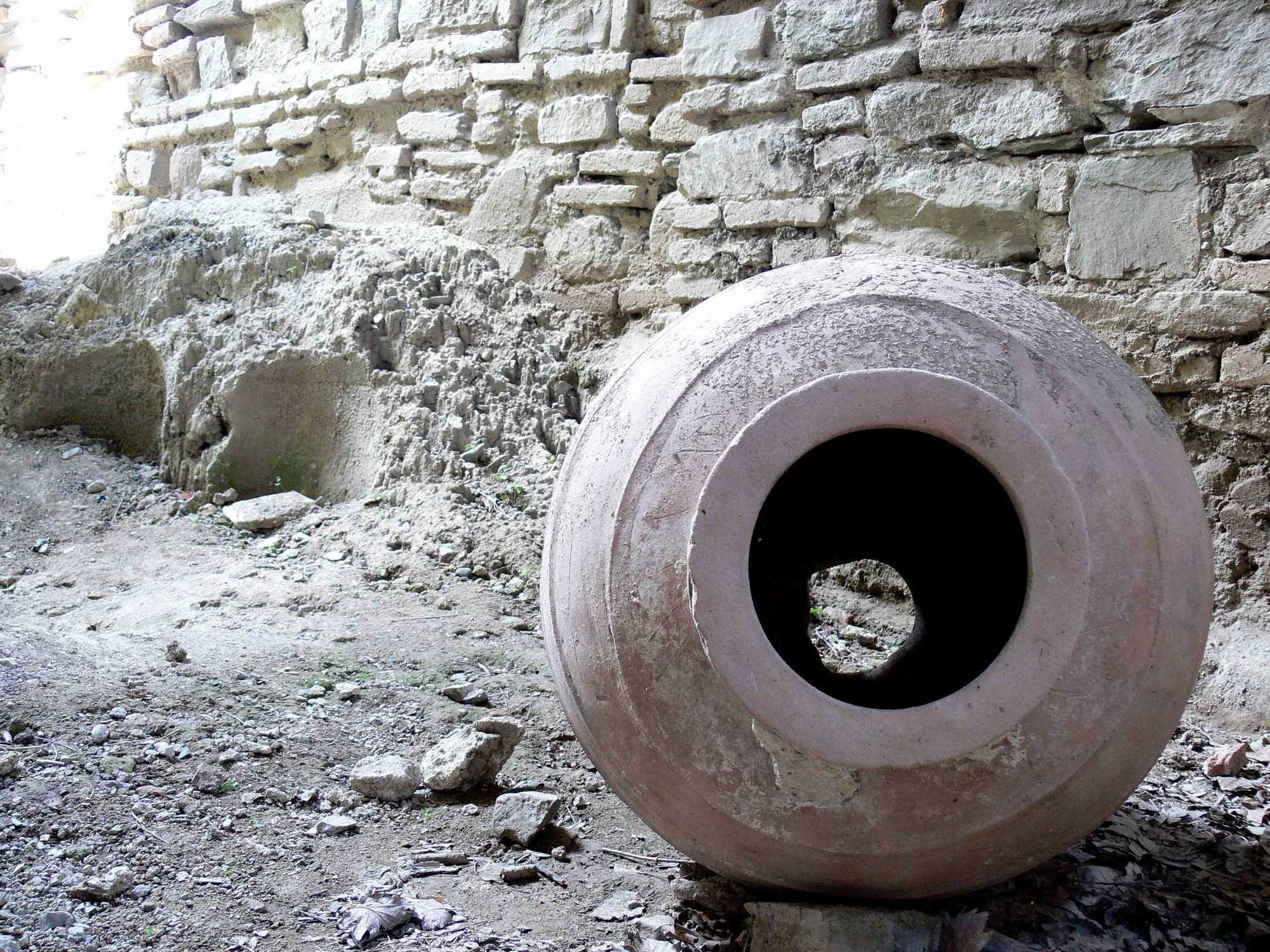
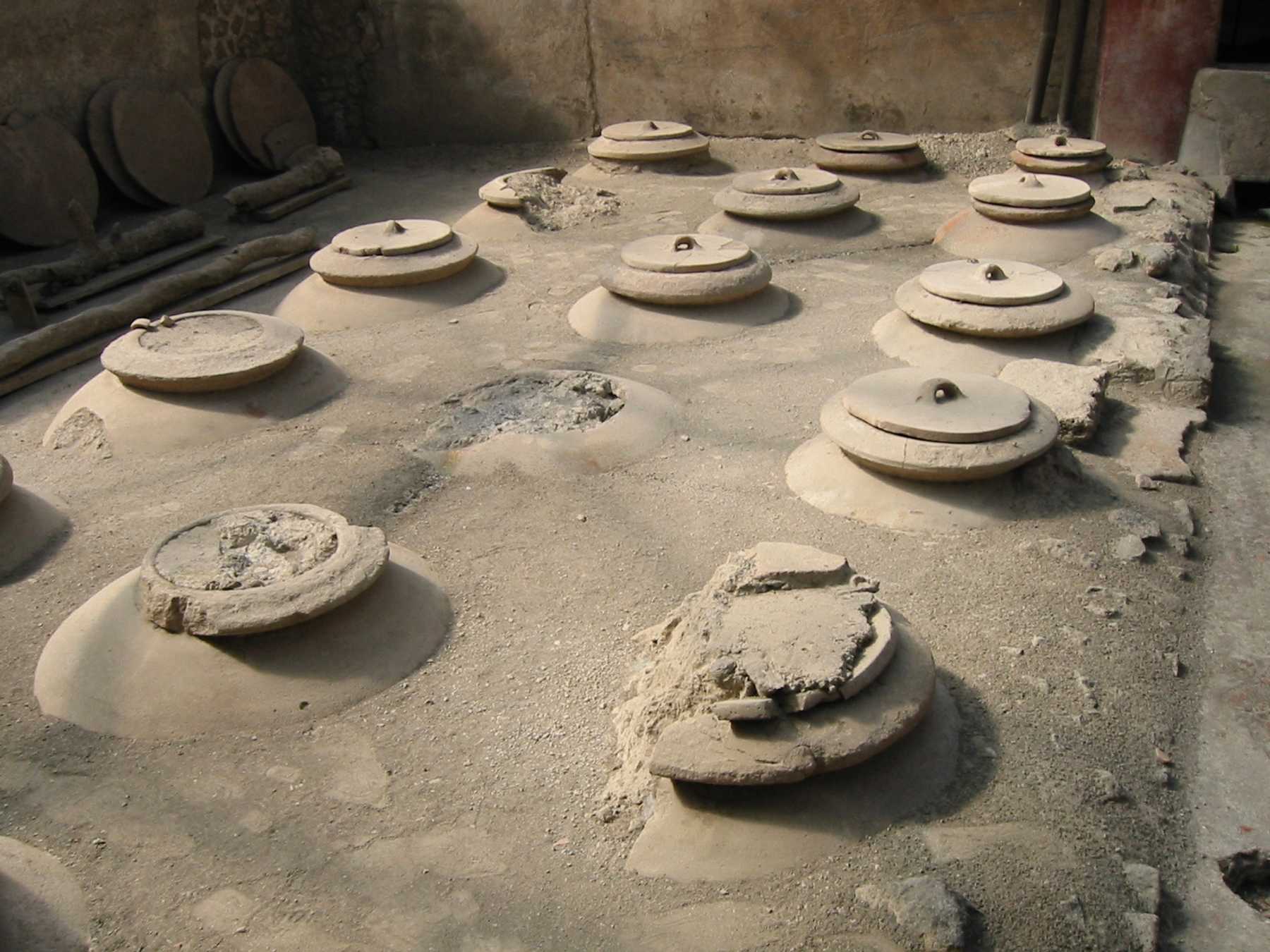
Large ceramic vessels called dolia served in Roman fermentation and storage. A recent comparative study treats their material, shape and placement as active features of winemaking. Burial could moderate temperature changes, while the vessel’s form and its interaction with oxygen affected conditions inside. The argument challenges the assumption that an earthenware container necessarily produced a crude or unstable drink.
Comparison with Georgian qvevri winemaking helps reconstruct how these vessels might have functioned. It also has limits: a modern practice is not a direct measurement of a Roman wine. Proposals about skin contact, surface yeasts and resulting aromas remain reconstructions requiring further testing. They should not become a claim that every Roman wine had the same colour or flavour.
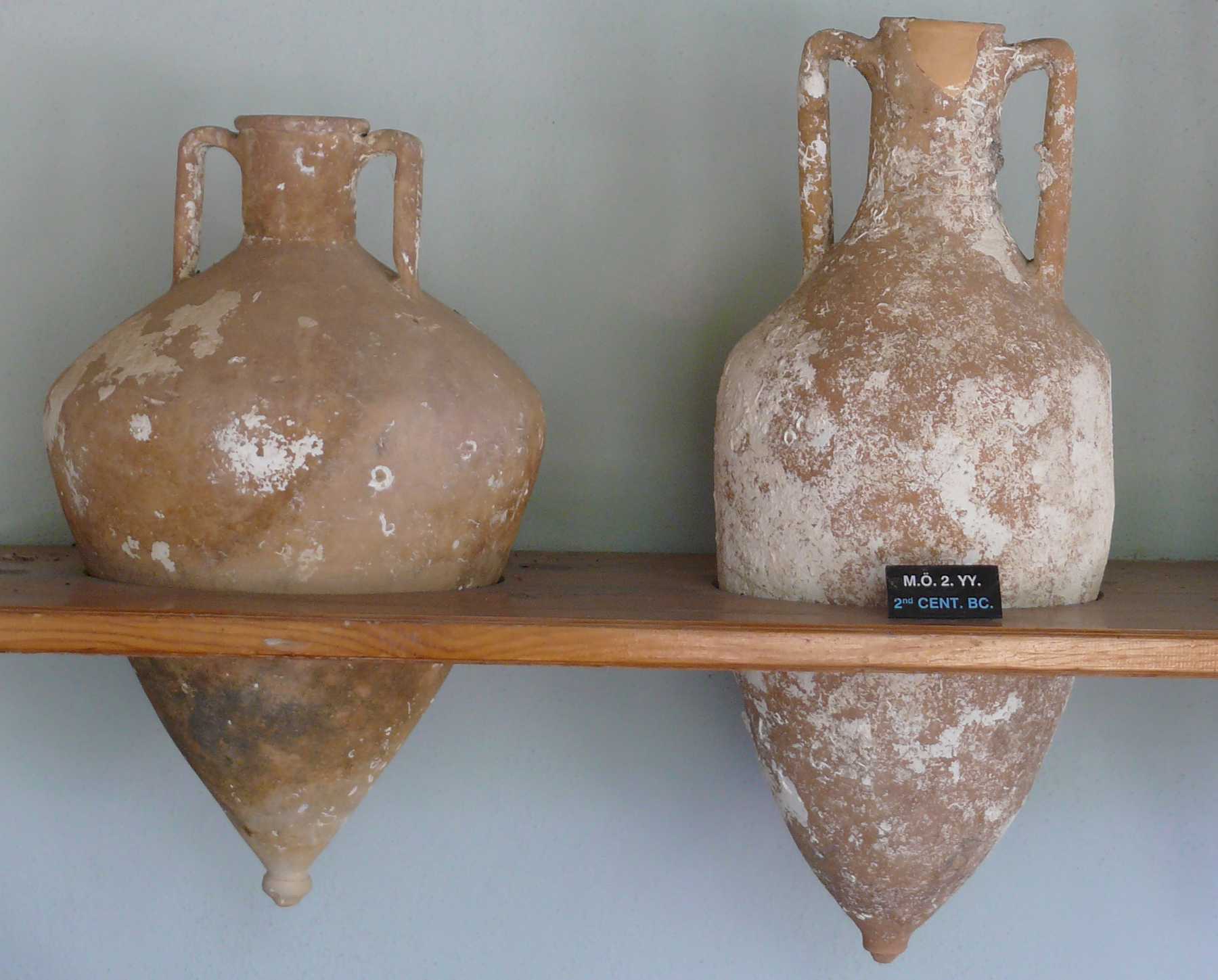
Ancient instructions also distinguish successive stages of handling. Pliny describes different storage arrangements according to climate, including buried dolia and wooden vessels near the Alps. Cato’s directions for an aromatised preparation specify a delay before sealing and a later transfer into amphorae. In On Agriculture 113, he gives the following sequence:
Pour the wine into the jars from the vat immediately, let them stand covered for fifteen days before sealing, leaving space for air, and then seal. Forty days later pour off into amphorae, and add one sextarius of boiled must to the amphora. Do not fill the amphorae higher than the bottom of the handles, and place them in the sun where there is no grass.
Roman Drinkers Knew That Age Could Improve –or Ruin– Wine
Pliny’s Natural History records a wine culture in which provenance and age already carried value. His account of the celebrated vintage from the consulship of Opimius, in 121 BC, describes wines surviving almost two centuries later. Their continued existence was remarkable, but he does not portray them as indefinitely improving. The passage makes a distinction between keeping a wine and retaining a drink suitable for ordinary consumption.
There are wines still preserved of this year’s growth, nearly two hundred years ago; they have assumed the consistency of honey, with a rough taste; for such, in fact, is the nature of wines, that, when extremely old, it is impossible to drink them in a pure state; and they require to be mixed with water, as long keeping renders them intolerably bitter. A very small quantity of the Opimian wine, mixed with them, will suffice for the seasoning of other wines.
This is Pliny’s report in Book XIV, chapter 6, rather than a modern analysis of a surviving sample. Its immediate subject is an exceptional old vintage used in small amounts to season other wines. Elsewhere, he assigns a much shorter useful ageing period to Pompeian wines, saying that they gained nothing after ten years. His account therefore provides no single ageing rule for all wine.
Regional reputation could also change. Pliny praises Falernian wine but complains that concern for quantity had damaged the quality of a particularly esteemed part of its production. He distinguishes rough, sweet and thin varieties, and acknowledges differences in individual preference. Such observations place cultivation, age and taste within Roman judgements of quality; a wine’s celebrated name did not make its excellence permanent or unanimous.
Seawater and Sweeteners Were Not All Responses to Failure
Cato’s Coan preparation includes seawater as a planned ingredient. His alternative recipe for a farm far from the coast uses brine, with rush and calamus to provide an aroma, followed by specified periods of storage. These directions describe a chosen style of wine. They cannot be reduced to a universal story in which Romans added other substances only because their wine was undrinkable.
The same text nevertheless recognises defects and proposes remedies. Chapter 109 concerns making a sharp wine sweeter and milder; chapter 110 addresses an objectionable smell by lowering a heated, pitched tile into the jar. Those prescriptions establish that sourness and bad odours were problems worth addressing. They do not prove that the treatments succeeded, and their presence should not be mistaken for modern experimental validation.
Cato also gives a winter drink for farm workers made with must, vinegar, boiled must, fresh water and seawater. He expects what remains after the summer solstice to become vinegar. This provision had a different intended use from a prestigious stored vintage. Pliny, meanwhile, reports that wine from Clazomenae gained esteem after its makers used seawater more sparingly. Ancient preferences could favour alteration, restraint or a different balance of ingredients; there was no single Roman product against which all later wine can be measured.
What Stronger Glass Bottles Changed
The later history of bottling does contain an important technological shift. Thick, durable wine bottles developed in seventeenth-century England made glass more useful for storage and transport. Early examples were broad-bottomed, and shapes subsequently moved towards the longer-necked cylinder. This was a development in the container and its use, centuries after Romans had already stored wines in ceramic vessels.
Closures and preparation mattered alongside the glass. Corks accommodated bottle openings, while laying bottles on their sides helped keep the cork moist. Bottling also involved clearing wine through operations such as racking and fining, as well as paying for the vessel, closure, labour and protective packaging. A bottle could form part of a more controlled storage system, but glass alone did not make the contents good.
Adoption was gradual, and barrel sales continued alongside bottled wine. The historical account describes changing costs and production methods rather than a single year when everyone acquired modern bottles. Seventeenth- and eighteenth-century improvements therefore help explain part of the proposed three-hundred-year turning point. They do not establish either the beginning of ageing wine or a final solution to its deterioration.
Fermentation Was Practised Long Before It Was Explained
Microbiology supplied another kind of knowledge. Yeasts convert grape sugars into alcohol, and nineteenth-century research established their role in fermentation; Pasteur’s wine studies belong to this later explanation. Bacteria also occur in both sound and spoiled wines. Recognising microorganisms made it possible to investigate processes that earlier producers had managed through observed changes and prescribed routines.
Modern research illustrates why better control does not mean a single preferred result. Malolactic fermentation, commonly associated with Oenococcus oeni, converts malic acid into lactic acid and can change acidity, stability and flavour. Selected bacterial cultures have improved the reliability of a process that may begin unpredictably with indigenous microorganisms. It is useful for many wines, but it is not an obligatory route to quality for every style.
The Roman instructions concern practical decisions that existed before that explanation: which grapes to accept, when to seal a jar, how to transfer wine and what to do when its smell or taste changed. Stronger bottles and later microbiology expanded the available means of control. The evidence supports successive improvements in particular operations, rather than 7,700 years of failure followed by a moment of perfection. Roman winemaking already included standards of quality, techniques intended to meet them and recognition that a valued wine could deteriorate.
Patrick McGovern et al. “Early Neolithic wine of Georgia in the South Caucasus.” Proceedings of the National Academy of Sciences 114.48 (2017), E10309–E10318. DOI: 10.1073/pnas.1714728114.
Emlyn Dodd. “The Archaeology of Wine Production in Roman and Pre-Roman Italy.” American Journal of Archaeology 126.3 (2022), 443–480. DOI: 10.1086/719697.
Dimitri Van Limbergen and Paulina Komar. “Making wine in earthenware vessels: a comparative approach to Roman vinification.” Antiquity 98.397 (2024), 85–101. DOI: 10.15184/aqy.2023.193.
Cato. On Agriculture, chapters 104–113. Translated by W. D. Hooper and H. B. Ash, Loeb Classical Library (1934). Public-domain text hosted by LacusCurtius.
Pliny the Elder. Natural History, Book XIV, chapters 6, 8, 9 and 27. Translated by John Bostock and H. T. Riley, volume III (1855). Project Gutenberg.
Stefan K. Estreicher. “Wine and France: A Brief History.” European Review 31.2 (2023), 91–179. DOI: 10.1017/S1062798722000370.
Eveline J. Bartowsky. “Oenococcus oeni and the genomic era.” FEMS Microbiology Reviews 41, supplement 1 (2017), S84–S94. DOI: 10.1093/femsre/fux034.


About the Roman Empire Times
See all the latest news for the Roman Empire, ancient Roman historical facts, anecdotes from Roman Times and stories from the Empire at romanempiretimes.com. Contact our newsroom to report an update or send your story, photos and videos. Follow RET on Google News, Flipboard and subscribe here to our daily email.
Follow the Roman Empire Times on social media: