
The Warehouses That Fed Rome
Rome depended on warehouses at Ostia, Portus and along the Tiber to turn seasonal grain arrivals into a steady food supply for the capital.

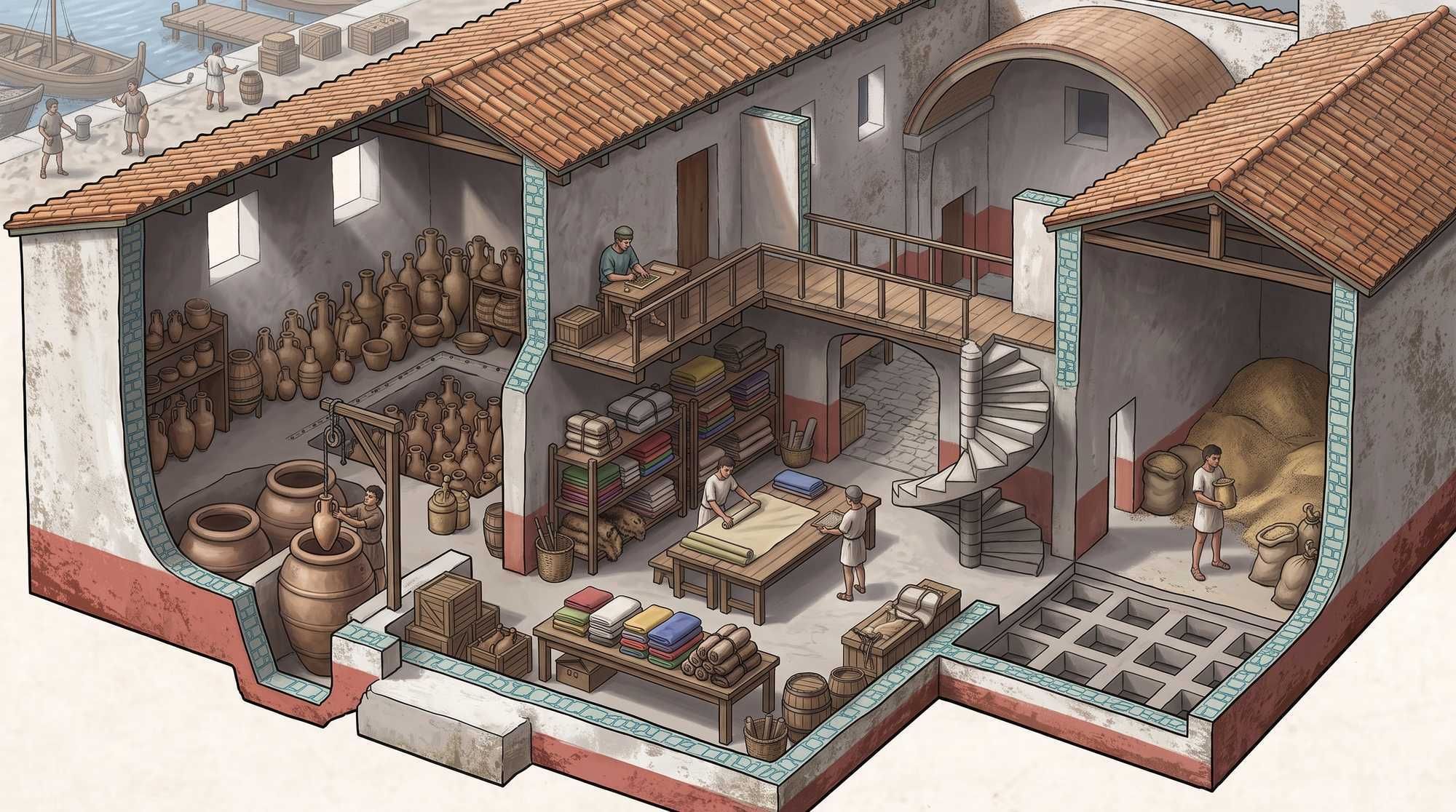
Rome depended on a food supply that arrived from far beyond Italy and did not arrive evenly throughout the year. Grain could spend months moving through a chain of collection points, ports, ships, warehouses, river barges and city depots before it reached the people who would consume it. The warehouses at Ostia, Portus and Rome were therefore not simply places where surplus food waited. They were the points that allowed an irregular maritime supply to become a continuous urban one.
The system had to absorb a seasonal rush of incoming ships, protect grain from damp and deterioration, record quantities and ownership, hold reserves, and then release supplies steadily toward Rome. It also had to cope with a final obstacle that could not be engineered away: the Tiber. Even after grain reached the ports, it still had roughly 35 kilometres of winding river between it and the capital.
Ancient writers occasionally reveal how precarious that arrangement could feel. Writing during the reign of Tiberius, Tacitus put the problem starkly:
“the very existence of the people of Rome is daily at the mercy of uncertain waves and storms.” Tacitus, Annals 3.54
The warehouses were part of Rome’s answer to those uncertain waves and storms.
Rome Could Not Eat on the Shipping Calendar
The fundamental problem was time. Grain was harvested seasonally, long-distance navigation was heavily concentrated in the safer part of the year, and major cargoes could arrive at Italian ports in bursts. Rome, meanwhile, had to eat every day.
Egyptian grain shows the problem clearly. Grain collected from the countryside moved through local granaries, river transport and Alexandria before entering the Mediterranean shipping network. The voyage from Alexandria toward Italy could itself take a month or considerably longer because ships heading northwest had to contend with prevailing winds. In the first century AD many Alexandrian grain ships still headed for Puteoli in the Bay of Naples before the development of the great harbour complex at Portus changed the pattern.
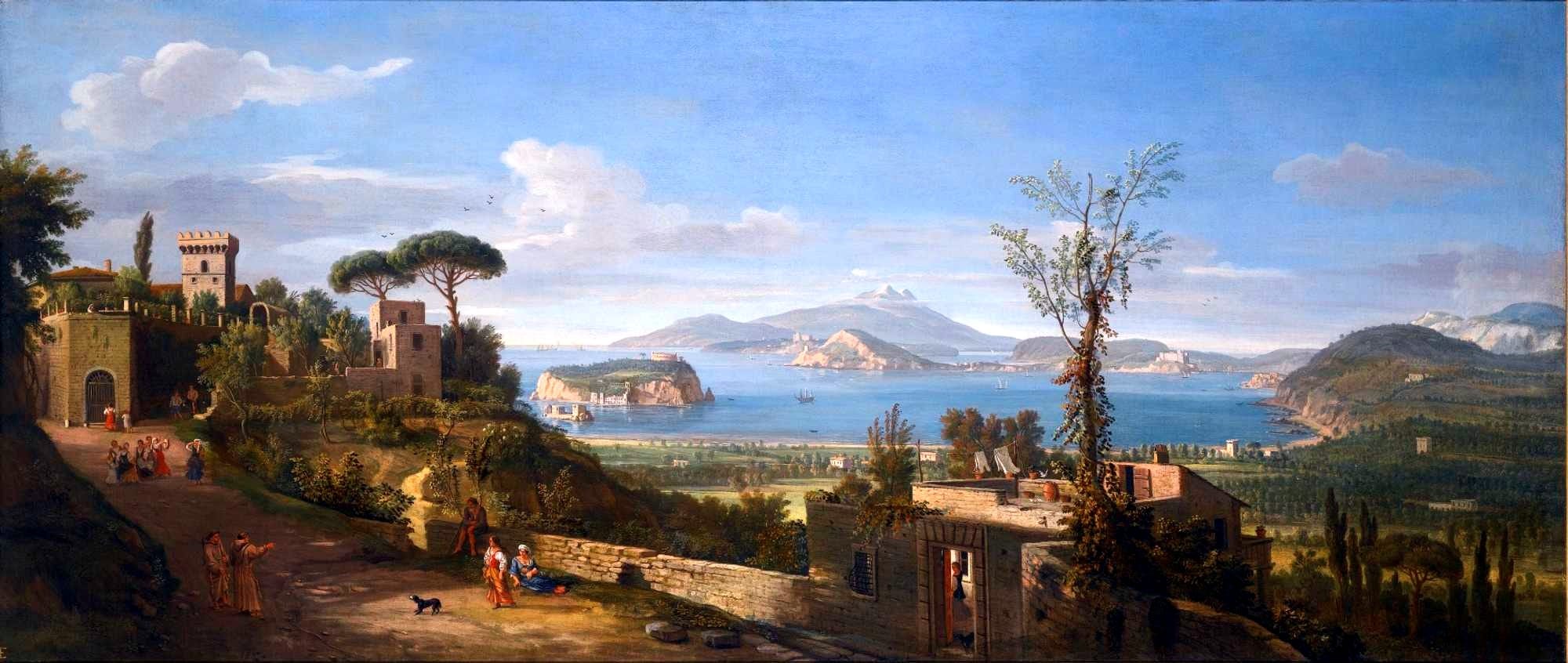
Their arrival could become an event. Seneca describes the advance vessels that announced the approaching Alexandrian fleet:
“Suddenly there came into our view to-day the ‘Alexandrian’ ships,—I mean those which are usually sent ahead to announce the coming of the fleet. ”Seneca, Moral Letters 77.1
At Puteoli, people hurried toward the waterfront to see them. The messenger ships could be distinguished by their topsails, which they were permitted to keep raised as they approached. Behind the spectacle was relief: another major consignment of food had made the voyage.
Arrival did not mean immediate availability. A surviving account from the late second century describes a man arriving with the Alexandrian grain fleet on 30 June but not unloading until 12 July. He reached Rome on 19 July, and by 2 August the ships had still not been released for their return voyage. The example should not be treated as a universal turnaround time, but it shows the pressure that a concentrated arrival of large ships could place on a harbour.
Storage allowed that pressure to be separated from consumption. Grain could be landed when ships arrived and then moved onward according to the capacity of the next stage of the system. This was particularly important because the transfer from the maritime ports to Rome created another bottleneck.
The danger became obvious whenever stocks ran low. Seneca recalled a crisis at the end of Caligula’s reign in which the officials responsible for the food supply concealed how little remained:
“had enough food left for at any rate seven or eight days” Seneca, On the Shortness of Life 18.5–6
That is a literary account of an exceptional crisis, not evidence that Rome normally kept only a week of grain in reserve. Its value lies elsewhere: the condition of the stores mattered enough that officials feared what would happen if the population learned how close they were to exhaustion.
From Puteoli to Ostia and Portus
For much of the late Republic and early Empire, Puteoli remained essential to Rome’s eastern maritime trade. Ostia stood at the mouth of the Tiber, but it was not a naturally protected deep-water harbour capable of solving every problem posed by large seagoing ships.
Claudius changed the scale of the system by constructing an artificial harbour north of Ostia, accompanied by substantial storage infrastructure. His intervention followed real pressure on the grain supply. Suetonius describes a shortage severe enough that Claudius was attacked in the Forum and forced to escape:
“he resorted to every possible means to bring grain to Rome, even in the winter season." Suetonius, Claudius 18.2
Claudius offered incentives connected with merchant shipping and assumed some of the risks caused by storms. The exact relationship between private enterprise, contractors and the transport of public grain remains debated, so these measures cannot simply be described as subsidies to independent grain merchants. What is clear is that they were intended to increase the transport capacity available to Rome’s supply system.
Trajan expanded the harbour complex again with the great hexagonal basin at Portus. The change was gradual rather than instantaneous, but Alexandrian grain traffic that had previously used Puteoli increasingly came directly to the ports near Rome.
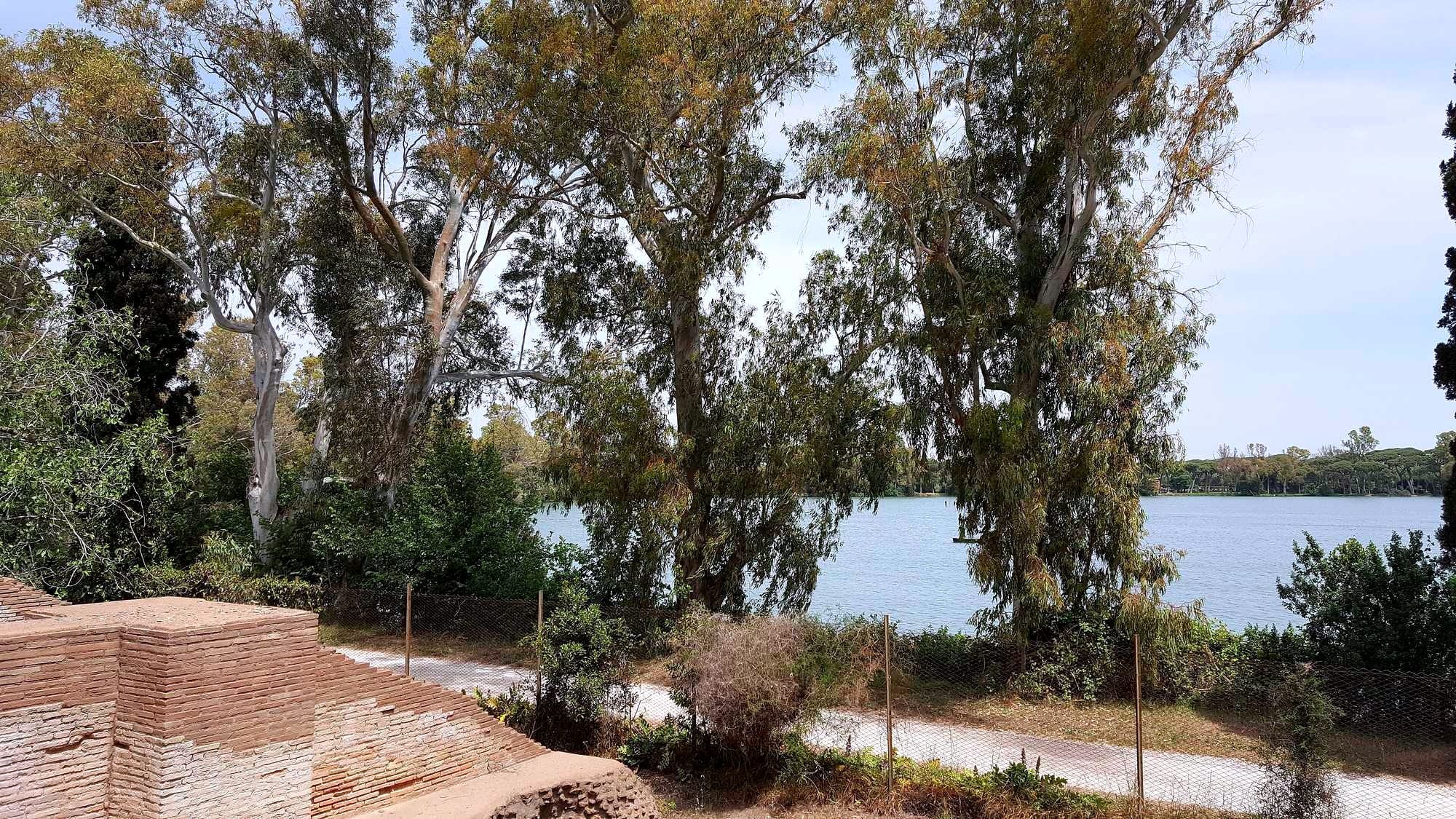
Portus did not make Ostia redundant. The two operated alongside one another, and the expansion of Portus coincided with a major second-century building boom at Ostia. More storage was being constructed and older warehouses were being modified even though enormous new facilities existed around the harbour basins.
That apparent duplication makes sense once the rhythm of the system is considered. Ships arrived seasonally, while goods could leave the ports for Rome more steadily. Storage was therefore needed at the maritime end and again at the city end. Warehouse capacity was not simply a measure of how much Rome consumed. It also reflected turnover, transport delays and the need to buffer one stage of the supply chain against another.
Ostia and Portus nevertheless developed differently. Ostia’s warehouses were embedded in an existing city. They varied greatly in size and plan, often surrounding courtyards or corridors and sometimes standing beside shops and other commercial activity.
Portus was more heavily dominated by large, modular storage structures arranged around the harbour installations. Its repeated, back-to-back rows of large cells were particularly well suited to the handling and accounting of bulk goods.
Neither distinction maps neatly onto “private Ostia” and “state Portus.” Ownership, contracts and administration overlapped far too much for that.
What Happened When a Grain Ship Arrived
The arrival of grain involved far more than carrying sacks down a gangplank.
Cargoes had to be registered, checked and measured. Egyptian documentation shows how elaborate the paper trail could become long before the grain reached Italy. Receipts might record quantity, crop year and quality. One surviving document describes wheat that had been checked for adulteration with earth or barley and had been sifted before transport. Copies of receipts passed between the people responsible for different stages of the journey.
Sealed samples could travel with cargoes as well. These samples, sometimes kept in small containers or leather wallets, allowed the grain delivered at the end of a journey to be compared with what had originally been accepted.
At Ostia, grain measuring became a specialized activity. The mensores frumentarii formed an important professional group. A mosaic associated with the grain measurers shows the procedure in action: grain is poured into a modius, its surface is levelled with a rutellum, while another figure appears to keep count with an accounting device.
Mensores should not, however, be confused with the permanent staff of individual warehouses. Their work could take place aboard vessels, at the harbour, in connection with stored stocks and when grain was subsequently released. The workers securely associated with the management of particular horrea include horrearii and vilici horreorum.
The physical movement depended heavily on the saccarii, the porters. Ostian warehouse architecture shows just how important human carrying remained. Many buildings stood above street level and had narrow entrances that effectively excluded carts. In the later form of the Grandi Horrea, an entrance corridor was only around 1.5 metres wide. Goods moved through these constricted points on people’s backs.
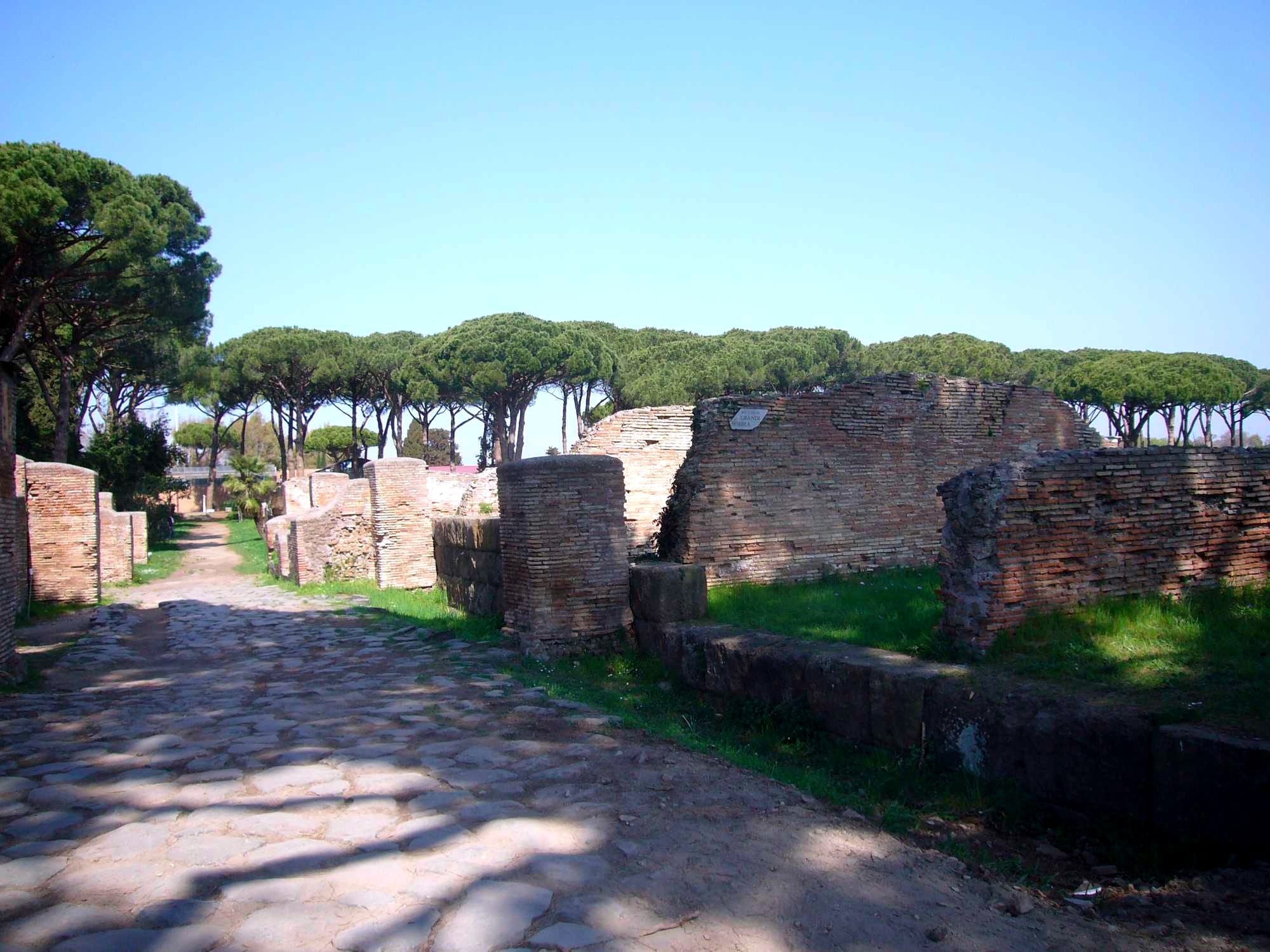
Upper floors did not remove that dependence. In some storage buildings, ordinary steps gave way to ramps so that porters could continue upward carrying their loads.
Portus was arranged differently. In the earlier form of the Magazzini cosiddetti di Traiano, storage cells and stairs or ramps could be reached directly from the quayside behind a colonnade. The arrangement favoured rapid discharge. Later alterations narrowed passage in front of the storage rooms, again indicating movement by individual porters.
One painted mark survives on the brickwork of a Portus cell: XIID, roughly 30 centimetres high and positioned where it could easily be read. Whether it meant something like cell 488 or cell 12 of section D remains uncertain. Either way, it shows a storage environment in which individual rooms could be identified within a larger system.
That mattered because “where is the grain?” and “how much grain is there?” were different questions. Documents from Puteoli identify numbered warehouse rooms, but in one transaction a creditor still required the contents of a particular room to be measured before accepting the stored goods as security.
Inside the Horrea
Horrea is often translated loosely as granaries, but that is misleading. Roman horrea could hold many kinds of goods.
Some names themselves make the point. Rome had the Horrea Piperataria, associated with pepper and other eastern commodities, as well as warehouses whose names were connected with other specialist goods. Evidence from the Horrea Galbana includes such varied materials as ivory, lentils, sand and amphorae.
Even buildings strongly associated with food storage cannot automatically be identified as grain warehouses from their architecture alone.
Raised floors, or suspensurae, are the clearest example. An older interpretation treated them almost as a signature of grain storage. Later work has shown that their function was more complicated. At Ostia they occur in the Horrea Antoniniani, were added to the Grandi Horrea in a later phase, and were also installed in another Hadrianic warehouse. At Portus extensive raised-floor systems are known in several storage buildings.
Some underfloor spaces did not communicate properly with the outside air, so ventilation cannot have been their only purpose. They could also reduce humidity, moderate temperature and distribute the weight of bulk goods.
Other features helped manage the storage environment. High, narrow windows encouraged airflow while limiting openings in the walls. Drainage protected buildings from surface water. At one Portus complex, the ground beneath the massive foundations was excavated deeply and replaced with a permeable mixture containing sand, pozzolana, chalk and ceramic material.
The Grandi Horrea at Ostia show why chronology matters. Their original first-century form did not simply contain every feature visible in the later ruins. During the second century the building was substantially modified, including the addition of an upper storey and raised floors. Later alterations squeezed still more usable space from the complex.
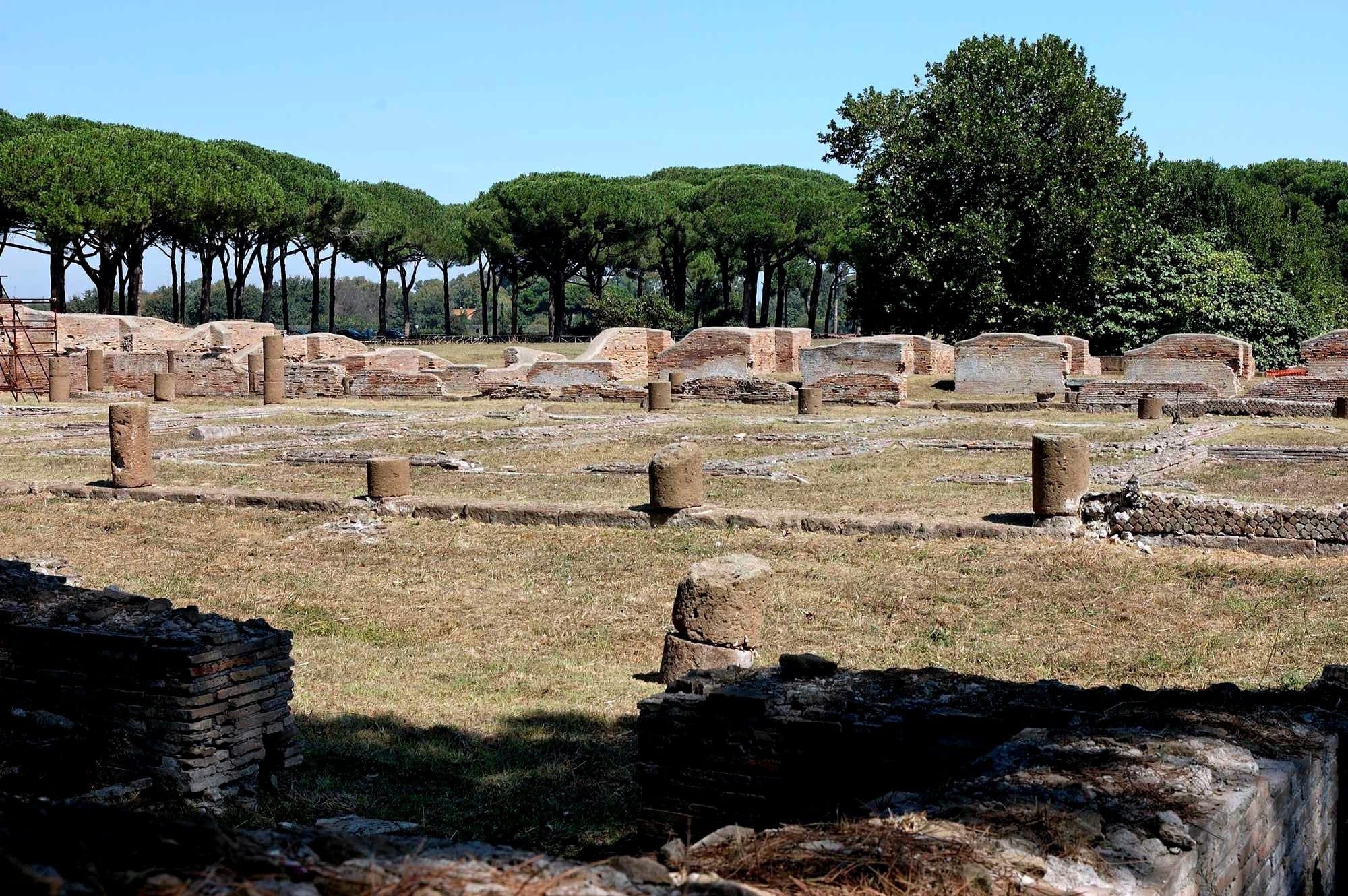
The Horrea Antoniniani were different. Their raised floors belonged to their original late-second-century construction. The complex was enormous, with a reconstructed ground-floor area of roughly 13,200 square metres, although that figure should be treated as an archaeological estimate rather than an ancient measurement.
Even the question of how grain sat inside these rooms remains unresolved. An older suggestion that civil warehouses commonly stored it in sacks is now difficult to maintain. Grain kept permanently in sacks is inefficient in its use of space and difficult to dry and aerate properly. No fixed wooden bin system comparable to that reconstructed in some military granaries has been identified in the major Ostian warehouses either.
Loose storage is plausible in at least some rooms. Certain entrances at the Grandi Horrea and at Portus had projecting elements that could help prevent loose material from spilling through the doorway. If grain was stored in bulk, floors had to remain dry and walls had to withstand the lateral pressure created by the mass inside.
Whatever the precise method, grain did not simply sit untouched. Stored grain required management, including turning or shovelling during quieter periods, while humidity, insects, mould and deterioration remained continuing threats.
Tacitus records an extraordinary demonstration by Nero after severe losses to the transport system:
“Nero threw the people's corn, which was so old as to be spoilt, into the Tiber” Tacitus, Annals 15.18
In the same passage, Tacitus reports about two hundred ships lost in a storm in the harbour and another hundred destroyed by fire on the Tiber. The spoiled grain is evidence that some public stocks could remain stored long enough to deteriorate; it should not be taken as a normal storage period.
Warehouses Were Businesses Too
A horreum was also a commercial space governed by rent, contracts, access and liability.
Storage space could be leased in both privately owned and imperial warehouses. A surviving notice connected with the private horrea of Q. Tineius Sacerdos lists an extraordinary variety of spaces available for hire: larger warehouse units, specialist storerooms, safe-deposit-type spaces, chests, spaces between columns and still smaller subdivisions. The precise meaning of every term is uncertain, but the inscription shows how finely storage could be divided.
Warehouse owners did not necessarily manage every rented room themselves. An entire building could be leased to someone who operated it and sublet parts to merchants or depositors. Imperial ownership therefore did not automatically mean that every operation inside the building was carried out by an imperial bureaucracy.
Access was taken seriously. At Ostia, warehouse doors preserved arrangements for bolts and wooden bars, and the Horrea Epagathiana et Epaphroditiana had particularly elaborate patterns of controlled entrances. Different corridors, stairways, the courtyard and the upper floor could be secured separately.
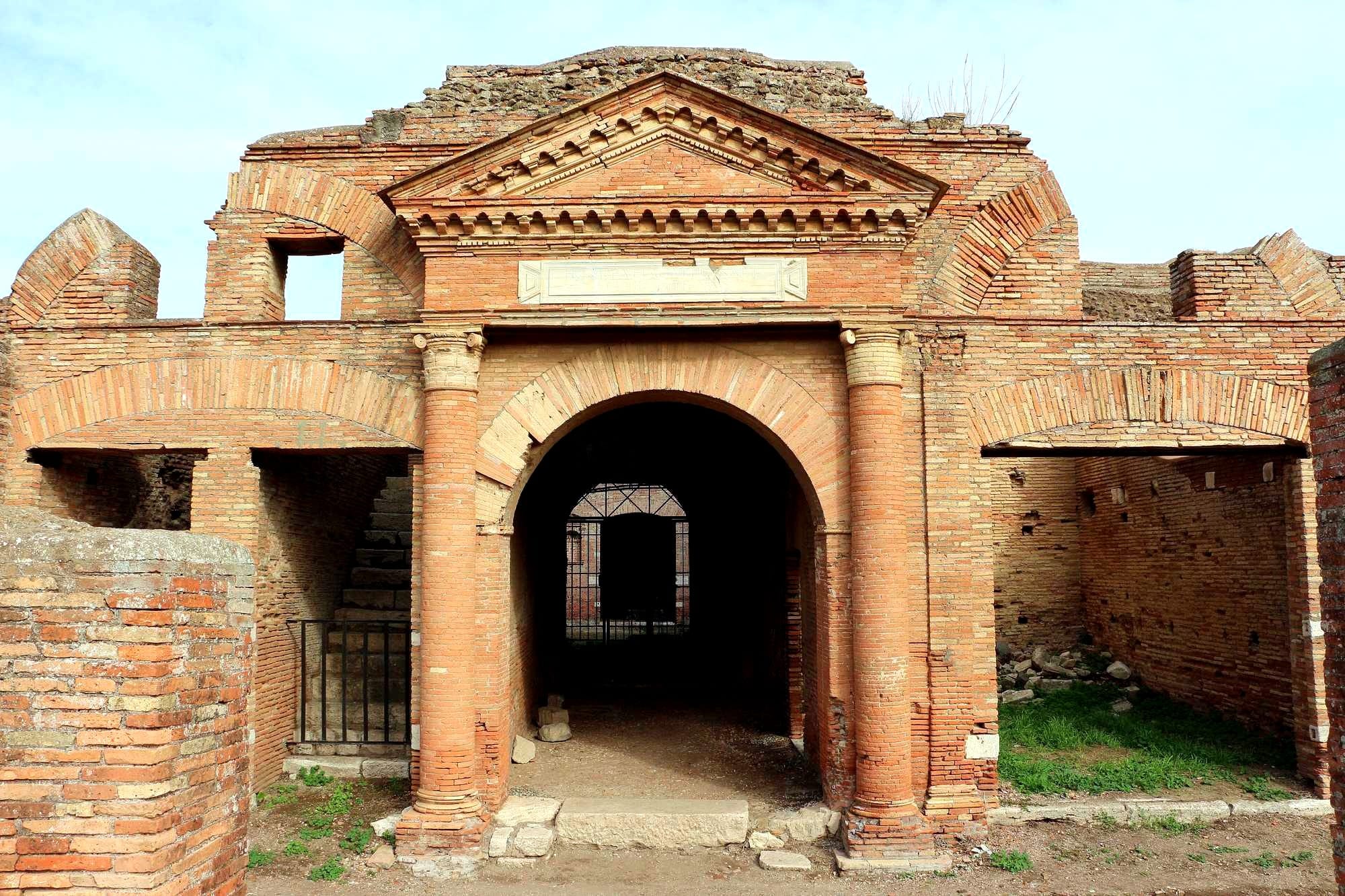
That building is itself a warning against treating every horreum as a granary. An inscription explicitly calls it horrea, yet its varied rooms, shops and sophisticated locking arrangements have led to interpretations ranging from secure rented storage to wholesale commercial premises. Its exact function remains uncertain.
The most revealing evidence for how storage, credit and access could intersect comes not from Ostia but from first-century Puteoli.
In AD 37, the grain dealer Gaius Novius Eunus had at least 7,000 modii of grain stored in a numbered cell of the publicly owned Horrea Bassiana. He also had legumes stored separately in 200 sacks between columns in the same complex. He pledged these goods to secure loans.
The transaction became physical. The lease of the warehouse cell was transferred to the creditor’s side for a nominal monthly rent, and the key was handed over. Control of a door became part of control of the pledged goods.
The documents also make deterioration somebody’s financial problem: the risk that the pledged goods would lose value remained with Eunus.
Although Puteoli was a different port, these tablets reveal the sort of commercial arrangements that the built environment of Ostia and Portus could support. Goods in storage were not necessarily dormant. They could be pledged, sold, transferred, released, moved to another room or assigned to another person while remaining within the warehouse system.
Three Days Up the Tiber
After grain had been unloaded, measured and stored at Ostia or Portus, much of it still had not reached Rome.
Seagoing cargoes had to be transferred to river craft suitable for the Tiber. The naves codicariae were adapted to this work. Their masts were positioned so that tow ropes could be attached, and upstream movement relied heavily on towing from the riverbanks by men and, at times, oxen.
The winding journey of roughly 35 kilometres could take about three days. Loading and unloading at each end added more time.
This explains why the huge warehouse infrastructure at the ports could not eliminate the need for another substantial storage network in Rome. The Tiber limited the rate at which the seasonal influx at the coast could be converted into supplies available in the capital.
Rome had been developing its commercial riverfront below the Aventine since the second century BC. The Emporium area acquired paved surfaces, river steps and large commercial buildings. During the Imperial period the riverbank was increasingly engineered with embankments, quays, ramps and warehouses.
Large travertine blocks pierced for mooring ropes were set into the riverfront. Some landing areas became associated with particular kinds of cargo. Barges approaching the city probably had to lie broadside against the quay because of the current, restricting the number that could unload simultaneously. Then the porters returned.
Saccarii carried loads from barges along narrow gangways and into the city’s storage system. Other specialists worked around them: saburrarii dealt with ballast, while urinatores recovered objects and merchandise lost into the water.
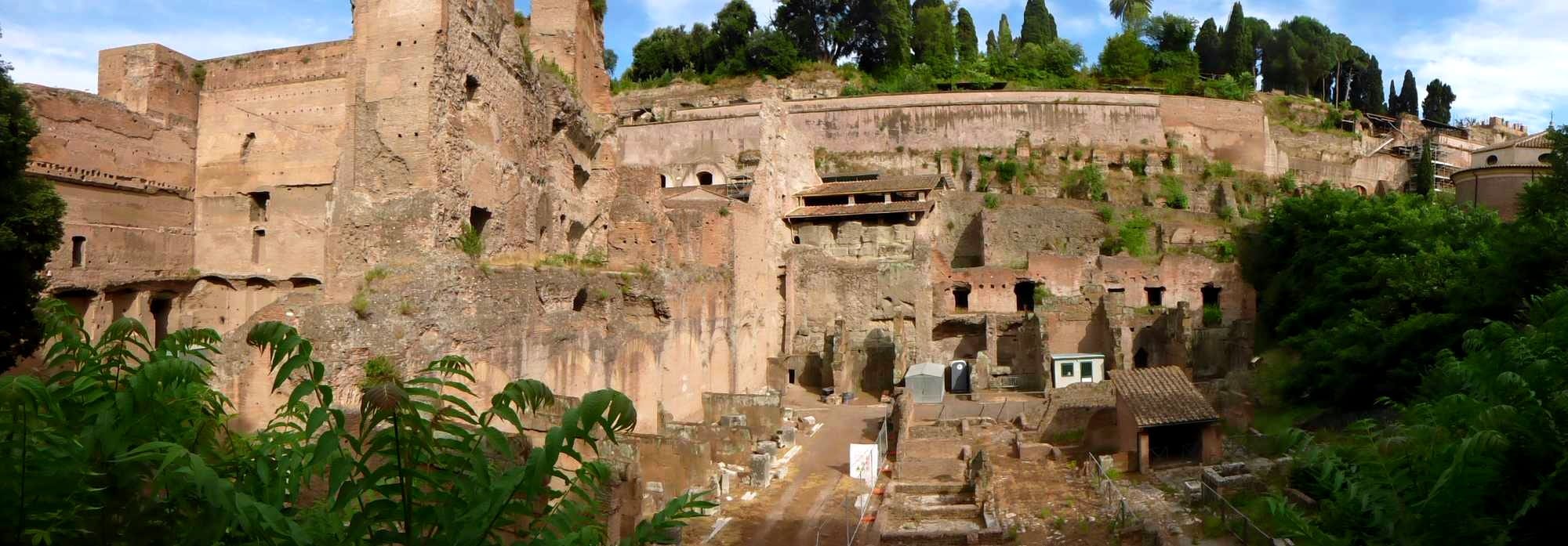
Some warehouses stood directly beside this activity. The Horrea Lolliana occupied a prominent position on the Tiber. More than eighty storage rooms are shown on the surviving portion of its Marble Plan representation, and the complete complex was larger still. Interestingly, the rooms along the river side did not simply open directly onto the quay. Its main entrances were positioned toward roads leading away from the river, apparently helping prevent all traffic from converging at a single waterfront entrance.
Nearby, the immense Horrea Galbana were organized around three great colonnaded courtyards in the surviving reconstruction. Their approximate footprint was about 167 by 146 metres, though both the dimensions and details depend partly on reconstruction from the Severan Marble Plan.
These were not merely giant grain bins. The Horrea Galbana handled varied goods and supported a workforce that included horrearii and operarii. Rome’s river district was an entire commercial landscape of warehouses, quays, roads, workers, traders and specialist storage rather than a single centralized grain depot.
From the Horrea to Bread
Arrival in Rome still did not complete the journey. Stored grain could move into several channels. Some public grain went to the regular frumentationes. Other supplies reached traders and bakers who served the broader urban food market.
The people operating at the end of the chain could themselves cross occupational boundaries. At Ostia, M. Caerellius Iazymis was identified both with river transport and the grain trade, and also held a leading position in the bakers’ guild. In Rome, the freedwoman Abudia Megiste appears in an inscription as a dealer in grain and legumes. Such individuals show that transport, wholesale dealing and food production did not always belong to completely separate professional worlds.
Roman bakers commonly combined milling with baking. Keeping grain whole until relatively close to consumption made practical sense because flour deteriorated faster. A load that had crossed the Mediterranean, waited in a port warehouse, travelled slowly up the Tiber and entered another warehouse in Rome might therefore still be grain until relatively near the end of its journey.
The infrastructure changed over time. By the later third century, public distributions themselves shifted from raw grain toward bread, altering the relationship between storage, milling, bakeries and distribution. That later system should not be projected backwards onto the first and second centuries, but it represents another stage in the long evolution of the machinery that fed the capital.
The warehouses were central to that machinery because they absorbed uncertainty. Ships did not arrive every day. Storms destroyed cargoes. Harbour processing could take days or weeks. Barges moved slowly upstream. Grain could deteriorate. Traders required temporary storage; officials required reserves; bakers required regular supplies.
Rome’s horrea turned those interruptions into something closer to continuity. Their courtyards, numbered cells, barred doors, ramps, raised floors and narrow windows belonged to a system stretching from Mediterranean harvests to loaves sold and distributed in the capital. Feeding Rome depended on ships and fields, but between the two stood an enormous amount of grain waiting behind locked warehouse doors.
Geoffrey Rickman, Roman Granaries and Store Buildings (Cambridge University Press, 1971)
Geoffrey Rickman, The Corn Supply of Ancient Rome (Oxford University Press, 1980)
Paul Erdkamp, The Grain Market in the Roman Empire: A Social, Political and Economic Study (Cambridge University Press, 2005)
Astrid Van Oyen, The Socio-Economics of Roman Storage: Agriculture, Trade, and Family (Cambridge University Press, 2020)
Seneca, Moral Letters, 77
Seneca, On the Shortness of Life, 18
Suetonius, Claudius, 18
Tacitus, Annals, 3.54; 15.18

About the Roman Empire Times
See all the latest news for the Roman Empire, ancient Roman historical facts, anecdotes from Roman Times and stories from the Empire at romanempiretimes.com. Contact our newsroom to report an update or send your story, photos and videos. Follow RET on Google News, Flipboard and subscribe here to our daily email.
Follow the Roman Empire Times on social media: