
The Roman Hostage System
Rome’s hostage system turned royal sons, noble youths, and local elites into living pledges of loyalty, peace, and political control.

In Roman foreign relations, a hostage was not simply another kind of prisoner. Prisoners could be seized in battle. Captives could be enslaved, ransomed, exchanged, displayed in triumph, or kept after defeat. A formal hostage belonged to a narrower category. He, or sometimes she, was handed over in connection with a surrender, a truce, a treaty, or a pledge of good faith.
The Latin word usually used for such a hostage was obses. (In Latin, obses, is a third-declension noun meaning "hostage", "pledge," or "security". It was frequently used by classical writers like Caesar and Livy to describe individuals given as guarantees for peace treaties. Its plural form is obsides.)
In Roman interstate dealings, the word normally referred to a person held as a surety for another party’s conduct. That did not make the arrangement gentle or voluntary. Hostages were often demanded after defeat, under military pressure, or during negotiations in which Rome held the stronger position. Still, the formal hostage was not just a body taken in war. The hostage represented an obligation.
That obligation was often connected with fides, the Roman idea of trust, loyalty, and good faith in public dealings. A hostage could be a pledge of peace, a sign of surrender, or a guarantee that a treaty would be observed. The hostage’s value came from rank and relationship. A king’s son, a senator’s child, or a noble youth was very important, because their family or community cared what happened to them.
This is why hostages appear in so many different settings in Roman history. They could be part of a formal surrender. They could be written into a treaty. They could be demanded from a community suspected of disloyalty. They could be paraded in a triumph. They could be released for political effect. In each case, Rome used a person of value to secure, display, or test a political relationship.
A Pledge of Peace
Livy’s story of Cloelia connects hostages directly with public faith. After Rome made peace with the Etruscan king Porsena, Roman hostages were included in the settlement. Cloelia, one of those hostages, escaped with other girls and crossed the Tiber back to Rome. Porsena demanded her return, and Rome sent her back.

The point is not only Cloelia’s courage. The hostage had escaped, but she was still part of a treaty. Livy says that honor was kept on both sides, and that the Romans returned the:
“pledge of peace according to the terms of the treaty.”
The person in custody was not treated only as an escaped captive. She was part of a public agreement, and restoring her preserved that agreement.
The story of Falerii makes the same distinction from another direction. During Rome’s siege of the city, a schoolmaster brought the children of leading Faliscans into the Roman camp and offered them to Camillus. The children had not been delivered by their city. They had been betrayed by a private act.
Camillus refused the offer and sent them back. Afterward, the Faliscans surrendered formally. Livy has their envoys say:
"Send men to receive our arms, our hostages, our city with its gates thrown open.”
The hostages belonged to public surrender, not to kidnapping by a traitor. These early stories are shaped as moral examples, but they preserve a clear distinction. A hostage was not just any vulnerable person in enemy hands. A formal hostage entered Roman control through a public act: treaty, surrender, truce, or pledge.
Surrender Before Treaty
In the earlier Roman pattern, formal hostages were closely connected with surrender. A defeated community could place itself in Rome’s power, giving up arms, territory, possessions, and hostages. Rome could then decide how harshly or mildly to treat the surrendering people.
This explains why hostages often appear where war is becoming controlled peace. The defeated side might not be destroyed. Its people might continue to live under their own local authorities. But hostages made the new relationship visible. They were proof that the community had accepted Roman superiority and had given Rome something valuable as security.
This also helps explain why the use of hostages changed as Rome expanded. In Italy, hostages were often tied to surrender or local loyalty. Outside Italy, especially from the Second Punic War onward, hostage clauses became more common in formal settlements with major powers. Rome was no longer dealing only with nearby Italian communities. It was negotiating with Carthage, Macedon, Sparta, the Aetolians, and the Seleucid kingdom.
A hostage clause could therefore move from surrender practice into treaty practice. It could be attached to a temporary truce, a final peace, or a wider diplomatic settlement. The person handed over still carried the same basic meaning: someone else was expected to keep faith.
The Children of Leading Families
Hostages were often selected from the leading families of a community. Their value came from the importance of the people behind them. A royal son could stand for a king’s promise. A senator’s child could stand for a local elite’s loyalty. A noble youth could represent a city’s future and the families who governed it.
During the Second Punic War, Rome became worried about Arretium. Reports of possible disloyalty grew more serious, and written orders were sent that hostages should be taken from the Arretines. A Roman commander entered the city with troops, summoned the local senate, and demanded hostages.

When the senators asked for time, the threat became direct. Livy says the commander ordered them to provide hostages immediately,
“forthwith, or he would the next day take all the children of the senators.”
The next day, 120 children of senators were taken and sent to Rome. This was not a foreign treaty after a decisive battle. It was a case of suspected disloyalty inside Italy while Hannibal’s war still threatened Rome. The hostages were taken because Rome feared what the local elite might do. Their children became the guarantee.
The Arretium episode shows the pressure built into the system. The hostages were not chosen because they themselves had power. They were chosen because their fathers did. Rome used family bonds to secure political obedience.
Hostages in Peace Treaties
After Zama, hostage-taking became part of the peace imposed on Carthage. The treaty did not only demand money. It also restricted Carthage’s military power, required the surrender of ships and elephants, dealt with prisoners and deserters, and limited Carthage’s future freedom of war.
The hostage clause was precise. Livy records that Carthage was ordered to provide:
“a hundred hostages,”
selected by Scipio,
“not younger than fourteen nor older than thirty.”
This was not a random seizure after victory. It was a formal condition of peace. The same settlement made hostages part of a broader peace. They stood beside restitution, indemnity, military restrictions, and Rome’s control over Carthage’s future wars. The hostages were not the whole treaty, and they were not only attached to the money payments. They were part of the peace structure imposed after defeat.
The treaty of Apamea, after Rome’s war with Antiochus III, shows the same practice in another major settlement. Antiochus had to pay, withdraw from territories, give up enemies of Rome, and provide hostages. Livy gives the hostage clause as follows:
“Let him deliver to the Romans twenty hostages, and change them every third year; none of which are to be younger than eighteen, or older than forty-five years.”
This was not a one-time gesture. The hostages had to be replaced at regular intervals. The clause made hostage-taking a continuing obligation written into the peace.
The age limits were also of great importance . The treaty did not ask for anyone at random. It wanted hostages within a defined age range, usually young enough to matter for the future but old enough to be politically valuable. This was a practical system, not merely a symbolic one.
Where Hostages Were Kept
Hostage-taking did not end when the hostages were handed over. They had to be moved, guarded, and kept somewhere. Some were sent to Rome. Some were kept in Italian towns. Some royal hostages lived long enough under Roman control to form relationships that later mattered politically.
A practical glimpse appears in the case of Carthaginian hostages kept at Setia. Livy describes them as:
“the children of the principal families,”
and says they had slaves with them. Their status remained visible even while they were under Roman custody.
The same episode also shows the anxiety created by foreign hostages in Italy. After a slave conspiracy, there was fear that Carthaginian hostages and prisoners had encouraged the plot. Watches were set in Rome, and prison guards were tightened. Hostages were diplomatic guarantees, but once they were inside Italy, they also became a security concern.
This practical side is easy to miss. A hostage clause was not only a line in a treaty. It created years of responsibility. Hostages had to be housed. Their status had to be managed. Their families and cities continued to care about them. Their release, replacement, or death could become political events.
Hostages Before the Roman People
Hostages could also be displayed in triumphs. This placed them in Roman public life. A hostage in a treaty secured future conduct. A hostage in a triumph showed that a foreign ruler or people had submitted.
Livy says that “captives and hostages” were led before the chariot of Titus Quinctius Flamininus in his triumph. Among them were Demetrius, son of Philip V of Macedon, and Armenes, son of Nabis of Sparta.
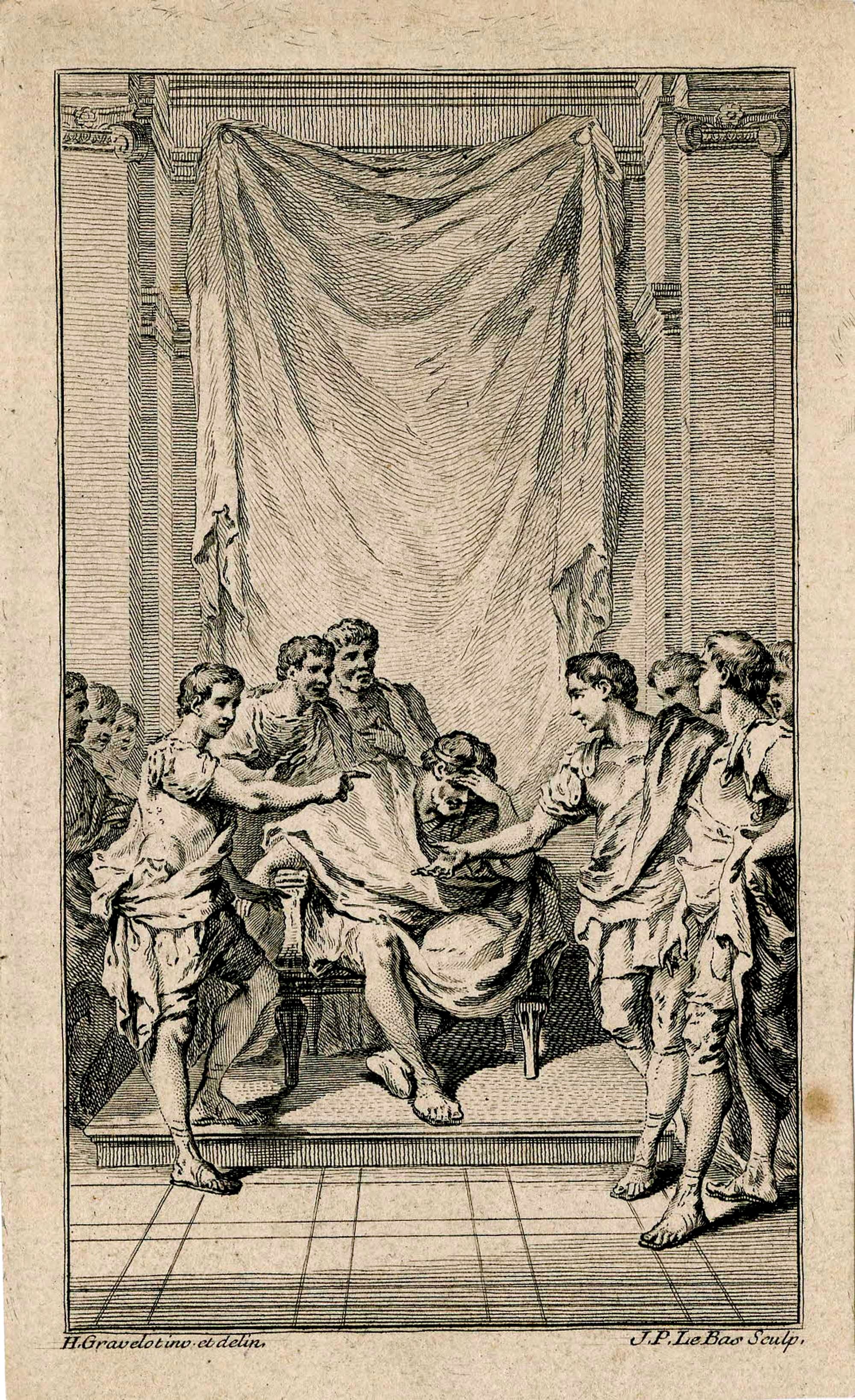
This was extremely important because both were sons of defeated rulers. They were not ordinary prisoners. Their presence showed that Rome had forced kings to give up members of their own families. The crowd saw not only captured goods and defeated soldiers, but living pledges of royal submission.
A triumph turned diplomatic leverage into public spectacle. Hostages were part of the proof that a Roman commander had not merely fought a war, but ended it on Roman terms.
Demetrius of Macedon
Demetrius, son of Philip V of Macedon, is one of the clearest examples of how a hostage’s importance could outlast the treaty that produced him. After Philip’s defeat in the Second Macedonian War, Demetrius was given to Rome. He was part of the settlement that followed the war and later appeared in Flamininus’ triumph.
In the final peace, his role is stated plainly. Livy says that hostages were received for the performance of the conditions, and that Demetrius was among them. The hostage was security for the peace terms.
Demetrius was later restored to his father. His return did not erase his Roman connection. When Philip later sent him to Rome as an envoy, the Senate received him favorably. Livy says Rome had restored his person to Philip, but still had:
“his mind as a hostage.”
That phrase shows the political afterlife of hostage-taking. Demetrius was no longer physically held in Rome. Yet his Roman experience still lived inside him. He had lived among Romans, was known by senators, and could be trusted by them in a way that other Macedonian envoys could not.
In Macedon, that same connection became dangerous. Demetrius’ brother Perseus used his Roman ties against him. Philip became suspicious. A former hostage who had once been useful because Rome trusted him now looked dangerous because Rome trusted him.
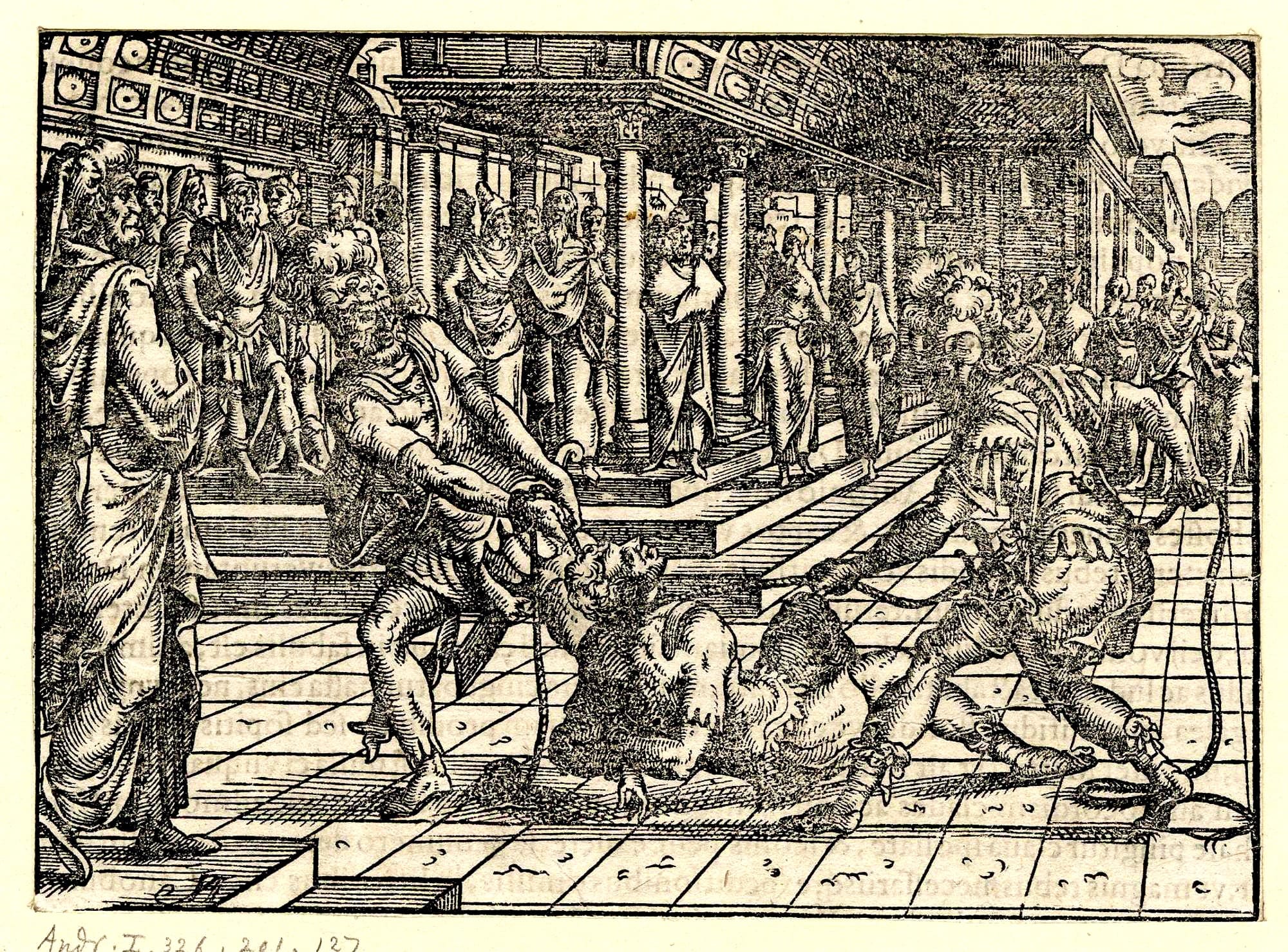
The story ends violently. Demetrius was accused, isolated, and secretly killed. The former hostage’s Roman connection had not protected him. It had made him politically exposed inside his own royal house.
Sparta, the Aetolians, and Greek Politics
The hostage system also appears in Roman dealings with Sparta and the Aetolians. These cases show that hostage-taking was not limited to Carthage, Macedon, or the Seleucid kingdom. It also belonged to the complicated Greek politics of the second century BC.
Nabis of Sparta had to provide hostages after his defeat. His son Armenes was among them. Like Demetrius, he later appeared in a Roman triumph. The sons of two rulers, Philip and Nabis, were displayed before the Roman people as proof that both had submitted to Roman terms.
The Spartan hostages later played a role in another political setting. Questions about their release became connected with disputes over Sparta, exiles, and the Achaean League. Their value did not end with the original settlement. Hostages could remain useful in later negotiations.
The Aetolians also had to deal with hostage demands after the defeat of Antiochus at Thermopylae. The evidence is less full than for Carthage or Macedon, but the pattern is familiar: defeat, negotiation, Roman demands, and hostages as part of the political settlement.
These Greek cases show the flexibility of the Roman system. A hostage could secure peace, mark submission, or remain part of a later dispute between Rome and Greek communities.
Seleucid Hostages
The treaty of Apamea brought Seleucid royal hostages to Rome. Antiochus III had to provide hostages after his defeat, and the agreement required their replacement. This created a continuing link between the Seleucid royal house and Rome.
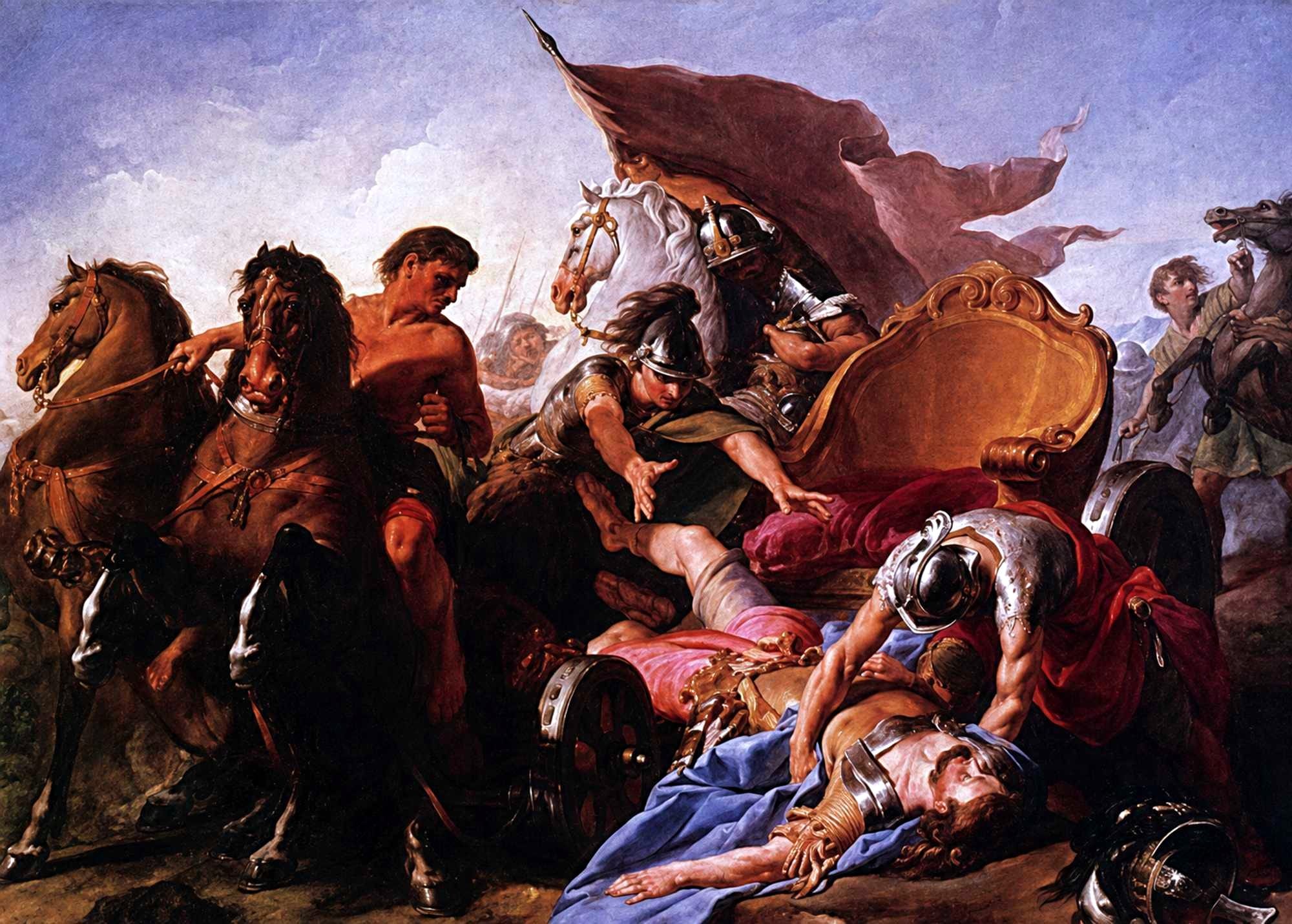
Antiochus IV Epiphanes, the king’s son, spent years in Rome as a hostage. Later, Demetrius, son of Seleucus IV, was sent in his place. These were not minor figures. They were royal men whose later careers mattered in eastern politics.
The formal purpose was clear: they were guarantees for the treaty. But royal hostages could become more than guarantees. A prince who lived at Rome learned Roman politics, met Roman aristocrats, and returned home with a reputation shaped by his Roman stay.
Livy says that, while Antiochus was at Rome,
“he was treated as a sovereign, not as a hostage.”
The phrase shows the difference between legal status and social treatment. A royal hostage could still be received as a prince.
That did not always make a returned hostage safer. A returned hostage might be useful to Rome, but suspect at home. He might have contacts that made him diplomatically valuable, but those same contacts could make rivals fear him.
The Seleucid cases therefore resemble Demetrius of Macedon without being identical. The treaty first created hostages as guarantees. Their years in Rome then created political consequences that could last beyond the treaty clause itself.
Hostages and Roman Influence
The ancient evidence does not need to be forced into a single explanation. Some hostages clearly formed Roman connections. Some returned home with Roman knowledge, Roman relationships, and a changed political position. Demetrius of Macedon is the clearest example.
But the treaty clauses themselves usually speak first of security. They require hostages as sureties, pledges, or guarantees. They do not normally describe hostages as students sent to Rome for cultural training. Roman influence could grow from custody, but the formal reason for taking hostages was usually to secure conduct.
This distinction makes a point. Rome did not need a cultural program for hostages to become useful. A hostage could become useful simply by living in Rome, knowing Roman aristocrats, and later returning to a court where Roman friendship mattered.
The system could therefore shape politics without always needing to begin as a plan of education. A hostage was first a pledge. Over time, that pledge could become a contact, an envoy, a rival, or a future ruler.
Caesar’s Hostages in Gaul
Caesar’s Gallic War gives a different view of the system. In Gaul, hostages appear repeatedly in negotiations, surrenders, tribal disputes, and campaign decisions. They are not confined to one grand treaty after a major war. They appear as a practical tool of control.
During the Helvetian campaign, Caesar demanded hostages before making peace. Caesar says Divico refused the humiliation and answered that it was the ancestral practice of the Helvetii:
“to receive, not to offer, hostages.”
The answer shows what hostage-giving meant. To give hostages was to accept the weaker position. To receive them was to stand above the other party.
After the Helvetii were defeated, Caesar demanded the surrender of hostages, arms, and deserters. The terms came together. Hostages were one part of submission after defeat.
The Veneti episode shows that hostages mattered enough to provoke danger. Caesar says the Veneti detained Roman envoys because they hoped:
“to recover their own hostages”
previously given to Crassus. The affair is then presented as a serious violation that led to war.
Hostages also reached into the families of leaders. In the case of Indutiomarus of the Treveri, Caesar demanded 200 hostages. These included the leader’s son and relatives. The point was not only to take numbers. It was to take people whose loss would matter.
Gallic chiefs were also taken when the army sailed to Britain. Caesar feared a rising in Gaul during the expedition, so he took many chiefs with him:
“by way of hostages.”
This was not a treaty clause. It was a way to reduce the risk of revolt while the Roman army was away.
At Noviodunum, the political value of hostages appears from the opposite direction. Caesar had gathered there:
“all the hostages of Gaul,”
along with corn, money, baggage, and horses. When the Aeduan revolt spread, the guards were killed and the hostages were sent to Bibracte. Caesar had concentrated political leverage in one place, and his opponents understood its value.
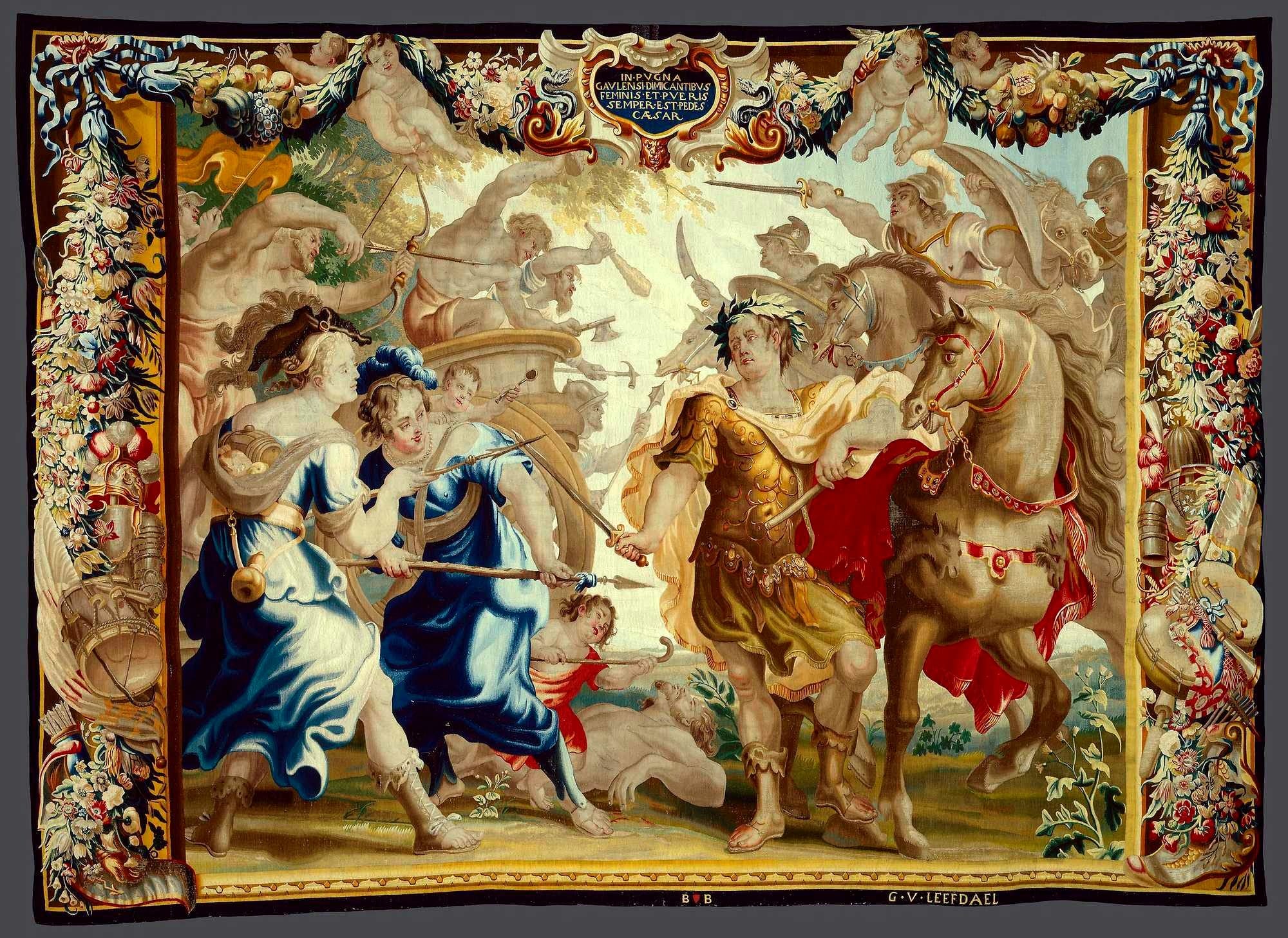
In Caesar’s account, hostages repeatedly mark submission and control. A people gives hostages when it yields. A leader’s relatives are taken when loyalty is uncertain. Hostages are moved or held to manage risk. They are also recovered, seized, or transferred when control breaks down.
Scipio and the Hostages at New Carthage
The hostage system was not only Roman. Carthage used hostages in Spain, and Rome later turned that fact to its advantage.
When Scipio planned the attack on New Carthage in 209 BC, he knew the city held Carthaginian money, war material, and hostages from across Spain. These people had not been given to Rome. They belonged to Carthage’s system of control over Iberian communities.
After the city was taken, Scipio did not treat those hostages as ordinary prisoners. Polybius says he invited the hostages,
“over three hundred in number,”
to visit him. Then,
“calling the children to him one by one,”
he reassured them and told them that they would soon see their parents.
He also told the others to write home that they were safe and that Rome was willing to restore them if their relatives became allies. In the narrative, the release of hostages became a political act. Carthage had held them to control Iberian communities. Rome could release them to win support from those same communities.
The effect is shown when Iberian leaders came to Scipio. Edeco wanted his wife and children restored and asked to be recognized as a friend. Scipio returned them and made him an ally. Other Iberians followed. The hostage relationship had changed hands.
This episode shows the system’s flexibility. Taking hostages was one kind of power. Releasing hostages could be another. Rome did not need to be the original hostage-taker to profit from the hostage relationship.
When Hostages Did Not Work
Hostage-taking did not always prevent conflict. Communities rebelled despite having given hostages. The Veneti tried to recover theirs by seizing Roman envoys. Gallic hostages gathered at Noviodunum were removed when the Aeduan revolt spread. Demetrius’ Roman connection did not make Macedon stable or make him safe.
This does not mean hostages were useless. It means their value was broader than simple prevention. They could delay revolt, provide leverage, mark surrender, support a treaty, strengthen a Roman commander’s public standing, or create relationships that mattered years later.
Their failure in one sense could coexist with success in another. A hostage might not permanently secure a treaty, but still show that Rome had imposed terms. A royal hostage might not create a loyal client king, but still give Rome a contact inside another court. A group of noble youths might not prevent future war, but their presence in Italy still represented the defeat of their city or kingdom.
The system was therefore not a guarantee that always removed future danger. It was a recurring instrument of Roman power, used because it could serve several purposes at once.
A System Between War and Diplomacy
The Roman hostage system worked by turning people of rank into pledges of political conduct. That is why the sources so often speak of children of senators, royal sons, noble youths, and relatives of leaders. Rome wanted hostages whose absence would be felt.
The system developed as Rome expanded. In early Italian practice, hostages often appear with surrender. In Mediterranean diplomacy, they become part of treaties and long-term settlements. In Greek and eastern politics, royal hostages could become figures in later dynastic struggles. In Caesar’s Gaul, hostages appear as tools of campaign control.
The ancient sources show the system in many forms: Cloelia returned under treaty, the Faliscans offering hostages after surrender, Arretine senators’ children sent to Rome, Carthaginian youths chosen after Zama, Seleucid hostages replaced under treaty, Demetrius displayed and later destroyed by suspicion, Gallic hostages demanded by Caesar, and Iberian hostages restored by Scipio.
In each case, the hostage was more than a prisoner. The hostage was a pledge, a sign, a guarantee, and sometimes a future political problem. Rome used hostages because they stood at the point where defeat, agreement, loyalty, and power met.
Livy, History of Rome, Books 1–8, trans. Daniel Spillan. Project Gutenberg.
Livy, History of Rome, Books 27–36, trans. Cyrus Edmonds. Project Gutenberg.
Livy, History of Rome, Books 37 to the End, trans. W. A. McDevitte. Project Gutenberg.
Polybius, The Histories, trans. W. R. Paton. LacusCurtius / University of Chicago.
Julius Caesar, The Gallic War, trans. W. A. McDevitte and W. S. Bohn. LacusCurtius / University of Chicago.
Maurice James Moscovich, The Role of Hostages in Roman Foreign Policy. Doctoral thesis, McMaster University, 1972.
Simon Thijs, “Hostages of Rome,” Athens Journal of History, Vol. 2, No. 3, 2016.
Jason Governale, “Hostages in Imperial Rome: ‘Romanization’ and Resistance.”
Elinor Grace Cosgrave, Captive-taking in the Late Roman Republic and Early Principate: Historical Realities and Elite Representations. Doctoral thesis, University of Leeds, 2021.




About the Roman Empire Times
See all the latest news for the Roman Empire, ancient Roman historical facts, anecdotes from Roman Times and stories from the Empire at romanempiretimes.com. Contact our newsroom to report an update or send your story, photos and videos. Follow RET on Google News, Flipboard and subscribe here to our daily email.
Follow the Roman Empire Times on social media: