
The Philosopher-King Who Never Came: How Rome Succeeded Where Plato Failed
Plato believed that justice was impossible without a philosopher-king—a ruler who grasped the Form of the Good and governed by wisdom rather than appetite. He spent much of his life searching for such a ruler. He never found one.
Rome, meanwhile, built one of the most durable political systems in history. Its founders were not philosophers—or so the tradition holds. A caveat is necessary here: the "seven kings" of Rome are not straightforwardly historical figures.
No Philosophers Needed: A Contextual Background
Livy, writing in the age of Augustus some seven centuries after the events he describes, was composing a founding narrative as much as a chronicle. Romulus killing his brother, Numa consulting a nymph, Tarquinius Superbus as the ur-tyrant: these are literary and ideological constructions, shaped by later Roman self-understanding.
Modern historians, from T. P. Wiseman to Tim Cornell, treat the regal period with considerable skepticism. This essay uses the tradition as Livy intended it—as a mirror of Roman political values, not a transcript of Roman political events. What that tradition consistently reveals is significant regardless of its literal truth: Rome's foundational stories locate political achievement not in the wisdom of individual rulers, but in the structures they leave behind.
Yet those structures did not eliminate the problem Plato identified—they managed it. The Roman system depended on mos maiorum—an unwritten normative tradition encompassing ancestral custom, precedent, and obligation, which no statute could fully capture or enforce.
When that tradition eroded, the institutions it had animated proved insufficient. The late Republic did not collapse for lack of structure, but for lack of restraint among those who operated within it. Rome's eventual faltering demonstrates that institutions can delay—but not eliminate—the need for something like civic virtue.
The Philosopher Who Failed: An Introduction
In 367 BCE, Plato sailed to Syracuse. He had been invited by Dionysius II, a young tyrant who seemed eager to learn. Plato saw an opportunity: here was a ruler he could mold into the philosopher-king he had described in his Republic—a ruler who would govern by wisdom rather than appetite, justice rather than whim.
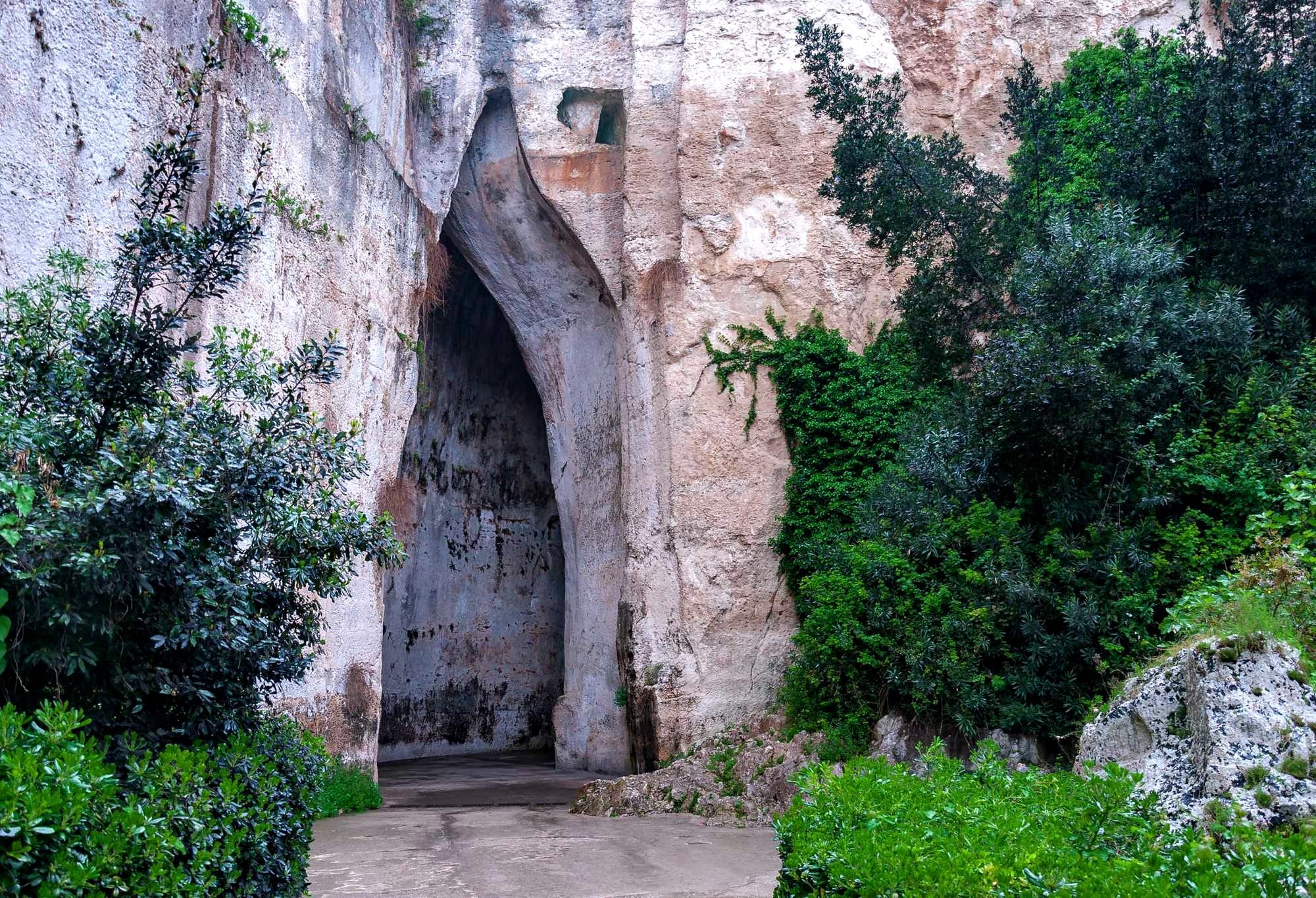
It did not go well. Dionysius's courtiers accused Plato of plotting against the tyrant. He was exiled. On the voyage home, his ship was captured by pirates. Plato was sold into slavery in Aegina, and ransomed by Anniceris of Cyrene—a name worth remembering for the irony it carries: the great theorist of the ideal state saved not by a philosopher-king, but by the generosity of a practical stranger.
He returned to Syracuse twice more, hoping to salvage something from the wreckage. Each time, the same pattern: hope, intrigue, exile. Dionysius could not—or would not—become a philosopher. There was one figure in Syracuse who might have answered Plato’s hopes: Dion, the tyrant’s brother-in-law, a man of genuine philosophical seriousness who had studied at the Academy and shared Plato’s conviction that rule should be grounded in wisdom.
Plutarch’s account of Dion’s life reads as a sustained demonstration of why this conviction was fatal in practice. Dion eventually seized power in Syracuse—only to be assassinated by his own allies, his philosophical commitments no protection against the appetites of the men around him. The would-be philosopher-ruler did not fail for want of philosophy. He failed because philosophy was not enough.
In his Seventh Letter, Plato wrote of these journeys with bitterness and something close to embarrassment. He had gone to Syracuse full of hope, believing he could create a just city by shaping a just ruler. He left having demonstrated the opposite: that the gap between philosophical understanding and political power was not a problem of circumstance but of kind. The man who could rule well by wisdom alone did not appear to exist.
This failure has led many to dismiss the philosopher-king as a beautiful but useless fantasy. And yet Plato's underlying question—whether governance can ever be grounded in genuine knowledge rather than appetite, faction, and accident—has not gone away.
What changes across history is not the question but the proposed answers. This essay turns from Plato's failed answer to a different one: not the rule of the wise, but the construction of something that makes individual wisdom less necessary.
Plato's Utopia: Wisdom as the Precondition of Justice
In Book V of the Republic, Plato makes his case through Socrates:
"Until philosophers are kings, or the kings and princes of this world have the spirit and power of philosophy, and political greatness and wisdom meet in one… cities will never have rest from their evils—no, nor the human race, as I believe."
Plato's claim is often dismissed as utopian, but this risks understating its force. The philosopher-king is not merely a proposal but a diagnosis: that without genuine knowledge of the good, political power will tend to drift toward appetite, faction, and instability.
The apparent impossibility of his solution may be the point—not that philosophers will rule, but that without them, something essential is always missing. Every political system, on this reading, is permanently incomplete. The best it can do is manage the consequences of that incompleteness.
Read this way, the Republic is less a political blueprint than a challenge. It forces a difficult question: if those who know should rule, but those who rule rarely know, what follows for any real political system? Plato believed that until wisdom and power meet in the same person, cities will never know peace—not just Athens or Sparta, but all cities, and indeed the human race itself. Plato himself admitted this was deeply unrealistic, and he spent much of his life trying to prove otherwise. He failed.
Alongside the philosopher-king, the Republic introduces another device that reveals how seriously Plato took the problem of political cohesion. In Book III, Socrates describes what he calls an "audacious fiction"—a founding myth to be told to the citizens of the ideal state.
Rulers, soldiers, and people alike would be told that their upbringing and education were a dream; that in reality they had been formed inside the earth itself, which was their true mother, and that their fellow citizens were their brothers and sisters by nature.
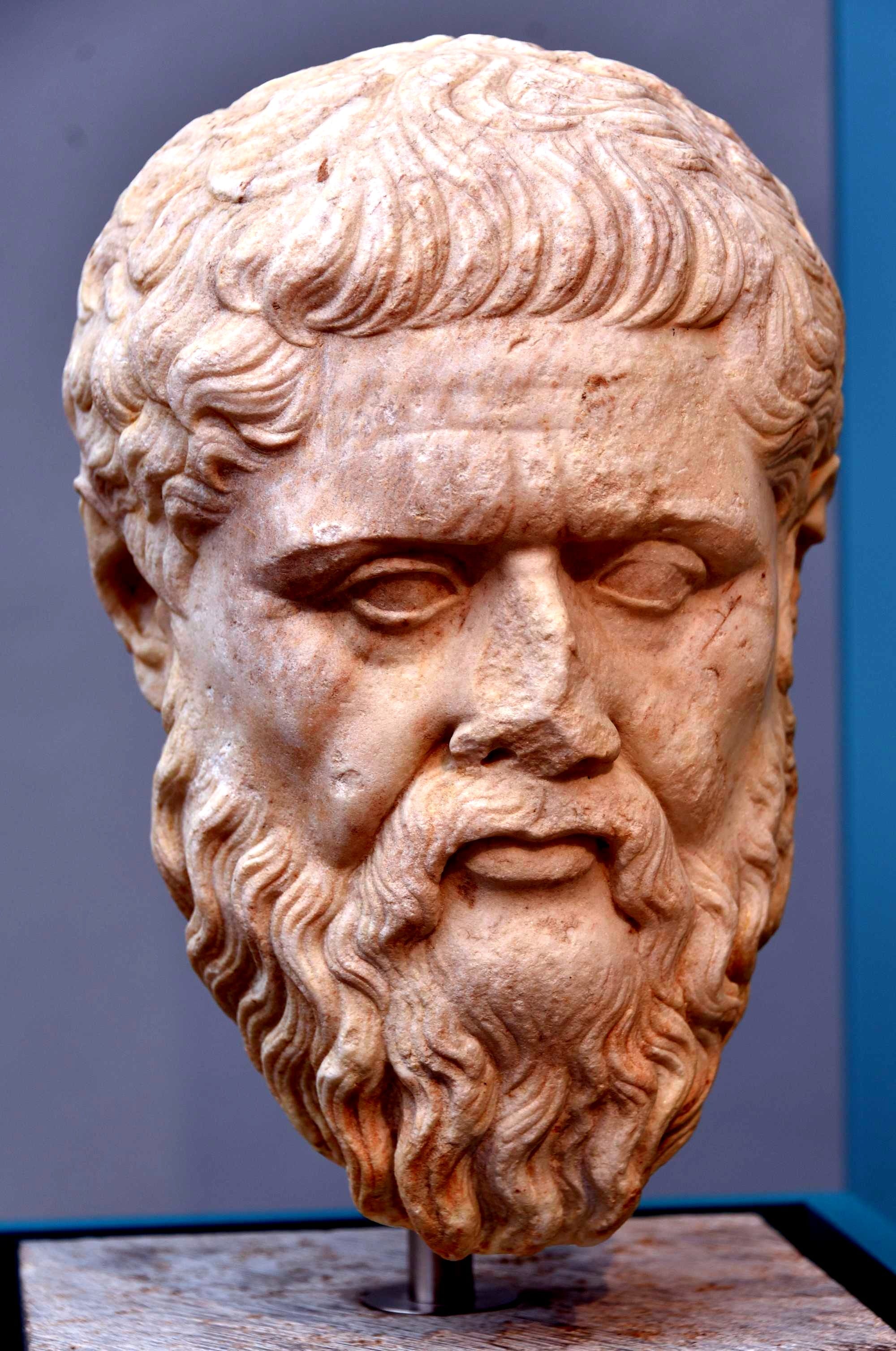
Plato calls this lie audacious because it is bold and shameless. Its purpose is not to deceive for its own sake but to bind. If citizens believe they share the same mother—the earth, the city itself—they will fight for each other, defend the state as family, and accept the hierarchy of roles that reason demands.
The content of the myth matters less than its effect: a population that acts as though justice is natural rather than imposed. This is Plato at his most unsettling—the philosopher who insists on truth above all things, designing a foundational falsehood, because he understands that political communities cannot be held together by argument alone.
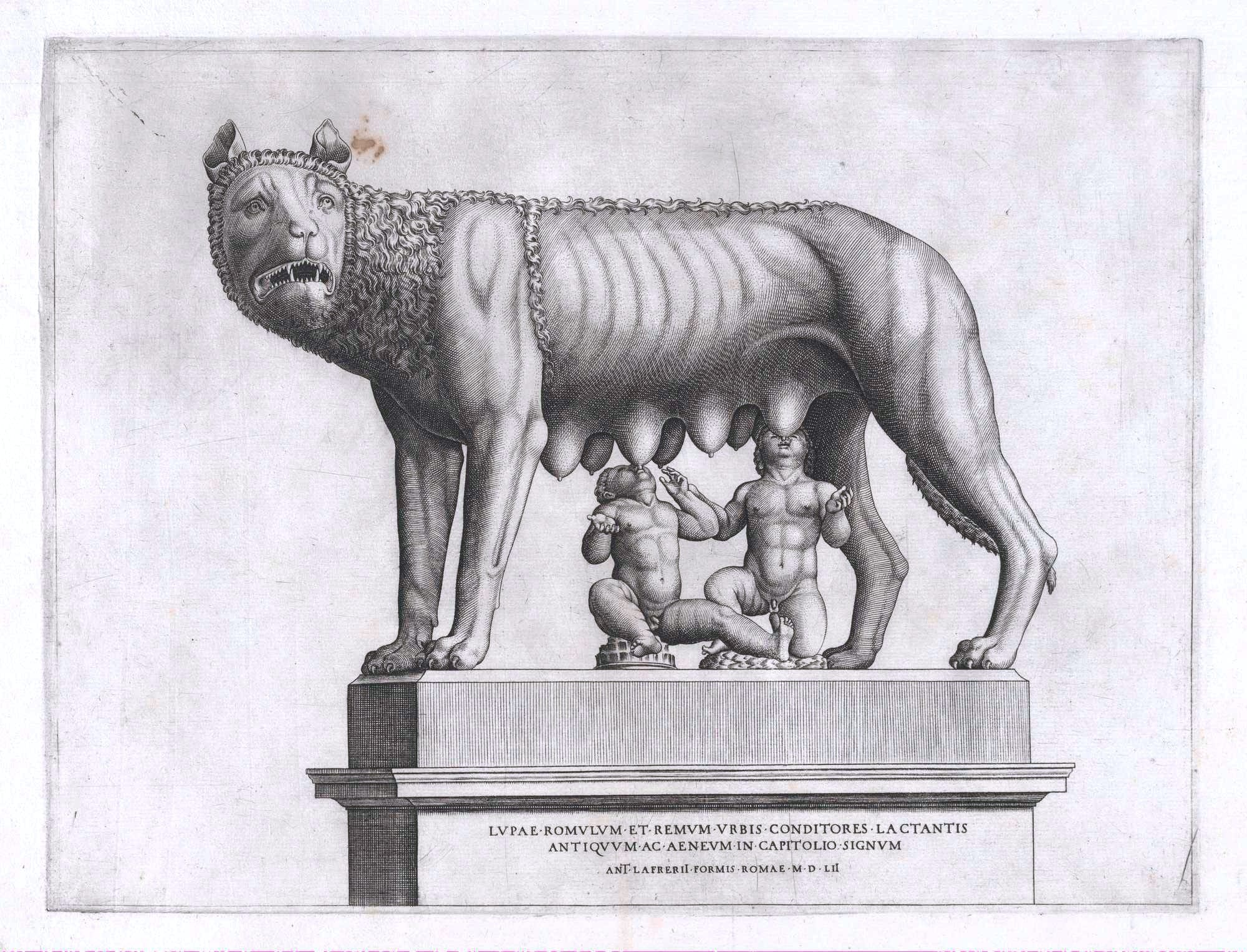
Rome, which might seem to stand entirely apart from Plato's mythmaking, turns out to be closer than it first appears. Roman identity was sustained by its own narratives—of divine ancestry, sacred founding, and ancestral virtue. The story of Romulus and Remus, the descent of the Julian line from Aeneas, the sacred rituals of Numa: these were Rome's noble lies, diffuse and embedded in custom rather than declared outright by a philosopher.
If Plato's fiction was explicit and engineered, Rome's was organic and inherited. But both served the same function: they made citizens willing to die for something larger than themselves. The distinction between Platonic idealism and Roman pragmatism becomes less absolute here. Rome did not escape the need for myth. It simply never had to announce it. And perhaps that is the stronger version of Plato's insight—a community whose binding stories feel like memory rather than instruction needs no philosopher to maintain them.
The Roman Alternative: Builders, Not Philosophers
If Plato sought to solve the problem of justice through the character of the ruler, the early Romans approached it differently. Their kings did not claim philosophical wisdom, nor did they attempt to rule by it. Instead, they built.
Each king contributed something that the next inherited and extended—so that what accumulated over the regal period was not a dynasty or an ideology, but a set of arrangements capable of outlasting any individual who operated within them. What emerged was not the rule of the wise, but the construction of a system that could function in their absence.
As Livy records, Romulus
"created one hundred senators… who were called Fathers, and their descendants Patricians"(Ab Urbe Condita 1.8),
establishing a council whose authority derived not from philosophical wisdom but from status, lineage, and institutional role.
This act is revealing. Romulus does not seek out those uniquely capable of grasping justice in Plato's sense. Instead, he constructs a body that distributes authority across a class of men defined by ancestry and position. The Senate is not a collection of the wise, but a mechanism for continuity.
Its legitimacy rests not on knowledge of the good, but on recognition, hierarchy, and tradition—and it is designed to absorb, rather than depend on, the quality of any individual judgment. Power distributed is power that survives its holder. This is not a philosophical insight but a practical one, and its practical character is precisely what makes it durable.
As Livy records, Numa believed that
"an awe of the gods should be instilled"
in the people, a principle of the greatest efficacy among a
"multitude ignorant and uncivilized" (Ab Urbe Condita 1.19).
Numa does not attempt to cultivate knowledge of the good. He governs by shaping belief—by habits of obedience grounded in religion rather than reason. The stability he creates depends not on wisdom but on the management of collective psychology.
Citizens who believe behave as reliably as citizens who know, and belief is far easier to produce. The result is a system in which the need for wisdom is reduced—replaced by ritual, authority, and shared conviction.
As Livy records, Servius Tullius
"instituted the census, a most salutary measure for an empire destined to become so great, according to which the services of war and peace were to be performed, not by every person indiscriminately, as formerly, but in proportion to the amount of property" (Ab Urbe Condita 1.42).
The census's precise function is worth specifying: it was primarily a military-organizational tool, sorting citizens into property classes to determine their obligations for military service and equipment. Its significance as a political instrument was downstream of this—by fixing roles according to measurable wealth rather than personal judgment or aristocratic discretion, it created a systematic basis for civic participation that was legible, repeatable, and independent of any individual's assessment.
Political and military obligations were no longer determined by the perceived virtue of individuals, but by a fixed classificatory scheme. Governance became less dependent on the wisdom of rulers or citizens, and more dependent on the design of the system itself. This is Servius's contribution to the Roman alternative: not philosophical insight, but administrative precision.
The census did not ask whether a citizen was good. It asked what he owned, and from that derived what he owed. In Plato's framework, this would be a diminishment—justice reduced to arithmetic. In Rome's, it was a foundation: a basis for obligation that was consistent, legible, and immune to the partiality of individual judgment. Where Plato seeks to perfect the ruler, Servius reorganizes the state around the assumption that no ruler needs to be perfect.
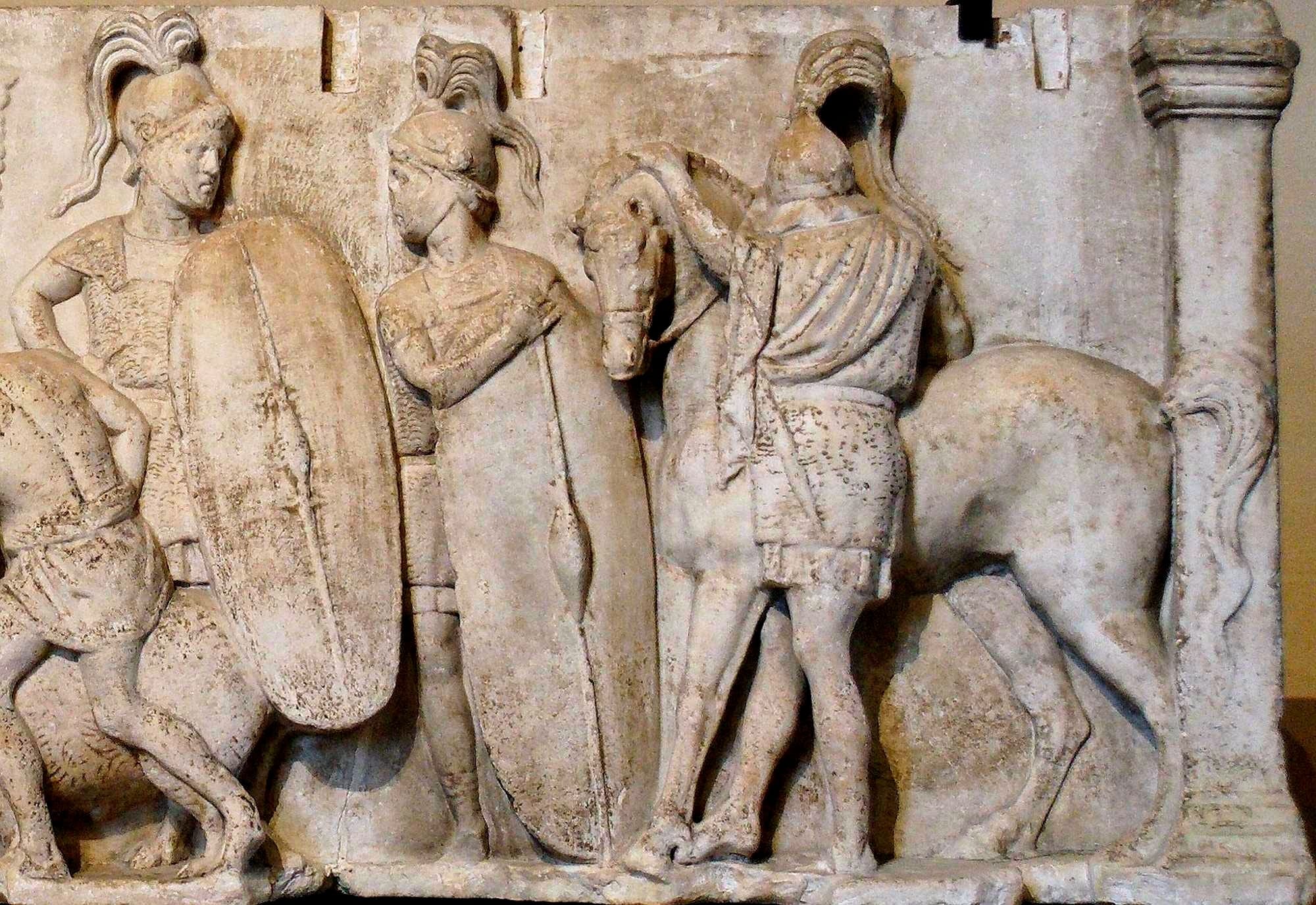
What unites Romulus, Numa, and Servius is less a shared philosophy than a shared instinct: build outward rather than upward. Each contributed something distinct—structure, belief, classification—and each contribution was designed to function without the next exceptional individual.
Plato conceived of the ideal city as something founded whole, the product of a mind that had grasped the Form of the Good. The Roman tradition shows the opposite process: a political order built in layers, each generation inheriting and adding. The Senate, religious observance, the census—none required philosophical genius.
All required the willingness to trust arrangement over enlightenment, mechanism over the individual mind. That willingness, repeated across generations, is what Rome's political durability actually rested on. It is also what Plato's framework, however intellectually compelling, could never fully accommodate.
This is also where Rome's relationship to myth becomes most instructive. Plato's noble lie was a designed fiction—a story told deliberately, with full awareness of its falsity, in service of a higher political truth. Rome's founding myths operated differently.
No Roman magistrate sat down and invented the story of Aeneas or the divine birth of Romulus. These stories grew and were refined over generations, shaped by the needs of the community rather than the calculations of a philosopher. Yet their political function was identical: to make citizens feel that they belonged to something sacred, something worth preserving at personal cost. Plato theorized the necessity of such myths; Rome demonstrated their power without ever theorizing them at all.
Cicero: From Philosophy to Practice
As Cicero argues,
"the efficacy of all virtue consists in its use. Its greatest end is the government of states, and the perfection not in words but in deeds, of those very things which are taught in the schools"
(De Re Publica, Book II)
Virtue, for Cicero, is not fulfilled in contemplation but in application. The highest expression of moral and intellectual excellence is not the philosopher's understanding of justice, but the statesman's ability to enact it. Philosophy does not govern—it instructs.
This is a quieter but more consequential departure from Plato than it first appears. Plato's philosopher-king must understand justice before he can create it. Cicero's statesman operates within a system already in motion, asking not what justice requires in the abstract but what the existing order can be made to sustain.
As Cicero argues, the best political order is one
"formed by a combination of monarchy, aristocracy, and popular rule"(De Re Publica, Book II).
The strength of the state lies not in perfection but in balance—in the interaction of distinct elements, each limiting the excesses of the others. Authority is distributed; stability comes from the equilibrium of competing forces rather than the wisdom of any single mind. It is worth noting that Cicero was building on a framework already articulated by Polybius, the Greek historian who had observed the Roman Republic at its height and argued in his Histories that Rome’s exceptional durability was a direct consequence of its mixed constitution—consuls supplying monarchical energy, the Senate supplying aristocratic deliberation, and the assemblies supplying popular accountability.
For Polybius, the balance was not an accident of history but the explanation of Roman success. Cicero inherited and Romanized this analysis; what is original in his account is the claim that this balance was not designed at all, but accumulated.
As Cicero observes, the Roman state
"was not formed by the genius of one man, but of many; nor in the lifetime of one man, but through several generations and ages" (De Re Publica, Book II).
Its political order emerges not from design but from development—from decisions, practices, and adjustments accumulated over time. What matters is not whether any individual fully understands justice, but whether the system, taken as a whole, can sustain it.
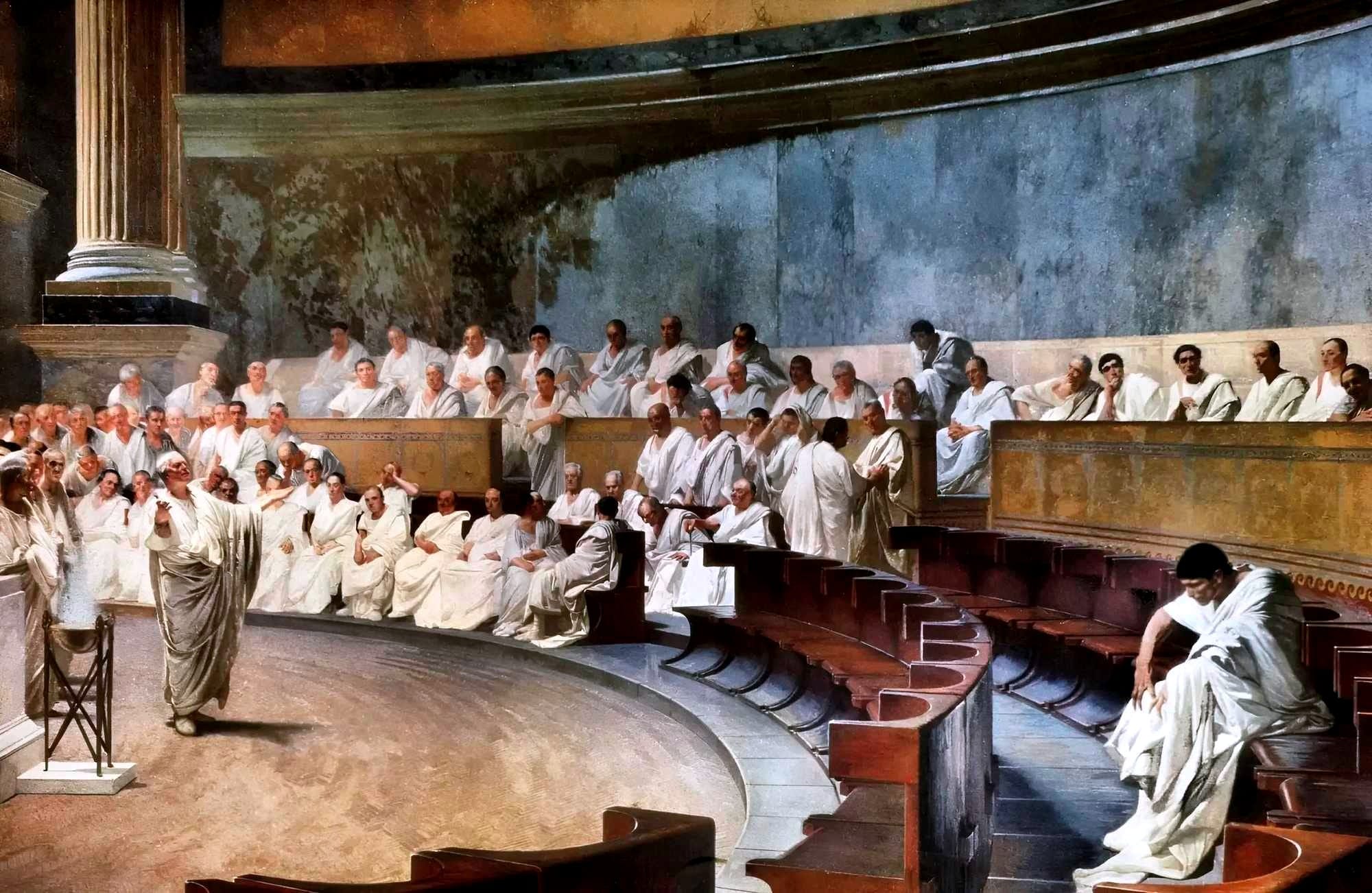
Cicero does not resolve the tension between wisdom and power; he relocates it. Where Plato begins with knowledge and seeks to build a state from it, Cicero begins with the state and asks how knowledge might serve it. The philosopher-king gives way to something more modest: a political order in which the success of philosophy is measured not by its truth alone, but by its capacity to sustain civic life across generations.
This is a less heroic vision than Plato's. It is also the one that actually worked—not because it was wiser, but because it asked less of the individuals within it and more of the system that contained them.
What This Means for Today
Plato’s philosopher-king has modern heirs, and they are not always who we expect. The obvious cases—the revolutionary vanguard suspending elections, the authoritarian governing by decree—are easy to dismiss. More instructive is the subtler version: the constitutional court.
Courts of this kind occupy a peculiar position in modern constitutional orders. They are explicitly insulated from popular will—appointed rather than elected, tenured rather than accountable—on the premise that the interpretation of foundational law requires a form of knowledge that democratic majorities cannot reliably supply.
This is Platonism in institutional dress: the claim that certain questions of governance belong to those who understand, not to those who merely vote. The logic is not without force. Constitutional principles are meant to constrain majorities, and a court that simply ratified whatever a majority wanted would be no constraint at all. But the same logic that justifies judicial review can, if left unchecked, justify its expansion without limit.
When a court moves from interpreting the constitution to effectively rewriting it—deciding not what the law means but what it should mean—it has ceased to function as a constraint on power and begun to function as a source of it. The structure that was designed to limit the philosopher-king has quietly produced one.
Rome’s counter-argument is not that expertise is worthless. It is that expertise concentrated in an insulated body, trusted to know better than the system around it, is a system waiting to fail. The Roman Senate was not composed of wise men—it was composed of men whose ambitions were structured, whose decisions were precedented, and whose power was constrained by colleagues with rival interests.
This is unglamorous. It is also more durable than any arrangement that concentrates authority in a single exceptional figure—or a body that functions as one.
When Madison argued in Federalist No. 51 that the Constitution must govern men as they are—that ambition must counteract ambition—he was articulating something Rome had practiced without theorizing. The separation of powers is not an expression of optimism about human nature but of pessimism about it, translated into architecture.
And yet Madison's republic, like Rome's, depends on more than architecture. Its institutions have survived considerable stress, but that stress has also revealed where formal rules give way to informal norms—where the system's functioning requires political actors to treat constraints as binding even when they are technically circumventable.
This is the Roman problem restated. Institutions are not self-sustaining. They require a political culture that takes them seriously, and that culture cannot itself be legislated. Neither Rome nor any modern democracy has fully solved this. What kind of citizens does a republic require, and how does it form them? That remains the open question—the one Plato asked first, and which outlasts every institutional answer.
Plato believed that justice required a philosopher-king—a ruler of perfect wisdom who would govern by knowledge rather than appetite. He spent his life searching for such a figure, convinced that without the union of wisdom and power, political life would remain disordered. He never found one.
Rome, by contrast, built one of the most durable political systems in history. Its founders were not philosophers. They were warriors, priests, builders, and at times tyrants. Yet what they lacked in wisdom they compensated for in construction—institutions that did not depend on the excellence of any single ruler and that outlasted their creators.
The Senate was not a body of wise men. The census was not a philosophical instrument. But together, accumulated across generations, they produced a political order capable of absorbing individual failure on a scale that Plato's ideal could not contemplate.
Plato placed his hopes in a single enlightened mind. Rome dispersed that burden across a system. Where Plato sought to align power with truth, Numa aligned it with belief. Where Plato waited for the perfect ruler, Cicero trusted the imperfect citizen and the accumulated weight of tradition. And where Plato engineered a noble lie to bind his ideal city, Rome inherited its myths organically—finding that stories, whether declared or simply lived, were indispensable to any lasting political order.
Rome itself eventually faltered. Its institutions could not withstand the erosion of the normative tradition that had animated them. The lesson is not that Rome succeeded where Plato failed in any final sense—but that Rome lasted longer by refusing to wait for perfection. It built for the imperfect. It endured because of that choice, and fell because no institution can substitute indefinitely for the civic character of those who inhabit it.
Plato asked who should rule. Rome answered: no one alone. That answer worked—not perfectly, but far longer than any philosopher-king ever did. The more urgent question is what we build in his absence.
Bibliography
Cicero. De Re Publica. Translated by Clinton Walker Keyes. Loeb Classical Library. Cambridge, MA: Harvard University Press, 1928.
Livy. Ab Urbe Condita. Translated by Benjamin Oliver Foster. Loeb Classical Library. Cambridge, MA: Harvard University Press, 1919.
Plato. Republic. Translated by Benjamin Jowett. Project Gutenberg.
Plato. Seventh Letter. Translated by R. G. Bury. Loeb Classical Library. Cambridge, MA: Harvard University Press, 1929.
Plutarch. Life of Dion. In Plutarch's Lives, Vol. 6. Translated by Bernadotte Perrin. Loeb Classical Library. Cambridge, MA: Harvard University Press, 1918.
Polybius. The Histories, Vol. 3 (Book VI). Translated by W. R. Paton. Loeb Classical Library. Cambridge, MA: Harvard University Press, 1923.
Secondary Sources
Arena, Valentina. Libertas and the Practice of Politics in the Late Roman Republic. Cambridge: Cambridge University Press, 2012.
Beard, Mary. SPQR: A History of Ancient Rome. New York: Liveright Publishing, 2015.
Cornell, Tim. The Beginnings of Rome: Italy and Rome from the Bronze Age to the Punic Wars (c. 1000–264 BC). London: Routledge, 1995.
Forsythe, Gary. A Critical History of Early Rome: From Prehistory to the First Punic War. Berkeley: University of California Press, 2005.
Morrison, J. S. "The Origins of Plato's Philosopher Statesman." The Classical Quarterly 8, no. 3-4 (1958): 198–218.
Stacey, Peter. Roman Monarchy and the Renaissance Prince. Cambridge: Cambridge University Press, 2007.
Wiseman, T. P. Remus: A Roman Myth. Cambridge: Cambridge University Press, 1995.


About the Roman Empire Times
See all the latest news for the Roman Empire, ancient Roman historical facts, anecdotes from Roman Times and stories from the Empire at romanempiretimes.com. Contact our newsroom to report an update or send your story, photos and videos. Follow RET on Google News, Flipboard and subscribe here to our daily email.
Follow the Roman Empire Times on social media: