
The Sack of Rome in 410
The result of years of failed negotiations between Alaric, his Goths, and the western imperial court, and not a sudden event, led to the sack of Rome in 410.

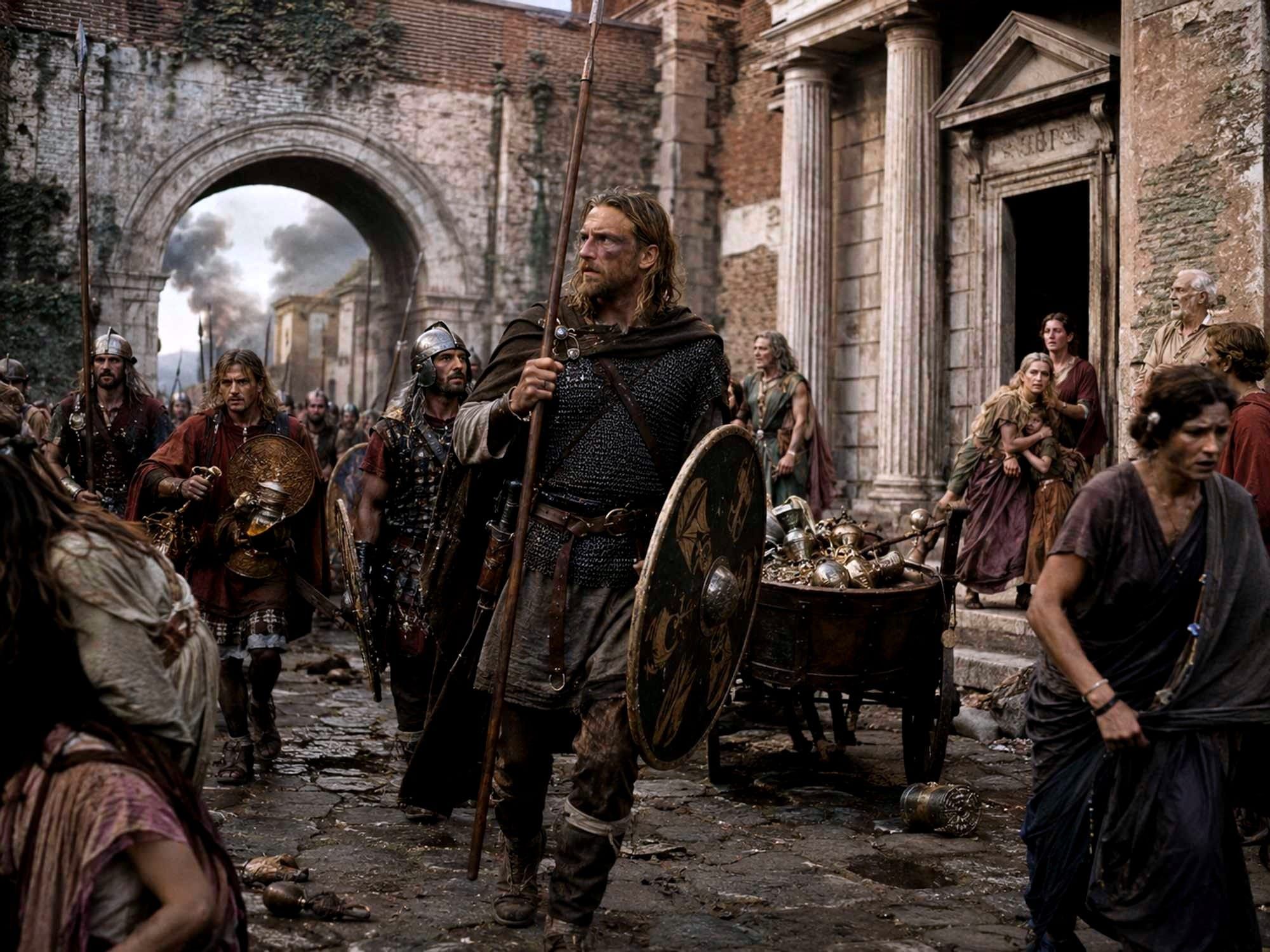
Before Rome was sacked in 410, Alaric had spent years trying to secure a place for himself and his followers inside the Roman world. The city fell only after negotiations failed, imperial politics broke down, and Rome became the pressure point in a crisis that Ravenna could not resolve.
Rome Was No Longer Where the Emperor Ruled
In August 410, Rome was no longer the city from which emperors ruled the western empire. The emperor Honorius was at Ravenna, protected by marshes and supplied by sea. Yet Rome still carried the weight of its name. It was the old capital, the city of emperors, senators, triumphs, temples, basilicas, and centuries of Roman memory.
When Alaric and his Goths entered Rome, the event did not come from nowhere. It followed years of failed negotiations, broken alliances, court rivalries, and a settlement problem that the western government never solved.
The sack lasted three days, from 24 to 27 August 410. It was not the first time Alaric had threatened Rome. It was not even the first time he had used the city as pressure against Honorius’ government. This time, however, the threat became reality.
Alaric was not a simple foreign invader from outside the Roman world. He had spent years moving inside Roman politics. He had held Roman military rank, negotiated with Roman officials, fought Roman armies, and tried to secure a recognized place in the imperial military order.
He was also the leader of a Gothic following whose loyalty was personal, not institutional. His followers could serve Roman purposes, but they were not simply regular imperial troops.
The Goths Inside the Empire
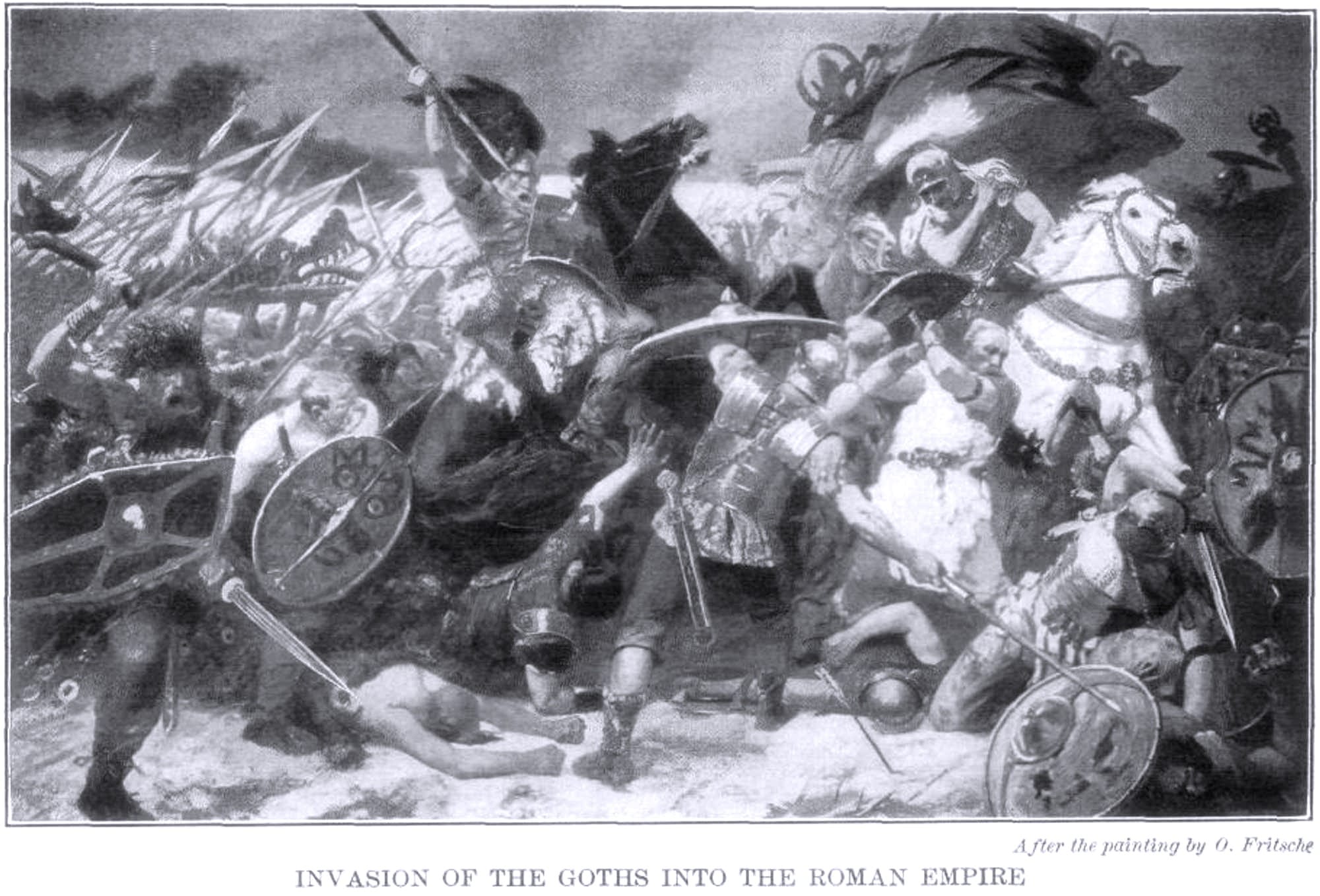
The deeper crisis went back to the fourth century. In 376, groups of Goths crossed the Danube into Roman territory. They were under pressure from the Huns and asked to enter the empire. The Romans allowed them in, but the arrangement soon broke down.
Supplies were mishandled, Roman officials exploited the newcomers, and the Goths rebelled. The rebellion led to one of the greatest Roman military defeats of late antiquity.
In 378, at Adrianople, the Goths defeated an eastern Roman army and killed the emperor Valens. The battle did not make the Goths masters of the empire, but it changed the situation. They were now inside Roman territory, and the Roman state could not simply remove them.
Theodosius reached a settlement with Gothic groups in 382. They remained inside the empire and were drawn into Roman military service and Roman political conflicts. This meant that later Gothic leaders were not operating only beyond the frontiers. They were part of the world of Roman armies, treaties, payments, ranks, and imperial rivalries.
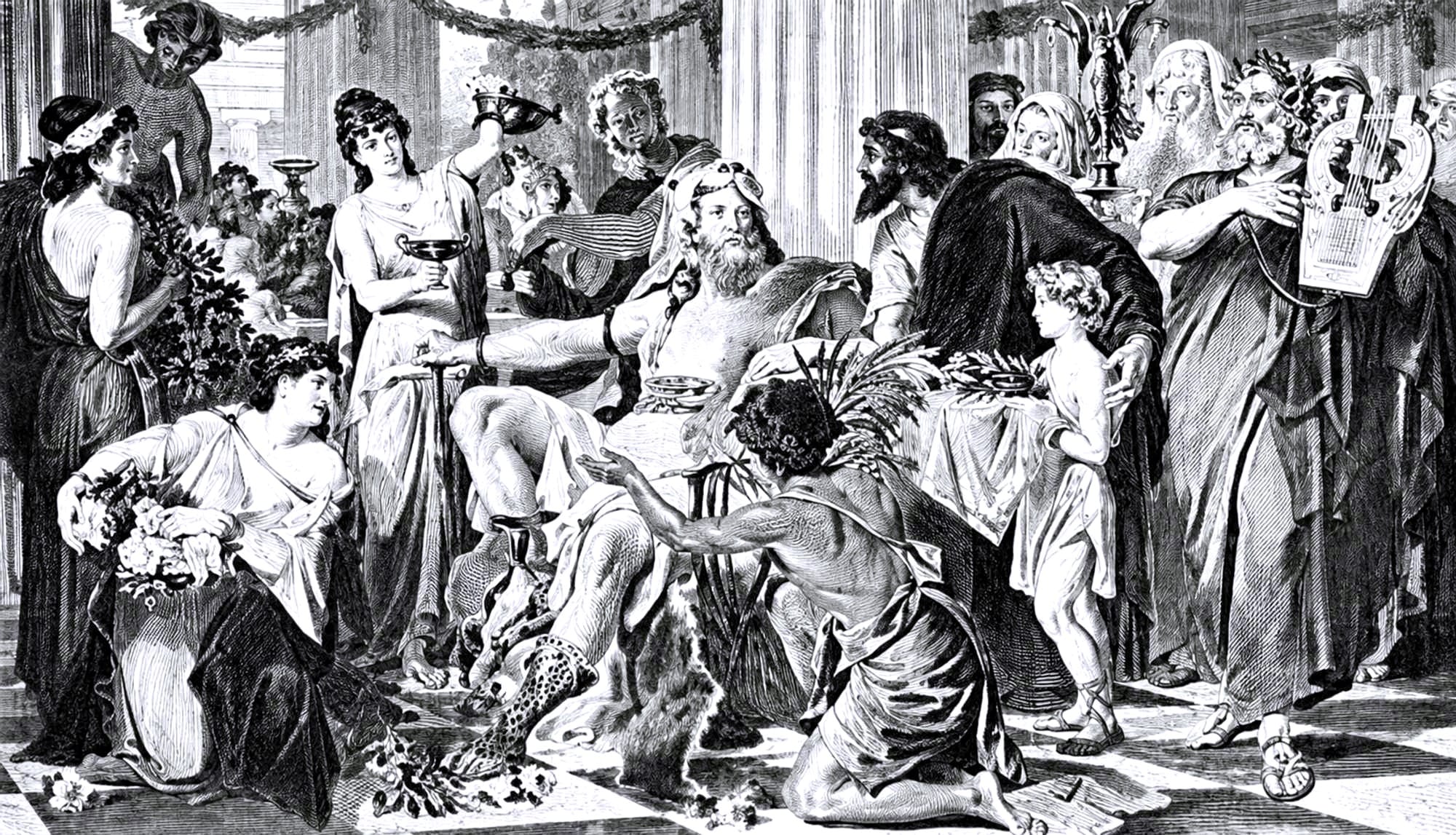
Alaric became prominent after the death of Theodosius in 395. The empire was divided between Theodosius’ two sons: Arcadius in the East and Honorius in the West. Both were young. Around them stood powerful ministers, generals, and court factions.
In the West, Stilicho became the main military figure behind Honorius. In the East, other officials resisted Stilicho’s claims and influence. Alaric and his followers became involved in these rivalries. He moved through the Balkans and Greece, negotiated with imperial officials, and fought when negotiations failed.
His demands changed according to circumstances, but the basic problem remained the same: he needed office, supplies, recognition, and a secure future for the people following him.
Alaric’s Search for a Place in Roman Power
Alaric’s followers were not only a raiding force looking for a single campaign. They included fighting men, dependants, and people who needed food and settlement. Their position depended on their leader’s ability to obtain supplies, rewards, and a stable place inside or alongside Roman power.
When negotiations dragged on, Alaric’s own position became harder. His followers needed more than promises. They needed food, pay, land, or some reliable future.
In the early fifth century, Alaric entered Italy more than once. Stilicho fought him and checked him, but he also later tried to use him. Around 406, Stilicho planned to employ Alaric in a western campaign connected with the eastern empire. Alaric moved as expected, but the plan did not proceed. Other crises hit the West, including the movement of Germanic groups into Gaul.
Alaric waited and then demanded compensation. His forces had moved and waited as part of an arrangement that had not delivered results. Stilicho agreed that payment should be made. The amount was large, and the decision angered some Roman senators. One senator described the payment not as peace but as servitude.
The payment weakened Stilicho politically. His enemies at Ravenna turned Honorius against him. Stilicho was accused of dangerous ambitions, and his background made him easier to attack in a court atmosphere hostile to barbarian influence.
In August 408, Stilicho was executed. His son and many close associates were also killed.
Stilicho’s Fall and the Road to Crisis
The consequences went beyond the death of one general. After Stilicho’s fall, violence spread against the families of barbarian soldiers serving in the Roman army. These families were killed in Italian cities.
Many surviving soldiers then went over to Alaric. The western government lost soldiers, and Alaric gained men who had direct reason to abandon Ravenna.
Stilicho’s death also removed the main figure who had negotiated with Alaric. Alaric now had to deal with Honorius’ court without the Roman commander who had previously been able to bargain with him. Ravenna refused the terms he wanted. Alaric asked for gold, hostages, and a settlement for his people, but no lasting agreement followed.
Honorius was difficult to force directly. Ravenna was not an easy target. Its marshes and access to the sea made it safer than Rome. Rome, by contrast, could be reached by land. It was not the emperor’s residence, but it could be used to pressure the emperor’s government.
Why Rome Could Be Pressured
Rome’s food supply made the city vulnerable. The city depended heavily on imported grain, especially grain that arrived through Portus, the harbour downstream on the Tiber. Supplies moved from the coast toward the city.
A hostile force did not need to break through the walls immediately. It could threaten the food route. The Aurelian Walls were large and impressive, and repairs had been made in the early fifth century. But the city was vast, heavily civilian, and dependent on supplies from outside. A siege did not have to begin with an assault on the walls. Hunger could force decisions before a storming attempt became necessary.
Alaric used this weakness in 408. His forces threatened the line between Portus and Rome. Food shortage and disease worsened conditions inside the city. Panic also spread among the population and elite.
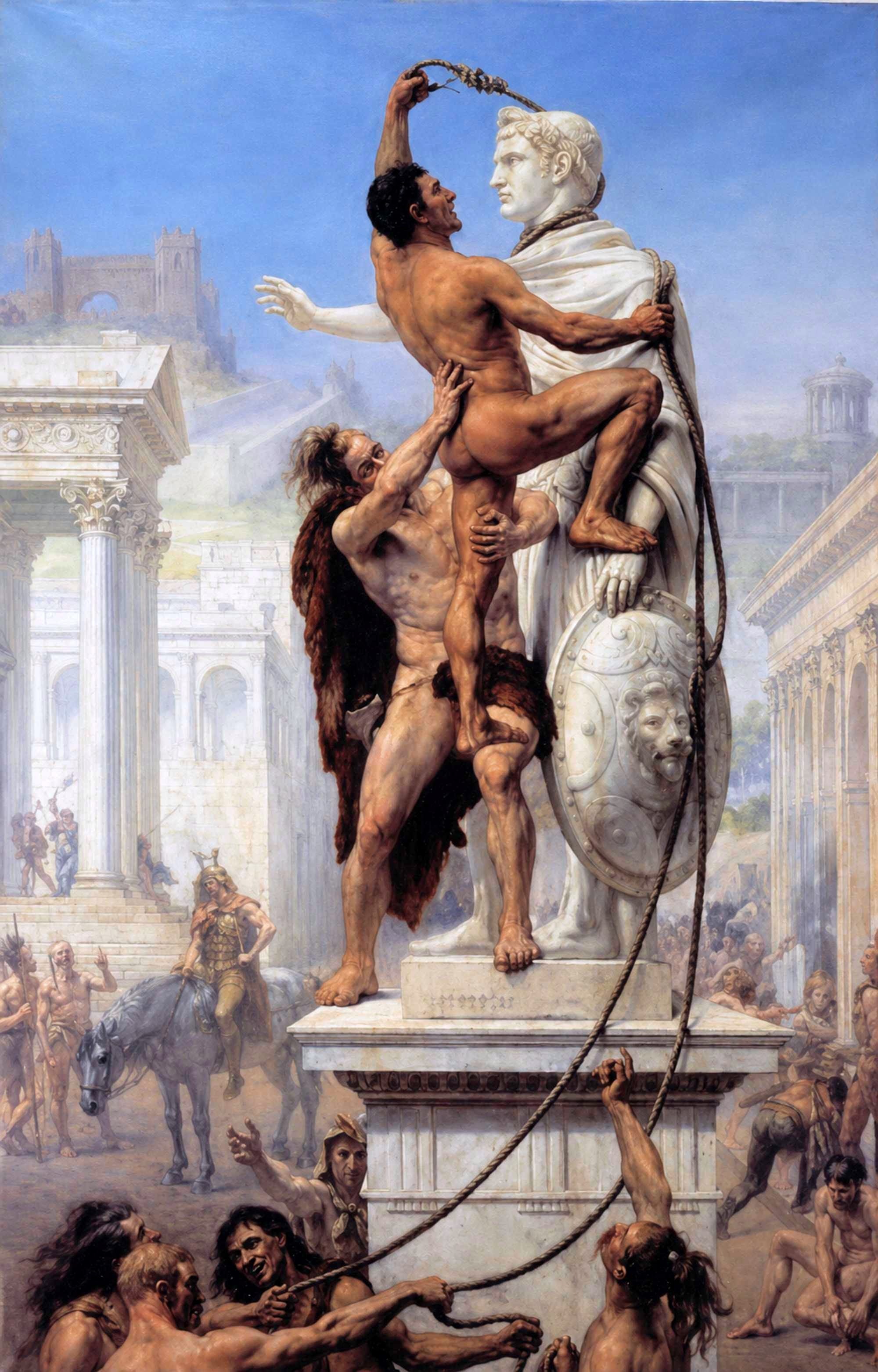
Serena, Stilicho’s widow and a member of the Theodosian family, was killed on suspicion of collusion with Alaric. The Senate negotiated. Rome agreed to pay a large ransom. The payment included gold, silver, luxury goods, and other valuables. Wealthy Romans were taxed to raise the amount. Some pagan statues were stripped or melted down to complete the payment.
Alaric then withdrew. The ransom ended the immediate crisis, but it did not settle the conflict. Alaric still had no secure settlement for his followers and no firm recognition from the western government. The Senate sent an embassy to Ravenna, and negotiations continued.
Attalus, Africa, and Failed Negotiations
In 409, talks took place at Rimini. Alaric asked for money and grain, but also for high military command. The office he wanted was the great command once held by Stilicho, the command of both services. The imperial side was prepared to grant supplies, but not the office. The refusal broke the negotiation.
Alaric moved again toward Rome. Afterward, he reduced his demands. He asked for grain and for settlement in less central provinces, including Noricum. These reduced demands were also rejected.
With no agreement from Ravenna, Alaric turned to another solution. In December 409, he elevated the Roman senator Priscus Attalus as emperor. Attalus had served as urban prefect of Rome and had already been involved in embassies to Ravenna. His elevation created an alternative emperor who could meet Alaric’s demands and put pressure on Honorius.
Attalus gave high military commands to Alaric and to Athaulf, Alaric’s brother-in-law. But Attalus also formed his regime from Roman senatorial figures and did not act only as Alaric’s instrument. He had his own ambitions and made his own decisions.
The main problem was Africa. Rome depended heavily on African grain. Without Africa, Attalus could not control the food supply that Rome needed. He sent a general named Constans to take the province, but the attempt failed. Heraclian, the official in Africa loyal to Honorius, defeated and killed him.
After the failure in Africa, Alaric proposed sending a small Gothic force to seize the province. Attalus refused. This refusal left the food problem unresolved and weakened Attalus’ usefulness. An emperor who could not secure Africa could not easily feed Rome or force Honorius into submission.
Attalus and Alaric then marched toward Ravenna and opened negotiations from Rimini. Honorius offered some kind of shared rule. Attalus refused and demanded that Honorius be deposed and sent into exile.
Then the balance changed. Nearly 4,000 eastern soldiers arrived at Ravenna by sea. Ravenna was already difficult to attack because of its marshes. With fresh troops inside the city, Honorius no longer needed to negotiate from weakness.
Alaric deposed Attalus early in 410. The deposition may have followed secret talks with Ravenna, or it may have been a condition for reopening negotiations. Attalus had failed to take Africa, failed to force Honorius into agreement, and failed to solve the settlement problem.
Sarus and the Final March on Rome
After removing Attalus, Alaric tried again to negotiate with Honorius. He moved close to Ravenna, to a distance of about sixty stades, a little under thirteen kilometres. The surviving textual tradition does not preserve the location clearly.
Before an agreement was reached, Sarus attacked Alaric. Sarus was a Gothic general in imperial service and had served since the time of Stilicho. The reason for the attack is uncertain. One account says Sarus feared that an agreement between Alaric and Honorius would harm his own position.
It is not clear whether Sarus acted on Ravenna’s orders. Alaric treated the attack as proof that Honorius could not be trusted. He ended the negotiation and marched back to Rome for the third time.
By then, the other routes had failed. Stilicho was dead. The first siege had produced ransom but no settlement. The Rimini negotiations had failed. Alaric’s reduced demands had failed. Attalus had failed. The attempt to reopen talks near Ravenna had ended with Sarus’ attack. Rome became the place where those failures arrived.
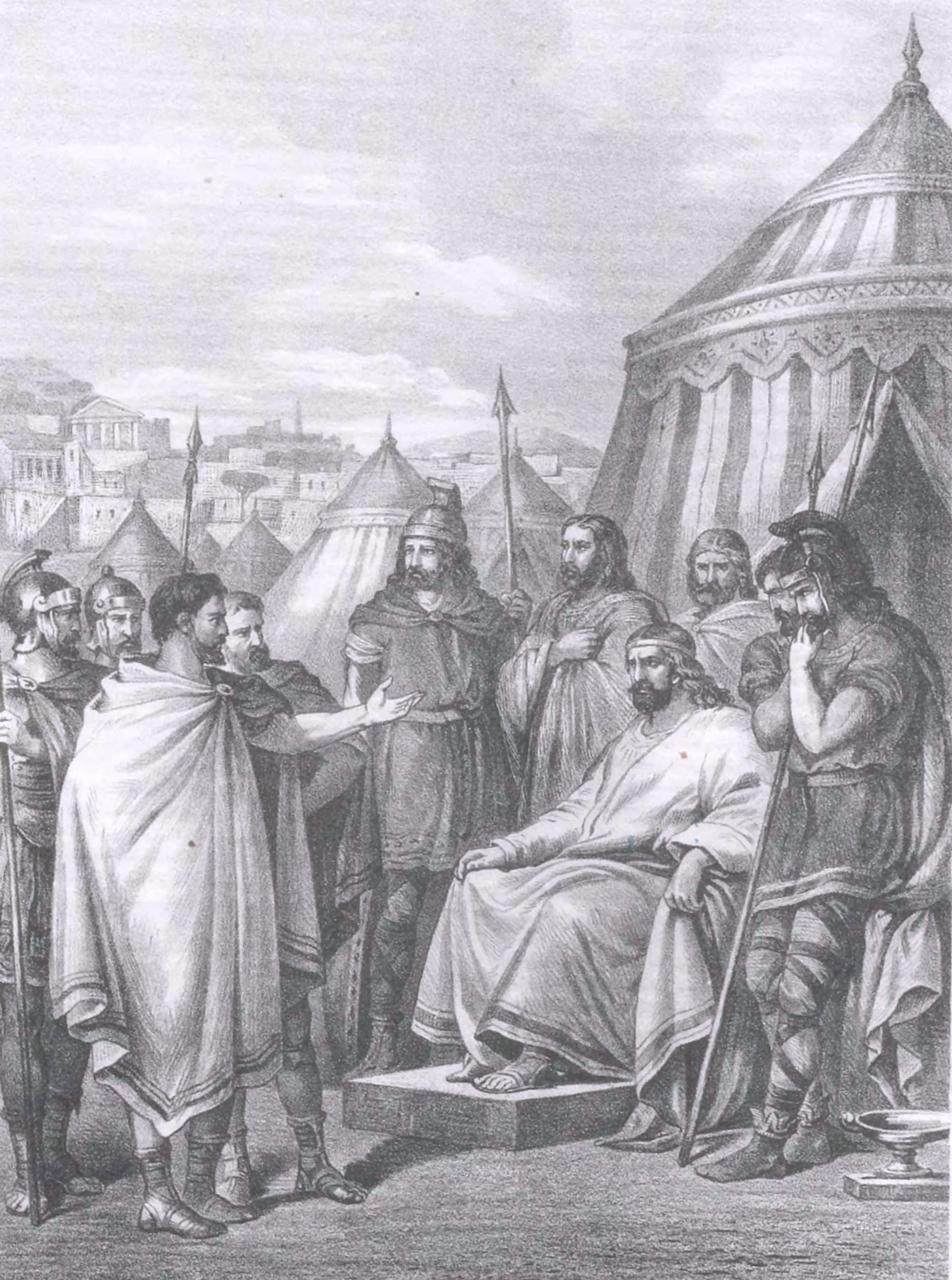
The sack began on 24 August 410 and lasted three days. The Goths looted the city and carried away wealth accumulated over centuries. The sack ended on 27 August.
The city was not erased. The sources and archaeological evidence do not support a picture of Rome being completely destroyed. There was real damage, including damage to public buildings and aristocratic houses, but not the destruction of the whole city. Rome was looted, not wiped out.
Some parts of the city suffered. The area around the Salarian Gate appears in later traditions about the entry into Rome. Damage is also connected with parts of the Forum area, elite houses, and public buildings. Rebuilding inscriptions from after the attack show that repairs followed. The city still had the ability to restore damaged structures.
Rome in Gothic Hands
The sack brought plunder, but it did not give Alaric what he had sought for years. It did not give him a recognized Roman office. It did not provide a legal settlement for his followers. It did not create a stable future for the Goths inside the empire.
After leaving Rome, Alaric moved south. Sicily and then Africa may have been intended as the next destination. The attempt failed. Alaric died within a few months of the sack, near Consentia in southern Italy.
His followers remained together after his death. Leadership passed to Athaulf. The group did not dissolve, but Alaric himself did not live to secure the settlement he had pursued.
The sack of Rome in 410 was not the beginning of the Gothic presence inside the empire, nor was it the first failure in relations between Alaric and the western court. It was the result of a long chain of events: the Gothic entry into the empire, the aftermath of Adrianople, the settlement under Theodosius, Alaric’s rise after 395, the rivalries between imperial courts, Stilicho’s fall, the killings that followed, the pressure on Rome’s food supply, the failed ransom settlement, the failure of Attalus, the failure to secure Africa, and the attack by Sarus before the last negotiations could succeed.
For three days, the old capital was in Gothic hands. Rome survived, but the road that led Alaric to its gates had passed through years of failed agreements, broken commands, famine pressure, and court rivalries. The city was not destroyed; its name, buildings, and people remained. But in August 410, the city that had once taken the world into its empire found itself caught inside the empire’s own unresolved wars.
Michael Kulikowski, "Rome’s Gothic Wars: From the Third Century to Alaric"
Matthew Kneale, "Rome: A History in Seven Sackings"
Shane Bjornlie, “The Sack of Rome in 410: The Anatomy of a Late Antique Debate”
About the Roman Empire Times
See all the latest news for the Roman Empire, ancient Roman historical facts, anecdotes from Roman Times and stories from the Empire at romanempiretimes.com. Contact our newsroom to report an update or send your story, photos and videos. Follow RET on Google News, Flipboard and subscribe here to our daily email.
Follow the Roman Empire Times on social media: