
Roman Astronomers: The Men Who Studied the Stars in Ancient Rome
Roman astronomy was shaped by soldiers, statesmen, poets and natural philosophers who studied eclipses, stars, planets, calendars and comets.

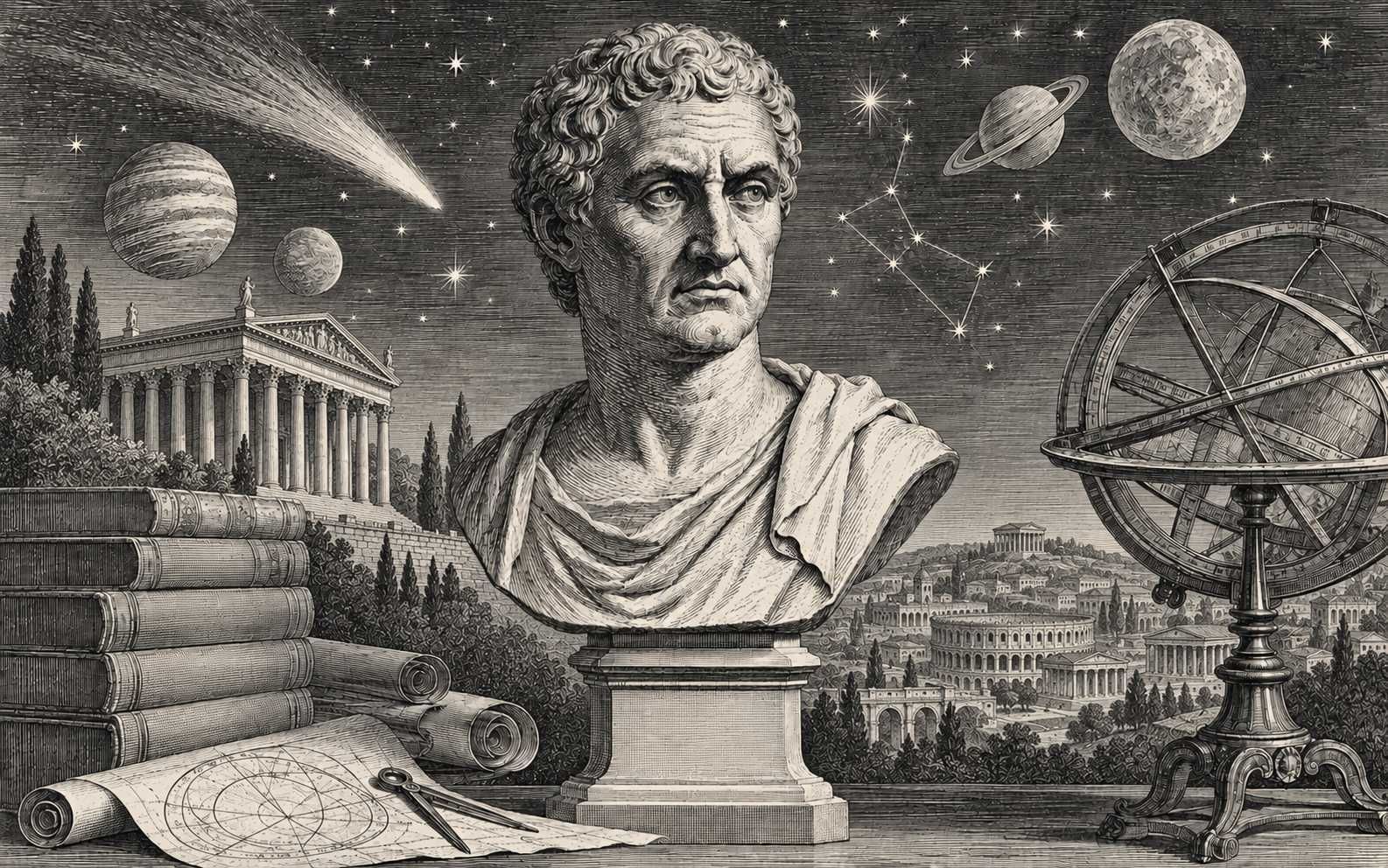
Astronomy belonged to the mathematical arts known to educated Romans, alongside geometry, arithmetic and musical theory. Advanced mathematical study was limited at Rome, but astronomy occupied a somewhat different position from the other mathematical subjects. Roman writers encountered it through philosophy and education, but also through calendars, agriculture, weather prediction, poetry and the observation of celestial phenomena.
Much of the technical knowledge available in Rome had Greek foundations. During the late Republic, Latin writers increasingly translated and adapted Greek works on subjects including astronomy and established Latin equivalents for Greek technical terminology.
The divisions between subjects were also different from modern ones. Astronomy concerned the heavens and the movements of celestial bodies, while meteorologia covered much of what happened below the stars. Comets could fall awkwardly between the two because some ancient theories treated them as atmospheric phenomena and others as celestial bodies.
The Romans remembered some men for calculating or explaining eclipses, others for translating descriptions of the constellations into Latin, and others for writing about the planets, comets and the structure of the heavens. Their surviving works and later reputations show several different forms that the study of the stars could take at Rome.
Gaius Sulpicius Gallus and the Study of Eclipses
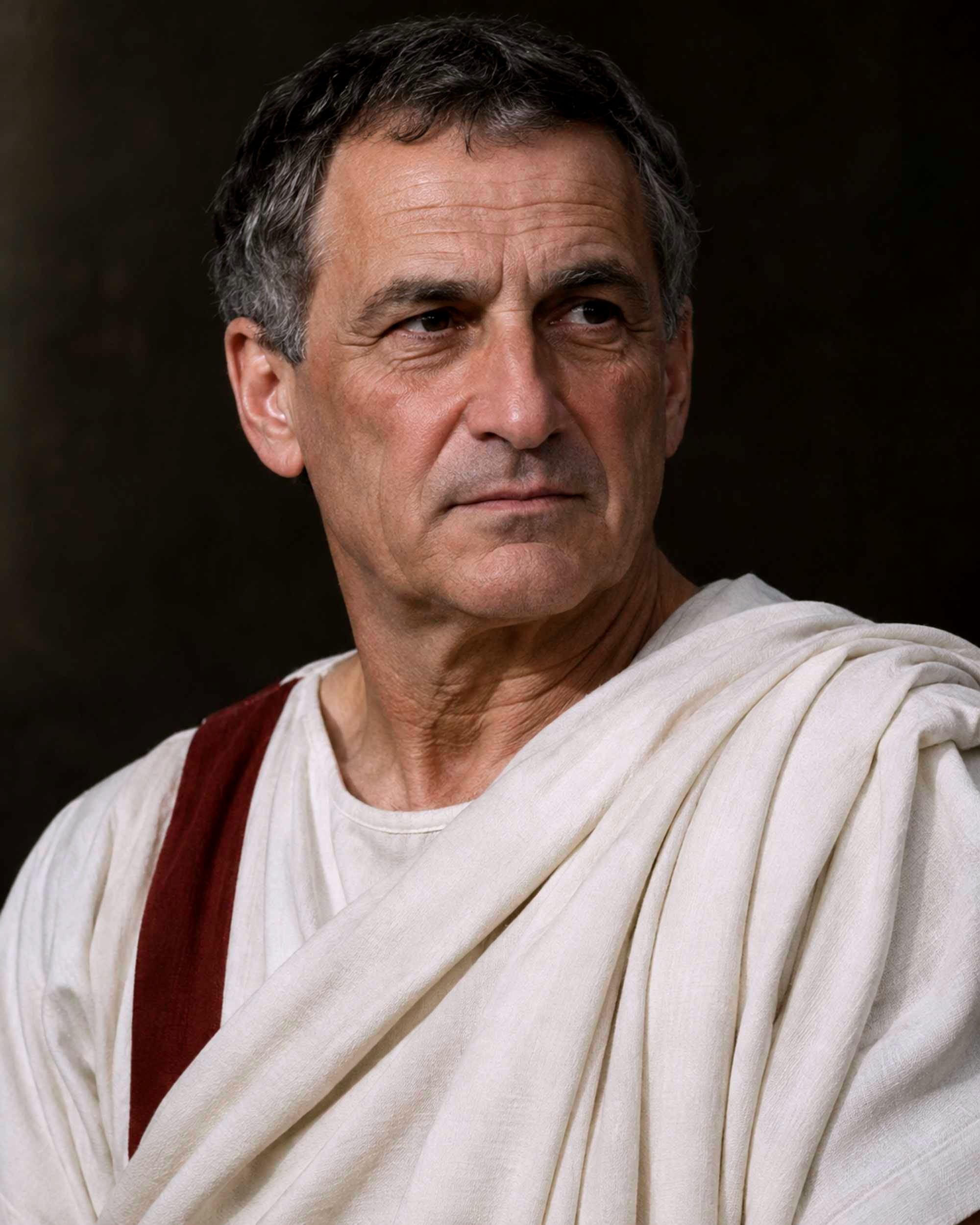
Gaius Sulpicius Gallus, consul in 166 BC, is one of the earliest Romans to acquire a lasting reputation for astronomical knowledge. Cicero knew people who had known Gallus personally and presents him as a Roman aristocrat whose interest in the heavens continued throughout his life. In On Old Age, Cicero has Cato recall:
“We saw Caius Gallus, your father's friend, Scipio, almost to the last moment occupied in measuring heaven and earth. How often did the morning light overtake him when he had begun some problem by night, and the night when he had begun in the early morning! How did he delight to predict to us far in advance the eclipses of the sun and moon!”
The passage gives Gallus a wider astronomical reputation than the single eclipse episode for which he later became famous. Ancient testimony also associates him with a book on astronomy or eclipses. Other testimony associated with Gallus gives figures for distances in the cosmos: 126,000 stades from the earth to the moon, twice that distance from the moon to the sun, and three times that from the sun to the zodiac.
Gallus is also connected with the mechanical representation of the heavens. Cicero's On the Commonwealth describes two celestial spheres taken to Rome after the capture of Syracuse in 212 BC and traditionally associated with Archimedes. These devices could represent the movements of the sun, moon and stars, phases of the moon and perhaps eclipses. Later celestial spheres were also associated with Lucullus and Posidonius.
In Cicero's dialogue, Gallus explains one of the Archimedean spheres. As the device turns, the different movements of the sun, moon and five planets are reproduced, and the moon reaches the position in which the earth's shadow covers it, corresponding to a lunar eclipse. The episode presents Gallus as someone able to explain a mechanical model of celestial motion rather than simply as a man who knew that eclipses occurred.
His best-known astronomical story, however, concerns the Roman campaign against Perseus of Macedon in 168 BC. A lunar eclipse occurred shortly before the Battle of Pydna. The surviving Roman accounts differ significantly over Gallus's role.
Cicero's version in On the Commonwealth has the eclipse occur first. Gallus then addresses the soldiers on the following morning, explaining that what they had seen was a recurring natural phenomenon rather than a prodigy:
“it was no prodigy, and that the phenomenon which had then appeared would always appear at certain periods”
Cicero's Gallus explains the eclipse through the positions of the sun and moon and removes the soldiers' fear of the event.
Livy gives a different version. In his account, Gallus announces beforehand that an eclipse will occur and tells the soldiers when to expect it. Pliny likewise preserves the prediction tradition. In his account Gallus was brought before the army
“to fore-tell the eclipse which should happen the next morrow.”
The different versions cannot simply be treated as separate details of one secure historical event. Modern analysis of the tradition points out that Cicero's account is the earliest surviving source connecting Gallus with the Pydna eclipse, and in that account he explains the eclipse after it has occurred rather than predicting it beforehand. Livy and Pliny preserve the later version in which his astronomical knowledge becomes an advance prediction.
The Pydna story is therefore only one part of the ancient evidence for Gallus. Cicero's separate description of his fascination with eclipse calculation, the tradition of his lost book, and his association with the Archimedean sphere all contribute to the reputation he retained as one of the earliest Roman aristocrats particularly associated with astronomy.
Cicero and the Stars in Latin
Cicero himself played an important part in bringing Greek astronomical material into Latin. As a young man he translated Aratus's Phaenomena, a Greek poem of the third century BC that described the constellations and celestial signs. The astronomical material in Aratus ultimately depended heavily on Eudoxus, while the poem also included mythology, descriptions of nature and weather signs.
Roman interest in astronomy was not confined to prose handbooks or mathematical treatments. Poetry was one of the principal ways in which educated Romans encountered descriptions of the heavens, and Aratus became particularly influential. Cicero's youthful Aratea belongs to a wider Roman tradition of translating and adapting his poem.
Cicero appears to have consulted Greek commentators who attempted to correct some of Aratus's astronomical errors. His own translation, however, also introduced problems. He could exaggerate a constellation's size or describe a dim star as bright. At the same time, he was careful to give Greek and Latin names for stars and constellations, even when doing so affected the movement of the poetry.
Some of Cicero's Aratea survives because he later quoted his own youthful verses. A passage describing the two Bears first contrasts their value to sailors:
“This the Phœnicians choose to make their guide
When on the ocean in the night they ride.
Adorned with stars of more refulgent light,
The other shines, and first appears at night.
Though this is small, sailors its use have found;
More inward is its course, and short its round.”
His description then turns to Draco winding between them:
“The Dragon grim between them bends his way,
As through the winding banks the currents stray,
And up and down in sinuous bending rolls.”
The surviving fragments show how astronomical description could enter Latin literary culture while retaining the constellation framework inherited from Greek astronomy.
Cicero returned to celestial subjects in prose. The Dream of Scipio describes a cosmos of concentric spheres containing the fixed stars, the planets, the sun and moon. On the Commonwealth discusses the Archimedean celestial sphere and Gallus's explanation of the lunar eclipse.
Other works refer to astronomy as a subject of education and to the contrast Cicero perceived between Greek enthusiasm for mathematical study and the more restricted Roman use of mathematics for practical measurement and calculation.
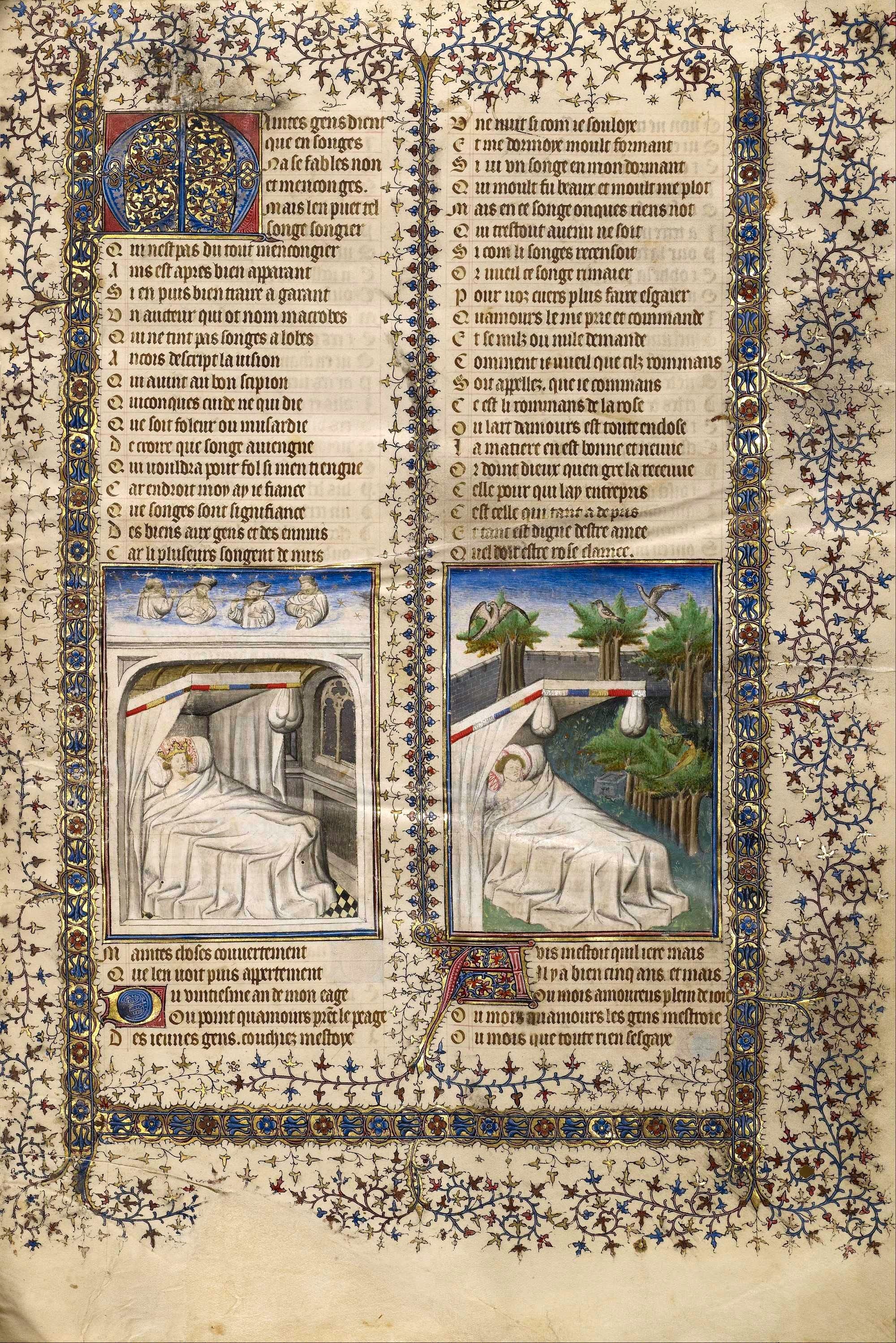
The Aratean tradition continued after Cicero. Germanicus, the adopted son of the emperor Tiberius, produced another Latin version of Aratus. His surviving poem follows much of the constellation material of the Phaenomena, while additional fragments concern weather prediction and related celestial signs.
The surviving evidence does not require Germanicus to be treated as an observational astronomer; his importance here lies in the continuing Roman literary adaptation of Greek celestial material. The relative dates of Germanicus and Manilius cannot be determined conclusively.
Varro: Astronomy, Time, Winds and the Calendar
Marcus Terentius Varro dealt with astronomy more extensively than the surviving state of his writings might suggest. Most of the relevant works have disappeared, and their precise contents often have to be reconstructed from fragments and later references. The surviving evidence nevertheless places astronomy in several different areas of his scholarship.
His Disciplinae included books on geometry, arithmetic, astronomy and music, perhaps in that order. The astronomical book is largely lost. It apparently included material on the origins or courses of the stars, but much of what has been proposed for its contents remains uncertain.
It may have outlined a standard cosmology of concentric spheres, perhaps discussed a theory in which Mercury and Venus circle the sun, and almost certainly dealt in some form with the music of the spheres. Those details cannot all be treated with equal certainty.
Varro's mathematical scheme itself shows how astronomy could be connected with other fields. His definition of geometry was unusually broad. It began with measuring land and establishing boundaries, then moved to marking time through the moon, estimating the distance from earth to moon and from moon to sun, and finally considering the size of the earth. Astronomy and musical theory could consequently be treated as branches of this larger mathematical field.
Varro also dealt with the shape of the earth. He described it as egg-shaped, with a section circular in one direction and oval in another. He may also have compared competing estimates of the earth's circumference, although the reconstruction of exactly where this discussion appeared in his works is uncertain.
Celestial material appeared in his treatment of numbers as well. In the Hebdomades, Varro assembled phenomena involving the number seven: seven stars in each of the Bears, seven Pleiades, seven wandering celestial bodies, and seven circles or zones associated with the celestial and terrestrial spheres. He also connected the moon's phases with multiples of seven.
The evidence does not indicate that astrology necessarily formed part of the astronomy in Varro's liberal-arts programme. Ancient terminology could blur the distinction—astrologia could encompass material now divided between astronomy and astrology—but the educational tradition of the mathematical arts appears not to have required astrological prediction.
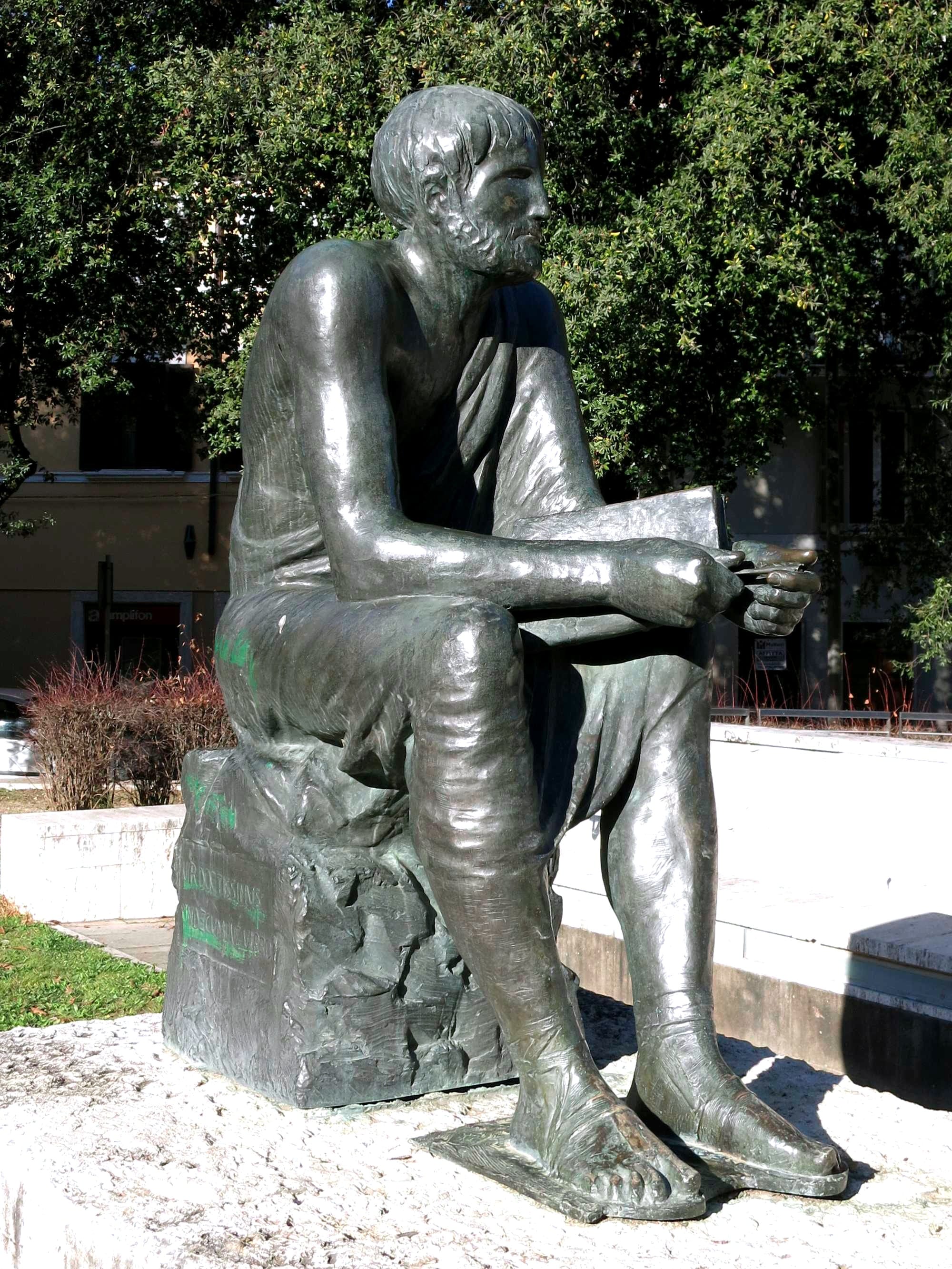
Other works connect Varro's astronomical knowledge much more directly with practical life. In De Ventis, formally a work on meteorology rather than astronomy, he seems to have related his sixteen wind directions to the rising and setting of the sun at different times of year, including the solstices and equinoxes, and probably to divisions of the celestial sphere.
His agricultural writing used an astronomical division of the year into eight periods, assigning different farming activities to each. His Ephemeris Navalis appears to have contained a calendar correlating the risings and settings of the sun and stars with weather that sailors might expect. A separate Ephemeris may also have dealt with calendrical questions connected with Caesar's reform. Several details of these lost works remain uncertain.
Varro's villa at Casinum provides another unusual piece of evidence. He describes a rotunda or tholos whose hemispherical dome seems to have represented the sky. At least the morning and evening stars were apparently made to move around it and indicate time. A circle representing eight winds was also incorporated, together with a vane that showed the direction of the wind inside the building. The description is brief, and the mechanism cannot be reconstructed securely, but the structure combined representations of the sky, time and wind within the setting of a Roman villa.
Varro's interests therefore ranged from the mathematical classification of astronomy to celestial distances, calendrical time, agriculture, weather and mechanical representation.
Nigidius Figulus and the Boundaries of Astronomy
Nigidius Figulus, a contemporary and friend of Cicero, is more difficult to classify. Later tradition remembered him as a Pythagorean and magician, while his own interests ranged over natural philosophy, astrology, augury, Etruscan lore, language and other subjects. The surviving fragments are too sparse to reconstruct a coherent astronomical system.
His De Vento extended to at least four books and dealt principally with material belonging to meteorology. Nigidius discussed seasonal winds and explanations connected with the movement or position of the sun. His treatment appears in places to depend closely on Aristotle, although the small number of surviving fragments makes the precise relationship difficult to determine.
He was also interested in signs associated with the sun and moon that could indicate weather. Dark markings on the upper horn of the moon were connected with rain, while a reddish appearance of the moon or sun could be taken as a sign of approaching storm. Other surviving material may connect a pale setting sun surrounded by dark clouds with a north wind, although the source and relationship of these ideas remain uncertain.
Nigidius's later reputation as a Pythagorean should not be expanded into evidence that he pursued all the mathematical disciplines traditionally associated with early Pythagoreanism. The surviving fragments do not provide evidence for works devoted to mathematics, musical theory or arithmology. His strongest surviving connections lie instead with astrology, natural philosophy, divination and occult traditions.
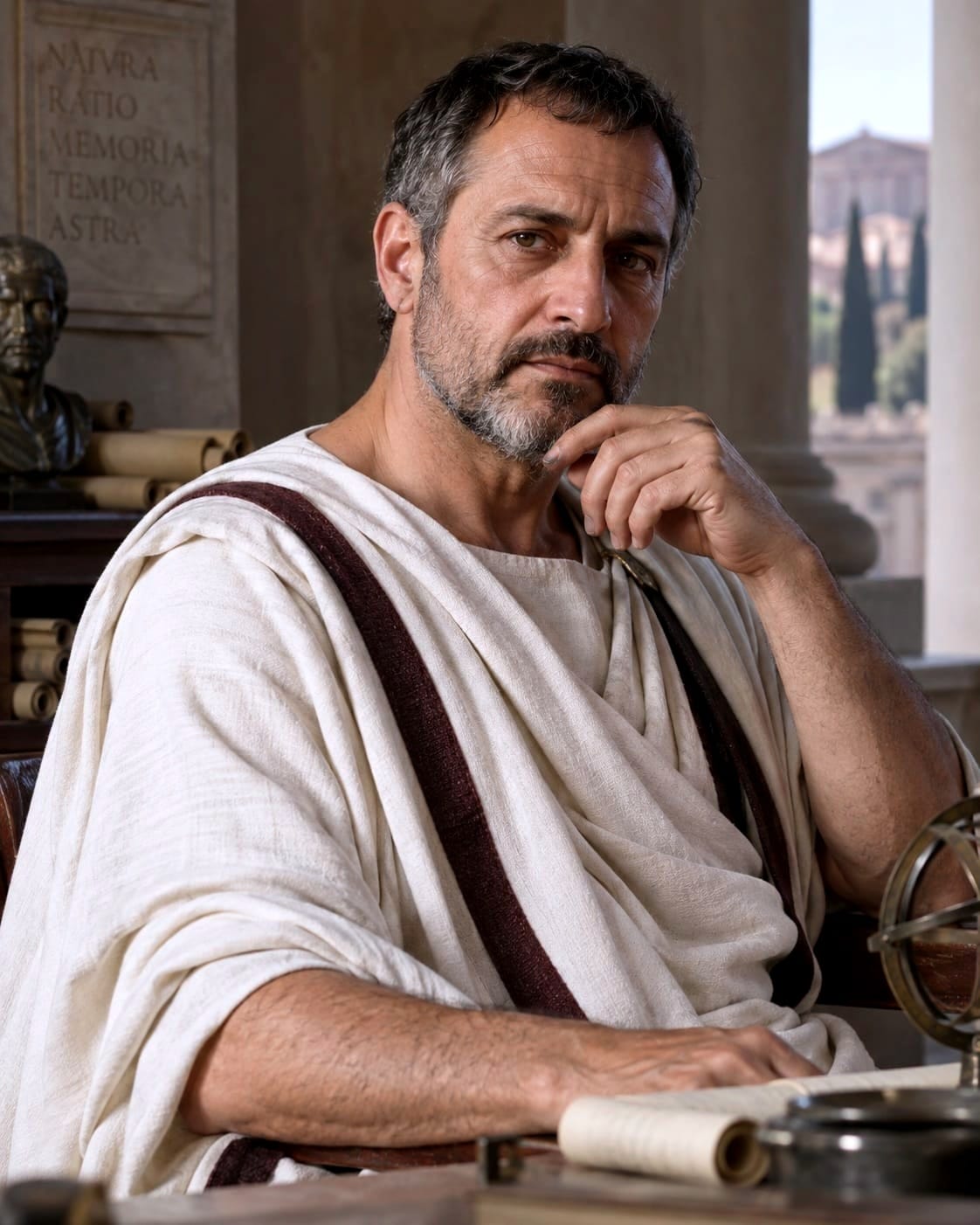
His presence alongside Varro nevertheless illustrates how difficult it is to impose modern disciplinary boundaries on Roman treatments of the heavens. The sun and moon could enter discussion through astronomical motion, weather prediction, calendrical reckoning or astrology, depending on the work and author.
Manilius and the Astronomica
Marcus Manilius's Astronomica is the largest surviving Latin poem devoted to a systematic treatment of the heavens and astrology. Its five books ultimately develop an astrological system, but Book I begins with a substantial account of the cosmos itself.
The book proceeds through the origin and nature of the universe, the arrangement of the constellations, the planets, the circles of the celestial sphere and comets. Its structure repeatedly engages with Aratus and the Latin tradition that had already included Cicero and later Germanicus.
Manilius's star map makes extensive use of Aratus's Phaenomena and contains close verbal echoes of Cicero's Aratea. But he does not always reproduce their descriptions. His treatment of Orion provides a clear example. Aratus and Cicero place Orion beneath Taurus, whereas Manilius associates the constellation closely with Gemini and describes some of the individual stars that form it.
Manilius describes Orion:
“Now near the Twins, behold Orion rise;
His arms extended measure half the skies:
His stride no less. Onward with steady pace
He treads the boundless realms of starry space,
On each broad shoulder a bright star displayed.
And three obliquely grace his hanging blade.”
The individual stars on Orion's shoulders and belt correspond to the greater specificity noted in the modern analysis of the passage.
Manilius also describes the seven wandering celestial bodies: Saturn, Jupiter, Mars, the Sun, Mercury, Venus and the Moon. His ordering corresponds to one of the most widespread arrangements in antiquity and was particularly common at Rome, but planetary order was not universally agreed. Germanicus, for example, preserves a different sequence in one of his surviving fragments.
The text of Manilius itself poses another difficulty. The four lines naming these bodies appear after the discussion of celestial circles in the manuscripts, but editors have long disagreed about where they belong. Some have moved them earlier in Book I, some have placed them elsewhere, and individual lines have even been rejected by certain editors. The planetary information can therefore be discussed without assuming that the surviving manuscript position is unquestionably original.
A large part of Book I is devoted to the circles by which the sky was organized: the zodiac, horizon, meridian and other divisions used to describe positions and motion in the celestial sphere. Manilius's treatment belongs within an older Greek astronomical tradition but forms part of the poem's preparation for the astrological books that follow.
Comets occupy the final major astronomical discussion. Manilius does not consistently separate the phenomena that modern terminology distinguishes as comets, meteors and other transient lights. He records several possible explanations. Some theories derive them from terrestrial material or exhalations. Another possibility treats them as bodies more comparable with planets, following their own paths while their visibility is affected by the sun. He does not settle the problem by choosing a single explanation.
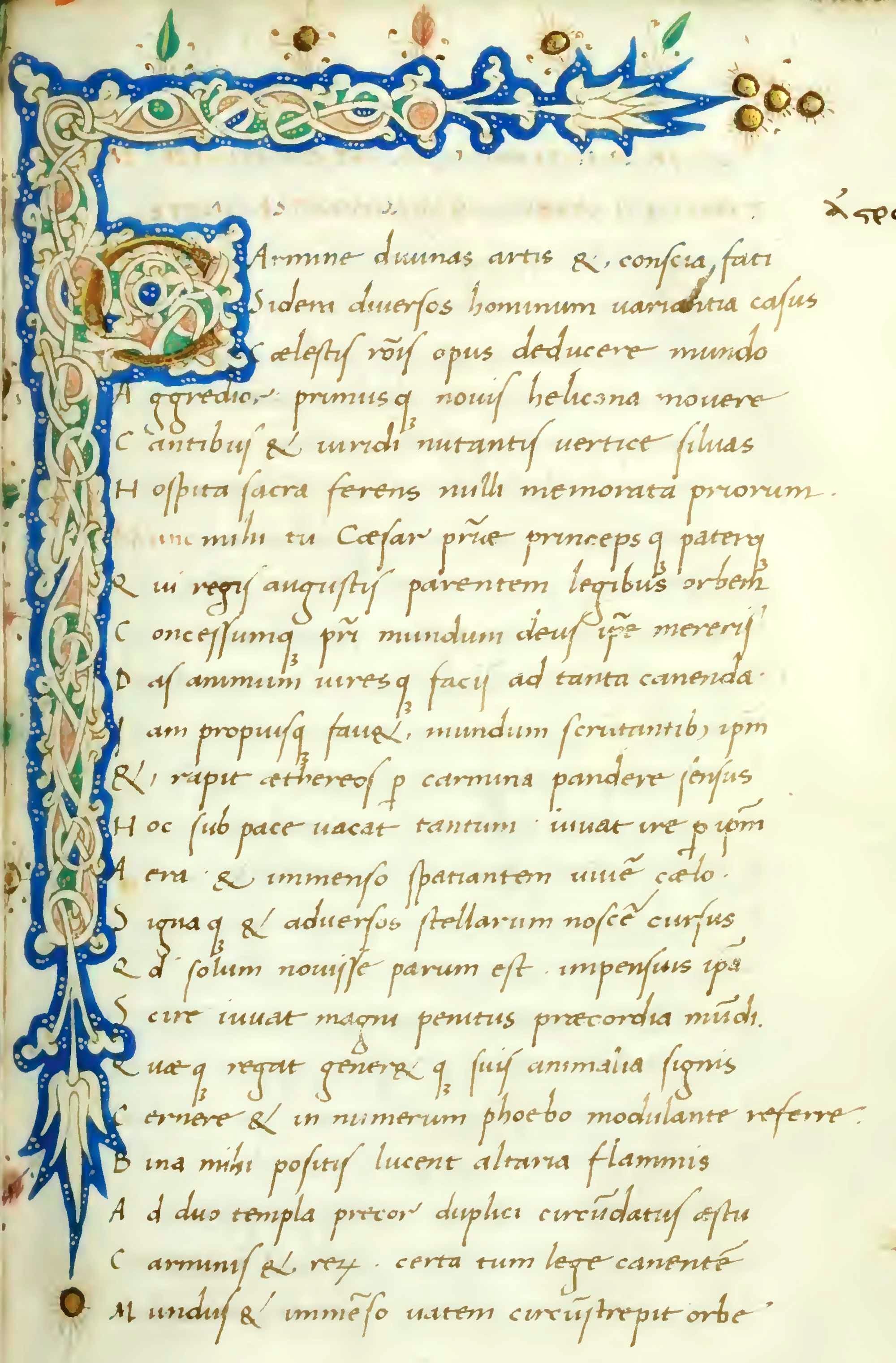
His account then connects comets with events in human affairs, including war and political catastrophe. The astronomical Book I thus leads into a poem in which the celestial system is ultimately interpreted astrologically. The fixed stars and other bodies are no longer simply objects to identify and describe; the later Astronomica is concerned with their relationship to fate and human life.
Seneca and the Unsolved Problem of Comets
Seneca's Natural Questions belongs in this history with an important qualification. Its principal subject is not astronomy. In ancient terms it is predominantly a work on meteorology: the physical phenomena occurring in the atmosphere and certain phenomena on or within the earth.
Book VII, however, is devoted to comets, and the subject leads Seneca directly into questions about the nature and movements of celestial bodies.
He reviews a series of earlier explanations. Some authorities treated comets as fires produced temporarily in the atmosphere. Others distinguished multiple kinds of comet or associated them with terrestrial exhalations. Seneca records these positions rather than presenting the subject as settled knowledge.
He ultimately rejects the view that a comet is merely a short-lived atmospheric fire:
“I do not agree with my school here, for I cannot think a comet is a sudden fire, but I rank it among Nature’s permanent creations.”
Seneca's disagreement is significant because his own Stoic tradition had commonly placed comets among phenomena of the upper atmosphere. He argues that ordinary atmospheric fires are transient, whereas comets endure and follow courses that require a different kind of explanation.
He does not claim, however, that those courses have already been understood. His argument explicitly allows the possibility that the astronomical knowledge of his own time is incomplete. Toward the end of Book VII he writes:
“Many, too, that are unknown to us, the people of a coming day will know. Many discoveries are reserved for the ages still to be, when our memory shall have perished.”
He continues:
“The world is a poor affair if it do not contain matter for investigation for the whole world in every age.”
And shortly afterward:
“Nature does not reveal all her secrets at once. We imagine we are initiated in her mysteries: we are, as yet, but hanging around her outer courts.”
Seneca's expectation of future progress in understanding nature is not confined to this single passage. The same attitude appears elsewhere in the Natural Questions, although Book VII gives it particularly clear expression in connection with the still-unexplained nature of comets.
His use of earlier authorities also shows some of the problems involved in reconstructing ancient observation. In discussing figures such as Epigenes and Apollonius, Seneca sometimes appears to insert references to comets seen in his own lifetime. It is not always possible to determine whether a particular contemporary observation belongs to Seneca himself or to the authority whose views he is reporting.
Comets had another significance in Roman society. They could be treated as prodigies or interpreted as signs concerning rulers and political events. Earthquakes, lightning, meteorite showers and unusual lights could likewise enter Roman religious procedures. Seneca instead discusses their physical causes within natural philosophy. That contrast is part of the modern interpretation of the Natural Questions and should not be turned into a claim that Roman religious interpretations simply disappeared.
Pliny the Elder and the Heavens in the Natural History
A generation after Seneca, Pliny the Elder placed an extensive account of the heavens at the beginning of his Natural History. Book II surveys the cosmos before the encyclopedia descends to geography, humans, animals, plants, medicine and the material world.
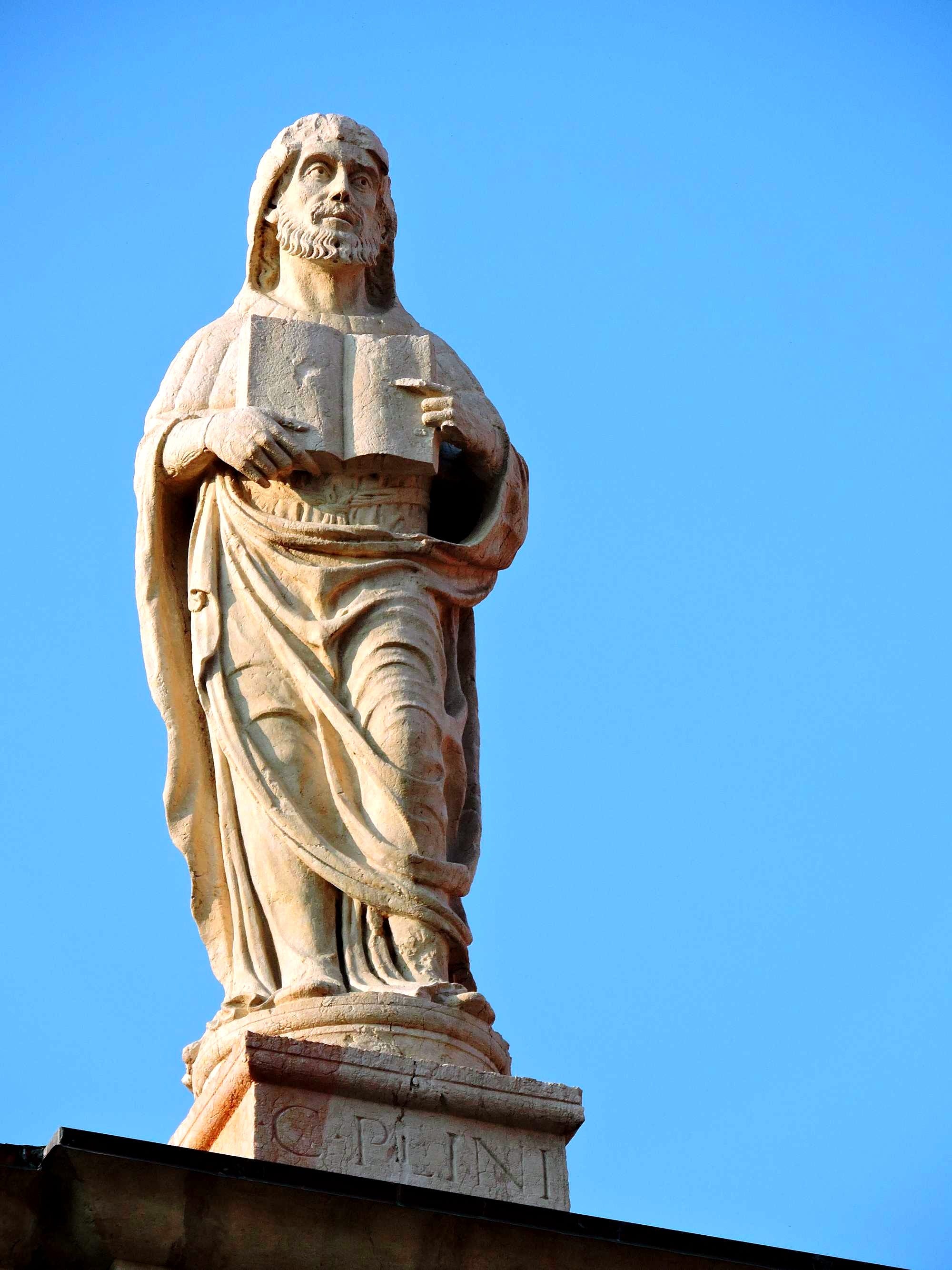
Pliny's work is not a mathematical astronomical treatise. It assembles material from numerous earlier authorities, but the range of celestial topics is considerable. He discusses the fixed stars, the seven wandering bodies, their movements and periods, the sun and moon, eclipses, comets, celestial distances and other lights and phenomena in the sky.
His treatment of eclipses includes their recurrence:
“It is ascertained that the eclipses complete their whole revolution in the space of 223 months”
Pliny distinguishes the circumstances of solar and lunar eclipses and recognizes that eclipses do not appear identically from all places on earth. The visibility and apparent timing of an eclipse depend on geographical position.
The planets are treated as wandering bodies whose movements differ from the daily movement of the fixed heavens. Pliny discusses their arrangement, periods, stations and apparent retrograde motion. The resulting account preserves for Latin readers a large body of astronomical material inherited from earlier Greek and Hellenistic traditions.
Pliny also places astronomical knowledge into a history of individuals. Gallus appears prominently in his discussion of eclipses. Pliny says that Gallus was the first Roman to make the explanation of eclipses widely known and repeats the tradition that he announced the eclipse before the defeat of Perseus. He also reports Gallus's later written work.
That account differs from Cicero's earlier Pydna story but fits Pliny's larger sequence of men who explained celestial phenomena. He mentions Thales and then Hipparchus, whose work on the movements and appearances of the heavens Pliny praises at length. Gallus is presented as the Roman figure within that history.
Pliny's Book II also demonstrates how much material could be gathered under a Roman treatment of the heavens. Planetary motion could appear beside eclipses; comets beside atmospheric lights; celestial distances beside arguments about the form of the earth. Some explanations came from mathematical astronomy, some from natural philosophy, and others from older traditions whose categories did not match later distinctions between astronomy and meteorology.
Studying the Stars at Rome
The surviving Roman evidence places astronomy in several different settings rather than within one clearly defined Roman profession. Gallus was a senator and magistrate remembered for eclipse calculation and celestial models. Cicero translated Aratus and used astronomical subjects in philosophical works. Varro incorporated astronomy into the mathematical arts while also applying celestial observations to calendars, agriculture, winds and timekeeping. Nigidius dealt with phenomena associated with the sun and moon within a wider combination of meteorology, astrology and divination.
Manilius devoted an entire poem to the celestial system and astrology. Germanicus continued the Latin adaptation of Aratus. Seneca examined comets from within ancient meteorology and argued that their nature and movements remained incompletely understood. Pliny assembled a broad account of planets, eclipses, comets and other phenomena within his encyclopedia.
Greek material remained central throughout these works. Roman writers translated, adapted, organized and transmitted astronomical knowledge that had developed over centuries in the Greek world, while also placing it in Latin poetry, education, encyclopedic writing, agricultural calendars and Roman discussions of natural phenomena. The surviving evidence does not require these men to be treated as members of a single Roman astronomical school; it records different Roman ways of studying, explaining and writing about the heavens.
Elizabeth Rawson, Intellectual Life in the Late Roman Republic, especially Chapter 11, “The Mathematical Arts.”
Alan C. Bowen, “The Art of the Commander and the Emergence of Predictive Astronomy,” in Science and Mathematics in Ancient Greek Culture.
Patrick Glauthier, “Repurposing the Stars: Manilius, Astronomica 1, and the Aratean Tradition,” American Journal of Philology 138.2 (2017), 267–303.
Harry M. Hine, “Rome, the Cosmos, and the Emperor in Seneca’s Natural Questions,” Journal of Roman Studies 96 (2006), 42–72.
Cicero, De Senectute.
Cicero, De Republica.
Cicero, De Natura Deorum.
Cicero, Aratea.
Livy, Ab Urbe Condita, Book 44.
Pliny the Elder, Natural History, Book 2.
Seneca, Natural Questions, Book 7.
Manilius, Astronomica, Book 1.
Germanicus, Aratea.

About the Roman Empire Times
See all the latest news for the Roman Empire, ancient Roman historical facts, anecdotes from Roman Times and stories from the Empire at romanempiretimes.com. Contact our newsroom to report an update or send your story, photos and videos. Follow RET on Google News, Flipboard and subscribe here to our daily email.
Follow the Roman Empire Times on social media: