
Gratian: A Child on the Throne, a Soldier in the Making
Raised to the rank of Augustus at just eight years old, Gratian spent his reign trying to grow into the military and political role his father had prepared for him.

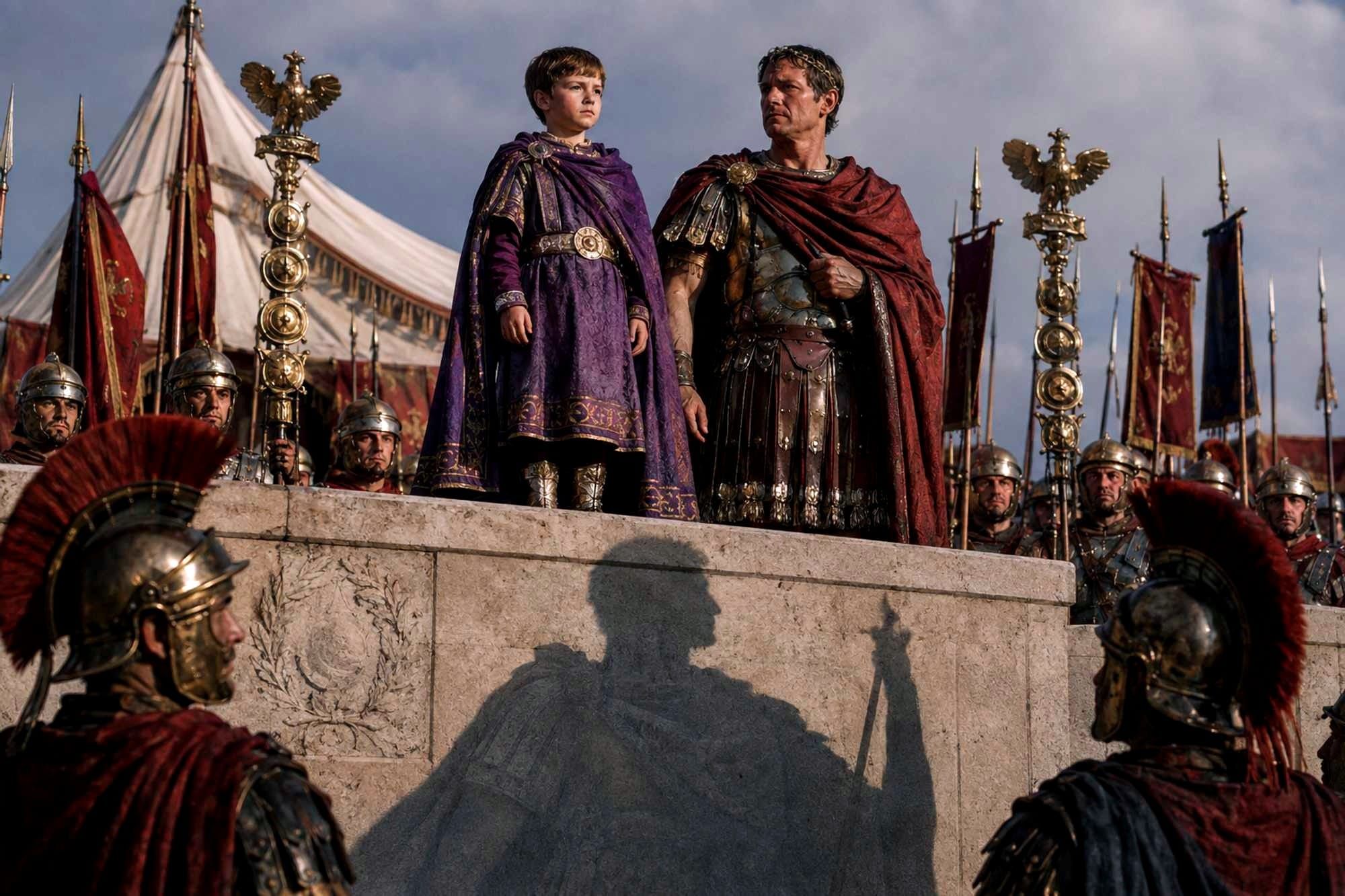
When Gratian became Augustus in 367, he was eight years old. His father, Valentinian I, had recovered from a serious illness that had already prompted discussion at court about who might succeed him, and the solution he adopted was unusual. Instead of giving his son the junior rank of Caesar, Valentinian raised the boy directly to the same imperial title held by himself and his brother Valens.
Gratian could not yet command an army, conduct government independently, or fulfil most of the duties traditionally associated with an emperor. His elevation nevertheless secured his place within the new dynasty and gave him full imperial rank long before he was capable of exercising the responsibilities that went with it.
The arrangement remained workable while Valentinian was alive. It became considerably more complicated after his death in 375, when Gratian inherited a western government in which generals, civilian officials and aristocratic networks already possessed considerable authority around the throne.
During the following eight years he increasingly attempted to perform the functions expected of an adult Roman ruler: commanding troops, responding to frontier crises, making appointments, arbitrating religious disputes and directing imperial policy. His reign ended in 383 when Magnus Maximus was proclaimed emperor by troops in Britain, crossed into Gaul and drew much of Gratian's military support away from him.
Ancient writers subsequently offered several explanations for his fall, including his enthusiasm for hunting, his attachment to foreign soldiers, the influence of advisers and his growing involvement in religious affairs. None of these explanations by itself accounts adequately for what happened. Gratian had entered imperial life as a child ruler around whom other men necessarily performed many of the practical functions of government. As he grew older, he attempted to exercise more of those functions himself, while the political and military structures formed during his youth remained in place.
An Eight-Year-Old Augustus
Gratian was born in 359, the son of Valentinian and Severa. When Valentinian became emperor in 364, his son acquired an entirely new political significance. Before his promotion as Augustus, Gratian had received the designation nobilissimus puer, and in 367 he held his first consulship. His position changed dramatically later that year after Valentinian became seriously ill.
The illness exposed the uncertainty surrounding a dynasty that had only recently come to power. While Valentinian appeared close to death, groups at court discussed possible adult successors, and Ammianus names Rusticus Julianus and the general Severus among the men whose candidacies attracted support. The eight-year-old Gratian was therefore not automatically treated as the obvious successor merely because he was the emperor's son. When Valentinian recovered, he acted to prevent a similar crisis from occurring again.
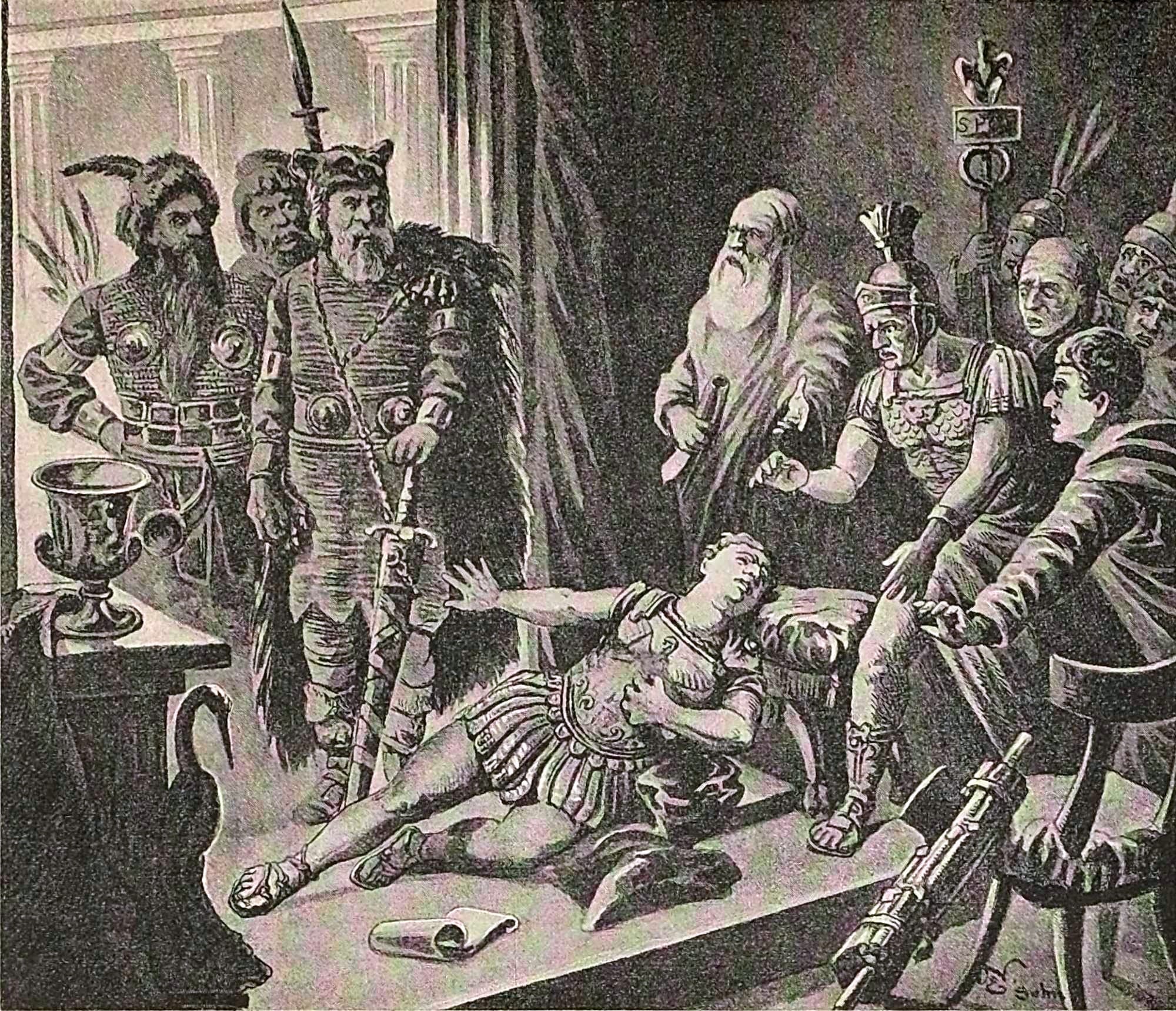
On 24 August 367 at Amiens, Valentinian presented Gratian to the assembled army and proposed him as an imperial colleague. The soldiers acclaimed the boy as Augustus. Rome had known youthful emperors before, and emperors had promoted their sons while they were young, but the direct elevation of a child of eight to the full rank of Augustus, beside a reigning father and uncle and without an intermediate period as Caesar, remained a striking departure from recent imperial practice.
In formal terms, Gratian did not possess a lesser imperial rank. He stood beside Valentinian and Valens as an Augustus even though his age meant that his practical role would necessarily remain restricted. The arrangement therefore created a considerable gap between title and capacity: Gratian possessed the highest rank in the Roman state while remaining dependent upon his father and the experienced adults surrounding the imperial court.
Ammianus' account of the elevation is especially useful because the military expectations placed upon the new emperor are explicit. After clothing his son in the imperial insignia, Valentinian instructed Gratian to prepare for the responsibilities he would eventually have to assume, telling him to:
"accustom yourself to pass fearlessly with the infantry over the Danube and the Rhine"
Valentinian also instructed him to remain close to his soldiers and to be prepared to risk his life for those under his command. His son was still a child, but the role being described to him was that of the traditional campaigning emperor who travelled with the army, crossed the frontier rivers and shared military danger. Gratian could not fulfil that role in 367, but his father expected him eventually to grow into it.
Gratian did receive some exposure to military life during his father's reign. Valentinian took him on campaign against the Alamanni in 368, although Ammianus states that the boy was kept back with the Jovian legion because his age made him unequal to battle and hardship. When Valentinian undertook his final campaign on the Danube in 375, Gratian remained at Trier. By then he was sixteen and recently married, and leaving him in Gaul may have represented a greater measure of independence, but he had still not established himself as a field commander.
His civilian education developed alongside this military environment. Ausonius, the distinguished teacher from Bordeaux, was summoned to court during the later 360s to supervise Gratian's education. Literary training, rhetoric and familiarity with the language of administration were valuable qualifications for a late Roman ruler, whose government depended heavily upon communicating with educated officials and aristocrats throughout the empire. Gratian was therefore prepared both for the cultivated civilian world represented by Ausonius and for the active military emperorship exemplified by his father.
Valentinian Dies, and Another Child Becomes Emperor
By 374 Gratian had married Constantia, daughter of Constantius II. The marriage connected the Valentinian dynasty with the Constantinian house and strengthened Gratian's dynastic position. By the time Valentinian left for the Danube in 375, his elder son had already held three consulships, in 367, 371 and 374, and had been Augustus for eight years. There was little doubt that he had been deliberately marked out as his father's principal heir.
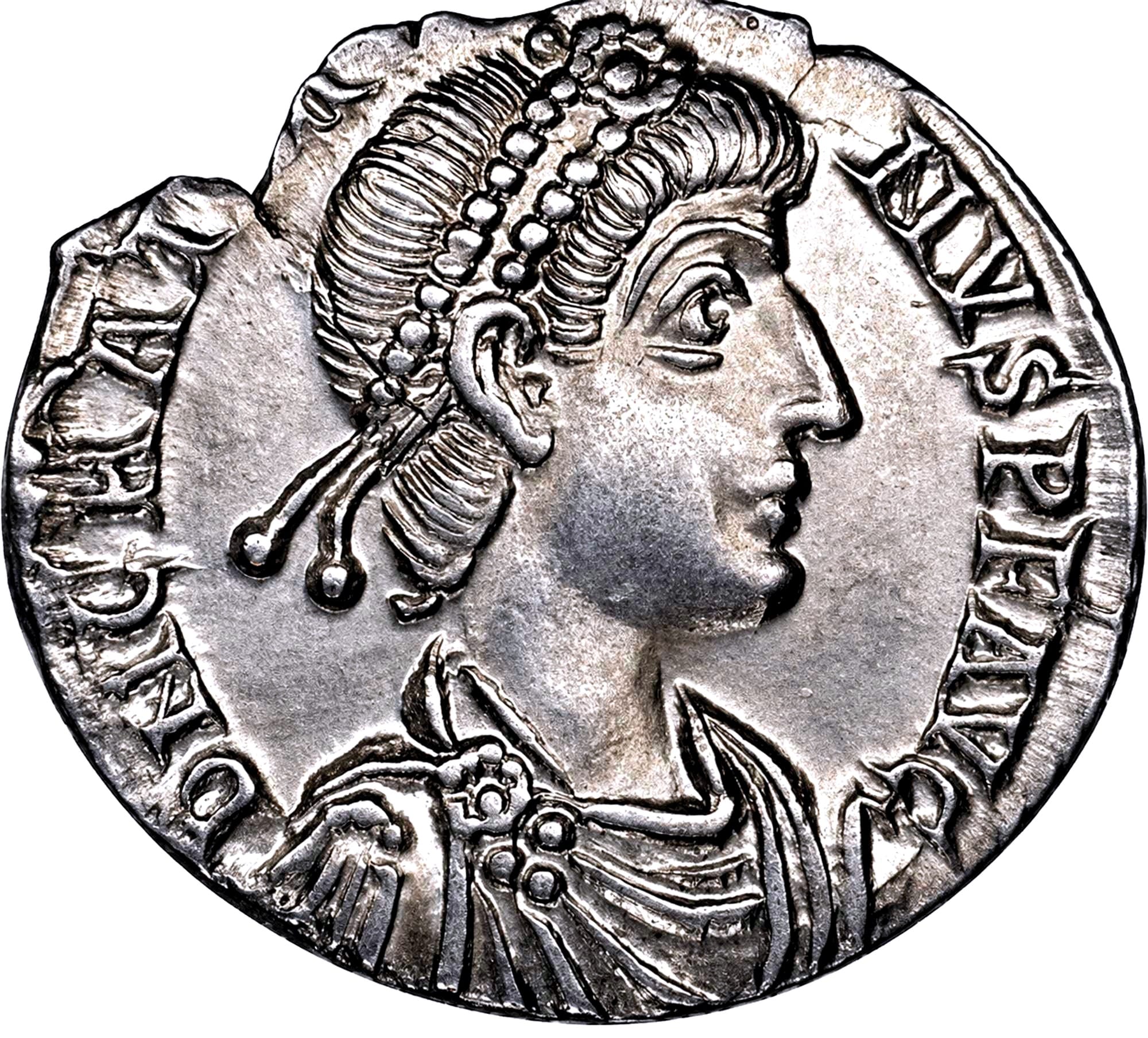
Valentinian died suddenly at Brigetio on 17 November 375 while receiving an embassy from the Quadi. Gratian was at Trier and was not present when the succession crisis began. Senior officials around the dead emperor moved quickly, recalling the general Merobaudes and removing the respected commander Sebastianus from the immediate scene because of fears that troops might proclaim an experienced adult soldier instead.
Six days after Valentinian's death, his four-year-old son by Justina was brought before the army and proclaimed Valentinian II. Neither Gratian nor Valens had authorized the elevation beforehand. The decision took place amid a genuine political emergency, but the precise calculations of those involved have to be reconstructed cautiously.
A sudden imperial death could encourage military usurpation and civil war, while a four-year-old dynastic Augustus also offered advantages to powerful men who could exercise authority around him without facing an independent adult ruler.
Modern interpretations consequently give considerable importance to Merobaudes and other senior figures involved in the settlement, while Petronius Probus has also been associated with the political manoeuvring surrounding the new regime. The evidence does not allow every detail of these arrangements to be recovered, but Valentinian II's elevation was not the straightforward execution of a succession plan left by his father. Men on the spot acted without prior imperial authorization and created a new political situation to which Gratian then had to respond.
Gratian accepted his half-brother instead of challenging the proclamation and risking conflict within the dynasty. Later accounts have sometimes encouraged the impression of a clear territorial division in which Gratian governed Gaul, Britain and Spain while Valentinian II received Italy, Africa and Illyricum. In practice, the younger emperor was four years old and there is little evidence of independent governmental activity by him before Gratian's death. Contemporary evidence generally treats Gratian as the effective western ruler, and it was Gratian who later dealt with the disposition of Illyrian territory.
The early years of Gratian's independent rule also brought substantial changes within the civilian administration. Some officials closely associated with Valentinian's Pannonian network disappeared from power, while relations with the Roman senatorial aristocracy became less confrontational. Valentinian's reign had produced considerable resentment among senators because of prosecutions and investigations associated with officials such as Maximinus, and Gratian's government adopted a noticeably different tone.
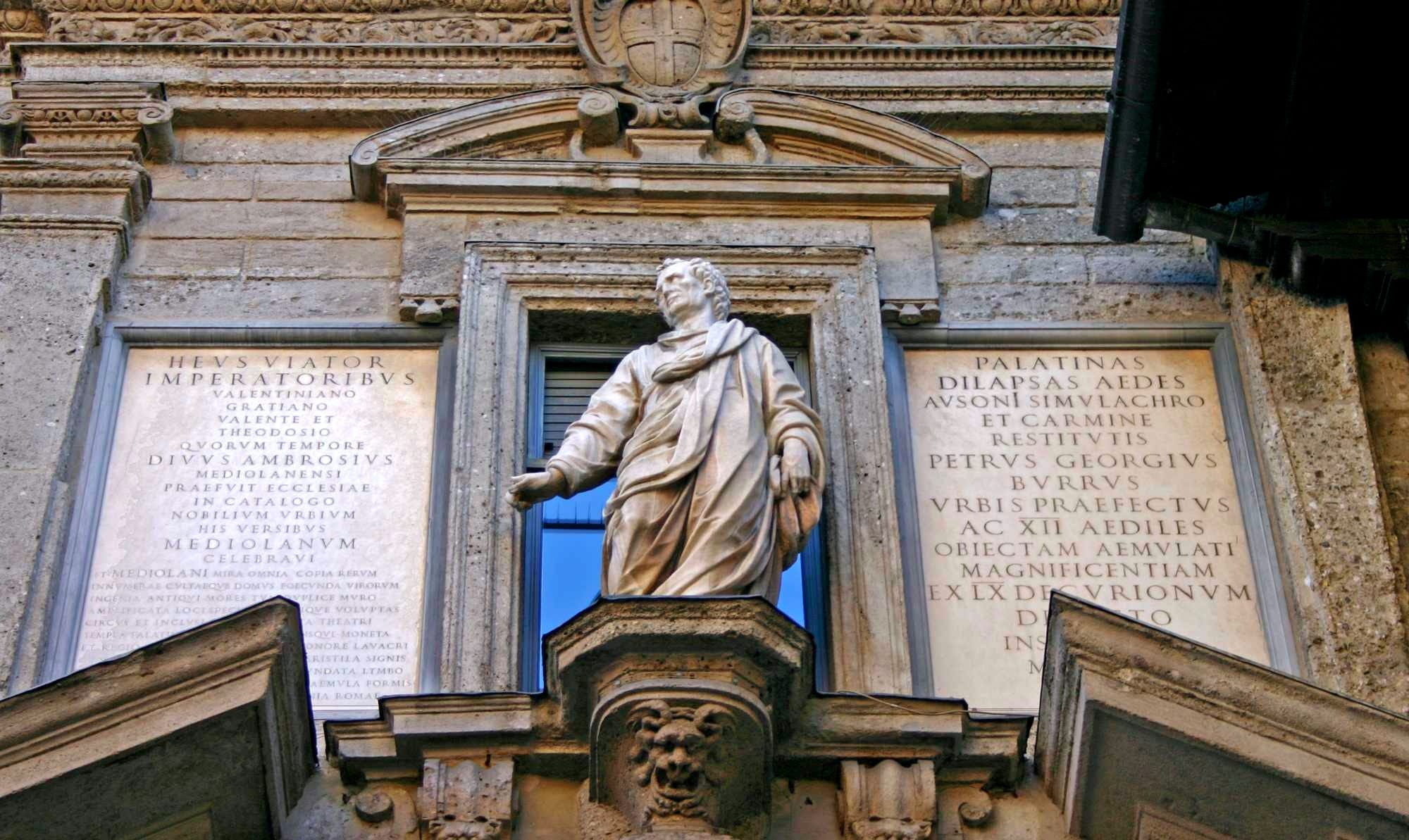
Ausonius and his associates prospered conspicuously within this new environment. His son Hesperius received important appointments, other relatives and associates advanced through the administration, and Ausonius himself rose through the praetorian prefecture to the consulship of 379. The prominence of Gallic officeholders became one of the most noticeable characteristics of Gratian's early government.
That prominence did not make Ausonius the controller of the western empire. His influence depended heavily upon access to his former pupil and upon civilian networks of office and patronage, while his position within the army was much weaker. Merobaudes remained an important military figure, and members of the Roman senatorial aristocracy possessed their own connections and interests. Gratian's government therefore contained several overlapping centres of influence rather than a single faction directing policy from behind the throne.
Gratian Tries to Become a Military Emperor
The crisis of 378 gave Gratian his clearest opportunity to perform the military role Valentinian had described eleven years earlier. In the East, Valens was facing the consequences of the Gothic crossing of the Danube. The situation had deteriorated into a major war, and the eastern emperor requested military assistance from the West.
Before Gratian could reach his uncle, however, the Lentienses, an Alamannic group, crossed the Rhine after learning that Roman troops were being transferred towards Illyricum. Gratian recalled some forces and entrusted the immediate response to Nannienus and Mallobaudes. The Romans defeated the invaders near Argentaria, but Gratian did not end the campaign after that initial victory.
He crossed the Rhine himself and continued the pursuit into difficult mountainous country. The decision consumed time while Valens faced a much larger emergency in Thrace, but it also produced the clearest surviving evidence of Gratian attempting to exercise personal battlefield leadership. During the fighting, Ammianus says the Roman troops were encouraged because:
"the emperor himself was continually seen actively employed among the front rank"
The Romans continued their operations despite the difficult terrain and heavy fighting. When direct attacks proved costly, Gratian and his commanders resorted to blockade, after which the surviving Lentienses surrendered, provided young men for Roman recruitment and were permitted to return home.
Ammianus' assessment immediately afterwards is unusually favourable. He praises Gratian's vigour and rapidity of action and describes him as eloquent, moderate, warlike and merciful. He nevertheless follows that praise with criticism of the emperor's enthusiasm for hunting and of the influence exerted by people around him, producing a mixed portrait rather than either an unqualified panegyric or a simple condemnation.
The Lentienses campaign nevertheless delayed Gratian's journey east. From the perspective of the wider military crisis, his decision to complete the western campaign was strategically costly. It also makes sense within the political circumstances of a nineteen-year-old emperor who had possessed imperial rank since childhood but had relatively little opportunity to establish a personal military reputation. A victory achieved in his own presence allowed Gratian to demonstrate precisely the kind of martial leadership expected of an emperor and described by Valentinian at Amiens.
After the campaign he resumed his movement east, reached Sirmium and continued towards Castra Martis, but illness slowed his progress. Ammianus records that Gratian suffered an intermittent fever during the journey. He nevertheless remained in communication with Valens, and Richomeres eventually arrived at the eastern court carrying letters announcing Gratian's approach and urging Valens to wait for the western reinforcements.
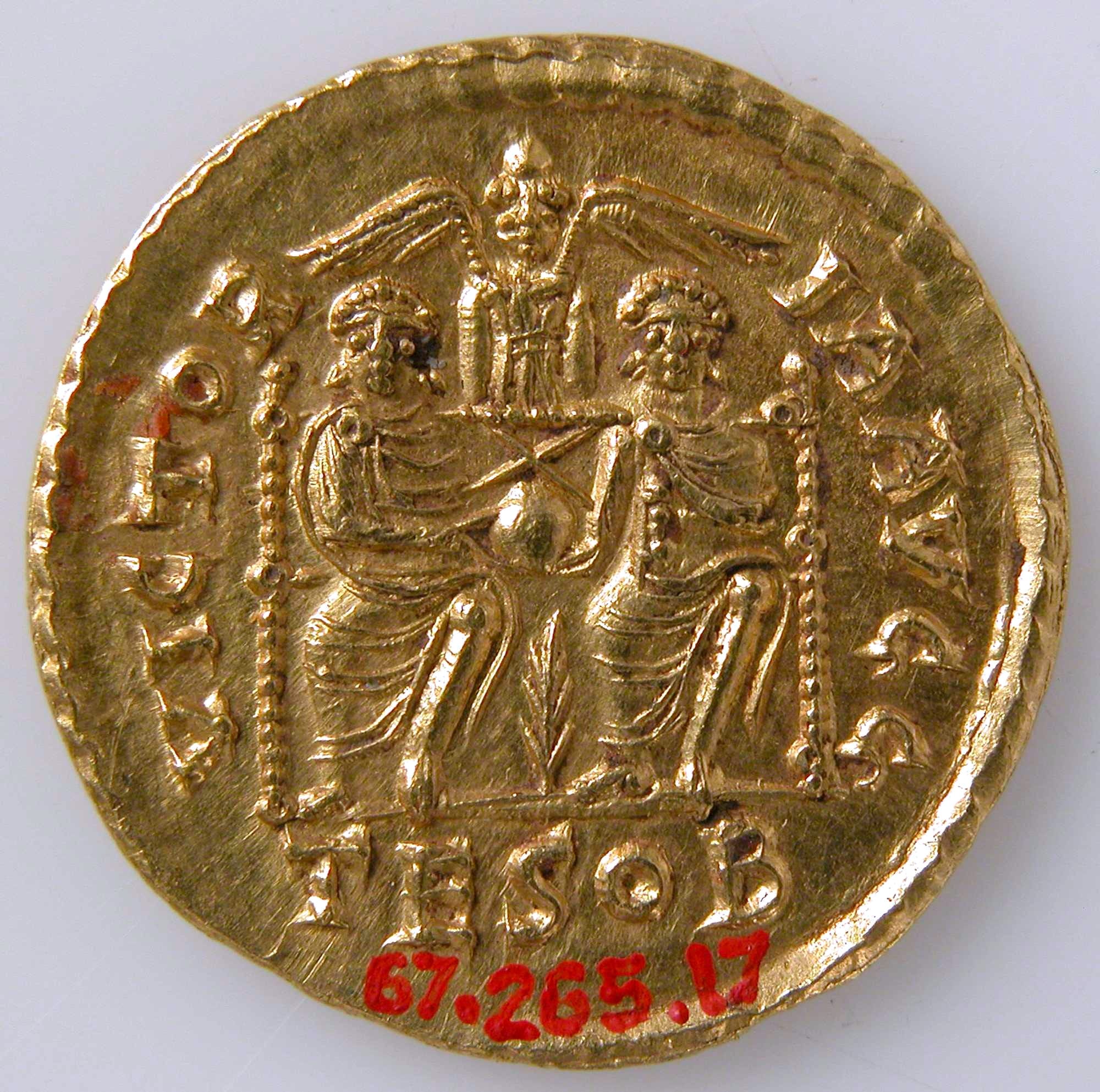
The eastern command disagreed over what to do. Victor and others advised waiting for Gratian, while another group urged Valens to fight immediately. Ammianus also associates the decision with rivalry between the emperors, describing Valens as conscious of his nephew's recent success and receptive to advisers who wanted him to secure a victory before Gratian could share in it.
Valens attacked the Goths near Adrianople on 9 August 378. The result was a catastrophic Roman defeat in which the eastern emperor was killed and a large part of his field army destroyed. Gratian's delay on the Rhine formed part of the sequence leading to the battle, but the evidence does not support the claim that he abandoned Valens or caused the disaster. The eastern emperor knew that Gratian was approaching, received advice to wait and nevertheless chose to fight before the western army arrived.
Adrianople, Theodosius and a New Imperial Balance
The death of Valens left Gratian and the seven-year-old Valentinian II as the surviving Augusti. A new emperor was not appointed immediately, and almost five months passed before Theodosius was elevated in January 379. This interval is significant because the later, simplified account in which Gratian immediately selected a capable general to save the East does not capture the uncertainty of the situation.
Theodosius was the son of the distinguished commander who had served under Valentinian I before being executed after the emperor's death. The younger Theodosius had military experience, including service in the Danubian region, and had not been implicated in the disaster at Adrianople. In a military emergency that required experienced leadership, he offered qualities neither of the surviving young emperors could yet provide in the East.
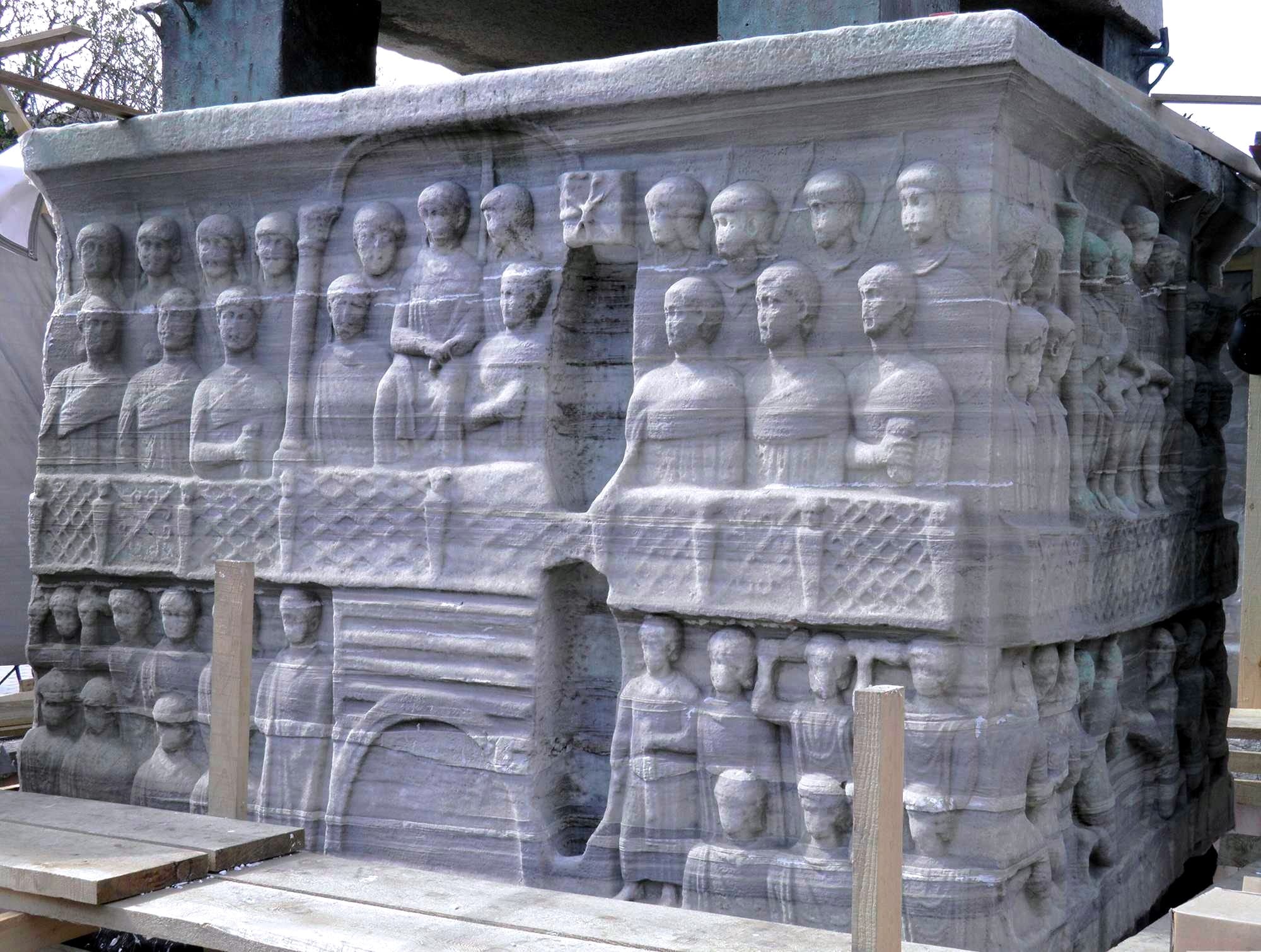
The role of the surviving eastern commanders also has to be considered. Richomeres, Victor and Saturninus survived Adrianople and remained important military figures. One modern reconstruction gives these generals and the eastern army a substantial role in bringing Theodosius forward. The surviving evidence does not allow that reconstruction to be demonstrated in full, but it also makes it difficult to reduce the accession to a purely personal appointment by Gratian, since any new eastern Augustus needed the acceptance of the army he was expected to command.
Theodosius became Augustus at Sirmium on 19 January 379 with Gratian's recognition. The precise balance of initiative among Gratian, the military commanders and other political figures remains uncertain. Ausonius' subsequent silence is notable because his Gratiarum Actio, delivered later in 379, praises Gratian extensively without celebrating what would have been the remarkable act of selecting Theodosius as emperor.
Once Theodosius had been elevated, Gratian cooperated with the new political settlement. He transferred the dioceses of Dacia and Macedonia to his eastern colleague, providing territory and resources useful for the continuing Gothic war. The accession nevertheless changed the balance within the imperial college, since Gratian's formal seniority now existed alongside an adult military emperor governing the region in which Rome's most serious military emergency was unfolding.
The new circumstances also contributed to the decline of Ausonius' political importance. His consulship in 379 represented the culmination of his rise, but the major decisions following Adrianople had taken place away from Trier and increasingly beyond the environment in which his influence was strongest. As Gratian's attention moved towards Illyricum and northern Italy, other political and ecclesiastical figures gained greater access to the emperor.
Gratian, Ambrose and the Christian Emperor
Gratian's religious policies developed gradually rather than changing in a single moment. After Valens' death, ecclesiastical historians report that he permitted exiled bishops to return and allowed substantial freedom of worship, with exceptions for groups already prohibited. Subsequent measures narrowed some of those freedoms, suggesting an evolving response to the confused religious conditions left by Valens rather than the immediate adoption of a fixed programme.
There is also evidence that a basilica in Milan was available to the Homoean Christian community during this period before Gratian later returned it to the Nicenes. The precise circumstances remain debated, but the episode is difficult to reconcile with the idea that Gratian instantly adopted an uncompromising Nicene policy as soon as Ambrose acquired influence over him.
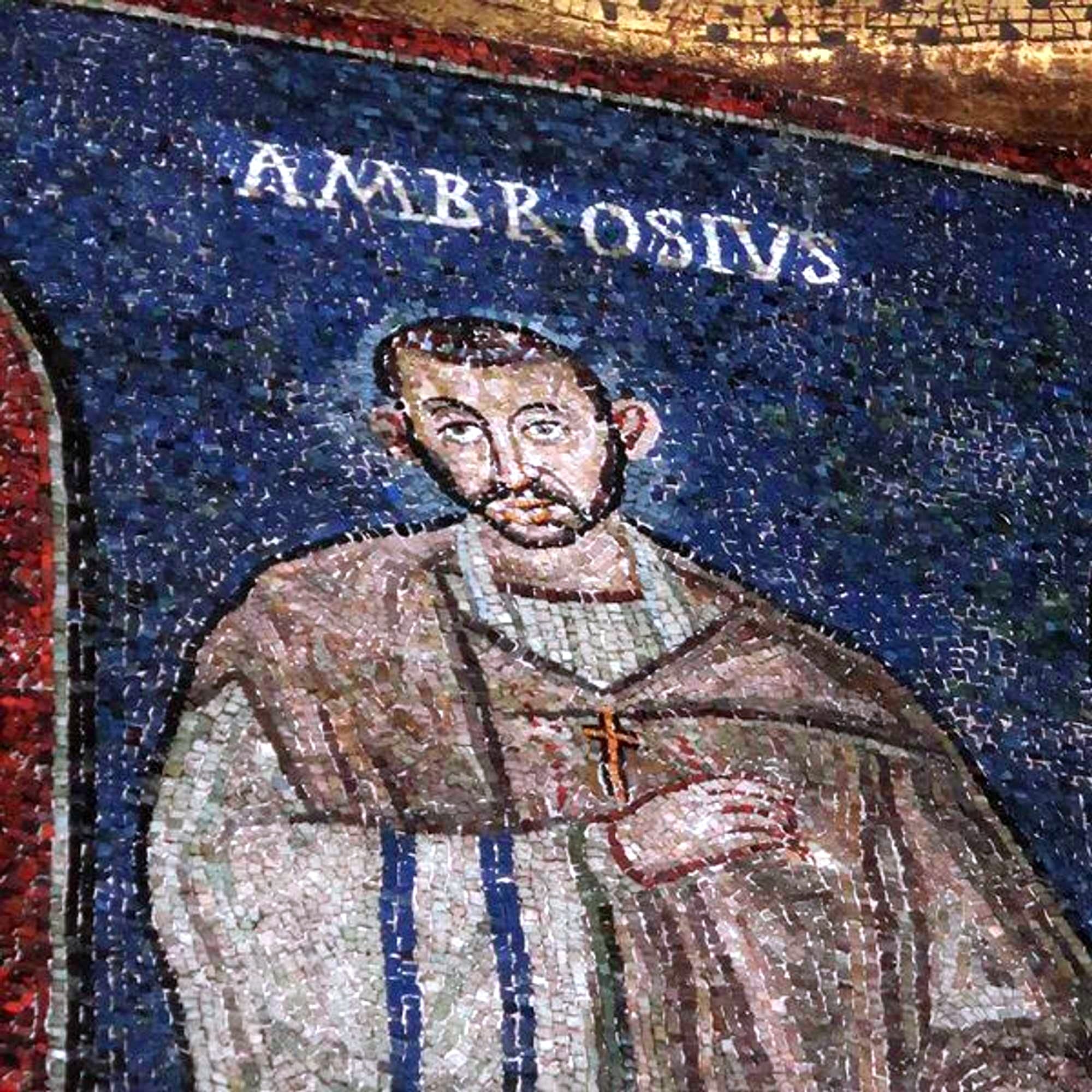
Ambrose's importance nevertheless increased, particularly as Gratian spent more time within the political environment of northern Italy. The emperor's own surviving correspondence is valuable because it shows Gratian actively seeking theological instruction rather than merely receiving episcopal pressure. In 379 he wrote to Ambrose:
"Hasten then, holy Bishop of God; come and teach me, who am already a sincere believer"
Gratian also requested further theological material concerning the Holy Spirit. His own words show that the relationship was not simply one in which Ambrose imposed his views upon a passive young ruler. Gratian deliberately sought the bishop's instruction, while Ambrose's growing influence operated partly because the emperor wanted the guidance he could provide.
By 381 that influence was more clearly visible in the preparations for the Council of Aquileia. Gratian appears originally to have envisaged a broader gathering than the council that eventually took place. By September the meeting had become relatively small and heavily dominated by Ambrose, with proceedings directed primarily against the Homoean bishops Palladius and Secundianus.
The council nevertheless remained connected to imperial authority. Its participants thanked the emperors for allowing the meeting and expected imperial government to enforce the resulting decisions. Gratian was therefore exercising a religious function increasingly associated with Christian emperorship, in which rulers were expected to participate in maintaining ecclesiastical order and to give practical effect to decisions made by bishops.
Theodosius' role complicates any attempt to make Ambrose the sole explanation for Gratian's religious development. The eastern emperor had his own bishops, councils and policies, and the two imperial courts did not always pursue identical objectives. Gratian's religious government emerged from interaction among the emperor himself, Ambrose, other western bishops, the Roman church and his eastern colleague.
The Altar of Victory and the Pontifical Question
Around 382, Gratian took measures that changed the relationship between the western government and some of Rome's traditional religious institutions. The Altar of Victory was removed from the senate house, and privileges associated with the traditional priesthoods and the Vestal Virgins were affected. The relevant legislation has not survived in full, so the exact scope of the financial measures cannot be reconstructed with complete confidence.
Later evidence concentrates particularly upon the privileges and financial support associated with the Vestals and priestly colleges. Modern scholarship has consequently questioned older descriptions of Gratian's policy as a comprehensive assault upon pagan worship. The measures were nevertheless substantial enough to provoke serious opposition from traditionalist senators, while removing the Altar of Victory from the senate house carried considerable symbolic importance.
A senatorial delegation attempted to approach Gratian but was not received. The circumstances became part of the subsequent controversy, and Christian senators also opposed the restoration of the older privileges. The episode therefore did not represent a uniformly pagan senate confronting a uniformly Christian imperial government, since Rome's senatorial aristocracy itself contained competing religious constituencies.
The related question of the title pontifex maximus requires particular caution. Zosimus later claimed that Gratian rejected a ceremonial pontifical robe because accepting it was incompatible with his Christianity and placed the episode at the beginning of the reign. Contemporary evidence makes that chronology impossible, since Ausonius was still using pontifical language for Gratian in 379.

Alan Cameron's 1968 reconstruction moved the supposed refusal to the final period of the reign and associated it with the senatorial controversy of 382–383. Cameron explicitly acknowledged that elements of this reconstruction were hypothetical, and his later work weakened the traditional story further.
The supposed ceremonial robe described by Zosimus is not otherwise securely attested, while the imperial pontifical title itself may have undergone modification or reinterpretation rather than being rejected in one dramatic public act.
The evidence therefore supports a change in the relationship between Christian emperorship and Rome's traditional chief priesthood during this period, but not the familiar scene of Gratian ceremonially refusing a pagan robe as an established historical event. The distinction is important because much of the conventional picture of his religious reign has depended upon treating that later narrative as a straightforward description of what happened.
Magnus Maximus and the Collapse of Gratian's Rule
By 383 Gratian had been Augustus for sixteen years and had effectively governed the western empire since his father's death. His regime nevertheless remained vulnerable in the area upon which imperial survival ultimately depended: the loyalty of the army.
The successful campaign of 378 showed that Gratian could lead troops personally, but occasional battlefield leadership did not necessarily give him the same enduring relationship with the western military establishment as commanders who spent much of their careers among the soldiers.
Ancient writers offered personal explanations for the deterioration of his support. Ammianus, despite praising Gratian's conduct against the Lentienses, criticized his passion for hunting and suggested that it distracted him from serious government. Zosimus later claimed that Gratian showed excessive favour to Alan soldiers and alienated Roman troops by adopting elements of their dress and behaviour.
These accounts preserve evidence of contemporary or later hostility towards the emperor, but they do not provide a complete explanation for the collapse of his regime. Gratian may indeed have recruited and favoured Alan troops, while such recruitment could also have served a political purpose in an army where powerful established commanders possessed their own following. His difficulties therefore involved not only personal popularity but the distribution of military allegiance within the western government.
Merobaudes was especially important. He had been involved in the arrangements following Valentinian I's death and remained one of the leading military figures of Gratian's reign. The emperor's personal courage was not the central issue, since Ammianus' account of 378 shows that Gratian could campaign and expose himself to battle. More consequential was whether the continuing loyalty of the western troops belonged primarily to the emperor or to commanders who had maintained much closer and more continuous relationships with them.
In 383 Magnus Maximus was proclaimed emperor by troops in Britain and crossed to Gaul. His revolt quickly became more than a movement confined to the British army. Once Maximus had established himself on the Continent, soldiers, commanders and provincial elites had practical reasons to respond to a ruler who possessed military force and could exercise power within Gaul itself.
Gratian moved against the challenge, and Zosimus describes several days of confrontation during which units progressively abandoned him for Maximus. The details cannot be reconstructed securely enough to treat every stage of that narrative as certain, but the overall result is clear. Gratian's military position disintegrated before he could defeat the usurper.
Merobaudes' precise role remains debated. A substantial strand of modern scholarship accepts that the general defected from Gratian and regards his loss as central to the collapse of the emperor's military support, while other reconstructions have questioned aspects of the evidence.
It is therefore safer not to present a dramatic betrayal by Merobaudes as an uncontested fact. What can be established is that Gratian was no longer able to rely upon the military establishment that had sustained his government.
He fled south after the collapse of his forces. Andragathius, one of Maximus' commanders, pursued him, and Gratian was killed near Lyon in August 383 at the age of twenty-four. Later ecclesiastical writers elaborated the episode with a story in which Andragathius used a carriage and false information concerning Gratian's wife to lure him into a trap, but the surviving versions differ and cannot securely establish the deception.
Gratian's death immediately changed the position of Valentinian II. For almost eight years the younger Augustus had remained largely in his brother's shadow, but at twelve he now became the principal surviving legitimate emperor in the West. Civilian and military figures consequently regrouped around his court in an effort to preserve an alternative to Maximus.
The events of 383 also exposed a difficulty that had existed since Gratian's elevation in 367. A child could hold full imperial rank while adults around him performed many of the practical functions associated with the office. Officials could administer government, generals could command armies and aristocratic networks could exercise patronage while the young emperor provided dynastic legitimacy.
Gratian, however, had not been educated to remain permanently in that position. Valentinian had prepared him for the expectation that an emperor would cross the Rhine and Danube with his troops and share the dangers of military command. In 378 Gratian attempted to fulfil that expectation, personally crossing the Rhine, pursuing the Lentienses into difficult terrain and appearing among his fighting men.
The political environment in which he attempted to assume those responsibilities had been formed during the years in which he could not exercise them himself. Civilian networks had developed around access to his court, senior generals possessed their own relationships with the army, and bishops increasingly sought imperial intervention in ecclesiastical disputes. Gratian could exercise authority within that system, but his accession to adulthood did not remove the independent influence already accumulated by the figures surrounding him.
His failure did not end the practice of placing children on the imperial throne. Theodosius subsequently raised his sons Arcadius and Honorius as Augusti while they were still young, and later western governments became increasingly accustomed to emperors who inherited power as children while powerful military commanders exercised many of the practical functions traditionally associated with the imperial office.
Gratian therefore stood near the beginning of an important development in the later Roman West, but his reign differed from the more established pattern of child-emperor government that followed. He had received full imperial rank at eight while his father and other experienced figures exercised the practical functions of rule around him.
As he matured, he attempted to assume those functions himself, including personal military command, and his overthrow in 383 showed how difficult that transition could become when political influence and military loyalty were already concentrated among powerful figures around the imperial court.
Meaghan A. McEvoy, Child Emperor Rule in the Late Roman West, AD 367–455.
John Matthews, Western Aristocracies and Imperial Court, A.D. 364–425.
Alan Cameron, “Gratian’s Repudiation of the Pontifical Robe,” Journal of Roman Studies 58 (1968).
Ammianus Marcellinus, The Roman History, Books XXVII, XXX and XXXI, trans. C. D. Yonge.
Gratian, Letter to Ambrose, 379.
Ambrose of Milan, correspondence and material associated with the Council of Aquileia.
Symmachus, Relatio 3.
Zosimus, New History, Book IV.
Socrates Scholasticus, Ecclesiastical History.
Sozomen, Ecclesiastical History.


About the Roman Empire Times
See all the latest news for the Roman Empire, ancient Roman historical facts, anecdotes from Roman Times and stories from the Empire at romanempiretimes.com. Contact our newsroom to report an update or send your story, photos and videos. Follow RET on Google News, Flipboard and subscribe here to our daily email.
Follow the Roman Empire Times on social media: