
Appian of Alexandria: The Greek Historian Who Explained Rome’s Empire
In the second century CE, Appian of Alexandria set out to explain how Rome conquered the world — and how it turned against itself. His Roman History remains the most sustained ancient account of the civil wars that transformed republic into empire.

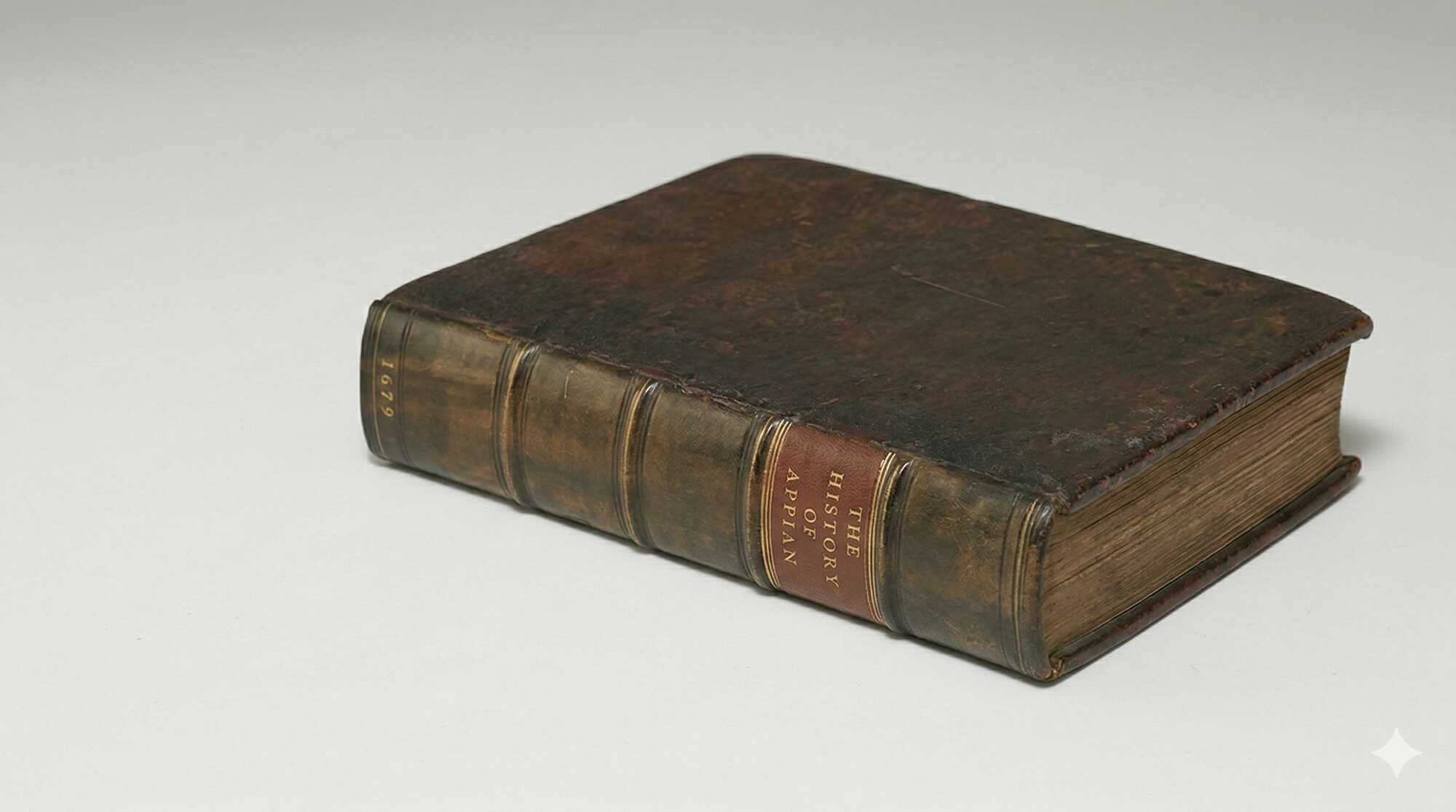
In the second century CE, long after the Roman Republic had vanished, a Greek official from Alexandria undertook an ambitious task: to write the history of Rome’s expansion and, above all, its internal collapse. Appian’s Roman History is not merely a chronicle of wars. It is the most sustained ancient account of the civil conflicts that transformed Rome from republic to empire. Without Appian, much of that story would be fragmentary, distorted, or lost.
Appian of Alexandria – A Greek Historian of Rome’s Rise and Rupture
Appian was a native of Alexandria in Roman Egypt, probably born around AD 95 and active into the reign of Antoninus Pius, dying sometime after the mid-second century. What little is known about his life comes from his own preface and from letters written by Fronto, tutor of Marcus Aurelius.
Appian records that he rose to prominence in Alexandria before moving to Rome, where he worked as a legal advocate in the imperial courts and was eventually appointed procurator – a post that required Roman citizenship and equestrian rank. Fronto himself supported his appointment, describing him as a man of integrity and honour.
Appian states that he had written an autobiography, now lost, but his historical works were still known in the ninth century. His Roman History was conceived not as a strict chronological narrative but as a series of thematic or ethnographic books, organised around Rome’s wars with individual peoples and, ultimately, its internal conflicts.
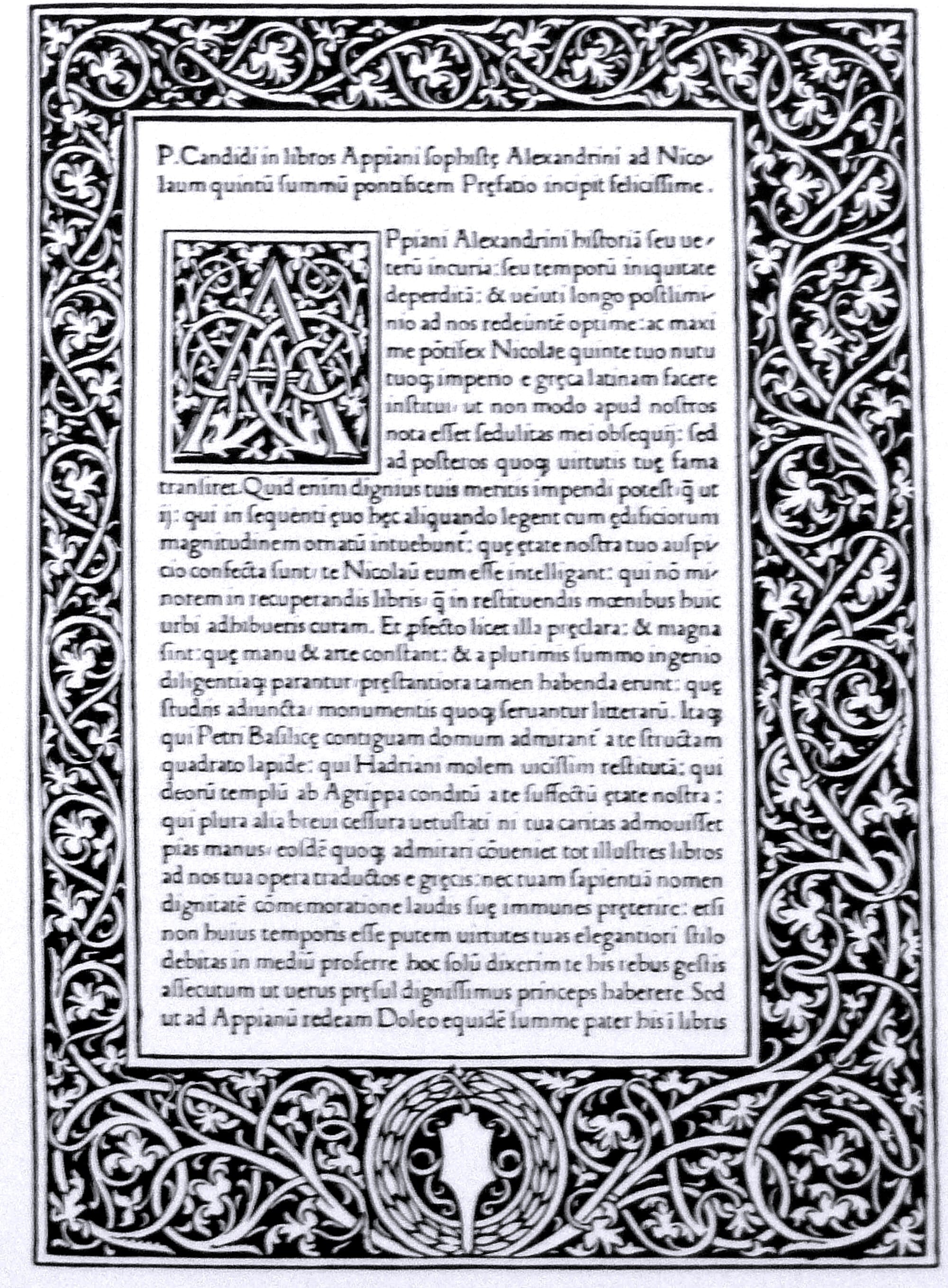
Originally comprising twenty-four books, only eleven survive in full or nearly complete form, including the Spanish, Hannibalic, Punic, Illyrian, Syrian, and Mithridatic Wars, along with five books of the Civil Wars. Fragments of other sections survive in later Byzantine compilations.
Although writing long after the events he described, Appian drew on earlier Greek and Latin historians and, at times, documentary sources. He explicitly cites figures such as Polybius, Caesar, Augustus, and Asinius Pollio, while modern scholarship has long debated the precise nature of his sources. Yet beyond questions of borrowing, his work reveals a deliberate structure and interpretative purpose.
Appian was less concerned with philosophical theorising than with narrating large historical processes – especially the destructive cycle of Rome’s civil wars – in a way that emphasised causes and consequences.
His style is generally plain, but in speeches and rhetorical passages he becomes vivid and forceful. The opening of the Civil Wars, which traces the tensions leading to the Gracchi, stands among the most carefully constructed accounts of the late Republic. At times criticised for inaccuracies in detail, Appian nevertheless preserves indispensable narratives – including the only full ancient account of the Third Punic War and the destruction of Carthage.
From “Third-Rate” to Reconsidered – The Modern Rehabilitation of Appian
For much of modern scholarship, Appian of Alexandria was burdened by a dismissive verdict. In 1863, Nissen famously labelled him “third-rate,” a judgement that German scholarship largely endorsed and that was reinforced by E. Schwartz’s influential entry in Pauly-Wissowa’s Realencyclopädie der classischen Altertumswissenschaft. Once fixed there, Appian’s reputation hardened for generations. English-language scholars followed suit.
Earlier centuries had been more generous. In the sixteenth century, editions and translations of Appian circulated widely, and he was read with interest; even Shakespeare drew on him for Antony and Cleopatra. Yet by the late nineteenth century, his standing had declined sharply. Although his works continued to be consulted, they were often mined for information rather than read as crafted history.
This marginalisation served the priorities of the then-dominant discipline of Quellenforschung – the search for underlying sources. Appian was treated as a passive compiler whose value lay in preserving fragments of lost historians. Such an approach proved convenient: a supposedly unthinking transmitter of earlier material offered scholars freer scope for reconstruction than an author recognised as shaping his narrative with intention and design.
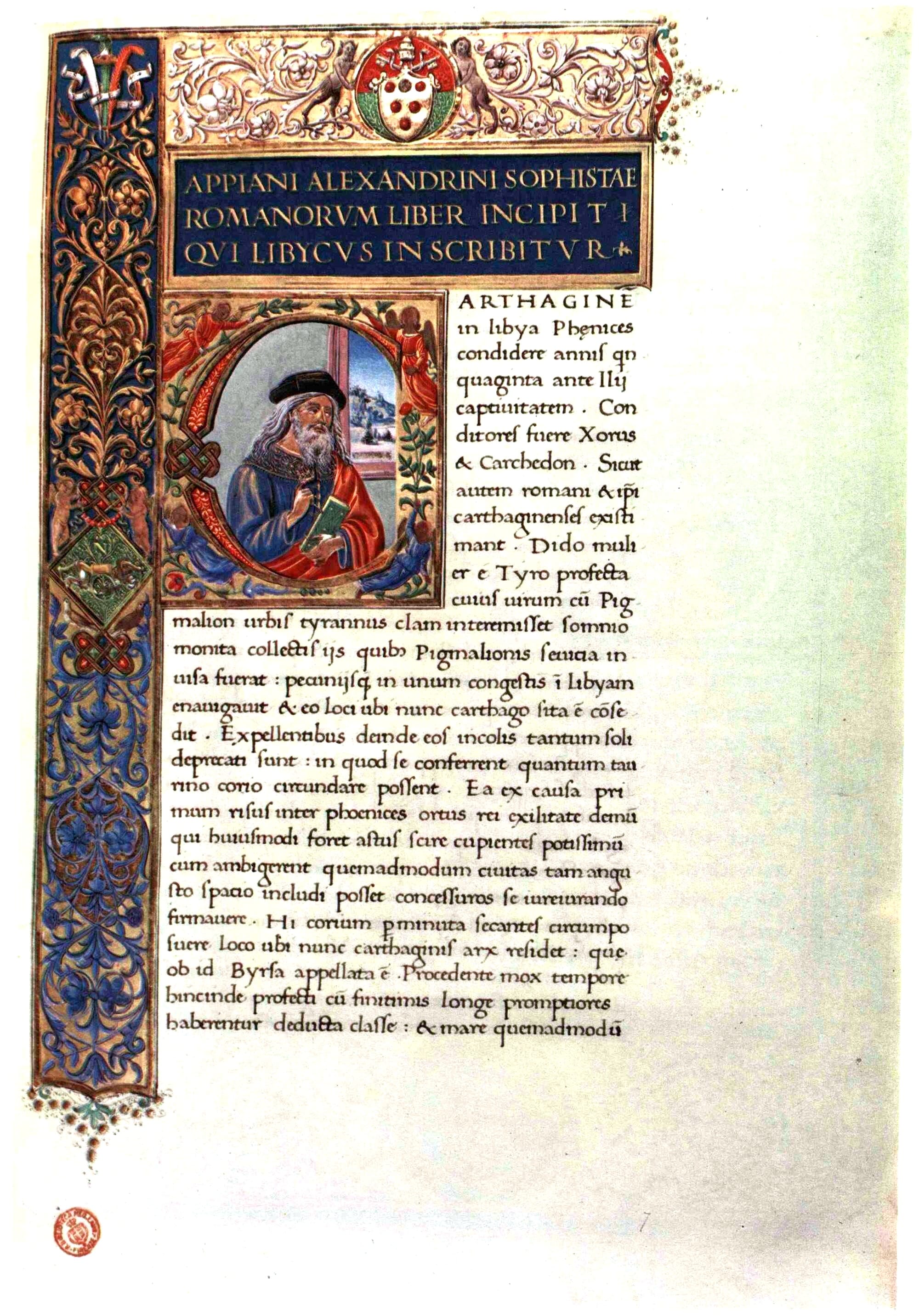
For decades, Appian research largely followed this path. In recent decades, however, attitudes have shifted. Broader changes in scholarly taste, along with renewed interest in underexplored authors, have encouraged a re-evaluation. Just as figures once dismissed – such as Diodorus, Josephus, Velleius Paterculus, and Florus – have been reconsidered as independent and reflective historians, so too has Appian.
Modern scholarship increasingly presents him as a serious writer with rhetorical control, structural vision, and analytical purpose. His weaknesses remain acknowledged, but they no longer define his contribution.
This reassessment is comparatively recent. The first full-length literary study of Appian’s work appeared only in 1988, prompting calls for a more substantial appraisal of his place in historiography. The 1990s brought further literary analyses and doctoral dissertations in both English and German, and subsequent studies have explored his language, narrative strategies, and compositional techniques – areas once neglected or dismissed by earlier philological traditions. A significant milestone came in 2015, when Kathryn Welch edited a volume devoted to exploring Appian’s originality.
The question of originality has often centred on Appian’s use of sources. While it is clear that he relied on earlier Greek and Latin narratives, as well as documentary material, more recent scholarship emphasises something beyond compilation. The structure of his Roman History – organised on a broad, panoramic scale – and his sustained treatment of the Roman civil wars across five books suggest a historian seeking not merely to record events but to interpret them.
In both design and declared purpose, Appian departs from conventional historiographical models, presenting himself as a writer concerned with explaining transformative moments in Roman history rather than simply recounting them.
Writing the Roman Empire as World History
Appian conceived his Roman History as a form of universal history. From Rome’s early expansion in Italy to the campaigns of his own era, he traced the gradual extension of Roman power until it encompassed the inhabited world. For Appian, Rome’s story was not simply one of conquest, but of sustained domination and long-term stability. He reflects a widely shared Roman perspective when he observes:
“Possessing the best part of the earth and sea they have, on the whole, aimed to preserve their empire by the exercise of prudence, rather than to extend their sway indefinitely over poverty-stricken and profitless tribes of barbarians …” (Roman History, Preface 7.26)
The idea that Rome had achieved rule over the known world long predated Appian. Polybius had already remarked that Rome had conquered “nearly the entire inhabitable world.” Appian himself emphasises that most of the empire was acquired under the Republic, while the emperors largely maintained what had already been won. Roman history, once Rome dominated both western and eastern Mediterranean regions, effectively became world history.
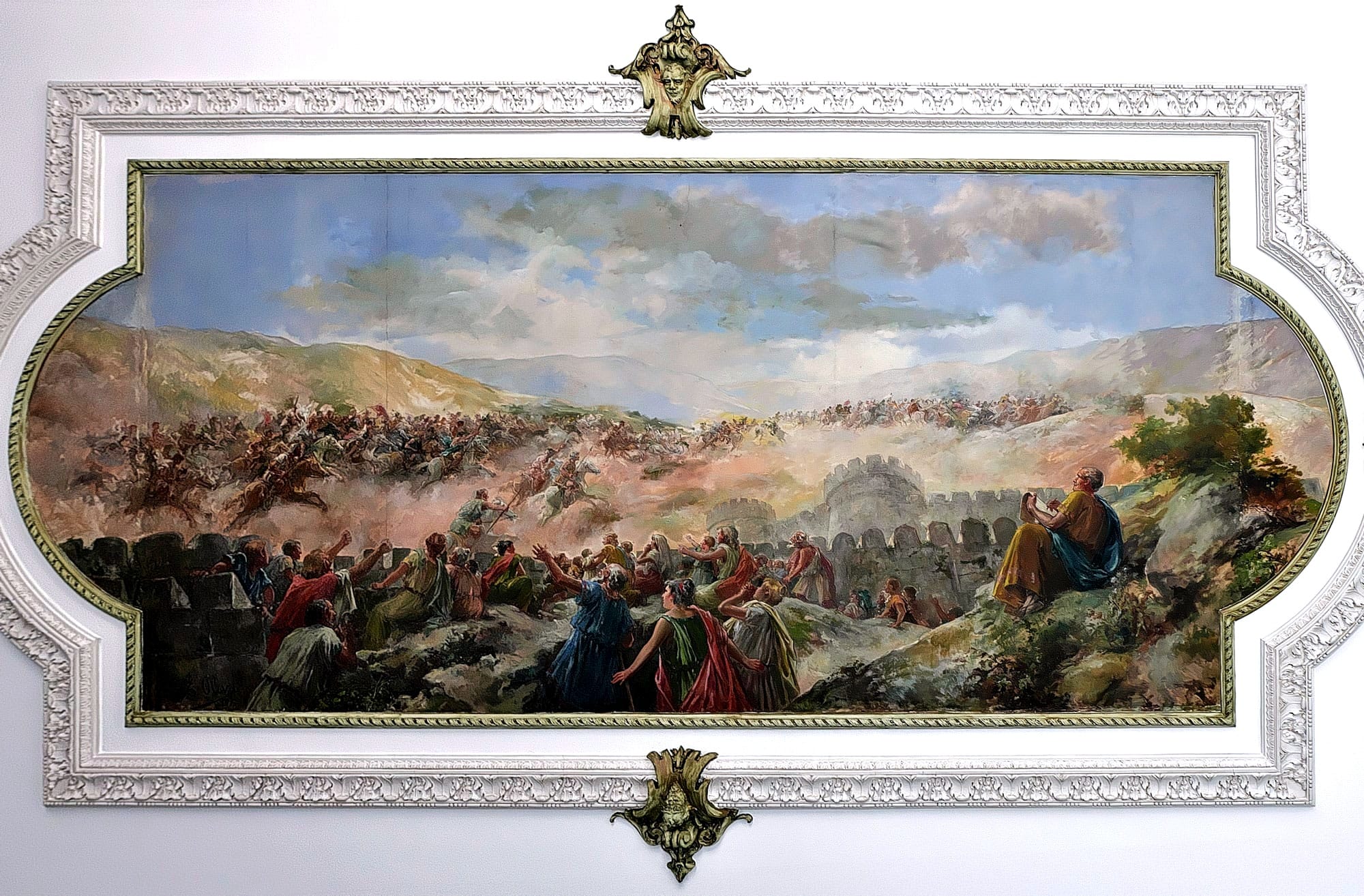
A Radically New Structure for Explaining Empire
Greek historians had written universal histories since the fourth century BCE. Some attempted to narrate all human history from its beginnings; others, like Polybius, focused on a defined period during which world domination was achieved. Appian chose a different path.
Rather than arranging his work strictly chronologically or geographically, he adopted an ethnographic structure. As he announces in his preface:
“I am going to write the part relating to each ethnos separately, omitting what happened to the others in the meantime, and taking it up in its proper place” (Roman History, Preface 13.49).
Each book treats Rome’s conflict with a particular people – Spaniards, Carthaginians, Syrians, Mithridates, and others – narrating that struggle in chronological order, while largely avoiding synchronistic links with parallel events elsewhere. The result is not a seamless, continuous narrative of Mediterranean history, but a series of focused accounts that together form a panoramic history of empire.
This approach sacrificed chronological interconnectedness in favour of analytical clarity. By isolating Rome’s encounters with different peoples, Appian sought to compare Rome’s conduct with that of its adversaries and to illuminate the distinct challenges posed by each. As he explains:
“… desiring to compare the Roman prowess with that of every other nation”
and
“desiring to learn the Romans’ relations to each, in order to understand the weakness of these nations or their power of endurance, as well as the bravery or good fortune of their conquerors or any other circumstance contributing to the result” (Roman History, Preface 12.48).
In this way, Appian presents Roman expansion not as a uniform process, but as a sequence of varied encounters requiring different combinations of military skill, diplomacy, endurance, and fortune. The tribal societies of Spain and Gaul, the strategic brilliance of Hannibal, the organised monarchies of Antiochus and Mithridates, and the diplomatic complexities of the Greek cities all demanded different responses.
Appian attributes Rome’s success to a unique blend of prudence, resilience, discipline, and fortune. He writes:
“Through prudence and good fortune (δι’ εὐβουλίαν καὶ εὐτυχίαν) has the empire of the Romans attained to greatness and duration in gaining which they have excelled all others in bravery, patience, and hard labor (ἀρετῇ καὶ φερεπονίᾳ καὶ ταλαιπωρίᾳ πάντας ὑπερῆραν)… through the doubtful struggles and dangers of seven hundred years, they achieved their present greatness, having enjoyed the favors of fortune through wisdom (διὰ τὴν εὐβουλίαν).” (Roman History, Preface 11.43–4)
An Unprecedented Empire, An Unprecedented Form
Earlier historians such as Polybius, Dionysius of Halicarnassus, and Josephus offered their own explanations for Rome’s supremacy – whether constitutional stability, inherited Greek virtues, or divine providence. Appian, by contrast, embedded his explanation within the very structure of his history. His ethnographic organisation was designed to demonstrate, through comparison, that Rome alone possessed the range of qualities necessary to conquer and govern a vast and diverse world.
He did not develop this theory through overt philosophical reflection or sustained polemic. Unlike Polybius, he rarely pauses to defend his method or to argue explicitly with predecessors. Instead, the explanatory force of his design is meant to emerge from the narratives themselves.
For Appian, Rome’s empire was an unprecedented historical phenomenon – unmatched in size and endurance. To explain it required not simply recounting events, but reshaping the form of history itself. ("The Originality of Appian of Alexandria" by Jonathan J. Price)
Mapping Power in Space and Time
Appian structured his Roman History along two intersecting lines: time and space. The traditional chronological axis remains present, but he overlays it with a geographic one, organised around the peoples and regions Rome conquered and incorporated. From the outset, he makes this spatial perspective clear:
“Setting out to write the history of the Romans, I have considered it necessary to place at the beginning the boundaries of the peoples (ethnē) they rule” (Roman History, Preface 1–2).
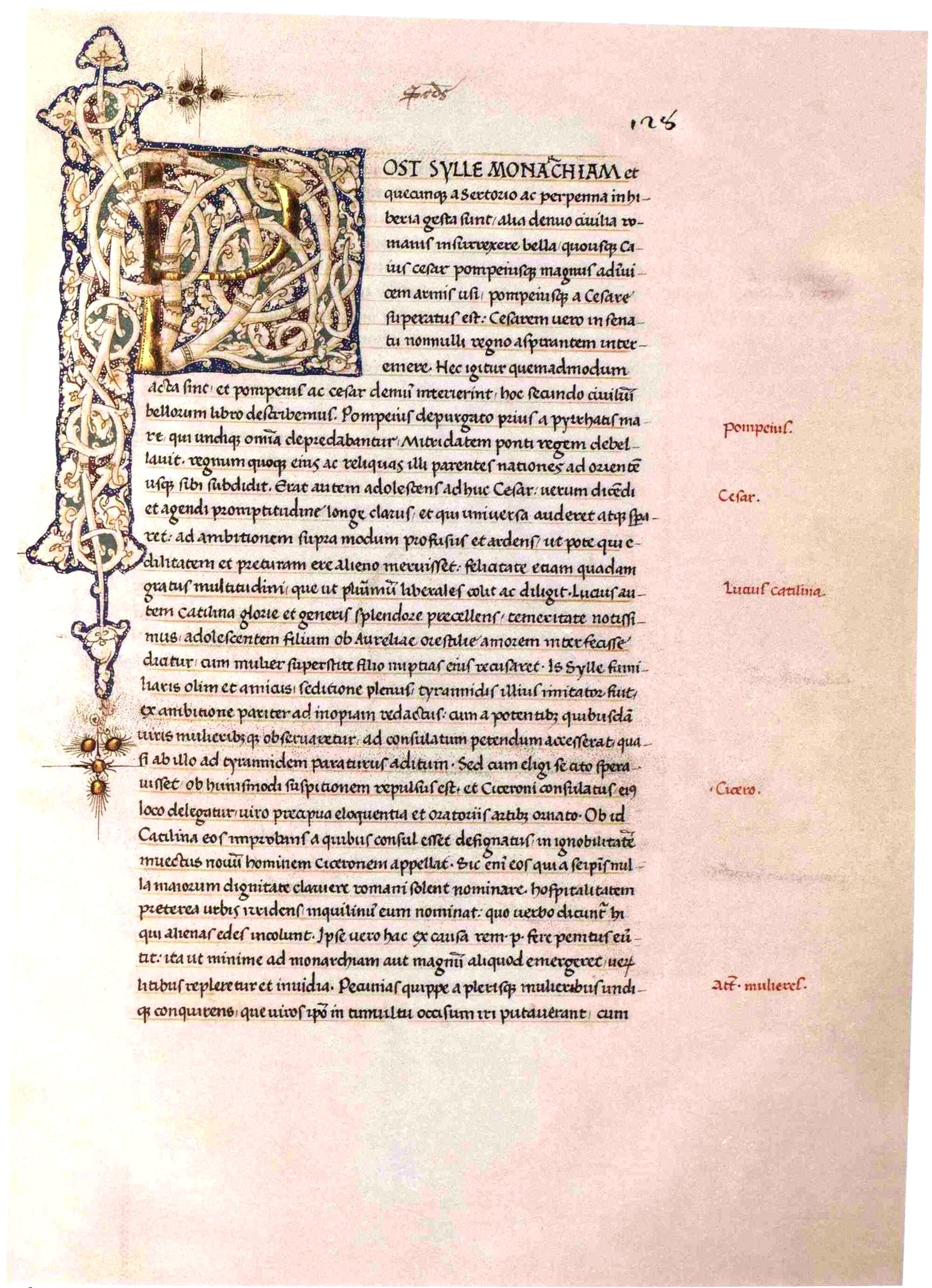
He then surveys those boundaries, occasionally noting lands beyond Roman control, such as Greater Armenia, “which the Romans do not control fiscally.” Geography, in other words, is not background detail but the foundation of his design. Appian’s history moves outward from Rome and Italy through the empire region by region – Celtic lands, Sicily, Spain, Carthage, and beyond – pausing for major conflicts such as the Hannibalic and Mithridatic Wars. The historian becomes a traveller across imperial space.
Chronology, meanwhile, governs the internal structure of each section. Appian also frames Roman history within a vast temporal arc of more than nine centuries. He divides this span into three broad phases: roughly 500 years to secure Italy; 200 years to subdue most foreign nations; and a final 200-year imperial era in which emperors consolidated and defended what had already been won.
His projected sequence of books follows this trajectory: wars in Italy, then wars against foreign peoples in order of their outbreak, followed by civil wars, and finally a concluding survey of Rome’s military forces, provincial taxation, and financial resources.
Although Appian later modified elements of the plan – adding works on Egypt, the Dacians, and Arabs, while abandoning others such as a projected Parthian history and the final administrative survey – he largely adhered to his original framework. The arrangement was unusual. Chronological continuity was sometimes sacrificed, and Rome’s domestic political history often recedes behind the wider imperial canvas. Yet this design addressed a long-standing historiographical challenge: how to present coherently the growth of an empire that spanned continents.
Earlier historians had grappled with similar tensions between geography and chronology. Livy and Diodorus followed largely annalistic structures; Polybius organised events by Olympiads while moving geographically within each year. Others occasionally paused to survey the empire’s extent.
Velleius Paterculus, for example, briefly catalogued the peoples and territories reduced to provincial status, remarking that by surveying them together
“what we have noted in stages will be more easily seen in its entirety all at once”.
Josephus, in a speech he attributes to Agrippa II, similarly lists the nations under Roman rule and emphasises the tribute they pay, urging his audience to consider Rome’s strength and
“take the measure of your own weakness”.
Tacitus and Florus likewise included panoramic surveys of Roman dominion, linking imperial geography to assessments of power and stability.
Appian transforms what in these authors appears as episodic excursus into the organising principle of his entire history. His project resembles Florus in treating Rome’s expansion as world history and in suggesting that meaningful historical development culminated under Augustus. Yet where Florus frames his narrative as a compact panorama, Appian develops a sustained, region-by-region account of conquest and incorporation.
This spatial ordering reflects a broader imperial mentality that conceived the empire not merely as territory on a map, but as a collection of peoples brought under Roman authority and obliged to contribute tribute. From Pompey’s triumphal displays of conquered nations to Augustus’ Porticus ad Nationes and the catalogues embedded in the Res Gestae, Roman political culture frequently expressed domination through lists of subdued peoples. Appian’s opening chapters, with their attention to fiscal control and boundaries, stand within this tradition.
At the same time, Augustan ideology increasingly portrayed the empire as complete and stable – a unified whole secured by peace and sustained by revenues and standing armies. Augustus’ breviarium totius imperii, summarising legions, provinces, fleets, and finances, provided a model for thinking about imperial resources in systematic terms. Appian’s own projected final book on Rome’s military forces and provincial revenues echoes this administrative vision.
Thus Appian’s arrangement is neither arbitrary nor merely innovative for its own sake. It emerges from a long historiographical and political tradition of surveying empire in both temporal and spatial dimensions. By combining chronological progression with a systematic tour of conquered peoples, Appian sought to present the Roman Empire not simply as a sequence of wars, but as a structured and measurable world order – vast in extent, long in duration, and consciously organised under Roman rule. ("Breviarium Totius Imperii: he background of Appian's Roman History" by Josiah Osgood)
Appian’s Roman History endures not because it is flawless, but because it confronts a problem few ancient historians attempted at such scale: how to explain the rise, consolidation, and internal fracture of an empire that reshaped the inhabited world. By organising his work around the peoples Rome conquered and the civil wars that nearly destroyed it, Appian transformed Roman history into a study of power across space and time. His design reveals a historian less interested in ornament than in comprehension. For readers seeking to understand how Rome became a world empire — and how it nearly collapsed under its own weight — Appian remains indispensable.
About the Roman Empire Times
See all the latest news for the Roman Empire, ancient Roman historical facts, anecdotes from Roman Times and stories from the Empire at romanempiretimes.com. Contact our newsroom to report an update or send your story, photos and videos. Follow RET on Google News, Flipboard and subscribe here to our daily email.
Follow the Roman Empire Times on social media: